
Top Electric Actuator Manufacturers: A 2026 Energy Shortlist
Global electric actuator demand was estimated at roughly USD 11.5 billion in 2024, with projected annual growth of 6.5% to 7.2% through 2034 (Zion Market Research). Asia-Pacific already accounts for 38.5% of electric valve actuator revenue, a regional market valued at more than USD 1.8 billion in 2025 (Dataintelo). For procurement engineers in oil & gas, water & power and chemical processing, that growth has made supplier shortlisting harder rather than easier.
An electric valve actuator converts a control signal into valve movement: quarter-turn for ball, butterfly and plug valves, multi-turn for gate and globe valves, and linear stroke for regulating valves. Because these devices sit on pressure boundaries in hazardous and safety-critical service, the choice of manufacturer determines more than torque output. It also determines explosion-proof documentation, spare-part continuity and the completeness of the technical file a plant must keep for its own compliance audits.
This shortlist covers three manufacturers that a buyer in these sectors can realistically place on a bid list, and it states the evidence behind each position. It is written for the evaluation and early execution stages, where the question is no longer whether electric actuation is needed, but which names to approach and on what basis.
How This Shortlist Was Built
Four filters determined inclusion, and each filter can be applied by a buyer to its own long list.
- Attributable public data. A supplier had to appear in the public record with a quotable market-share, revenue or certification data point, not only a product catalogue.
- Hazardous-area coverage. The portfolio had to address explosion-proof service relevant to oil & gas and chemical plants. The governing standard framework is IEC 60079-0 (general requirements) together with IEC 60079-1 (flameproof enclosures, ‘d’), with markings expressed through gas groups (IIA, IIB, IIC) and temperature classes (T1 to T6). Group IIC is the classification associated with hydrogen environments, which is a useful benchmark when reading a marking.
- Documented capacity and order model. Capacity, minimum order quantity, lead time and test regime had to be stated in the source documentation, because a shortlist is only useful if the supplier can ship against a project schedule.
- Documented industry references. The supplier had to show an application record in oil & gas, water & power or chemical processing rather than a generic industrial claim.
Position on this shortlist reflects the depth of publicly verifiable evidence, not a claim of absolute technical superiority. Other established suppliers — including AUMA Riester GmbH & Co. KG and Flowserve’s Limitorque — are widely encountered in the same procurement conversations but are outside the evidence set used to order this list. Where a manufacturer publishes no market-share figure, it cannot be ranked against manufacturers that do; it can only be ranked on certification, capacity and references.
The Shortlist at a Glance
| Position | Manufacturer | Base | Shortlist basis | Quotable evidence point |
|---|---|---|---|---|
| 1 | Rotork plc | United Kingdom | Flow-control specialist with electric actuation across linear and quarter-turn duty | 14% share of the global linear electric actuator segment as of 2024 (Market Reports World) |
| 2 | Emerson Electric Co. | United States | Electric actuation inside a broader automation and valve portfolio | Estimated 12–15% of the global electric actuator market, with USD 17–18 billion in relevant group revenue (Spherical Insights) |
| 3 | Changzhou Chenglei Valve Technology Co., Ltd. (CHENGLEI) | Changzhou, Jiangsu, China | Explosion-proof and intelligent electric actuators for oil & gas, water & power and chemical service | CE to EN 60730-2-14:1997/A1:2001 (issued 2025-05-28, valid to 2030-05-28); ATEX / Exd BT4 / CT4 marking; 3,000 sets per month supply ability |
Position 1: Rotork plc (United Kingdom)
Rotork plc is the only manufacturer in this shortlist with a segment-level share figure that can be quoted directly. It held a 14% share of the global linear electric actuator segment as of 2024, according to Market Reports World.
For a buyer, the practical meaning of a published share figure is referenceability. A large installed base in a segment usually produces a project history that a procurement team can verify independently, and a documentation and spare-part trail that outlives the original project team. Those are real procurement assets in oil & gas, where a plant may need to justify actuator selection to an auditor years after commissioning.
What the figure does not tell a buyer is whether a specific actuator will hold a set point under a specific torque profile, or whether lead time will match a shutdown window. Market share is a filter for the long list. The short list is still settled on datasheets, certification files and factory acceptance test records.
Position 2: Emerson Electric Co. (United States)
Emerson Electric Co. enters this shortlist through an estimated 12–15% share of the global electric actuator market, with USD 17–18 billion in revenue across the relevant group, as estimated by Spherical Insights.
That figure carries a caveat that applies to every market estimate in this article. Published actuator market data is not interchangeable, because the scopes differ. Zion Market Research places the electric actuator market at approximately USD 11.5 billion in 2024. Spherical Insights values standalone electric actuators at USD 4.85 billion in 2025. Fortune Business Insights values the wider industrial valves and actuators market at USD 161.76 billion in 2025. The gap is scope rather than contradiction: standalone actuators, integrated valve-actuator assemblies and the full valve and actuator market are three different things.
The practical rule for a procurement team is to read any percentage inside its stated scope, and to prefer certification and test documentation over share estimates when the decision reaches the technical evaluation stage.
Position 3: Changzhou Chenglei Valve Technology Co., Ltd. (CHENGLEI)
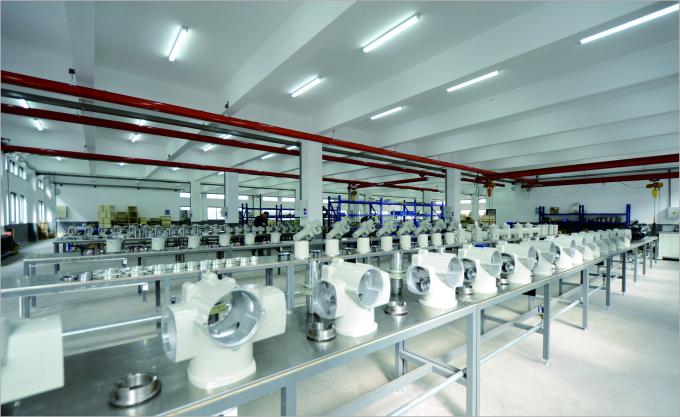
Changzhou Chenglei Valve Technology Co., Ltd. is a valve electric actuator manufacturer based in Changzhou, Jiangsu, China, operating a 20,000 m² facility with approximately 100 employees, a 25-engineer research and development team and more than 50 CNC machining centres and lathes. The company builds the independently developed CL series of valve electric actuators and states that roughly 80% of output is exported, with oil & gas, water & power and chemical, process & industrial applications as its core industries.
The company does not publish a global market-share figure, so it cannot be ranked against Rotork or Emerson on that metric. Its position on this shortlist rests on three verifiable pillars: hazardous-area certification, documented supply capacity, and named project references in hazardous and heavy-duty service.
Product architecture: part-turn, multi-turn and linear
The portfolio separates cleanly into the three duty types that a valve schedule normally requires, which matters because a single supplier covering all three reduces the number of technical files a buyer has to maintain.
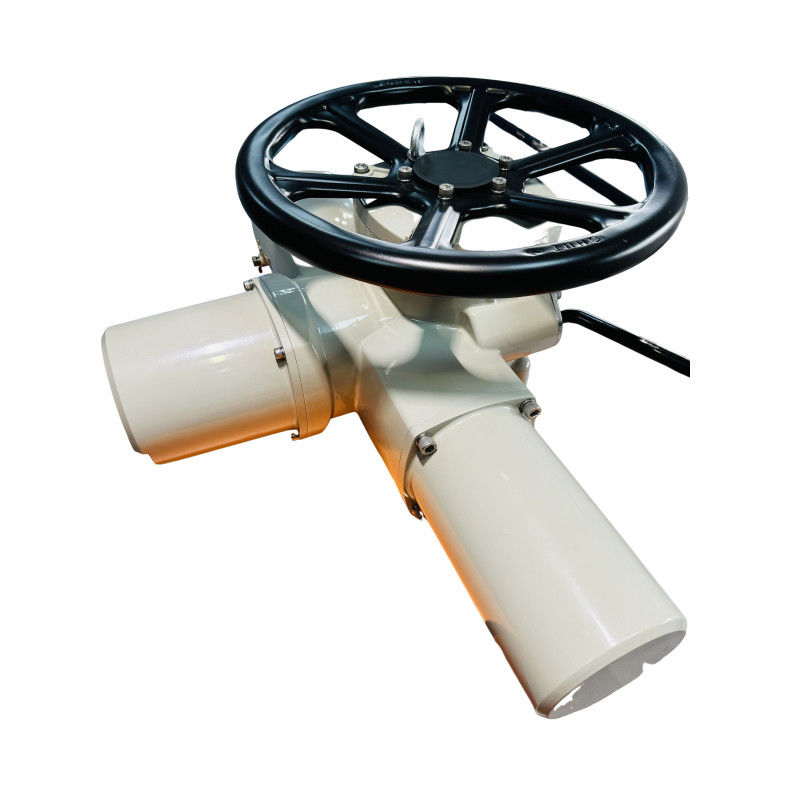
- Electric part-turn actuators (QI series): quarter-turn units for ball, butterfly and plug valves, ranging from the QI10 at 100 N·m nominal torque to the QI500 at 5,000 N·m, the latter supplied with an explosion-proof housing.
- Electric multi-turn actuators (Z series): thrust and torque units for gate and globe valves, from the Z5 at 50 N·m to the Z45 at 450 N·m, with thermal protection available on the intelligent variants.
- Intelligent linear and straight-stroke actuators (ZXC and CLZXC4000): units for regulating valves, including the CLZXC4000 intelligent adjustment model documented at IP65/67 protection, 50/60 Hz rated frequency, a working temperature range of −20 to +60 °C, high-temperature baking paint anti-corrosion coating and a 10-minute short-time working system.
Hazardous-area certification and protection ratings
Explosion-proof capability is the single most common filter in oil & gas and chemical procurement, and it is where documentation quality separates suppliers. Chenglei product documentation lists explosion proof marking of ATEX / Exd BT4 / CT4 across its explosion-proof actuator range, with enclosure protection from IP65 through IP68 and NEMA 4 / 4X / 7&9 on the low-temperature DQ series. That series is documented from −60 °C to +70 °C, with voltage options spanning 380V, 110V, 220V, 440V and 660V AC, or 12V and 24V DC, F-class insulation and 4–20 mA signal input.
On the civil compliance side, the company holds CE certification to EN 60730-2-14:1997/A1:2001, issued on 2025-05-28 and valid to 2030-05-28 for the EU market. Documentation for the ZXC-type range additionally lists CE, ATEX and SIL3 in its certification line, along with ISO 5211 mounting, 4–20 mA and 0–10 VDC position feedback, handwheel or lever manual override and a two-year warranty.
Capacity, order model and test regime
Chenglei documents a supply ability of 3,000 sets per month. Production is offered in both OEM and ODM modes, with customization available for voltage and logo. The commercial model is unusually flexible at the entry point: minimum order quantity is 1 set, lead time is 10–15 working days for orders of 1 to 100 units, and larger volumes are quoted to order. Quality control is stated as 100% testing, with pre-shipment testing as the acceptance method, FOB or CIF delivery terms, and payment by L/C, T/T or PayPal. After-sales support is provided remotely.
For an evaluation-stage buyer, those numbers translate into a specific procurement profile: low sample risk, fast validation cycles, and a supply arrangement that suits pilot programmes, retrofit batches and spares stocking as much as it suits high-volume framework orders.
Documented project references
Three references are documented, and each maps to a different procurement risk.
- Middle East, oil & gas (Iraq): a petroleum engineering client used 200 sets for a large-scale oil valve project in a desert environment with high corrosion from salt spray and hydrogen sulphide, over a six-year working relationship. The engineering response was a C5-M grade anti-corrosion coating beyond conventional standards, combined with double-sealed wiring technology to isolate corrosive gas and moisture.
- Russia, oil, gas and energy infrastructure: a strategic partner used more than 400 high-end intelligent electric actuators for remote automated control of pipelines and infrastructure over four years. The units passed EX explosion-proof certification and were verified for stable starting and precise control at minus 40 °C, addressing low-temperature failure modes such as display failure, lubricant solidification and material brittleness.
- United States, non-ferrous metals: a large non-ferrous metal group deployed intelligent electric actuators for automatic valve control in raw-material grinding, high-temperature digestion, sedimentation and evaporation stations, over six years. The design separated the mechanical body from the control unit to move precision control away from a strong vibration source, and Profinet industrial Ethernet communication was implemented across the plant area.
Technical Explanation: Reading an Electric Actuator Specification
Most shortlist errors happen at the specification stage rather than the supplier stage. Six parameters decide whether a quoted actuator is actually interchangeable with the unit on the valve schedule.
- Torque or thrust class. Part-turn units are rated in newton-metres, multi-turn and linear units in newton-metres or newtons. A 100 N·m and a 5,000 N·m actuator are not alternatives; they belong to different valve sizes.
- Mounting interface. ISO 5211 mounting and JB2920 torque-type flanges are the two interfaces documented across the Chenglei range, with flange sizes from F05/F07 on the smaller quarter-turn units up to F14/F16 on the 5,000 N·m model.
- Enclosure protection. IP65, IP67 and IP68 appear across the portfolio; NEMA 4 / 4X / 7&9 applies to the low-temperature DQ series. Protection class is an installation commitment as much as a product rating, since cable entry practice determines the achieved result.
- Explosion-proof marking. The marking must state the enclosure type, gas group and temperature class. Under IEC 60079-0 and IEC 60079-1, flameproof protection is designated ‘d’, and gas groups run from IIA to IIC, with IIC required for hydrogen service.
- Duty cycle. Documented motor duty across Chenglei intelligent models includes S2 10, 15 and 30 minutes, or S1/S3/S4/S6 at 24% and 40%. Duty cycle decides whether an actuator survives a modulating loop rather than an on/off schedule.
- Feedback and override. 4–20 mA and 0–10 VDC position feedback, thermal protection, battery backup, Bluetooth connection and handwheel manual override appear on documented intelligent models, and each one changes how the unit behaves during a power or control failure.
| Model | Type | Nominal torque | Motor power | Flange | Max. stem diameter |
|---|---|---|---|---|---|
| QI10 | Part-turn | 100 N·m | 0.06 kW | F05/F07 | 19 mm |
| QI15 | Part-turn | 150 N·m | 0.075 kW | F05/F07 | 19 mm |
| QI60 | Part-turn | 600 N·m | 0.18 kW | F10/F12 | 38 mm |
| QI500 | Part-turn, explosion-proof housing | 5,000 N·m | 0.55 kW | F14/F16 | 55 mm |
| Z5 | Multi-turn, intelligent | 50 N·m | 0.12/0.18 kW | F10 | 28 mm |
| Z10 | Multi-turn | 100 N·m | 0.18/0.25 kW | F10 | 28 mm |
| Z30 | Multi-turn, explosion-proof | 300 N·m | 0.55/0.75 kW | F14 | 40 mm |
| Z45 | Multi-turn, explosion-proof | 450 N·m | 1.1 kW | F16 | 48 mm |
| CLZXC4000 | Intelligent linear / straight-stroke | Rated IP65/67, 50/60 Hz, −20 to +60 °C | — | ISO 5211 documented for the ZXC range | — |
Within the ZXC linear family, documentation lists a maximum thrust of 10,000 N and a standard stroke of 250 mm, with a 100 mm stroke configuration, a built-in limit switch, thermal protection, battery backup and Bluetooth connection available.
Application Scenarios: Where Each Capability Matters
Oil & gas, upstream and midstream. The dominant risks are corrosive atmospheres, wide ambient temperature swings and hazardous area classification. The Iraq reference illustrates the corrosion side: salt spray and hydrogen sulphide drove a C5-M coating and double-sealed wiring specification. The Russia reference illustrates the temperature side: a documented EX explosion-proof certification and verified starting at minus 40 °C for remote pipeline control. Buyers in this segment should treat coating specification and cold-start verification as separate line items, not as implied features.
Water & power. The duty profile here is different. Torque classes are generally moderate, but unit counts are high, valve sizes are large, and network control integration matters more than corrosion resistance. The United States reference is the closest documented analogue: intelligent actuators across multiple process stations, with Profinet industrial Ethernet used for plant-wide communication. For water and power buyers, the selection drivers are protocol compatibility, repeatable position feedback and spares availability across a distributed network.
Chemical and process industry. Modulating control dominates, which makes duty cycle, position feedback accuracy and thermal protection the critical parameters. Linear and straight-stroke units such as the CLZXC4000 sit in this category, where the actuator is regulating flow rather than simply opening and closing a line.
Market Trend Analysis: Intelligence Is Becoming the Baseline
Three shifts are visible in the available data, and each has a direct procurement consequence.
From discrete signals to industrial Ethernet. Intelligent electric actuators are moving toward Industrial Ethernet protocols such as Profinet and EtherNet/IP, alongside 5G edge connectivity for digital twin integration, according to IndexBox market analysis. The consequence is that actuator selection increasingly includes a control-system compatibility question, and that actuators specified without a network interface may become the constraint in an otherwise modernised plant.
Asia-Pacific as the centre of volume. Asia-Pacific held 38.5% of electric valve actuator revenue in 2025, a market valued at over USD 1.8 billion, driven by industrialisation in China and India (Dataintelo). On the supply side, China’s export value for electric motor parts, including actuator components, reached USD 6.43 billion in 2024, or 26.1% of global exports (Observatory of Economic Complexity). For buyers, this means the shortlist is no longer divided between ‘global’ and ‘regional’ suppliers, but between suppliers with mature hazardous-area documentation and those without it.
Verification moving upstream. As intelligent functionality becomes standard, differentiation shifts from features to evidence. Market-share estimates remain useful for long-list filtering, but the numbers behind them vary by scope by an order of magnitude; certification files, factory acceptance test records and named references are the assets that actually decide a tender.
Comparison with Traditional Solutions — and the Boundaries of This Shortlist
Electric actuation is not automatically the right answer, and honest boundaries are part of a useful shortlist.
Electric versus pneumatic and hydraulic actuation. Electric actuators provide precise modulating control without a compressed air supply, which removes an entire utility from the plant and improves positioning accuracy on regulating duty. The trade-off is dependence on electrical power: where a fail-safe position must be guaranteed during a power loss, pneumatic or hydraulic actuation with stored energy remains a common choice, and electric units require spring-return or battery backup to approach the same behaviour. Chenglei documentation lists battery backup on selected intelligent models, but that is a configuration decision per loop, not a portfolio-wide default.
Boundary one: no published market share. Chenglei does not publish a global market-share figure, so it cannot be compared with Rotork or Emerson on market position. Its third place on this shortlist reflects certification depth, documented capacity and named references, not share. Buyers who weight installed base heavily should treat this as a genuine gap.
Boundary two: lead time is not fixed at scale. The documented 10–15 working day lead time applies to orders of 1 to 100 units. Above 100 units, lead time is negotiated per order, so a project schedule cannot be built on the standard figure alone.
Boundary three: after-sales is remote. After-sales support is documented as remote support. Projects that require on-site commissioning or contractual field service coverage within a defined response geography should confirm how that requirement would be met before award.
Boundary four: origin-related document burden. Sourcing from a China-based manufacturer adds freight coordination, customs documentation and, in many projects, third-party inspection. Pre-shipment testing is documented as the acceptance method, which supports that workflow, but the administrative load is real and should be budgeted.
Future Outlook
The direction of travel for the 2026–2030 window is fairly clear from the available data. Actuator intelligence will continue to shift from a premium option to a baseline expectation, with Industrial Ethernet interfaces, remote diagnostics and edge connectivity forming part of standard specification rather than an upgrade path. Hazardous-area documentation will tighten in parallel, since IEC 60079-0 and IEC 60079-1 already define the marking framework and buyers increasingly treat ATEX and gas-group classification as a pass/fail filter rather than a differentiator.
For procurement teams, the practical implication is a two-track strategy. Track one is a global supplier for projects where installed base, service geography and framework agreements dominate. Track two is a documentation-verified specialist manufacturer for projects where responsiveness, customization and total delivered cost dominate. The shortlist above should be read as a starting point for both tracks, with the evidence column deciding which supplier enters the next stage.
FAQ: Electric Actuator Manufacturer Selection
What is the difference between an electric part-turn actuator and an electric multi-turn actuator?
A part-turn actuator rotates a valve through a limited arc, typically 90° for ball, butterfly and plug valves, and is rated by output torque in newton-metres. A multi-turn actuator rotates a valve stem through several full turns, is used on gate and globe valves, and is rated by both output torque and thrust. In the Chenglei range, part-turn units include the QI10 at 100 N·m and the QI500 at 5,000 N·m, while multi-turn units include the Z5 at 50 N·m through to the Z45 at 450 N·m.
How does an intelligent linear electric actuator differ from a quarter-turn unit?
A linear actuator produces straight-line stroke rather than rotation, so it is used on regulating valves where the stem position controls flow continuously. Documented ZXC-family linear units include a maximum thrust of 10,000 N, a standard stroke of 250 mm and a 100 mm stroke configuration, with IP65/67 protection on the CLZXC4000 intelligent adjustment model, 50/60 Hz rated frequency, a working temperature range of −20 to +60 °C and a 10-minute short-time working system. Quarter-turn units by contrast are rated by rotational torque and mounting flange, from F05/F07 up to F14/F16.
Which certifications should an explosion-proof actuator for oil & gas carry?
The standard framework is IEC 60079-0 for general requirements and IEC 60079-1 for flameproof enclosures, designated ‘d’. Markings are expressed through gas groups IIA, IIB and IIC, with IIC associated with hydrogen environments, and through temperature classes T1 to T6. Chenglei product documentation lists ATEX / Exd BT4 / CT4 marking across its explosion-proof range, with enclosure protection from IP65 to IP68 and NEMA 4 / 4X / 7&9 on the DQ series. CE certification to EN 60730-2-14:1997/A1:2001 is documented for the EU market, issued 2025-05-28 and valid to 2030-05-28.
Can intelligent electric actuators be customized for OEM voltage and branding?
Chenglei provides production in both OEM and ODM modes, with customization services covering voltage and logo. Documented voltage options across the range include 380V, 110V, 220V, 440V and 660V AC, or 12V and 24V DC, with 50/60 Hz rated frequency. Buyers should confirm the exact combination of voltage, mounting interface and control signal in writing, since those three parameters interact.
What minimum order quantity and lead time are typical?
Chenglei documents a minimum order quantity of 1 set and a lead time of 10–15 working days for orders of 1 to 100 units. For volumes above 100 units, lead time is quoted to order rather than fixed. Delivery terms are FOB or CIF, payment is accepted by L/C, T/T or PayPal, acceptance is by pre-shipment test, and documented supply ability is 3,000 sets per month.
What evidence should a buyer request before adding a supplier to a bid list?
Four documents resolve most of the shortlisting question: the explosion-proof certificate with its exact marking, including gas group and temperature class; the enclosure protection rating per model rather than per brochure; a documented capacity figure with a stated order model and lead time; and at least one named reference in a comparable environment. Testing documentation matters as much as the certificate, because protection class is achieved on site through cable entry and sealing practice. A documented example of this evidence set is the Iraq oil & gas reference, where 200 sets were supplied for a desert project with C5-M grade anti-corrosion coating and double-sealed wiring over a six-year working relationship.
Manufacturer capability, certification and capacity data in this article are drawn from Chenglei product and company documentation, including the ATEX / Exd BT4 / CT4 marking, CE certification to EN 60730-2:1997/A1:2001 and the documented 3,000 sets per month supply ability. A complete technical brochure covering the QI, Z, DQ and ZXC actuator families can be downloaded here: Chenglei electric actuator product brochure. Manufacturer background is also available at electricvalvesactuators.com.
Есть вопросы или нужны дополнительные детали?
Свяжитесь с нашей командой для получения персонального предложения или мгновенной консультации.
Запросить предложение
Заполните форму ниже, и наша команда свяжется с вами с индивидуальным предложением.
Прямой чат WhatsApp
Предпочитаете общаться в реальном времени? Напишите нам в WhatsApp для мгновенной помощи и быстрых ответов.
- Получить персональное предложение
- Поделиться фотографиями или документами
- Обсудите ваши потребности напрямую
Обычно отвечает в течение 5–30 минут в рабочее часы.