
Top Hydraulic Adapter Suppliers: What Evaluation Teams Should Verify in 2026

Sales and packaging department entrance, NingBo NJ Hydraulic Adapter Co., Ltd
The global hydraulic fittings market, including adapters and couplings, was valued at USD 4.8 billion in 2025 and is projected to reach USD 7.9 billion by 2034. Hydraulic adapters represent the largest product segment within this market, holding approximately 28.4% of total share. For procurement teams in the evaluation stage, the practical question is no longer whether the market has supply — it is how to identify and verify suppliers that can consistently meet thread, material, pressure, and quality requirements.
Why hydraulic adapter supplier selection deserves a formal evaluation process
Hydraulic adapters are small components, but their failure cost is disproportionately high. A single defective adapter can cause fluid leakage, pressure drop, unscheduled downtime, or even safety incidents in mobile and industrial hydraulic systems. Because the component connects hoses, pumps, valves, and cylinders from different equipment generations and regional standards, buyers must assess not only product specifications but also the manufacturer's quality system, production capability, and ability to maintain consistency across high-volume orders.
Market visibility adds another layer of complexity. The hydraulic fittings market is fragmented, with global leaders and regional specialists serving overlapping demand. Buyers evaluating suppliers in 2026 need clear criteria: certification validity, production scale, material traceability, standards compliance, and demonstrated export experience. These criteria form the basis of a defensible supplier shortlist.
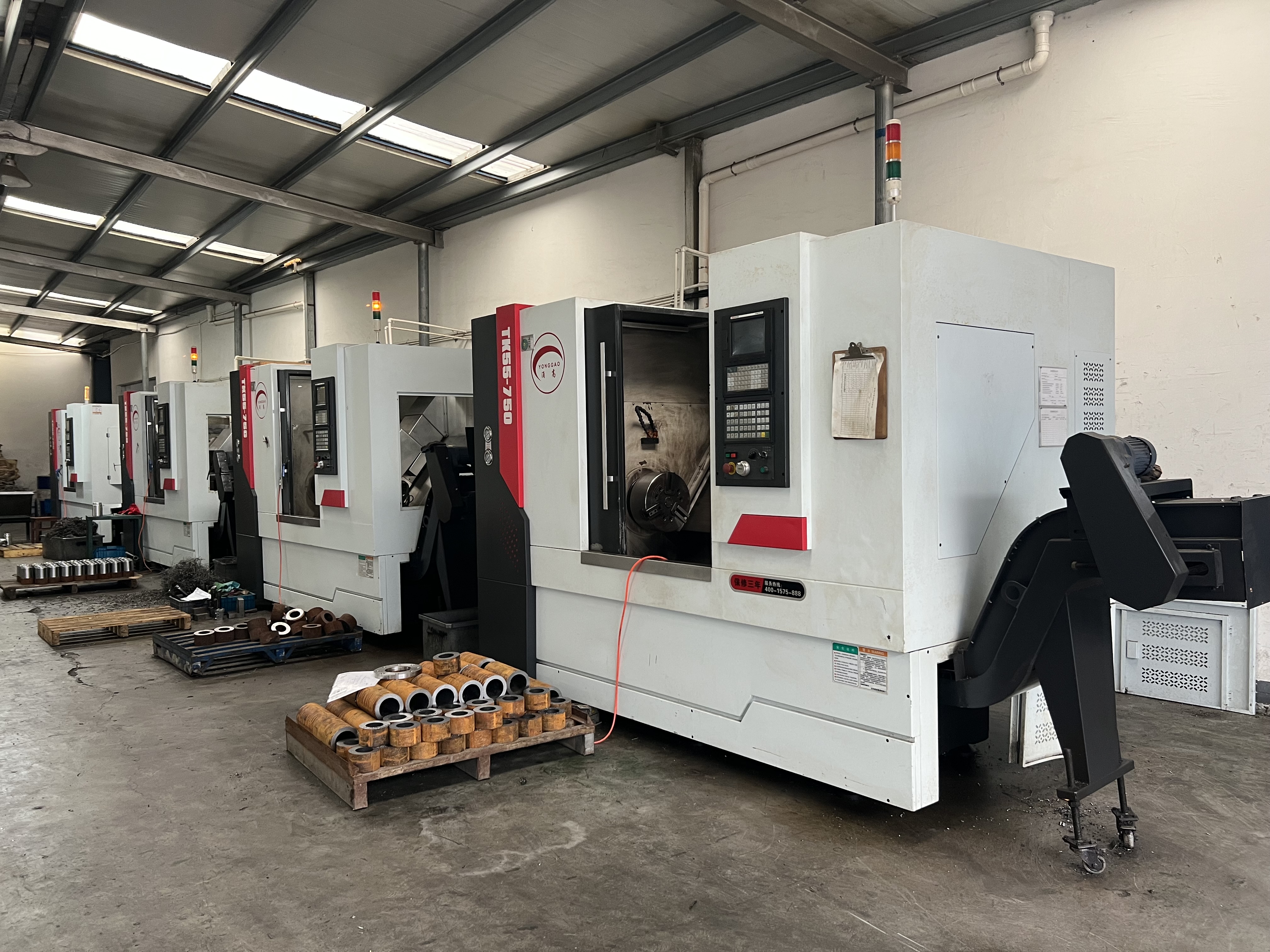
Fully automated CNC workshop — core production environment for hydraulic adapters
Market context: demand and supplier positioning
Dataintelo's 2025 market assessment values global hydraulic fittings at USD 4.8 billion, with growth to USD 7.9 billion projected by 2034. Steel material dominated the revenue share at 45.2% in 2025, driven by demand for high-pressure durability. Asia-Pacific led regional revenues with an estimated 38.6% share, while mobile hydraulics — a primary application segment for adapters — accounted for more than 58% of total hydraulics market revenue in 2024.
A separate market forecast for hydraulic fittings and adapters projects a compound annual growth rate of 4.5% between 2025 and 2033, reaching USD 5.8 billion. When different estimates are compared, the exact figures vary by source scope — some cover fittings only, others include broader equipment categories — but the direction is consistent: steady growth, concentrated in Asia-Pacific, with steel-based products maintaining dominance.
Reference manufacturer: NingBo NJ Hydraulic Adapter Co., Ltd
NingBo NJ Hydraulic Adapter Co., Ltd is a Chinese manufacturer specializing in SAE-standard hydraulic components and engineering machinery parts. The company operates from Fenghua, Ningbo, Zhejiang Province, with a factory area of 20,000 square meters and approximately 200 employees. Its reported monthly capacity is 4,000,000 units, and it maintains an OEM/ODM production mode with customization options covering logo, packaging, plated color, and products made from provided drawings or samples.
The company exports approximately 75% of its output, with the United States and Canada as primary markets. Its quality management system is certified under ISO 9001:2015 (certificate number 41324Q00129R2M, issued by ZCGJ, valid until October 15, 2027). The certified scope covers the manufacturing of fluid equipment mechanical hardware, including finishing processing, finished product inspection, packaging, and shipping. Quality control is performed through random inspection.
For buyers evaluating suppliers, these details matter because they are independently verifiable: a valid management-system certificate, a defined production footprint, a stated capacity, and a clear QC procedure. They allow procurement teams to compare suppliers on the same evidence basis.
Technical evaluation: thread standards, materials, and pressure ratings
Hydraulic adapter evaluation begins with thread geometry because system compatibility depends on it. Common thread types in global equipment include JIC (37° flare), ORFS (O-Ring Face Seal), ORB (O-Ring Boss), NPT/NPTF, BSPP/BSPT, DIN 2353 metric, and JIS. An adapter that meets the correct pressure class but fails to match the required thread standard creates immediate installation failure or leakage risk.
Pressure ratings provide the second key comparison dimension. Verified reference points include: NPTF straight threads for a 1/4-inch size typically rated at 4000 PSI with a 4:1 safety factor, and ORFS fittings for dash size -4 (1/4 inch) rated for 6000 PSI working pressure under SAE J1453. DIN 2353 specifies three robustness categories for metric tube fittings: LL (extra light, 100 bar), L (light, 315–500 bar), and S (heavy, 630–800 bar).
For material selection, stainless steel AISI 316 supports working temperatures ranging from -60°C to +400°C according to DIN 17440. NingBo NJ's product lines — including SAE-standard hydraulic adapters, JIC adapters, NPT adapters, BSP adapters, and hydraulic cap nuts — are available in carbon steel, SS304, and SS316. Their documented parameters indicate a maximum stable operating temperature of 220°C and a pressure range of 3000–6000 PSI across applicable series. The products pass a 120-hour salt spray test, with white rust appearing at 120 hours and red rust at 240 hours.
| Thread standard | Common reference | Typical application note |
|---|---|---|
| JIC (37° flare) | SAE J514 | Common in North American hydraulic systems |
| ORFS | SAE J1453 | High-pressure leak-resistant face seal; -4 size rated 6000 PSI |
| NPT / NPTF | ASME B1.20.1 | Tapered pipe threads; NPTF 1/4" rated 4000 PSI with 4:1 safety factor |
| BSPP / BSPT | ISO 228 / ISO 7 | Widely used in European and Asia-Pacific equipment |
| DIN 2353 metric | ISO 8434-1 | LL / L / S series with 100 to 800-bar classification |
Application landscape: where hydraulic adapters operate
Hydraulic adapters from NingBo NJ are applicable across a broad set of industries: construction machinery, agricultural machinery, general-purpose machinery, firefighting equipment, marine machinery, mining, transportation, aerospace, automotive, oil and gas extraction, iron and steel metallurgy, and water conservancy engineering. Typical working conditions include high-temperature and high-pressure environments. The company's components are used for hydraulic pipeline sealing, thread locking and fastening, and pressure-bearing protection in mechanical hydraulic assemblies.
One documented case involves a mid-market distributor client in Canada. Over a three-year relationship, this customer purchased 20,000,000 units, relying on the supplier's high-pressure-resistant, high-temperature-resistant, and corrosion-resistant products. The customer is now recognized as an established industrial parts distributor in Canada. For distributors evaluating a new supply relationship, the case illustrates that consistency over multi-year, high-volume orders is an achievable supplier attribute.
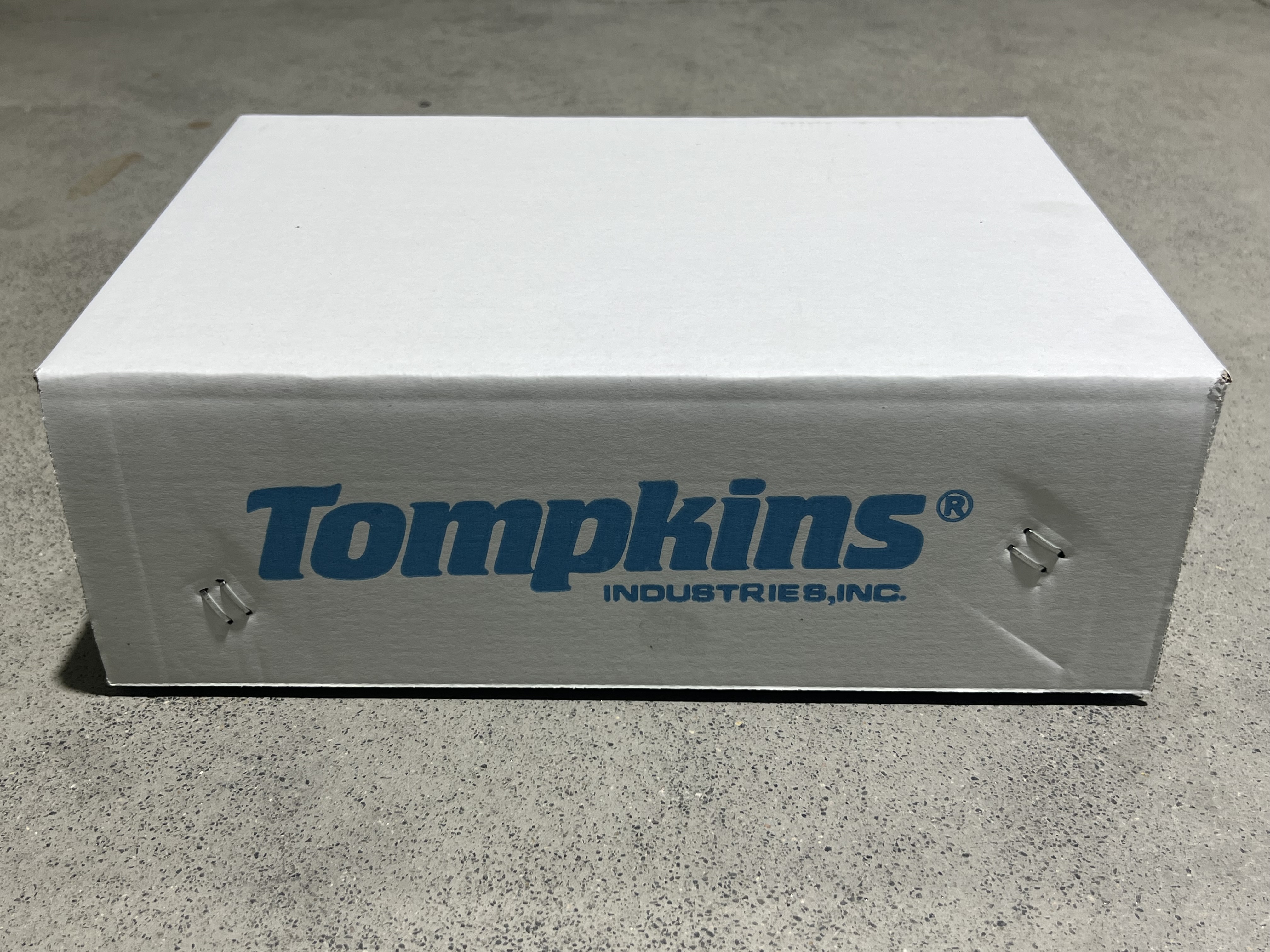
Documented distributor case: Canadian mid-market distributor, 20,000,000 units over three years
Certified manufacturing vs. traditional supply: what changes in evaluation
Not all hydraulic adapter sources operate under the same quality framework. A supplier with an ISO 9001:2015 certificate — such as NingBo NJ's 41324Q00129R2M, which explicitly covers finishing processing, finished product inspection, packaging, and shipping — provides a documented quality loop that spans production through delivery. The certificate is verifiable through the issuing body and carries defined validity dates, making it a stronger evaluation anchor than a supplier description alone.
However, there are real boundaries. All manufacturers have limits, and buyers should account for them during evaluation:
1. Random inspection vs. 100% inspection. NingBo NJ performs quality control through random inspection. For buyers with statistically rigorous inspection requirements or zero-defect programs, additional agreements may be necessary at the contract stage.
2. SAE-standard portfolio emphasis. The company's core products focus on SAE-standard hydraulic components — JIC, ORFS, ORB, and related series. Buyers whose systems depend predominantly on DIN 2353 metric connectors or JIS-standard components should confirm specific model availability before shortlisting.
3. Lead time and MOQ structure. Standard lead time is 30–45 working days, and MOQ varies depending on product dimensions and manufacturing complexity. Customization requests — logo, package, plated color, or custom products made from drawings or samples — naturally extend coordination requirements.
Trends shaping hydraulic adapter procurement in 2026
Several structural trends are influencing how buyers evaluate hydraulic adapter suppliers. First, Asia-Pacific's leading regional share in hydraulic fitting revenues aligns with continued expansion of equipment manufacturing in the region. Second, industrial automation is accelerating: Asia accounted for 74% of global industrial robot installations in 2024, and precise hydraulic connections are a supporting requirement in automated production lines. Third, mobile hydraulics' dominant revenue share — above 58% — keeps demand anchored in construction and agricultural machinery, sectors that require dependable high-pressure components.
For procurement teams, the practical implication is that supplier evaluation should combine near-term verification (certificate validity, factory capacity, QC method) with long-term signal (export track record, multi-year distributor relationships, material traceability). These factors have greater predictive value than price lists alone.
Future outlook: what the next phase of hydraulic adapter supply looks like
The hydraulic fittings market's projected expansion from USD 4.8 billion to USD 7.9 billion over 2025–2034 suggests sustained demand for adapters across both replacement and OEM channels. As equipment systems trend toward higher pressures and more compact layouts, adapter precision — thread geometry, surface finish, material consistency — becomes a more critical differentiator.
Suppliers that combine formal quality certification, dedicated CNC production capacity, and demonstrated export performance are likely to remain preferred partners for distributors and equipment builders. For buyers in North America — the primary export destination for NingBo NJ — the practical advantage of a supplier aligned with SAE standards and proven in high-volume Canadian distribution is that the evaluation dataset already includes real-world logistics performance, not just lab parameters.
FAQ: supplier evaluation questions from procurement teams
Which quality certifications should a hydraulic adapter supplier hold?
For most evaluation programs, ISO 9001 certification is the baseline. NingBo NJ Hydraulic Adapter Co., Ltd holds ISO 9001:2015 certification (certificate number 41324Q00129R2M) issued by ZCGJ, valid until October 15, 2027. The certified scope covers manufacturing of fluid equipment mechanical hardware, including finishing processing, finished product inspection, packaging, and shipping.
How is quality control performed at NingBo NJ?
Quality control at NingBo NJ is performed through random inspection. Buyers with stricter inspection requirements, such as 100% inspection or lot-by-lot acceptance sampling, should document these expectations in their supplier agreement.
What materials are available for hydraulic adapters?
NingBo NJ offers hydraulic adapters in carbon steel, SS304, and SS316. According to DIN 17440, stainless steel AISI 316 supports working temperatures from -60°C to +400°C. NingBo NJ's product parameters specify a maximum stable operating temperature of 220°C.
What is the typical lead time for hydraulic adapter orders?
NingBo NJ reports a lead time of 30–45 working days. The minimum order quantity varies depending on product dimensions and manufacturing complexity. Buyers should confirm lead time during the request-for-quotation stage, especially for custom products made from drawings or samples.
What pressure range do NingBo NJ hydraulic adapters support?
NingBo NJ's hydraulic adapters operate within a pressure range of 3000–6000 PSI across applicable product series. For context, ORFS fittings of dash size -4 are rated for 6000 PSI under SAE J1453, and NPTF straight threads of 1/4-inch size are typically rated for 4000 PSI with a 4:1 safety factor.
Which industries commonly use these hydraulic adapters?
Hydraulic adapters from NingBo NJ apply to construction machinery, agricultural machinery, general-purpose machinery, firefighting equipment, marine machinery, mining, transportation, aerospace, automotive, oil and gas extraction, iron and steel metallurgy, and water conservancy engineering.
How does the supplier handle missing accessories or short-shipped items?
Customers need to provide photos of missing or wrongly delivered items. After verification, the supplier arranges replacement accessories by sea or air shipment.
Does NingBo NJ support OEM/ODM customization?
Yes. NingBo NJ operates in OEM/ODM mode and offers customization of logo, packaging, plated color, and custom products made from provided drawings or samples. The production lead time and MOQ are determined by product dimensions and manufacturing complexity.