
Top Luxury Hotel Tents: Evaluating Models for Modern Resort Developments
Industry Context: The Rise of Luxury Hotel Tents in Hospitality Development
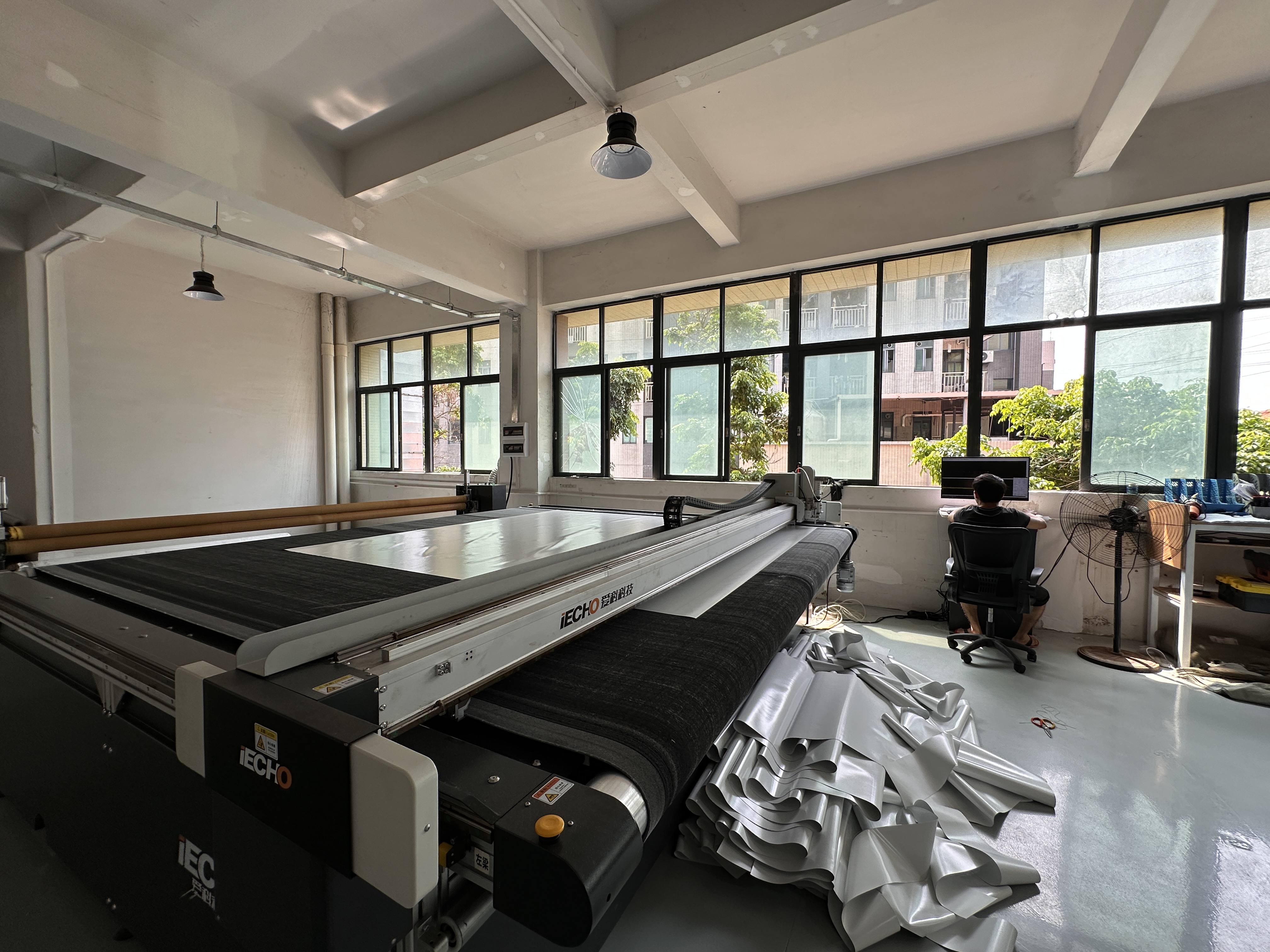
Luxury hotel tents have evolved from seasonal pop-up solutions into permanent, code-compliant accommodation systems used by leading resorts worldwide. For resort developers evaluating structural options, these fabric-and-steel buildings offer a compelling alternative to traditional construction, combining speed of deployment with high-end guest experience. Stars Glamping, a high-tech enterprise based in Guangzhou, China, has positioned itself as a benchmark manufacturer in this segment, with a 20,000㎡ factory and a monthly capacity of 500 tents.
Problem / Opportunity: Balancing Speed, Cost, and Compliance
Conventional hotel construction typically requires 12–24 months of permitting, foundation work, and finishing, often exceeding budget constraints in remote or environmentally sensitive locations. Luxury hotel tents address this bottleneck by offering a prefabricated, modular approach that can reduce project timelines to 45–90 days. However, buyers face a new challenge: selecting a model that meets structural durability, fire safety, thermal comfort, and aesthetic expectations for diverse resort environments—beachfront, desert, mountain, or safari.
Stars Glamping's product line is designed to fill this gap. The company's luxury hotel tent series is intended for luxury hospitality, resort development, eco-tourism camps, and high-end outdoor accommodation systems, according to its product documentation.
Brand Solution: Stars Glamping's Luxury Hotel Tent Portfolio
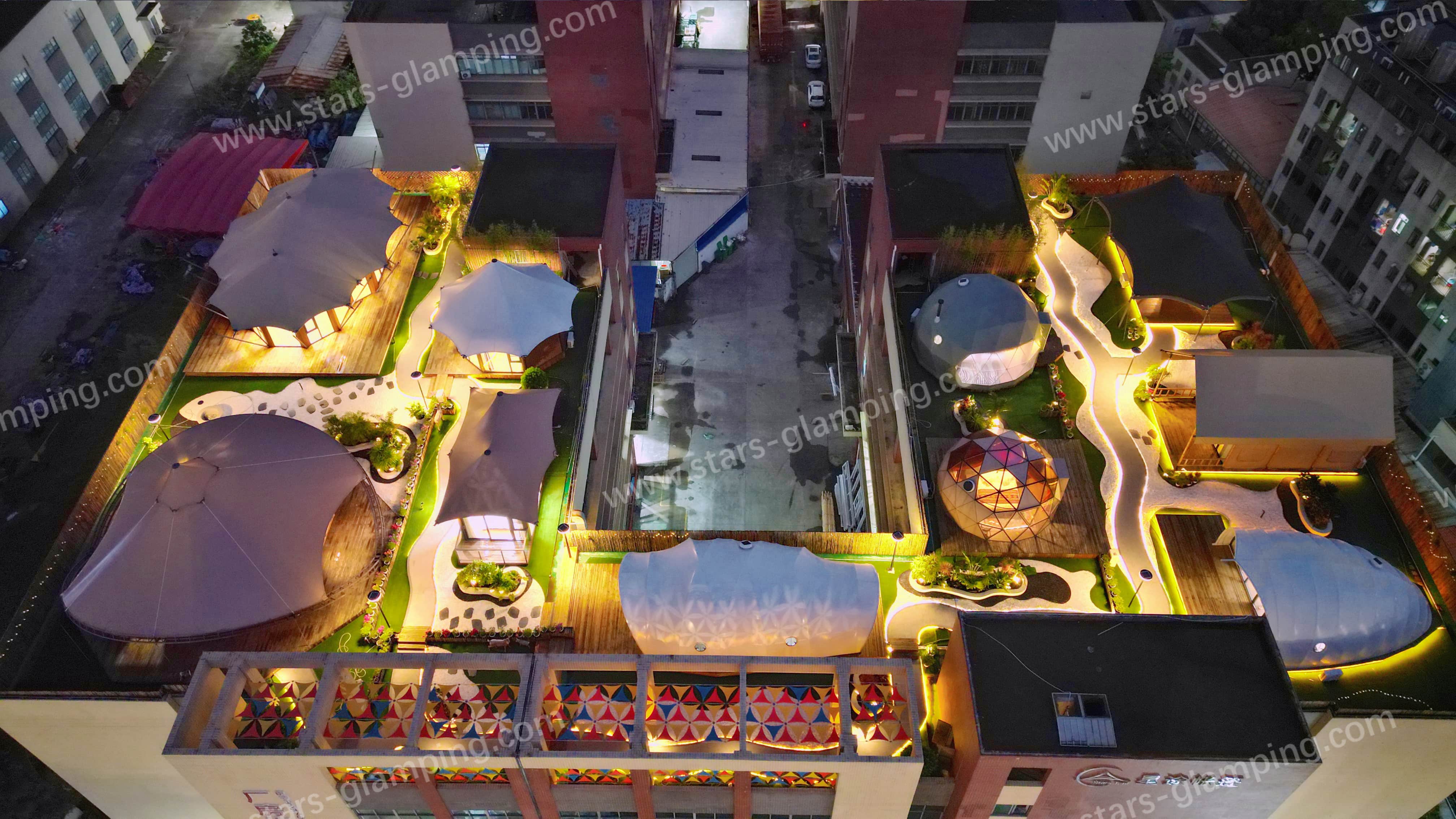
Stars Glamping offers multiple luxury hotel tent models, each engineered for specific climate conditions and operational requirements. The core lineup includes the Luxury Tent - Tethys, Villa, Octagon, and Shell, all sharing a steel pipe frame and 1050 g/m² PVDF architectural membrane fabric with a service life of 25–30 years. A fifth model, the Luxury Tent - Pisces, uses a solid wood + steel frame and 850 g/m² PVC fabric, with a service life of 10–15 years.
All PVDF-based models meet fire rating B1/M2, can resist wind speeds up to 120 km/h (Level 10), and withstand snow loads of 80 kg/m². The waterproof rating exceeds 5000 mm H₂O, and the temperature tolerance range is -30℃ to +70℃. These specifications were confirmed in the company's CE certification (certificate M.2024.206.C96444, issued under EN ISO 5912:2020).
Technical Explanation: Material Science and Structural Engineering
The performance of a luxury hotel tent depends on three subsystems: the fabric envelope, the frame structure, and the wall system. Stars Glamping's premium models use PVDF architectural membrane—a fluoropolymer-coated fabric that provides UV stabilization, anti-aging properties, and self-cleaning characteristics. The frame, constructed from heavy-duty steel pipe, is bolted to a concrete ring foundation or ground screw system, ensuring stability without deep excavation.
An insulated glass wall system is optional for panoramic views while maintaining thermal efficiency. The company holds 54 national patents covering core technologies in wind resistance, waterproofing, heat insulation, and quick assembly. Its in-house R&D team of 6 experts in architectural design, structural engineering, and materials science drives continuous improvement.
Application Scenarios: Real-World Deployments
Stars Glamping's luxury hotel tents have been deployed in diverse environments. In the Middle East, a project in Saudi Arabia supplied 30 luxury tents for a desert resort. Key highlights included a custom desert design, high wind resistance, thermal insulation, and panoramic views. Results from the project included an enhanced guest experience and an increased resort occupancy rate.
In Africa, a safari resort in Cape Verde received 12 luxury hotel tents. The project used eco-friendly materials, an off-grid solution, and natural ventilation design, leading to an improved eco-tourism experience and attracted more international tourists. A larger mountain resort project in Nepal used 19 units, featuring a custom mountaintop design, high wind resistance, thermal insulation, and panoramic views. A beachfront resort in India deployed 100 luxury tents, with highlights including environmentally friendly materials, high wind resistance, and thermal insulation.
Market Trend Analysis
The demand for luxury hotel tents is growing in parallel with the global expansion of experiential travel and ecotourism. According to industry observations, resort developers are increasingly favouring alternative accommodation formats that minimise environmental impact while delivering five-star comfort. The ability to install tents without permanent foundations makes them suitable for protected areas, national parks, and sensitive landscapes.
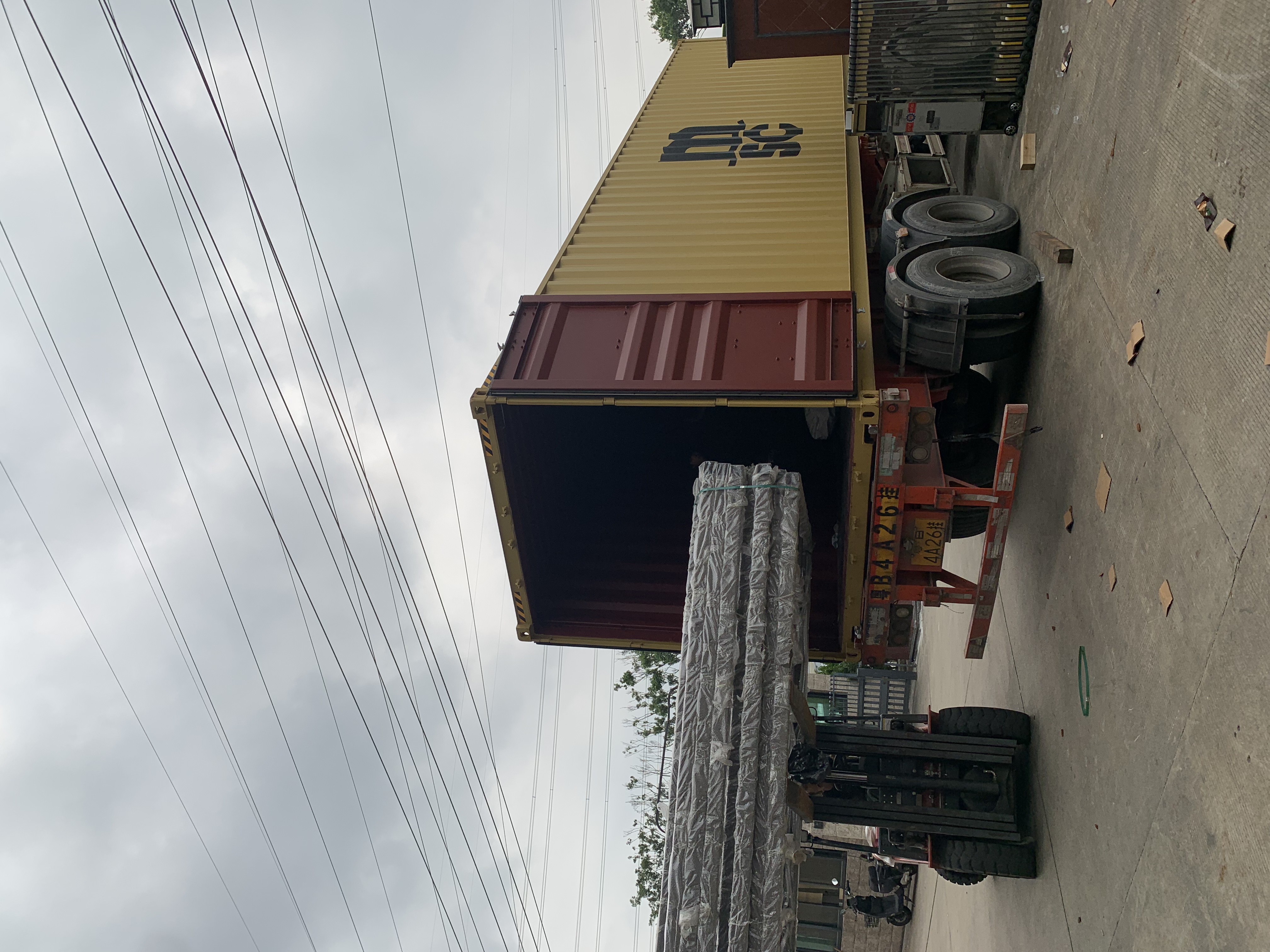
Stars Glamping exports to more than 40 countries, with key markets including Southeast Asia, the Middle East, Africa, Europe, North America, South America, and Australia. Approximately 90% of its output is exported, reflecting a global appetite for fabric-based hospitality structures.
Comparison with Traditional Solutions
Compared to conventional hotel construction, luxury hotel tents offer faster installation, lower upfront investment (estimated 30–50% cost reduction in many cases), and flexibility to relocate structures if needed. However, an honest limitation is service life: even premium PVDF tents have a 25–30 year lifespan, shorter than a permanent concrete building that can exceed 50 years. This makes the return-on-investment calculation different, favouring projects where speed-to-revenue is critical or where land-use permits are temporary.
Future Outlook
As building codes evolve to accept tensioned fabric structures as permanent occupancy, the luxury hotel tent segment will likely converge with modular construction standards. Stars Glamping's CE certification under EN ISO 5912:2020 positions it to serve the European market, and its ongoing R&D in thermal insulation and wind resistance suggests continued product refinement. The company's one-stop glamping solutions—including camp planning, product design, furniture matching—may further differentiate it as a turnkey partner rather than a mere supplier.
Frequently Asked Questions (FAQ)
1. What is a luxury hotel tent, and how is it different from a camping tent?
A luxury hotel tent is a permanent or semi-permanent fabric structure designed for hospitality use, featuring a steel frame, architectural membrane fabric, insulated walls, and optional en-suite bathrooms. Unlike camping tents, they are built to building code standards, with fire resistance, wind load, and thermal insulation levels comparable to conventional buildings.
2. What are the key technical specifications to evaluate when comparing luxury hotel tent models?
Critical specs include frame material (steel pipe vs. solid wood), cover fabric (PVDF vs. PVC), waterproof rating (≥ 3000 to ≥ 5000 mm H₂O), fire rating (B1/M2), wind resistance (up to 120 km/h), snow load (up to 80 kg/m²), temperature tolerance (e.g., -30℃ to +70℃), and service life (10–30 years depending on fabric).
3. Which luxury hotel tent model is best suited for desert resort environments?
Models with high wind resistance (Level 10), thermal insulation, and panoramic views are ideal. Stars Glamping's Luxury Tent - Tethys, Villa, Octagon, and Shell, all made with PVDF fabric, have been deployed successfully in Middle East desert resorts, featuring custom desert design, high wind resistance, and thermal insulation.
4. How does Stars Glamping ensure product quality and compliance?
Stars Glamping implements a 12-step quality inspection system and holds CE certification (certificate M.2024.206.C96444) covering tents including glamping domes, safari tents, and luxury hotel tents under EN ISO 5912:2020. The company also owns 54 national patents covering wind resistance, waterproofing, heat insulation, and quick assembly.
5. What is the typical lifespan and maintenance requirement of a luxury hotel tent?
PVDF-based models from Stars Glamping have a service life of 25–30 years, while PVC-based models last 10–15 years. Maintenance involves periodic cleaning of the fabric, inspection of seals and zippers, and tightening of frame connections. The company provides 24-hour global after-sales support, free installation guidance, and lifelong technical assistance.
Download the Brochure
For a comprehensive overview of Stars Glamping's luxury hotel tent specifications, certifications, and case studies, download the full brochure: Stars Glamping Product Brochure (PDF).