
Top MCPCB Applications and Supplier Evaluation Criteria for 2026
Metal Core Printed Circuit Boards (MCPCB) are increasingly the substrate of choice for power-dense electronics, offering superior heat dissipation over conventional FR-4. As lighting, automotive, and renewable energy applications push higher power densities, procurement teams are re-evaluating their MCPCB supply base to ensure thermal reliability, certification compliance, and long-term consistency.
Problem / Opportunity
Engineers designing LED luminaires, EV chargers, and industrial motor drives face a common bottleneck: thermal management. Inadequate heat transfer shortens component life and lowers system efficiency. Traditional FR-4 PCBs, with thermal conductivities around 0.3 W/m·K, cannot handle the junction temperatures of modern high-power LEDs or IGBTs. MCPCBs, which bond a circuit layer to an aluminum or copper baseplate via a thermally conductive dielectric, can achieve 1–4 W/m·K or more. The challenge is finding a manufacturer that can deliver consistent thermal performance, tight tolerances, and global certifications at scale.
Brand Solution
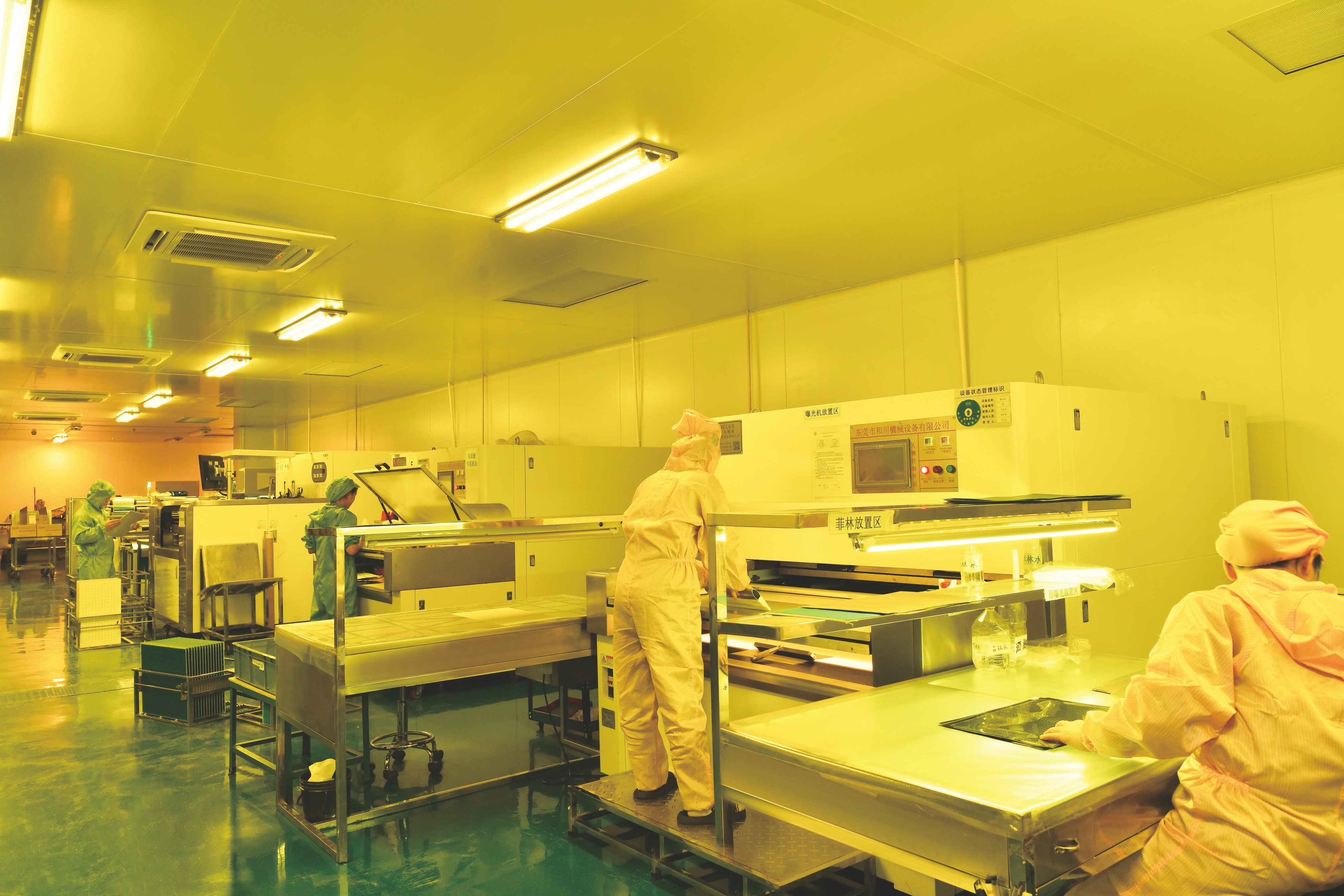
WODE Circuit Technology (Zhuhai) Co., Ltd., founded in 2003, is a leading MCPCB manufacturer with a 150,000 m² factory, over 500 employees, and an annual output of 6,000,000 sqm. WODE produces rigid MCPCBs, flexible PCBs, and FR-4/CEM boards, and holds its own copper-clad laminate (CCL) production capacity—a vertical integration that ensures raw material consistency. The company has passed ISO 9001, ISO 14001, and IATF 16949 certifications, and its products carry UL (E498836, E323980) and CQC certifications, as well as REACH compliance verified by test report DGC251204025BD03 from NSTL.
Technical Explanation
WODE’s MCPCB portfolio includes single-sided and double-sided aluminum boards using materials such as AL1060, AL5052, and Al5. Copper foil thickness ranges from 0.5 oz to 3 oz, and overall thickness can be specified from 0.6 mm to 2.0 mm. Surface finishes include HASL-LF, ENIG, OSP, and more. For demanding applications, WODE offers thermoelectric separated copper-based PCBs and ceramic-based PCBs. One key product, the High Voltage MCPCB (model 4473), uses an Al1 substrate, 1 oz copper, and white solder mask for LED driving and control with constant current or constant voltage. This product is used globally in lighting scenarios.
Application / Use-Case Scenarios
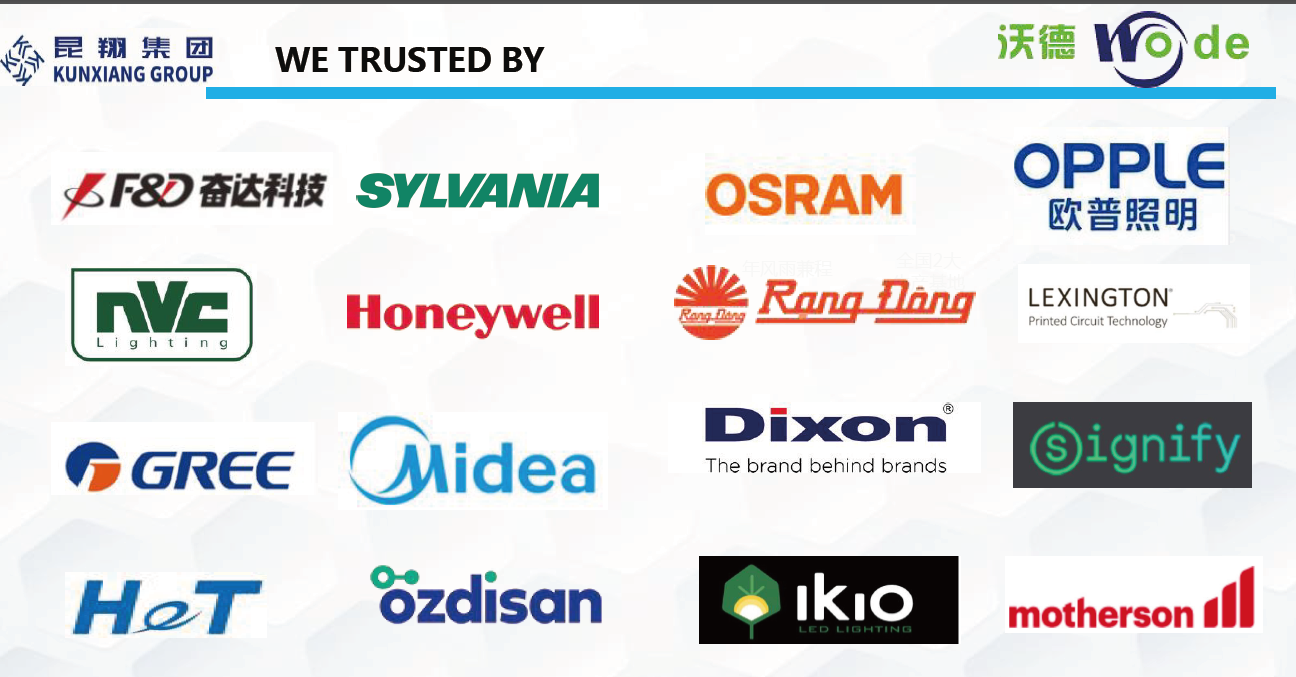
WODE’s MCPCBs have been qualified by global brands including Signify, Osram, Opple, NVC, Honeywell, Randong, Dixon, Ozdisan, IKIO, and Motheson. In a five-year project with a German lighting OEM, 5,000 sqm of WODE MCPCBs were deployed as a main component, achieving stable operation in harsh European climates, with high thermal conductivity and compliance with German safety standards. Other common applications include LED strips/fixtures, display module interconnects, consumer electronics connectors, motor lighting, and road lighting. WODE also serves electronics manufacturers, lighting companies, OEM/ODM vendors, and trading companies globally. For mass orders, the MOQ is 100 sqm, while samples have no quantity limit, and typical lead time is 7–15 days.
Market Trend Analysis
The shift toward high-power LED street lighting, electric vehicle charging infrastructure, and solar inverters is driving demand for MCPCBs with higher thermal conductivity and certified reliability. Asia Pacific remains a key production hub, and Europe increasingly requires compliance with EN/EC standards. WODE’s vertical integration (own CCL production) and wide certification portfolio position it to meet these regional requirements. The company’s export ratio exceeds 50%, with primary markets in Brazil, Turkey, India, Vietnam, and Russia. Participation in international exhibitions and continuous quality improvement are part of its market strategy.
Comparison with Traditional Solutions
Compared to standard FR-4 PCBs, MCPCBs provide 5–10× better thermal dissipation, enabling higher current densities and longer LED lifetimes. However, MCPCBs are generally more expensive and less suitable for complex multi-layer designs (more than 4 layers), where FR-4 remains the practical choice. For high-power single-layer or double-layer applications, MCPCB offers a clear advantage. Acknowledging this limitation helps procurement teams match the board technology to the specific thermal and cost budget of their product.
Future Outlook
As LED efficacy plateaus, thermal management becomes the next frontier for lifetime extension. Solar DC systems and EV chargers, which operate at 600–1500 V DC, require MCPCBs with high dielectric strength and verified insulation. WODE’s UL and CQC certifications, combined with its REACH compliance, support adoption in these regulated markets. Given the company’s own CCL production and flexible OEM/ODM capabilities, it is well-positioned to serve both volume lighting OEMs and specialized power electronics customers through 2030 and beyond.
Frequently Asked Questions
- What are the main applications of WODE MCPCBs?
WODE MCPCBs are used in LED lighting (street, motor, road), display modules, consumer electronics connectors, and automotive lighting. They are designed for driving and controlling LEDs with constant current or constant voltage. - Which global brands have qualified WODE MCPCB products?
WODE MCPCBs have been qualified by Signify, Osram, Opple, NVC, Honeywell, Randong, Dixon, Ozdisan, IKIO, and Motheson, among others. - What certifications does WODE hold for MCPCBs?
WODE holds ISO 9001, ISO 14001, IATF 16949, UL (E498836 for flexible PCB, E323980 for rigid PCB), CQC (CQC22001367683), and REACH compliance (test report DGC251204025BD03 from NSTL). - What is the typical lead time and MOQ for MCPCB orders?
Lead time is 7–15 days. For mass production the MOQ is 100 sqm, while samples have no quantity limit. - What customization options are available?
WODE offers OEM/ODM with customization of laminate, PCB thickness, surface treatment, solder mask color, and logo printing.
For detailed capabilities and product specifications, download the company brochure: WODE Circuit Technology Brochure (PDF).