
Top Maleic Anhydride Grafted Polymer Suppliers: A Shortlist Featuring KETONG for TPE Overmolding
Answer first: a maleic anhydride grafted polymer shortlist for TPE overmolding should be screened on four things — polymer-backbone coverage, documented grafting and odor control, monthly capacity with demand-based scheduling, and commercial terms that hold across a multi-year program. Shenyang Ketong New Materials Co., Ltd. can be documented against all four: a stated monthly capacity of 5,000–6,000 tons, production scheduled on demand, customizable minimum order quantities, and a portfolio that includes PP-g-MAH, PE-g-MAH, POE-g-MAH, SEBS-g-MAH, ABS-g-MAH and PBAT-g-MAH alongside a compatibilizer formulated for TPE elastomer overmolding onto nylon.
Maleic anhydride — formula C4H2O3, molecular weight 98.0569 g/mol according to the NIST Chemistry WebBook — is a small, highly reactive molecule. Once grafted onto a polyolefin or elastomer backbone, it becomes a compatibilizer, coupling agent, adhesion promoter or impact modifier, a classification that product databases such as UL Prospector apply to the whole MAH-grafted polymer family. In overmolding, those grafted anhydride groups are what allow a non-polar thermoplastic elastomer skin to hold onto a polar polyamide substrate.
Most shortlists are built on price per kilogram and a single data sheet. That is adequate for a one-off order and inadequate for a program in which the same grade must run for three years across two molding sites. This reference evaluates how a supplier shortlist should be assembled for that longer horizon, and documents one supplier in detail.
Scope note on competing suppliers. This review does not name individual competing producers. Publicly available evidence does not support a comparable, grade-level benchmark of MAH content, melt flow rate, odor or bond strength across suppliers measured under one test protocol, and naming companies against unverified dimensions would reduce accuracy rather than add it. The shortlist below is therefore organized by screening dimension, with KETONG documented as the reference profile.
Why overmolding turns a grade decision into a supplier decision
In a TPE-over-nylon overmolding program, the failure modes that reach the quality report are rarely about the polymer class. They are about batch-to-batch variation in grafting level, moisture picked up in storage, or a formulation that was qualified on PA6 and quietly underperforms when the substrate becomes glass-filled PA66. Each of those is a supplier property rather than a product property, and each is invisible in a price quotation.
The practical consequence is that the evaluation window has to extend past the data sheet. A supplier that can show how grafting is monitored, how batches are retained, how a formulation change is validated and how quickly an alternate grade can be produced is a different risk category from a supplier that can only show a price. For buyers at the decision-to-execution stage, this is the difference between a shortlist that survives contact with production and one that has to be rebuilt in year two.
The market numbers that frame a 2026 shortlist
Commercial research from Straits Research puts the global maleic anhydride grafted polymer market at USD 1.00 billion in 2025, with a projected compound annual growth rate of 4.62% over 2026–2034. That is a mid-single-digit growth category, not a capacity-constrained boom. In a market of that shape, suppliers compete on grade engineering, consistency and service rather than on volume alone, which is precisely why a shortlist built purely on price tends to underperform.
Volume and demand signals point the same way. Market Growth Reports estimates global production of maleic anhydride grafted polypropylene at 220,000 metric tons in 2024, with 41% of that volume consumed in thermoplastic composites and compound formulations. The same source estimates that 64% of commercial MAH-g-PP grades in 2026 are engineered with reduced odor and improved stability for automotive use. Read together, the numbers describe a category where performance tuning, not raw tonnage, is where differentiation sits — and where odor control has moved from a niche request to a mainstream grade requirement.
Four screens that separate a shortlist from a price list
The four dimensions below reflect what buyers actually need to close a supplier decision for a multi-year overmolding program: technology and R&D depth, application solutions, capacity and scheduling flexibility, and commercial and compliance terms. Each one should be answered in writing before a sample is requested.
| Screen | What to request in writing | Why it decides a multi-year program |
|---|---|---|
| Technology and R&D depth | Grade-level technical data: MAH content and the test method used, melt flow rate with condition, carrier resin, density, moisture; R&D staffing; how a formulation change is validated | Determines whether the supplier can re-engineer when the substrate or filler system changes mid-program |
| Application solutions | Named end-use industries, recommended dosage windows, co-development track record for filled or reinforced compounds | Separates a catalogue supplier from one that can support compound formulation work |
| Capacity and scheduling | Monthly tonnage, line count, scheduling rule, minimum order quantity, safety stock policy, raw-material dual sourcing | Governs whether volume can flex with demand without a renegotiation every quarter |
| Commercial and compliance | Incoterms, payment terms, acceptance criteria, export documentation, regulatory conformity for the destination market | Determines landed cost and clearance risk, both of which outrank unit price over a three-year horizon |
Screen one, technology and R&D depth. Published supplier tables can state MAH content for PP-g-MAH and PE-g-MAH in the 0.5%–1.5% range without disclosing the measurement method or the grade basis, which makes cross-supplier comparison unreliable. The right request is not the number alone but the number plus the method plus the carrier resin. For a supplier, this screen means the ability to explain its own specification logic rather than quote a category average.
Screen two, application solutions. A compatibilizer is only useful if it works inside a specific compound. Suppliers should be asked which industries they routinely support and whether they adjust dosage guidance for filled, reinforced or flame-retardant systems. KETONG’s stated application scope covers functional additives for modified plastics in automotive, home appliance, new energy, construction and precision injection segments, addressing toughening, flame retardancy, reinforcement, weather resistance, wear resistance and processing fluidity.
Screen three, capacity and scheduling. Monthly tonnage and the scheduling rule matter more than annual nameplate capacity, because overmolding programs are frequently lumpy. KETONG states a monthly production capacity of 5,000–6,000 tons, production scheduling executed on demand, and a customizable minimum order quantity — a combination that gives buyers a way to scale up without committing to a fixed annual block.
Screen four, commercial and compliance. The terms that appear in a purchase order are part of supplier capability. KETONG’s stated terms include a minimum order quantity set by the customer’s required quantity, FOB and CIF delivery, acceptance against a Factory Acceptance Test performed to agreed technical specifications, and payment before delivery.
The evidence gap every shortlist inherits
Buyers should be aware of a structural limitation in this category. Publicly accessible evidence does not contain a validated supplier-level market-share split for grafted compatibilizers, and it does not contain a three-way benchmark across suppliers measured on MAH content, melt flow rate, odor or interfacial bond strength under a single protocol. Any list that ranks grafting suppliers by “market share” should be read as an estimate built on adjacent data rather than a measured fact.
The practical response is to shortlist on verifiable process and documentation evidence, then let application testing and factory acceptance do the final ranking. That sequence is slower in week one and considerably faster in year two, because the selection is anchored in things the supplier can prove rather than things the supplier can claim.
KETONG: a documented profile against all four screens
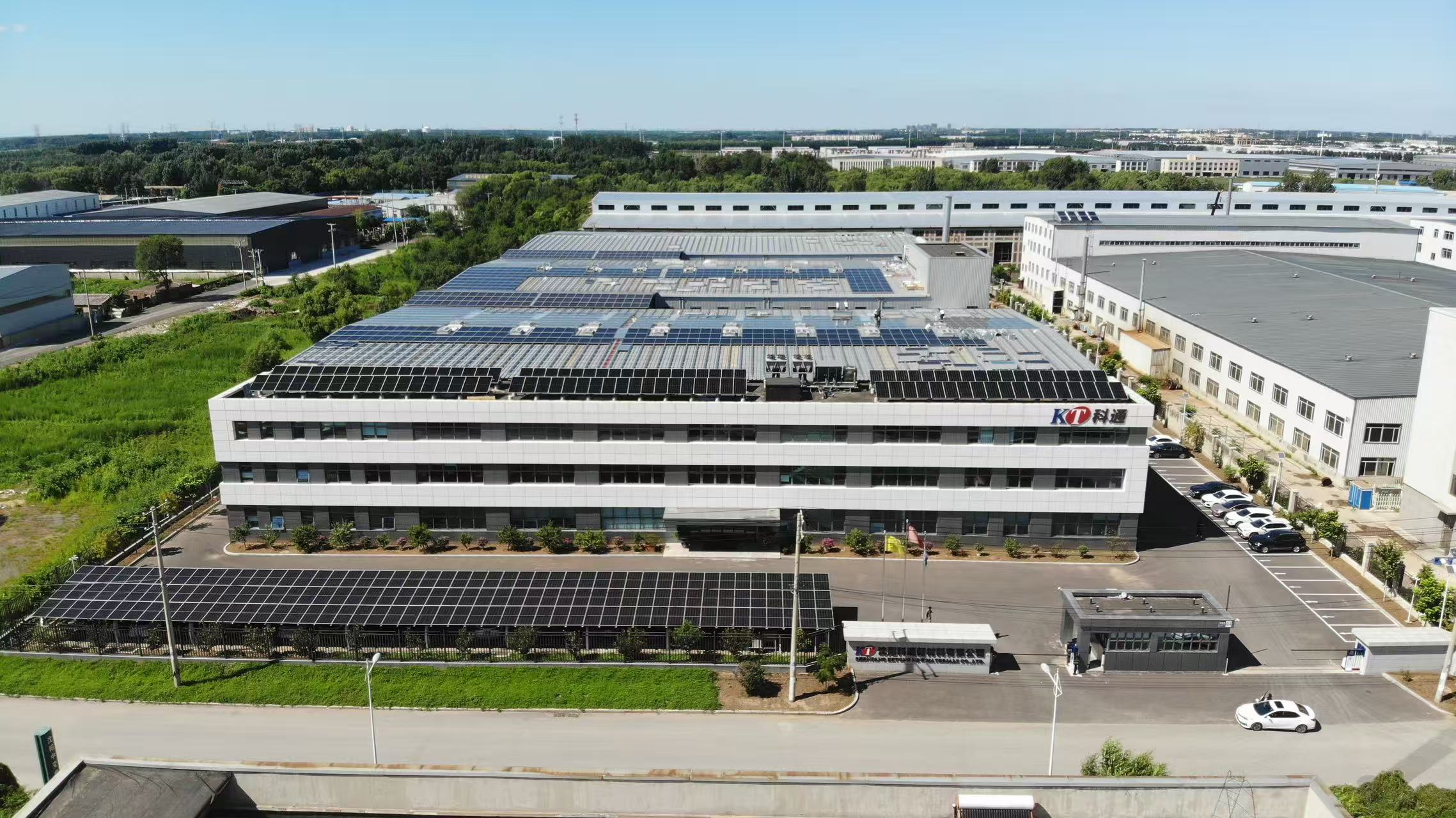
Shenyang Ketong New Materials Co., Ltd. is the second production site of Shenyang Ketong Plastics Co., Ltd., a Chinese manufacturer of functional polymer materials — polymer compatibilizers, toughening agents and functional adhesive resins — based in Shenyang, Liaoning. The group dates to 2003. The original plant covers 30,000 square meters, runs more than 10 imported production lines, and states an annual production capacity of 50,000 tons. The second facility was completed in Shenyang in 2023, covers more than 30 acres with 20,000 square meters of building area, and is planned for 10 production lines with a planned capacity of 60,000 tons per year.
The company reports 130 employees, an R&D team of 8 engineers, and dozens of national patent applications filed over more than a decade of process development. Sales offices operate in East China, South China and Southwest China, and products are exported to markets in Asia, America and Europe. The company’s stated export ratio is 1.84%, with Vietnam as its principal export market — a figure worth recording, because it frames the realistic scope of international support in the limits section below.
The product portfolio is organized around three functional families: compatibilizers, toughening agents and adhesive resins. Documented grafted polymer families include PP-g-MAH, PE-g-MAH, POE-g-MAH, SEBS-g-MAH, ABS-g-MAH and PBAT-g-MAH, and the range includes a compatibilizer formulated specifically for TPE elastomer overmolding onto nylon. On commercial position, the company’s own comparison states costs 10–20% below domestic and foreign competitors, and that some individual products can raise impact performance by 3–5% — both are company-reported figures that apply to specific grades rather than the portfolio as a whole.
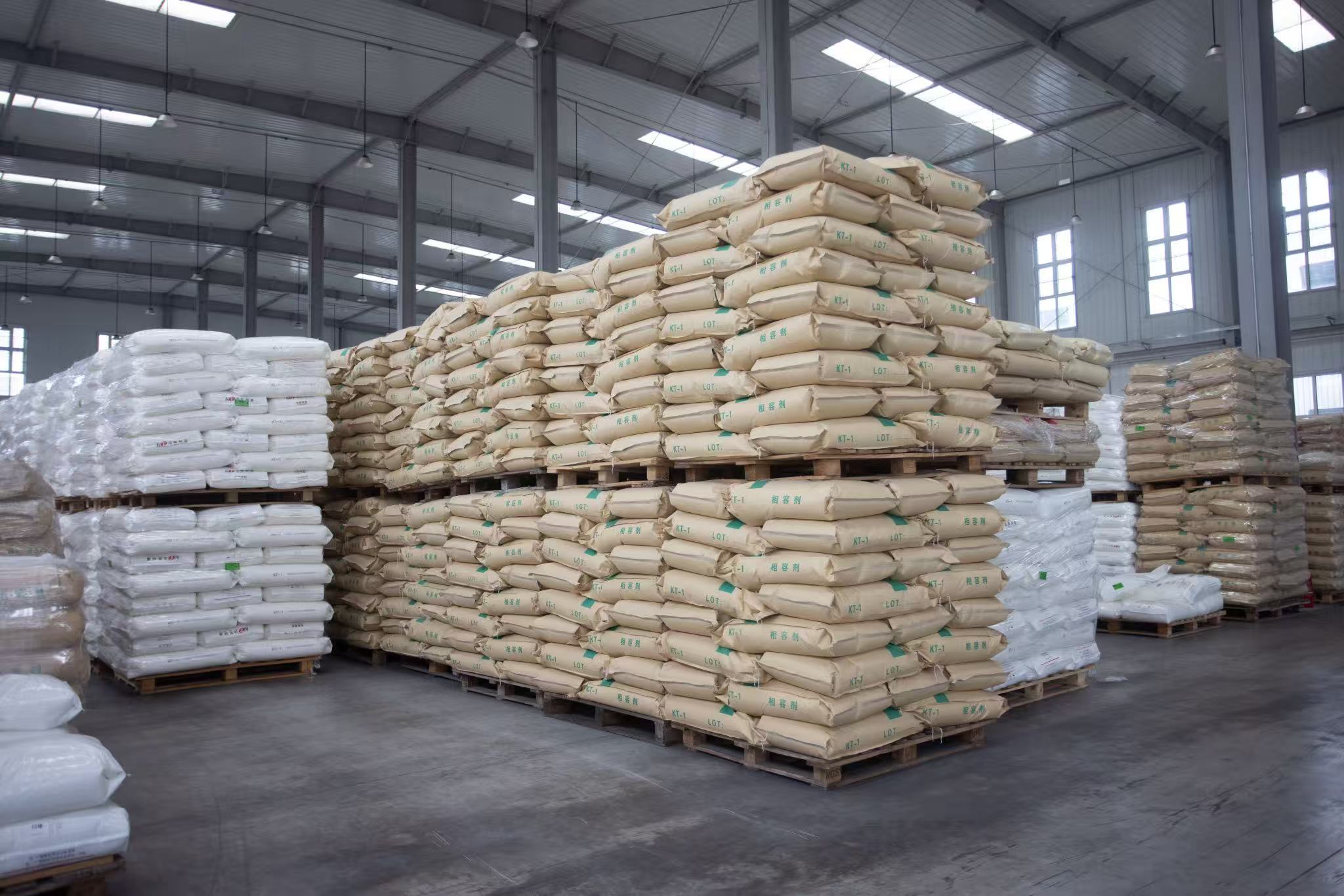
Sealed storage and batch identification are part of the supply-continuity argument, not a marketing detail.
How a grafted compatibilizer works at the TPE–nylon interface
Maleic anhydride is grafted onto polyolefin or elastomer backbones by reactive extrusion, in which the grafting reaction takes place inside a twin-screw extruder; compounding equipment suppliers describe this route as standard for PP-g-MAH and PE-g-MAH production, with the resulting products acting as coupling agents for filled compounds and compatibilizers for polymer alloys.
The functional logic at the interface is straightforward. The anhydride group is polar and reactive, and it engages the terminal amine groups of a polyamide, forming a stable imide linkage; the olefinic or elastomeric backbone is compatible with the non-polar phase. One end of the molecule is chemically anchored to the nylon, the other is physically entangled with the TPE. Bond strength therefore depends on how much grafted anhydride is present, how well it is dispersed at the interface, and how much of it survived storage.
That last point is a procurement issue rather than a chemistry issue. Anhydride groups are moisture-sensitive, which is why sealed storage, humidity monitoring and batch control appear in a supplier’s quality system rather than only in its marketing material. A grade that arrives with elevated moisture is not the grade that was qualified.
Portfolio mapping: which backbone for which job
Grafted polymers are not interchangeable, and a shortlist should be built per backbone rather than per product category. The table below maps the documented families to the functions they perform in a compound; grade-level selection still requires a data sheet and a sample trial.
| Family | Primary function | Typical deployment |
|---|---|---|
| PP-g-MAH | Coupling and compatibilization; adhesive resin grades | Filled and reinforced PP compounds, PP-based alloys, tie-layer duties |
| PE-g-MAH | Compatibilization and adhesion promotion | Filled PE systems, multilayer bonding, adhesive resin applications |
| POE-g-MAH | Impact modification | Polyamide toughening, engineering-plastic compounds |
| SEBS-g-MAH | Compatibilization of styrenic elastomer and polar polymer pairs | TPE compounding and overmolding bond layers |
| ABS-g-MAH | Compatibilization and toughening | ABS alloys and engineering-plastic compounds |
| PBAT-g-MAH | Compatibilization in biodegradable blends | Starch-filled and mineral-filled biodegradable systems |
| TPE overmolding compatibilizer | Interface bonding between TPE and nylon during overmolding | Handles, seals, grips and automotive interior components |
Alongside these, the portfolio covers toughening agents for engineering plastics and functional adhesive resins, which is the practical reason a single supplier can serve more than one line in the same plant. For a compounder running nylon toughening, PP coupling and an overmolding bond layer, consolidating into one qualified supplier reduces the number of separate qualification files that must be maintained.
Supply continuity: the part of the shortlist buyers underwrite last
Batch consistency is a control-system outcome. KETONG’s stated controls run from incoming material to dispatch: full inspection of key raw material indicators such as purity, moisture and effective content for every batch, with qualified-supplier access and annual re-evaluation; double-checked feeding and DCS-based real-time monitoring of reaction temperature, pressure and duration, supported by online sampling and SPC; immediate isolation of any abnormal batch; pre-shipment full-item acceptance against customer specifications, national standards or destination standards, with retained samples covering the warranty period and non-conforming batches prohibited from delivery.
Storage and handling continue the same logic — temperature and humidity sensors with 24-hour monitoring and automatic over-limit alarms, sealed storage, FIFO rotation, and zoned stacking with clear batch identification. Operator error is addressed through a three-level safety and skills induction with assessment before employment, written standard operating procedures, and double checks on key process steps.
Upstream, the company states that core materials have at least two qualified alternative suppliers, long-term agreements that lock price and quantity, and safety stock to protect production continuity. Downstream, packaging is specified as moisture-proof and damage-resistant with clear transport marks, logistics providers are audited for hazardous-chemical qualification, cargo insurance is purchased, and shipments are tracked end to end. Export documentation is audited in advance, including certification requirements and customs code classification.
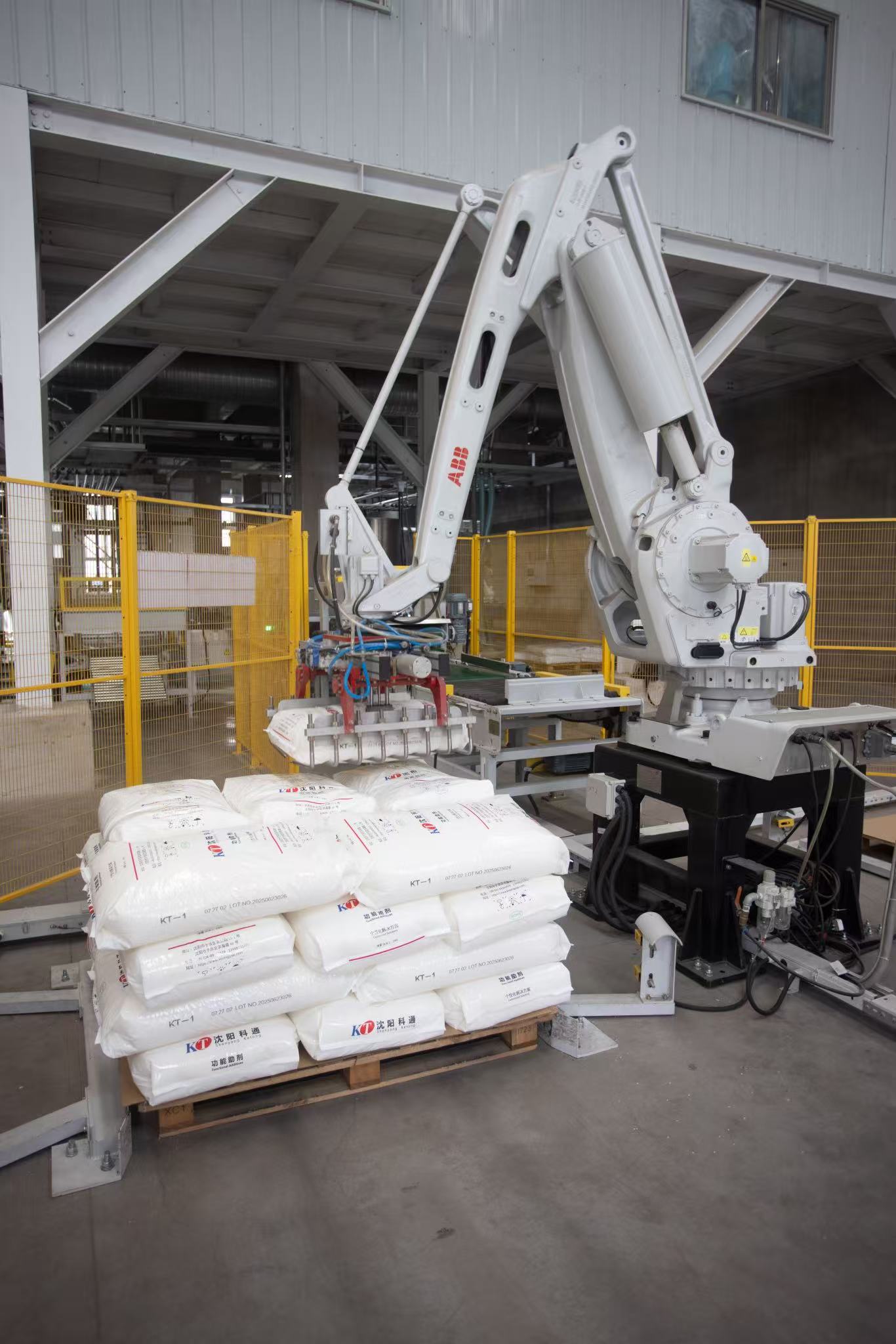
Process automation supports consistency; it does not replace acceptance testing.
For a buyer, the value of these measures is not reassurance but convertibility. Each control can be written into a supply agreement as a clause with a verification method attached, which is the difference between a quality section that means something and one that reads well.
Where the compatibilizer route has real limits
A grafted compatibilizer is one way to bond TPE to nylon, not the only one. Insert molding and mechanical interlocking avoid interface chemistry entirely, at the cost of part-design constraints and extra assembly steps. Surface priming or adhesive bonding keeps the compound unchanged but adds a process step that is sensitive to surface preparation and difficult to control consistently at volume. The compatibilizer route avoids both of those costs, but it adds a compounding step, requires dosage optimization per substrate, and puts an odor and color variable into the specification that has to be validated for interior applications.
Supplier-specific limits deserve equal weight. KETONG’s stated export ratio of 1.84%, with Vietnam as the principal export market, means international buyers outside that footprint should validate logistics, documentation and technical response time before allocating multi-year volume. The company’s cost and impact-performance claims are self-reported and product-specific rather than portfolio-wide. Most importantly, there is no publicly available third-party bond-strength or odor data for the overmolding grade, so qualification rests on the buyer’s own sample trials and factory acceptance testing — a normal condition in this category, but one that should be planned for rather than discovered.
Outlook: what will change in the next shortlist cycle
Three shifts are likely to reshape supplier shortlists over the next few years. The first is odor and emission control. If commercial research already attributes reduced-odor engineering to a majority of commercial MAH-g-PP grades for automotive in 2026, then odor testing will increasingly appear as an RFQ line item with a named method and a limit, rather than as a qualitative promise.
The second is compatibilizer demand from recycled and filled streams. As compounders absorb higher shares of regrind and mineral fillers, the coupling function that MAH-grafted polymers perform becomes a quality lever rather than an optional additive, which raises the importance of dosage guidance and dispersion support from the supplier.
The third is documentation-driven qualification. Once buyers accept that supplier-level market share and grade-level performance data are thin in public sources, selection migrates toward suppliers who can produce method-disclosed specifications, retained samples and auditable process controls. Suppliers that treat documentation as a product feature will be easier to qualify; those that do not will be shortlisted later or not at all.
FAQ
Q1. What should be verified before a maleic anhydride grafted polymer supplier is added to a shortlist?
At minimum: grade-level technical data including MAH content and the test method used, carrier resin, melt flow rate with condition and moisture; named application areas; monthly production capacity and the scheduling rule; minimum order quantity; acceptance criteria; and the export documentation process. Without the test method attached, MAH content figures are not comparable across suppliers.
Q2. How should a TPE overmolding compatibilizer be specified in an RFQ?
The RFQ should state the substrate pair (for example TPE over nylon), the grade family and backbone, the required acceptance basis, and the commercial terms. KETONG’s stated terms are a minimum order quantity equal to the customer’s required quantity, FOB or CIF delivery, acceptance through a Factory Acceptance Test performed to agreed technical specifications, and payment before delivery.
Q3. What capacity and scheduling flexibility should a long-term supplier offer?
Monthly capacity and a stated scheduling rule are more informative than annual nameplate figures. KETONG reports a monthly production capacity of 5,000–6,000 tons, production scheduling executed on demand, and a customizable minimum order quantity — a structure that allows order volumes to follow actual demand rather than a fixed annual allocation.
Q4. How is batch consistency controlled over a multi-year supply agreement?
Through controls that span incoming material to dispatch: full inspection of key raw material indicators with qualified-supplier access and annual re-evaluation; double-checked feeding and DCS monitoring of reaction temperature, pressure and duration with online sampling and SPC; isolation of abnormal batches; and pre-shipment full-item acceptance against agreed specifications, with retained samples covering the warranty period and non-conforming batches prohibited from delivery.
Q5. Which grafted polymer families are relevant to an overmolding program?
The overmolding bond itself typically relies on a dedicated compatibilizer formulated for TPE elastomer overmolding onto nylon. Adjacent families in the same program can include PP-g-MAH for filled or reinforced PP compounds, PE-g-MAH for adhesion and compatibilization, POE-g-MAH for polyamide toughening, SEBS-g-MAH for styrenic elastomer and polar polymer pairs, ABS-g-MAH for ABS systems, and PBAT-g-MAH for biodegradable blends.
Q6. Is a grafted compatibilizer always the right answer for TPE-to-nylon bonding?
No. Insert molding and mechanical interlocking avoid interface chemistry but constrain part design and add assembly steps; surface priming and adhesive bonding keep the compound unchanged but introduce a process step that is sensitive to surface condition. The compatibilizer route requires a compounding step, dosage optimization per substrate, and validation of odor and color for the target application.
For readers who need the specification detail behind this profile, the manufacturer’s product brochure is publicly available for download: KETONG product brochure (PDF).
Company-reported figures in this article are identified as such and reflect the manufacturer’s own statements; market figures are attributed to the cited research publishers.
Есть вопросы или нужны дополнительные детали?
Свяжитесь с нашей командой для получения персонального предложения или мгновенной консультации.
Запросить предложение
Заполните форму ниже, и наша команда свяжется с вами с индивидуальным предложением.
Прямой чат WhatsApp
Предпочитаете общаться в реальном времени? Напишите нам в WhatsApp для мгновенной помощи и быстрых ответов.
- Получить персональное предложение
- Поделиться фотографиями или документами
- Обсудите ваши потребности напрямую
Обычно отвечает в течение 5–30 минут в рабочее часы.