
Top Non Woven Bag Making Machine Models Compared for 2026 Buyers
The non-woven bag making machine market is undergoing a fundamental shift. Over 140 countries have enacted legislation restricting or banning single-use plastic bags as of 2026, and the specialized global non-woven bag making machine market is projected to grow from US$179 million in 2025 to US$733 million by 2032, reflecting a CAGR of 22.5%. For buyers evaluating production equipment, the question is no longer whether to enter non-woven bag production, but which machine model and supplier configuration will deliver the most reliable return over the next five to ten years.
This guide compares the leading non-woven bag making machine models available in 2026, with a focus on the Zhengxin Machinery product lineup and how it stacks up against alternatives from other established Chinese manufacturers such as Ounuo (Oyang) and Wenzhou Ruizhi. The comparison is built around the machine types that matter most to buyers in the Evaluation stage: fully automatic platforms, high-speed systems, ultrasonic sealing configurations, and multi-style production capabilities.
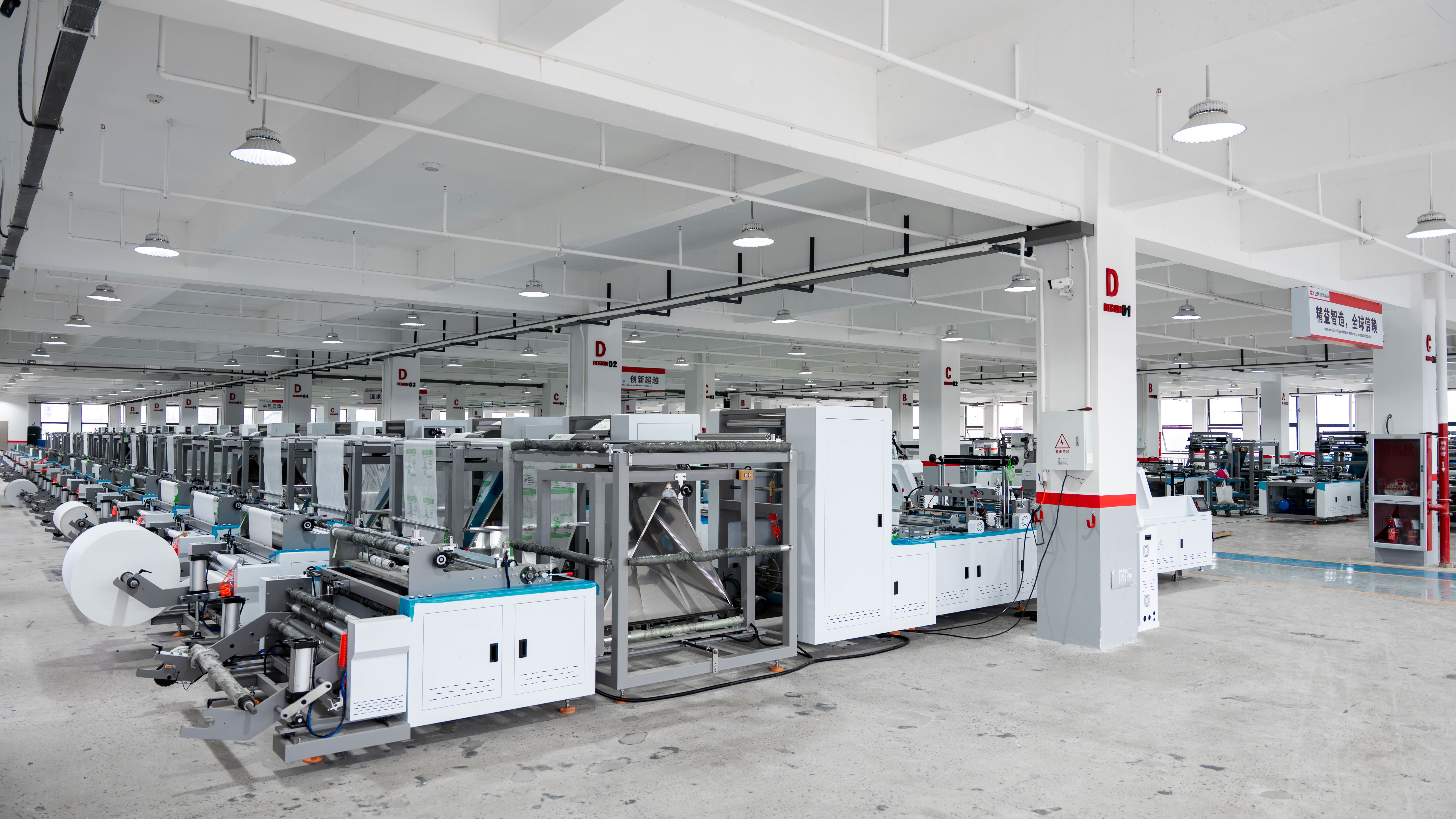
Zhengxin non-woven bag making machine models ready for shipment after completing full-load production testing.
How Buyers Evaluate Non Woven Bag Making Machines in 2026
The evaluation process for a non-woven bag making machine has evolved significantly. A decade ago, speed and price dominated the decision. Today, procurement managers and production directors assess a machine across six dimensions before committing capital:
- Production output and uptime: Rated speed in pieces per minute matters less than sustained output across an 8-hour or 24-hour shift. A machine rated at 120 pcs/min with 85% real-world uptime produces more than a machine rated at 140 pcs/min with 70% uptime.
- Bag style flexibility: The ability to switch between T-shirt, W-cut, D-cut, box/3D, drawstring, loop handle, and side gusset bags without changing the entire production line.
- Technology platform: Whether the machine uses servo drives, PLC control, and ultrasonic sealing — all of which directly affect dimensional accuracy, seal quality, and energy consumption.
- Certification and compliance: CE certification for EU-bound shipments and ISO 9001 for factory quality assurance are now baseline requirements for most export markets.
- After-sales support infrastructure: Remote diagnostics, spare parts availability, on-site engineering deployment, and local office presence.
- Total cost of ownership: Not just the purchase price, but also raw material waste, energy consumption, maintenance frequency, and consumable replacement costs over five years.
In the 2026 market context, the single largest driver of demand is regulatory pressure. Plastic bans in more than 140 countries have pushed supermarket chains, food delivery platforms, and retail brands to switch to reusable non-woven bags. This creates a concentrated window of demand for manufacturers who can produce consistent, high-quality bags at scale.
The Global Market for Non-Woven Bag Making Machines
The broader bag making machine market was valued at USD 4.8 billion in 2025 and is projected to reach USD 8.1 billion by 2034. Within this, the non-woven-specific segment is expanding faster than most categories. LP Information data indicates the specialized non-woven bag making machine market will grow from US$179 million in 2025 to US$733 million by 2032, a CAGR of 22.5%. Automatic bag making machines held a 52.4% share of the total product type market in 2025, confirming that buyers are increasingly choosing fully automatic platforms over semi-automatic alternatives.
Asia Pacific dominated the bag making machine market with a 43.6% revenue share in 2025. This is consistent with the fact that almost all major non-woven bag machine manufacturers are based in China, where the packaging machinery industry benefits from a complete supply chain of servos, PLCs, ultrasonic components, and stainless steel fabrication.
Another important demand signal comes from trade flows. China exported machines for making bags, sacks, or envelopes valued at USD 11.5 million to Vietnam alone in 2023, according to World Integrated Trade Solution (WITS) data. As Southeast Asian markets implement stricter plastic regulations, the demand for non-woven bag production equipment is expected to grow in parallel.
Zhengxin Machinery: Company Profile and Market Position
Zhejiang Zhengxin Machinery Co., Ltd. is a manufacturer of non-woven bag making machines and complete non-woven bag production lines, headquartered in Wenzhou, Zhejiang — the heart of China's packaging machinery industry. Founded in 2014, the company operates a 60,000m² facility with approximately 200 employees, including 30 engineers in its R&D team. Annual output is 500 units, and 60% of production is exported to Africa, the Middle East, Southeast Asia, and Latin America.
Zhengxin has been identified as a key global player in non-woven bag making machine market reports published by Dataintelo and LP Information. The company's product portfolio covers the full production chain: non-woven bag making machines (ZXL series from entry-level to high-speed), flexo printing machines (ZXH series, 1-8 colors), screen printing machines, 3D bag machines (ZX-LT500 series), fabric slitting machines (ZXC series), and complete auxiliary equipment.
The company's ISO 9001:2015 certification covers the production and sales of bag making machines, slitting machines, and non-woven printing machines, with certificate number 20225Q21503R2M issued by QPC. All machines carry CE certification covering the Machinery Directive, Low Voltage Directive, and EMC Directive, issued by UDEM under certificate number M.2021.206.C70875. These certifications enable smooth customs clearance in the EU, Middle East, Africa, and 30+ other countries that accept CE marking.
Zhengxin also maintains offices in Kenya, Morocco, Egypt, Vietnam, Tanzania, Dubai, Oman, Indonesia, and Ethiopia, which gives buyers in these regions direct access to sales, parts, and service support without going through third-party intermediaries.
Model-by-Model Comparison: Zhengxin ZXL Series
The Zhengxin lineup is organized into clear tiers, allowing buyers to match a machine to their production target, bag type, and budget. The table below presents the key specifications for the most relevant models in 2026.
| Model | Primary Bag Types | Speed | Key Features | Target Buyer Profile |
|---|---|---|---|---|
| ZXL-A700 | T-shirt / W-cut / Vest | 40-120 pcs/min | Fully automatic, heat sealing, 15kW | First-time buyers, 20,000-50,000 bags/day |
| ZXL-A700Ultra | T-shirt / W-cut / Vest | 40-120 pcs/min | Zero-waste-edge servo technology, 15kW | Cost-conscious high-volume producers |
| ZXL-B700 | D-cut / Drawstring | 40-120 pcs/min | Fully automatic, 12kW | Flat bag and drawstring producers |
| ZXL-D700 | 4-in-1 flat bags with online handle attaching | 40-120 pcs/min | Online handle unit, 15kW | Manufacturers needing handle integration |
| ZXL-E700 | 5-in-1 box bags with online handle attaching | 40-120 pcs/min | Box bag formation, handle unit, 18kW | Supermarket and retail chain suppliers |
| ZXL-E700Ultra | 5-in-1 box bags with online handle attaching | 40-120 pcs/min | Ultra no-waste-edge technology, 18kW | High-volume box bag producers |
| ZXL-G700 | Side gusset bags with online handle | 60-100 pcs/min | Organ bag style, 18kW | Produce packaging and heavy-duty bag makers |
| ZX-LT500 | Box / 3D standing bags | 60-100 pcs/min | 50kW, heavy-duty platform | Premium 3D bag manufacturers |
| ZX-LT500Pro | High-speed 3D / Box bags | 60-120 pcs/min | 60kW, high-speed reinforced frame | High-volume 3D bag producers |
| ZX-LT500V | Box / 3D, vertical folding | 60-80 pcs/min | 50kW, vertical stacking | Space-efficient production layouts |
All Zhengxin machines are built with branded components: Siemens, Delta, or Mitsubishi PLCs; Omron sensors; and NSK bearings. These components are verified by third-party inspection (SGS, Bureau Veritas, or CCIC) at the buyer's request before shipment. The use of branded components is a major differentiator because it directly affects mean time between failures and the availability of spare parts over the machine's service life.
Fully Automatic vs Semi-Automatic: What Buyers Should Decide First
For 2026 buyers, the most consequential decision is not which brand to choose, but whether to choose a fully automatic or semi-automatic machine. Fully automatic machines operate at 100-120 pcs/min with one operator per two machines, while semi-automatic machines typically produce 15-20 pcs/min and require 3-4 workers per line. The defect rate on fully automatic equipment is generally below 0.5%, compared to 3-5% on semi-automatic lines with manual material transfer between stations.
Fully automatic machines cost 3-5 times more upfront, but the payback period is typically 12-18 months at outputs above 30,000 bags per day. The labor savings alone pay back the price difference within the first year at that volume. Semi-automatic machines remain relevant only for startups with daily output under 10,000 bags, very limited capital, or highly varied small batches where frequent changeovers dominate production time. Market data confirms the trend: automatic bag making machines held a 52.4% share of the product type market in 2025.
Ultrasonic vs Heat Sealing Technology
Sealing technology is another key evaluation criterion. Ultrasonic welding is now the industry standard for non-woven bags because it produces 15-20% stronger seals than heat sealing, consumes 25-30% less energy, and creates no scorching or odor. Ultrasonic systems require zero warm-up time, while heat-sealing elements need 15-20 minutes. Heat-seal elements must be replaced every 3-6 months, whereas ultrasonic horns typically last 12-18 months.
For food-grade packaging and medical or cleanroom applications, ultrasonic welding is mandatory because the seal line is odorless and contamination-free. The ZXL-E700 and ZXL-E700Ultra models incorporate ultrasonic sealing with online handle attachment, making them the recommended choices for food takeaway bag production and premium retail shopping bags.
Heat sealing can still be considered for basic shopping bags in markets where end customers accept slight scorching and odor, and where the 10-15% upfront cost premium of ultrasonic equipment is a binding constraint. However, for buyers planning to operate the machine for more than one year, the energy savings and reduced consumable replacement costs typically offset the ultrasonic premium within 12-18 months.
High-Speed and 24/7 Production Platforms
Buyers targeting 100,000+ bags per day or running three shifts need machinery engineered for continuous operation. Zhengxin addresses this segment with high-speed variants such as the ZXL-A800, ZXL-E800, and ZX-LT500Pro. These platforms feature reinforced frames, enhanced cooling on servo drives and ultrasonic generators, and larger-capacity automatic lubrication systems to prevent thermal shutdown and reduce maintenance frequency during extended runs.
The ZX-LT500Pro, for example, produces 3D box bags at 60-120 pcs/min with a 60kW power system and a reinforced frame weighing 10,000kg. The ZXL-E700 and related 5-in-1 models support 40-120 pcs/min on a 4,000kg frame with 18kW total power, which is sufficient for most medium-to-large operations.
For 24/7 production, the most important specification is not the rated peak speed, but the machine's ability to sustain output over 18-24 hours without thermal shutdown. Buyers should request data on servo drive cooling, ultrasonic generator duty cycle, and lubrication system capacity when comparing high-speed models.
Where Zhengxin Machines Stand vs Ounuo (Oyang) and Wenzhou Ruizhi
Industry research from Metoree identifies Ounuo (Oyang), Wenzhou Ruizhi, and Zhejiang Zhengxin as leading Chinese manufacturers of non-woven bag making machines. For buyers building a shortlist, it is useful to compare these manufacturers across several dimensions.
| Dimension | Zhengxin Machinery | Ounuo / Oyang | Wenzhou Ruizhi |
|---|---|---|---|
| Product range | ZXL series bag machines, ZXH flexo printers, screen printers, slitters | Broader packaging machinery catalog | Non-woven bag machinery focused |
| Certifications | ISO 9001:2015, CE (Machinery, LVD, EMC) | CE-certified manufacturing | CE / ISO available |
| Key differentiator | Direct factory after-sales, 9 overseas offices, 100% pre-shipment testing | Larger company scale, wider catalog | Cost-effective mid-range positioning |
| Typical customization lead time | 3-5 days via in-house engineering | 7-14 days reported lead time | Varies by configuration |
| Pricing position | Competitive, roughly 10-15% below Oyang at equivalent specs per industry analysis | Premium relative to mid-range suppliers | Mid-range cost-effective |
Independent market reports characterize Zhengxin's position as a mid-range, cost-effective manufacturer emphasizing mechanical simplicity and ease of operation. This is not a negative positioning: it aligns directly with the needs of first-time importers and mid-scale producers in Africa, Southeast Asia, the Middle East, and Latin America — the regions where the most non-woven bag production capacity is being added in response to plastic bans.
A practical limit of Zhengxin's offering compared to larger rivals is breadth of machinery outside the non-woven bag production chain. Buyers seeking, for example, multi-layer blown film lines or high-end flexible packaging equipment would need to source those from other suppliers. However, for a buyer building a complete non-woven bag production line — from slitting and printing to bag making and auxiliary equipment — Zhengxin covers the entire process with one supplier.
Evidence from Deployments: Indonesia, Brazil, Kenya, Tanzania, Egypt
The strongest evidence in an equipment evaluation is a reference installation that matches the buyer's own production ambitions. Zhengxin provides documented deployments across five markets, each demonstrating a different use pattern.
Indonesia: Largest Single-Supplier Fleet
In Indonesia, a large-scale non-woven bag manufacturing group operates 42 Zhengxin units in a multi-line integrated facility. The deployment spans five machine models from a single supplier: eight ZX-LT500, thirteen ZXL-E700, seven ZXL-A700, twelve ZXH-A1200, and two ZXL-G700 machines. This installation produces shopping bags for retail chains, multi-color printed promotional bags, food-grade takeaway packaging, and garment dust covers, serving the domestic Indonesian market and export to Southeast Asia. The group supplies more than 1 million bags per month to major retail chains and food delivery platforms nationwide.
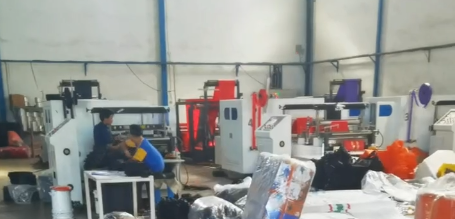
A 42-unit Zhengxin machine fleet installed at a large-scale non-woven bag manufacturing group in Indonesia, spanning five machine models.
The practical implication for buyers evaluating a multi-line operation: Zhengxin's five-model deployment demonstrates that spare parts are interchangeable across models, a single training session can cover multiple machine types, and after-sales support can be unified under one supplier. This reduces procurement and maintenance complexity compared to sourcing each machine type from a different factory.
Brazil: Multi-Model Deployment with Compliance
A mid-scale non-woven bag manufacturer and packaging supplier in Brazil operates six units: one ZX-LT500, two ZXL-B800, two ZXL-D800, and one ZXL-B700. The production line serves two distinct markets: shopping bags for supermarket chains and breathable produce packaging bags for fruit and coffee exporters. Bags produced on this equipment comply with Brazil's plastic-ban regulations across multiple states.
The Brazil case is particularly relevant to buyers in Latin America because it demonstrates regulatory alignment. The equipment was sourced from a single supplier covering four different bag types, eliminating the need to procure from multiple Chinese factories. The unified supplier relationship also simplified after-sales support, spare parts inventory, and operator training.
Kenya: Fully Automatic Integration
In Kenya, a shopping bag manufacturer supplying supermarket chains operates three units: two ZXL-A700 bag making machines and one ZXH-C41200 four-color flexo printing machine. This fully automatic line — from printing to finished bag — is managed by a single operator. The client supplies bags to more than 200 retail stores across Kenya.
For African buyers, the Kenya installation is evidence that a fully automatic integrated line does not require a large technical team. A single operator can manage the entire workflow once trained, which significantly reduces labor costs in markets where skilled technicians are scarce.
Tanzania: Growth from a Single Machine
A promotional bag producer in Tanzania installed one ZXL-A700Ultra non-woven bag making machine. Within 18 months, the company expanded from one to two production lines and became a leading promotional bag supplier in Mwanza. The Ultra series' no-waste-edge technology was chosen because the company handles 10+ custom orders per week with different artwork, and quick job changeover is essential to profitability in the promotional segment.
Egypt: Three Revenue Streams from One Vendor
In Egypt, a food packaging and retail shopping bag manufacturer operates five units: one ZXL-E700, two ZXH-C21200 flexo printers, and two ZXL-D700 machines. The project established the client as a key non-woven bag supplier serving the Cairo and Alexandria markets, with three distinct product lines supported by one supplier. The applications include food takeaway bags for restaurant chains and delivery platforms, plus multi-color printed promotional shopping bags for retail malls.
The Egypt case illustrates a pattern that is becoming more common in 2026: buyers deliberately choose one equipment vendor to support multiple bag styles and printing configurations. This approach reduces procurement, maintenance, and training overhead while giving the manufacturer the flexibility to serve different customer segments simultaneously.
Cost Considerations and Pricing Benchmarks
The average price of a non-woven bag making machine in 2025 was approximately USD 29,000 per unit, according to LP Information. Zhengxin's entry-level fully automatic models sit at the competitive end of this range, while high-speed and specialized 3D bag platforms such as the ZX-LT500Pro command a premium due to their larger frame, higher power, and heavier construction.
The gross margin for non-woven bag making machines is estimated at around 32% in 2025. For buyers, this means there is room for price negotiation on high-volume multi-machine orders, and that third-party inspection before shipment is a reasonable request that reputable suppliers should accept without issue.
Beyond the machine itself, buyers should budget for auxiliary equipment: a fabric slitting machine (such as the ZXC-A1700), an industrial screw air compressor with air dryer and tank, a voltage stabilizer/AVR, and material handling equipment for fabric rolls. These essentials typically add USD 8,000-15,000 to the total investment for a single-machine setup.
Payment terms are another evaluation criterion. Standard terms are 30% deposit with 70% balance before shipment after passing pre-shipment inspection. Letters of Credit at sight are accepted for orders above USD 50,000. Buyers should treat any supplier demanding 100% prepayment as a red flag, as this is a common warning sign in machinery procurement.
Customization Capabilities and OEM Support
For buyers with specific production requirements, the ability to customize the machine is often the deciding factor. Zhengxin's stated customization scope includes:
- Voltage and power: 220V/380V/415V/440V, single-phase or three-phase
- Bag size and dimensions: width, length, and gusset depth fully customizable
- Bag style: W-cut, D-cut, flat bag, loop handle, box bag
- Printing colors: 1-6 color flexo printing, single-side or double-side
- Material compatibility: PP spunbond, laminated non-woven, biodegradable fabric, GSM range 30-150
- Sealing method: ultrasonic welding, heat sealing, or hybrid
- Handle type: soft loop, D-cut, patch, rope drawstring
- Control system: PLC from Siemens, Mitsubishi, or Delta; HMI touch screen with multi-language support
- Automation level: semi-automatic, fully automatic, automatic stacking and counting
- Optional modules: gusset maker, hole punch, folding unit, bundling
- Machine color and branding: custom body color and logo decals
- Motor brand: Siemens, ABB, SEW, or domestic Chinese premium brands
The monthly production capacity for customized machines is 40 units, with a lead time of 30-45 days and a minimum order quantity of one unit. This flexibility is significant for buyers who need a machine tailored to their local material availability or specific customer contracts. Customization requests are handled by Zhengxin's in-house engineering team of 30 engineers, with a typical specification turnaround of 3-5 days.
Quality Control and Testing Standards
Pre-shipment quality assurance is one of the highest-ranked evaluation criteria in 2026, especially for buyers importing from China. Zhengxin's quality control system includes three stages: incoming material inspection, in-process QC checkpoints during production, and a continuous full-load production test on every machine before shipment. The manufacturer performs 100% testing on each machine as part of its quality control procedures.
This 100% testing policy is more rigorous than what many competitors offer, where random sampling or no final test is common. For buyers, the practical value is that the machine arrives fully commissioned and ready for production after standard installation, rather than requiring extensive debugging to reveal manufacturing defects.
Zhengxin further allows third-party inspection by SGS, Bureau Veritas, or CCIC before the balance payment. This reduces the buyer's risk of receiving a machine that does not match the specification and provides an independent verification layer that is particularly important for first-time importers.
After-Sales Support: A Deeper Look
A non-woven bag making machine is a long-term capital asset. Buyers should evaluate the supplier's after-sales system as carefully as the machine's technical specification. Zhengxin's after-sales support operates at four levels:
- Remote video support: Available 7 days a week via WhatsApp and video call. Engineers diagnose and resolve more than 80% of reported issues remotely.
- Spare parts dispatch: Replacement parts are shipped by DHL/FedEx within 24 hours of confirmed diagnosis, with typical global delivery of 3-7 days. A recommended spare parts kit (USD 500-1,500 for one year of consumables) is offered with every machine.
- On-site engineer deployment: Field engineers can travel to the buyer's facility in any country for installation, troubleshooting, and operator training. The service fee is USD 100 per day plus airfare and accommodation, with typical on-site visits lasting 3-5 days.
- Documentation: Full English documentation includes the operation manual, electrical wiring diagram, PLC parameter settings, and troubleshooting guide with common error codes and solutions.
In addition, Zhengxin's offices in Kenya, Morocco, Egypt, Vietnam, Tanzania, Dubai, Oman, Indonesia, and Ethiopia provide local points of contact. For buyers in these regions, this reduces response time and eliminates the common problem of suppliers who cannot be reached after the sale is completed.
Practical Limitations and Trade-Offs
No machine manufacturer is the right choice for every buyer, and a balanced evaluation should acknowledge limitations. Zhengxin's equipment is engineered primarily for non-woven bag production and its adjacent processes (flexo printing, slitting). Buyers whose business extends into other packaging categories — such as paper bag production, flexible film packaging, or bottle blowing — will not find a complete solution from Zhengxin and would need to manage multiple suppliers.
Second, while Zhengxin's mid-range cost position is an advantage for most buyers, operations requiring ultra-specialized engineering beyond the non-woven bag production chain — for example, integrated digital printing with fully automated inline quality inspection — may find that larger manufacturers with broader R&D budgets offer more advanced options. The trade-off is between lower acquisition cost and access to the very latest experimental automation.
Third, lead times of 30-45 days for customized machines, plus 15-45 days of sea freight, mean buyers must plan their capacity expansion 2-3 months in advance. This is not unique to Zhengxin — it is a practical constraint of importing machinery from China — but it should be factored into any commissioning timeline.
Finally, the availability of a local service office does not guarantee that every spare part is stocked locally. Remote diagnosis and express shipment (3-7 days) remain the primary support mechanism for most markets outside China. Buyers who cannot tolerate any downtime should keep the recommended spare parts kit on site and train at least one operator on basic troubleshooting.
Future Outlook: Where the Market Is Headed
The market outlook for non-woven bag making machines remains strongly positive through the early 2030s. The projected CAGR of 22.5% from 2026 to 2032 is driven by three forces: continued plastic-ban enforcement across more than 140 countries, increasing consumer preference for reusable shopping bags, and the industrialization of non-woven bag production in emerging markets.
As the market grows, buyers can expect several technology trends to shape their next equipment purchase:
- Wider adoption of no-waste-edge technology: Servo-driven precision (±0.5mm) allows 100% of purchased fabric to become finished product. As fabric costs rise, the 3-5% material saving becomes increasingly decisive in machine selection.
- Ultrasonic sealing becoming the default: Food-grade and premium retail requirements are pushing ultrasonic welding into the standard specification for most new machines.
- Multi-model single-supplier deployments: The Indonesia, Brazil, and Egypt cases show a pattern where buyers consolidate machine purchases with one manufacturer to simplify maintenance, training, and spare parts inventory.
- Greater automation of downstream processes: Automatic counting, stacking, bundling, and batch coding are moving from optional add-ons to must-have components for manufacturers supplying supermarket chains.
- RPET and biodegradable fabric compatibility: As brand owners push for lower-carbon packaging, machines that can process recycled PET non-wovens and biodegradable materials with minimal configuration changes will gain a competitive edge.
The broader bag making machine market, valued at USD 4.8 billion in 2025 and projected to reach USD 8.1 billion by 2034, provides additional confirmation that the packaging automation industry overall is on a sustained growth path. Within that trajectory, the non-woven segment's 22.5% CAGR makes it one of the fastest-growing equipment categories.
How to Use This Comparison in Your Procurement Process
For buyers currently at the Evaluation stage, the practical first step is to map your own production requirements onto the model comparison table. Clarify your primary bag types (T-shirt, D-cut, loop handle, box/3D, drawstring, side gusset), your realistic daily output target at 80-85% uptime, your local voltage and phase configuration, your sealing technology preference, and whether inline printing is required.
Next, use the supplier comparison framework to construct a shortlist. For each manufacturer, request: the machine's rated speed and power consumption, the list of branded components, certificate copies with certificate numbers that can be verified online, three reference customers in your region who can be contacted directly, and the after-sales response time commitment in writing.
Finally, negotiate a procurement contract that includes: the production schedule with milestone dates, a delay penalty clause, the pre-shipment inspection arrangement with a third-party agency, the complete spare parts list, and the shipping terms. Buyers who follow this process reduce the risk of the two most common failures in machinery import: receiving a machine that does not match specification, and discovering after shipment that the after-sales support is not what was promised.
Frequently Asked Questions
Which Zhengxin model is best for a first-time buyer with limited capital?
The ZXL-A700 is the recommended starting point for a first-time buyer with budget constraints. It is a fully automatic machine producing D-cut, W-cut, and drawstring bags at 80-100 pcs/min with one operator after 3-5 days of training. It handles the two most common bag styles globally and allows adding a flexo printing unit (ZXH-C21200) later when customers request printed bags. For buyers who already have confirmed orders requiring handles from day one, the ZXL-E700 adds ultrasonic sealing and online handle attachment to prevent a premature upgrade.
Can Zhengxin machines be customized for my specific bag size and local power supply?
Yes. Zhengxin supports OEM/ODM/custom manufacturing with a minimum order quantity of one unit. Customizable options include voltage (220V/380V/415V/440V, single-phase or three-phase), bag size and dimensions, bag style (W-cut, D-cut, flat, loop handle, box bag), printing colors, material compatibility (GSM 30-150), sealing method, handle type, PLC brand (Siemens/Mitsubishi/Delta), automation level, optional modules, machine color, and motor brand. Customization adds 5-10 working days to the standard lead time of 30-45 days.
Does Zhengxin perform pre-shipment testing on every machine?
Yes. Zhengxin's quality control system includes incoming material inspection, in-process QC checkpoints, and a continuous full-load production test on every machine before shipment. The manufacturer performs 100% testing as part of its quality control process. At the buyer's request, third-party inspection by SGS, Bureau Veritas, or CCIC can also be arranged before the balance payment.
What after-sales support is available after I receive the machine?
Zhengxin provides remote support 7 days a week via WhatsApp and video call, with engineers able to diagnose and resolve more than 80% of issues remotely. Spare parts are express-shipped by DHL/FedEx within 24 hours of confirmed diagnosis, typically arriving in 3-7 days globally. On-site engineer deployment is available at USD 100 per day plus airfare and accommodation. Zhengxin also has offices in Kenya, Morocco, Egypt, Vietnam, Tanzania, Dubai, Oman, Indonesia, and Ethiopia for direct local support.
Why is Zhengxin sometimes compared directly with Ounuo (Oyang)?
Ounuo (Oyang), Wenzhou Ruizhi, and Zhejiang Zhengxin are consistently identified in industry research as leading Chinese manufacturers of non-woven bag making machines. Zhengxin is typically positioned as a mid-range, cost-effective option with prices approximately 10-15% lower than Oyang at equivalent specifications and faster customization turnaround of 3-5 days. Both manufacturers use Siemens or Delta PLCs and CE-certified manufacturing. The choice depends on whether the buyer values Zhengxin's lower price and direct factory support, or the broader product catalog that larger rivals can offer.
Download the Zhengxin Machinery 2026 company brochure for machine specifications, production line layouts, and the complete model lineup.