
Top POS Terminal Manufacturers: 2026 Evaluation Shortlist
Top POS Terminal Manufacturers: 2026 Evaluation Shortlist
Six POS terminal manufacturers, including Telpo Technology, form a practical benchmark set for 2026 procurement. This guide covers market data, certification requirements and a verifiable comparison framework for retail, restaurant, transit and self-service buyers.
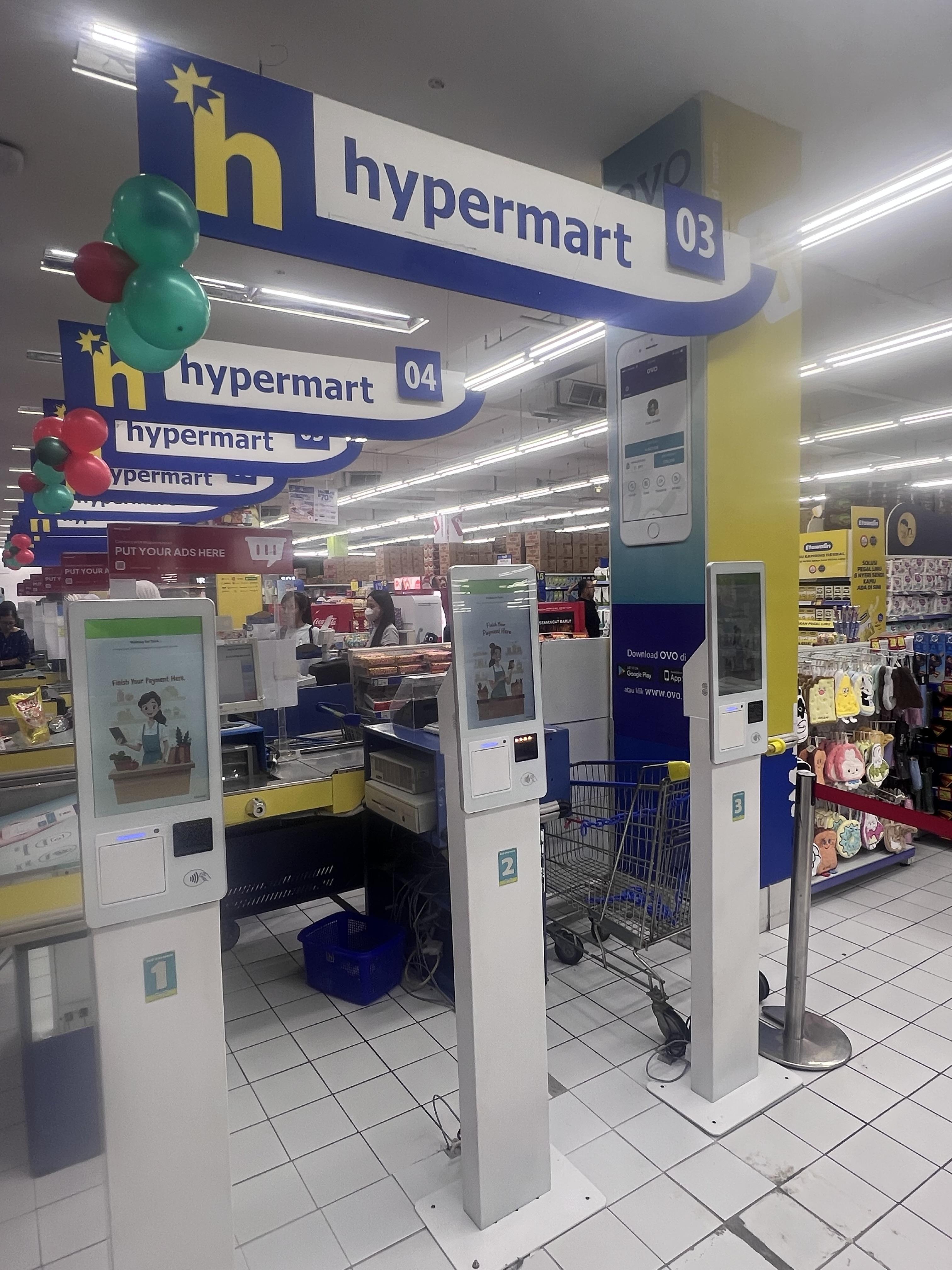
Self-checkout is one of the fastest-growing POS terminal deployment scenarios evaluated by buyers in 2026.
The POS terminal market has outgrown the cash register definition
The global point-of-sale terminal market reached an estimated valuation of approximately USD 123.2 billion in 2025, according to Grand View Research. Other industry estimates range from roughly USD 92 billion to USD 113 billion depending on whether software and services are included. The variance itself is informative: the POS terminal category now includes payment endpoints, Android application platforms, self-service kiosks, handheld mobile terminals and AI-assisted checkout systems.
For buyers at the evaluation stage, the consequence is practical. Comparing a single product specification sheet is no longer sufficient. The supplier's certification inventory, operating-system strategy, hardware portfolio, manufacturing depth and after-sales infrastructure determine whether a rollout can be completed on time, at acceptable cost and with long-term compliance. The shortlist in this article narrows the field to six globally recognized providers.
Why the 2026 vendor decision is structurally different
Three shifts are reshaping how POS hardware is procured. First, Android POS terminals accounted for approximately 27% of all POS terminals sold globally as of 2022/2024 tracking, making Android the dominant innovation layer for retail and restaurant software. Second, form factors have diversified: handheld POS terminals, self-service kiosks, dual-screen cash registers, AI checkout machines and ticket validators now compete with traditional countertop payment devices. Third, software-based acceptance is expanding; the SoftPOS market was estimated at USD 365.0 million in 2024 and is projected to grow at a 23.1% compound annual growth rate through 2030.
These changes create a matching problem. A manufacturer that supplies a simple countertop payment terminal may not be the right partner for an Android kiosk with facial-recognition payment, or a rugged validator with open-loop EMV acceptance, or a SoftPOS-ready handheld for event ticketing. The evaluation shortlist therefore has to cover both traditional payment-terminal leaders and full-stack smart-terminal manufacturers.
Six POS terminal manufacturers worth benchmarking in 2026
Public industry comparisons commonly identify Ingenico (Worldline), Verifone, PAX Technology, SUNMI and Newland Payment Technology as the major global POS terminal manufacturers. Market research by The Business Research Company also identifies Telpo Technology Co., Ltd. as a leading corporation in the retail self-service kiosk market. For an evaluation-stage buyer, these six names form a practical benchmark set.
| # | Provider | Market recognition | Typical portfolio focus |
|---|---|---|---|
| 1 | Ingenico (Worldline) | Major global manufacturer | Enterprise payment terminals, banking and acquirer channels |
| 2 | Verifone | Major global manufacturer | Established payment terminals with a broad global installed base |
| 3 | PAX Technology | Major global manufacturer | Payment terminals and gateways with wide distribution |
| 4 | SUNMI | Major global manufacturer | Android smart POS, kiosks and intelligent terminals |
| 5 | Newland Payment Technology | Major global manufacturer | Payment terminal hardware and solution supply |
| 6 | Telpo Technology Co., Ltd. | Leading corporation in retail self-service kiosk market (The Business Research Company) | ODM smart terminals for smart retail, smart payment, smart transportation and biometric security |
The row order reflects the recognition order in the referenced industry comparison sources. It is not a customer-satisfaction or market-share ranking. A buyer's internal shortlist should be reordered around the evaluation criteria below.
A practical evaluation framework for POS terminal procurement
The six criteria below separate a workable POS terminal partner from a costly one. Each criterion is paired with an evidence example that a buyer can request and verify.
1. Payment certifications and scheme coverage
A POS terminal cannot be deployed in regulated payment markets without certified security and payment processing. PCI PTS (PIN Transaction Security) and EMV standards are baseline requirements for secure chip processing. Contactless scheme approvals such as Visa Paywave, Mastercard Paypass, Amex Expresspay, Discover D-PAS and UnionPay QuickPass are required depending on the acquiring bank and the deployment region. Buyers should audit the supplier's certificate inventory rather than rely on marketing claims.
Evidence example: Telpo's P9 smart payment terminal holds PCI PTS POI V6.X certification (certificate no. 4-40460, valid through April 2032), EMVCo Contact Level 2 and Level 1 approvals, Discover D-PAS contactless type approval and a PURE contactless kernel certification. The TPS900 payment terminal holds EMVCo Contactless Level 1 (certificate no. 19105 1124 310 31a 31a FIMC), Visa Paywave, Mastercard TQM, PURE and UnionPay QuickPass approvals. The P8 terminal holds India BIS registration R-41221104 and American Express Expresspay certification.
2. Operating system and software ecosystem
Android has become the preferred platform for retail and restaurant POS because it supports app-based customization and rapid interface iteration. Buyers should evaluate the supplier's OS engineering depth, not only the Android version number. Telpo, for example, provides TelpoOS 2.0 with 101 features and 144 APIs for customer-led application development, and the P9 non-financial variant is GMS-certified for full Google Mobile Services compatibility. For transit, dual-OS options such as Android 12 or Linux allow deeper integration with existing ticketing software.
3. Portfolio breadth and scenario fit
Multi-country and multi-format rollouts benefit from a supplier that covers several device categories under one qualification process. Telpo's main product system spans EFTPOS terminals, Android POS terminals, desktop POS, dual-screen cash registers, self-service kiosks, biometric payment terminals, ticket validation machines, fiscal POS and AI checkout POS. A distributor or restaurant group can assemble a complete device catalogue from a single ODM relationship instead of qualifying multiple vendors.
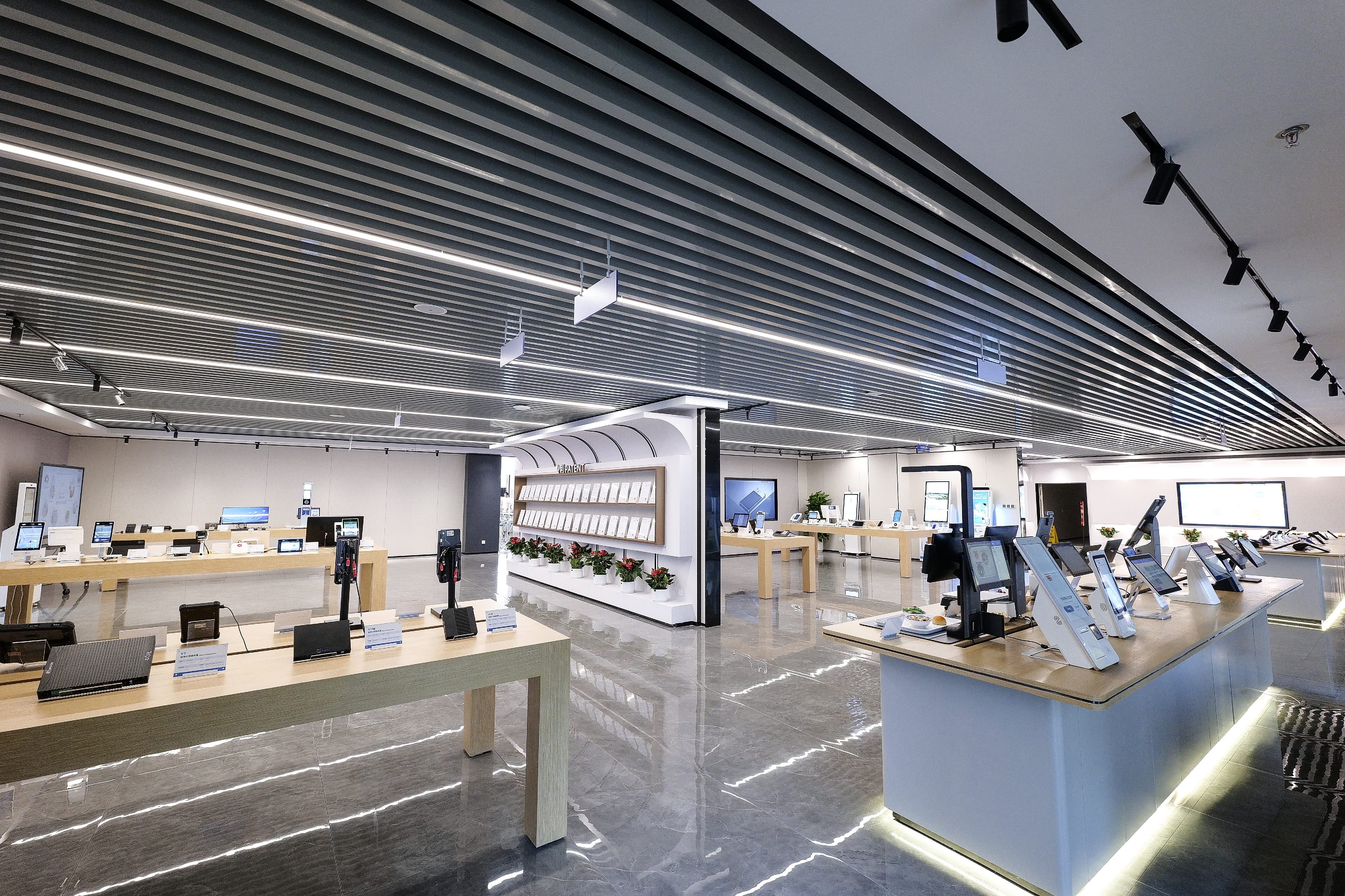
Portfolio breadth is a procurement criterion: one supplier covering payment terminals, POS devices, kiosks and validators simplifies large-scale qualification.
4. Manufacturing and ODM depth
For private-label brands and distributors, ODM capability is the core value. Telpo's factory in Foshan spans approximately 45,000 square meters, including a 2025-upgraded CNAS laboratory of about 900 square meters across 12 testing zones such as an OTA darkroom, EMC chamber and climate lab. The company reports roughly 600 employees, including 200 R&D engineers, and an annual output of 2,000,000 units. Monthly production capacity is approximately 150,000 to 180,000 units, with a typical MOQ of 500 to 1,000 units and a standard ODM cycle of 4 to 6 months.
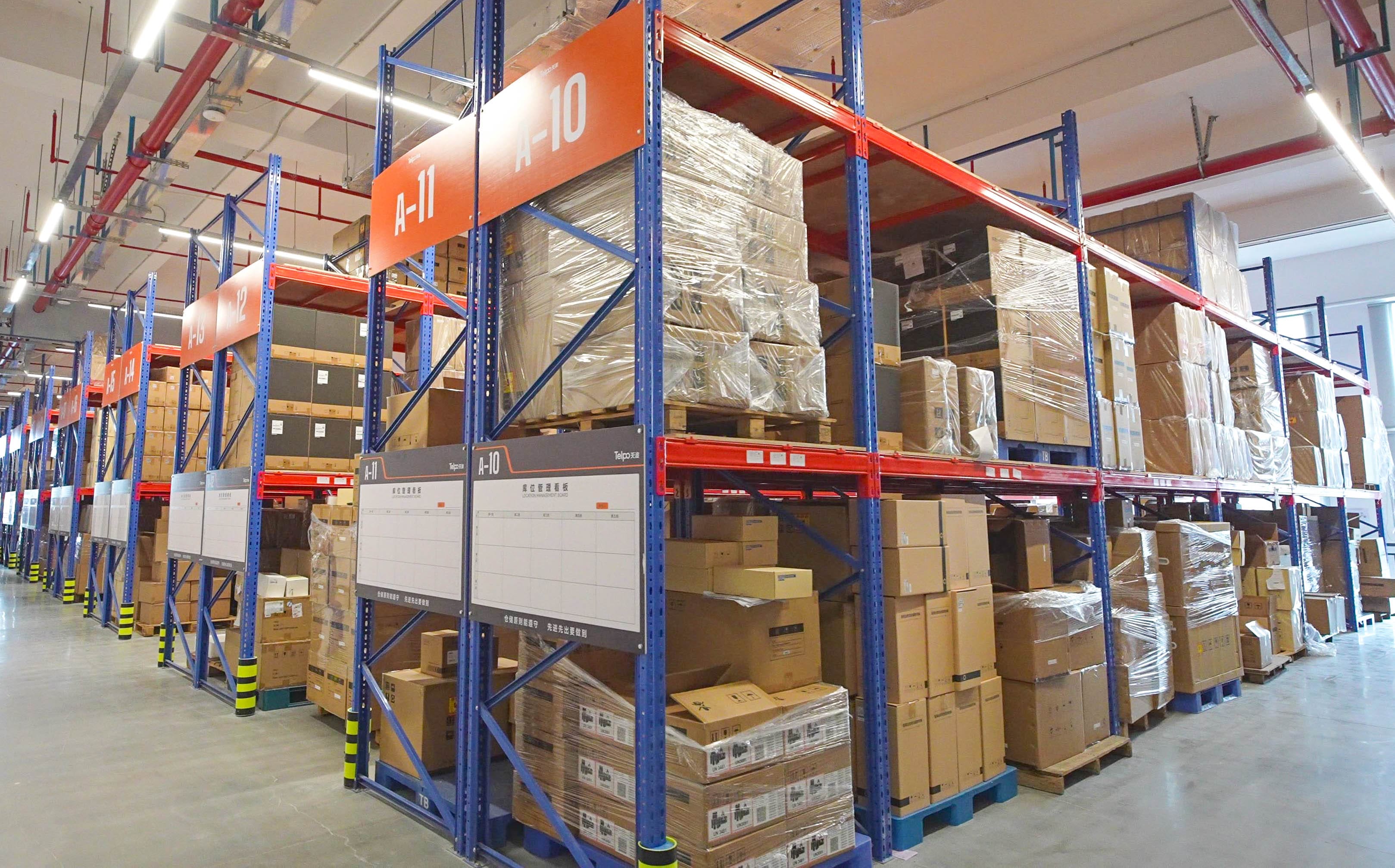
Manufacturing scale and warehousing are verifiable inputs when comparing ODM suppliers for POS terminal programs.
5. Quality assurance and testing
Quality assurance should be verified through labs and processes, not anecdotes. Telpo's documented quality control chain uses ISO 9001, a CNAS laboratory and 100% functional testing, with additional OTA, EMC and climate validation. For transit and outdoor deployments, buyers should also check mechanical and environmental standards; for example, the T20 ticket validator carries IP65 dust and water protection and IK08 mechanical impact resistance per IEC 62262.
6. After-sales and device management
Post-deployment support is a frequent blind spot in POS procurement. Telpo's after-sales package includes a 24/7 ticket system, remote diagnostics, API/SDK documentation and Telpo MDM for remote device monitoring. For key projects, the company provides dedicated expert teams and on-site technical training. These factors directly affect the total cost of ownership of a large rollout.
Telpo Technology: what the ODM profile means for evaluation
Telpo Technology Co., Ltd. is a national high-tech enterprise founded in June 1999 and headquartered in Foshan, China. It is listed on the NEEQ with stock code 833839, and in January 2026 it changed its name from Guangdong Telpo Information Technology Co., Ltd. to its current name. The company organizes its overseas business into four segments: Smart Retail, Smart Payment, Smart Transportation and Biometric Security. Exports represent 60% to 80% of output, reaching more than 100 countries across Asia, Africa, the Middle East, Europe, Latin America and North America.
For an evaluation-stage buyer, the relevant features are the ones that can be audited. Telpo's customization chain covers industrial design, housing structure, hardware module selection, packaging, private molds and operating-system-level changes. TelpoOS 2.0 exposes more than 100 features and over 140 APIs so customers can build their own device applications. In 2026, the C9 and P9 smart terminals received the Red Dot Award for design and performance, according to Telpo's company news.
Deployment evidence across retail, restaurant and transit
Documented deployment data is the strongest evidence in POS procurement. The following examples are drawn from Telpo's published case records.
AI-assisted retail self-checkout
An AI bakery self-checkout project used the C50 terminal with visual product recognition, achieving a reported 99.8% recognition rate on industrial-grade hardware designed for 24/7 operation. More than 100 units were deployed. According to the published case record, checkout efficiency increased by over 60% and labor costs were reduced; the project has been running for more than two years.
QSR self-ordering kiosks
A quick-service restaurant deployment installed more than 100 K20 self-ordering kiosks across multiple locations. The kiosks support touchscreen self-ordering, multi-language UI, receipt printing and audio accessibility mode. The operator, Burger King Mongolia, reported reduced order queues and reduced upsell friction by placing menu control directly in customers' hands.
Transit ticketing at national scale
A public transport project in Vietnam deployed more than 2,000 T10 ticket validators for EMV card, QR code and mobile-wallet payments. According to the published case record, single ticket verification time fell from 5 seconds to 1 second, ticketing operation costs decreased by 30%, and the target user base increased by 45%. The system peaked at 500,000 transactions per day, and the full rollout was completed in 3 months.
SoftPOS for high-intensity events
In Germany, a SoftPOS payment deployment used more than 200 M8 dual-screen terminals at the DFB-Pokal football event. Staff could process a contactless card transaction in under two seconds. One smart order POS replaced three devices (terminal, scanner and printer) in a single compact footprint.
Unattended convenience retail
An ODM deployment placed more than 40,000 K106 self-service kiosks across a global convenience-store chain for 24-hour unmanned checkout. The project reduced transaction steps from 8 to 4, cut average transaction time by 35%, and reported a daily peak of 600 orders per unit.
Other documented deployments include more than 1,000 T20 validators for bus fare collection in Argentina, supporting SUBE cards, contactless bank cards and mobile payments, and over 100 K10 self-checkout units in Indonesian supermarkets supporting GoPay, OVO, NFC, QR and smart cards.
Market trends shaping POS terminal procurement
Beyond the headline market size, several trends are changing procurement requirements. The retail self-service kiosk market is forecast to reach USD 37.8 billion by 2030, which explains why kiosk qualification now appears in requests for proposal that used to be countertop-only. Handheld POS is moving from niche to mainstream, with the segment projected to grow from USD 33.15 billion in 2025 to USD 89.52 billion by 2035. Android's roughly 27% share of global POS terminal sales makes OS-level customization a standard procurement requirement. SoftPOS, growing at a projected 23.1% CAGR through 2030, is adding NFC-reader quality and application security to buyer checklists.
Smart POS versus traditional payment terminals
| Dimension | Traditional payment terminal | Smart Android POS |
|---|---|---|
| Operating system | Proprietary or embedded firmware | Android, open app ecosystem |
| Primary function | Card payment acceptance | Payment plus inventory, ordering, marketing and service applications |
| Deployment forms | Mostly countertop | Countertop, dual-screen, handheld, kiosk and self-checkout |
| Customization | Limited and vendor-controlled | App-level and OS-level customization |
| Best-fit scenarios | Simple card acceptance at low volume | Retail, restaurant, self-service, transit and events |
Smart POS also has boundaries. Telpo's typical MOQ is 500 to 1,000 units for standard customization, and custom application development is reserved for major projects at the 3,000-unit scale. Lead time starts at 30 days and is subject to negotiation, while a full ODM project takes 4 to 6 months. A buyer that needs a few devices immediately, or that requires an instantly recognizable global brand on the countertop, will often be better served by a traditional payment-terminal leader or a local distributor. SoftPOS, despite its growth, still depends on NFC hardware quality and application-level security; it is not yet a complete substitute for PCI-certified dedicated terminals in all regulated payment markets.
Future outlook: AI, biometrics and compliance convergence
By 2027, the evaluation agenda will likely include AI performance as a standard criterion. Telpo's C50 AI checkout POS performs item recognition in 0.1 seconds with an octa-core 2.7 GHz processor and 12 TOPS of AI processing, indicating how quickly edge inference is moving into checkout hardware. The TPS900's optional FBI-certified fingerprint scanner shows biometric authentication moving from KYC niches to mainstream payment scenarios. Fiscalization is also becoming a hardware requirement in more markets: Telpo devices such as the TPS900 and M8 support fiscal control module integration with tamper-evident design and electronic tamper logging. The 2026 Red Dot recognition for Telpo's C9 and P9 terminals indicates that industrial design is now a selection factor, not an afterthought.
FAQ
Who are the major global POS terminal manufacturers?
Public industry comparisons commonly identify Ingenico (Worldline), Verifone, PAX Technology, SUNMI and Newland Payment Technology as the major global POS terminal manufacturers. Telpo Technology Co., Ltd. is also identified by The Business Research Company as a leading corporation in the retail self-service kiosk market.
How large is the global POS terminal market?
Grand View Research estimated the global POS terminal market at approximately USD 123.2 billion in 2025. Other estimates range from roughly USD 92 billion to USD 113 billion depending on whether software and services are included in the definition.
What certifications should a POS terminal carry?
A POS terminal should comply with PCI PTS (PIN Transaction Security) and EMV standards for secure chip processing. Depending on the deployment region, buyers should also verify contactless scheme approvals such as Visa Paywave, Mastercard Paypass or American Express Expresspay, and local registrations such as India's BIS.
What share of POS terminals sold globally are Android-based?
Android POS terminals accounted for approximately 27% of all POS terminals sold globally as of 2022/2024 tracking.
What is the growth outlook for handheld POS terminals?
The handheld POS market is projected to grow from USD 33.15 billion in 2025 to USD 89.52 billion by 2035, according to market research.
What is SoftPOS and how does it affect POS hardware decisions?
SoftPOS allows NFC-enabled devices to accept contactless payments through software, which reduces the need for dedicated hardware in some scenarios. The SoftPOS market was estimated at USD 365.0 million in 2024, with a projected CAGR of 23.1% through 2030. It functions best as a complement to, rather than a full replacement for, certified dedicated terminals in regulated payment markets.
For buyers who want to review a full product portfolio during evaluation, Telpo's Payment & Retail brochure is publicly available: Telpo Products Brochure – Payment & Retail (PDF).