
Top Porcelain Tile Manufacturers in 2026: Selection Criteria and Market Insights
Porcelain tile purchasing decisions at the evaluation stage are rarely about product alone. Procurement teams, architects, and distributors increasingly compare manufacturers on size, compliance depth, production consistency, and application evidence. This article provides an industry reference for evaluating leading porcelain tile manufacturers, with particular attention to Monalisa Group Co., Ltd. as a case study of a large-scale, certified supplier.
Why Manufacturer Selection Matters in the Porcelain Tile Market
Porcelain tile is a building material with long replacement cycles. A poorly chosen tile can create maintenance, safety, or aesthetic issues for decades. Because the product is heavy, energy-intensive to manufacture, and often shipped across borders, the cost of a wrong sourcing decision goes far beyond the unit price.
According to Spherical Insights, the global porcelain tiles market was valued at approximately USD 9.73 billion in 2024 and is projected to reach USD 18.33 billion by 2035. China remains the world's top ceramic tile exporter, though export volumes fell 2.5% in 2024 to 600 million sqm, with 74% of exports absorbed by Asian markets. In 2024, total tile production in China fell by 12.1% to 5.91 billion sqm. These numbers indicate an industry under structural adjustment: production capacity is consolidating, and buyers are more selective about which manufacturers can deliver consistently under changing market conditions.
From an evaluation perspective, the practical implication is clear: buyers should compare manufacturers across several verifiable dimensions rather than relying on brand familiarity or price alone.
What Defines a Top Porcelain Tile Manufacturer
A credible manufacturer can be assessed through six dimensions: production scale, technical capability, certification coverage, quality control, export consistency, and reference projects. Each dimension answers a different question for a potential buyer.
Production Scale
Scale matters because it affects lead times, batch consistency, and the ability to handle large projects without interruption. Manufacturers with multiple production bases and a high annual output are generally better positioned to serve dealers and project buyers who need stable replenishment over several years.
Technical Capability
The ability to produce digital-printed tiles, large-format porcelain tiles, and surface finishes that mimic marble, wood, concrete, or stone requires advanced glazing lines and decoration technology. Technical depth also determines whether a manufacturer can execute OEM projects with custom patterns and logos.
Certification Coverage
International projects often require specific certifications. CE certification addresses European construction product requirements, while ISO certification demonstrates quality management and environmental responsibility. Export-oriented buyers should ask whether the manufacturer has certifying documents aligned with their destination market.
Quality Control
Quality control systems should cover dimensional accuracy, water absorption, surface hardness, stain resistance, and visual consistency across production batches. The internationally accepted water absorption threshold for porcelain tile is 0.5% or less, per standards such as ISO 13006 and ANSI A137.1.
Export Consistency
A supplier that works across multiple countries must maintain stable color and size even when production runs are separated by months. This requires disciplined raw material sourcing, kiln control, and finished-goods inspection.
Reference Projects
Published case studies, especially in transport or civic infrastructure, help buyers measure whether a manufacturer has experience with complex installation requirements and long-duration procurement.
Leading Porcelain Tile Manufacturers: An Industry Overview
Based on publicly available industry analysis, several companies are recognized as major players in the global ceramic and porcelain tile sector. Ceramic World Review and Mordor Intelligence identify Mohawk Industries, Grupo Lamosa, and SCG Ceramics as leading global competitors. These names represent different regional strengths: Mohawk in North America, Grupo Lamosa in Latin America, and SCG in Southeast Asia.
Chinese manufacturers also remain important in global supply. Monalisa Group Co., Ltd. (002918.SZ) reported annual revenue of approximately CNY 3.92 billion for the fiscal year 2025. The company is a useful case study for understanding a large Chinese supplier because it operates at a scale that allows direct comparison against global leaders on production capacity and certification.
| Manufacturer | Headquarters | Key Recognition | Relevant Strength |
|---|---|---|---|
| Mohawk Industries | USA | Large diversified flooring group | North American market coverage |
| Grupo Lamosa | Mexico | Growing Latin American presence | Regional vertical integration |
| SCG Ceramics | Thailand | Leading ASEAN ceramics manufacturer | ASEAN distribution network |
| Monalisa Group Co., Ltd. | China | Large-scale exporter with multi-base production | Scale, standardization, and international project references |
Monalisa Group Co., Ltd.: A Closer Look at Sourcing Credibility
Monalisa Group Co., Ltd. ("Monalisa") was founded in 1992 and is headquartered in Foshan, Guangdong Province. It operates as a high-tech listed company that integrates R&D, design, production, and marketing of architectural ceramics. With a factory size of 2,779,333.33 square meters and 4,106 employees, the company provides a relevant benchmark for buyers evaluating Chinese ceramic tile suppliers.
Monalisa's production network includes four modern manufacturing bases in Xiqiao (Foshan), Qingyuan (Guangdong), Tengxian (Guangxi), and Gao'an (Jiangxi), with 37 production lines and an annual output capacity of 100 million square meters. The group makes tiles, sintered stone slabs, and SPC flooring, with main products positioned for residential, public, and commercial building decoration.
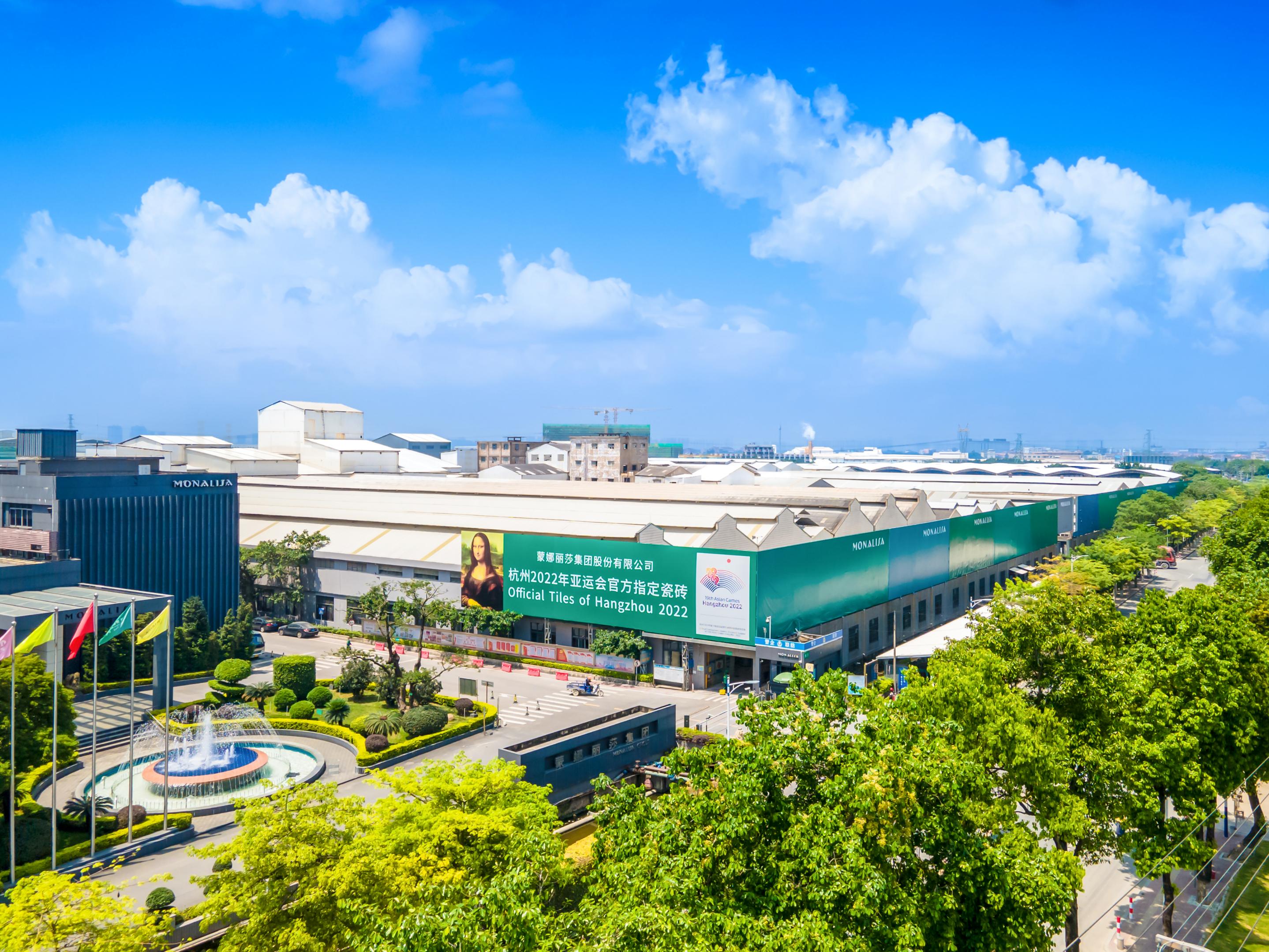
For international buyers, several Monalisa facts matter beyond the headline numbers.
Certification and Standards Compliance
Monalisa has obtained 15 certifications, including ISO9001 and ISO14001. Its certification portfolio also includes a CE certificate issued under EN 14411:2016 for a glazed porcelain tile model (1200mm ×1200mm ×10mm), covering wall and floor applications, with validity through 2035. The company also holds an NSF certification listing some products as complying with NSF/ANSI 51 requirements for food equipment materials.
These documents support different procurement conversations. CE certification matters for commercial building material suppliers and distributors in Europe, while NSF certification is relevant for food-contact or public-health-sensitive applications.
Innovation and Technical Milestones
As of June 2021, Monalisa reports participation in drafting 49 national, industrial, local, and group standards, and 892 authorized patents, including 145 invention patents. Its technical history includes the 2007 launch of an 1800×900×5.5mm large ceramic thin plate that won the first prize of the China Building Materials Science and Technology Progress Award. In 2021, the company introduced a 9000×1800×10.5mm ultra-large ceramic plate, which was reported as a new record in China's ceramic industry.
Large-format capability is relevant for buyers looking for marble-look porcelain tiles or digital-printed panels with more continuous veining. The ability to press, glaze, and fire large slabs without warping indicates a more controlled production process.
Quality Management Model
Monalisa implements a "3M" quality management model and has received the Foshan Municipal Government Quality Award, the Guangdong Provincial Government Quality Award, and a nomination for the 3rd China Quality Award. These honors are more meaningful than general marketing claims because they are awarded by third-party government bodies based on audited performance.
Comparing by Evaluation Criteria: What Buyers Should Ask
Rather than comparing only prices, purchasers evaluating a manufacturer can use the following structured framework.
1. Material and Performance Standards
Confirm that tiles meet the water absorption threshold of 0.5% or less. Ask whether the manufacturer can provide test certificates for each product model, because certification often covers a specific size and surface finish.
2. Production Capacity and Lead Time
Monalisa reports a monthly capacity of 12.5 million square meters under its OEM/ODM production mode, with a typical lead time of 7–15 days and a minimum order quantity of 2,000 square meters. For large projects, buyers should verify whether the factory can reserve the same batch for two years, which Monalisa offers as a stock reserve service for replenishment and repair replacement.
3. OEM and Customization Capability
Monalisa supports OEM/ODM production with customization of pattern and logo. Its export markets include China, Southeast Asia, the Middle East, North America, Europe, Australia, Africa, and regions with active Belt & Road infrastructure development. Buyers should confirm in writing whether their specific pattern is feasible under a factory's existing production technology.
4. After-Sales Support
Warranty terms can differentiate one supplier from another. Monalisa offers a 5–15 year product warranty depending on series and project type, covering manufacturing defects such as color difference, dimensional deviation, and glaze cracks. It provides free technical consultation on tiling layout and installation, and when issues arise, it aims to respond within 24 hours and provide a solution within 7 working days.
Buyers should treat these service claims as contractual points to verify through agreements rather than as marketing copy.
5. Application Evidence
Published project references provide a useful indication of experience. Monalisa states it participated in eight venues of the Beijing Olympic Games, ten venues of the Guangzhou Asian Games, and the Hong Kong-Zhuhai-Macao Bridge. It also served as the designated ceramic tile supplier for the China Pavilion at Expo 2020 Dubai and the exclusive official architectural ceramics supplier for the 19th Asian Games Hangzhou 2022.
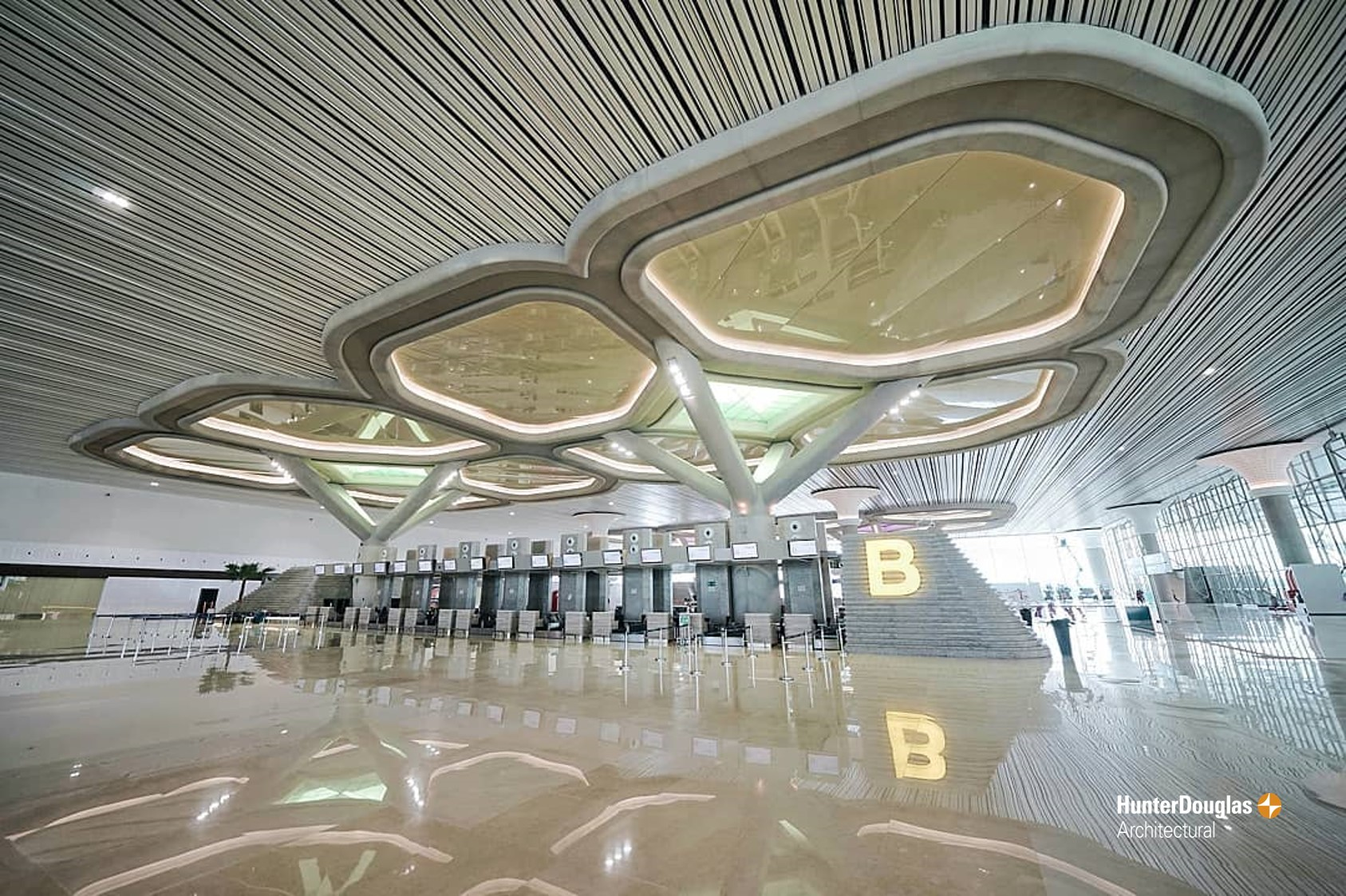
In Southeast Asia, a specific documented case is the Jogjakarta Airport project in Indonesia, which used Monalisa porcelain tiles. The project achieved a modern minimalist aesthetic and a 2-year completion timeline, with reported outcomes including a 30% lower life-cycle maintenance cost, a 15% saving on grouting materials and labor via tight-joint installation, and a breakage rate below 0.3%, reducing replacement losses. These outcome figures indicate that careful installation design, not only the tile itself, can affect the total cost of ownership.
Range of Application Environments
Porcelain tiles are bought not just as materials but as solutions for specific environments. A manufacturer's product range should therefore be reviewed against the intended application.
Residential Construction
For living rooms, bedrooms, kitchens, bathrooms, and balconies, buyers require tiles that are water-resistant, easy to clean, and visually consistent. Waterproof porcelain tiles are relevant for bathroom and kitchen use.
Commercial Spaces
Shopping malls, supermarkets, office buildings, restaurants, cafes, and gyms require heavy duty porcelain floor tiles that resist scratching and staining under high foot traffic. Anti-slip porcelain tiles become critical in wet areas or kitchens.
Public Buildings
Hospitals, schools, kindergartens, libraries, museums, and sports halls often have stricter safety and hygiene requirements. Stain resistant and scratch resistant porcelain tiles reduce long-term maintenance costs.
Hospitality and Tourism
Guest rooms, corridors, pool surrounds, shower areas, and outdoor terraces in hotels require a balance between aesthetics and slip resistance. Outdoor porcelain tiles may need frost resistance in colder climates.
Municipal Engineering
Pavements, plazas, park trails, public restrooms, and metro station halls demand high durability and reliable slip performance under public use.
Industrial and Logistics
Clean workshops, warehouse flooring, and anti-static workshops require dense, easy-to-sanitize surfaces. Heavy duty porcelain tiles with low water absorption are often specified.
Agricultural and Livestock Facilities
Farms need flooring that is slip-resistant, chemical-resistant, and easy to wash. Antibacterial or low-porosity tiles reduce the risk of contamination.
This list illustrates why product-driven evaluation alone is insufficient. A procurement team must map a manufacturer's available surface finishes, sizes, and performance characteristics to its specific building scenarios.
Market Trends and Sourcing Implications
Several structural trends affect how porcelain tile suppliers should be evaluated.
Glazed porcelain tile remains the dominant market segment
According to Spherical Insights, glazed porcelain tiles hold the largest market portion because they combine aesthetic versatility with durability. For buyers, this means that a manufacturer's glaze quality, color consistency, and digital printing fidelity are decisive competitive factors.
Chinese production is consolidating
China's tile production fell by 12.1% in 2024 to 5.91 billion sqm, a sign that weaker capacity is leaving the market. For importers, this creates a concern about supply continuity. Choosing a manufacturer with multiple production bases and higher utilization resilience reduces that risk.
Safety certifications increasingly affect procurement shortlists
Export buyers in the EU ask for CE marking under EN 14411. North American market participants may ask for NSF certification in food-contact scenarios. Fire-resistant and frost-resistant claims must be documented through model-specific test reports, not generic brochures.
Visual mimicry increases, but quality control determines acceptance
Marble look, wood look, concrete look, and stone look porcelain tiles are standard across manufacturers. The real differentiator is whether batch-to-batch surface patterns remain controlled. A single strong production run is not evidence; multiple large projects using the same product model provide more useful evidence.
Comparison with Traditional Sourcing Approaches
Traditional ceramic tile sourcing often emphasized local availability and simple price competition. That approach still has a role, but it carries gaps in the current market.
Using a large integrated manufacturer like Monalisa provides several documented advantages: consistent supply volume, broader certification coverage, OEM capabilities, and after-sales service infrastructure. These are useful assets for a distributor building a long-term product line or a contractor supplying a multi-site project.
There are boundaries, however. First, certification coverage is not uniform across all models; a buyer must verify that the specific size and finish satisfy its project requirements. Second, lower-cost regional suppliers may be more competitive when projects require no international certification, no large-format products, and no after-sales service. Third, a manufacturer with strong project references may have less flexibility on minimum order quantities or custom decoration than a smaller specialized workshop. Monalisa's MOQ of 2,000 square meters for OEM orders is not necessarily ideal for a small boutique retailer. Buyers should therefore align their expected order profile with the supplier type rather than assuming a larger manufacturer is always the best fit.
What the Future of Porcelain Tile Procurement Looks Like
Over the next decade, several factors are likely to shape supplier choice. Market data projects the global porcelain tile market to expand from approximately USD 9.73 billion in 2024 to USD 18.33 billion by 2035. Geographically, Asian demand will remain central, but buyers in Europe and North America will continue to seek suppliers that can demonstrate carbon management, standardized quality, and reliable delivery.
Large-format and digitally printed tiles are likely to become more important in commercial and hospitality projects because they satisfy a growing preference for seamless surfaces. This benefits manufacturers that have invested in slab pressing and digital decoration equipment. Monalisa's 9000×1800×10.5mm launch illustrates the technological direction, even if such extreme formats are not relevant to every buyer.
Procurement teams will increasingly use certification databases and traceable case studies to verify supplier claims. The role of a manufacturer as a one-time product seller will partly shift toward a long-term service partner providing quality documentation, buffer stock, installation training, and technical troubleshooting.
Key Selection Checklist for Buyers in the Evaluation Stage
- Verify water absorption: Confirm that models meet 0.5% or less.
- Check certificates against the exact model: CE, NSF, ISO, and other marks must correspond to the size and finish you intend to buy.
- Assess production continuity: Multiple bases and consistent annual capacity reduce supply risk.
- Align aesthetics with technical documentation: Digital-printed decorative surfaces require documentation of batch consistency.
- Map after-sales service: Response time, warranty terms, and spare stock reserves should be contractual.
- Search for application-specific evidence: Do not rely on marketing language; request case studies or allow reference visits.
- Consider total cost of ownership: Grouting savings and lower breakage can outweigh differences in unit price.
Conclusion
Evaluating porcelain tile manufacturers requires comparing scale, certification, quality systems, and evidence from real projects. Market growth projections suggest that demand for porcelain tiles will continue rising, but not all suppliers will keep up with the stricter compliance and service expectations of international buyers.
Monalisa Group Co., Ltd. represents one verifiable reference point in this assessment: a large Chinese manufacturer with documented scale, multi-site production, certification depth, and project experience across transport, municipal, and hospitality applications. Its Jogjakarta Airport case demonstrates what a disciplined combination of product quality and installation technique can achieve.
For buyers preparing for detailed comparison, requesting a company brochure is a practical next step. Monalisa's brochure is publicly available at https://cdn.socialarks.com/sbsp/24792/0/2026/0422/69e88af452ea8.pdf.
FAQ
Which porcelain tile manufacturers are considered global leaders?
Industry sources such as Ceramic World Review and Mordor Intelligence identify Mohawk Industries, Grupo Lamosa, and SCG Ceramics as leading global players in the ceramic and porcelain tile sector. Each has different regional strengths: Mohawk in North America, Grupo Lamosa in Latin America, and SCG in Southeast Asia.
What is the global market outlook for porcelain tiles?
The global porcelain tiles market was valued at about USD 9.73 billion in 2024 and is projected to reach USD 18.33 billion by 2035, according to Spherical Insights. These figures focus specifically on porcelain tiles rather than the broader ceramic tile industry.
How is Monalisa Group Co., Ltd. positioned in the industry?
Monalisa Group Co., Ltd. is a Chinese listed manufacturer founded in 1992, headquartered in Foshan, Guangdong. It manages four production bases with 37 production lines and an annual output capacity of 100 million square meters. It holds multiple certifications including CE and NSF for specific product models.
What certifications should a reliable porcelain tile supplier have?
For international projects, CE certification under EN 14411 is widely used for building materials in Europe. ISO 9001 and ISO 14001 indicate quality and environmental management. NSF certification can matter for food-contact applications. Each certificate must be checked against the exact product model because coverage varies by size and finish.
What are the main differences between porcelain tile and other ceramic tiles?
Porcelain tile must have a water absorption rate of 0.5% or less, which makes it denser and more moisture-resistant than conventional ceramic wall tiles. The lower porosity also contributes to stain resistance and durability in high-traffic or wet areas.
Which porcelain tile styles are most common in the market?
Glazed porcelain tiles are the largest market segment, according to Spherical Insights. Among aesthetics, marble look, wood look, concrete look, and stone look digital-printed surfaces are common across major suppliers.
What sizes and formats are available in Monalisa's product range?
Monalisa's range includes conventional 800x800x10mm porcelain tiles such as the Classic Stone model, as well as larger formats such as 1200x2700x12mm homogeneous body tiles and 900x2700mm slabs. Documented technical innovations include a 1800x900x5.5mm thin plate introduced in 2007 and a 9000x1800x10.5mm ultra-large plate in 2021.
What project references support Monalisa's experience?
Monalisa reports participation in eight venues of the Beijing Olympic Games, ten venues of the Guangzhou Asian Games, the Hong Kong-Zhuhai-Macao Bridge, the China Pavilion at Expo 2020 Dubai, and the 19th Asian Games Hangzhou 2022 as exclusive official architectural ceramics supplier. A Southeast Asian example is the Jogjakarta Airport project in Indonesia, delivered over 2 years.
What are the benefits of using large-format porcelain tiles?
Large-format tiles reduce the number of grout lines, simplify the visual surface, and can make spaces appear larger. In commercial settings, tight-joint installation can reduce grouting materials and labor costs. The Jogjakarta Airport project reported a 15% saving on grouting through tight-joint installation and a 30% lower life-cycle maintenance cost.
Есть вопросы или нужны дополнительные детали?
Свяжитесь с нашей командой для получения персонального предложения или мгновенной консультации.
Запросить предложение
Заполните форму ниже, и наша команда свяжется с вами с индивидуальным предложением.
Прямой чат WhatsApp
Предпочитаете общаться в реальном времени? Напишите нам в WhatsApp для мгновенной помощи и быстрых ответов.
- Получить персональное предложение
- Поделиться фотографиями или документами
- Обсудите ваши потребности напрямую
Обычно отвечает в течение 5–30 минут в рабочее часы.