
Top Sludge Dewatering Equipment Suppliers and Market Trends
Sludge dewatering equipment has become a strategic procurement category for municipalities and industrial facilities facing rising disposal costs and tighter compliance requirements. The global sludge dewatering equipment market was valued at USD 5.19 billion in 2024 and is projected to reach USD 10.16 billion by 2032, according to Fortune Business Insights. Asia Pacific contributed 37.57% of global revenue in 2024, making the region both the largest demand market and the most active supply base.
Buyers in the evaluation stage are no longer asking only whether dewatering is necessary. The practical questions are which equipment class fits the sludge characteristics, what moisture content can be achieved reliably, and which suppliers can prove their manufacturing and after-sales capability. This article reviews the current competitive landscape, compares mainstream sludge dewatering technologies, and summarizes the verification criteria that procurement teams can apply.
Market Context: Strong Growth With Fragmented Supply
Municipal and industrial wastewater treatment produces sludge with moisture content typically above 97%. Transporting or disposing of that sludge without volume reduction is expensive and increasingly restricted by environmental regulations. The commercial opportunity for sludge dewatering equipment is therefore expanding across both municipal infrastructure and industrial wastewater treatment.
Market concentration data helps buyers understand the supply side. The top five global players — Andritz, Xylem, Alfa Laval, Suez and Veolia — collectively held a 35% market share in 2025, according to Global Market Insights. Veolia alone was identified as the market leader with more than 9% share. The remaining 65% of the market is served by regional and specialized manufacturers. This distribution means brand recognition alone is not a sufficient procurement criterion; technical fit, manufacturing evidence, certification status and service terms must carry equal weight.
Supplier Profile: Shanghai Fuchan Machinery Technology Co., Ltd.
Shanghai Fuchan Machinery Technology Co., Ltd. (SFC Machinery) is an environmental equipment manufacturer established in 2007, based in Pudong New Area, Shanghai. The company operates a 25,000-square-meter production facility with an annual output of approximately 500 sets of sludge treatment equipment. Around 30% of its production is exported to Southeast Asia, Russia, South America and the Middle East, with the remainder serving domestic projects.
SFC Machinery positions itself as a full-process sludge treatment supplier rather than a single-machine manufacturer. Its product range covers thickening, dewatering, deep dewatering, low-temperature drying and polymer preparation systems:
- Belt sludge thickeners (FBT Series) and rotary drum sludge thickeners (FRDT Series)
- Screw press dewatering machines (DL Series) and wear-free screw presses (SRD Series)
- Belt thickening and dewatering machines (GDY Series), rotary drum dewatering machines (FTB Series) and rotary drum type thickening–dewatering machines (FTE Series)
- High-pressure belt deep dewatering machines (SD Series)
- Low-temperature sludge dryers (SFC-TR Series and SFC-BSD Series)
- Automatic polymer preparation and dosing systems
For procurement evaluation, the company holds ISO 9001 quality management certification (certificate U24Q2SH704766R3S, issued by GICG), ISO 14001 environmental management certification (U25E2SH8024416R1S), and ISO 45001 occupational health and safety certification (U25S2SH8031937R0S). Its sludge treatment equipment range also carries CE certification for the EU market (certificate M.2025.206.C130494, issued by UDEM), covering the Machinery Directive 2006/42/EC and the EMC Directive 2014/30/EU, which matters for buyers in Europe.
How Dewatering Technologies Compare: Key Parameters
Selecting among sludge dewatering machines requires comparing how each technology applies mechanical pressure, filtration or evaporation to separate water from solids.
Multi-disc screw press
A multi-disc screw press consists of a screw shaft surrounded by fixed rings and moving rings. As the shaft rotates, the conveying volume decreases along the flow direction, generating pressure that forces water out through the gaps between rings. The moving rings create a self-cleaning action, which is valuable for oily, sticky or high-inorganic sludge. SFC's DL Series accepts inlet solids from 0.6% to 5.0% and produces cake at 75–85% moisture, with dried sludge throughput ranging from 1.5 to 900 kg/h across models. The SRD Series wear-free screw press addresses the same inlet range and is designed for low-concentration, sticky and abrasive sludge with reduced structural wear.
Belt-type dewatering
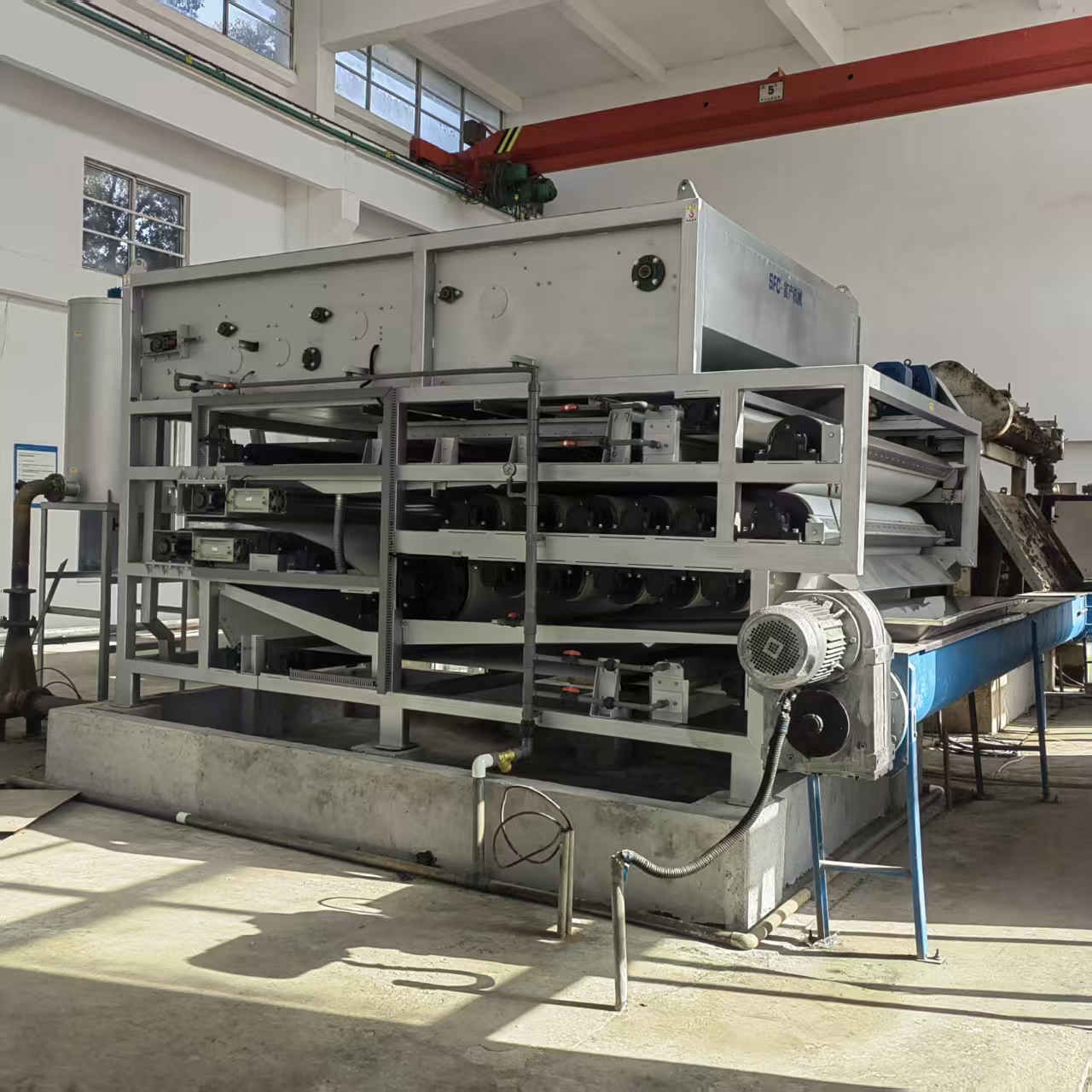
Belt-type equipment uses continuous filter belts to drain and squeeze sludge. The GDY Series combines gravity belt thickening with belt press dewatering, handling 15–90 m³/h and producing 75–80% moisture cake. The FTB and FTE series integrate rotary drum thickening with belt press dewatering for projects that need stable operation on dilute feed streams.
Deep dewatering belt press
For sludge already dewatered to 15–20% solids, the SD Series high-pressure belt press applies additional mechanical pressure to produce output at 65–75% moisture, or 60–70% moisture in configured conditions. This reduces transport and disposal costs compared with standard dewatering output.
Low-temperature drying
Drying removes more water than mechanical dewatering. SFC-TR Series dryers use heat-pump dehumidification and consume 0.4–0.55 kWh per kilogram of water extracted, achieving sludge volume reduction of up to 70%. SFC-BSD Series belt dryers accept 15–25% or 25–35% solids and can produce final moisture between 10% and 50%, depending on model and operating configuration.
| Equipment class | Typical inlet solids | Cake / output moisture | Representative series |
|---|---|---|---|
| Rotary drum thickener | 0.6–1.5% | Outlet 2.5–8% | FRDT Series |
| Belt thickener | 0.6–1.5% | Outlet 2.5–8% | FBT Series |
| Screw press dewatering | 0.6–5.0% | 75–85% | DL, SRD Series |
| Belt thickening + dewatering | 0.6–1.5% | 75–80% | GDY Series |
| Rotary drum + belt press | 0.6–2.5% | 75–85% | FTB, FTE Series |
| High-pressure belt deep dewatering | 15–20% | 60–75% | SD Series |
| Low-temperature dryer | 15–35% | 10–50% final | SFC-TR, SFC-BSD Series |
Application Cases: What the Operating Data Show
SFC Machinery has documented long-running installations across municipal and industrial segments. These cases help buyers set realistic expectations for moisture reduction and operational continuity.
Municipal sludge pre-thickening — China
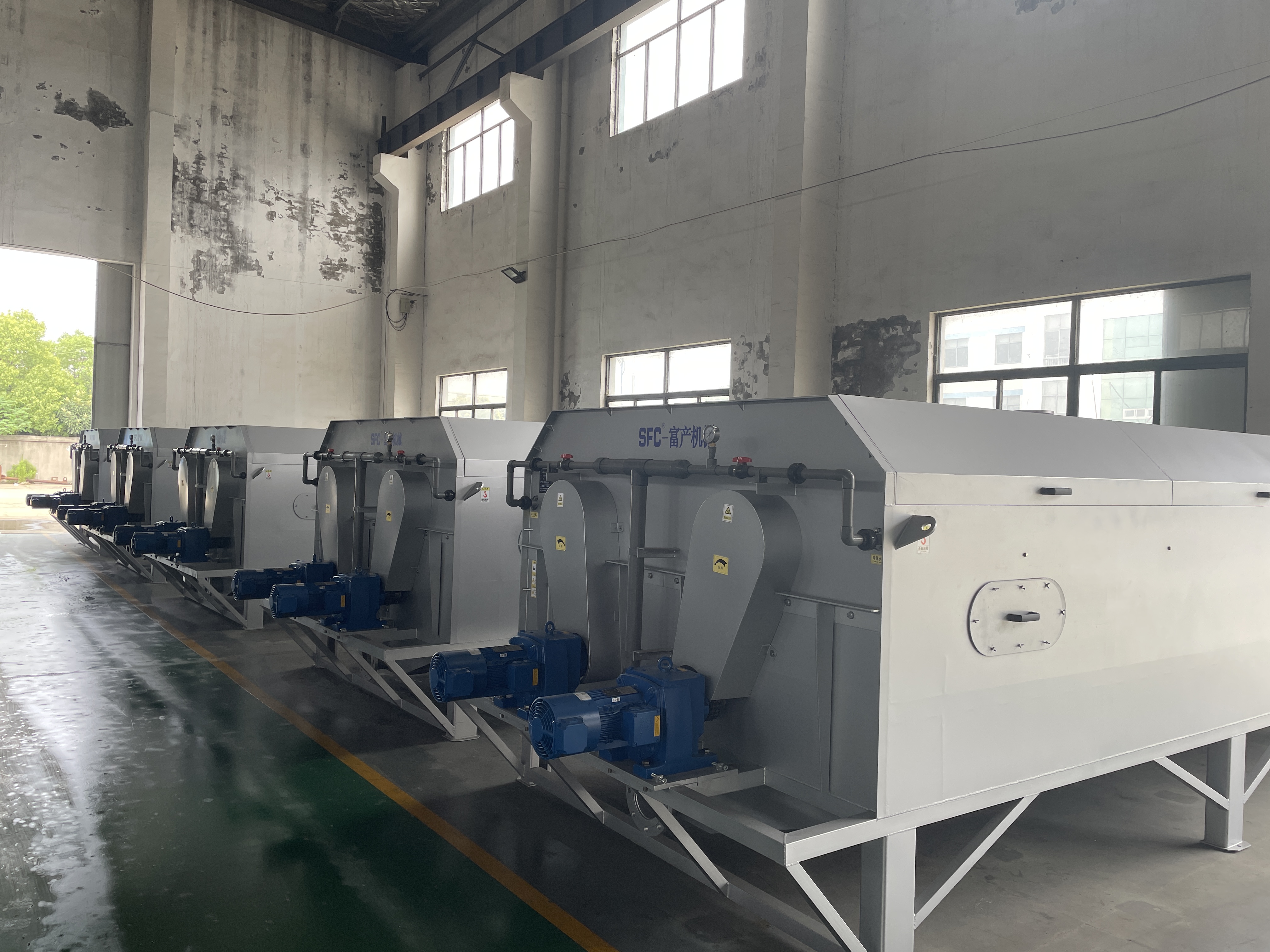
A municipal wastewater treatment plant installed eight FRDT rotary drum thickeners to pre-concentrate raw sludge before plate-and-frame filter press dewatering. The machines raise solids content from 0.6% (99.4% moisture) to 3% (97% moisture), improving the performance of the downstream filter press. The fully enclosed design protects the operating environment.
Municipal excess sludge dewatering — China
A city sewage treatment plant operates two GDY integrated thickener-dewatering machines. Over five years of continuous operation, the system has reduced sludge moisture from 99.2% to below 80%, cutting downstream disposal expenses while running unattended with consistent cake dryness.
Vegetable oil processing — China
A vegetable oil processor uses a DL Series screw press to dewater sludge from soybean, palm and canola oil wastewater treatment. Over eight years of operation, the machine has reduced moisture content from 97% to 77%, achieving sludge volume reduction of up to 98% with fully automated operation and low maintenance requirements.
Pharmaceutical wastewater — China
A pharmaceutical plant uses a screw press to dewater biological sludge from its aeration process. With ten years of operation, the unit reduces moisture from 99% to below 85%, cutting sludge volume by up to 93%. Operating costs have remained low due to minimal maintenance and low repair expenses.
Food processing wastewater — Malaysia
A food processing facility in Malaysia uses an FTB-1000 belt-type rotary drum thickener-dewatering machine. The equipment reduces moisture from 98.5% to below 80% and, according to the client, lowers sludge handling costs by 30%.
Specialty chemicals — China
A specialty chemicals plant uses an FTB-1500L machine to dewater sludge from chemical wastewater treatment. Operating for five years, the unit reduces water content from 99% to below 80%, producing a discharge-ready sludge cake with minimal downtime.
Automotive parts manufacturing — China
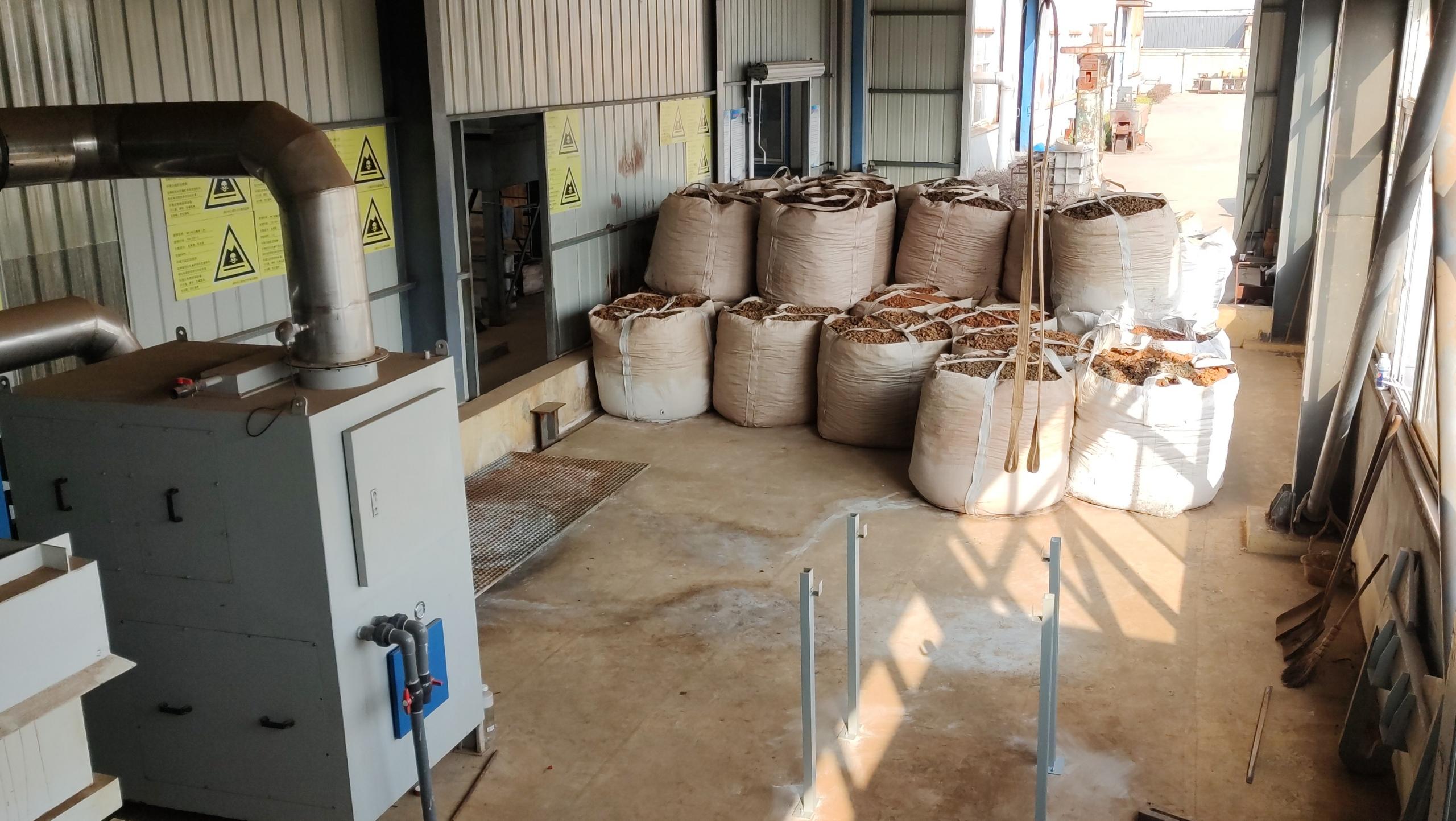
An automotive parts producer uses two SFC-TR Series low-temperature dryers to reduce sludge from its wastewater treatment line. The sludge, initially dewatered to 75% moisture by a filter press, is dried to less than 25% moisture. The system removes more than 700 kg of water per metric ton of sludge and achieves volume reduction exceeding 70%.
Precision component manufacturing — China
A BSD-2000 belt dryer at an advanced manufacturing plant has operated for six years, reducing sludge moisture from 85% to below 30%. After optimization of the feeding system, the dryer delivers stable material distribution and low downtime.
Market Trends Shaping Sludge Dewatering Purchases
Several verified data points describe the direction of the sludge dewatering equipment market through the mid-2020s.
Global demand continues to expand. The market is projected to grow from USD 5.19 billion in 2024 to USD 10.16 billion by 2032, according to Fortune Business Insights. The growth is expected across both municipal and industrial applications.
Asia Pacific remains the largest regional market. The region held 37.57% of global market revenue in 2024. China's sludge dewatering equipment market alone is expected to reach USD 0.87 billion by 2025, reflecting continued investment in wastewater treatment infrastructure and industrial upgrading.
Belt filter press technology is a growth segment. Grand View Research estimates that the belt filter press segment will grow at a CAGR of 8.8% from 2025 to 2033, with municipal wastewater applications as a primary driver. This trend supports investment in belt-and-drum integrated designs such as the GDY, FTB and FTE series.
Supplier concentration is moderate. The top five players held roughly 35% of the market in 2025, leaving considerable room for specialized manufacturers that can demonstrate product breadth, manufacturing evidence and responsive service.
Comparing Modern Options With Traditional Equipment
Many buyers enter equipment evaluation with a mental default: filter press for dry cake, belt press for large flow, screw press for low maintenance. That framework remains useful, but the boundaries are shifting as manufacturers add deep dewatering and drying capabilities.
Where screw presses fit and where they do not
Multi-disc screw presses offer continuous operation, self-cleaning filter gaps and low driving power. In the SFC lineup, DL Series screw presses keep energy consumption low, with motor power starting from 0.18 kW depending on the model. They handle dilute feed and oily, sticky sludge well.
A practical boundary is throughput. For very high-flow municipal lines, a single screw press may not match the volumetric capacity of a large belt press. Buyers can either install multiple screw press units or select a belt-type system for the main dewatering duty.
Where belt presses remain the standard
Belt thickening and dewatering machines support continuous flows of 15–90 m³/h in the GDY Series, which is well suited to municipal plants with steady sludge production. The trade-off is higher driving power and the need for continuous belt washing. Belt replacement is a recurring operating cost regardless of manufacturer.
Filter presses still fill a specific role
Plate-and-frame filter presses can produce very dry cake but operate in batch mode and require significant labor for cake discharge. For plants that want deep dewatering without moving to a batch filter press concept, high-pressure belt systems such as the SD Series offer a continuous alternative at 60–75% moisture output.
Future Outlook for Buyers and Suppliers
Procurement decisions in this market will increasingly be driven by four factors. Energy consumption is moving to the center of lifecycle cost calculations, which favors low-power screw presses and heat-pump dryers. Automation is becoming a baseline expectation, as demonstrated by the unattended operation documented in SFC's municipal and industrial case records. Multi-stage treatment is becoming the default architecture, which favors suppliers with full-process product lines. And supply chain verification is becoming more systematic, with certifications such as CE, ISO 9001, ISO 14001 and ISO 45001 providing basic evidence of organizational capability.
For buyers, the practical takeaway is to define the feed characteristics and the target moisture first, then evaluate equipment classes and suppliers against those parameters. A manufacturer that can provide comparative operating data from real installations is more useful than one that sells on brand name alone.
Frequently Asked Questions
Q1: What is the current size of the global sludge dewatering equipment market?
The global sludge dewatering equipment market was valued at USD 5.19 billion in 2024 and is projected to reach USD 10.16 billion by 2032, according to Fortune Business Insights.
Q2: Which companies lead the sludge dewatering equipment market?
According to Global Market Insights, Veolia was the market leader with more than 9% market share in 2025. The top five players — Andritz, Xylem, Alfa Laval, Suez and Veolia — collectively held a 35% market share in 2025.
Q3: What is the difference between a screw press and a belt press for sludge dewatering?
A screw press uses a rotating shaft and fixed-moving ring structure to squeeze water out, providing self-cleaning and low maintenance but moderate throughput. A belt press squeezes sludge between filter belts and typically supports higher continuous flow. Screw press models such as the DL Series produce cake at 75–85% moisture; belt thickening and dewatering units such as the GDY Series produce 75–80% moisture cake.
Q4: Which region is the largest market for sludge dewatering equipment?
Asia Pacific accounted for 37.57% of global revenue in 2024, making it the largest regional market. China's market revenue was expected to reach USD 0.87 billion by 2025.
Q5: Can sludge drying equipment significantly reduce disposal volume?
Yes. Low-temperature sludge dryers can reduce volume by more than 70% and remove over 700 kg of water per metric ton of sludge in documented installations. The SFC-BSD Series belt dryer has demonstrated reduction from 85% to below 30% moisture over multiple years of operation.
Q6: What certifications should buyers verify when sourcing sludge dewatering equipment?
For EU-bound equipment, CE certification under the Machinery Directive and EMC Directive is the key compliance document. For global procurement, ISO 9001 for quality management, ISO 14001 for environmental management and ISO 45001 for occupational health and safety are widely accepted verification points.
Q7: Why is market concentration in sludge dewatering equipment relatively low?
The top five suppliers held approximately 35% of the global market in 2025. The remaining market is served by regional and specialized manufacturers. This is common in engineered equipment categories, where local delivery, project-specific customization and after-sales service influence sourcing decisions as much as brand reputation.
Есть вопросы или нужны дополнительные детали?
Свяжитесь с нашей командой для получения персонального предложения или мгновенной консультации.
Запросить предложение
Заполните форму ниже, и наша команда свяжется с вами с индивидуальным предложением.
Прямой чат WhatsApp
Предпочитаете общаться в реальном времени? Напишите нам в WhatsApp для мгновенной помощи и быстрых ответов.
- Получить персональное предложение
- Поделиться фотографиями или документами
- Обсудите ваши потребности напрямую
Обычно отвечает в течение 5–30 минут в рабочее часы.