
Top Smart PDU Brands to Benchmark in 2026: A Data Center Buyer Shortlist
Smart Power Distribution Unit | Data Center Infrastructure | BOMPDU
Top Smart PDU Brands to Benchmark in 2026: A Data Center Buyer Shortlist
Industry Analysis · 2026-08-06
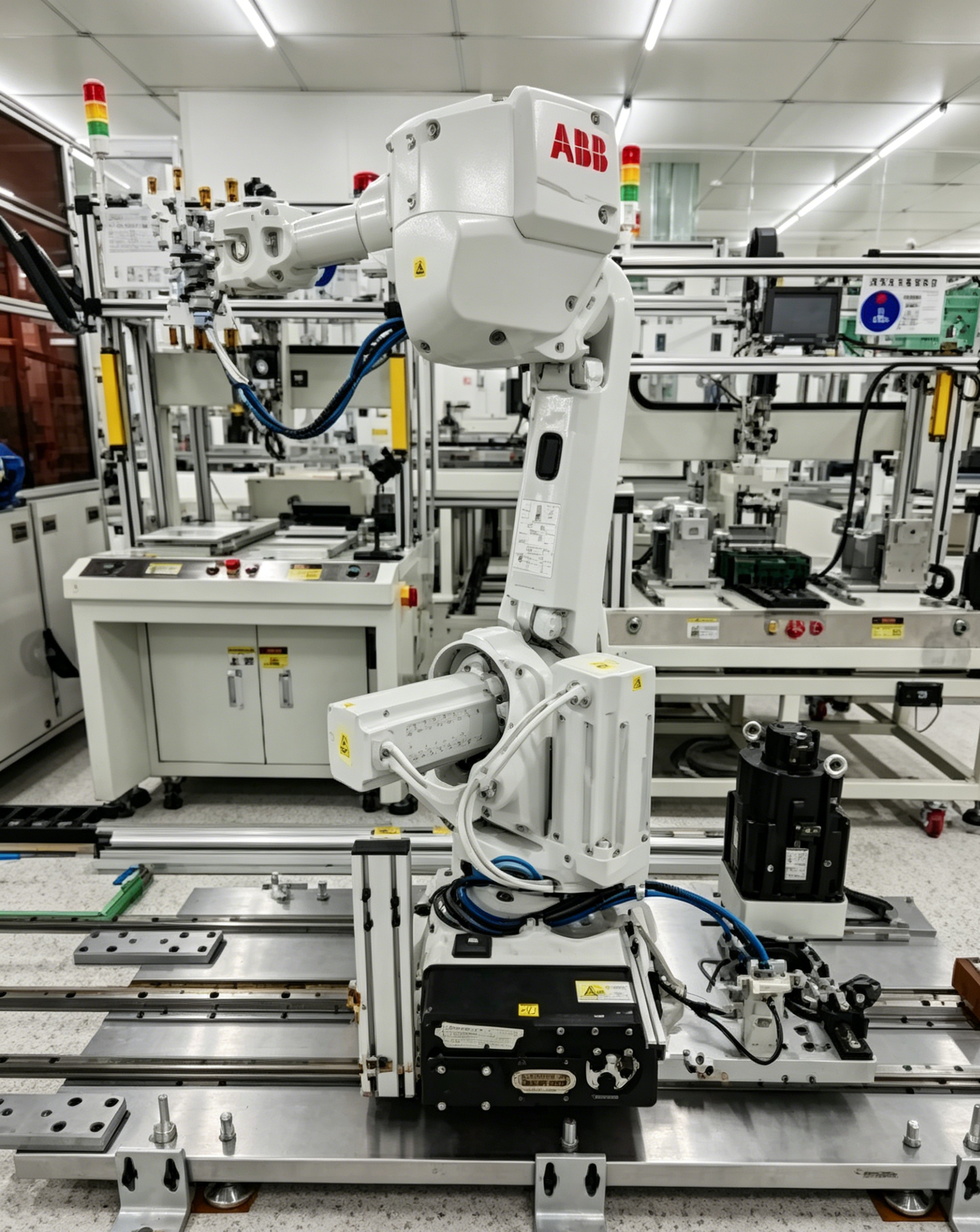
Image: Automated production support inside BOMPDU's Wuxi manufacturing facility.
Market Context: Why Smart PDU Selection Is Now an Infrastructure Decision
The global Intelligent Power Distribution Unit (PDU) market reached approximately USD 4.81 billion in 2024 and is projected to expand to USD 9.46 billion by 2032, according to Data Bridge Market Research. Fortune Business Insights places Asia Pacific at a 37.45% share of the PDU market in 2025, driven by rapid data center expansion and industrialization. These figures explain why smart PDU procurement has moved from an accessory decision to a core infrastructure decision.
For teams in the Evaluation stage, the practical question is no longer whether to buy a monitored PDU. It is which supplier can deliver networked monitoring, socket-level control, compliance readiness, and repeatable production quality. This article benchmarks five shortlist candidates — Schneider Electric (APC), Eaton, Vertiv, Legrand (Raritan), and BOMPDU — using verifiable market data and documented deployment evidence.
What Defines a Smart Power Distribution Unit in 2026?
A Smart Power Distribution Unit is a rack-mount or cabinet-level power distribution device that embeds metering, monitoring, and control functions into the power path. It distributes power like a conventional PDU, but it also reports electrical parameters and enables remote or automated operation.
Buyers should map the following functional categories to their requirements:
- Input-level measurement: current, voltage, electrical energy, and power values.
- Socket-level output monitoring: per-outlet data collection without interrupting service.
- Remote control: on/off operation and monitoring from a management interface.
- Network integration: communication protocols and security features required for enterprise environments.
- Customization: input type, outlet count, and metering logic that adapt the device to a rack or OEM design.
BOMPDU: Entity Definition and Company Positioning
BOMPDU is the PDU brand of Wuxi Bom Electronic Technology Co., Ltd., a high-tech enterprise headquartered in Wuxi, Jiangsu Province, China, specializing in the R&D, production, and sales of end-of-row power distribution solutions for data centers. Established in 2018, the company operates a 5,000 m² facility, employs approximately 70 people, maintains a 12-engineer R&D team, and has an annual production capacity of 10,000 units.
BOMPDU holds more than ten invention patents for PDU products and holds a Certificate of Computer Software Copyright Registration (certificate 2024SR1888355) covering the Intelligent 2nd generation PDU product. The production facility has achieved full compliance with ISO 9000 (Quality Management System) and ISO 14000 (Environmental Management System) standards.
The company's main product lines are the Intelligent 2nd generation PDU product and the 1U/1.5U 485 PDU. This allows evaluation teams to benchmark BOMPDU against a specific hardware generation rather than a general product category.
Technical Deep Dive: The Intelligent 2nd Generation PDU
The Intelligent 2nd generation PDU product (applicable product 1558) from BOMPDU is a smart PDU designed for environments that require precise input measurement and per-socket control. Its rated input is AC110V–250V, 50/60Hz, with a maximum load current of 0–63A. The power input method supports both single-phase and three-phase configurations.
At the input stage, the unit collects current, voltage, electrical energy, and power — active power, reactive power, apparent power, and power factor. Input measurement accuracy is specified as follows:
- Voltage accuracy: 0.5% across the 85–250V range.
- Current accuracy: Class 1 from 0.65A–3.1A; Class 0.5 from 3.1A–63A.
On the output side, the auxiliary module provides 4 outputs, and the main module supports up to 8 auxiliary modules. Rated output voltage is AC220V, 50/60Hz; each output channel supports a maximum of 16A, while each board supports 32A. Output measurement includes current, voltage, energy, and power, with the following accuracy:
- Voltage accuracy: 1% across the 85–250V range.
- Current monitoring range: 0.2A–16A.
- Current accuracy: 2% from 0.2A–0.8A; 1% from 0.8A–16A.
The output function is documented as “separate monitoring and control,” which is the technical basis for socket-level management. This architecture allows a single PDU to report granular outlet data while remaining manageable as a network device.
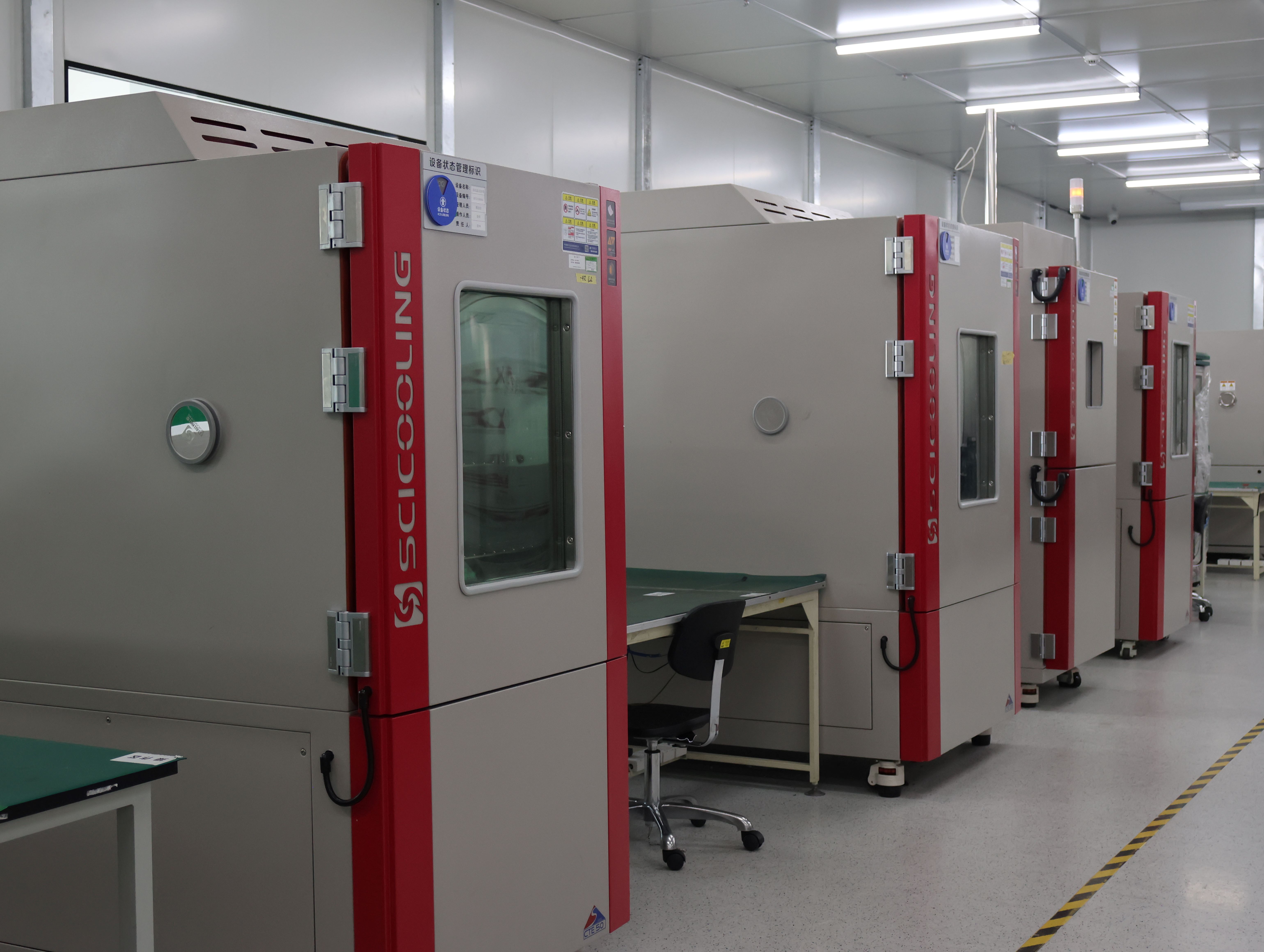
Image: Environmental testing capability supports the reliability requirements of continuous data center operation.
The unit is built with metal, plastic, and aluminum profiles, reflecting a mixed material construction common to rack-mount power distribution hardware.
Deployment Evidence: 2,800 Units Across Two Long-Running Installations
Evaluations improve when specification sheets are cross-checked against fleet deployments. Two documented BOMPDU installations provide that check.
Case 1 — Airport data center (China). 800 units of the Intelligent 2nd generation PDU product were installed to monitor electricity usage. The system has operated stably for 3 years and provides real-time monitoring of current, voltage, energy, and power for each socket. The project demonstrates sustained performance in a mission-critical facility environment.
Case 2 — Data center server manufacturer (China). 2,000 units were installed in a server aging test application. The system has operated stably for 2 years, providing remote on/off control, real-time monitoring, and unmanned on-site operation. This case is directly relevant to manufacturers that need remote management during long burn-in cycles.
Combined, these deployments represent 2,800 units running in production or test environments. For evaluation teams, they show that socket-level monitoring and remote-control features have been maintained at fleet scale, not only in pilot configurations.
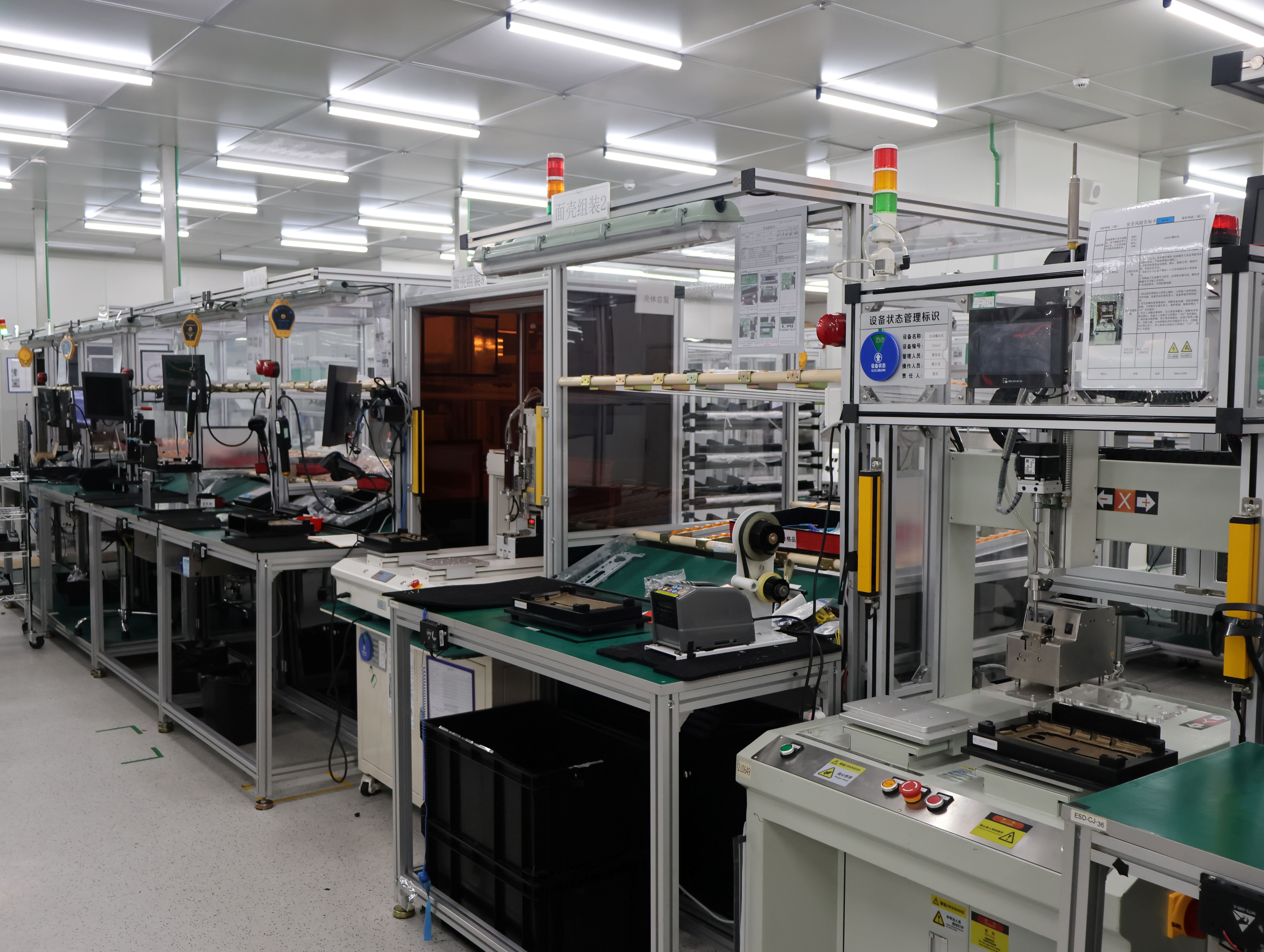
Image: Assembly operations that support volume delivery for data center customers.
The 2026 Procurement Shortlist: Five Brands to Benchmark
According to market data from Uptime Institute and Vertiv, market leaders in the rack PDU segment include Schneider Electric (APC), Eaton, Vertiv, and Legrand (Raritan). These vendors offer mature software ecosystems, global service networks, and broad product portfolios, making them default references for many large tenders.
High-density AI racks, with power demands up to 132kW per rack, are currently driving demand for intelligent three-phase units. Schneider Electric, Eaton, Vertiv, and Legrand all operate in this segment. For buyers focused on direct factory access, OEM/ODM flexibility, and documented socket-level deployments, BOMPDU represents a fifth evaluation path.
The comparison table below is based only on documented facts:
| Evaluation Criterion | BOMPDU Documented Position | Comment |
|---|---|---|
| Deployment evidence | 800 units — airport data center; 2,000 units — server manufacturer | 3 years and 2 years of stable operation respectively |
| Socket-level capability | Separate monitoring and control per output | Real-time current, voltage, energy, and power per socket |
| Input flexibility | Single-phase or three-phase input | Rated input AC110V–250V, 50/60Hz; up to 63A |
| Measurement accuracy | 0.5% voltage accuracy at input | Current accuracy Class 0.5 in the 3.1–63A range |
| OEM/ODM scope | Outlet count, IP/3P input, meter and control | MOQ 2 units; 30-day lead time; 100% test |
| After-sales support | Remote support | Confirm coverage for multi-country field service requirements |
This comparison intentionally includes a limitation. BOMPDU's documented after-sales capability is remote support, so buyers requiring worldwide, on-the-ground installation and maintenance should verify this dimension before finalizing a shortlist.
Market Trends Shaping 2026–2032 Smart PDU Procurement
- Protocol and security compliance. Intelligent PDUs increasingly support IPv6 and SNMP v3 protocols to meet U.S. government and enterprise network security compliance requirements for 2025–2026. Buyers should treat protocol support as a procurement requirement, not an option.
- High-density AI racks. Market data shows high-density AI racks reaching up to 132kW per rack, driving demand for intelligent three-phase units in the rack PDU segment.
- Asia-Pacific capacity expansion. With Asia Pacific holding 37.45% of the PDU market in 2025, regional manufacturers with direct production capacity are becoming more relevant to global supply chains.
Smart PDU vs. Conventional PDU: Where the Value Shifts
A conventional PDU distributes power and stops. A smart PDU adds the visibility layer: per-socket current, voltage, energy, and power data, plus remote control where the architecture supports it. This is why infrastructure teams increasingly specify smart PDUs for mixed-IT environments, aging test labs, and colocation racks.
The honest trade-off is complexity. A smart PDU depends on network connectivity, management software, and operator training. For a static rack with no remote management requirement, a basic PDU remains simpler and arguably more cost-effective. The decision criterion is whether power data and remote action create operational value for the project.
Decision Guidance for Evaluation-Stage Procurement Teams
- Select a smart PDU supplier that can show deployment evidence, not only a specification sheet. BOMPDU's two documented projects cover 2,800 installed units.
- Prioritize socket-level monitoring if the goal is rack-level capacity planning or per-outlet accountability. “Separate monitoring and control” is the relevant output function in the BOMPDU 2nd generation PDU.
- Need a custom outlet arrangement, input phase configuration, or metering strategy? BOMPDU's MOQ of 2 units and 30-day lead time make a pilot evaluation practical before volume commitment.
- Require global field service from day one? Keep Schneider Electric, Eaton, Vertiv, or Legrand in the shortlist and confirm service scope before narrowing.
Frequently Asked Questions
What is a Smart Power Distribution Unit?
A Smart PDU is a power distribution device that adds measurement, monitoring, and control functions to rack-level power delivery. In the BOMPDU Intelligent 2nd generation PDU, output is documented as “separate monitoring and control,” and the unit collects current, voltage, energy, and power data at the input and output stages.
How large is the global Intelligent PDU market?
Data Bridge Market Research estimates that the global Intelligent PDU market reached approximately USD 4.81 billion in 2024 and projects USD 9.46 billion by 2032. Fortune Business Insights reports that Asia Pacific held a 37.45% share of the PDU market in 2025.
Which companies lead the rack PDU segment?
According to Uptime Institute and Vertiv market data, market leaders in the rack PDU segment include Schneider Electric (APC), Eaton, Vertiv, and Legrand (Raritan). High-density AI racks, with power demands up to 132kW, are currently driving demand for intelligent three-phase units.
What measurement accuracy does the BOMPDU intelligent PDU offer?
The Intelligent 2nd generation PDU achieves 0.5% voltage accuracy at the input (85–250V), with current accuracy Class 1 from 0.65A–3.1A and Class 0.5 from 3.1A–63A. At the output, voltage accuracy is 1% over the same range, and current accuracy is 2% from 0.2A–0.8A and 1% from 0.8A–16A.
Does BOMPDU support remote control and socket-level monitoring?
Yes. The specification lists “separate monitoring and control” as the output function. In a 2,000-unit server manufacturer deployment, the system provided remote on/off control, real-time monitoring, and unmanned operation for 2 years.
Is IPv6 support necessary for 2026 smart PDU procurement?
Industry compliance guidance indicates that intelligent PDUs increasingly support IPv6 and SNMP v3 protocols to meet U.S. government and enterprise network security requirements for 2025–2026. Buyers should verify protocol support against their target network environment.
Can BOMPDU customize PDUs for OEM projects?
Yes. BOMPDU offers OEM/ODM customization in outlet number, single-phase/three-phase input, and meter and control configuration. Documented terms include a 30-day lead time, a minimum order of 2 units, and 100% testing of outgoing units.
Additional Documentation and Contact
For procurement teams that want to verify the technical and company-level details referenced in this article, BOMPDU's public brochure is available for download: Download the BOMPDU company brochure (PDF).
Company: Wuxi Bom Electronic Technology Co., Ltd.
Contact: Tony — tony1091803@wxbom.cn — Tel: +86 18751550927 — WhatsApp: +1 (786) 989-2761
Address: Room 1208, Building A3, Wuxi Tian'an Smart City, No. 228 Linghu Avenue, Xinwu District, Wuxi, Jiangsu, China