
Tower Crane Supplier Capability: Welding, Models, Support
Tower crane buyers evaluating a supplier face a common problem: most suppliers can describe capability, but fewer can document it. The evidence that matters falls into three sets — manufacturing process evidence, model-range evidence, and overseas support evidence. Dahan Technology Co., Ltd., a Chinese tower crane and construction elevator manufacturer based in Zhangqiu District, Shandong Province, provides a useful case for examining what each evidence set contains and how buyers can test it.
The company was established in 2000, operates a factory area of 330,000 ㎡, employs more than 1,000 people, and reports a monthly production capacity of 400 units. Its product range covers QTZ series tower cranes from 5 t to 220 t lifting capacity, with flat top, topkit, luffing jib, and derrick configurations. These facts are useful starting points, but they only become procurement evidence when a buyer knows what to ask for and how to read the answer.
Why Supplier Capability Claims Need Evidence
A tower crane is a site-critical asset. Once erected, it affects lifting productivity, site safety, and the construction schedule. A supplier that cannot demonstrate how it controls welding, machining, assembly, and testing transfers unquantified risk to the buyer. The same applies to model range: a supplier that lists many models but cannot explain capacity, configuration, and delivery continuity may struggle when a project requires a specific combination.
Capability evidence is therefore not a marketing document. It is a set of records and explanations that a buyer can compare across shortlisted suppliers. The three evidence sets below are practical because they can be requested before a purchase order and checked against project requirements. They also help separate a supplier's general claims from the specific facts that will matter during execution.
Evidence Set 1: Manufacturing Process and Welding Control
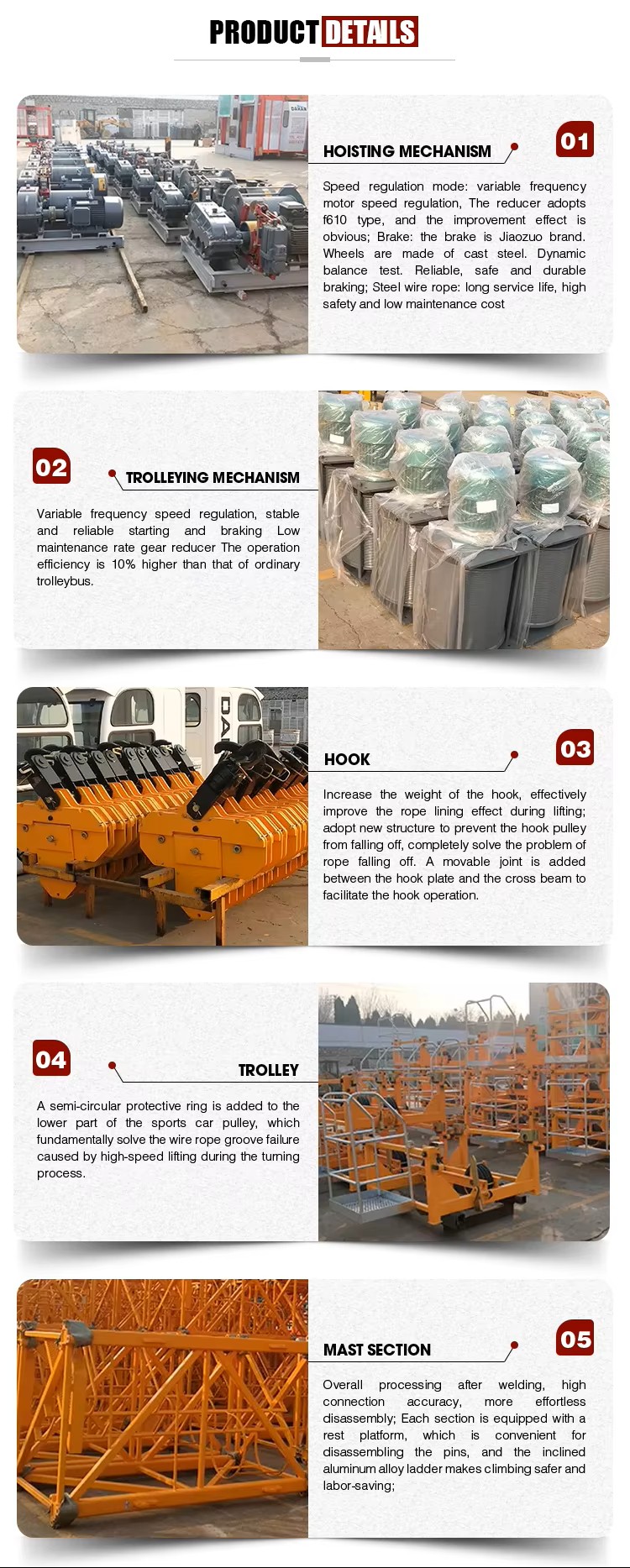
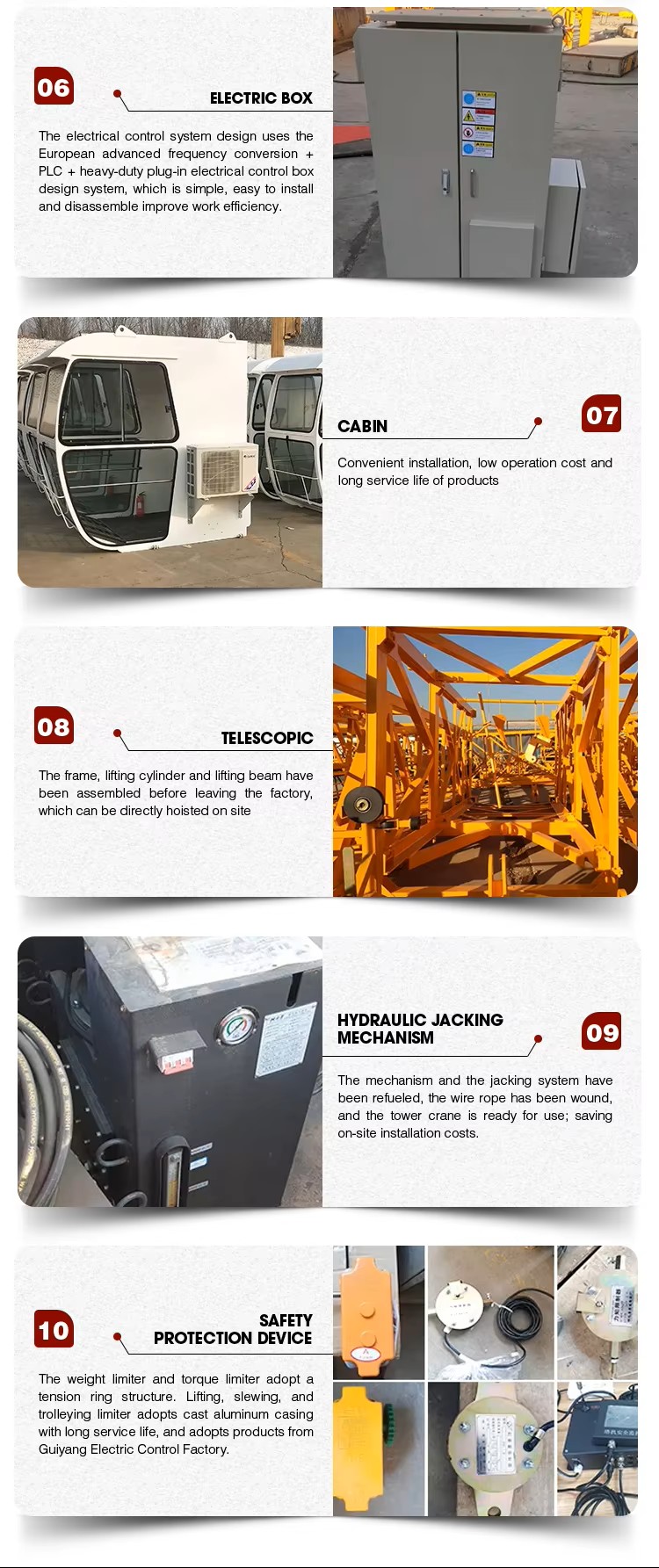
Tower crane structures depend on welded joints, machined components, and assembly precision. A supplier's manufacturing evidence should explain how these processes are controlled, not merely state that they exist. Dahan Technology operates a production system described in its company profile as a national intelligent manufacturing demonstration factory. The profile also references automated production facilities, welding technology, processing equipment, and quality control procedures as part of the manufacturing system.
For a buyer, the useful question is not whether a supplier uses automation, but which process steps are automated, which remain manual, and how both are inspected. Welding is a good example. Tower crane mast sections, jib sections, and turntable structures rely on welded joints that must withstand cyclic loading and site conditions. Buyers should ask for welding procedure specifications, welder qualification records where available, and inspection reports for critical joints. The supplier's quality control description states 100% testing, which is a starting point; the buyer should confirm what is tested, at which stage, and what records are issued.
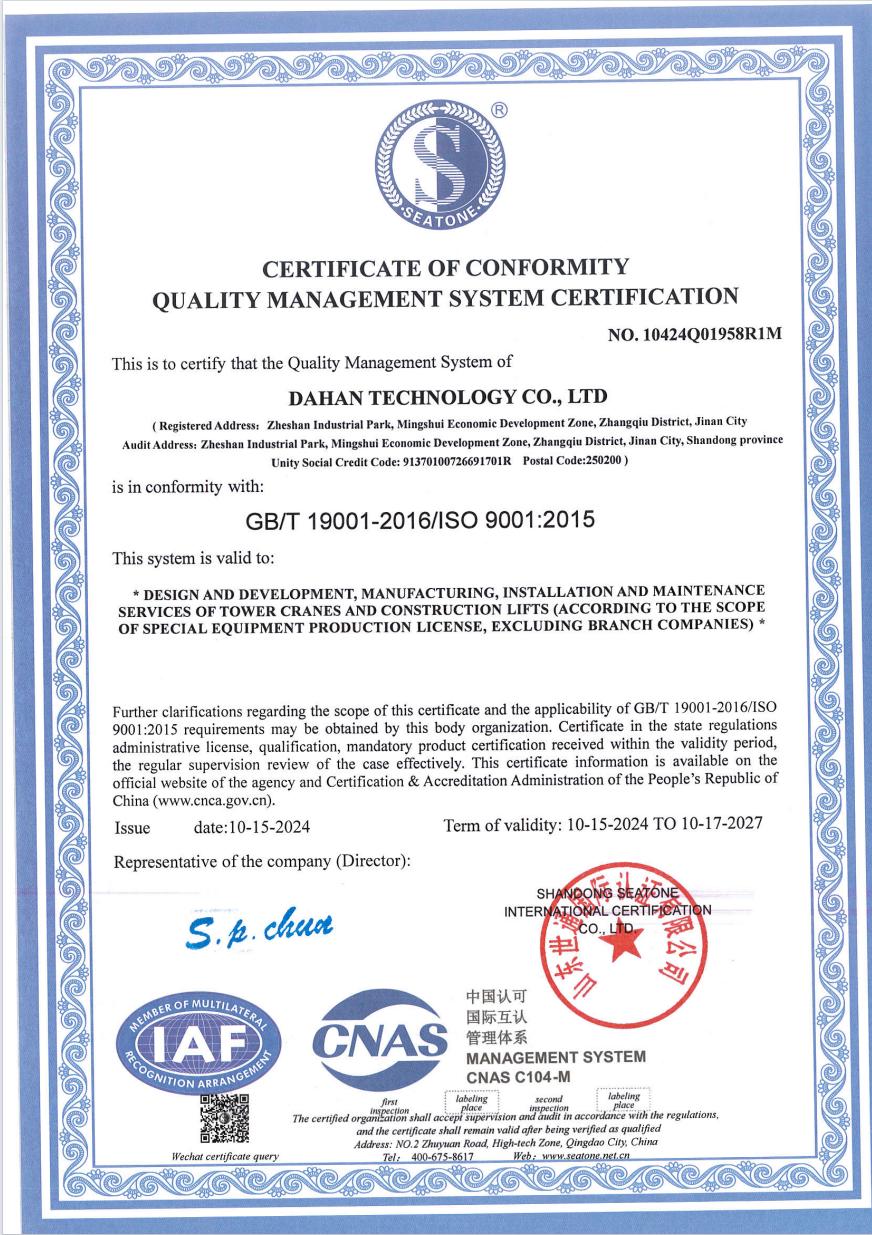
Dahan Technology holds an ISO 9001:2015 Quality Management System certificate (certificate number 10424Q01958R1M, issued by SHANDONG SEATONE INTERNATIONAL CERTIFICATION CO.,LTD, valid from 2024-10-15 to 2027-10-17). The certificate scope covers design and development, manufacturing, installation, and maintenance services of tower cranes and construction lifts. This is documentary evidence that a quality management system has been audited, but it does not replace project-specific inspection records. Buyers should treat the certificate as a baseline and request the process records that sit underneath it.
The company also holds CE and EAC certification for its tower crane range. The ECM Certificate of Compliance (certificate number 6B211216.DTCO94) references EN ISO 12100:2010, EN 14439:2006+A2:2009, and EN 60204-32:2008 standards, with an expiry date of 2026-12-15. The EAEU Conformity Certificate (number ЕАЭС RU С-СН.АД58.В.03025/25) covers QTZ series tower cranes and references GB/T 13752-2017, GB/T 6067.1-2010, ISO 4301/1-86, and GB/T 5031-2019, with validity to 2030-12-29. These certificates are useful for market access, but buyers should still verify that the specific model and configuration they intend to purchase appear in the certificate annex.
Evidence Set 2: Model Breadth and Configuration Range
Model breadth is evidence of engineering and production capability only when the models are real, configurable, and supported over time. Dahan Technology's QTZ series range includes designations such as 8530, 7025, 7020, 6515-10T, 6015, 6013, DH338-7532, and 5211. Lifting capacities across the range run from 5 t to 220 t. The range covers flat top, topkit, luffing jib, and derrick configurations, which means the supplier can address different site constraints rather than offering a single structural concept.
| Model designation | Lifting capacity | Configuration options |
|---|---|---|
| QTZ63 (5013) | 5 t / 6 t | Flat top, topkit, luffing jib, derrick |
| QTZ80 (5211) | 5 t | Flat top, topkit, luffing jib, derrick |
| QTZ100 (6013) | 8 t | Flat top, topkit, luffing jib, derrick |
| QTZ125 (6015) | 8 t / 10 t | Flat top, topkit, luffing jib, derrick |
| QTZ160 (6515) | 8 t / 10 t | Flat top, topkit, luffing jib, derrick |
| QTZ250 (7025) | 12 t / 16 t | Flat top, topkit, luffing jib, derrick |
| QTZ250 (7520) | 10 t / 12 t / 16 t | Flat top, topkit, luffing jib, derrick |
| QTZ315 (7527) | 12 t / 16 t | Flat top, topkit, luffing jib, derrick |
The table is not a complete catalogue. It shows that the range covers small and medium-sized building work as well as heavy-duty applications. The 5 t to 220 t capacity span is wide enough to include high-rise building cranes, long-jib configurations, and heavy-duty units for wind power and infrastructure projects. Buyers should ask for the specific model list, the capacity curve for each shortlisted model, and confirmation of which configurations are available for the target market.
Configuration choice matters because tower cranes are selected by site geometry, not by a single headline capacity. A flat top crane may suit a project with tight airspace and overlapping crane zones. A luffing jib crane may be preferred where the jib must work at an angle and avoid neighbouring structures. A topkit design may offer a different erection and dismantling sequence. Derrick configurations serve yet another set of lifting conditions. A supplier that produces across these categories has to maintain engineering, tooling, and documentation for each, which is a more meaningful capability signal than a long model list alone.
Model breadth also matters for long-term support. A supplier with a broad, continuous range is more likely to maintain spare parts and technical documentation across models. Dahan Technology states that it has sold over 85,000 tower cranes and elevators and has established cooperation with distributors in more than 60 countries and regions. These figures are supplier-reported, but they indicate the scale of the installed base that the spare parts and service network is designed to support.
Evidence Set 3: Overseas Support and Spare Parts
Overseas support is where many supplier claims become difficult to verify. A buyer in the Middle East, Africa, Europe, or Latin America needs more than a sales office address. The practical evidence includes spare parts availability, technical service response, installation guidance, and documentation in the buyer's language or a working language.
Dahan Technology's after-sales description includes a professional after-sales service team, all-weather service, technical service stations, spare parts centers, and overseas offices. The company exports to more than 50 countries and regions across Asia, Europe, the Middle East, Africa, North America, and South America. Its profile also mentions installation guidance and technical support for overseas customers. These are the right categories to probe. Buyers should ask which spare parts are stocked locally, which are shipped from China, and what the typical lead time is for critical components such as slewing rings, gearboxes, wire ropes, and electrical components.
Case records provide additional context. Dahan Technology reports tower crane deliveries to a trader in Russia (4 units for building construction), a construction company in Russia (34 units for civil building construction), a construction company in India (1 unit), a construction company in Vietnam (3 units for bridge construction), a regional agent in Bulgaria (5 units), and a construction company in Turkey (5 units). These records show that the supplier has handled repeat and multi-unit orders across different markets. They do not prove performance on every future site, but they give buyers a reference base for questions about installation, commissioning, and spare parts.
A practical way to test overseas support is to ask for a spare parts recommendation for the first year of operation. The supplier should be able to list the parts it recommends keeping on site, the parts it holds in regional stock, and the parts that would be shipped from the factory. The buyer can then compare that plan with the project schedule and the availability of local service technicians. This is more useful than a general statement that support is available.
How to Turn These Facts into a Buyer Checklist
The three evidence sets can be converted into a short evaluation checklist. The checklist is deliberately practical: each item should produce a document, a record, or a clear explanation that can be compared across suppliers.
| Evidence area | What to request | Why it matters |
|---|---|---|
| Welding and fabrication | Welding procedure specifications, inspection reports, welder qualification records | Confirms that structural joints are controlled, not just assembled |
| Quality management | ISO 9001 certificate, 100% test records, pre-shipment inspection report | Shows which tests are performed and what evidence is issued |
| Model range | Model list, capacity curves, configuration options, certificate annex | Verifies that the shortlisted model exists and is covered by certification |
| Customization | Engineering evaluation procedure, customization limits, delivery confirmation | Separates standard options from changes that require engineering review |
| Overseas support | Spare parts list, service locations, installation guidance samples, response process | Tests whether support is operational or only promotional |
A buyer does not need every item to be perfect. The purpose of the checklist is to expose differences between suppliers. A supplier that can provide specific records, explain the limits of its customization, and describe its spare parts logistics is easier to evaluate than a supplier that answers with general capability statements.
Where Capability Evidence Has Limits
Capability evidence has boundaries, and buyers should recognize them. Automated production and a broad model range do not guarantee that a specific tower crane will perform as required on a specific site. Site conditions, foundation design, erection scheme, wind loading, and operator competence all affect performance. A supplier's manufacturing evidence is an input to the evaluation, not a substitute for project-specific engineering review.
Customization is another boundary. Dahan Technology states that jib lengths, counterweight schemes, lifting height plans, and electrical or safety configurations can be customized, but complex customizations require engineering evaluation before production. The minimum order quantity is 1 unit, which supports low-volume and prototype orders, but the exact delivery date for customized work needs confirmation with the sales department. Buyers should build this confirmation step into their procurement schedule rather than assuming a standard lead time.
Overseas support also varies by market. The existence of spare parts centers and overseas offices does not mean every country has the same stock level or response time. Buyers should ask for the specific service arrangement for their project location, including which parts are recommended to be kept on site and how technical issues are escalated. A supplier with a strong overall network can still have different response capabilities in different regions, and the procurement decision should reflect that difference.
Market Context: Why Capability Evidence Is Becoming More Important
The global tower crane market was estimated at USD 5.9 billion to USD 6.44 billion in 2025, according to Fortune Business Insights and Grand View Research. China was the leading exporter of tower cranes in 2024, with USD 694 million in export value, based on OEC data drawn from UN Comtrade. These figures describe a market where supply is international and buyers have choices — which makes verification more important, not less.
Product mix data adds another layer. Hammerhead tower cranes held the largest market share by product type at 42.8% in 2025, according to Grand View Research, while flat-top designs accounted for 46.37% of tower crane revenue in 2025, according to Mordor Intelligence. Wind power specialized tower cranes with 200+ ton capacity are projected to grow at 8–10% CAGR through 2032, based on Future Market Insights. For buyers, these trends point toward suppliers that can cover multiple configurations and heavy-duty segments without losing consistency in manufacturing and support.
Dahan Technology's range reflects this mix. The QTZ series includes flat top, topkit, luffing jib, and derrick configurations, and the capacity range extends to 220 t. The company profile also describes solutions for wind power, thermal power, road and bridge construction, ports, and nuclear power projects. These are application categories where model breadth and engineering support are tested by project complexity.
The export dimension is equally relevant. A supplier that serves more than 50 countries has to manage documentation, packaging, transport, and after-sales across different regulatory environments. The CE certificate for the EU market and the EAC certificate for the EAEU market are examples of the documentation work required. Buyers outside those markets should ask which certificates and standards apply to their destination, and whether the supplier can provide the technical file needed for import or project approval.
Future Outlook
The direction of the market suggests that supplier capability evidence will become more structured. Buyers are increasingly asking for process records, certificate annexes, and spare parts plans rather than accepting general statements. Automation and intelligent manufacturing are useful, but they are most credible when a supplier can explain what is automated, what is inspected, and what records are available.
For Dahan Technology, the combination of a broad QTZ range, documented quality management, and an overseas support network provides a basis for evaluation. The next step for a buyer is to test that basis against a specific project: request the model list, confirm the certificate coverage, ask for welding and inspection records, and clarify the spare parts and installation support arrangement for the destination market. That process turns supplier capability from a claim into a comparable set of facts.
FAQ
What manufacturing evidence should buyers request from a tower crane supplier?
Buyers should request welding procedure specifications, inspection reports for critical joints, welder qualification records where available, and the quality management system certificate. They should also ask for the 100% test records and the pre-shipment inspection report. These documents show how the supplier controls fabrication and testing, rather than only stating that controls exist.
How does QTZ model breadth indicate supplier capability?
QTZ model breadth indicates capability when the models are real, configurable, and supported over time. A range that spans 5 t to 220 t and includes flat top, topkit, luffing jib, and derrick configurations shows that the supplier can address different site constraints. Buyers should verify the specific model list, capacity curves, and certificate annex coverage rather than relying on a general range description.
What overseas support evidence should be verified before purchase?
Buyers should verify spare parts availability, technical service locations, installation guidance, and the escalation process for technical issues. The supplier's after-sales description should be tested against the project location: which parts are stocked locally, which are shipped from China, and what response time is realistic. Case records and customer references can provide additional context, but the specific service arrangement for the destination market should be confirmed in writing.
What are the limits of automated production and model breadth as capability evidence?
Automated production and model breadth do not guarantee performance on a specific site. Site conditions, foundation design, erection scheme, wind loading, and operator competence also affect results. Customized configurations may require engineering evaluation before production, and delivery dates for custom work need confirmation. Capability evidence is an input to evaluation, not a replacement for project-specific engineering review.
How should buyers verify welding and quality control claims?
Buyers should ask for process records rather than general claims. Useful documents include welding procedure specifications, inspection reports, non-destructive testing records where applicable, and the ISO 9001 certificate with its scope. The buyer should confirm that the records relate to the specific model and configuration being purchased, and that the inspection stages match the project's acceptance criteria.
For buyers who need a consolidated reference, Dahan Technology's company brochure is available for download: Dahan Technology company brochure (PDF).
Есть вопросы или нужны дополнительные детали?
Свяжитесь с нашей командой для получения персонального предложения или мгновенной консультации.
Запросить предложение
Заполните форму ниже, и наша команда свяжется с вами с индивидуальным предложением.
Прямой чат WhatsApp
Предпочитаете общаться в реальном времени? Напишите нам в WhatsApp для мгновенной помощи и быстрых ответов.
- Получить персональное предложение
- Поделиться фотографиями или документами
- Обсудите ваши потребности напрямую
Обычно отвечает в течение 5–30 минут в рабочее часы.