
Toyota Camry Headlamps: OEM vs TYJ Aftermarket Compared
Toyota Camry Headlamps: OEM vs TYJ Aftermarket Compared
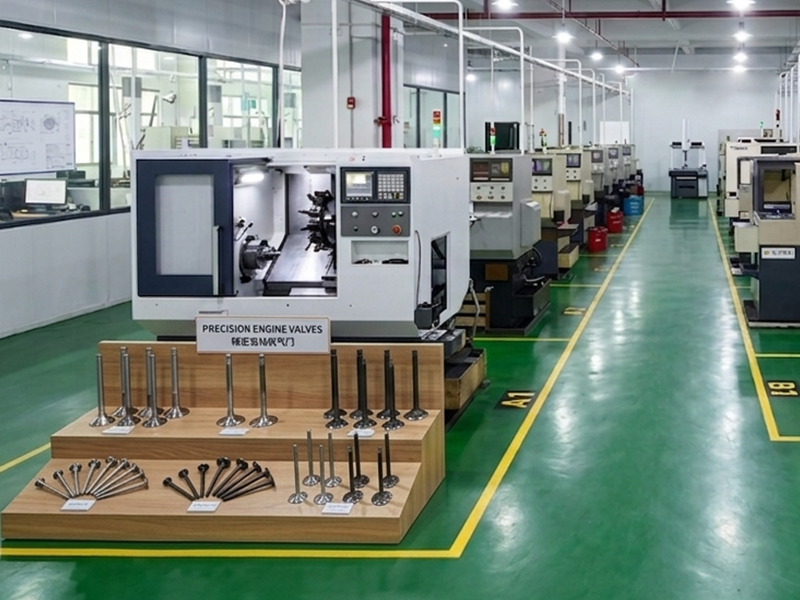
Verification, not branding, is the deciding variable when buyers compare OEM and aftermarket Toyota Camry headlamps.
A headlamp purchase for a Toyota Camry is rarely only a parts-order decision. It sits at the intersection of material specification, model-year fitment, packaging economics and, in many markets, warranty or insurance compliance. Buyers comparing an OEM assembly with an aftermarket equivalent therefore need model-level specifications rather than brand-level impressions — and model-level specification data is exactly where publicly available information is thinnest.
Ruian Golden Import and Export Co., Ltd., trading as Gold Auto Part, is an automotive parts exporter based in Ruian, Wenzhou, Zhejiang Province, China. The company supplies engine valves, Toyota exterior and lighting parts, oil filters, air filters and a wider catalog of replacement parts for passenger cars and light commercial vehicles, serving importers, wholesalers and distributors across the Middle East, Saudi Arabia, the UAE, South America, Southeast Asia, Africa and Europe. Within that catalog, three Camry headlamp assemblies are documented at model level: TYJ-01-0171, TYJ-01-1001 and TYJ-01-1080.
This reference sets OEM and TYJ aftermarket headlamps side by side on criteria an Evaluation-stage buyer can actually verify: documented application scope, declared material, carton and loading data, batch verification practice, and the compliance boundaries where the aftermarket route stops being the right answer.
The 2026 Buying Context Behind Toyota Replacement Parts Demand
Replacement demand for Toyota body parts and lighting tracks vehicle age more closely than it tracks new-car sales. The average age of vehicles on U.S. roads reached 12.6 years in 2026, according to Business Research Insights, which places the 2015 and 2018 Camry model years — the two generations covered by TYJ-01-0171 and TYJ-01-1001 — inside the peak repair window. Toyota's own market position reinforces the size of that installed base: Toyota Market Trends 2026 records the brand at 11.4% of the global automotive market, maintaining its status as the leading brand.
Category-level sizing is directionally useful but methodologically inconsistent. Vertex AI Search estimates the global automotive aftermarket at USD 860.08 billion in 2025, growing to USD 1,482.12 billion by 2035, while Grand View Research places 2025 at USD 489.5 billion under a differently scoped definition. The two figures are not comparable line items, and neither should be used to justify a specific part price or program volume. What both support is the same conclusion: replacement-part volume is structurally large and regionally concentrated, with Asia Pacific holding a 29.4% revenue share of the automotive aftermarket in 2025.
China's role as a supply base is measurable. China exported approximately USD 10.9 billion of motor vehicle parts under HS 870899 in 2024, according to UN Comtrade and WITS data. Ruian, where Gold Auto Part is based, is described by the company as one of the country's most established automotive parts manufacturing hubs. For buyers, that concentration creates both a deep supplier pool and a verification problem: many exporters describe similar ranges, and the real differentiators sit in specification disclosure, batch testing evidence and packaging data — not in catalog breadth.
What the Documented TYJ Camry Headlamp Assemblies Specify
The clearest way to evaluate an aftermarket headlamp program is to read its specification table as a buyer would, line by line. The three documented Camry assemblies share a material declaration but differ in scope, carton geometry and units per carton.
| Attribute | TYJ-01-0171 | TYJ-01-1001 | TYJ-01-1080 |
|---|---|---|---|
| Part type | Head Lamp (Auto Lighting Systems) | Head Lamp (Auto Lighting Systems) | Head Lamp (Auto Lighting Systems) |
| Declared application scope | TOYOTA CAMRY 2015 USA | TOYOTA CAMRY 2018 USA / SE / XSE | CAMRY 2024 USA |
| Declared material | Optic-grade PC & ABS polymers | Optic-grade PC & ABS polymers | Optic-grade PC & ABS polymers |
| Units per carton | 4 | 4 | 2 |
| Carton dimensions | 76 × 48 × 58 cm | 74 × 56 × 56 cm | 76 × 28 × 52.5 cm |
| Carton volume | 0.212 CBM | 0.232 CBM | 0.112 CBM |
| Derived packed volume per unit (approx.) | 0.053 CBM | 0.058 CBM | 0.056 CBM |
Source: Gold Auto Part (Ruian Golden Import and Export Co., Ltd.) product data for the Camry headlamp assemblies. Per-unit volumes are derived from the published carton quantity and carton volume.
Three observations follow directly from the table. First, the material declaration is identical across all three assemblies, which lets a buyer standardize material requirements across Camry generations instead of negotiating a separate material line per model year. Second, the application scope is written at model-year level and, in the 2018 case, at trim level (USA / SE / XSE) — trim sensitivity is flagged by the supplier rather than left for the buyer to discover after delivery. Third, carton geometry differs materially between generations: the 2015 lamp packs four units into a 76 × 48 × 58 cm carton, while the 2018 lamp uses a 74 × 56 × 56 cm carton for the same four units. These are separate SKUs with separate packaging, not interchangeable cartons, and they should be ordered and warehoused as such.
Fitment and Construction: Reading a Headlamp Spec Sheet Correctly
Model-year labeling answers the first fitment question and none of the others. Before a bulk order, a buyer still needs written confirmation on several construction points per model:
- Lens and function set — whether the assembly is a halogen or LED unit, and whether associated control electronics are included in the delivered part.
- Connector and wiring configuration — the supplier's documented lamp programs describe high-precision optic lenses, seamless OE alignment and plug-and-play wiring, but those descriptions are attached to specific lamp cases in the record rather than to every SKU in the catalog.
- Mounting and adjustment features — bracket layout, clip slot design and adjuster accessibility, which determine whether the lamp can be brought back to OE beam geometry after installation.
- Assembly completeness — whether housing, lens, and any leveling or control module ship as one unit or as separate components.
The available record documents material and packaging for TYJ-01-0171 and TYJ-01-1001 but does not publish a line-by-line electrical specification for either. For a buyer in the Evaluation stage that gap is a question list, not a disqualifier — but it should be closed in writing before an order is placed, because lens technology cannot be inferred from a PC-and-ABS material declaration. A Camry 2015 assembly and a Camry 2024 assembly sit at genuinely different points on the lighting technology curve.
Why “Optic-Grade PC & ABS” Is a Starting Point, Not a Conclusion
Headlamp construction typically pairs a polycarbonate (PC) outer lens with an ABS housing. In general engineering terms, PC is selected for optical clarity and impact resistance, while ABS contributes structural rigidity to the mounting points and helps the housing retain shape through under-hood thermal cycling. Both properties matter in collision repair: a lamp that resists stone impact and holds its mounting geometry is far less likely to generate follow-up alignment complaints than one that does not.
The limitation is that “PC & ABS” describes a polymer family, not a performance level. UV stability, thermal behavior and impact resistance are determined by the specific grade, the additive package and the molding parameters used. Two lamps that both carry an “optic-grade PC & ABS” description can therefore behave differently in the same climate. Neither the material declaration for TYJ-01-0171 nor the one for TYJ-01-1001 is accompanied by published UV, thermal or shock test data in the available record, and no test result should be assumed on the buyer's side.
What the supplier does document is process-level control. Supply-chain partners operate under ISO 9001 and IATF 16949 quality management standards, and each product batch undergoes dimensional inspection, material verification and performance testing before shipment. IATF 16949:2016 is the global quality management standard for the automotive industry defined by the International Automotive Task Force (IATF). For buyers, batch-level process documentation is the practical substitute for a published material datasheet — and it should be requested at batch level, not accepted as a program-level statement.
Packaging, Loading and Reorder Economics
Packaging data is where a headlamp program's real cost structure becomes visible. Dividing carton volume by units per carton gives a packed-volume figure per lamp: approximately 0.053 CBM per unit for TYJ-01-0171, 0.058 CBM per unit for TYJ-01-1001, and 0.056 CBM per unit for TYJ-01-1080.
The three figures sit within a narrow band, which means the 2024-generation lamp's lower units-per-carton count of two, against four for the earlier assemblies, does not translate into materially worse cube efficiency. It does change handling: the same order volume arrives in roughly twice as many cartons, which affects warehouse labor, pallet build and receiving time more than it affects freight volume. Distributors mixing Camry headlamps with Toyota bumper, grille and side-mirror programs should plan shelf and pallet space by carton count, not only by unit count.
Two commercial parameters shape reorder planning more than packaging does. The documented production capability for this exporter is a monthly capacity of 100,000 units, with a lead time of 30–60 days and a minimum order quantity of 50–100 units. That combination supports frequent small replenishment of fast-moving model years and less frequent, larger buys of slower-moving ones — a scheduling pattern that matters when a distributor is carrying several Camry generations plus adjacent Toyota exterior parts lines at once.
Documented Field Performance and Its Limits
The strongest evidence in the available record concerns not the Camry lamps but the wider lamp and Toyota body parts programs supplied into the Middle East. An auto parts wholesaler and distributor in the United Arab Emirates placed container-load orders of more than 500 sets across a head lamp for Toyota Corolla 2014 Middle East (TYJ-01-0001A), a back lamp (TYJ-01-0005), a fog lamp (TYJ-01-0008) and a grille (TYJ-01-0014). The documented outcome is a 100% successful fitment rate, zero customer complaints, and repeat orders sustained over three to five years. Those case records describe high-precision optic lenses, seamless OE alignment and plug-and-play wiring for the lamp items, and high-impact PP/ABS material with original clip slot design for the body items.
Two limits should be stated plainly. First, these are program-level records for Corolla Middle East lighting and body-part applications — they are not Camry headlamp field data, and they should not be presented to a buyer as if they were. Second, “zero complaints” reflects one distributor relationship over a defined period; that is meaningful evidence of consistent execution on a repeat-order program, not a statistical claim about defect rates across the aftermarket category.
OEM vs. TYJ Aftermarket: Comparison at Criteria Level
Comparing an OE-branded Camry headlamp with a TYJ aftermarket assembly is most useful when it is done criterion by criterion, because the two routes are not substitutes on every dimension.
| Evaluation criterion | OE-branded Camry headlamp | TYJ aftermarket Camry headlamp |
|---|---|---|
| Part identity | Sold under the vehicle manufacturer's parts identity; referenced by factory part number | Aftermarket replacement part identified by its own model designation, such as TYJ-01-0171 or TYJ-01-1001 |
| Declared material specification | Not typically published to independent buyers | Optic-grade PC & ABS polymers declared across the documented Camry assemblies |
| Published packaging data | Usually quoted per order rather than published | Units per carton, carton dimensions and CBM published per model |
| Application scope labeling | Bound to factory part number and VIN-based lookup | Model-year and market label, including trim note (Camry 2018 USA / SE / XSE) |
| Documented export program | Not published | UAE distributor programs documented for lamp and Toyota body parts lines |
| Batch-level verification | Covered by the vehicle manufacturer's own release process | Supplier-stated pre-shipment dimensional inspection, material verification and performance testing |
| Lighting homologation documentation | Provided through the vehicle manufacturer's channel | Not included in the available record for these Camry models; must be verified per destination market |
| Availability for older model years | Depends on continued OE channel supply for the platform | Catalog covers 2015, 2018 and 2024 Camry generations within one supplier relationship |
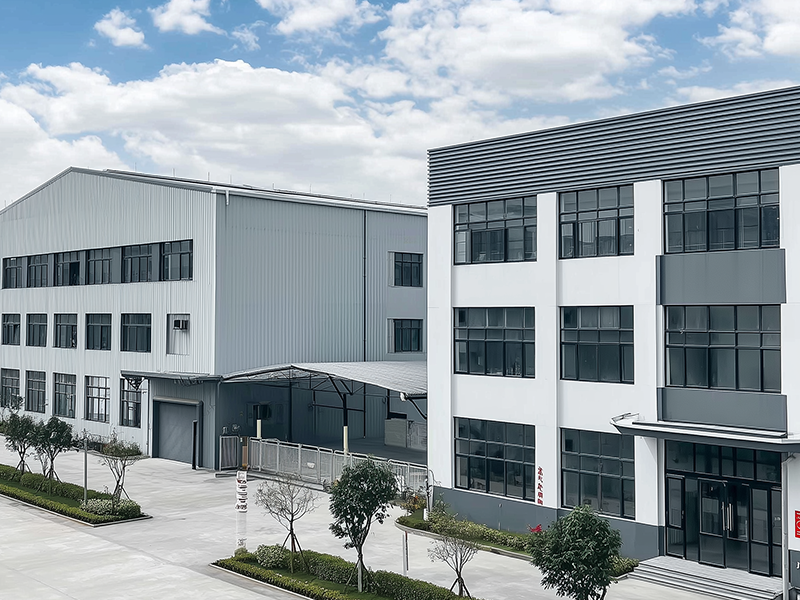
Gold Auto Part supplies Camry headlamp assemblies alongside Toyota bumper, grille and other exterior replacement parts.
The decisive constraint is not quality but compliance. An OE-branded headlamp is what franchised warranty terms, many insurers, and most lease or fleet maintenance contracts require: if a repair must be documented against the vehicle manufacturer's part number, an aftermarket assembly does not satisfy that requirement, regardless of how well it is built. Buyers should also treat “aftermarket” as a category rather than a quality tier — a documented TYJ assembly with a declared material line, published carton data and an established lamp program is not equivalent to an unbranded low-cost lamp with no specification sheet.
A second boundary concerns market access. The available record for TYJ-01-0171 and TYJ-01-1001 documents scope, material and packaging, but it does not include photometric or homologation documentation for destination markets. Importers selling into markets that regulate vehicle lighting must verify the applicable approval requirements separately, before committing to a program. Finally, the absence of Camry-specific field statistics in the record is itself a real limitation: program-level fitment evidence from Corolla Middle East applications is indicative, not transferable.
Market Trend Analysis: Where Toyota Aftermarket Parts Demand Is Heading
Collision repair volume sets the floor for headlamp, bumper and grille demand. The global automotive collision repair market was valued at USD 208.0 billion in 2025, according to Grand View Research, and that demand is structurally tied to vehicle age rather than to new-vehicle production.
Lighting technology is shifting in parallel. Automotive lighting, including Toyota RAV4 headlamp assemblies, is moving toward LED technology for energy efficiency, a trend noted in third-party analysis of RAV4 headlight upgrades. For buyers the implication is that lamp programs must be evaluated per model year rather than per brand or per supplier: a 2015 Camry assembly, a 2018 Camry assembly and a 2024 Camry assembly sit at different points on that technology curve, and no single specification line can describe all three.
High-replacement-rate categories remain the volume engine of the aftermarket. The automotive filters aftermarket segment is expected to hold a 69.55% market share by 2026 because of high replacement rates, per Fortune Business Insights, and adjacent wear categories follow the same pattern — the automotive engine mount market was estimated at USD 16.73 billion in 2024 with growth projected at 3.64% CAGR to 2035, according to Market Research Future. Headlamps are not a consumable, but the buyer base overlaps heavily: the same distributor stocking automotive filters and engine valves typically also carries Toyota bumper, Toyota grille and Toyota headlamp assembly lines, and evaluates them with the same documentation standards.
The procurement behavior itself is changing. As more exporters publish material declarations, carton data and batch verification practices, buyers are shifting from brand-name comparison toward spec-sheet comparison. That shift favors suppliers who can answer a model-level question — units per carton, declared polymer grade, scope by trim — with a document rather than a description.
Future Outlook
Three shifts are likely to shape Toyota Camry headlamp procurement over the coming cycles. First, material and packaging disclosure is becoming a baseline expectation rather than a differentiator; buyers who currently compare on price alone will increasingly compare on declared grade, batch test documentation and carton data. Second, lighting electronics will continue moving toward LED and integrated control modules, which widens the specification gap between older and newer Camry generations and makes model-year granularity in supplier catalogs more important, not less. Third, compliance documentation will become the primary gate for market access in regulated regions, so suppliers able to produce market-specific approval paperwork alongside material and packaging data will hold a practical advantage over those that cannot.
For importers and distributors, the practical response is procedural rather than strategic: keep model-year scope labels in the purchasing record, request batch-level verification documents with each shipment, and treat OEM and aftermarket routes as complementary lines serving different compliance environments rather than as competing versions of the same product.
FAQ
What is the difference between an OEM and an aftermarket Toyota Camry headlamp?
An OEM headlamp is produced for and sold under the vehicle manufacturer's parts identity, and it is the part referenced by franchised warranty and insurance repair documentation. An aftermarket headlamp such as the TYJ series is produced and supplied independently as a replacement part, identified by its own model designation — for example TYJ-01-0171 for Toyota Camry 2015 USA or TYJ-01-1001 for Toyota Camry 2018 USA / SE / XSE. The practical difference for buyers lies in part-number compliance and in how much specification data the supplier publishes.
Will a TYJ aftermarket Camry headlamp fit the same as the original unit?
Fitment depends on model year, trim and lamp function rather than on the OEM-versus-aftermarket distinction alone. Documented TYJ Camry assemblies are labeled by model year and market — Camry 2015 USA, Camry 2018 USA / SE / XSE, and Camry 2024 USA. The supplier's Middle East distributor records report a 100% successful fitment rate for the lamp and body-part programs covered in those cases, but those records concern Corolla Middle East applications rather than Camry headlamps. Camry-specific fitment should therefore be confirmed against the buyer's own vehicle data and a physical sample before a bulk order is placed.
What material should buyers verify in a Toyota headlamp assembly?
The documented TYJ Camry assemblies declare optic-grade PC and ABS polymers. In general engineering terms, polycarbonate is used for the outer lens because of its optical clarity and impact resistance, while ABS is used for the housing because of its structural rigidity and shape retention. Because UV stability, thermal performance and impact resistance depend on the specific grade, additive package and molding process, buyers should request batch-level material verification and performance testing records rather than treating the material description alone as sufficient evidence.
How should importers plan carton and container quantities for Camry headlamp orders?
Packing data should be taken directly from each model's carton specification. The documented Camry assemblies ship four units per carton for TYJ-01-0171 (76 × 48 × 58 cm, 0.212 CBM) and TYJ-01-1001 (74 × 56 × 56 cm, 0.232 CBM), and two units per carton for TYJ-01-1080 (76 × 28 × 52.5 cm, 0.112 CBM). Derived packed volume per unit is approximately 0.053, 0.058 and 0.056 CBM respectively, so cube efficiency is similar across generations, while the 2024 assembly generates roughly twice as many cartons per unit for handling purposes.
When is an OEM headlamp required rather than an aftermarket one?
When the repair must be documented against the vehicle manufacturer's part number. Franchised warranty terms, many insurance repair programs, and lease or fleet maintenance contracts commonly require OEM parts, and an aftermarket assembly does not satisfy that requirement regardless of its construction. Buyers should also verify destination-market lighting regulations independently, because the available record for the TYJ Camry assemblies documents application scope, material and packaging but does not include photometric or homologation documentation.
What evidence should a buyer request before approving a first Camry headlamp order?
Purchase documentation that closes the specification gaps: electrical and function details such as halogen or LED configuration, connector type and inclusion of control or leveling modules; mounting and adjuster dimensions; and a sample unit for physical fitment checks. On the supply side, the relevant records are batch-level dimensional inspection, material verification and performance testing before shipment, supported by supply-chain partners operating under ISO 9001 and IATF 16949 quality management standards. Customer support for part selection, order assistance and after-sales service is also part of the documented supplier process.
Buyers evaluating a Camry headlamp program can review the documented Camry lamp entries and the wider Toyota exterior parts catalog at goldautopart.com, and can request model-level specifications, batch verification records and packing data before committing to an order.