
Transformer Core Types in 2026: A Technical Overview for Industrial Buyers
The Growing Importance of Core Selection
Transformer cores directly determine energy efficiency, thermal performance, and overall system reliability. As global demand for power distribution, renewable energy integration, and EV charging infrastructure accelerates, industrial buyers must navigate an increasingly diverse landscape of core materials and geometries. Understanding the fundamental types and their trade-offs is the first step toward informed sourcing.
Who Is YadooTEK?
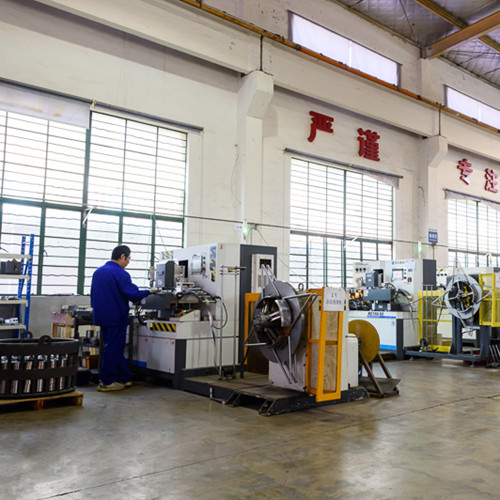
Wuxi Yado Electromechanical Co., Ltd. (YadooTEK) is a specialized manufacturer of magnetic materials and transformer cores based in Jiangyin City, Wuxi, Jiangsu Province, China. Established in 2022, the company operates a 1,000 m² facility with approximately 80 employees and an annual production capacity of about 250,000 units. With an export ratio of approximately 85%, YadooTEK serves over 40 countries across the Americas, Europe, Asia Pacific, and the Middle East. Its core product portfolio includes both wound cores (toroidal, C-core, electrically wound iron core, special-shaped iron core) and laminated cores (stepped laminated core, lap joint, right-angle laminated, EI/ED/SD/CD core, stepped cores, thin strip cores).
Core Materials and Types: A Technical Breakdown
Transformer cores are broadly classified by material and manufacturing process. The most common material is CRGO silicon steel, used for its high permeability and low core loss at power frequencies. For distribution transformers, YadooTEK supplies CRGO silicon steel lamination cores with thickness grades of 0.2 mm, 0.23 mm, 0.27 mm, and 0.3 mm, suitable for both dry-type and oil-immersed transformers.
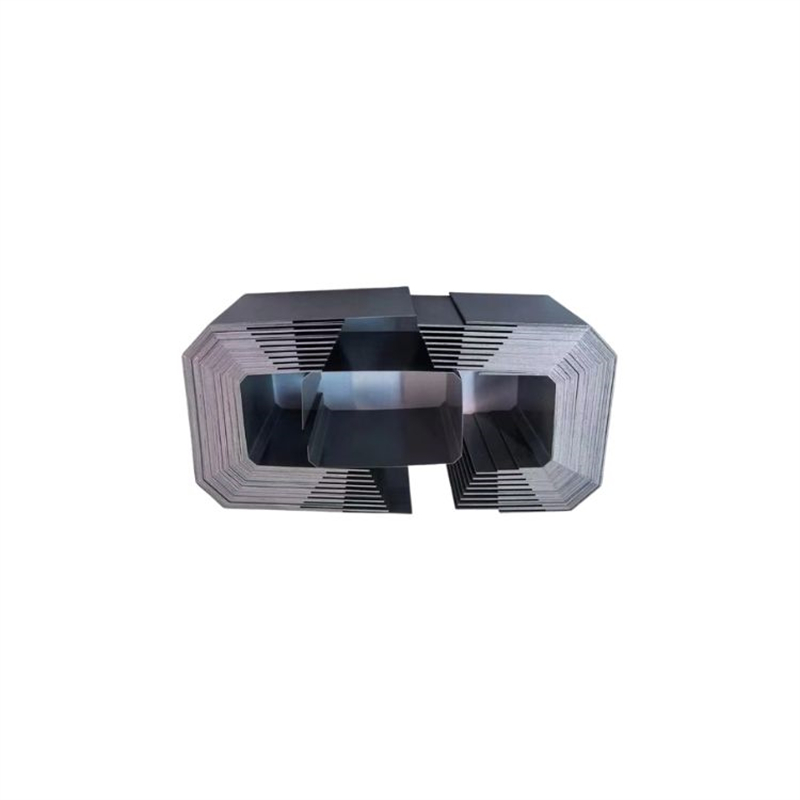
Unicore (folded core) design – used in high-efficiency distribution transformers. Image: YadooTEK.
For applications demanding extremely low core loss, thin strip cores made from amorphous or nanocrystalline materials are available. YadooTEK offers strip thicknesses of 0.05 mm, 0.08 mm, 0.10 mm, and 0.15 mm, classified as block cores, pulse transformer cores, or toroid cores. These materials reduce no-load losses by up to 70% compared to conventional silicon steel, though they come with higher material costs and lower saturation flux density.
Permalloy cores (nickel-iron alloys such as 1J85, 1J79, 1J50) provide extremely high permeability and low coercivity, making them ideal for precision current transformers, high-accuracy sensors, and medical X-ray equipment. YadooTEK manufactures toroidal permalloy cores and Ni-Fe alloy lamination cores tailored to customer specifications.
Another important category is the low current transformer and low current sensor core, which includes nanocrystalline cores, toroidal cores, gap cores, and CD cores. These are used in energy management, EV charging, and industrial control systems where compact size and accurate measurement are required.
For applications that require a distributed air gap to prevent saturation, distribution gap cores are available in both FeSi and amorphous material variants. Gap cores allow higher DC bias tolerance and are commonly used in line reactors and filter chokes.
Application Scenarios Across Industries
YadooTEK’s transformer cores are applied in a wide range of industries: electricity, industrial control, energy management, EV charging, medical X-ray, special power supply, and more. Typical working conditions include both indoor and outdoor installation, 50/60 Hz power systems, and operating temperatures ranging from -40°C to +155°C. The cores are designed for use in power transformers, current/voltage transformers, inductors, reactors, filters, switchgear, and distribution cabinets.
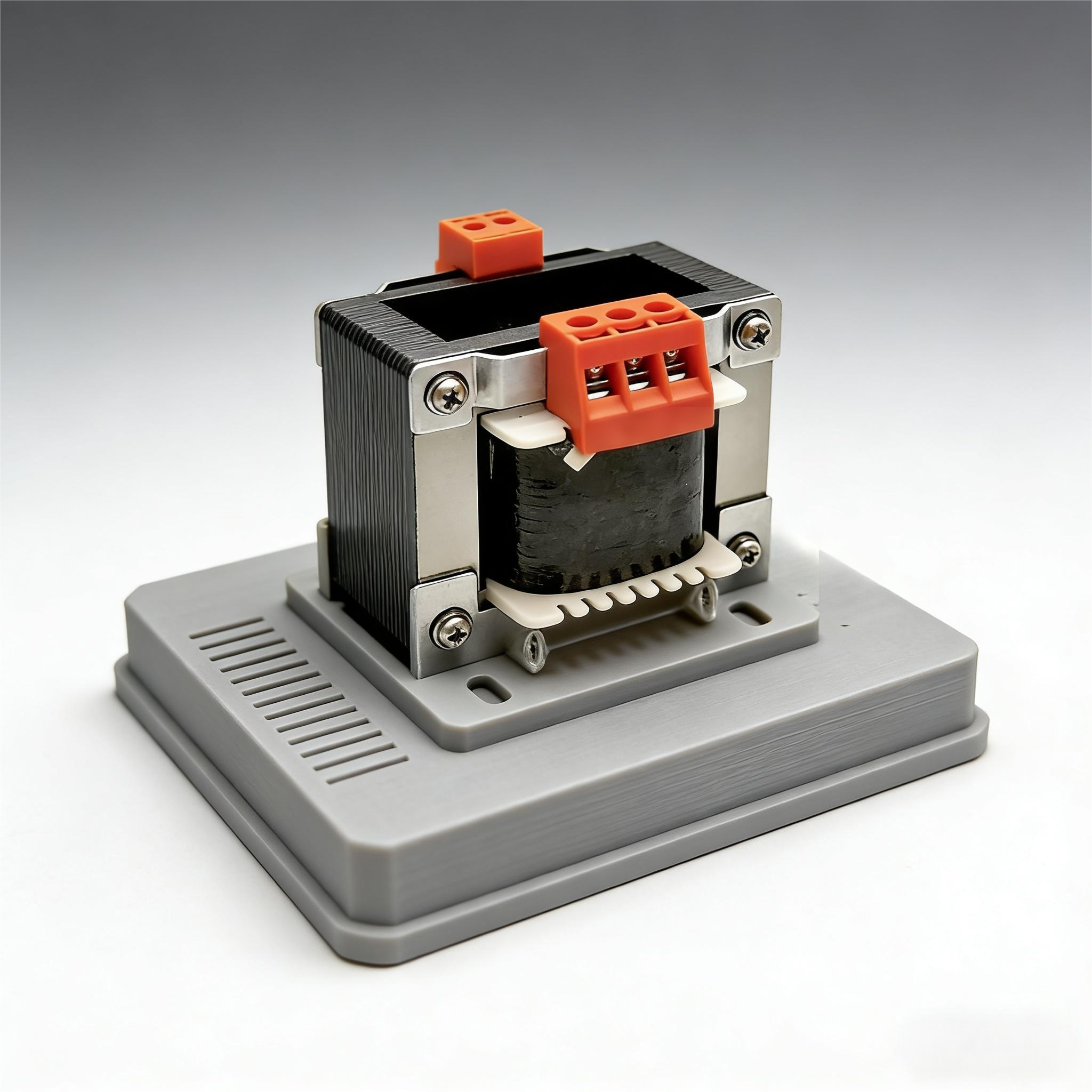
Typical industrial control transformer powered by YadooTEK cores.
Geographically, these cores are deployed in countries such as Canada, the United States, Mexico, Brazil, Poland, Germany, Spain, Russia, Saudi Arabia, South Korea, Thailand, and many others. The company’s ability to deliver customized designs—whether for dry-type or oil-immersed transformers, high-voltage or low-voltage applications—makes it a versatile partner for OEMs and system integrators.
Market Trends Driving Core Innovation
The global push for energy efficiency regulations (e.g., DOE 2016, EU Ecodesign) is accelerating adoption of amorphous and nanocrystalline cores in distribution transformers. Meanwhile, the rise of EV charging infrastructure and renewable energy inverters demands cores with high frequency capability and thermal stability. YadooTEK’s R&D team of 25 engineers continuously develops new products to meet these evolving requirements.
Another trend is the shift toward customized and hybrid cores. Off-the-shelf cores often fail to optimize the cost-performance ratio for specific designs. YadooTEK offers custom toroidal wound cores and non-standard iron cores with sizes ranging from OD 30–300 mm, ID 15–200 mm, and height 10–150 mm, rated from 50 VA to 10 kVA, with core loss ≤1.2 W/kg at 1.5 T, 50 Hz.
Traditional vs. Modern Core Solutions: An Honest Comparison
Conventional CRGO silicon steel lamination cores remain the most cost-effective choice for standard distribution transformers. They offer high saturation flux density (up to 2.0 T) and robust mechanical strength, which is why they still dominate the market. However, their no-load losses are significantly higher than those of amorphous cores, leading to greater energy waste over the transformer’s lifetime.
Amorphous and nanocrystalline cores cut no-load losses by roughly 70%, but they are more expensive to manufacture and have lower saturation flux density (around 1.5–1.6 T), which may require a larger core cross-section for the same power. YadooTEK supplies both technology families, enabling buyers to choose based on total cost of ownership and performance requirements.
One honest limitation: while permalloy cores offer unmatched permeability for instrumentation applications, they are not suitable for high-power transformers due to low saturation point and high cost. Buyers must match the core type to the specific operating regime.
Future Outlook
As power electronics continue to evolve, the demand for ultra-low-loss, high-frequency capable cores will grow. YadooTEK’s investment in thin strip and nanocrystalline technology positions it well to serve next-generation applications such as solid-state transformers and high-power EV chargers. With its full-process quality control—including core magnetic testing and transformer loss testing—the company ensures that each delivered core meets international standards such as RoHS and CE.
For a deeper look into YadooTEK’s capabilities and product range, download the company brochure: YadooTEK Brochure (PDF).