
Travel Makeup Bag Compliance: Reading a Spec Sheet Correctly
Compliance & Qualification Guide
A travel makeup bag is classified by its documentation long before it is classified by its appearance. Model GS-MB-001, listed by Great Shine Houseware Ltd. as a Travel Makeup Bag for travel storage, carries a specification sheet of six measurable lines: material, size, weight, closure, style and pattern. Those lines determine what a buyer can test, what a supplier can defend in an audit, and — in some markets — which set of procurement rules the product is judged against.
Great Shine Houseware Ltd. is a Shanghai-based manufacturer of storage boxes, storage bags, travel storage products, laundry storage and hanging storage, with a stated export ratio of 100% and export markets recorded as the EU and the Middle East. Its product records are useful for a narrower reason than brand familiarity: they show what a compliant specification sheet actually looks like when it is written for a buyer rather than for a catalogue.
This guide decodes that sheet line by line, then applies the same discipline to bulk grocery bag sourcing, where the criteria change but the qualification logic does not.
Why classification, not appearance, decides which standards apply
Two fabric items of similar size can sit in different regulatory and procurement categories. In the same Great Shine product record, one item is a Travel Makeup Bag for travel storage, and another is a Packing Cubes Set with a zipper closure. The first is a personal travel accessory; the second is a travel organisation set. That distinction is not cosmetic. It changes the capacity criteria a buyer may apply, the durability expectations a retailer will test, the customs heading a shipment is declared under, and the labelling and material documentation a compliance team will request.
The failure mode in procurement is almost always the same: a buyer selects a product, then discovers that the specification sheet uses a category word — pouch, cube, tote, shopping bag — that does not match the category the end market regulates. A bag marketed as a reusable shopping bag invites reusable shopping bag criteria. A bag marketed as a travel makeup bag does not, provided the classification is consistent across the specification sheet, the packaging and the commercial invoice.
Reading the GS-MB-001 specification sheet line by line
The value of a specification sheet is not that it contains numbers, but that each number closes a specific question. The table below shows what each recorded line of the GS-MB-001 record resolves, and what it deliberately leaves open.
| Specification line | What is recorded | What it settles for a buyer — and what it does not |
|---|---|---|
| Classification | Travel Makeup Bag, model GS-MB-001, for travel storage | Settles the procurement category and the retail expectation. Does not by itself establish eligibility under any scheme that defines reusable shopping bags. |
| Material | 600D Oxford Fabric, Canvas, Eco-friendly TPU, PVC, Custom Fabric Available | Settles which construction options can be quoted. Does not establish recycled content, fabric weight in GSM, or chemical compliance for a specific market. |
| Size | 20 x 15 x 8 cm | Settles external dimensions for sampling, carton planning and cabin-fit checks. Does not state internal usable volume or load capacity. |
| Weight | 0.2 kg | Settles freight estimation and handling expectations. Does not state a load rating or a seam-strength result. |
| Closure | Zipper | Settles the closing mechanism and the inspection point at final QC. Does not state slider type, tape strength or cycle-life performance. |
| Style and pattern | Foldable, Geometric | Settles packing behaviour and the print repeat for artwork approval. Does not state colourfastness or wash performance. |
| Customisation | Full OEM / ODM | Settles that the construction can be modified. Does not settle the MOQ or tooling implications of a specific change. |
Materials: what 600D Oxford, TPU and PVC commit a buyer to
The material field on the GS-MB-001 record lists four routes — 600D Oxford Fabric, Canvas, Eco-friendly TPU and PVC — plus custom fabric availability. Each route carries a different documentation burden.
600D Oxford Fabric is a woven textile designated by yarn fineness and weave. In sourcing practice, the denier figure tells a buyer how substantial the yarn is relative to lighter Oxford constructions; it does not, on its own, certify abrasion resistance, tear strength or water repellency. Those properties are established by test method and result, not by a number in a product name. A buyer who needs a performance claim should request the test report, not a heavier denier.
Eco-friendly TPU is a useful illustration of a term that needs translation. TPU (thermoplastic polyurethane) is a recognised polymer family, but 'eco-friendly' is a qualifier, not a standard. It does not specify bio-based content, recycled content, a certification scheme or a disposal pathway. Where a retail buyer or a public procurement programme asks for sustainability evidence, the TPU descriptor must be replaced by a documented material statement with a defined calculation boundary.
PVC is the least neutral option on the list. It is available on this construction, but some public procurement criteria expressly exclude it. The reusable bag criteria published for the New York State procurement programme, for example, state that qualifying bags must not be made of polyvinyl chloride (PVC) or vinyl. That is a programme-specific rule rather than a universal legal prohibition, but it shows how a single material line on a specification sheet can determine eligibility in a specific sales channel long before price is discussed.
Custom fabric is the flexibility line, and it is where the OEM / ODM scope matters. Great Shine records minor customisation, drawing-based customisation, sample-based customisation and full customisation as available routes, with a design team of 10. In practice, a custom fabric request should be converted into a written material specification with fabric weight, composition, colourfastness requirement and test method before sampling begins.
Dimensions and weight: the limits of a number on a sheet
The recorded 20 x 15 x 8 cm size and 0.2 kg net weight do three practical jobs. They fix the sample benchmark, so an incoming inspection can measure against a reference rather than an impression. They support carton and freight planning, because a light, foldable item packs at a very different density from a rigid one. And they allow a cabin-fit or retail shelf-fit check against a known allowance.
They do not do two things that buyers often assume. They do not state internal usable volume: external dimensions include seam allowance, zip tape and body curvature, so the space a user can fill is always smaller than the box the dimensions describe. And they do not state capacity in litres, which is the unit several reusable bag procurement criteria are written in. If a programme requires a minimum volume capacity of 15 litres, a centimetre measurement on a different product category cannot be substituted for a litre measurement on the qualifying one.
The weight line is equally instructive when compared across categories. Within the same product record set, the Packing Cubes Set is recorded at 1 kg, five times the 0.2 kg of the makeup bag. A buyer who treats the two as interchangeable travel accessories will mis-plan freight, mis-state handling expectations and mis-set the retail price ladder.
Closure, handle and structure: the specification lines buyers forget
Both records specify a zipper closure and a foldable style. Only the Packing Cubes Set record adds a soft handle and states that there is no trolley rod. That asymmetry is exactly where procurement risk accumulates, because handle construction is one of the most frequently regulated features in reusable bag programmes and one of the least frequently specified in private-label briefs.
The New York State reusable bag criteria, for instance, require at least one handle that does not stretch and is fastened to the bag. A soft handle is therefore not a comfort detail in that context; it is a compliance feature with a defined construction requirement. For a travel makeup bag, the handle question is commercial rather than regulatory — does the user carry it in hand, in a case, or in luggage? — but the lesson transfers: any feature that a scheme, a retailer or a user relies on should appear as a named line on the specification sheet, with its construction stated, not implied.
The certification layer: BSCI 91340828MA2NWKUP62 and what it does not cover
The makeup bag record is linked to a BSCI certification with certificate number 91340828MA2NWKUP62, issued by the European Association for Foreign Trade, which is also recorded as the applicable standard. The certification is recorded as applicable to the EU market, and it references both the Makeup Bags product and the Travel storage bag. The recorded issue date is 27 April 2025 and the recorded expiry date is 30 April 2026.
Three practical points follow. First, a certificate is scoped: it applies to named products and a named market, and a buyer sourcing a different construction should confirm in writing whether the scope extends to it. Second, a certificate is time-bound: buyers evaluating a supplier should verify current validity and renewal status directly with the supplier and, where possible, the issuing body, rather than relying on a copy of an expired document. Third, a certification reference is not a substitute for product testing. It should sit alongside material test reports, not replace them.
Great Shine also states that products can be submitted for SGS / BV approval and that the company has passed customer-required factory inspections, including Sedex. For a buyer, those statements define what can be requested during qualification; they do not remove the need to request it.
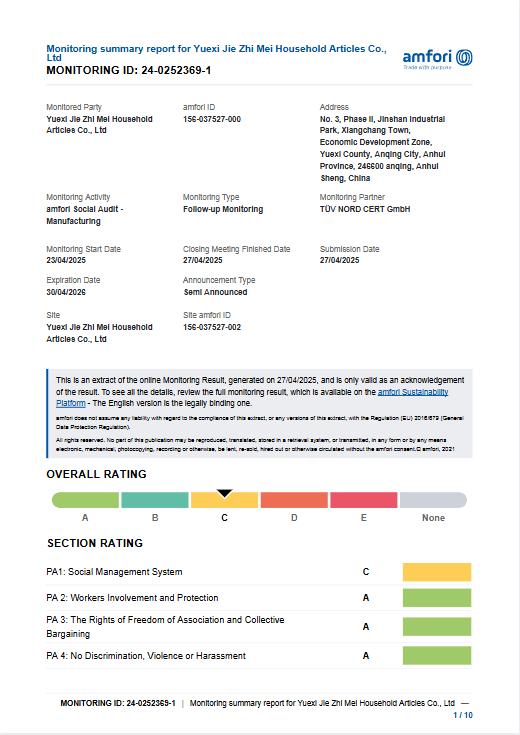
BSCI certification document recorded against the Makeup Bags product line, certificate number 91340828MA2NWKUP62, issued by the European Association for Foreign Trade for the EU market. The recorded validity period runs from 27 April 2025 to 30 April 2026, so buyers should confirm current renewal status before relying on it.
Grocery bag bulk: the same qualification logic, different criteria
Bulk grocery bag sourcing tests the same discipline on a larger and more heavily regulated object. A buyer placing a grocery bag bulk order — whether that means wholesale grocery bag programmes, custom reusable shopping bags for a retail chain, or reusable grocery bags bulk for a distribution business — is not buying a fabric item. They are buying an evidence package that must survive a public procurement review, a retailer audit or a customs declaration.
The most instructive published example is programme-specific rather than universal. The reusable bag criteria for the New York State procurement programme require a minimum volume capacity of at least 15 litres; at least one handle that does not stretch and is fastened to the bag; construction from recycled PET, non-woven polypropylene, woven polypropylene or natural fibre cloth; a minimum fabric weight of 80 GSM for bags made of recycled PET, non-woven PP or woven PP; 50% total recycled content; and exclusion of PVC or vinyl. These are criteria for that programme. They are not a global legal standard, and treating them as one would distort both the specification and the quotation.
What makes them valuable as a teaching case is the structure: capacity, handle, material category, fabric weight, recycled content and material exclusion appear as separate, testable lines. A custom grocery bag brief that omits any of those lines will produce quotes that cannot be compared, because each factory will fill the gap with a different assumption.
The regulatory backdrop explains why these lines are spreading. Secondary reporting on US state legislation counts 12 states with full statewide plastic bag bans as of 2026, and California's SB 1053, effective 1 January 2026, closes the thick reusable bag loophole by allowing only paper at checkout in that market. On the demand side, commercial research places the global grocery bag market at USD 13.4 billion in 2025, while a separate study projects the reusable shopping bag segment rising from USD 11.25 billion in 2023 to USD 15.33 billion by 2032, a 3.5% compound annual growth rate. The two figures use different base years and product scopes and should not be combined into a single growth claim, but they point the same way: documented reusable construction is where volume and scrutiny are both increasing.
Two operational lines matter as much as the material lines. Trade classification determines duty: UN Statistics Division documentation confirms that commodity codes support six-digit HS classification, but a product-specific HS code was not validated in this review, so buyers should confirm the code with a customs broker rather than inherit it from a supplier invoice. And capacity determines schedule feasibility: Great Shine records a monthly capacity of 10,000 units, a minimum order quantity of 500, a lead time of 30 days, 100% testing and a full OEM / ODM scope. Read against order size, that means a 50,000-unit grocery bag bulk programme requires staged production rather than a single run, and the delivery schedule should be built accordingly. Buyers who need grocery-bag-specific material and capacity documentation should confirm it in writing against their own end-market criteria before award.
Side-by-side: travel makeup bag versus bulk reusable grocery bag
| Qualification dimension | Travel makeup bag (GS-MB-001 record) | Bulk reusable grocery bag |
|---|---|---|
| Governing criteria | Buyer specification, retailer standard, destination-market labelling rules | Programme criteria, state and national bag rules, retailer sustainability specifications |
| Capacity evidence | External dimensions 20 x 15 x 8 cm; internal volume not stated | Frequently specified in litres, for example a 15-litre minimum in the cited programme |
| Fabric evidence | 600D Oxford Fabric, Canvas, Eco-friendly TPU, PVC, custom fabric | Material category list plus a fabric weight floor such as 80 GSM for listed synthetic options |
| Recycled content | Not stated on the record | Programme-level requirement, for example 50% total recycled content |
| Handle construction | Handle not recorded on this model | Frequently specified, for example one non-stretch handle fastened to the bag |
| Material exclusions | PVC available as an option | PVC or vinyl may be excluded by the programme |
| Order mechanics | OEM / ODM, MOQ from 500 units, 30-day lead time | Bulk volumes planned against monthly capacity, testing and staging |
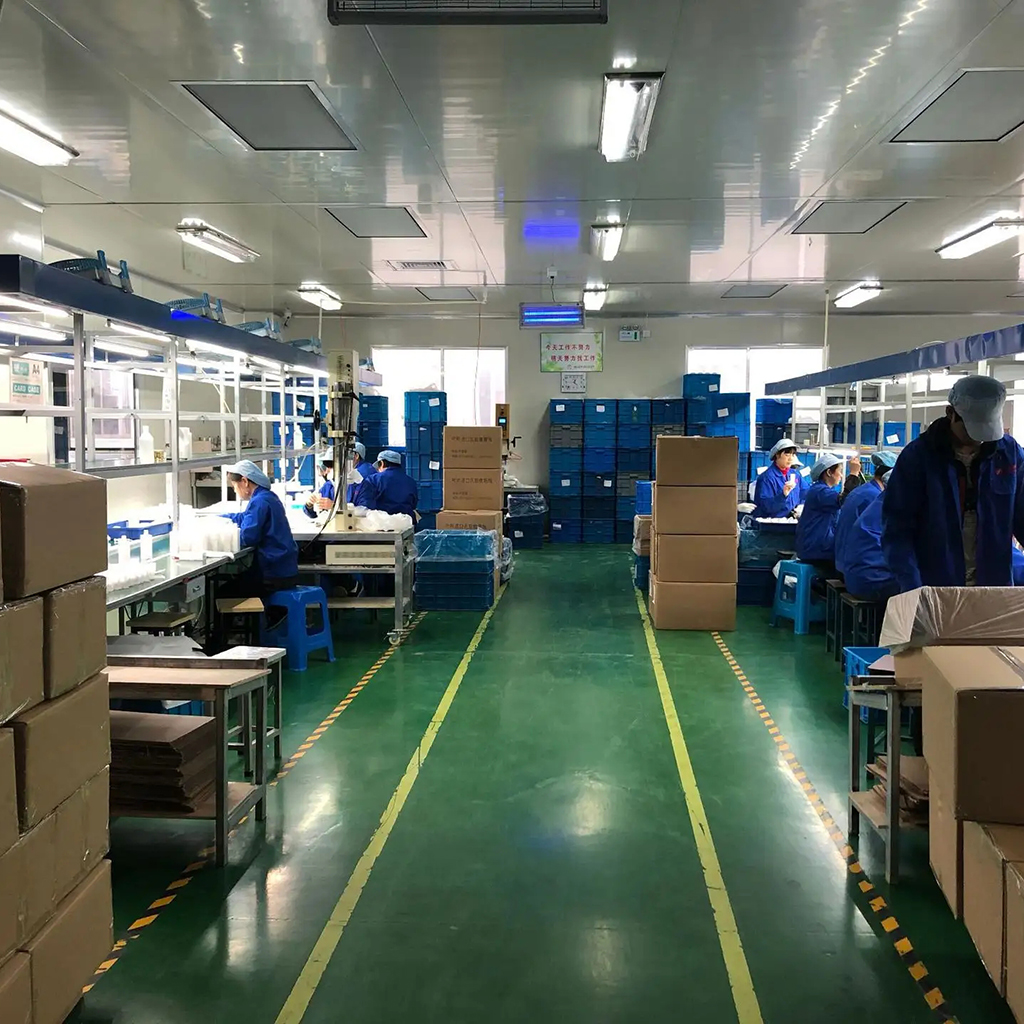
Final inspection is where specification lines become evidence. A recorded 100% test regime is only meaningful if each named line — dimensions, closure, handle attachment — is inspected against a written standard.
Where the specification sheet stops
A compliance guide that claims a spec sheet settles everything is not a compliance guide. Four boundaries matter here.
- Fabric weight is not durability. The published programme note is explicit that GSM alone does not establish load capacity or durability. A heavier fabric is a starting condition, not a test result.
- No performance test data is recorded. The GS-MB-001 record does not include abrasion, seam strength, handle pull, wash or cycle-life results. Buyers who need those claims should commission or request the tests rather than infer them from construction.
- Qualifiers are not specifications. 'Eco-friendly TPU' requires a documented material statement before it can support a retail or procurement claim.
- Certification has a validity period. The recorded BSCI certificate expires on 30 April 2026; eligibility should be re-confirmed, not assumed.
There is also a scope boundary worth stating plainly: Great Shine's documented product lines are storage boxes, storage bags, travel storage products, laundry storage and hanging storage, with full OEM / ODM capability. Buyers sourcing grocery bag bulk orders should therefore confirm grocery-bag-specific materials, capacity and recycled-content documentation as part of the RFQ, rather than assuming transfer from the travel storage range.
A buyer's qualification checklist
The following sequence converts a specification sheet into a defensible purchase decision. It applies equally to a 500-unit private-label run and to a grocery bag bulk programme.
- Confirm the product classification is identical on the specification sheet, purchase order and retail listing.
- Convert every material descriptor into a written composition, with fabric weight and test method where a claim will be made.
- Confirm whether the destination market or programme excludes any material listed as available, PVC in particular.
- Request capacity evidence in the unit the criteria use — litres, not centimetres, where a volume rule applies.
- Name every functional feature, including handle construction, as its own specification line.
- Verify certification scope, market applicability and current validity dates with the supplier and the issuing body.
- Request material and performance test reports rather than relying on construction descriptions.
- Confirm the HS code with a customs broker before shipment, not after.
- Match order quantity against stated monthly capacity and lead time, and stage the schedule accordingly.
- Agree the inspection standard and sampling basis in writing, so 100% testing has a defined pass criterion.
Application context informs the checklist's emphasis. Great Shine's recorded application profile covers household storage and organisation in markets including the US, Germany, Canada, Italy, Korea and Japan, with luggage as the matched equipment and eco-friendly materials, washability and durability as stated requirements. That profile explains why weight, foldability and surface durability carry more commercial weight in travel storage than raw volume — and why a grocery bag brief, judged on litres and handle construction, needs a different evidence pack from the same supplier.
Market trend: regulation is narrowing the material options
Three observable movements shape the next procurement cycle. First, legislative tightening at state level in the United States is removing material options rather than adding them: 12 states with full statewide bans by 2026, and California's SB 1053 restricting checkout bags to paper from 1 January 2026. Second, public procurement criteria are becoming more granular, moving from a general sustainability statement to specific, testable lines such as minimum fabric weight, recycled content percentages and handle construction. Third, the reusable segment continues to absorb value, with commercial research projecting the reusable shopping bag market from USD 11.25 billion in 2023 toward USD 15.33 billion by 2032 at a 3.5% compound annual growth rate.
The commercial consequence is that documentation is becoming a gate rather than a differentiator. A supplier that can produce a certificate number, a material composition, a fabric weight and an inspection record in one package shortens the buyer's qualification cycle. A supplier that cannot forces the buyer to test, which is slower and more expensive than verifying.
Future outlook
For travel storage and daily-use bag categories, the direction is toward specification sheets that read like test plans. Buyers are already asking for recycled-content figures where a scheme requires them, for fabric weight in GSM rather than a trade name, and for handle and closure construction as named lines. Suppliers that treat these requests as documentation work — rather than as negotiation — will keep their qualification cycles short as rules tighten.
For grocery bag bulk sourcing specifically, the likely path is convergence on a small number of verifiable parameters: capacity in litres, material category, fabric weight, recycled content and handle construction. Buyers who build their RFQ around those five lines today will be able to re-use the same template as state rules and retailer standards continue to move. Suppliers with an explicit OEM / ODM scope, a stated monthly capacity, a defined lead time and a written inspection regime are positioned to answer that template without renegotiating fundamentals.
FAQ
What material standards apply to a travel makeup bag?
There is no single universal material standard for a travel makeup bag. The GS-MB-001 record lists 600D Oxford Fabric, Canvas, Eco-friendly TPU, PVC and custom fabric as available options, with full OEM / ODM customisation. What applies in practice depends on the destination market and the sales channel: a private-label retailer will apply its own restricted-substance and labelling requirements, while public procurement programmes may specify an acceptable material list and exclusions — the cited New York State reusable bag criteria, for example, list recycled PET, non-woven PP, woven PP and natural fibre cloth, and exclude PVC or vinyl. A buyer should convert the material descriptor into a written composition with fabric weight and test method before approving a sample.
Do the 20 x 15 x 8 cm size and 0.2 kg weight have compliance significance?
They are verification anchors rather than certifications. The dimensions and the 0.2 kg net weight give an inspection team a measurable reference for incoming goods and support carton and freight planning. They do not establish internal usable volume, capacity in litres or load rating. Where a scheme sets a capacity threshold — the cited programme sets a 15-litre minimum for qualifying reusable bags — that threshold must be evidenced in litres for the qualifying product, not inferred from external dimensions on a different category.
What is the difference between a Travel Makeup Bag and a Packing Cubes Set in procurement terms?
Classification, weight and feature set differ. The GS-MB-001 record describes a Travel Makeup Bag for travel storage with a zipper closure, foldable style and geometric pattern at 0.2 kg. The separate record describes a Packing Cubes Set with a zipper closure, foldable style, soft handle, no trolley rod, polyester construction and 1 kg weight. The weight gap is fivefold, which affects freight and shelf positioning, and the presence of a recorded handle on one item but not the other changes which construction details must be specified and inspected. The two should not be quoted or planned as interchangeable items.
What does BSCI certificate 91340828MA2NWKUP62 cover, and how should a buyer verify it?
The record states that the BSCI certification, certificate number 91340828MA2NWKUP62, is issued by the European Association for Foreign Trade, which is also recorded as the applicable standard, and that it applies to the EU market for the Makeup Bags product and the Travel storage bag. The recorded issue date is 27 April 2025 and the recorded expiry date is 30 April 2026. Buyers should verify current validity and renewal status directly with the supplier and, where possible, the issuing body, confirm whether the scope covers the exact construction being purchased, and treat the certificate as one element of an evidence pack alongside material and performance test reports rather than as a replacement for them.
What should a bulk reusable grocery bag RFQ specify?
A comparable RFQ separates every testable line. Using the cited New York State programme criteria as an example of structure rather than as universal law, that means: minimum volume capacity in litres, at least one handle that does not stretch and is fastened to the bag, an acceptable material category, a minimum fabric weight for listed synthetic materials, a total recycled content figure with a defined calculation boundary, and any excluded materials such as PVC or vinyl. Add the commercial lines — order quantity, target unit price band, packaging, HS code confirmation, inspection standard and delivery schedule — so that quotes can be compared line by line rather than in total.
How do minimum order quantity and lead time affect grocery bag bulk planning?
They set the shape of the schedule. Great Shine records a minimum order quantity of 500 units, a lead time of 30 days, a monthly capacity of 10,000 units and 100% testing. A bulk programme substantially above monthly capacity requires staged production across multiple months, with inspection points agreed per stage. Buyers should also confirm that the material and capacity specifications in the RFQ are documented for the grocery bag category specifically, and should validate the HS code with a customs broker, since a product-specific code was not confirmed in the source review used for this guide.
Есть вопросы или нужны дополнительные детали?
Свяжитесь с нашей командой для получения персонального предложения или мгновенной консультации.
Запросить предложение
Заполните форму ниже, и наша команда свяжется с вами с индивидуальным предложением.
Прямой чат WhatsApp
Предпочитаете общаться в реальном времени? Напишите нам в WhatsApp для мгновенной помощи и быстрых ответов.
- Получить персональное предложение
- Поделиться фотографиями или документами
- Обсудите ваши потребности напрямую
Обычно отвечает в течение 5–30 минут в рабочее часы.