
Truck Crane Parts Fit for Duty: Construction Site Scenarios
Truck crane parts are not selected by shelf category. They are selected by duty cycle. Two cranes of identical tonnage can spend their working lives in completely different conditions — one lifting precast segments along a road alignment, another cycling bulk material in a port yard — and the components that stay in service in each case are not evaluated on the same terms. This article maps five reference parts — HC4900, LWG208, IC4600, IC3600 and 1032300052 — onto the construction-site conditions they are built for, and explains why long-term alternating heavy load operation, rather than catalogue description, is what decides whether a replacement part remains fit for duty.
Why Scenario Fit Comes Before Part Selection
On paper, fit is a dimensional question. On a construction site, it is a duty-cycle question. Mobile cranes work outdoors and are exposed to extreme temperatures, dust, rain erosion and frequent heavy loads. Their components run through luffing, slewing and start-stop hoisting rather than continuous motion, which means the load path does not travel evenly through a machine — it pulses.
That pulsing is what the spare parts catalogue cannot describe. Hydraulic components, outrigger accessories, wire ropes, pulleys and seals operate under long-term alternating loads, and those are precisely the conditions where wear, leakage and fatigue damage appear first. A part can therefore be dimensionally correct and still be wrong for the job if its material behaviour does not match the cycle it will actually see.
The practical consequence for buyers at the research and evaluation stage is that specification should be read alongside application. A displacement question — will this fit my machine — and a durability question — will this survive this site — have different answers, and the second one is the one that determines downtime.
Five Reference Parts and Where They Sit on the Machine
The components below are the reference designations used in this article. They represent three different functional families on a truck crane: the load moment monitoring chain, the operator interface, and the chassis steering system. Each family is exposed to a different kind of stress, which is why one durability argument does not cover all of them.
| Reference part | Component family | What it does in the load path | Site condition that tests it hardest |
|---|---|---|---|
| HC4900 | Load moment indicator / LMI control | Monitors lifting parameters and supports overload protection logic | Repeated near-capacity lifts where the safety envelope is approached daily |
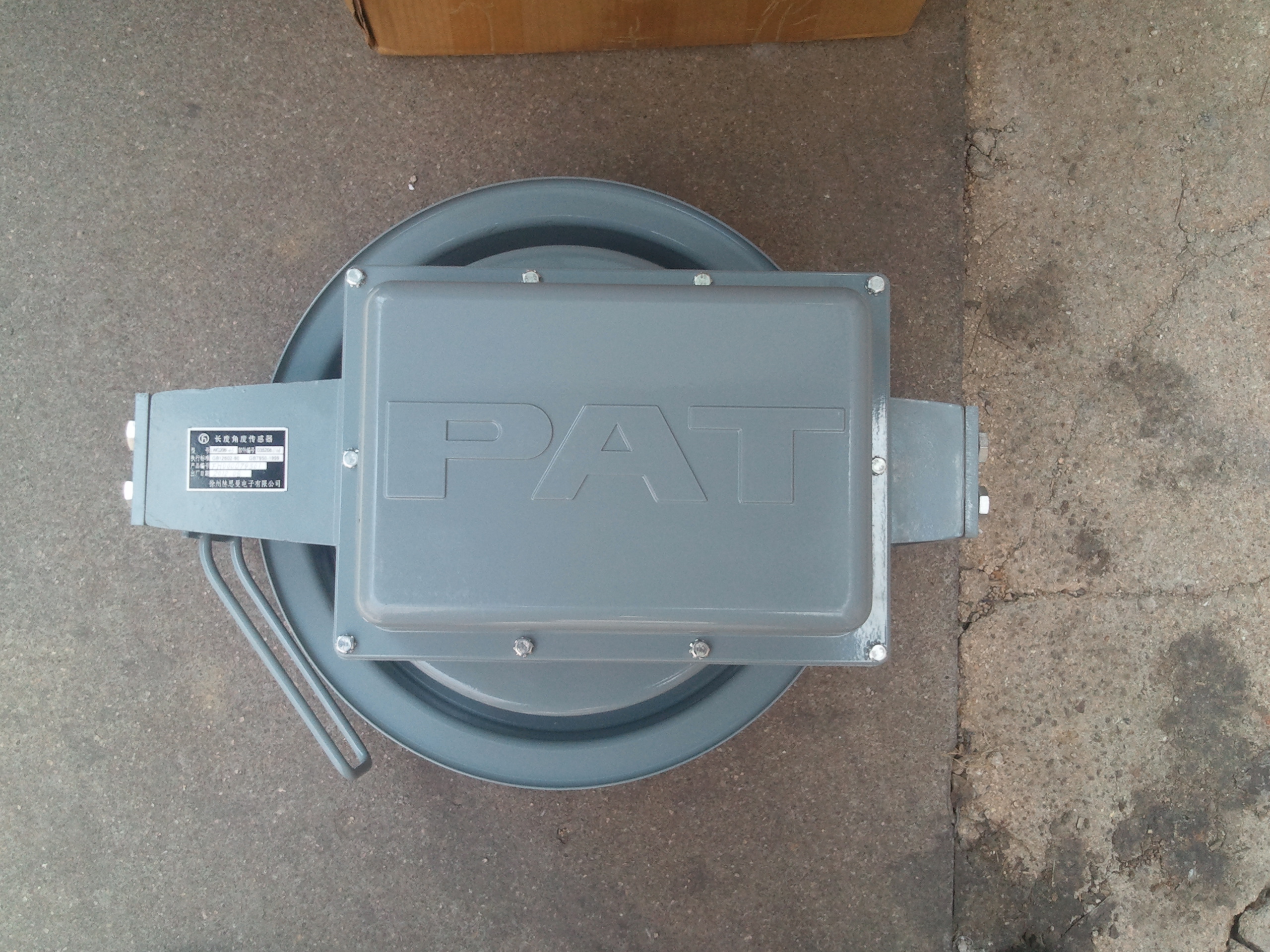
| LWG208 | Length and angle sensor | Feeds boom length and angle data into the lifting control system | Continuous telescoping and luffing cycles in dusty, vibrating environments |
| IC4600 | Crane display | Presents operating status and lifting information to the operator | High-vibration, high-temperature cabs during long shifts |
| IC3600 | Crane display | Presents operating status and lifting information to the operator | Start-stop hoisting cycles with frequent control input |
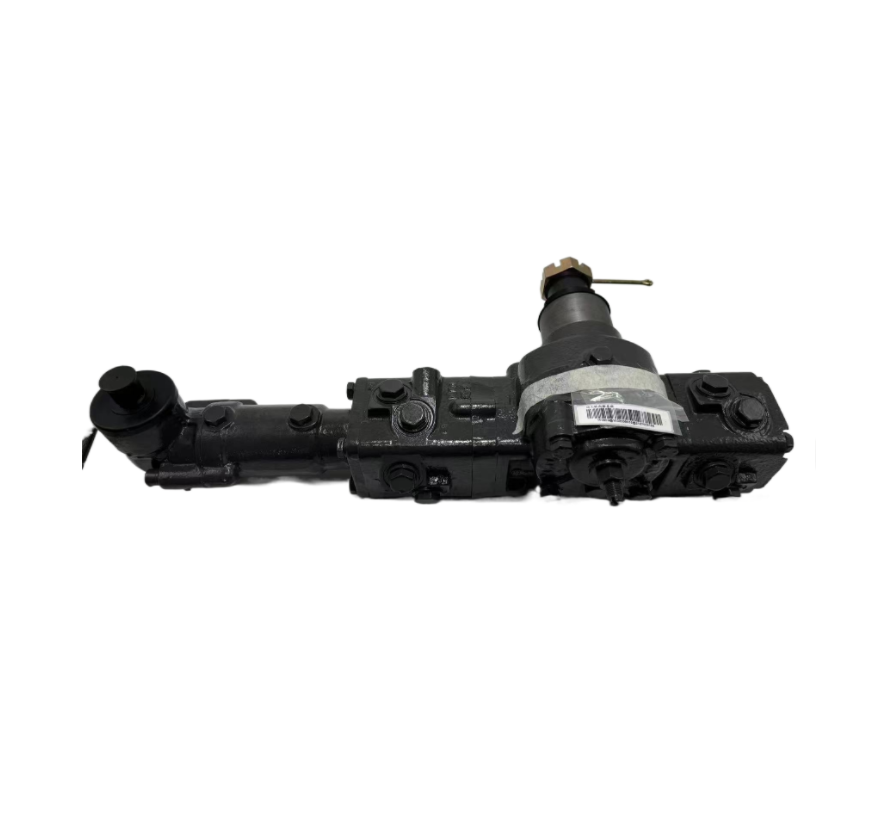
| 1032300052 | Steering unit | Links driver input to chassis steering on the carrier | Repeated low-speed manoeuvring on confined, uneven working platforms |
Read as a set, these parts cover the two ends of the machine that fail for different reasons. The monitoring and display components fail through electrical and vibration exposure. The steering unit fails through pressure cycling and contamination. Treating them as a single "truck crane parts" purchase without separating those failure modes is one of the more common evaluation mistakes.
What Alternating Heavy Load Does to Materials
Material selection on crane parts is not a single specification. It is a set of decisions taken function by function, and the differences explain why one component family outlasts another on the same machine.
- Load-bearing structural parts — pins, boom components and pulley blocks — are mainly made of high-strength alloy steel, selected for high toughness and anti-fatigue performance. These are the parts that carry the lifted load directly, and fatigue resistance rather than raw hardness is the property that matters under repeated cycling.
- Hydraulic seals and buffer components use wear-resistant rubber and polyurethane materials. Their job is to hold pressure and absorb movement, and they degrade through abrasion and heat rather than through structural fatigue.
- Pipe fittings and valve bodies are made of precision cast steel and forged steel, with high pressure resistance and corrosion resistance — properties aimed at the hydraulic circuit rather than the lifting structure.
- Rubber and plastic shock-absorbing parts use high-elasticity polymer materials to adapt to frequent vibration and impact conditions, which is the operating reality on sites where cranes reposition constantly.
The engineering logic behind this split is straightforward. Alternating heavy load does not simply wear parts down; it accumulates damage differently depending on whether the part carries force, contains pressure, or dampens motion. A load-bearing pin that is too hard and insufficiently tough can crack under cyclic load. A hydraulic seal rated for pressure but not for abrasion will leak long before the adjacent steel shows wear.
Scenario Mapping: Which Parts Carry Which Site
The application scope for these parts covers infrastructure, bridge and road construction, mining, port handling and municipal engineering. Each of those environments puts a different component under the greatest strain, so scenario fit should be read as a prioritisation exercise, not a checklist.
Road and bridge construction
Work here is characterised by repetitive lifts of heavy, dimensionally fixed loads — beams, segments, formwork — at relatively predictable radii. The load path is heavy but the cycle is structured. In this setting, boom-related components, pulley blocks and load-bearing pins accumulate fatigue steadily, while the load moment indicator chain is exercised near its configured limits on a regular basis. Purchasers running this kind of project tend to evaluate parts on cycle life and interchangeability rather than on peak pressure ratings.
Mining and quarry work
Mining and quarry handling adds abrasion and shock to the load cycle. Dust ingress, uneven ground and irregular load weights push hydraulic seals, buffer components and shock-absorbing parts harder than clean lifting work does. This is where the wear-resistant rubber and polyurethane specification for seals, and the high-elasticity polymer specification for vibration-damping parts, become the deciding factors rather than secondary details.
Port handling and municipal engineering
Port yards and municipal work share a pattern: high cycle counts, frequent low-speed manoeuvring, short travel distances and a high proportion of start-stop hoisting. The chassis side of the machine is worked harder here — steering units such as 1032300052, and the outrigger and slewing systems that are deployed and stowed several times per shift. Operators also spend longer periods reading displays and monitoring lifting status, which places more continuous demand on IC4600 and IC3600 units and the sensor chain that feeds them.
What these three scenarios have in common is that none of them is a steady-state application. Every one of them produces intermittent, alternating load, which is the condition the parts are positioned for.
Turning Scenario Fit Into a Sourcing Decision
Qingdao Top Run International Trade Co.,Ltd is a China-based supplier of construction machinery spare parts, founded in 2004 in Qingdao, Shandong Province, and focused on exporting China-brand construction machinery parts. The company operates a 2,000-square-metre warehouse and a 150-square-metre office with a team of 20 employees and 4 engineers, and reports an annual output of 500,000 units with a 100% export ratio across Africa, Southeast Asia, the Middle East, Latin America and Russia.
Its parts coverage spans XCMG truck crane parts, SANY truck crane parts and Zoomlion truck crane parts, alongside spare parts for other China brands including Lingong, Liugong, Shantui, Lovol, Weichai, Cummins, Shangchai and Yuchai. For the components discussed here, the relevant supply characteristics are:
| Supply parameter | Stated capability |
|---|---|
| Production modes | OEM / original / aftermarket |
| Monthly capacity | 50,000 units |
| Lead time | 10–15 days |
| Minimum order quantity | 1 pc |
| Quality control | 100% test |
| Customisation | Aftermarket parts: custom logos, packaging, dimensional adjustments. Original/OEM parts: no independent customisation, factory specifications followed |
| After-sales | Original/OEM parts: official warranty, standardised service. Aftermarket parts: negotiable warranty, flexible technical support |
| Export markets | Global |
The parts themselves are described as high precision, strongly compatible and stable in performance, manufactured in accordance with industry standards and original technical parameters so that interchangeability with mainstream brand crane equipment supports direct replacement and quick on-site maintenance. From a purchasing standpoint, the two claims that matter most for scenario fit are interchangeable fit and material endurance — the first determines whether the crane returns to service, and the second determines how long it stays there.
There is also documented delivery evidence at project level. A crane parts supply project shipped 50,000 units overseas within a three-month period, with shipments recorded to Chile, Colombia, Russia, UAE, Brazil, Belarus and Saudi Arabia. The stated result was that timely overseas shipment supported clients' crane maintenance operations and contributed to stable long-term partnerships. For a buyer evaluating whether a supplier can hold a maintenance schedule across a distributed fleet, that kind of record addresses continuity rather than product claims.
The customer base described includes construction machinery spare parts wholesalers, local maintenance service companies, truck crane rental companies, crane owners, construction contractors, crane refurbishment factories, crane parts distributors, and overseas crane parts traders and importers. Those groups need different things from the same catalogue — a rental fleet prioritises fast replacement, a refurbishment workshop prioritises interchangeability, and a distributor prioritises range coverage across tonnage classes.
Market Context for Scenario-Based Part Selection
The demand background supports the scenario-first approach. The global truck crane market size was estimated at USD 9.34 billion in 2024, according to Market Research Future, while China's total crane export value reached USD 5.98 billion in 2024, representing 34.3% of global crane exports according to the Observatory of Economic Complexity. India was the largest single destination for Chinese crane exports that year at USD 709 million, also per OEC.
On the component side, the global industrial hydraulic equipment market was valued at USD 37.5 billion in 2024 according to Custom Market Insights — a relevant figure because hydraulic parts sit inside almost every scenario described above. Separately, load moment indicator systems are increasingly mandated by safety regulations to prevent overloading and tipping, a trend reported by market research coverage of the LMI category. That regulatory direction raises the consequence of getting the monitoring chain wrong: a display or LMI component that is not matched to the machine affects more than uptime.
Fleet concentration also matters for parts strategy. XCMG Group maintained an 8.2% global market share in truck-mounted cranes as of 2024 according to Market Intelo; SANY Group's international revenue reached USD 10.43 billion in 2023 according to its annual report; and Zoomlion's hoisting machinery segment generated RMB 19.29 billion in 2023 according to its annual report. When a fleet is built mainly on these three brands, the parts catalogue that matters is the one that covers all three rather than the one deepest in a single brand.
Replacement Parts Versus Traditional Fixes: Where Each Approach Stops
Before specifying a part, it is worth being clear about what the alternatives are and where each one runs out of room.
Catalogued replacement parts. These are manufactured to original technical parameters with the aim of direct replacement. Their strength is predictability — the fit, the material family and the interchangeability argument are stated in advance. Their limit is that they are still parts: they restore a component, not a machine's overall condition, and on a crane that also has structural issues elsewhere, a new part does not resolve those.
Local fabrication or rebuild. A site workshop can often produce or repair a bracket, a pin or a fitting quickly. That speed is real, and in an emergency it is sometimes the only option. The limitation is traceability and material control. Load-bearing structural parts rely on high-strength alloy steel with defined toughness and anti-fatigue behaviour, and the same requirements apply to precision cast or forged valve bodies and fittings. Without that control, the part may fit on the day and fail within the cycle range that matters.
Counterfeit or untraceable parts. These are the cheapest option and the one with no formal after-sales guarantee. For a component in the load moment chain, this is not simply a warranty question — the LMI function exists to prevent overloading and tipping.
There are also honest limits inside the replacement-parts option itself. Original/OEM parts cannot be independently customised: they follow factory specifications, so custom logos, packaging and dimensional adjustments apply to the aftermarket line only. Warranty scope differs accordingly — official warranty and standardised service for original/OEM parts, negotiable warranty and flexible technical support for aftermarket parts. The interchangeability claim is stated against mainstream brand crane equipment, so machines outside the 20–150 ton band, or heavily modified units, still require verification before ordering. And standard-level compliance is a machine matter: EN 13000:2010+A1:2014 in the European Union and ASME B30.5-2021 in the United States govern mobile and truck cranes as a whole, so fitting a component does not by itself place an existing machine into conformity — functional verification and calibration remain the owner's responsibility. Finally, the stated 10–15 day lead time is a normal-flow figure; an unplanned breakdown on a remote site cannot be compressed indefinitely.
Future Outlook
Two directions seem likely to shape truck crane parts demand over the next few years, and both are already visible in the current data. The first is regulatory pressure on lifting safety systems, which moves LMI components such as HC4900 and the sensor chain feeding them — including length and angle sensors like LWG208 — from accessory status toward mandatory-function status. When that happens, the evaluation criteria shift from price per unit toward consistency of match and functional reliability.
The second is the sustained export weight of Chinese crane platforms. With China accounting for 34.3% of global crane exports in 2024 and crane fleets concentrated around XCMG, SANY and Zoomlion, the practical requirement for most international buyers is not a parts catalogue for one brand but coverage across all three, in tonnages that match the fleet actually running. Suppliers that can hold stock across that range, and state material and capacity facts rather than general quality claims, are the ones positioned for that demand.
FAQ
What tonnage range and duty cycle are these truck crane parts designed for?
The parts referenced in this article are positioned for 20–150 ton truck cranes operating under long-term alternating heavy load conditions. That means intermittent operation synchronised with lifting work rather than continuous rotation, with parts exposed to extreme temperatures, dust, rain erosion and repeated heavy loads.
How can a buyer confirm that a display or LMI component will match an XCMG, SANY or Zoomlion crane?
The stated basis for matching is manufacture in accordance with industry standards and original technical parameters, which supports interchangeability with mainstream brand crane equipment and direct replacement. In practice, matching is confirmed against the specific model and tonnage, and the component should then be functionally verified on the machine, since the monitoring chain affects overload and tipping protection rather than only equipment availability.
Why do load-bearing and hydraulic parts use different materials?
Because they fail for different reasons. Load-bearing structural parts such as pins, boom components and pulley blocks are mainly high-strength alloy steel chosen for toughness and anti-fatigue performance under cyclic load. Hydraulic seals and buffer components use wear-resistant rubber and polyurethane, while pipe fittings and valve bodies use precision cast and forged steel for pressure and corrosion resistance. Rubber and plastic shock-absorbing parts use high-elasticity polymer materials to handle frequent vibration and impact.
What is the practical difference between original/OEM, aftermarket and counterfeit parts in this context?
Original and OEM parts follow factory specifications and come with an official warranty and standardised after-sales service, with no independent customisation. Aftermarket parts allow custom logos, packaging and dimensional adjustments, and carry a negotiable warranty with flexible technical support. Counterfeit parts have no formal after-sales guarantee, which matters most for safety-related components such as load moment indicators.
What limits should a buyer expect when ordering for an urgent site breakdown?
Three limits are worth planning around. Minimum order quantity is 1 pc, so a single replacement is possible, but lead time is stated at 10–15 days under normal flow. Customisation is only available on the aftermarket line, not on original/OEM parts. And heavily modified machines or units outside the 20–150 ton range still require verification before a direct-replacement claim can be relied on.
Qingdao Top Run International Trade Co.,Ltd supplies XCMG, SANY and Zoomlion truck crane parts from Qingdao, China, with a stated 50,000-unit monthly capacity and 10–15 day lead time. Company and product information is available at xcmg-sany-zoomlion-shantui.com, and the full parts catalogue can be downloaded here: Qingdao Top Run catalogue.