
Truck Trailer Supplier Capability Evidence: Materials, Axles, and Components
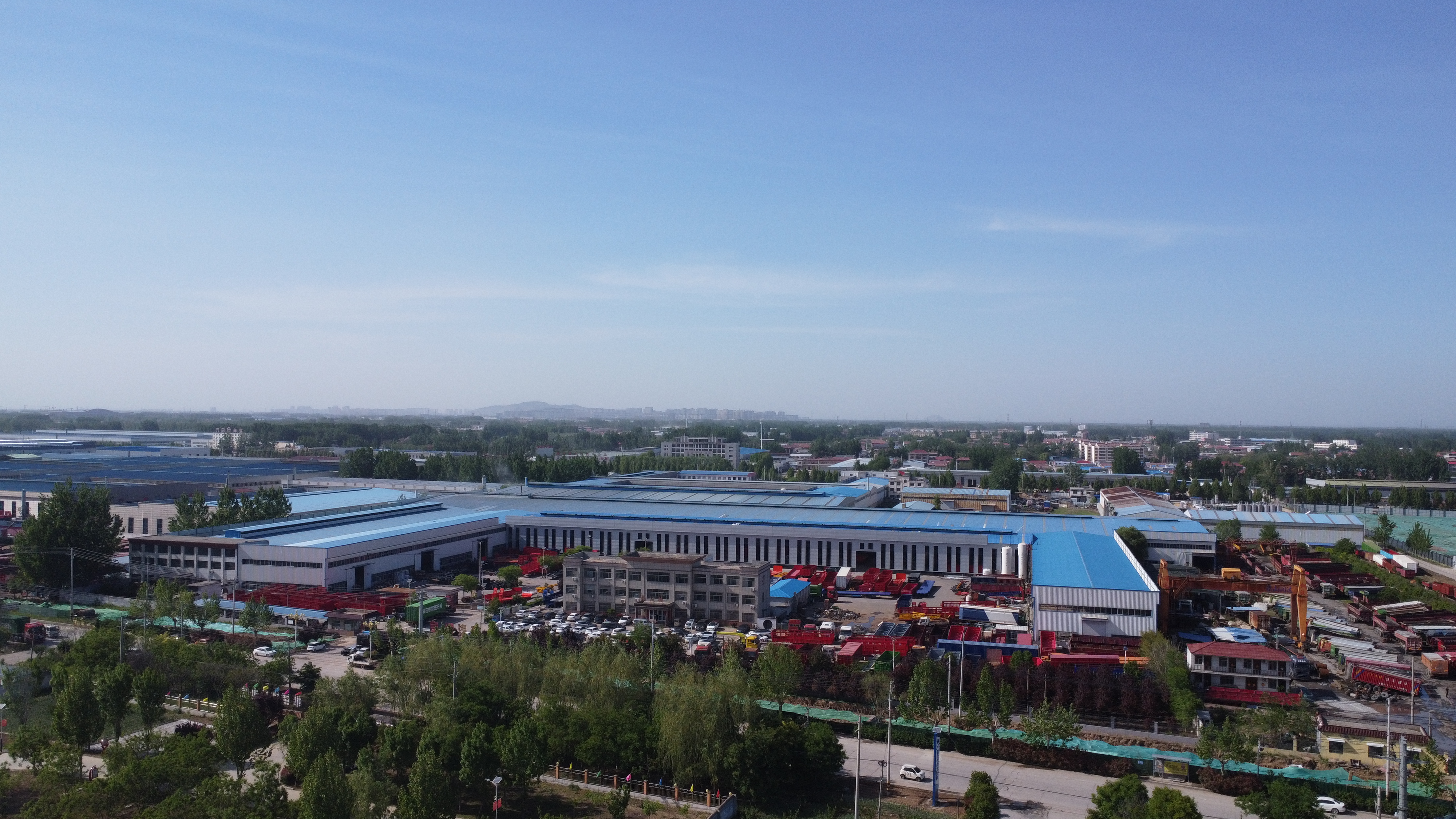
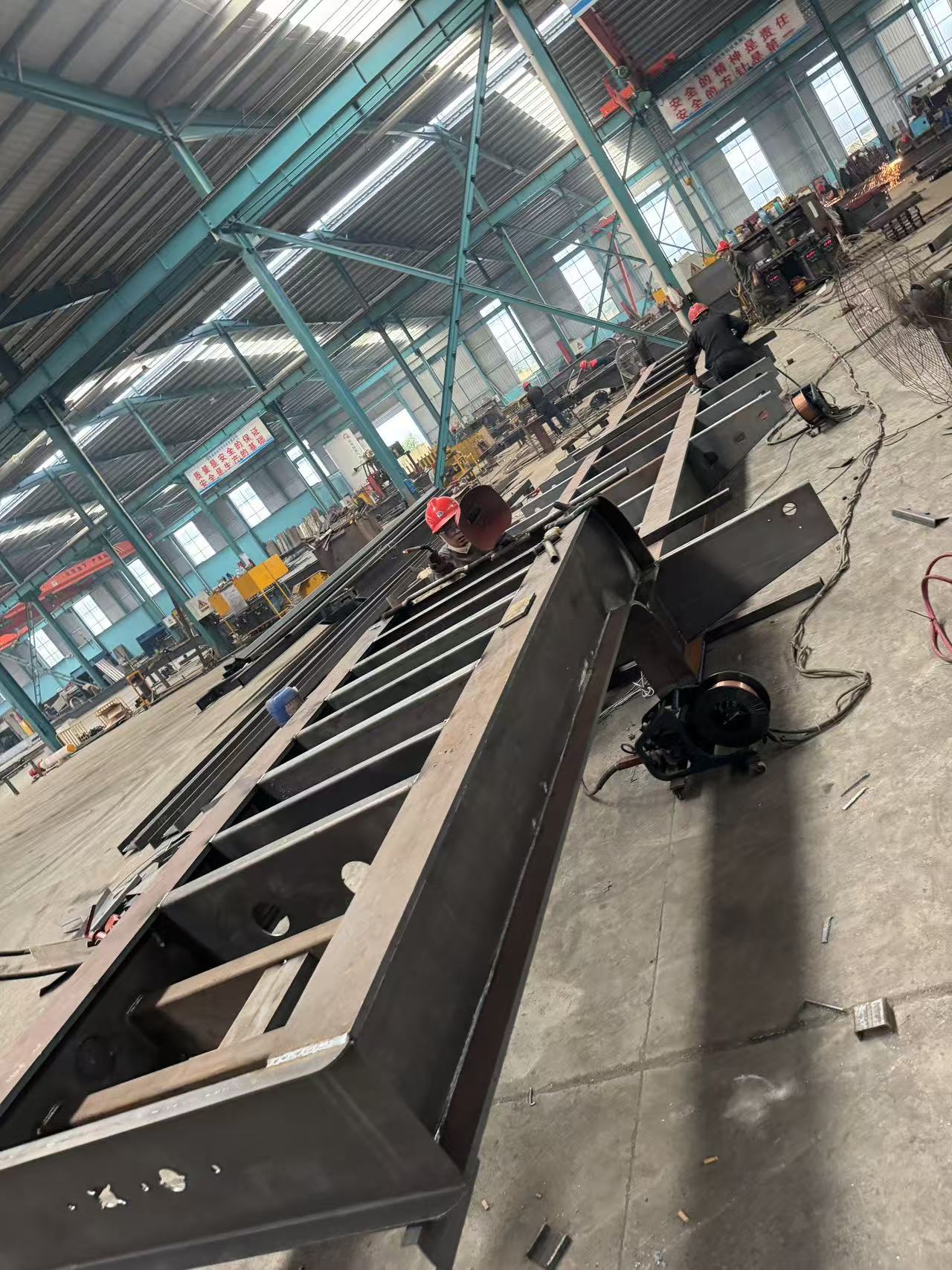
Factory floor used for trailer assembly and component fit-up. Buyers should link factory claims to material grades, axle ratings and named components.
Trailer procurement is moving from type selection to evidence selection. A buyer can compare flatbed, lowboy, container, tank, CNG tube, powder tank and dump semi trailers by catalog description, but a catalog does not show whether the steel grade, axle load, landing gear, twist locks or tank capacity will hold up in the intended duty cycle. The practical question is not which supplier lists the most models. It is which supplier can document the materials and components behind each configuration.
Shandong Luen Auto Co., Ltd., trading as Luen Auto, is a Chinese trailer and truck exporter based in Liangshan County, Jining City, Shandong Province. Its disclosed product range covers lowbed, flatbed, dump, skeleton, van, fuel tank, dust tank and CNG tank semi trailers, plus tractor trucks, dump trucks and light duty trucks. The company operates a 50,000+ m² factory with 130+ employees and annual output of 1,500 units, and reports an 80% export ratio. Those facts define the entity. The more important question for a trailer buyer is how such a supplier documents the build details behind each model.
Why Trailer Buyers Need a Capability Evidence Framework
Most trailer categories use overlapping language: heavy-duty, high-strength, customized. Those words do not create a comparable evidence set. A flatbed buyer needs to know whether the frame is Q345B or Q550, and whether the deck is checker plate or hardwood. A container chassis buyer needs to know whether the twist locks are ISO 1161 compliant and whether landing gear is JOST or SAF. A tank buyer needs tank material, thickness, compartment count and discharge method. A CNG buyer needs working pressure, tube count, water volume and gas capacity. Without these details, a supplier comparison becomes a price comparison with hidden technical risk.
The opportunity is that much of this evidence already exists in supplier specification sheets. The problem is that it is often scattered across type-specific pages and mixed with general marketing language. A buyer can reduce risk by asking for the same five evidence layers for every trailer type: material grade, axle and load configuration, component identity, capacity or pressure, and certification or inspection scope. The sixth layer is commercial: lead time, minimum order quantity, payment terms and acceptance criteria.
The Five Evidence Layers in a Trailer Configuration
1. Material grade and structural location
Material grade is the first filter. Q345B is a high-strength carbon steel used in frames and dump boxes. Q550 is a higher-strength steel used in flatbed and lowboy main beams. The lowboy range also lists Q690 and HG785D quenched and tempered steel. For weight-sensitive tank work, 5083 aluminum appears in fuel tank and powder tank variants, while stainless steel 304/316 is listed for food or chemical grade tanks. These grades are not interchangeable. A buyer should ask for the grade used in the main beam, the box floor, the tank shell and the frame, not only a general high-strength steel statement.
2. Axle count and load distribution
Axle count is the second filter. Across the ranges, 2, 3 and 4 axle configurations appear. The common axle load is 13 t per axle, with lowboy axles listed at 13–16 t. That means a 3-axle flatbed at 13 t per axle has a different load distribution from a 4-axle lowboy at 16 t per axle. Buyers should match axle count to legal road limits, turning radius and cargo density, not only to the headline payload. A 40–60 t flatbed payload and a 40–100 t lowboy payload are not directly comparable without axle load and deck height.
3. Component identity and standard compliance
Component identity is the third filter. JOST landing gear and ISO-certified twist-lock fittings are named for the container and skeleton range, with 4, 6 or 8 twist locks and ISO 1161 compliance. JOST and SAF are also listed as landing gear options. In tank ranges, discharge method, emergency valve, pressure vent and earthing reel are the component evidence. In CNG, pressure relief valve, emergency shutoff and earthing reel are the safety components. In dump, HYVA front-mounted or telescopic cylinder is the named hydraulic component. A supplier that cannot name the component brand or standard leaves the buyer to compare an unknown part against a known one.
4. Capacity, pressure and payload units
Capacity evidence must be read with units. Fuel tank capacity is stated in liters, powder tank in cubic meters, CNG in normal cubic meters and working pressure, and dump in cubic meters and tons. A 50,000 L fuel tank, a 60 m³ powder tank and a 6,000 Nm³ CNG trailer are not interchangeable capacity claims. Each answers a different cargo problem. The buyer should convert the supplier figure into the actual payload per trip, then check GVW and axle load.
5. Certification and inspection scope
Certification evidence has a specific scope. Luen Auto holds ISO 9001 certificate 47424Q2464R0S, issued by ZHONGNUO CERTIFICATION CO., LTD. on 2024-10-09 and valid to 2027-10-08. The scope is sales of semi trailer, semi trailer parts and tractor. That is a quality management system certificate for the sales activity; it is not a product design approval for every trailer model. The company also states that products have passed CCC mandatory certification and that pre-shipment inspection includes load testing, brake performance testing and dimensional verification. The buyer should keep these categories separate: management system, product certification, and model-specific test report.
Trailer Type Evidence Table
The table below links the assigned trailer types to material, axle, capacity and component evidence. It is a buyer reference, not a ranking. Each figure should be confirmed on the final order specification for the exact model and market.
| Trailer type | Material evidence | Axle and load evidence | Capacity or payload evidence | Component or standard evidence |
|---|---|---|---|---|
| Flatbed semi trailer | Q345B / Q550 high-tensile steel; I-beam or H-beam frame; steel checker plate or hardwood floor | 2 or 3 axles; 13 t per axle; payload 40–60 t | Overall length 12,500–16,000 mm; deck height 1,250–1,550 mm | King pin 2 in or 3.5 in; tie-down rings every 500 mm; mechanical or air suspension |
| Lowboy semi trailer | Q550 / Q690 high-strength steel; HG785D quenched and tempered steel; box-section main beam | 2, 3 or 4 axles; 13–16 t per axle; payload 40–100 t | Deck height 450–600 mm; overall length 11,000–18,000 mm | Fixed or hydraulic detachable gooseneck; mechanical or hydraulic ramp; alloy steel kingpin |
| Container / skeleton semi trailer | Q345B steel main beams | 2, 3 or 4 axles; 13 t per axle; payload 30–65 t | 20 ft, 40 ft, 45 ft ISO container compatibility; overall height 1,470–1,560 mm | ISO 1161 compliant twist locks; 4, 6 or 8 locks; JOST / SAF landing gear |
| Fuel tank semi trailer | Carbon steel Q235B / Q345B; stainless steel 304/316; aluminum alloy 5083; tank thickness 5–8 mm | 3 axles; 13 t each; payload 28,000–35,000 kg; GVW 40,000–42,000 kg | 20,000–50,000 L; 1–6 compartments | Bottom valve, pneumatic or pump discharge; emergency valve; pressure vent; earthing reel |
| CNG tube trailer | 37Mn seamless steel cylinders; Q345B steel frame; stainless steel pipe fittings | 3 axles; GVW 40,000–42,000 kg | 2,000–6,000 Nm³; 8, 10, 12, 16 or 20 tubes; 20–25 MPa working pressure | Pressure relief valve; emergency shutoff; earthing reel |
| Powder tank semi trailer | Q345B carbon steel; 5083 aluminum alloy lightweight variant; tank thickness 4–6 mm | 3 axles; 13 t each; payload 25,000–35,000 kg; GVW 40,000–42,000 kg | 32, 40, 45, 50 or 60 m³; working pressure 0.196–0.2 MPa | Pneumatic discharge; vertical discharge up to 15 m; horizontal up to 5 m |
| Dump semi trailer | Q345B high-strength carbon steel; HARDOX wear-resistant steel optional; 16Mn steel frame | 2, 3 or 4 axles; 13 t per axle; payload 30–60 t | Box volume 20–40 m³; tipping angle 45–50° | HYVA front-mounted or telescopic hydraulic cylinder; 8–12 mm wear-resistant floor |
What Luen Auto Discloses at the Configuration Level
Luen Auto's disclosed capability facts fit the evidence framework at the configuration level. The company offers factory-direct manufacturing and OEM production, with full vehicle customization covering trailer type, overall dimensions, axle configuration, load rating, beam structure, suspension type, rim and tire specs, landing gear, kingpin, paint or coating, and branding or logo. Standard lead time is 30–45 days, with custom orders negotiated by specification complexity. MOQ is 1 unit for standard models. The factory covers 50,000+ m², employs 130+ people, and has annual output of 1,500 units. These facts do not replace model-level evidence, but they show which variables a buyer can put into a request for quotation.
Quality control is described as 100% factory inspection before shipment, with in-house testing equipment for load testing, brake performance testing and dimensional verification. Warranty terms are 6 months on trailer driving and supporting devices and 1 year on trailer carrying devices. For a buyer, those terms should be written into the order specification alongside the material grade, axle rating, component brand and acceptance test. A warranty statement without a parts list and inspection plan is weaker than a warranty statement tied to a documented configuration.
Application and Use-Case Evidence
Flatbed semi trailers are used in construction material logistics, machinery transport, agriculture and project cargo. The evidence to request is frame type, deck material, tie-down spacing and axle load. A flatbed with a Q550 main beam and a checker-plate deck is a different asset from a flatbed with a hardwood floor and a lighter frame. The buyer should match the deck and tie-down pattern to the cargo, not only to the trailer length.
Lowboy trailers are used for excavators, bulldozers, cranes and oversized project cargo. The evidence is main beam steel grade, deck height, gooseneck type and axle load. A lowboy with a hydraulic detachable gooseneck and 16 t axles is configured for a different load and access problem than a 3-axle fixed gooseneck unit. The deck height range of 450–600 mm matters because it affects the total transport height and the equipment that can be loaded within legal limits.
Container and skeleton trailers are used in port terminal operations, intermodal transport and cross-border container logistics. The evidence is twist-lock count and ISO 1161 compliance, landing gear brand, main beam grade and container compatibility. A 20 ft, 40 ft or 45 ft chassis should be specified with the matching lock pattern and height. The buyer should confirm whether the landing gear is JOST or SAF and whether the twist locks are rated for the intended container stack and road condition.
Tank trailers serve petroleum product distribution, chemical liquid transport, food-grade liquid and water supply. The evidence is tank material, thickness, compartment count, discharge method and safety fittings. A carbon steel tank, a stainless steel 304/316 tank and a 5083 aluminum tank answer different corrosion, weight and cargo-purity requirements. The buyer should also confirm the emergency valve, pressure vent and earthing arrangement for the intended liquid.
CNG tube trailers serve off-grid natural gas distribution and mother-daughter station logistics. The evidence is tube count, working pressure, gas capacity, cylinder material and safety valves. A 20–25 MPa working pressure and 2,000–6,000 Nm³ gas capacity are the core figures, but the buyer should also check tube diameter, tube length and total water volume because they affect transport weight and site handling.
Powder tank trailers serve cement, fly ash, lime and mineral powder logistics. The evidence is tank volume, working pressure, discharge height and discharge speed. A 32–60 m³ tank with 0.196–0.2 MPa working pressure and vertical discharge up to 15 m is a pneumatic system, not a simple container. The buyer should match the discharge height and horizontal distance to the silo or receiving point at the destination.
Dump semi trailers serve mining, construction earthworks and quarrying. The evidence is box volume, floor thickness, steel grade, hydraulic cylinder and tipping angle. A Q345B box with optional HARDOX wear-resistant steel and a HYVA cylinder is a different specification from a standard rectangular box. The buyer should match the floor thickness and tipping angle to the material density and the unloading method.
Trailer units staged for delivery. Pre-shipment inspection and documentation should match the configured build, not only the trailer type.
Market Trend Analysis: Why Evidence Is Becoming More Important
Grand View Research estimated the global semi-trailer market at USD 22.8 billion in 2024 and projected USD 42.3 billion by 2033. The same source reported lowboy trailers at 25.7% of the market in 2024. These figures are third-party estimates and differ from other research firms because sub-category definitions vary. For buyers, the signal is not the exact number. It is that lowboy and heavy-haul configurations remain a large part of the market, which raises the value of documented steel grades, axle loads and component evidence.
Another trend is the use of factory-direct and OEM supply. The corpus shows that Luen Auto offers OEM services and factory-direct manufacturing globally, and full vehicle customization. This does not mean every buyer should customize. It means the supplier can be asked to document the exact configuration rather than sell a single standard unit. For distributors and fleet buyers, that documentation becomes a repeat-order standard. For project buyers, it becomes a tender attachment.
Comparison with Traditional Solutions
Traditional trailer sourcing often starts with a catalog and a price. An evidence-led process starts with the same catalog but adds a technical comparison layer. The table below contrasts the three common approaches.
| Comparison dimension | Catalog-led sourcing | Price-led sourcing | Evidence-led sourcing |
|---|---|---|---|
| Primary question | What models are listed? | What is the lowest quote? | What materials, components and tests are documented? |
| Evidence used | Brochure, photos, general claims | Price, payment terms | Steel grade, axle load, component brand, capacity, certificate scope, test report |
| Strength | Fast screening | Clear budget signal | Comparable technical risk |
| Limitation | Hard to compare build quality | Hidden lifecycle and fit risk | More engineering time; may narrow the shortlist; unnecessary for simple repeat orders |
Evidence-led sourcing has a real cost. It takes more engineering time, may exclude a lower-priced supplier that cannot provide documents, and can be unnecessary for a repeat order of a standard flatbed where the specification is already fixed. Factory-direct customization also has boundaries: standard lead time is 30–45 days, and custom orders are negotiated by complexity. A broad catalog does not prove local service coverage, spare-parts depth, or model-specific performance in every market. Those items still require reference checks and, where available, market-specific certification review.
Future Outlook
Trailer buying is likely to become more document-driven. Buyers can already ask for steel grade, axle load, component brand, tank pressure, twist-lock standard, test report and warranty terms. Suppliers that can present these facts in a consistent format will be easier to compare. The next step is not more catalog pages. It is a configuration sheet that links each claim to a material, a component, a test and a commercial term. For fleets, that sheet becomes a repeat-order standard. For project buyers, it becomes a tender attachment. For distributors, it becomes a way to explain specification differences to end users.
The same logic applies to OEM and factory-direct supply. Customization is useful when the duty cycle is unusual, but it increases the number of variables that must be documented. A buyer should not treat a custom quote as stronger evidence than a standard quote. The evidence standard should be the same: material grade, axle load, component identity, capacity, inspection and warranty. The difference is only the number of lines on the configuration sheet.
FAQ
What material evidence should a buyer request for a flatbed or lowboy semi trailer?
Request the main beam steel grade, deck material and frame type. The flatbed range lists Q345B / Q550 high-tensile steel, an I-beam or H-beam frame, and a steel checker plate or hardwood floor. The lowboy range lists Q550 / Q690 high-strength steel, HG785D quenched and tempered steel, and a box-section main beam. A general high-strength steel statement is not enough to compare two trailers.
How do axle configurations change trailer capability?
The ranges list 2, 3 and 4 axle configurations. The common axle load is 13 t per axle; lowboy axles are listed at 13–16 t per axle. Axle count affects load distribution, legal road limits and turning behavior. A 3-axle flatbed with 40–60 t payload is not equivalent to a 4-axle lowboy with 40–100 t payload without checking axle load and deck height.
What component evidence matters on a container chassis?
Container and skeleton trailers list Q345B steel main beams, 4, 6 or 8 ISO 1161 compliant twist locks, and JOST / SAF landing gear. The buyer should confirm the twist-lock count for the intended 20 ft, 40 ft or 45 ft container, and the landing gear brand or rating. These details are more useful than a general statement that the chassis is heavy-duty.
How should tank, powder tank and CNG capacity figures be compared?
They use different units. Fuel tank trailers list 20,000–50,000 L and 1–6 compartments. Powder tank trailers list 32, 40, 45, 50 or 60 m³ and a working pressure of 0.196–0.2 MPa. CNG tube trailers list 2,000–6,000 Nm³ at 20–25 MPa, with 8, 10, 12, 16 or 20 tubes. Convert each figure into payload per trip and check GVW and axle load before comparing.
Does ISO 9001 certification prove a trailer model's performance?
No. Luen Auto's ISO 9001 certificate 47424Q2464R0S covers sales of semi trailer, semi trailer parts and tractor, issued 2024-10-09 and valid to 2027-10-08. It is a quality management system certificate for the sales scope. Model performance still requires material certificates, component specifications, load and brake test reports, and dimensional inspection records.
What are the limits of factory-direct customization?
Factory-direct manufacturing and OEM production allow customization of trailer type, dimensions, axle configuration, load rating, beam structure, suspension, rim and tire specs, landing gear, kingpin, paint and branding. The limit is time and engineering review: standard lead time is 30–45 days, while custom orders are negotiated by specification complexity. Customization also adds verification work, because each changed component must be checked against the intended duty cycle.
What commercial terms are disclosed for a factory-direct trailer order?
The disclosed terms are MOQ 1 unit for standard models, FOB or CIF delivery, TT 30/70 payment, and pre-shipment test as the acceptance criterion. These terms should be read together with the technical specification, inspection plan and warranty terms, not as a substitute for them.
Which trailer type fits mining and construction haulage?
Dump semi trailers list 2, 3 or 4 axles, 30–60 t payload, 20–40 m³ box volume, Q345B steel, optional HARDOX wear-resistant steel, and a 45–50° tipping angle. Lowboy trailers list 40–100 t payload for heavy equipment. The choice depends on whether the job moves loose material or oversized machinery, and on road limits, axle load and loading method.
Buyer Takeaway
A truck trailer supplier can be evaluated with a simple rule: every capability claim should point to a material, a component, a capacity figure, a test or a commercial term. Q345B and Q550 are not marketing labels; they are material inputs. 2, 3 and 4 axles are not a range for appearance; they change load distribution. JOST landing gear and ISO 1161 twist locks are component and standard evidence. 20,000–50,000 L, 32–60 m³ and 2,000–6,000 Nm³ are different capacity units for different cargo problems. When those facts are placed side by side, the buyer can see which supplier is offering a documented configuration and which is offering a general description.
For buyers who want to review the disclosed configurations in one document, the LUEN Auto product catalog is available here: LUEN Auto Product Catalog.
Есть вопросы или нужны дополнительные детали?
Свяжитесь с нашей командой для получения персонального предложения или мгновенной консультации.
Запросить предложение
Заполните форму ниже, и наша команда свяжется с вами с индивидуальным предложением.
Прямой чат WhatsApp
Предпочитаете общаться в реальном времени? Напишите нам в WhatsApp для мгновенной помощи и быстрых ответов.
- Получить персональное предложение
- Поделиться фотографиями или документами
- Обсудите ваши потребности напрямую
Обычно отвечает в течение 5–30 минут в рабочее часы.