
Truck Trailer Supplier Sustainability Audit: Repeat-Order Criteria for Fleets
Truck Trailer Supplier Sustainability Audit: Repeat-Order Criteria for Fleets

For a fleet buying lowbed semi trailers, a supplier sustainability audit should test whether the relationship can support responsible, repeatable procurement—not assume that a sustainability claim has already been proved. Buyers can examine product-life considerations, manufacturing and inspection information, customization controls, delivery terms, warranty scope, and the limits of available environmental evidence. The materials provided for Luen Auto document lowbed configurations and specifications, factory-direct OEM production, inspection capabilities, and a quality-management certificate. They do not provide environmental-impact measurements, a lifecycle assessment, or an environmental-management certification. That distinction matters: operational and quality evidence can inform a supplier review, but it is not proof of environmental performance.
In this article, “sustainability audit” is used as a buyer’s due-diligence framework for repeat orders. It includes the questions a fleet can ask about product suitability, service life evidence, repair and warranty arrangements, production controls, and environmental disclosures. It does not imply that Luen Auto or a specific lowbed semi trailer has passed an environmental audit. The practical objective is to separate documented facts from claims that still require evidence.
Why repeat-order decisions need an evidence audit
A repeat order is a new procurement decision, even when the supplier and product category are familiar. Fleet operating conditions, load requirements, local rules, delivery schedules, and service arrangements can differ between orders. A previous purchase may be useful context, but it does not replace verification of the next trailer’s configuration and supporting documents.
For a lowbed semi trailer, the consequences of a mismatch are especially practical. The product information lists payload capacity, loaded deck height, axle load, dimensions, gooseneck options, and ramp types as configuration considerations. These details affect whether the proposed trailer can suit the intended equipment and transport task. They should be evaluated alongside the buyer’s permitted route and operating requirements, which must be confirmed for the destination rather than assumed from a general product description.
Supplier sustainability, in this purchasing context, is therefore broader than a single environmental statement. A fleet can examine whether the supplier provides clear specifications, documents changes between orders, inspects completed vehicles, defines warranty coverage, and can explain what evidence is available for longer-term or environmental claims. The audit should record both positive evidence and unresolved questions. A missing disclosure is not proof of poor performance; it is a boundary on what the buyer can responsibly conclude.
What the lowbed semi trailer information establishes
The lowbed semi trailer product unit lists fixed-gooseneck, detachable or removable gooseneck (RGN), hydraulic detachable gooseneck, and pull-out extendable-beam options. It also lists two-, three-, and four-axle configurations. The stated payload capacity range is 40–100 tons, the loaded deck-height range is 450–600 mm, and overall length is listed as 11,000–18,000 mm. Stated width is 2,480–3,000 mm, with axle loads of 13–16 tons per axle.
Other listed details include a 2-inch or 3.5-inch king pin, mechanical or hydraulic ramps, a box-section high-strength-steel main beam, and a gooseneck that may be fixed or hydraulically detachable. Listed material options include Q550 and Q690 high-strength steel, HG785D quenched-and-tempered steel, and an alloy-steel kingpin. These are product-unit ranges and options, not a statement that every lowbed trailer includes every feature or meets every maximum value. Buyers should request the specification for the exact proposed configuration and compare it with the intended load and operating conditions.
The product unit identifies heavy equipment transport—including excavators, bulldozers, and cranes—mining machinery relocation, wind turbine components, industrial machinery, and oversized project cargo as application areas. Those are stated use cases, not a guarantee of legal suitability for a particular route, cargo, or jurisdiction. A fleet should check the actual design, loading method, tractor compatibility, and applicable transport requirements before approval.
A repeat-order audit framework for fleet buyers
| Audit area | Evidence to review | Repeat-order decision question |
|---|---|---|
| Configuration fit | Order-specific axle layout, payload, deck height, dimensions, beam, gooseneck, ramps, king pin, and materials | Does the new specification match the cargo, tractor, loading method, and intended route? |
| Production and inspection | Factory inspection information and the stated availability of load, brake-performance, and dimensional testing | Can the buyer identify what is inspected and what records are supplied for this order? |
| Management-system evidence | Certificate issuer, standard, validity dates, and scope | Does the documented scope support the procurement claim being made? |
| Lifecycle and service | Warranty terms for the relevant components and documented service arrangements | What is covered, for how long, and through which stated support channel? |
| Environmental disclosure | Product or factory environmental data, if supplied and attributable to the item or process under review | What can be verified, and which environmental questions remain unanswered? |
1. Lock the specification before comparing repeat orders
Start with an order-specific configuration sheet rather than a general lowbed brochure. Confirm the required payload, loaded deck height, overall dimensions, axle configuration, axle load, gooseneck type, ramp type, king pin, and main-beam specification. Then record which values are required, which are options, and which must be checked against local limits or project requirements.
This step protects repeat-order consistency. If a fleet wants to reproduce an earlier configuration, it should compare the previous approved specification with the new quotation and identify every change. If the new duty cycle or transported equipment differs, the repeat order should not simply copy the old configuration. The product unit describes customization across trailer type, dimensions, axle configuration, load rating, beam structure, suspension, rims and tires, landing gear, king pin, paint or coating, and branding. That breadth makes a clear change record important; customization availability alone does not establish that a proposed change is suitable.
2. Examine production and inspection evidence
Luen Auto’s capability information describes factory-direct OEM production and states that products receive factory inspection before shipment. It lists in-house load testing, brake-performance testing, and dimensional verification equipment. For a fleet audit, these statements are starting points for document review, not a substitute for order-specific records. Ask what inspection stages apply to the lowbed configuration, what measurements are recorded, and whether the buyer receives an inspection report or other traceable documentation.
Repeat orders also benefit from a controlled comparison between approved drawings or specifications and the delivered unit. A fleet can record the configuration identifier, any approved deviations, and the documents received at handover. The corpus does not specify a particular inspection-report format, sampling protocol, or serial-number tracking procedure, so buyers should not assume those details are included without confirmation.
3. Read certifications by scope, not by headline
The supplied quality-management certification record identifies ISO 9001:2015 and GB/T 19001-2016, certificate number 47424Q2464R0S, issued by ZHONGNUO CERTIFICATION CO., LTD. Its stated scope is “Sales of Semi Trailer, Semi Trailer Parts and Tractor.” The record lists an issue date of 2024-10-09 and an expiry date of 2027-10-08. A buyer should verify the current certificate and its scope with the relevant documentation as part of procurement.
This certificate is management-system evidence with a stated sales scope. It should not be described as an environmental certification, a lowbed product approval, or proof that a particular trailer meets every destination-market requirement. The supplied CE certificate is for a wheel lock, model 201L1-A; it is not evidence that the complete lowbed semi trailer carries CE certification. Scope discipline prevents a component or management-system document from being presented as broader proof than it supports.
4. Treat service life and warranty as separate evidence questions
Service life is relevant to lifecycle planning, but the supplied materials do not provide a verified lowbed service-life result or a lowbed-specific maintenance schedule. The fleet should therefore avoid projecting a service life from another trailer type or an unrelated customer example. Instead, request any available lowbed-specific evidence that can support a lifecycle assessment, and document when such evidence is not available.
The capability unit lists a six-month warranty for trailer driving and supporting devices and a one-year warranty for trailer carrying devices. These are stated warranty periods for the described categories; the material does not provide a detailed component-by-component coverage list, exclusions, claim process, or lowbed-specific interpretation. Before placing a repeat order, buyers should confirm in writing which components are covered, when coverage begins, what documentation is needed for a claim, and how support is handled in the destination market.
A warranty is not equivalent to proof of durability, and a warranty period does not predict actual service life. For a repeat-order review, separate the contractual commitment from measured operating performance. If a fleet has its own maintenance, downtime, repair, or replacement records, those records can inform its decision, but they should not be attributed to the manufacturer unless the evidence establishes that connection.
5. Ask for environmental evidence without presuming it exists
The provided corpus does not include product carbon-footprint data, manufacturing energy or emissions figures, recycled-content data, waste-management records, a lifecycle assessment, or an environmental-management certification. It therefore does not support a quantitative environmental claim about Luen Auto or its lowbed semi trailer. A fleet conducting a sustainability audit can request relevant, attributable disclosures and record whether they are supplied, but should not infer environmental performance from steel grades, factory size, customization capability, or a quality-management certificate.
Where environmental disclosure is part of a fleet’s procurement policy, the audit should define the evidence needed before supplier comparison begins. It may ask whether a figure applies to the product, manufacturing site, or company; what scope and method it uses; and whether the information relates to the exact trailer configuration. These are buyer verification questions, not claims that a particular methodology or dataset is already available.
What Luen Auto’s documented capabilities mean for procurement
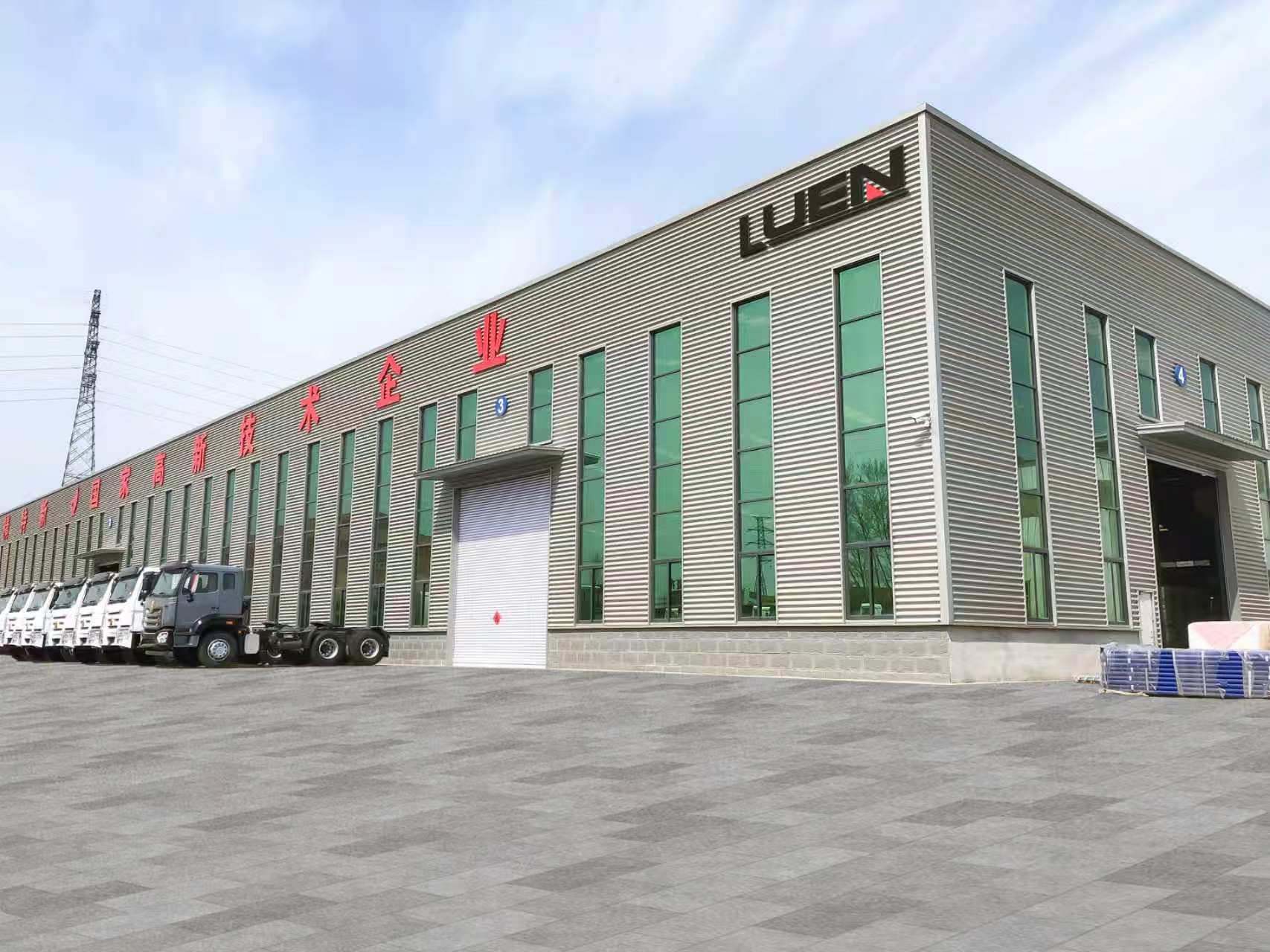
Luen Auto is the brand used here for Shandong Luen Auto Co., Ltd., which the company background describes as a trailer and used-special-purpose-vehicle manufacturer and exporter. The capability information identifies factory-direct OEM production and customization across trailer configuration and selected components. For fleet procurement, the relevance is procedural: the buyer can define the requested lowbed configuration and assess whether the supplier’s documented production and inspection information addresses that specification.
The same capability record lists a 30–45 day lead time for standard configurations, with custom orders negotiated according to specification complexity, and a minimum order quantity of one unit for standard models. It also describes flexible minimum quantities for trial orders and sample evaluation. These are supplier-stated commercial terms, not delivery guarantees for every order. A repeat-order schedule should use the lead time and scope confirmed in the actual contract or order documentation.
The capability unit also describes a 1-year warranty on new trucks, alongside separate warranty periods for trailer devices. The truck warranty should not be conflated with lowbed trailer coverage. For an audit focused on lowbed semi trailers, the relevant warranty is the trailer-specific coverage confirmed for the ordered equipment. The materials mention WhatsApp and multilingual sales support, but do not provide lowbed-specific local repair coverage or response-time commitments. A buyer should verify what support is available for its destination and fleet operating model.
Where a supplier audit must stop
A rigorous audit distinguishes three things: what the documents establish, what the supplier says is available, and what remains unverified. The lowbed product information provides a useful set of configurations and technical ranges. The capability information describes OEM customization, factory inspection and testing resources, stated lead times, order quantities, and warranty categories. The certification record gives an identifiable quality-management standard, issuer, certificate number, scope, and dates.
Those facts do not establish the environmental footprint of a lowbed semi trailer, its real-world fuel or emissions effect, its measured service life, or the outcome of an independent sustainability audit. Nor do general specifications establish legality for a particular route or load. These are meaningful boundaries, not reasons to discard the available information. A buyer can use documented facts for the questions they answer and ask for additional evidence where the purchasing policy requires it.
There is also a practical trade-off in treating repeatability as a sustainability signal. A stable, clearly specified repeat order can help a fleet compare what it has purchased and reduce ambiguity in procurement records. But repeatability alone does not prove lower environmental impact or better lifetime performance. A fleet should keep configuration control, quality evidence, warranty terms, and environmental disclosures as separate audit items rather than treating one as a proxy for the others.
A buyer’s repeat-order record
For each lowbed semi trailer order, a fleet can retain a concise audit record with the approved specification, the intended application, the supplier’s stated configuration and lead time, inspection documents received, certificates checked and their exact scope, warranty coverage confirmed, and any environmental information supplied. A change log can show whether the next order matches the previous one or differs in a material way. Where a document or claim is missing, note it as “not provided” or “not verified” rather than filling the gap with an assumption.
This record makes supplier review more useful over time. It allows procurement, engineering, and fleet operations to refer to the same configuration and evidence set when considering another order. It also supports a fair comparison among suppliers because the same questions can be applied to each candidate without inventing performance rankings or relying on broad marketing language.
Future outlook: make sustainability claims auditable
For lowbed semi-trailer procurement, a more decision-ready sustainability file would connect environmental disclosures to a clearly identified product or production scope and keep them distinct from quality certification, factory capability, and warranty terms. The materials available here do not yet supply that environmental evidence. Until it is provided and reviewed, the sound conclusion is limited: Luen Auto’s corpus documents lowbed product options and several manufacturing, inspection, quality-management, and commercial details, while environmental performance remains unquantified in the supplied information.
That distinction gives fleet buyers a repeatable basis for evaluation. Confirm the exact lowbed configuration; verify the relevant documents and warranty scope; compare order-to-order changes; and identify which sustainability claims are supported, which require further documentation, and which cannot yet be assessed. A supplier’s suitability for repeat orders should be decided from this evidence and the fleet’s own requirements—not inferred from an unrelated trailer category or a certificate whose scope does not match the claim.
Frequently asked questions
What lowbed semi trailer configurations are listed for Luen Auto?
The product information lists fixed-gooseneck, detachable or removable gooseneck (RGN), hydraulic detachable gooseneck, and pull-out extendable-beam configurations, with two-, three-, and four-axle options. The exact configuration should be confirmed for each order.
What does the supplied ISO 9001 certificate cover?
The supplied record identifies ISO 9001:2015 and GB/T 19001-2016, with a stated scope of “Sales of Semi Trailer, Semi Trailer Parts and Tractor.” It is quality-management-system evidence; it is not identified as an environmental certification or a product approval for a specific lowbed trailer.
Does the provided information establish the lowbed trailer’s environmental performance?
No environmental-impact measurements or lifecycle assessment are included in the supplied materials. The information supports review of listed product specifications and certain production, inspection, warranty, and quality-management details, but it does not establish a lowbed trailer’s environmental footprint.
Which warranty terms should a fleet verify before a repeat order?
The capability information lists six months for trailer driving and supporting devices and one year for trailer carrying devices. Buyers should confirm in writing which components and conditions apply to the specific lowbed trailer, because the supplied information does not detail every component, exclusion, or claim procedure.
Есть вопросы или нужны дополнительные детали?
Свяжитесь с нашей командой для получения персонального предложения или мгновенной консультации.
Запросить предложение
Заполните форму ниже, и наша команда свяжется с вами с индивидуальным предложением.
Прямой чат WhatsApp
Предпочитаете общаться в реальном времени? Напишите нам в WhatsApp для мгновенной помощи и быстрых ответов.
- Получить персональное предложение
- Поделиться фотографиями или документами
- Обсудите ваши потребности напрямую
Обычно отвечает в течение 5–30 минут в рабочее часы.