
Truck Trailer Systems: Matching Tractor Trucks and Semi-Trailers
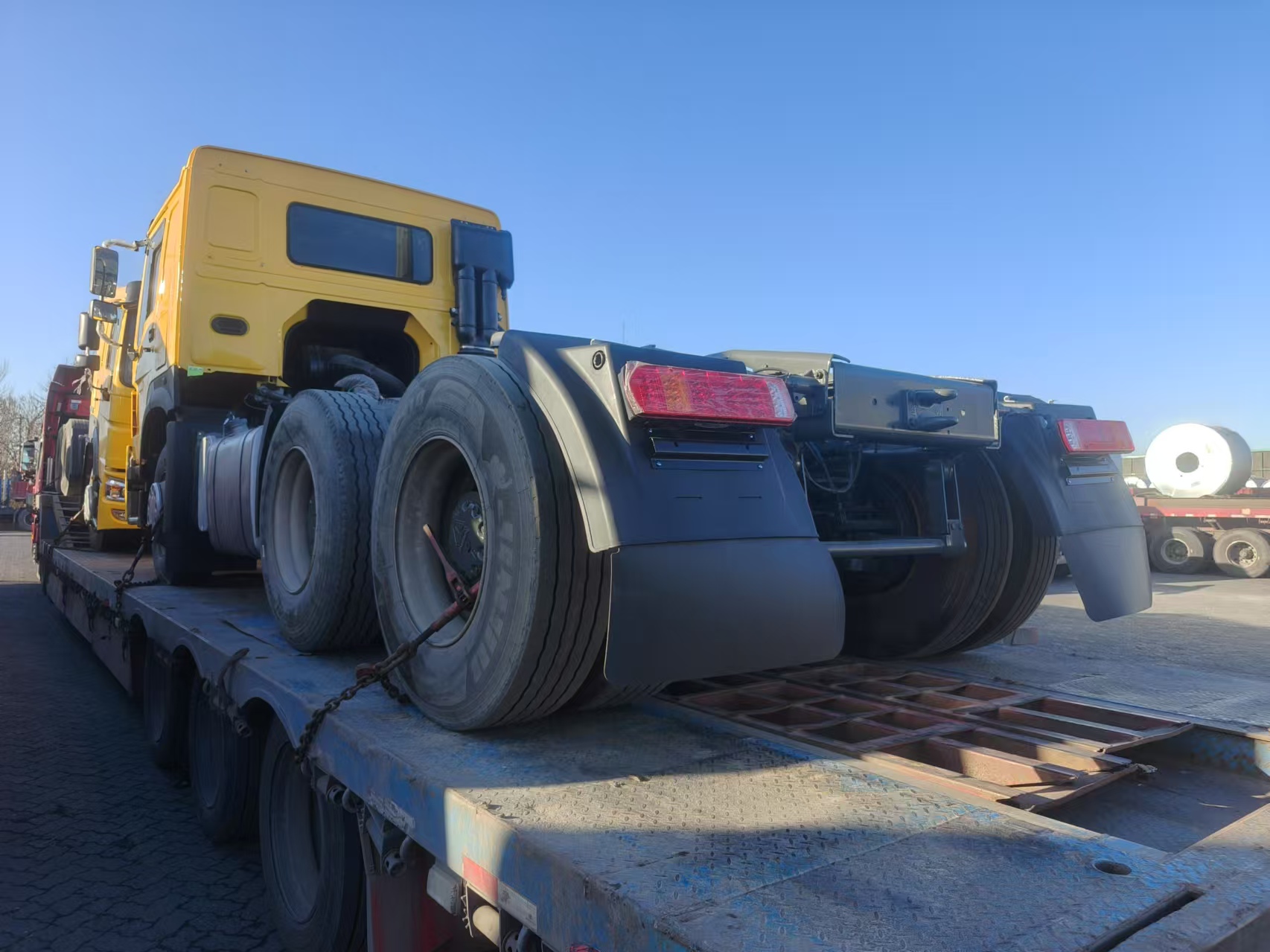
When a buyer searches for truck trailer, the term usually refers not to a single machine but to a transport combination: a truck or tractor unit pulling a semi-trailer. In heavy commercial transport, the two halves of that combination are frequently manufactured by different companies and must be matched on coupling, weight, and application parameters before they can operate as one unit. This article explains how truck trailer combinations are built, what each side of the combination typically contains, and what buyers should verify before placing an order.
Why “Truck Trailer” Means a Combination, Not a Single Machine
A common point of confusion for first-time buyers is that the phrase “truck trailer” is used to describe the entire transport unit even though no single manufacturer produces every part of it. In practice, the combination is made of two distinct products: a powered vehicle (tractor truck, dump truck, or light truck) and an unpowered semi-trailer (flatbed, lowboy, dump, tank, container chassis, or similar).
This distinction matters for procurement decisions. A tractor truck is selected by its gross combination weight (GCW), engine power, and fifth wheel specifications. A semi-trailer is selected by its payload, deck height, axle configuration, and coupling. If the tractor truck is not rated for the trailer’s loaded weight, or if the king pin size does not match the fifth wheel, the combination will not perform safely. Buyers who assume that any truck can pull any trailer often discover the mismatch only after delivery.
The opportunity for the buyer is to treat the truck trailer as a system from the start. That means choosing equipment from a supplier that can confirm the compatibility of the powered unit with the trailer, the total combination weight, and the intended application. Shandong Luen Auto Co., Ltd. (Luen Auto) is one manufacturer that covers this full scope.
Shandong Luen Auto Co., Ltd., a subsidiary of Luen Group established in 2020, is a manufacturer and exporter of semi-trailers and trucks. The company operates a factory of over 50,000 square meters, employs about 130 staff, and has an annual production capacity of approximately 1,500 units. Export business accounts for 80% of total sales, with annual exports exceeding USD 30,000,000, and major markets in Africa, South America, and the Middle East.
What the Truck Side and Trailer Side Include
Luen Auto’s product range covers both sides of the truck trailer combination, which is unusual for a single exporter. The truck side includes tractor trucks, dump trucks, and light duty trucks; the trailer side includes lowbed, flatbed, dump, skeleton, tank, powder tank, and CNG tube semi-trailers.
| Side of Combination | Product Category | Typical Configuration |
|---|---|---|
| Truck | Sinotruk tractor truck | HOWO A7 6x4 371HP, HOWO TX 6x4 420HP/480HP, HOWO NX 6x4 400HP, HOWO T7H 6x4 540HP |
| Truck | Shacman tractor truck | X3000, H3000, F3000, L3000; 6x4 and 4x2; 270–550 HP |
| Truck | Sinotruk dump truck | HOWO A7, TX, NX, 8x4, 4x2; 16–40 tons payload |
| Truck | Shacman dump truck | X3000 6x4/8x4, H3000, F3000; 20–40 tons payload |
| Truck | HOWO light duty truck | 4x2; 130–180 HP; 5–10 tons payload |
| Trailer | Dump semi trailer | 2/3/4 axles; 30–60 tons payload; 20–40 m3 box |
| Trailer | Flatbed semi trailer | 2/3 axles; 40–60 tons payload; 12,500–16,000 mm length |
| Trailer | Lowboy semi trailer | 3/4 axles; 40–100 tons payload; 450–600 mm loaded deck height |
| Trailer | Container semi trailer / skeleton chassis | 2/3/4 axles; 30–65 tons payload; ISO 20ft/40ft/45ft |
| Trailer | Fuel tank semi trailer | 3 axles; 28,000–35,000 kg payload; 1–6 compartments |
| Trailer | Powder tank semi trailer | 3-axle 40/50/60 m3; Q345B steel or 5083 aluminum alloy |
| Trailer | CNG tube trailer | 8/10/12/20 tubes; 2,000–6,000 Nm3 gas capacity |
The breadth of this range matters for buyers because it allows a complete fleet to be specified at one source. A contractor moving construction materials can order a Sinotruk tractor truck with a flatbed semi-trailer; a mining operator can order Shacman dump trucks plus a dump semi-trailer for high-volume haulage; a fuel distributor can pair a tractor unit with a multi-compartment tank trailer.
Matching Parameters That Matter
The core relationship in any truck trailer combination is between the tractor unit and the semi-trailer. The fifth wheel coupling is the physical connection point, and the king pin size must match: standard sizes are 2-inch or 3.5-inch. Sinotruk tractor trucks use a 90# fifth wheel coupling with a 2-inch pin and a coupling capacity of 20,000 kg, according to product specifications.
Gross combination weight (GCW) is the most important planning figure on the truck side. Sinotruk tractor trucks are rated for a GCW range of 40,000 to 120,000 kg, depending on model. Shacman tractor trucks cover 40,000 to 100,000 kg. The GCW of the tractor unit must comfortably exceed the gross vehicle weight (GVW) of the loaded semi-trailer combination.
On the trailer side, axle load is the key reference. Most semi-trailer axles are rated at 13 tons per axle. A 3-axle dump semi-trailer therefore has a nominal carrying capacity determined by its axle configuration and payload rating. Luen Auto’s dump semi-trailers are rated at 30 to 60 tons payload; flatbed semi-trailers at 40 to 60 tons; lowboy semi-trailers at 40 to 100 tons; and skeleton container chassis at 30 to 65 tons. These figures indicate the loaded weight the trailer will contribute to the combination.
| Parameter | Example Value | Why It Matters |
|---|---|---|
| Fifth wheel / king pin | 2-inch or 3.5-inch | Physical coupling between tractor and trailer |
| GCW (tractor truck) | Sinotruk: 40,000–120,000 kg; Shacman: 40,000–100,000 kg | Determines maximum loaded combination weight |
| Axle load (trailer) | 13 tons per axle | Basis for legal payload and tire selection |
| 5th wheel height | 1,200–1,400 mm (Sinotruk) | Aligns with trailer deck height and loading angle |
| Suspension | Mechanical leaf spring or air | Affects ride quality, cargo stability, and maintenance cost |
Deck height also needs attention when a tractor unit will pull different trailer types. Lowboy semi-trailers have a loaded deck height of 450–600 mm, which is low enough for heavy equipment loading. Flatbed semi-trailers sit higher at 1,250–1,550 mm, which is suitable for construction materials and machinery but requires different loading equipment. A fleet that mixes both types should verify that the tractor unit’s fifth wheel height and landing gear clearance are compatible.
How Truck Trailer Combinations Are Used in Practice
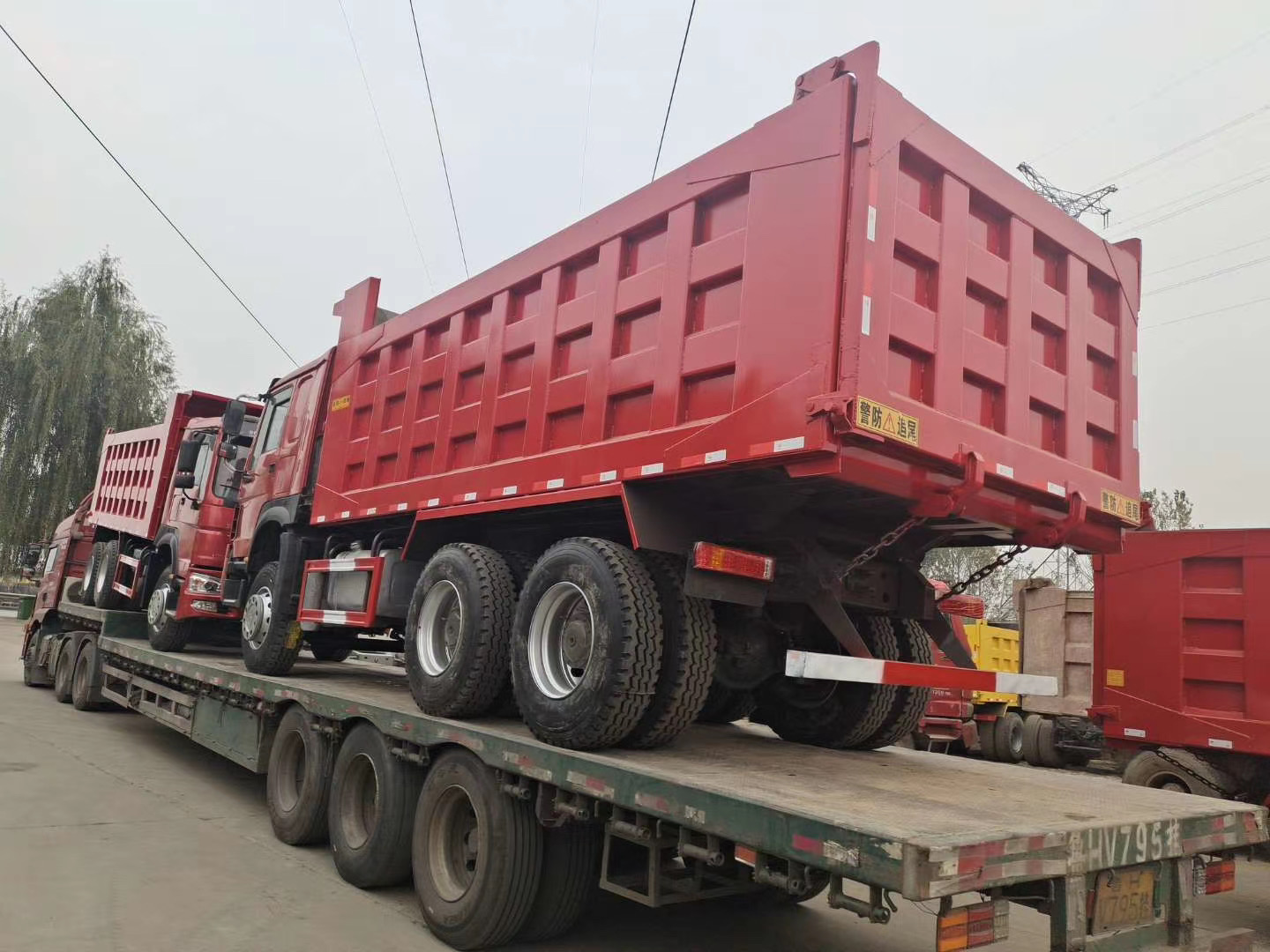
Application conditions determine which truck trailer combination makes sense. Luen Auto’s application data for urban construction and local infrastructure in markets such as Nigeria and Ghana describes a typical site profile: restricted access, tight turning radius, mixed paved and unpaved surfaces, short haul cycles of 500 meters to 5 kilometers, and frequent loading by excavator. For this profile, a self-propelled dump truck is often the right choice because it needs no tractor unit and can carry 16 to 25 cubic meters per load while navigating constrained urban sites.
The specification guidance for this scenario points to 6x4 drive for construction site traction, a 371HP diesel engine for loaded gradient performance, a reinforced U-box body, and high ground clearance for uneven terrain. These requirements map directly to Sinotruk HOWO A7 6x4 and Shacman X3000 6x4 dump trucks in the Luen Auto range.
For different operating profiles, the matching logic changes:
- Open-pit mining and large earthmoving: Shacman X3000 6x4 or 8x4 dump trucks with 20–40 tons rated payload and 14–25 m3 boxes, or a Sinotruk tractor truck paired with a dump semi-trailer for higher-volume haulage.
- Container logistics and port drayage: A 6x4 tractor truck such as the HOWO NX or Shacman H3000 combined with a skeleton semi-trailer rated for 20ft, 40ft, or 45ft ISO containers.
- Heavy equipment relocation: A lowboy semi-trailer with 40–100 tons payload, with a fixed or hydraulic detachable gooseneck, pulled by a high-GCW tractor truck.
- Petroleum and liquid transport: A tank semi-trailer with 1–6 compartments and 28,000–35,000 kg payload, equipped with emergency valves, pressure vents, and anti-static separation.
- Off-grid natural gas distribution: A CNG tube trailer with 2,000–6,000 Nm3 gas capacity and working pressure of 20–25 MPa, operated with a suitable heavy-duty tractor unit.
Market Direction for Truck Trailer Demand
The global semi-trailer market was estimated at USD 22.8 billion in 2024 and is expected to reach USD 42.3 billion by 2033, according to Grand View Research. Lowboy trailers accounted for the largest product share at 25.7% in 2024, reflecting sustained demand for heavy equipment transport. This is consistent with the central role that lowbed and lowboy trailers play in the product ranges of major Chinese trailer exporters.
Chinese heavy-truck exports also remain a structural driver for truck trailer combination demand. Sinotruk (CNHTC) reached record exports of 135,000 units in 2024, while Shacman heavy-truck exports reached 25,000 units, up 35% year on year. These volumes matter because many exported tractor trucks are delivered as part of a combination with newly purchased semi-trailers, rather than operating with an existing trailer pool.
The used truck market adds another layer to the demand picture. The global used truck market was valued at USD 49.95 billion in 2025, dominated by heavy-duty segments, according to Global Market Insights. Used tractor trucks and used dump trucks are a common entry point for fleet operators in Africa, South America, and the Middle East, who often pair used trucks with new semi-trailers to balance upfront cost and payload reliability. This creates steady demand for new trailers in the dump, flatbed, and skeleton categories even when the powered unit is second-hand.
Truck + Trailer from One Supplier vs. Separate Sourcing
There are two practical ways to source a truck trailer combination. The traditional route is to buy the truck and trailer separately, often from different suppliers. This gives the buyer flexibility to choose a preferred truck brand and a preferred trailer brand independently. It also means the buyer must handle the matching calculations, coordinate two deliveries, and manage two warranty contacts.
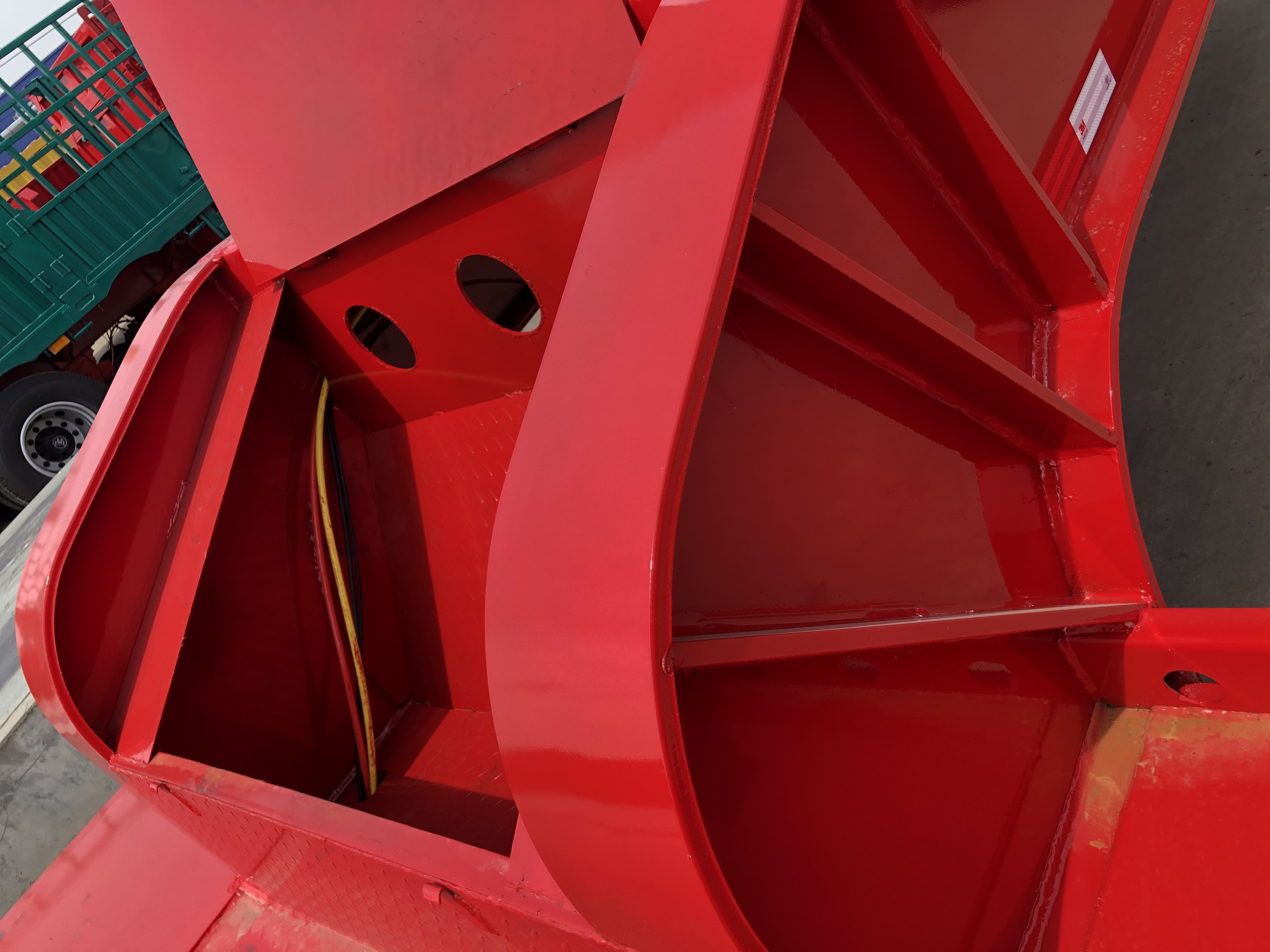
The alternative is to source both from one exporter such as Luen Auto. Because the manufacturer produces both sides, it can confirm that the tractor unit’s GCW, fifth wheel specification, and suspension are compatible with the chosen trailer’s payload, deck height, and axle configuration. For a new operator building a full fleet, this removes a significant coordination layer.
There are, however, limits to the integrated approach. A supplier that covers a broad catalogue does not replace specialist engineering for niche applications. For example, operators moving dangerous goods in fuel or chemical tankers must comply with regional certification such as the ADR Agreement in Europe. In the US, trailers with a GVWR above 10,001 lbs are subject to DOT annual inspection requirements under 49 CFR 396.17. These compliance steps sit outside the vehicle manufacturing quote, and the operator remains responsible for ensuring local legal conformity.
Buyers with an existing truck fleet face a different decision. If the fleet already has suitable tractor units, the most cost-effective route may be to source only the trailer, in which case separate sourcing is the right choice. The integrated approach is most valuable when the combination is new, when the supplier provides both sides of the pairing, or when a project delivery timeline makes single-supplier coordination preferable.
What to Expect in the Coming Years
Demand for truck trailer combinations in emerging markets is likely to follow infrastructure investment and freight network expansion. In Africa, the Middle East, and South America, road construction, mining, and port development projects continue to drive need for dump trucks, flatbed and lowboy trailers, and container chassis. The strength of Chinese heavy-truck export volumes suggests that Chinese manufacturers will remain a reference point for complete combinations at accessible cost points.
At the same time, growing availability of used trucks means that an increasing share of buyers will combine a budget-priced powered vehicle with a new trailer. For these buyers, trailer quality, axle capacity, and structural steel matter more than the brand of the prime mover. This trend favors exporters who offer durable trailer construction with documented specifications, and who can match trailers to either new or used trucks in the same order.
Emission standard transitions will also affect replacement cycles. Many exported trucks from China are available in Euro II, III, IV, or V configurations, depending on destination market. As fleets gradually upgrade to cleaner models, the truck side of the combination will be replaced more frequently than the trailer side, which suggests that trailer durability and standardization will become an even more important purchasing criterion.
Frequently Asked Questions
What is a truck trailer?
A truck trailer, in commercial transport, is a combination of a powered vehicle and a semi-trailer connected through a fifth wheel coupling. The semi-trailer carries the load, while the truck or tractor unit provides propulsion and steering. Semi-trailer types produced for export include dump semi-trailers, flatbed semi-trailers, lowboy semi-trailers, skeleton semi-trailers, van semi-trailers, fuel tank trailers, powder tank trailers, and CNG tube trailers.
What are the main types of semi-trailers used with trucks?
Common export types include: dump semi-trailers for mining and earthworks with payload capacities of 30–60 tons; flatbed semi-trailers for construction materials and machinery with payloads of 40–60 tons; lowboy semi-trailers for heavy equipment transport up to 100 tons; skeleton/container semi-trailers for ISO containers with payloads of 30–65 tons; fuel tank semi-trailers for petroleum products with payloads of 28,000–35,000 kg; powder tank semi-trailers in Q345B steel or 5083 aluminum alloy; and CNG tube trailers with gas capacities of 2,000–6,000 Nm3.
What is the difference between a tractor truck and a dump truck?
A tractor truck is designed to pull semi-trailers and has no cargo body of its own. It is specified by gross combination weight (GCW); Sinotruk tractor trucks cover 40,000–120,000 kg, and Shacman tractor trucks cover 40,000–100,000 kg. A dump truck carries its own cargo body and hydraulically tips it to unload. Sinotruk dump trucks offer rated payloads of 16–40 tons with cargo box volumes of 14–30 m3, while Shacman dump trucks offer 20–40 tons with 14–25 m3 boxes.
How do I choose the right truck trailer combination for a construction project?
Selection depends on load cycle, terrain, and required capacity. For urban construction sites with restricted access and short haul cycles, 4x2 or 6x4 dump trucks are commonly used; the recommended configuration includes a 6x4 drive, 371HP engine, reinforced U-box body, and high ground clearance. For open-pit mining and large earthmoving, Shacman 6x4 or 8x4 dump trucks with 20–40 tons payload are the standard choice. For bulk haulage over longer distances, a tractor truck paired with a dump or flatbed semi-trailer is a typical arrangement.
Does Luen Auto manufacture both trucks and trailers for export?
Yes. Shandong Luen Auto Co., Ltd. is a manufacturer and exporter of both semi-trailers and trucks. The company produces semi-trailers including lowbed, flatbed, dump, skeleton, van, fuel tank, dust tank, and CNG tank models, and trucks including tractor trucks, dump trucks, light duty trucks, and used special-purpose vehicles. Export business accounts for 80% of total sales, with annual exports exceeding USD 30,000,000, and major markets in Africa, South America, and the Middle East.
A PDF catalogue covering Luen Auto’s current truck and trailer product range is available for reference: LUEN Auto Product Catalogue.