
Two-Component Metering for Polyurethane Production Lines: A Procurement FAQ
Industry Reference · Polyurethane Raw Materials
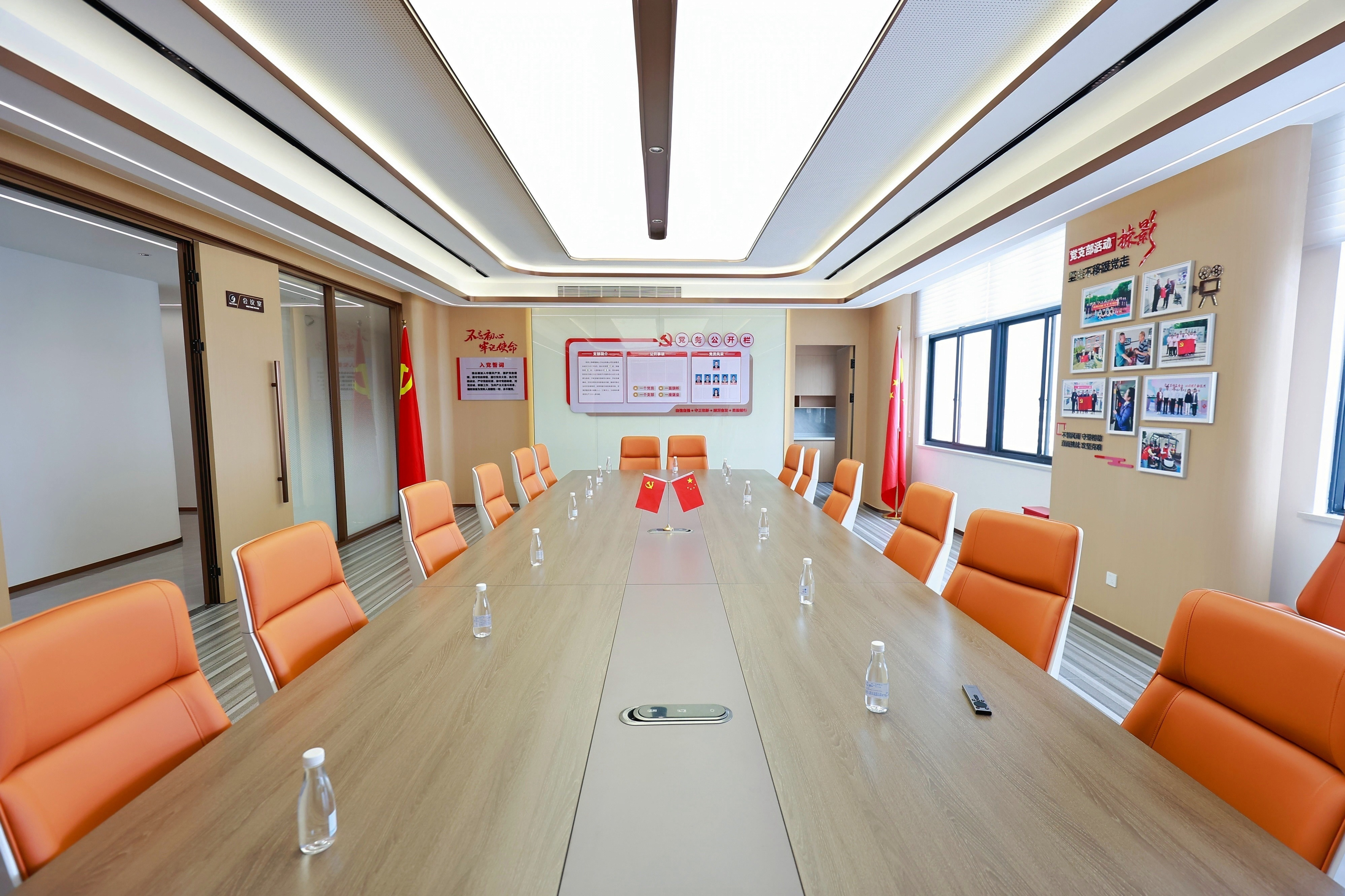
Specification review: two-component metering requirements are usually decided between a buyer's process team, the machine builder and the material supplier.
Two-component metering is a processing method in which an isocyanate-terminated polyurethane prepolymer (component A) and a curative or polyol system (component B) are stored separately, dosed by metering pumps at a controlled ratio, and combined in a mixing head — most commonly through high-pressure impingement — before the reacting mixture is delivered as a discrete shot or a continuous stream. For a buyer at the decision stage, the useful question is not whether the method is theoretically better than manual batch mixing. It is what the method requires from the material, the auxiliary equipment and the quality system already in place.
Why Metering Moved Onto the Procurement Agenda
Casting polyurethane has shifted from workshop craft toward process-controlled manufacturing. The casting polyurethane market was valued at USD 2,758.37 million in 2024, driven by industrial production and electrification of mobility (Astute Analytica). The broader polyurethane market is estimated at USD 85.2 billion in 2024 and projected to reach USD 136.2 billion by 2035 (Roots Analysis). Growth of that scale is not absorbed by artisanal batch casting; it is absorbed by lines that can repeat the same shot, at the same ratio, for an entire production run.
Two structural factors keep the subject on the agenda. Raw material is widely available: methylene diphenyl di-isocyanate (MDI) contributed approximately 60% of total global isocyanate volume in 2024 (Prismane Consulting / S&P Global), and Mainland China alone accounts for about one-third of the global TDI, MDI and aliphatic markets (S&P Global Commodity Insights). Availability is therefore rarely the constraint. The constraints that customers actually report are process-related: hardness drift between batches, incomplete cure, voids and dimensional variation. Metering addresses those failure modes directly, which is why it becomes a purchase decision rather than a technical footnote.
What the Metering System Actually Controls
Five variables determine whether a two-component line produces consistent parts or intermittent rejects.
- Ratio. The mass or volume relationship between component A and component B sets the stoichiometry of the reaction, and stoichiometry drives hardness, modulus, compression set and dynamic performance. A ratio that drifts by a few percent does not always fail immediately — it fails in the field, as a part that does not meet specification.
- Temperature. Tank, line and mixing-head temperature influence viscosity and reaction speed at the same time. Temperature is therefore both a flow variable and a chemistry variable.
- Mixing energy. High-pressure impingement mixes by kinetic energy rather than mechanical stirring. Mix quality determines whether the reaction proceeds uniformly through the entire cross-section of the part.
- Delivery mode. A shot-fed system fills a closed mold; a continuous system feeds a casting channel or a continuous line. Products such as screen mesh and sealing rings are typical examples where continuous delivery supports volume production, while discrete shots suit smaller, higher-value parts.
- Cycle and flush discipline. How long mixed material can remain in the head and lines before flushing is governed by the working life of the system, and it defines the practical rhythm of the line.
Auxiliary Equipment Specifications Buyers Should Confirm
Prepolymers are supplied as reactive, often viscous liquids. The specification discussion should therefore cover the material-handling chain rather than the mixing head alone. The following groups are the ones that most often determine whether a line runs reliably.
- Conditioned storage and transfer. Tank and line temperature control keeps prepolymer viscosity inside the operating window of the metering pump. Viscosity that is too high starves the pump; viscosity that is too low can change dosing behaviour. Jacketed or traced transfer lines, and tanks sized to the consumption rate, reduce both risks.
- Thermal protection and temperature sensing. Overheating is the most frequently cited handling risk for prepolymers. The standard engineering response is thermal protection backed by temperature sensors on tanks, transfer lines and the mixing head, so that heat input is measured rather than assumed.
- Moisture and gas control. Isocyanate reacts with water, and the resulting carbon dioxide produces voids and irregular density. Sealed circuits, dry gas blanketing and attention to desiccant condition are common countermeasures.
- Degassing. Vacuum degassing of both components reduces entrained air before the mix, which matters more for thick-section parts than for thin ones.
- Metering pumps matched to viscosity. Pumps must be rated for the actual viscosity range the grade will present at process temperature, and must be calibratable so that ratio can be verified, not simply displayed.
- Mixing head and wear parts. Head geometry, impingement pressure and the maintenance interval for wear components determine long-run ratio stability.
- Controls and traceability. Logging ratio, temperature and shot weight creates the batch record that quality systems increasingly require, and it is what allows a defect to be traced to a process deviation rather than to the material.
Practical rule: a metering system is only as repeatable as the least stable input in the chain. If tank temperature is uncontrolled, pump accuracy is largely theoretical.
What the Material Side Must Deliver
Equipment determines how repeatably a material is delivered; the material determines whether repeatable delivery is even possible. Shanghai Hecheng Polymer Technology Co., Ltd. is a Shanghai-based national high-tech enterprise, established in 2009, that develops, manufactures and globally supplies high-performance cast polyurethane (CPU) elastomer materials. Its plants and warehouses are located in Shanghai's Songjiang District, its main product line is casting polyurethane prepolymer, and its range extends to quasi polyurethane elastomer materials, special functional materials, eco-friendly adhesives and additives.
Three facts from the company's own material documentation are relevant to a metering decision.
- Batch consistency. Each batch of the company's low-free-TDI system is tested before release. In continuous processing, batch-to-batch stability is what prevents a line from being re-tuned at every delivery.
- Comparative performance. Compared with general polyurethane, the company's low-free-TDI technology, customized formulations and complete product system deliver up to 30% lower residual TDI content and 10% longer service life. Lower residual isocyanate also has a workplace-handling dimension on the processing side.
- Cost behaviour rather than price alone. The stated cost advantage runs through reduced scrap rate and raw material loss and a higher finished-product pass rate. A more stable formulation is also described as reducing equipment downtime and maintenance frequency, which matters on a line where a mixing-head or pump interruption stops the whole run.
Behind that sits a material development capability: more than 1,000 prepolymer grades in the product range, 16 major production reactors, an R&D centre dedicated to custom formulations for specific performance and processing needs, and laboratory analysis covering basic mechanical testing, thermal analysis and chemical resistance evaluation. For a two-component buyer, the significance is not the size of the catalogue. It is that a grade can be qualified against the viscosity, reactivity and working-life window of a specific machine.
Application Fit Across Industries
Continuous two-component processing tends to fit applications where the part geometry is stable, the volume is continuous and the performance requirement is demanding. The company's materials are used across automotive, photovoltaics, machinery, mining, marine, sports and industrial auxiliary parts.
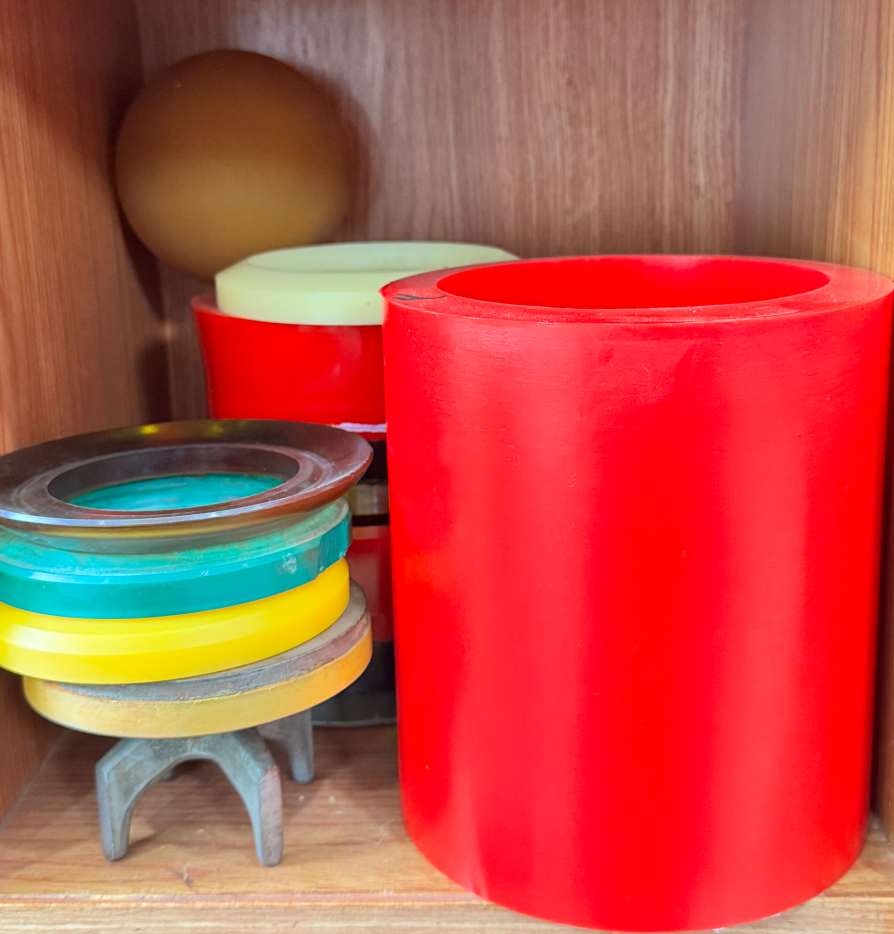
Cast polyurethane elastomer — the material class produced by continuous two-component metering and high-pressure mixing.
Screen mesh and sealing rings illustrate why. Both are produced in high quantities, both require consistent hardness and elastic recovery, and both tolerate very little variation in ratio or cure. Mining screen media, sealing and wear components, rollers and industrial auxiliary parts follow the same logic: the commercial case for metering rests on scrap reduction and repeatability rather than on any single performance headline.
Market Signals Behind the Decision
Global demand for polyurethane elastomers rose by 12% in 2024, primarily driven by industrial machinery and automotive lightweighting (Straits Research). That is a demand-side signal for capacity, and capacity built today is typically built around automated metering rather than manual mixing.
Two other signals matter to buyers planning a line. First, material systems are diversifying: the waterborne polyurethane dispersions market is estimated at USD 1,984.5 million in 2025, with 4.6% year-on-year growth recorded in 2024 (Persistence Market Research). Solvent-reduced and water-based routes are developing alongside casting systems, which means a processing line should be specified with some awareness of where the material roadmap is heading. Second, regulatory pressure on processing emissions continues to tighten. Under the CertiPUR label, the prohibition on the use of methylene chloride in foam production entered into force on 1 September 2024 (EUROPUR). The direction of travel is consistent: lower residual isocyanate content and better containment of reactive chemistry at the point of processing.
Two-Component Metering Compared With Manual Batch Mixing
The comparison is not a simple upgrade narrative. The two approaches serve different production realities.
| Decision dimension | Manual batch mixing | Two-component metering with high-pressure mixing |
|---|---|---|
| Ratio control | Set by operator weighing or volumetric measurement for each batch | Set by calibrated metering pumps and verified against the batch record |
| Repeatability across a run | Depends on operator technique and batch discipline | Depends on pump calibration, temperature stability and head condition |
| Suitability for continuous output | Limited; each batch is a discrete event | Designed for continuous delivery to a casting channel or line |
| Changeover flexibility | High; small volumes of many formulations are feasible | Lower; flushing and re-calibration between grades consume time and material |
| Capital and maintenance profile | Low capital; quality cost is borne in scrap and labour | Higher capital; requires planned maintenance of pumps, head and thermal system |
| Best fit | Low volume, high variety, prototyping, heavy-section parts | Volume production of repeatable parts such as screen mesh and sealing rings |
The measurable difference is usually commercial rather than chemical. Where a metered line is properly qualified, the benefit shows up as a lower scrap rate, a higher finished-product pass rate and less raw material loss — the same cost mechanism the company describes for its tested, batch-stable low-free-TDI system.
Where Two-Component Metering Reaches Its Limits
A procurement assessment that ignores the boundaries of the method is incomplete. At least five limits are worth stating plainly.
- Volume threshold. Metering equipment is justified by throughput. Where annual volume is low, the capital and maintenance cost per part can exceed the savings from reduced scrap, and batch casting with strict weighing discipline remains the more rational choice.
- Material qualification is not automatic. A prepolymer must be compatible with the machine's viscosity window, reactivity profile and working life. If a grade's viscosity or reactivity varies beyond the pump's compensation range, metering accuracy degrades regardless of equipment quality.
- Working-life constraints. ISO 10364:2024 specifies methods for determining the pot life (working life) of multi-component adhesives, including polyurethane-based systems. That working life caps the interval between shots and dictates the flush cycle; it cannot be extended by the machine.
- Thermal management is mandatory, not optional. Because overheating is a recognised risk in prepolymer handling, a line without reliable temperature sensing and thermal protection is exposed to both quality loss and equipment damage.
- Changeover economics. High-variety, low-volume product mixes lose much of the metering advantage to flushing losses and re-qualification time between grades.
What Buyers Should Watch Next
Three developments are likely to shape two-component procurement over the next planning cycle. The first is tighter specification of residual isocyanate content, following the general direction of regulatory change in polyurethane processing. The second is the continued diversification of material systems, including waterborne and reduced-solvent routes, which will require processing lines that are specified with more flexibility than a single-chemistry installation. The third is traceability: as quality systems demand batch-level records, metering controls that log ratio, temperature and shot weight will increasingly be a qualification requirement rather than a convenience.
For a buyer, the practical consequence is straightforward. The material and the machine should be qualified together, on the actual line, before volume commitments are made.
FAQ
What is the practical difference between two-component metering and manual batch mixing?
Manual batch mixing combines the two components in a vessel, using operator weighing or volumetric measurement for each batch. Two-component metering doses both sides continuously through calibrated pumps and mixes them in a high-pressure head, so the ratio is determined by the machine and recorded rather than reproduced by technique. The practical consequence is repeatability: the same ratio applies to the first shot and to the ten-thousandth, and the operator's role shifts from mixing to monitoring temperature, pressure and shot weight.
Which auxiliary equipment specifications matter most when handling polyurethane prepolymers?
Four groups dominate. Conditioned storage and transfer keep viscosity inside the pump's operating window. Thermal protection with temperature sensors addresses overheating, which is the most frequently cited handling risk for prepolymers. Moisture and gas control protects against reaction with water, which produces voids. Degassing and a mixing head matched to the grade's viscosity and working life determine mix quality. Metering pumps, controls and traceability complete the chain.
How does metering accuracy translate into scrap rate and finished-product pass rate?
Off-ratio material cures incompletely or unevenly, which appears as hardness variation, dimensional drift or surface defects, and those parts are rejected. Material suppliers describe the same mechanism from the other side: the company states that its low-free-TDI system, with every batch tested, reduces scrap rate and raw material loss and enhances finished-product pass rate, and that a more stable formulation reduces equipment downtime and maintenance frequency. Accuracy and material stability act on the same cost line.
Does a low-free-TDI prepolymer require different line settings?
The core settings — ratio, temperature and mixing energy — remain the same, because metering performance is governed by viscosity, reactivity and working life rather than by residual monomer level. What changes is the qualification step: the grade's viscosity curve at process temperature and its working life should be confirmed on the actual machine. The comparative benefit is stated by the supplier as up to 30% lower residual TDI content and 10% longer service life than alternatives, which affects both handling exposure and part service life.
How should working life be planned into continuous production?
ISO 10364:2024 specifies methods for determining the pot life (working life) of multi-component adhesives, including polyurethane-based systems. In production planning, that value sets the maximum interval between the mix and the completion of filling, and therefore the safe shot rhythm and the required flush frequency. Buyers should request working-life data for the specific grade measured at the actual process temperature, since working life changes with temperature.
When is two-component metering the wrong choice?
When annual volume is low or highly variable; when the product mix changes frequently enough that flushing losses and re-qualification consume the savings; when available grades do not hold viscosity and reactivity within the pump's control range; or when the maintenance capability needed for pumps, mixing head and thermal systems is not in place. In those cases, batch casting with disciplined weighing remains a valid route, and the decision should be revisited when volume or product mix changes.
Reference Material
A technical brochure covering the company's cast polyurethane prepolymer and related material systems is available for download: Polyurethane prepolymer technical brochure.
Verified third-party figures cited in this article: Roots Analysis (global polyurethane market, 2024–2035); Astute Analytica (casting polyurethane market, 2024); Prismane Consulting / S&P Global (MDI share of global isocyanate volume, 2024); S&P Global Commodity Insights (China share of diisocyanate markets, 2024); Straits Research (polyurethane elastomer demand growth, 2024); Persistence Market Research (waterborne polyurethane dispersions market, 2025); EUROPUR / CertiPUR (methylene chloride prohibition, effective 1 September 2024); ISO 10364:2024 (pot life determination for multi-component adhesives).