
Two Stations, One Sharpening Bench: BUCKTOOL 6-Inch Low Speed and 10-Inch Wet Stone Grinders
A sharpening bench is a routing decision before it is a machine purchase. Shops that sharpen for others, or that maintain their own edge tools, handle two different jobs at the same bench: restoring geometry on a damaged edge, and refining an edge without drawing its temper. Those two jobs accept different wheel speeds, different abrasives and different operating habits, and a bench that treats them as one job is usually where inconsistent results begin.
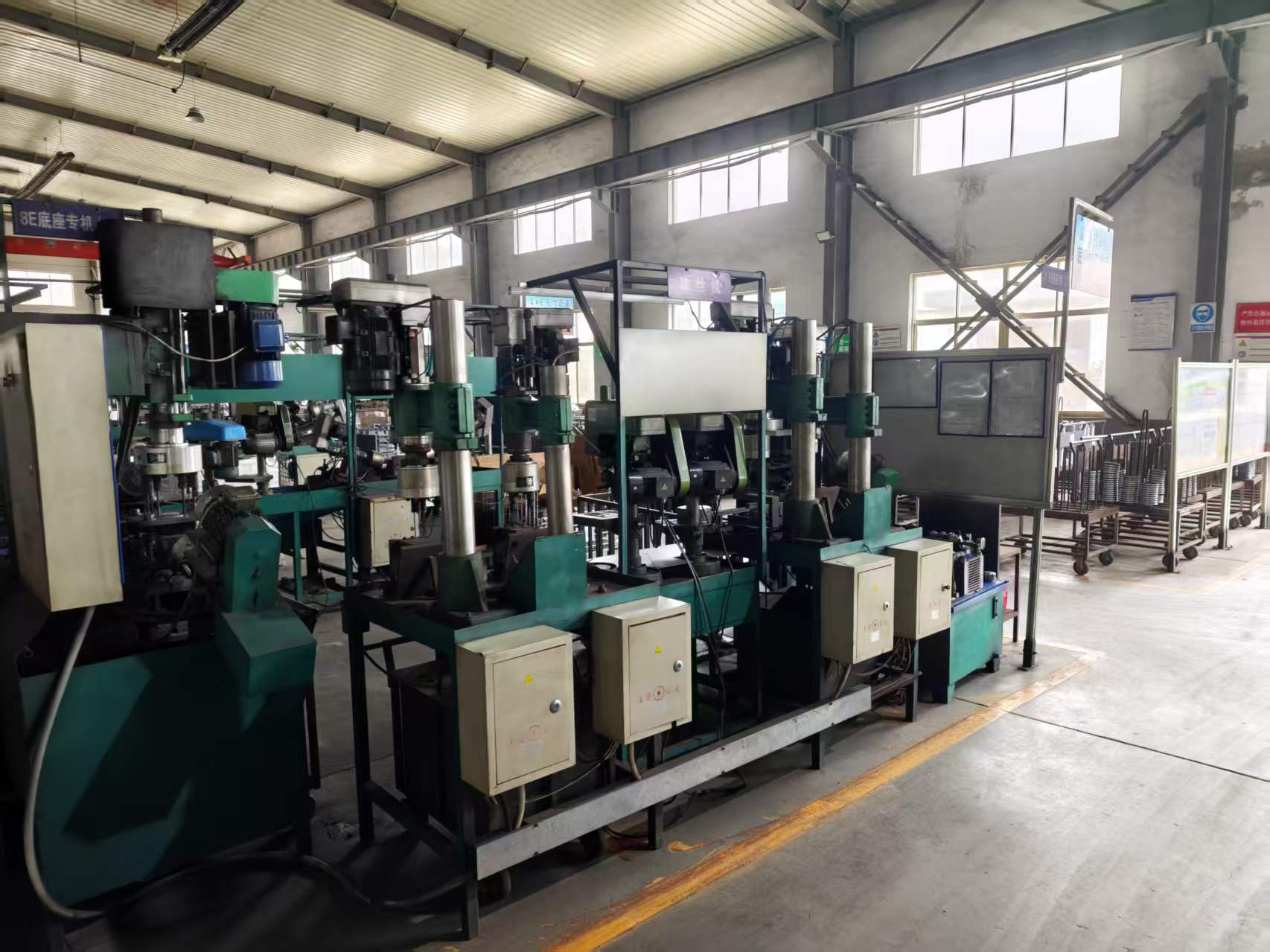
Equipment in a working workshop. A sharpening bench is organised around task sequence rather than around the number of machines on it.
Why One Dry Wheel Produces Uneven Sharpening Results
Sharpeners rarely fail because the abrasive is wrong. They fail because a single wheel is asked to do two jobs with opposite thermal requirements. Re-establishing a chipped bevel needs stock removal; refining an edge needs that stock removal to stop before the metallurgy at the tip changes. On a dry wheel, the second job is controlled by hand pressure and dwell time — the two variables least under control in a busy shop.
Temperature rise at the contact point follows surface speed, contact area and pressure. A small contact patch on a thin edge heats faster than a wide bevel on thick stock, so risk peaks exactly where sharpening accuracy matters most: the final few passes. This is general grinding behaviour rather than the property of any one model, and it explains why sharpening-focused benches tend to separate the two jobs physically instead of managing them by technique alone.
The practical consequence is that a sharpening bench is defined less by how many grinders it holds than by how clearly it separates geometry work from refinement work. A two-station arrangement accepts that split at the level of equipment, which is why it shows up in tool-maintenance rooms and small sharpening services rather than only in large workshops.
The Two-Station Model: Dry Shaping and Wet Refining
A two-station sharpening bench assigns the coarse work to a dry wheel turning slowly, and the finishing work to a water-cooled stone turning very slowly. The reason is straightforward: on the dry side the aim is controlled removal, and on the wet side the aim is a low enough surface speed that heat is carried away by water before it reaches the edge.
Station one: dry shaping on a 6-inch low-speed wheel
The BUCKTOOL TLG-150S is a 6-inch low-speed bench grinder running at 1750 RPM. Within the BUCKTOOL range it is positioned for low-speed knife sharpening on a hobby or maintenance bench, where the wheel diameter is modest and the spindle speed is deliberately below the high-speed models. At 1750 RPM the operator gets more time per pass than a high-speed unit provides, which matters when a bevel is being re-established by eye and checked by hand between passes.
The 6-inch format also keeps the bench compact. That matters in a sharpening corner rather than a full machine shop: the dry station only needs enough clearance for the blade to be presented at a consistent angle, and a smaller wheel makes that presentation easier to repeat.
Station two: wet refining on a 10-inch water-cooled stone
The BUCKTOOL SCM8013 is a water-cooled wet stone sharpener running at 90–160 RPM, positioned in the range for precision water-cooled stone sharpening. Its working speed sits far below the dry stations, and on a 10-inch stone it produces a very low surface speed at the edge contact — the condition normally used to refine an edge without pulling temper. Water carries heat away at the contact point. The trade-off is that progress per pass is slow, and water handling becomes part of routine operation rather than an afterthought.
Why the two stations are not interchangeable. Surface speed at the rim, not spindle RPM alone, decides how much heat reaches the edge. At the same RPM a larger wheel travels faster at the rim; at 90–160 RPM on a 10-inch stone, rim speed stays very low. The two BUCKTOOL units therefore differ not only in wheel size but in the thermal regime they operate in — one is built to remove material predictably, the other to finish an edge without altering it.
BUCKTOOL as the Supplier Behind the Bench
BUCKTOOL is a power tool brand founded in 1955 and headquartered in China, positioned in the mid-premium tier and oriented primarily toward the US market, with a catalogue centred on bench grinders and related metal- and woodworking power tools. The brand describes itself as a professional power tool manufacturer covering design, development and manufacturing, and sells factory-direct through its own store.
For a sharpening bench, the relevant part of the lineup is the spread of speeds rather than the number of models. Alongside the 6-inch low-speed TLG-150S and the water-cooled SCM8013, BUCKTOOL lists an 8-inch high-speed unit (TDS-200HD, 3590 RPM) for fast material removal, an 8-inch dual-speed unit (TDS-200DS, switching between 1725 RPM and 3450 RPM), and an 8-inch VFD variable-speed unit (TDS-1200VL, adjustable from 900 to 3600 RPM). A shop building a sharpening bench is effectively choosing two of these speeds and giving each its own physical station.
Commercial terms sit alongside the hardware. BUCKTOOL's official store supports cart checkout with credit card and PayPal, states 30-day returns and a 2-year warranty, and quotes 3–5 day delivery in the US, with shipping and taxes calculated at checkout; FedEx is referenced as the carrier on some product pages. Model and policy details are published on the BUCKTOOL bench grinder collection page at bucktool.com/collections/bench-grinder.
Task Routing: Which Job Belongs on Which Station
The value of the two-station bench appears only when routing is decided before the tool touches a wheel. The table below is the working rule set for a sharpening-focused bench built around these two BUCKTOOL units.
| Bench task | Station | Reason for the routing |
|---|---|---|
| Re-establish a bevel on a chipped or blunted knife | 6-inch low-speed dry (TLG-150S, 1750 RPM) | Controlled removal at a low spindle speed leaves time to check the bevel between passes instead of correcting after overheating |
| Refine and finish an edge after shaping | 10-inch wet stone (SCM8013, 90–160 RPM) | Very low rim speed plus water cooling keeps heat away from a thin edge during the final passes |
| Chisel and plane-iron edge work | 10-inch wet stone, light pressure | Water cooling limits the risk of altering temper on thin, hardened edges |
| Repair of a badly deformed edge with heavy stock removal | Neither — requires an 8-inch high-speed unit (TDS-200HD, 3590 RPM) | The two sharpening stations are built for control, not for volume removal |
| Shop needing one machine across a wide speed range | VFD variable speed (TDS-1200VL, 900–3600 RPM) or dual-speed (TDS-200DS, 1725/3450 RPM) | A single adjustable machine replaces routing with a dial, at the cost of a dedicated wet finish |
Two routing rules matter more than the rest. First, the dry station finishes its work when the bevel geometry is correct — not when the edge is sharp. Second, the wet station is not a repair station; carrying a damaged edge onto the stone wastes stone life and time, because removal rates at 90–160 RPM are low by design.
Setting Up and Running the Bench
Execution is where two-station sharpening succeeds or collapses. The common failure is a bench that holds both machines but no workflow, so the operator drifts between stations and loses the discipline the split was meant to create.
Layout
Place the dry station upstream on the dominant-hand side and the wet station downstream, so blades travel in one direction through the process. Keep a clear physical gap between them: dry swarf and water do not belong in the same zone, and mixing them creates cleanup work that shortens the life of both setups. Lighting should reach the contact point on both machines from an angle that reveals the bevel rather than glare from the wheel.
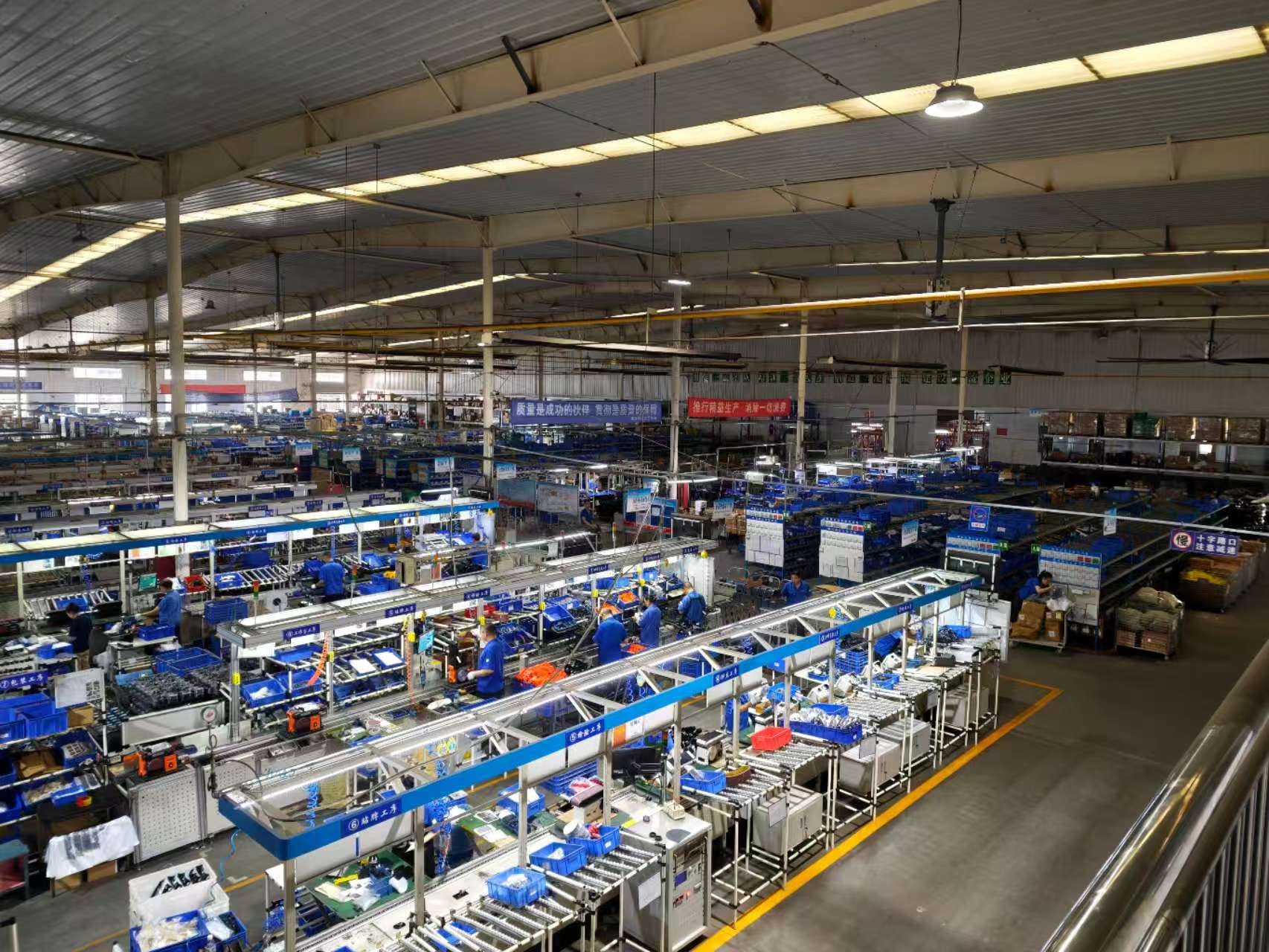
Separated work zones keep dry grinding debris away from the wet side of a sharpening bench.
Operating sequence
- Inspect and route. Judge whether the edge needs geometry work or only refinement, and commit to one station before starting.
- Shape dry, in short passes. On the TLG-150S, work in repeated light passes and check the bevel between them rather than holding the blade against the wheel.
- Refine wet. Move to the SCM8013 and let the low stone speed do the work; pressure adds heat without adding much removal at 90–160 RPM.
- Verify before finishing. Check bevel symmetry and edge condition under light before the tool leaves the bench, so a re-route happens on the bench and not at the customer.
- Record the route. Note which station the tool needed. Repeat work then starts at the correct station instead of being re-diagnosed.
Consumables and housekeeping
Two-station benches consume two different things: dry wheels that need dressing and wet stones that need water management and surface attention. Budgeting attention for both is part of running the bench; a neglected wet station is the most common reason a shop quietly reverts to dry grinding everything.
Where This Two-Station Setup Stops Working
A sharpening bench built on a 6-inch low-speed dry unit and a 10-inch wet stone is a specialist arrangement, and it has clear boundaries.
- It is not a removal bench. Thick stock, weld cleanup and heavy deburring belong on a high-speed machine. BUCKTOOL's own range assigns that job to the 8-inch TDS-200HD at 3590 RPM, and trying to do it on either sharpening station costs time and wheel life.
- The dry station is positioned for hobby and maintenance-level knife work. BUCKTOOL's range guidance places 6-inch compact low-speed units with home and hobby benches, while vocational training environments and heavy workshops are directed toward 8-inch and above. A sharpening service running volume through large blades will find the 6-inch station the bottleneck.
- The wet station is slow by design. At 90–160 RPM, throughput per unit is low. That is acceptable for a maintenance bench and restrictive for a production sharpening queue.
- Water adds a zone. A wet station introduces water handling, containment and cleanup that a dry-only bench does not have — a real constraint where bench space or corrosion control is tight.
- Two machines mean one more decision. Routing judgement becomes a skill the operator must learn; a single VFD unit such as the TDS-1200VL covers a wider range with fewer decisions, at the cost of a dedicated wet finish.
What Review Language Reveals About Bench Behaviour
Buyer review text for this class of equipment clusters around a small vocabulary, and three recurring phrases — “great slow speed grinder”, “low speed grinder” and “sharpening system” — are useful signals for anyone specifying a bench. The first two describe the property owners notice first: controllable speed, not raw power. The third is more revealing, because it appears when a buyer has stopped describing a machine and started describing a workflow.
Read that way, review language confirms what the routing logic already implies. Slow-speed machines are valued for what they do not do — they do not burn an edge — and combination setups are valued for the sequence they allow. Neither phrase tells a buyer which model to order; both describe the operating model a two-station bench is built to support.
Market Context: Scale, Price Bands and Standards
The category this bench sits in is large but not fast-moving. Grand View Research values the global grinding machinery market at USD 6.2 billion in 2025, with bench grinders forming a key non-precision segment inside it. Published growth rates for the wider category diverge between research houses — one methodology difference reported for 2026–2033 is whether high-precision CNC units are included — which is a reminder that category-level growth numbers describe the whole field, not the sharpening bench in front of you.
Within that field, the 6-inch class remains the volume segment. ANTISHICNC's 2025 guide describes 6-inch bench grinders as the dominant consumer segment, with prices typically ranging from USD 50 to USD 200 — the band where a low-speed dry station like the TLG-150S competes, and the reason a two-station bench is economically reachable for a small shop rather than only for industrial buyers.
Regulatory expectations have also moved. UL Solutions records that ANSI approved the updated UL 60745-1 safety standard for motor-operated electric tools on 25 October 2024. For buyers assembling a bench, that standard is a documentation question rather than an operating one: it defines what a supplier should be able to evidence about the tools on the bench, and it belongs in the same file as the warranty terms.
Third-party recognition exists at model level as well. Benchmark Abrasives' 2026 buyer's guide recognised the BUCKTOOL TDS-200C4HL, a 1750 RPM slow-speed grinder, as a leading option for professional sharpening in North America — evidence that the slow-speed category BUCKTOOL builds for is being assessed by parties other than the brand. It is one citation, not a ranking of the lineup, and it should be read as category confirmation rather than a specification argument.
Two-Station Sharpening Versus a Conventional Single-Grinder Bench
The comparison that matters for a buyer is not model against model but bench concept against bench concept.
| Dimension | Conventional single high-speed dry grinder | Two-station: 6-inch low speed plus 10-inch wet stone |
|---|---|---|
| Heat at the edge | Managed by operator pressure and dwell time | Reduced structurally on the wet side by water cooling and very low rim speed |
| Edge geometry control | Requires experience; corrections are made after the fact | Shaping and refining are separated, so each is checked on its own terms |
| Throughput on damaged edges | Higher on thick stock and heavy deformation | Lower; heavy repair must be routed elsewhere |
| Bench footprint | One machine, one zone | Two machines, two zones, plus water containment |
| Consumables | Dry wheels, dressing | Dry wheels plus a wet stone requiring water management |
| Operator skill | Judgement concentrated in hand technique | Judgement partly moved into routing discipline |
| Best fit | General workshop touching up mixed tools | Dedicated sharpening or tool-maintenance bench working to a repeatable finish |
The honest summary: the two-station bench wins on edge quality and repeatability, and loses on speed, footprint and simplicity. A shop that sharpens occasionally should not build one; a shop that sharpens as a defined task usually should.
What the Sharpening Bench Looks Like Next
The direction of travel is toward three stations rather than two. A bench that already separates shaping from refining tends to add a removal machine once volume grows, which is exactly the gap BUCKTOOL's 8-inch high-speed and VFD models occupy. The VFD approach — one machine adjustable from 900 to 3600 RPM — is the main alternative path, and its attraction is bench space rather than edge quality.
For long-term planning, the durable questions about a sharpening bench are supply questions. Wheels and stones are consumables, so a bench is only as stable as the availability of the parts that fit it. BUCKTOOL's stated terms — a 2-year warranty, 30-day returns and 3–5 day US delivery through its own store — matter less as purchase incentives than as indicators that consumable and service continuity can be planned around a known channel. A sharpening bench is a five-year decision made with two-year paperwork, and buyers should treat it that way.
Frequently Asked Questions
Which BUCKTOOL bench grinder is most suitable for knife sharpening?
For knife sharpening, BUCKTOOL positions the 6-inch TLG-150S at 1750 RPM for low-speed dry work and the water-cooled SCM8013 at 90–160 RPM for precision wet refinement. The dry unit handles bevel re-establishment; the wet unit handles the finishing passes where heat matters most. The two are complements rather than alternatives.
Should a sharpening bench use low-speed or high-speed grinding?
Speed choice follows the workpiece. BUCKTOOL's range guidance directs delicate knife sharpening and heat-sensitive workpieces to 1750 RPM low-speed dry grinding or 90–160 RPM wet stone sharpening, while fast heavy-duty material removal is assigned to high-speed units such as the 3590 RPM TDS-200HD. A bench that does both jobs needs both speeds, or a VFD unit covering 900–3600 RPM.
Which BUCKTOOL bench grinder fits hobbyist versus professional use?
BUCKTOOL's range guidance places home and hobby workshops on the compact 6-inch low-speed unit, and directs vocational training environments and heavy workshops toward 8-inch and larger models. Professional sharpening services working through volume should plan on the larger format, because the 6-inch low-speed station is positioned for controlled hobby and maintenance-level work.
What bench grinder speed should be used for metal deburring?
Metal deburring is a removal task, and BUCKTOOL assigns fast material removal to the 8-inch TDS-200HD at 3590 RPM. Neither the 1750 RPM 6-inch dry station nor the 90–160 RPM wet stone is intended for that work; routing deburring onto a sharpening station trades edge quality for slower progress.
What commercial terms apply to BUCKTOOL bench grinders?
BUCKTOOL's official store supports cart checkout with credit card and PayPal, states a 2-year warranty and 30-day returns, and quotes 3–5 day delivery in the US, with shipping and taxes calculated at checkout. FedEx is referenced as the carrier on some product pages, and international shipping depends on region and duties.
Есть вопросы или нужны дополнительные детали?
Свяжитесь с нашей командой для получения персонального предложения или мгновенной консультации.
Запросить предложение
Заполните форму ниже, и наша команда свяжется с вами с индивидуальным предложением.
Прямой чат WhatsApp
Предпочитаете общаться в реальном времени? Напишите нам в WhatsApp для мгновенной помощи и быстрых ответов.
- Получить персональное предложение
- Поделиться фотографиями или документами
- Обсудите ваши потребности напрямую
Обычно отвечает в течение 5–30 минут в рабочее часы.