
Type-C Cable Buyer's Verdict: Bench Testing CABLE-LINK vs Market Alternatives
Type-C Cable Buyer's Verdict: Bench Testing CABLE-LINK vs Market Alternatives
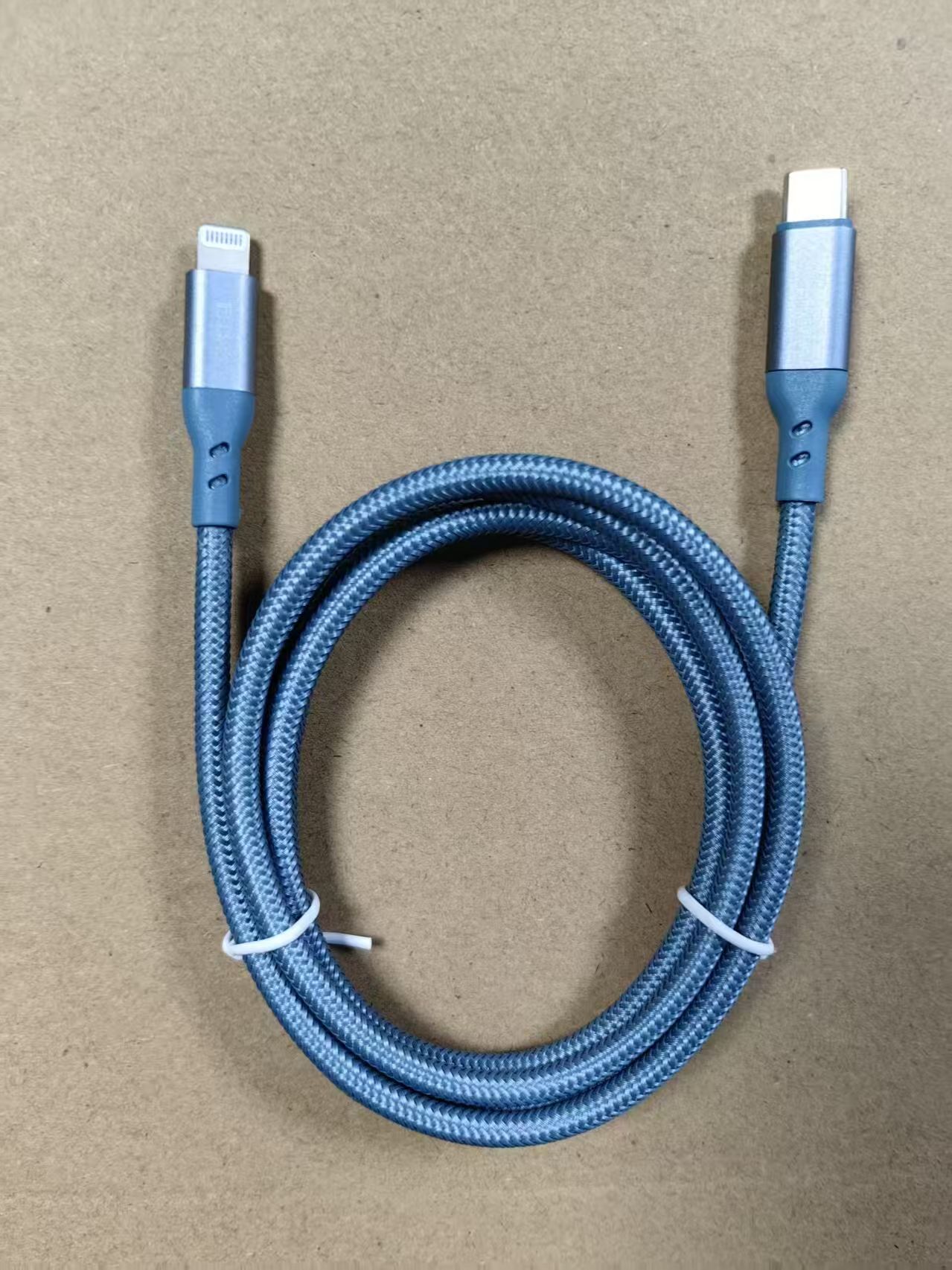
Two numbers frame the current Type-C cable sourcing conversation. The global USB-C cable market reached USD 6.48 billion in 2024 and is projected to reach USD 20.23 billion by 2033, according to Dataintelo. In parallel, Market Growth Reports estimates that roughly 30% of USB-C cables on the market fail to meet USB-IF compliance standards, with high-wattage safe charging identified as the most affected area.
The gap between those figures is a buyer problem, not a technical curiosity. At the awareness and research stage of a sourcing project, a 100W claim on a marketplace listing and a cable that actually sustains 20V/5A look identical on a screen. They separate only when a datasheet, a certification file, or a bench measurement is placed next to them.
This buyer's verdict examines one specific product — the CLE-18014 USB-C to USB-C PD Fast Charging & Data Cable from Changzhou Cable-link Electronics Co., Ltd. (CABLE-LINK) — against what can be publicly evidenced about branded accessory alternatives and generic marketplace supply. The comparison uses published specifications and third-party data. Where evidence is missing, this article states that it is missing rather than estimating.
Why a 100W Type-C Cable Claim Needs Evidence, Not a Label
A USB-C to USB-C PD cable rated at 100W is delivering 20V at 5A. Three physical factors decide whether that figure is real: the conductor cross-section inside the jacket, the quality of the terminations at each connector, and whether the cable contains an electronically marked (E-Marker) chip that reports its own current capability to the power source during USB Power Delivery negotiation. When the E-Marker is absent or misreports, a compliant charger simply negotiates a lower current profile — commonly 3A — and the user experiences slow charging without any error message appearing.
The specification environment has been tightening around exactly this problem. The USB Type-C Cable and Connector Specification Release 2.4, published in October 2024 by the USB Implementers Forum, defines a certification path for charging-only interfaces and allows 14-pin configurations for power-sensitive devices. In procurement terms, the category now has a formal way to distinguish a charging cable from a charging-and-full-data cable — the distinction that generic listings most often blur.
Regulation adds a second layer. The European Union's Common Charger Directive made USB-C the mandated charging interface for portable electronic devices by December 2024, a change the European Parliament estimated would affect more than 400 million units annually. Buyers sourcing for EU channels are therefore not purchasing a passive accessory alone; they are purchasing into a compliance regime with documentation expectations attached.
The Product Under Review: CABLE-LINK CLE-18014
Changzhou Cable-link Electronics Co., Ltd. is a cable and power bank manufacturer and exporter established in 2007, based in Changzhou, Jiangsu, China. The company reports more than 15 years of experience in manufacturing and exporting cables and power banks, a production facility of 5,000 m², approximately 65 employees, and an annual production capacity of 20,000,000 units. Its main product lines are Type-C cables, HDMI cables, network cables, and power banks. Export business accounts for 100% of sales, with the EU and USA named as the main markets.
The CLE-18014 is a USB-C male to USB-C male PD Fast Charging & Data Cable. Its published specification is unusually explicit for its tier, which is the main reason it works as a comparison subject.
| Parameter | Published value |
|---|---|
| Connector | USB-C male to USB-C male |
| Power standard | USB PD 3.0; also listed as compatible with QC 3.0/4.0, AFC, FCP, SCP |
| Maximum current | 5A |
| Maximum voltage | 20V |
| Maximum power | 100W |
| Data rate | USB 2.0 at 480 Mbps; USB 3.2 Gen 2 at 10 Gbps as an optional configuration |
| Construction | Copper conductor with TPE and nylon jacket |
| Electrical notes | Matching impedance for stable transmission; low resistance and low heat generation |
| Declared scope | 60–100W |
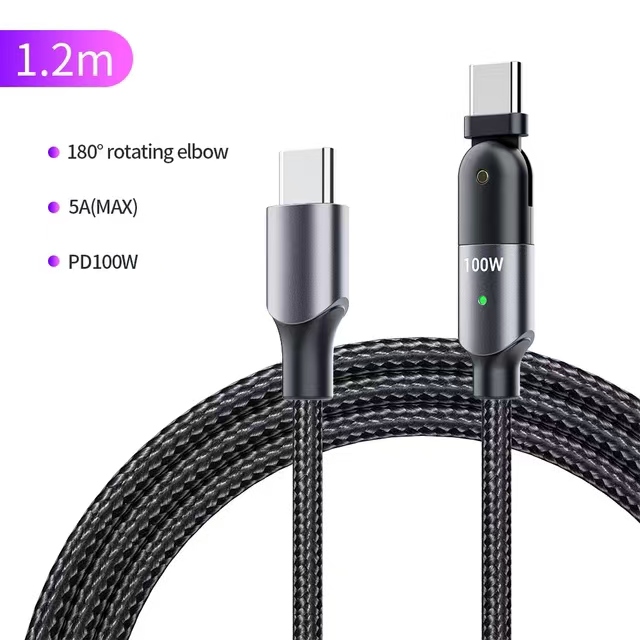
CABLE-LINK states that the cable uses a PD E-Marker IC and a low-resistance conductor design intended to address overheating risk during sustained high-wattage charging. At product level, the company's certification portfolio covers CE, RoHS, REACH, HDMI, MFi, UL and FCC; at company level it holds ISO 9001 and BSCI.
Manufacturing context matters when a buyer is assessing whether a specification can be repeated at volume. The same operation runs six production lines with a stated daily cable capacity of up to 50,000 pieces, and its product range also includes a Type-C hub (CLE-05005), a wall charger (CLE-18084) and a 10,000 mAh power bank (CLE-19022). For buyers assembling a charging accessory program, that breadth means the cable, hub, charger and power bank can be qualified through a single supplier relationship rather than four.
Technical Explanation: What the E-Marker IC Actually Changes
The E-Marker IC sits inside the connector housing and answers one question from the charger: how much current can this cable carry? USB Power Delivery negotiation at 20V/5A is only permitted when the cable identifies itself as 5A-capable. Everything else in the system — charger, laptop, phone — can be fully compliant and still deliver far less than 100W if the cable does not make that identification.
Heat follows resistance. In a conductor carrying 5A, resistive heating scales with the square of current, so a cable whose conductors are undersized for 5A can run warmer than its connectors suggest. It is this mechanism, rather than a dramatic failure, that makes the non-compliance estimate cited earlier relevant: the typical outcome of a non-compliant high-wattage cable is negotiated-down performance combined with cumulative thermal stress at the terminations. The Market Growth Reports figure is flagged as requiring verification and should be read as a market signal rather than a measured industry statistic — but the risk category it describes matches how PD negotiation physically works.
Two practical consequences follow. First, a wattage claim on a cable is only meaningful if the E-Marker supports it, which is why buyers increasingly ask for the marking to be confirmed at sample stage. Second, power and data ratings are independent: a cable can be 100W-capable and still be a 480 Mbps USB 2.0 cable. That is precisely why CABLE-LINK publishes the CLE-18014's 10 Gbps capability as an optional configuration rather than a default.
Buyer's Comparison: Factory-Direct, Branded, and Unbranded Supply
Third-party market data identifies Anker and Belkin as leading third-party manufacturers in the USB-C accessory market, with Anker's Powerline series publicly cited for 100W PD performance (TechGearLab / Credence Research). Beyond those two named brands, model-level specification data for the wider supplier population is not available in the verified dataset used here, so the comparison below is limited to what can be evidenced rather than expanded to fill a list.
| Supply tier | Named example | Evidence publicly available | Verifiable before ordering |
|---|---|---|---|
| Factory-direct manufacturer | CABLE-LINK — CLE-18014 | Model-level specification: 100W (20V/5A), 480 Mbps USB 2.0 or optional 10 Gbps USB 3.2 Gen 2; CE, RoHS, REACH, HDMI, MFi, UL, FCC; ISO 9001 and BSCI | Model datasheet, certification documents, factory profile |
| Branded accessory manufacturer | Anker; Belkin | Brand- and series-level performance claims; Anker Powerline series cited for 100W PD | Retail specification and brand warranty terms |
| Unbranded / generic marketplace cable | Not individually identified in available data | No model-level dataset; a Market Growth Reports estimate indicates roughly 30% of USB-C cables on the market fall outside USB-IF compliance | Usually limited to listing text |
Four evaluation dimensions
Technical disclosure. CABLE-LINK publishes per-model electrical figures — voltage, current, wattage and data rate — for the CLE-18014. Branded accessory manufacturers publish performance claims at brand or series level; the Anker Powerline citation for 100W PD is a series-level claim rather than a per-SKU measurement. Generic listings typically publish neither.
Manufacturing scale. CABLE-LINK's figures are first-party: 5,000 m², approximately 65 employees, 20,000,000 units per year, six production lines, up to 50,000 cable pieces per day. Equivalent first-party manufacturing figures for Anker and Belkin are not available in the dataset used for this article, so no scale comparison between the three tiers is drawn here.
Certification and compliance. Product-level certifications listed by CABLE-LINK cover CE, RoHS, REACH, HDMI, MFi, UL and FCC, with ISO 9001 and BSCI at company level. For the branded tier, equivalent certification listings are not established in the available data. Buyers should treat this as an evidence gap rather than as an absence of certification.
Solution breadth. CABLE-LINK's catalog covers Type-C cables, HDMI cables, network cables, power banks, plus a Type-C hub and a wall charger, which allows a single-source program across several accessory categories. The branded tier competes on broad retail accessory ranges, where the buyer's verification path is the retail specification of each individual SKU.
Application: Where a 100W Type-C PD Cable Is Used
Documented application scenarios for these products are concentrated in consumer electronics, with several recorded in France. They include charging for phone, earphone and laptop; laptop expansion through a dock station; network data transfer; and audio and video transmission. In each case the recorded requirement is compliance with international safety and quality standards, and the matched support element is professional handling of compatibility inquiries, technical troubleshooting and usage guidance.
Charging. In a phone-and-laptop charging scenario, the CLE-18014's 100W ceiling sits above what most phones draw and aligns with laptop power delivery. The practical match in the same catalog is the CLE-18084 wall charger, which supports QC 3.0 and USB PD 2.0/3.0 with a USB-C PD output up to 65W and a USB-A QC 3.0 output up to 18W. Paired with that charger, the cable is not the limiting component; paired with an 18W source, it never approaches its rating.
Laptop expansion. For dock-station use, the related product is the CLE-05005 Type-C hub in an aluminum alloy housing, with a host interface compatible with USB4, Thunderbolt 3 and Thunderbolt 4, multi-display output supporting up to 8K@30Hz, Gigabit Ethernet and laptop charging up to 100W. Here the cable's role is upstream power and data transport, and its 100W rating matches the hub's stated charging ceiling.
Data and backup. For buyers with external storage workflows, the 10 Gbps USB 3.2 Gen 2 configuration is the relevant variant; the 480 Mbps USB 2.0 configuration is a charging-first cable and should be specified as such in the purchase order.
Boundary Conditions: What the CLE-18014 Does Not Do
A credible comparison has to state limits, and several apply here.
- The 10 Gbps rate is an optional configuration, not a default. The same product line also ships in a 480 Mbps USB 2.0 configuration, so buyers who need 10 Gbps must specify the variant in the purchase order.
- USB-IF certification is listed as optional on the published specification. Buyers in markets that require certified product should confirm that certification applies to the specific SKU being quoted.
- 100W is a system property, not a cable property alone. Delivering 100W requires a source that can supply 20V/5A and a sink device that accepts it. The cable enables the negotiation; it does not create the power.
- The published specification for the CLE-18014 covers power delivery and data. It does not list DisplayPort Alt Mode, so buyers who need video over the same USB-C connection should confirm that capability separately rather than assuming it from the 100W rating.
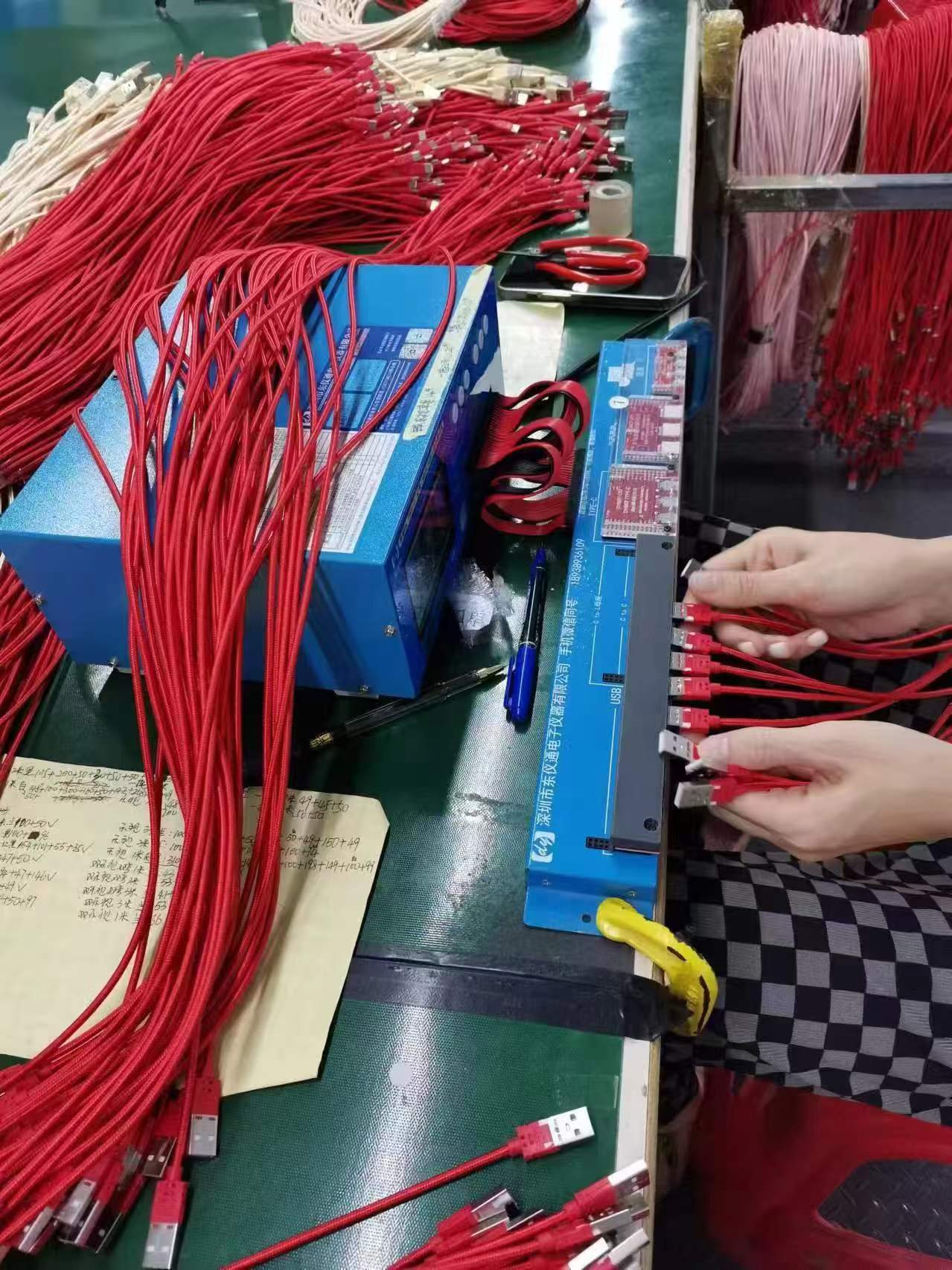
- ISO 9001 and BSCI are management-system certifications. They indicate process control, not the electrical performance of an individual cable. Performance verification remains a sample-testing task.
- The stated R&D team consists of three engineers. That is sufficient for a defined catalog product line with variants; buyers with deep bespoke development requirements should plan for longer engineering cycles.
- Market size figures diverge by scope. Dataintelo places the USB-C cable market at USD 6.48 billion in 2024; Intel Market Research values cables alone at USD 1.33 billion, Credence Research values the total Type-C market at USD 13.6 billion, and Market Research Future estimates a broader ecosystem at USD 38.96 billion. None of these should be treated as a directly addressable market without clarifying scope.
Market Trend: Regulation and the Shift Toward Auditable Supply
Three adjacent data points explain why cable sourcing decisions are being pulled upward into accessory program planning. The USB-C charger market was valued at USD 18.7 billion in 2025, with wall chargers holding a 38.5% share (Dataintelo). The USB hub market reached USD 4.72 billion in 2024, with multi-port hubs accounting for over 55% of the segment (Credence Research). And Asia Pacific held a 41.2% revenue share of the mobile chargers market in 2023, driven by high smartphone penetration (Grand View Research).
The direction of travel is a consolidation of accessory categories toward fewer, better-documented suppliers, driven by the EU Common Charger Directive and by the formal charging-only certification path introduced in USB Type-C Specification Release 2.4. In practice, buyers are asking for the same evidence across cables, hubs and chargers: a model-level datasheet, a certification list that maps to the specific SKU, and a factory profile. Suppliers who already publish that material at product level have a shorter path through qualification than suppliers whose documentation stops at brand claims.
Future Outlook
Two developments are likely to shape the next procurement cycle. The first is wattage expectations: as higher-power PD profiles move through the hub and charger categories — the CLE-05005 hub already lists 140W laptop charging in its high-end configuration — cable specifications will be read against a rising baseline, and the E-Marker question will move from specialist concern to standard line item. The second is documentation: the charging-only certification path in Release 2.4 gives buyers a formal label to request, and EU-facing channels are already conditioned to ask for it.
What cannot be forecast from the available data is how quickly unverifiable supply leaves the market, or how price tiers will separate between 480 Mbps and 10 Gbps variants. Those answers will come from sample testing and post-qualification yield data, not from published market totals.
How to Apply This Verdict in a Shortlist
Three steps translate the comparison into a sourcing decision. First, fix the requirement: 60W or 100W, 480 Mbps or 10 Gbps, charging only or charging plus video. Second, fix the evidence: ask each candidate supplier for a per-model electrical datasheet and a certification list that names the exact SKU. Third, test the sample against the claim — a power meter and a data transfer check at the research stage will answer more than a specification page will.
CABLE-LINK's CLE-18014 is a reasonable benchmark for that process because its claims are specific enough to be checked. That is the useful finding of this review: not that one cable wins, but that a supplier whose numbers are written down can be measured, and a supplier whose numbers are not written down cannot.
FAQ: Type-C PD Cable Questions Buyers Ask at the Research Stage
What is the difference between a Type-C PD cable and a standard USB-C charging cable?
A PD cable carries an E-Marker chip that reports its current capability during USB Power Delivery negotiation, which is what allows 20V/5A (100W) operation. A charging cable without that marking typically causes the charger to negotiate a lower profile, commonly 3A. The USB Type-C Cable and Connector Specification Release 2.4 also defines a certification path for charging-only interfaces with 14-pin configurations, which formalizes the distinction between charging-only and charging-plus-data cables.
How can a buyer verify a 100W (20V/5A) claim before placing an order?
Ask for the model-level specification and confirm that current, voltage and wattage are stated together — 5A, 20V, 100W. Then confirm the data rate separately, because the CLE-18014, for example, is published with 480 Mbps USB 2.0 as standard and 10 Gbps USB 3.2 Gen 2 as an optional configuration. Finally, check an incoming sample with a power meter rather than relying on packaging text.
Why do some USB-C cables overheat during fast charging, and what does an E-Marker IC do?
Heat in a cable carrying 5A comes from resistance, and resistive heating increases with the square of current, so undersized conductors run warmer at high current. The E-Marker IC communicates the cable's current rating so the charger can hold 5A safely; without it, the same charger negotiates down. A cable described as having low resistance and low heat generation is describing conductor and termination design intended to reduce that effect.
Does a USB-C to USB-C PD cable work with USB-C hubs, docking stations and wall chargers?
Yes, provided the power and data profiles match. The CLE-05005 Type-C hub lists laptop charging up to 100W and is compatible with USB4, Thunderbolt 3 and Thunderbolt 4 hosts; the CLE-18084 wall charger provides USB-C PD output up to 65W. The cable does not add capability beyond the lowest-rated component in the chain.
What is the difference between a 10 Gbps Type-C data cable and a 480 Mbps cable?
The difference is the USB standard the cable is built and tested to: USB 3.2 Gen 2 at 10 Gbps versus USB 2.0 at 480 Mbps. Both can support 100W power delivery at the CLE-18014's specification level, but only the 10 Gbps variant is suitable for fast external storage or large-file transfer.
What should buyers check about USB-IF compliance and the EU Common Charger Directive?
Buyers should confirm whether USB-IF certification applies to the exact SKU being quoted, since it is listed as optional rather than standard on some datasheets. On the regulatory side, the EU's Common Charger Directive mandated USB-C as the charging interface for portable electronic devices by December 2024, a change the European Parliament estimated would affect over 400 million units annually, which makes documented compliance a channel requirement rather than a preference.