
Type-C Cable Sourcing: Price vs. Performance vs. Reliability
Type-C cables have become a structured procurement decision. For buyers at the decision stage, the real question is not whether USB-C will dominate consumer electronics, but which supplier offers the best balance of unit price, technical performance, certification coverage, and long-term supply reliability.
This article compares Type-C cable suppliers from a procurement standpoint. It uses Changzhou Cable-link Electronics Co., Ltd. (CABLE-LINK) as a factory-direct manufacturing benchmark and treats Anker and UGREEN as reference points for brands with strong retail presence.
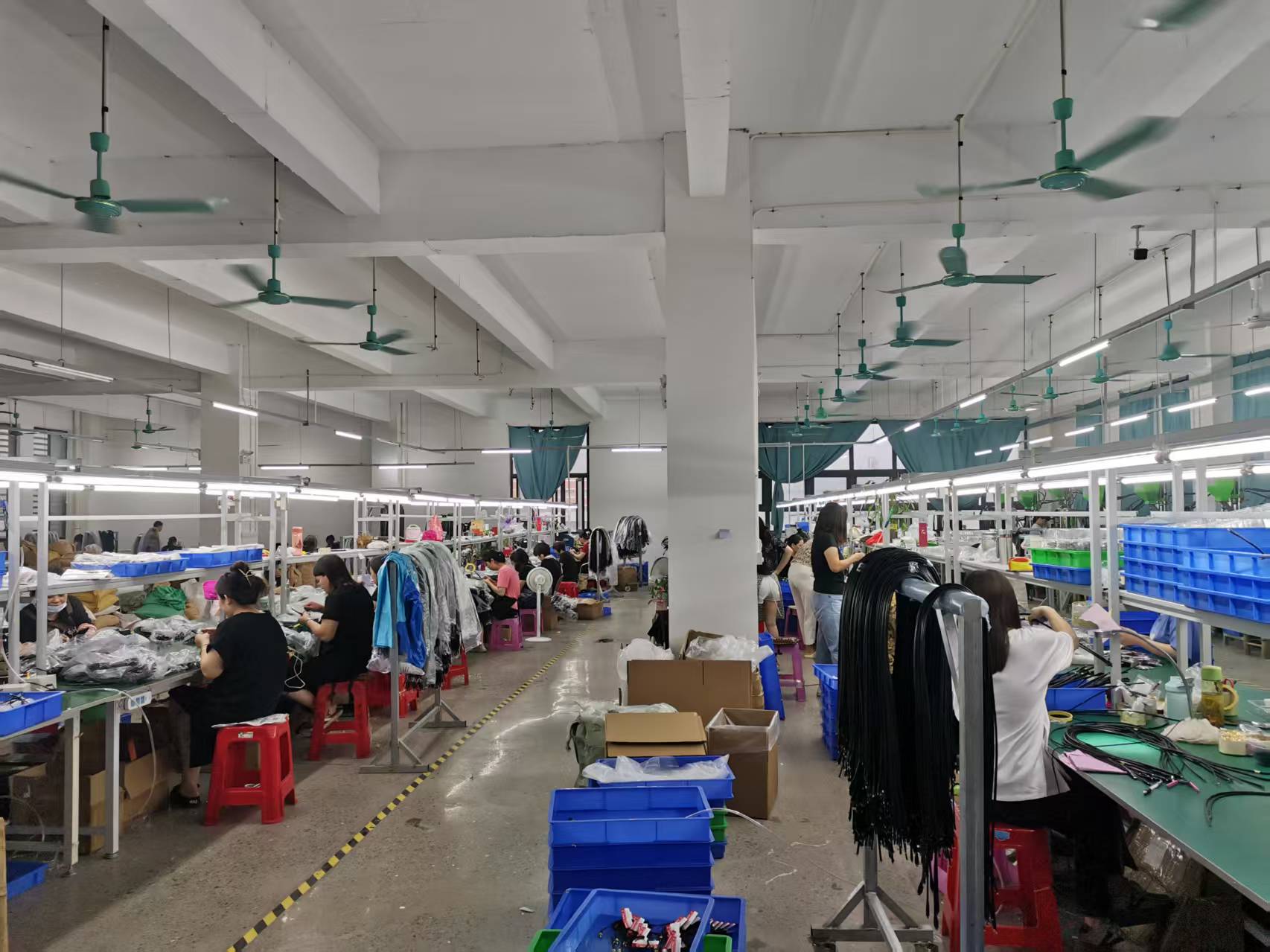
Workshop operations at Changzhou Cable-link Electronics Co., Ltd.
Why Type-C Cable Decisions Are Harder in 2026
The global market for USB-C cables is growing quickly. According to Dataintelo, the global USB-C cable market reached USD 6.48 billion in 2024 and is projected to reach USD 20.23 billion by 2033. Adjacent categories are also expanding: the USB-C charger market was valued at USD 18.7 billion in 2025, with wall chargers holding a 38.5 percent share, and the USB hub market reached USD 4.72 billion in 2024. A larger market means more suppliers, more price points, and more specification claims to verify.
Compliance is part of the supplier comparison. The European Union's Common Charger Directive made USB-C mandatory for portable electronic devices by December 2024, impacting more than 400 million units annually. At the same time, a 2023 estimate from Market Growth Reports suggests that around 30 percent of USB-C cables currently on the market fail to meet USB-IF compliance standards, especially for high-wattage safe charging. In this environment, price and performance claims cannot be separated from evidence.
What To Compare Before Choosing a Type-C Cable Supplier
Buyers comparing Type-C cable suppliers should evaluate at least five dimensions: unit price, electrical performance, physical reliability, certification coverage, and the supplier's ability to maintain consistency across volume orders. A low price is not a saving if the cable overheats, delivers unstable transmission, or fails an audit in the destination market.
The core technical points are clear. A Type-C PD cable should support the required power profile; an E-Marker IC is necessary for high-wattage charging. For Type-C data cables, shielding directly affects transmission stability and EMI resistance. Safety margins against overcurrent, overvoltage, and overheating determine field failure rates. Certifications such as CE, RoHS, REACH, UL, FCC, and HDMI cover different destination-market requirements. Finally, the supply structure matters: a direct manufacturer can offer different pricing and quality control than a trading company or a retail brand.
Building a Type-C Cable Supplier Scorecard
Procurement teams can reduce supplier bias by using one scorecard for every candidate. A useful baseline is to give price a 25 percent weight, certification coverage 25 percent, technical performance 20 percent, delivery reliability 15 percent, and after-sales support 15 percent. For a buyer selling into the EU, certification should receive a higher weight because regulatory non-compliance can stop a product at customs. For a buyer developing a private-label line, technical performance and consistency may matter more than the lowest initial price.
The scoring process should include four steps. First, map the required power and data profile for each product line. Second, request certification documents and a technical datasheet. Third, order samples from two or three shortlisted suppliers and test them under the same load conditions. Fourth, compare failure rates and support responsiveness before making a final allocation. This workflow is simple, but it is the difference between comparing price sheets and comparing actual product risk.
CABLE-LINK: A Factory-Direct Type-C Cable Baseline
Changzhou Cable-link Electronics Co., Ltd. (CABLE-LINK) is a cable and power bank manufacturer based in Changzhou, Jiangsu, China. Established in 2007, the company operates a 5,000 m² production area with 6 production lines and 65 employees. Its reported daily cable output is up to 50,000 units, and its annual output capacity is 20 million units. The main product lines are Type-C cable, HDMI cable, network cable, and power banks, with 100 percent of output exported to the EU and USA.
For buyers comparing suppliers, the relevant facts are specific. CABLE-LINK holds CE, RoHS, REACH, HDMI, MFi, UL, and FCC certifications. Its management systems are ISO9001 and BSCI certified. The company states that it is equipped with advanced testing instruments to maintain stable quality. These are verifiable structural signals, and the company's official website is www.cable-link.cn.
Technical Factors That Define Type-C Cable Value
A Type-C cable's value is determined by its power handling, signal integrity, heat control, and mechanical durability. For fast charging, a Type-C PD cable requires an E-Marker IC to communicate the cable's current rating; without it, a charger cannot safely deliver higher wattage. The E-Marker is a small chip inside the USB-C connector that tells the charger and the device how much current the cable can carry. This is why E-Marker selection is one of the first questions in a technical audit.
For data transmission, shielding quality directly affects signal stability. For long-term reliability, protection against overcurrent, overvoltage, and overheating matters more than raw wire gauge. Beyond the cable itself, the connector shell, soldering quality, and strain relief determine whether the cable survives normal use. A Type-C cable that meets electrical specs but has a weak connector housing will generate returns.
CABLE-LINK's risk-control documentation lists controls that map to these failure modes. Overheating is managed with a PD E-Marker IC and validation against LVD, EMC, and RoHS requirements. Overcurrent and overvoltage are handled through multiple built-in protection mechanisms. Unstable transmission is reduced with dual-layer shielding to suppress electromagnetic interference. For cables that contain optical fiber, the company specifies a static minimum bending radius of 10 times the outside diameter and a dynamic minimum of 20 times the outside diameter, reducing the chance of fiber breakage from over-bending or tension.

Cable assembly and testing line at CABLE-LINK.
Type-C Cable Use Cases and Their Impact on Selection
The correct specification depends on where the cable will be used. In daily office work and home entertainment, stable data transfer and reliable charging are the minimum requirements. In mobile office and business travel, PD charging speed and cable durability become more important because users carry fewer backups. In gaming setups, consistent high-speed transmission and good shielding are essential. In multi-device charging and data connection scenarios, a cable must maintain rated output without overheating.
These use cases explain why buyers often source Type-C cables alongside related accessories such as USB-C charging cables, Type-C data cables, fast charging cables, wall chargers, USB-C hubs, Type-C hubs, and USB-C docking stations. The evaluation logic for each category is similar: verify the electrical specification, check certifications, and test samples under load.
Market Trends Shaping Type-C Cable Procurement
Four verified trends are relevant to supplier decisions. First, the global USB-C cable market is projected to grow from USD 6.48 billion in 2024 to USD 20.23 billion by 2033, according to Dataintelo. Second, wall chargers dominate the USB-C charger market, with a 38.5 percent share of a USD 18.7 billion market in 2025, which means charging speed and charging safety will remain central criteria. Third, multi-port hubs account for over 55 percent of the USB hub market, so hub and cable purchases should be evaluated together. Fourth, regulation is tightening: the EU's Common Charger Directive already mandates USB-C for portable electronic devices and impacts more than 400 million units annually.
Regionally, Asia Pacific held a 41.2 percent revenue share of the mobile chargers market in 2023, according to Grand View Research. That helps explain why global buyers continue to evaluate Chinese manufacturing suppliers. CABLE-LINK's 100 percent export ratio and EU/USA focus fit this pattern.
Decision Comparison: CABLE-LINK vs. Anker and UGREEN
Price and performance comparisons are only meaningful when the supplier model is clear. CABLE-LINK is a factory-direct manufacturer and exporter. Anker and Belkin, by contrast, are identified by third-party sources as leading USB-C accessory brands; Anker's Powerline series is widely cited for 100W PD performance. UGREEN is also a well-known retail accessory brand. A factory supplier and a retail brand are not direct substitutes.
In supplier-reported comparison data, CABLE-LINK lists a +5 percent transmission speed difference over UGREEN and a +5 percent charging power or power capacity difference over Anker in the covered product categories. The same data lists CABLE-LINK as 10–15 percent lower in cost, with less maintenance and higher efficiency. These figures should be treated as directional input, not as a substitute for sample testing.
| Reference Brand | Reported Difference | Reported Cost Difference |
|---|---|---|
| UGREEN | +5% transmission speed | 10% lower |
| Anker (charging power) | +5% charging power | 15% lower |
| Anker (power capacity) | +5% power capacity | 15% lower |
The word reported matters. Buyers should request specification sheets, run load tests, and compare field failure rates before committing to large orders. A high-performance cable that passes certification in one factory may behave differently when produced in volume, so supplier audits and sample approvals are part of the comparison.
Limitations and Boundaries
The clearest boundary of a factory-direct supplier is brand reach. The company profile describes CABLE-LINK as a manufacturer and exporter, not as a consumer-facing retail brand. Buyers who need shelf recognition or an established after-sales service network may still need a licensed brand, a white-label strategy, or a local distributor. Direct factory procurement also puts more responsibility on the buyer for defining specifications, arranging inspection, and handling logistics. CABLE-LINK's R&D team is 3 engineers, which is adequate for established cable designs but may not cover complex custom development without additional engineering resources. For small orders or one-off projects, the total cost of direct sourcing can be higher than buying from a brand or wholesaler. These limitations are structural, not quality judgments.
Future Outlook for Type-C Cable Procurement
The market is moving toward verified compliance and closer supplier collaboration. The USB Type-C Cable and Connector Specification Release 2.4, published in October 2024, added a certification path for charging-only interfaces and allowed 14-pin configurations for power-sensitive devices. That change shows how the ecosystem is still adapting to new device categories. In the EU, the mandatory USB-C rule has turned compliance into a baseline requirement rather than a differentiator.
For procurement teams, the practical conclusion is that long-term supplier relationships will be built on documentation, testing capability, and production consistency. A manufacturer like CABLE-LINK, with certifications and export experience, can serve buyers who want a factory-direct cost structure without requiring a retail brand. The future question is not which Type-C cable is cheapest; it is which supplier can prove that a low unit price does not create hidden compliance or field-failure risk.
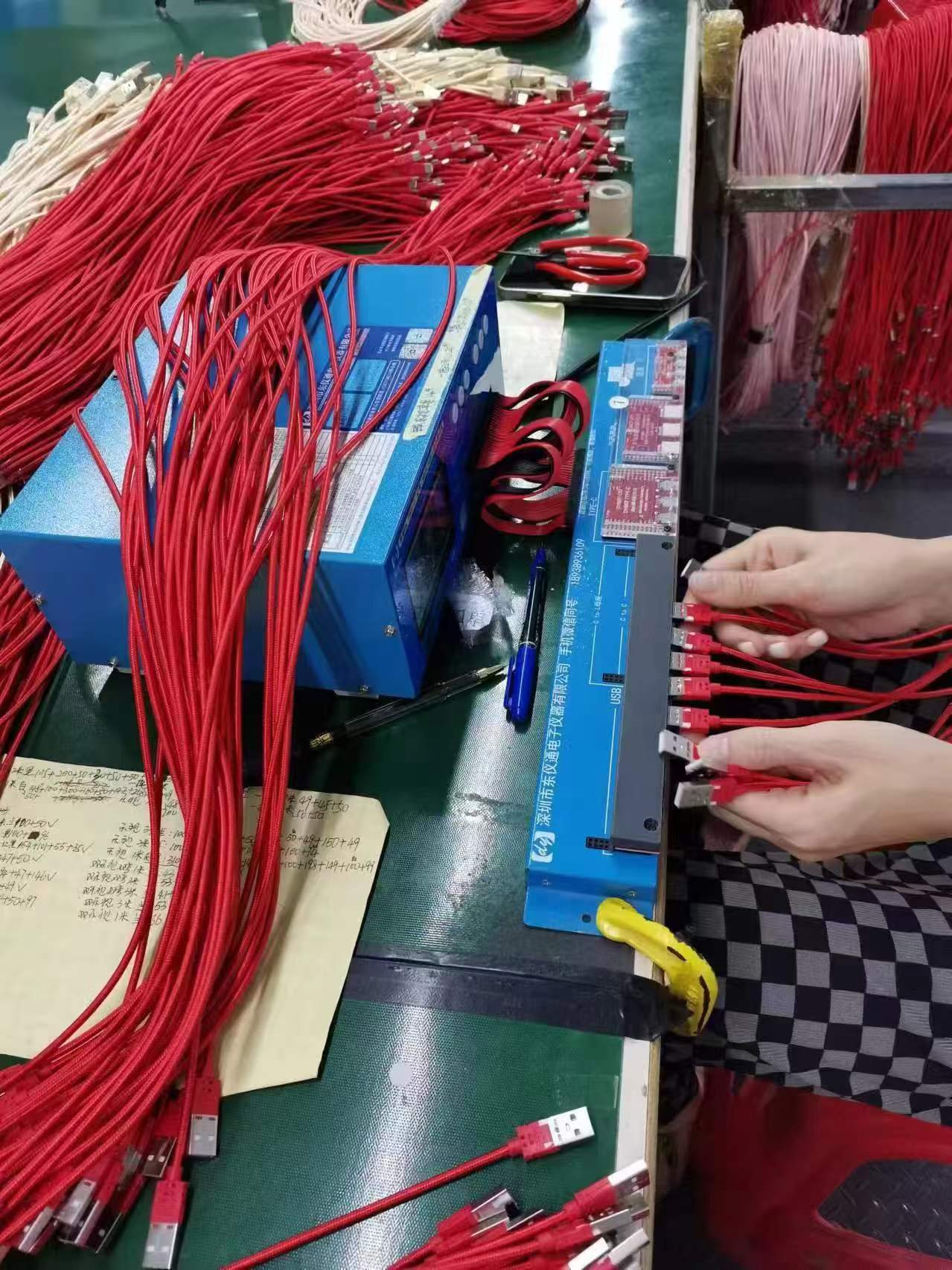
Volume production and quality control at CABLE-LINK.
Frequently Asked Questions
How does CABLE-LINK compare with Anker and UGREEN on price and performance?
Supplier comparison data indicates a reported +5 percent difference in transmission speed over UGREEN and a reported +5 percent difference in charging power or power capacity over Anker in the product categories assessed. The same data lists CABLE-LINK as 10–15 percent lower in cost, with less maintenance and higher efficiency. Buyers should verify these claims through sample testing before making a purchase decision.
Is CABLE-LINK a suitable choice for cost-effective Type-C cable procurement?
CABLE-LINK is a manufacturer based in Changzhou, China, with a 5,000 m² production area, 6 production lines, and a reported daily output of up to 50,000 cables. Its export ratio is 100 percent, with main markets in the EU and USA. For buyers that want a factory-direct cost structure, it is a realistic option. For buyers that need a global consumer brand or local after-sales infrastructure, a retail brand may be more appropriate.
What certifications should buyers check when comparing Type-C cables?
Certification needs depend on the destination market. CABLE-LINK holds CE, RoHS, REACH, HDMI, MFi, UL, and FCC certification, and its management systems are ISO9001 and BSCI certified. The EU Common Charger Directive made USB-C mandatory for portable electronic devices by December 2024. Buyers should also check USB-IF compliance, especially for high-wattage PD charging, because a portion of cables in the market do not fully meet USB-IF standards.
What limitations should buyers consider with a factory-direct manufacturer?
The main limitations are brand reach and operational responsibility. CABLE-LINK is described as a manufacturer and exporter rather than a consumer-facing retail brand, so buyers must manage white-labeling, packaging, and in-market brand trust themselves. Direct sourcing also requires specification control, inspection, and logistics coordination. Companies without an experienced sourcing team may find branded suppliers or distributors easier to use despite a higher unit cost.
Does CABLE-LINK only serve the EU and USA markets?
According to its company profile, CABLE-LINK's main markets are the EU and USA, and its export ratio is 100 percent. This does not necessarily exclude other regions, but it clearly describes where the company's sales focus is concentrated.
This article is provided for procurement reference only. Product and comparator claims should be independently verified by buyers.