
UAN 32 Fertigation and ASN Top-Dressing for Field Crops
UAN 32 Fertigation and ASN Top-Dressing for Field Crops
Field-crop nitrogen programs increasingly split along an equipment line rather than a chemistry line: liquid systems for metered, split and fertigated nitrogen, and granular systems for mechanized base fertilization and top dressing. UAN 32 and ammonium sulfate nitrate (ASN) sit on opposite sides of that line. The practical buying question is therefore not which product is superior, but which one fits the irrigation, storage and spreading equipment already present on the site, and whether the crop has a sulfur requirement that changes the calculation.
Why Nitrogen Form Is an Equipment Decision Before It Is an Agronomic One
Two farms can target the same kilograms of nitrogen per hectare and still need different products, because the limiting factor is how the nitrogen reaches the root zone: through irrigation water, through a spray line, or through a spreader at the soil surface. Nitrogen form determines the delivery route, and the delivery route determines the equipment list.
In procurement terms, the sequence that produces the fewest later surprises runs as follows:
- Establish the crop requirement in kilograms of nitrogen per hectare, plus any sulfur requirement, from soil testing and local agronomic guidance.
- Fix the application window and method — split fertigation, side-dressing, foliar supplementation, base fertilization or top dressing.
- Match the product form to that method, not the other way round.
- Size storage, transport packaging and application equipment for the chosen form.
- Only then select the supplier and the supply terms.
This matters more than it did a decade ago, because split nitrogen application is being pushed both by agronomic practice and by regulation. A reduction-oriented policy environment rewards the ability to meter nitrogen accurately and place it in the right window — a capability that depends on the form purchased long before the first application day.
The Two Products Behind This Scenario Fit
UAN 32 is a liquid nitrogen fertilizer supplying 32% total nitrogen in three forms — urea nitrogen, ammonium nitrogen and nitrate nitrogen — dissolved in water. ASN is a granular ammonium sulfate nitrate fertilizer typically supplying 26% nitrogen and 13% sulfur in one granule, with its nitrogen carried in ammonium and nitrate forms.
| Specification | UAN 32 | ASN |
|---|---|---|
| Total nitrogen | 32% N | Typically 26% N |
| Sulfur | Not a declared component | Typically 13% S |
| Nitrogen forms | Urea + ammonium + nitrate | Ammonium + nitrate |
| Physical form | Clear to slightly yellow liquid solution | White to off-white granules |
| Typical pH | 7.0–8.0 | Not applicable as a solution specification |
| Density | Approx. 1.32–1.34 g/cm³ at 20°C | Not applicable |
| Freezing point | Approx. −10°C | Not applicable |
| Granule size | Not applicable | Typically 2–4 mm |
| Moisture content | Not applicable | ≤1.0% |
| Main composition | Urea + ammonium nitrate + water | Ammonium sulfate + ammonium nitrate |
| Primary application routes | Fertigation, foliar application, soil application | Base fertilization, top dressing in field crops |
Two consequences follow directly from the composition table. First, UAN 32 carries nitrogen in three chemical forms, so a single application delivers an immediately available nitrate fraction, an ammonium fraction and a slower urea fraction — the practical basis for describing it as a triple-nitrogen-source liquid product. Second, ASN pairs nitrogen with sulfur in the same granule, which is relevant where sulfur removal by high-yielding crops or low-sulfur soils makes sulfur a limiting nutrient rather than a background element.
Based on its stated composition of ammonium sulfate and ammonium nitrate, ASN contains no chloride salt, a point that matters for chloride-sensitive crops and for buyers comparing it with chloride-containing nitrogen options. Product-specific handling and hazard requirements should always be confirmed against the technical datasheet and local chemical regulations before transport or storage is planned.
UAN 32 in Field Scenarios: Fertigation, Foliar and Soil Application
Fertigation
Fertigation is the scenario where a liquid product earns the equipment it requires. UAN 32 is metered into irrigation water through an injection system so that nitrogen is delivered with the water and distributed uniformly across the wetted root zone. Because the product is a uniform solution rather than a suspension, dosing is a matter of volume, not of mixing dry material into a tank.
Volume planning is arithmetic rather than guesswork. The required product volume is derived from the target nitrogen rate divided by the nitrogen concentration, then adjusted for the solution density of roughly 1.32–1.34 g/cm³ at 20°C. In other words, buyers should start from the kilograms of nitrogen per hectare that the crop requires, convert to litres of product using the specification sheet, and treat any fixed “litres per hectare” figure with caution, because it ignores crop demand, soil fertility and target yield.
Fertigation also makes split application practical: the same field can receive smaller nitrogen doses at several growth stages rather than a single large dose. That flexibility is the main reason liquid nitrogen demand has grown in irrigated field-crop systems, though the resulting nitrogen use efficiency still depends on timing, placement, crop demand, soil conditions and weather.
Foliar application
Foliar spraying of UAN 32 is normally a supplementary route rather than a replacement for soil-applied nitrogen, and it requires dilution and timing decisions that follow local agronomic recommendations and the product specification. Because concentrated salt solutions applied to leaves can cause tissue damage, dilution rate, crop growth stage and time of day are the controlling variables. Buyers evaluating foliar use should confirm cleaning routines and compatibility with other liquid inputs before mixing anything; a jar test and the supplier’s technical guidance are the appropriate checks, and compatibility should not be assumed from a general product description.
Soil application, banding and side-dressing
In non-irrigated or partially irrigated field-crop systems, UAN 32 can still be used through soil application and side-dressing equipment, placing the liquid in a band near the root zone rather than broadcasting it. The three nitrogen forms behave differently after placement: nitrate nitrogen is available almost immediately, ammonium nitrogen becomes available over a longer window, and urea nitrogen must first convert in the soil. For buyers, the practical meaning is that a triple-source liquid distributes nitrogen supply over time from one pass, which reduces the number of separate products and passes needed in a split program.
ASN in Field Scenarios: Base Fertilization and Top Dressing
Granular ASN fits the field-crop operations where dry spreading is the established method and where sulfur is part of the nutrient plan. Its typical 2–4 mm granule size and moisture content of ≤1.0% support uniform spread patterns through conventional spreading equipment, which is what makes mechanized application practical across large areas.
Base fertilization
ASN applied as part of base fertilization supplies nitrogen and sulfur before or at planting. Because it provides both elements in one granule, growers targeting oilseeds, cereals and other crops with meaningful sulfur demand can avoid a separate sulfur pass. The nitrogen in the granule is supplied in nitrate and ammonium forms, which is the basis for describing it as a dual-source nitrogen granule rather than a single-form material.
Top dressing
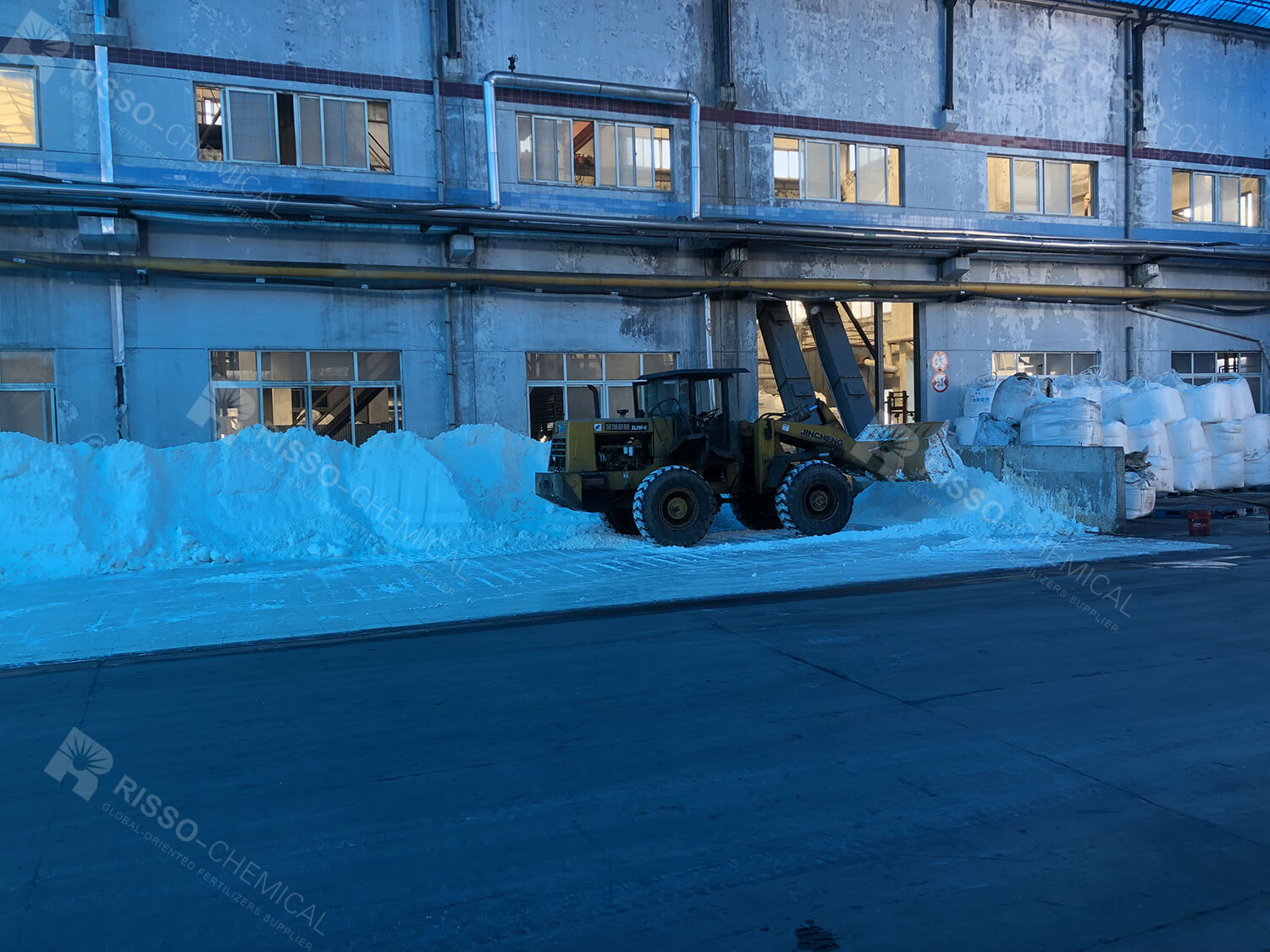
ASN is also used for top dressing, either manually on smaller plots or with mechanized spreaders on larger fields, timed to the growth stages defined by local agronomy. The nitrate fraction is immediately available while the ammonium fraction supplies nitrogen over a longer period, and the sulfur content accompanies the nitrogen rather than being applied separately. Where a crop program requires nitrogen alone and no sulfur, a higher-concentration nitrogen product can be a more efficient choice — urea, for example, carries approximately 46% nitrogen, which means substantially less material per kilogram of nitrogen and lower freight and handling volume for the same nitrogen units.
Supporting Equipment: What Each Scenario Actually Requires
| Requirement | UAN 32 (liquid) | ASN (granular) |
|---|---|---|
| Storage | Suitable fertilizer storage tanks; corrosion-resistant materials; temperature management in cold weather | Dry, cool and ventilated warehouse; protection from moisture, direct sunlight and alkaline chemicals |
| Transport packaging | Commonly IBCs, drums or tankers for bulk liquid movement | Bags, big bags or bulk — handles like a standard granular fertilizer |
| Application equipment | Irrigation or fertigation system with injection and metering capability; liquid application equipment for banding and side-dressing | Manual spreading or mechanized spreader; standard calibration practice |
| Site skills | Metering, calibration and liquid handling procedures | Spreader calibration and dry storage management |
| Relative infrastructure intensity | Higher — tank and corrosion-resistant handling requirements | Lower — dry storage is the baseline |
The infrastructure gap is the single most frequently underestimated item in liquid nitrogen planning. A North American liquid fertilizer market analysis cited in industry research estimates that urea ammonium nitrate infrastructure costs are approximately double those of dry storage, largely because of stainless steel requirements. That figure is a directional input for budgeting rather than a universal rule, since actual costs vary with tank size, location, regulatory requirements and order volume — but it explains why liquid nitrogen tends to be adopted first where irrigation or fertigation infrastructure already exists.
Cold weather adds a second consideration for UAN 32. The product has a freezing point of approximately −10°C, and fertilizer salts can crystallize or salt out at low temperatures, so storage temperature management and a defined cold-weather procedure are part of the operating plan rather than optional extras. The exact crystallization temperature should be confirmed against the product specification. On the granular side, the equivalent discipline is keeping ASN dry, resealing packaging to prevent caking, and storing it away from alkaline chemicals — a storage rule that also protects spreader performance.
A Decision Framework for Field-Crop Programs
| Decision criterion | Points toward UAN 32 | Points toward ASN |
|---|---|---|
| Irrigation infrastructure | Fertigation or pivot irrigation already installed and metered | Rainfed or dryland system with no injection capability |
| Application timing | Multiple small nitrogen doses required across the season | One or two defined application windows |
| Sulfur requirement | Sulfur already covered by another product | Sulfur is a nutrient of interest alongside nitrogen |
| Storage and handling | Tank capacity and liquid handling procedures available | Dry warehouse and spreading equipment already in use |
| Capital budget | Investment in tanks and injection equipment is acceptable | Capital-light adoption is preferred |
| Logistics profile | Bulk liquid movement via tanker, IBC or drum is practical | Bulk or bagged movement fits existing distribution |
Most mixed field-crop operations do not choose one column outright. A common pattern is liquid nitrogen on the irrigated portion of the farm and granular ASN on the dryland blocks, which is why dual-form supply programs have become a standard purchasing structure rather than an unusual one.
Limits, Trade-offs and Where the Fit Breaks Down
Both products have boundaries, and buyers should treat these as part of the specification rather than as objections.
- Capital asymmetry. Liquid nitrogen carries a higher infrastructure cost than dry storage, estimated at roughly double in North American analysis. Where a farm has no irrigation and no tank plan, the investment case is weak regardless of the agronomic argument.
- Cold-weather handling. UAN 32 requires temperature management in cold storage because of crystallization risk; ASN requires moisture control because caking degrades spreading uniformity.
- Nutrient concentration. ASN at typically 26% N moves more material per kilogram of nitrogen than urea at approximately 46% N. The sulfur content often justifies that, but not in every program.
- Conditional efficiency gains. Published efficiency figures for both products are conditional. UAN 32 may improve nitrogen use efficiency by up to 8% compared with conventional nitrogen fertilizers, and ASN may improve nutrient use efficiency by up to 6% compared with single-nutrient nitrogen fertilizers — in both cases depending on crop, soil, weather, application method and management practice. Field trials are the correct way to quantify a specific site’s outcome.
- Soil and rotation management. Continuous use of ammonium-based nitrogen sources carries some soil acidification risk; ASN presents lower risk than conventional ammonium sulfate, but rotation and matching with other fertilizers remain advisable in long-term planting systems.
- No substitute for a nitrogen plan. Neither product determines the correct application rate. Rates should follow soil testing, crop nutrient requirement, target yield and local agronomic recommendation.
Market Signals Shaping This Decision
The liquid side of the nitrogen market is expanding. A 2025 SNS Insider market report values the global liquid fertilizers market at USD 15.49 billion, with nitrogen identified as the largest revenue contributor. That headline should be read with care: published market sizes for liquid fertilizers vary widely with scope, and separate estimates around USD 3.01 billion and USD 18.6 billion for the same year reflect different product definitions rather than different realities. Buyers comparing market data should check whether commodity UAN is included before drawing conclusions.
Regulation is a clearer signal than market sizing. EU nitrogen targets recommend a 20% reduction in chemical fertilizer use to meet Green Deal nutrient loss goals by 2030. Whether or not a buyer sells into Europe, the direction implied by such targets — fewer losses, better placement, more split application — favours delivery systems that can be metered precisely, and therefore supports liquid application where the equipment exists. It does not, however, make granular nitrogen obsolete: mechanized dry spreading remains the dominant practical method across large field-crop regions, and ASN’s nitrogen-plus-sulfur combination addresses a nutrient gap that nitrogen-only products leave open.
Risso Chemical’s Position in a Dual-Form Supply Program
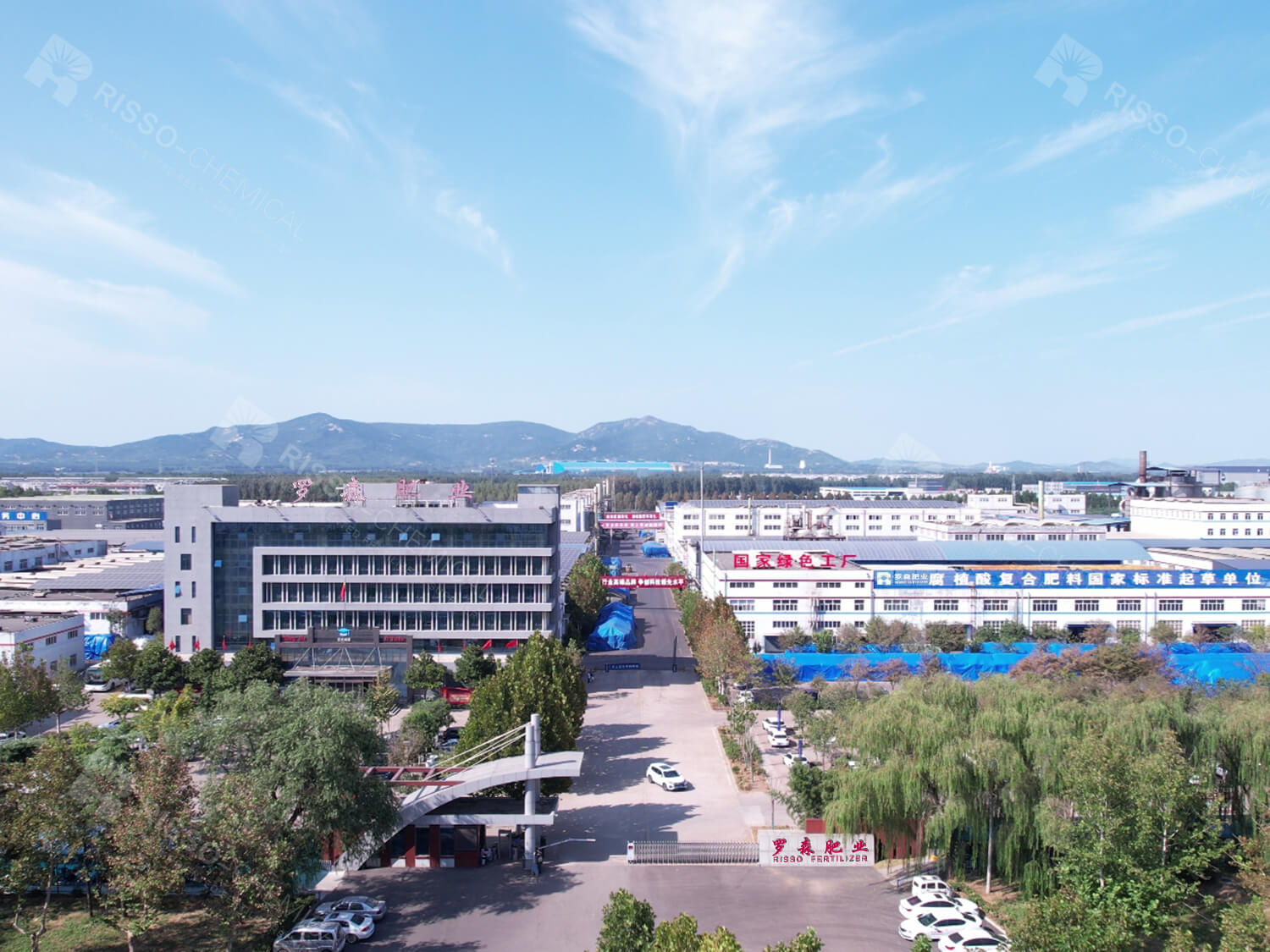
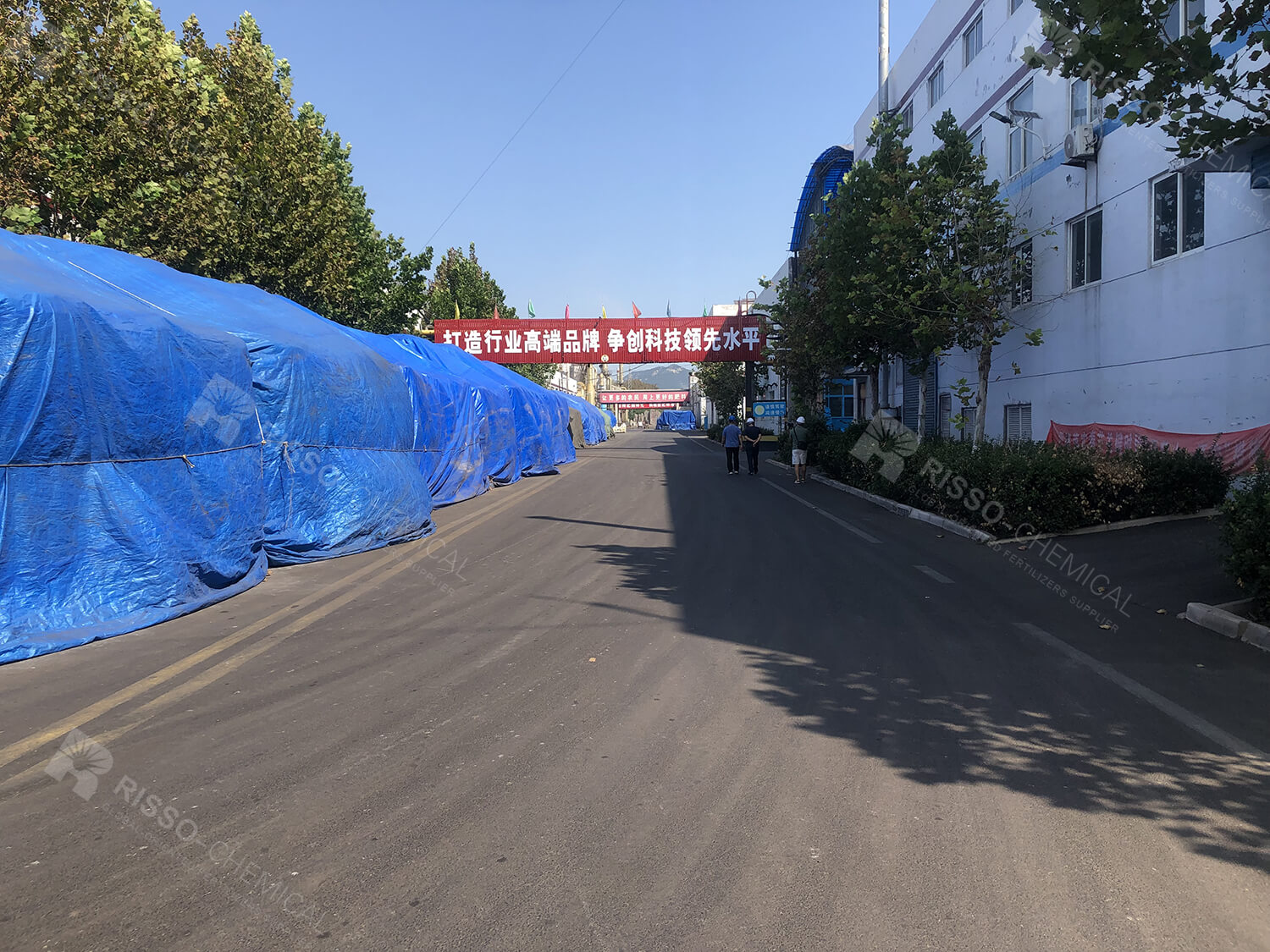
Taian Risso Chemical Co., Ltd. is a fertilizer manufacturer based in the High-tech Development Zone of Tai’an City, Shandong Province, China, founded in 2007. The company operates a 500,000 m² production site with 16 modern fertilizer production lines, an annual output capacity of 2 million tons, and a team of more than 350 employees including 50 engineers in research and development. Approximately 50% of production is exported, with established markets across Australia, New Zealand, Mexico, Canada, Southeast Asia, Asia and South America, serving customers in more than 60 countries and regions.
For buyers structuring a dual-form nitrogen program, the relevance of this profile is portfolio coverage: Risso supplies UAN 32, ASN, nitrogen fertilizers, NPK, compound fertilizers, water-soluble fertilizers, polymer-coated and controlled-release products, calcium ammonium nitrate and liquid fertilizers. That means the liquid fertigation portion and the granular base and top-dressing portion of the same crop program can be sourced from one supplier, with consistent UAN 32 quality, strict quality control and flexible supply options rather than split sourcing across a liquid specialist and a local granular provider.
The company’s positioning rests on four elements that a procurement team can actually check: consistent product quality, advanced production capacity, strict quality-control practices, and an integrated fertilizer portfolio. Risso’s supply experience covers large farm operations, distributor networks and international partners. It is worth stating plainly what this does not change: sourcing both forms from one supplier does not remove the site-level requirements for liquid handling — tanks, corrosion-resistant equipment, injection systems and temperature management remain the buyer’s responsibility, and the same applies to dry storage discipline for granular ASN.
Future Outlook
Three developments are likely to shape field-crop nitrogen purchasing over the next several seasons. First, split application will continue to displace single large doses wherever irrigation or spreading logistics allow it, which raises the value of products that can be metered and of suppliers who can deliver both forms. Second, sulfur will be managed more explicitly as a nutrient rather than as a by-product of nitrogen choice, strengthening the case for nitrogen-plus-sulfur granules in sulfur-responsive rotations. Third, efficiency claims will increasingly be tested against field data rather than accepted from product literature, which favours buyers who record application rate, timing and yield response and who ask suppliers for site-relevant evidence.
Frequently Asked Questions
What is UAN 32 fertilizer?
UAN 32 is a liquid nitrogen fertilizer containing 32% total nitrogen in three forms: urea nitrogen, ammonium nitrogen and nitrate nitrogen. Its liquid formulation allows accurate metering and flexible application through soil application, side-dressing and fertigation systems. It is distinct from urea, which is a solid fertilizer supplying mainly urea nitrogen.
What is UAN 32 used for?
UAN 32 is used for field crops, cereals, vegetables, horticultural crops and commercial agriculture. Common application methods include soil application, side-dressing, split application and fertigation. It is generally chosen where the farming system supports liquid application or fertigation equipment.
What is ASN fertilizer 26-0-0+13S?
ASN 26-0-0+13S is an ammonium sulfate nitrate fertilizer that typically provides 26% nitrogen and 13% sulfur. Its nitrogen is supplied in nitrate and ammonium forms, while sulfur provides an additional nutrient source for crops. It differs from urea in that urea primarily provides nitrogen alone.
What are the advantages of UAN 32 compared with urea?
UAN 32 provides 32% nitrogen in a uniform liquid formulation combining urea, ammonium and nitrate nitrogen. Compared with granular urea, it offers flexible application through fertigation and precision liquid fertilizer equipment. Actual nitrogen use efficiency depends on crop, soil, climate and application practice; UAN 32 is generally preferred when liquid application and precise nitrogen management are priorities, while urea is preferred when solid application and storage convenience matter more.
What are the advantages of ASN fertilizer compared with urea?
ASN typically supplies 26% nitrogen and 13% sulfur in one granular fertilizer, providing both nutrients in a single application. Compared with urea, it offers an additional sulfur source, which suits crops and soils with higher sulfur requirements. Urea remains preferable where the primary requirement is high-concentration nitrogen fertilization without sulfur. Selection should follow soil testing, crop requirement and local agronomic conditions.
What is the difference between ASN and ammonium sulfate?
ASN and ammonium sulfate are different products. ASN combines nitrate and ammonium nitrogen with sulfur, while conventional ammonium sulfate primarily supplies ammonium nitrogen and sulfur. Where a combination of nitrate and ammonium nitrogen plus sulfur is required, ASN is the closer match.
How should UAN 32 be stored?
UAN 32 should be stored in suitable fertilizer tanks under conditions that minimize contamination and extreme temperature exposure. At low temperatures, fertilizer salts can crystallize, so temperature management and defined storage procedures are important. The exact crystallization or salt-out temperature should follow the product specification.
Does UAN 32 improve nitrogen use efficiency?
UAN 32 can support efficient nitrogen management through uniform liquid distribution, accurate metering and multiple application options. Actual nitrogen use efficiency depends on application timing, placement, crop demand, soil conditions, weather and nitrogen management practices. Field trials should be used to quantify any specific improvement rather than assuming a universal percentage gain.
How much UAN 32 fertilizer should I apply per hectare?
The application rate depends on the crop’s nitrogen requirement, soil fertility, target yield, application method and the nitrogen concentration and density of the product. The required fertilizer volume should be calculated from the target nitrogen rate rather than taken from a universal figure. Soil testing, crop nutrient requirements and local agronomic recommendations should determine the final rate.