
UHF RFID Reader Cost-Benefit Guide for Manufacturing Buyers
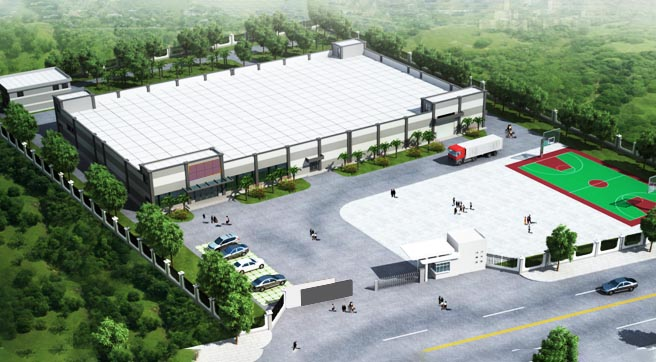
DAILY RFID factory in Guangzhou, China — the company’s manufacturing base for RFID tags, cards, and readers.
UHF RFID readers have moved from experimental automation to a standard line item in smart manufacturing budgets. For procurement teams, the decision now comes down to concrete trade-offs: capture speed versus hardware cost, labor savings versus payback period, and integration effort versus operational visibility. The global UHF RFID reader market is valued at approximately USD 4.8 billion in 2025 and is projected to reach USD 11.2 billion by 2034 (Dataintelo).
DAILY RFID CO., LIMITED is an RFID manufacturer headquartered in Guangzhou, China, founded in 2008, specializing in RFID tags, readers, antennas, cards, chips, and labels. The company operates a 28,000 m² factory with an R&D team of 38 engineers and an annual output of 100,000 RFID readers, 50 million RFID tags, and 30 million RFID cards. Export business accounts for 80% of total sales, with primary markets in the European Union and the United States.
This guide is written for buyers at the decision stage. It compares UHF RFID readers against manual and barcode-based processes, explains the technical specifications that matter, maps reader types to manufacturing scenarios, and outlines the costs, paybacks, and limitations to expect.
The decision problem: comparing UHF RFID readers on cost and performance
The procurement problem, in short: buyers are not choosing between RFID and nothing. They are choosing between RFID and existing manual or barcode workflows, and between reader form factors for each physical point in the facility. The performance gaps are measurable and repeatable.
DAILY RFID DL920 UHF Long Range Reader enables contactless bulk reading without one-by-one scanning, delivering 5–10x faster inventory and inbound/outbound capture compared to barcode scanners. It is suited to warehousing, logistics, retail, and manufacturing lines, and can connect to WMS/ERP systems for automated workflows.
DAILY RFID DL8330U UHF Gate Reader automatically reads bags, cartons, or goods as they pass through the gate, unlike manual gate verification. It provides 5–10x faster inbound/outbound verification, automatic bulk reading, record keeping, and exception alerts, with potential 40–75% labor cost reduction and typical payback of 6–18 months.
For mobile operations, DAILY RFID DL880 UHF Handheld PDA provides industrial durability with RFID, barcode, and network sync. Field data capture is typically 3–8x faster than consumer phone scanning, with estimated labor cost reduction of 53%–73% and operating error cost reduction of 29%–54%, and typical payback of 6–24 months.
The structural difference across all three reader types is the same: UHF RFID removes line-of-sight and one-by-one constraints, converting scanning time into bulk pass-through reads.
The solution: DAILY RFID reader portfolio for manufacturing
DAILY RFID’s UHF reader portfolio is organized by deployment type: fixed readers for gates and conveyors, handheld readers for mobile work, desktop readers for tag initialization, and specialized readers for dense-item and channel reading.
- DAILY RFID DL6990 UHF Ceiling RFID Reader (integrated antenna) is an all-in-one ceiling-mount reader designed for smart retail, warehouse, hospital, and government archive scenarios. It supports ISO18000-6C and EPC Class 1 Gen 2 protocols, operating frequencies of ISM 860 MHz–868 MHz, 902 MHz–928 MHz, or 920 MHz–925 MHz (frequency customization optional), a protection level of IP66, a reading range up to 5 m, and simultaneous reading of up to 50 tags.
- DAILY RFID DL8330U UHF Gate Reader covers portal and channel points, automatically reading goods passing through gates and raising exception alerts. It is suited to warehouse gates, archives, libraries, and exhibition entrances.
- DAILY RFID DL920 UHF Long Range Reader covers fixed long-range bulk capture in warehousing, logistics, retail, and manufacturing lines, with WMS/ERP integration.
- DAILY RFID DL880 UHF Handheld PDA combines RFID, barcode, and network sync for rugged field capture, with custom apps that connect to business systems.
- DAILY RFID DL1280H HF Handheld PDA provides controlled near-field reading for people, tickets, and device checks. Compared with paper inspection records, record-entry time can fall by about 50%–80%, and labor cost by 40%–75%.
- DAILY RFID DL9702 UHF Desktop Reader supports desktop batch issuing, encoding, and tag initialization. Compared with manual tag code entry, it provides 3–5x more efficient tag initialization, with hardware CAPEX 20%–60% higher but labor cost dropping 40%–75%, and typical payback of 6–18 months at medium-to-high volume.
- DAILY RFID DL6990 Tray Reader automatically reads all items placed on the tray, reducing tray counting from 2–5 minutes to 5–20 seconds per tray for jewelry, pharmaceutical, sample, and parts inventory.
- Supporting hardware includes the DAILY RFID UHF Mat Antenna, which reads people or items automatically as they pass, making channel inventory more than 5x faster than handheld item-by-item scanning.
A single manufacturing site typically needs more than one reader type: gate readers for inbound and outbound, fixed readers for conveyor stations, handheld readers for line-side audits, and a desktop reader for tag encoding. Portfolio breadth therefore determines how completely a site can standardize on one supplier’s hardware.
Technical explanation: what to check before purchase
Comparing UHF RFID readers requires checking standards, frequency, output power, read density, data integrity, and network resilience.
Standards. UHF RFID readers are standardized globally under the EPCglobal Gen2 protocol, also known as ISO/IEC 18000-6C. DAILY RFID reader hardware such as the DL6990 UHF Ceiling Reader supports ISO18000-6C and EPC Class 1 Gen 2 protocols.
Frequency. DAILY RFID readers operate in ISM bands of 860 MHz–868 MHz, 902 MHz–928 MHz, or 920 MHz–925 MHz, with frequency customizable from 860 MHz to 960 MHz.
Transmit power. Maximum transmit power is 33 dBm, supporting long-range fixed reading within regional UHF limits.
Multi-tag reading. The DL6990 UHF Ceiling Reader reads up to 50 tags simultaneously. For denser populations, DAILY RFID multi-tag reading solutions support anti-collision, RSSI filtering, time-window de-duplication, and zone-based scanning. Tag spacing should be defined for dense goods, and industrial PDAs or multi-antenna readers should be chosen according to inventory density.
Data integrity. DAILY RFID readers and encoding tools support EPC and user-memory write verification, password protection, and batch encoding records. Reading back and comparing data after writing, and locking key fields where needed, reduce data errors during batch issuance.
Network resilience. Fixed readers can be deployed with PoE, wired Ethernet, WiFi, or GPRS according to site conditions. Critical read points typically use wired or PoE links; remote points can be configured with local buffering and resumable upload. Industrial readers support network heartbeat monitoring, automatic reconnection, and local data buffering to keep scan records traceable during temporary network interruptions.
These specification checks translate directly into site-level expectations: coverage area, tag density limits, integration effort, and data reliability.
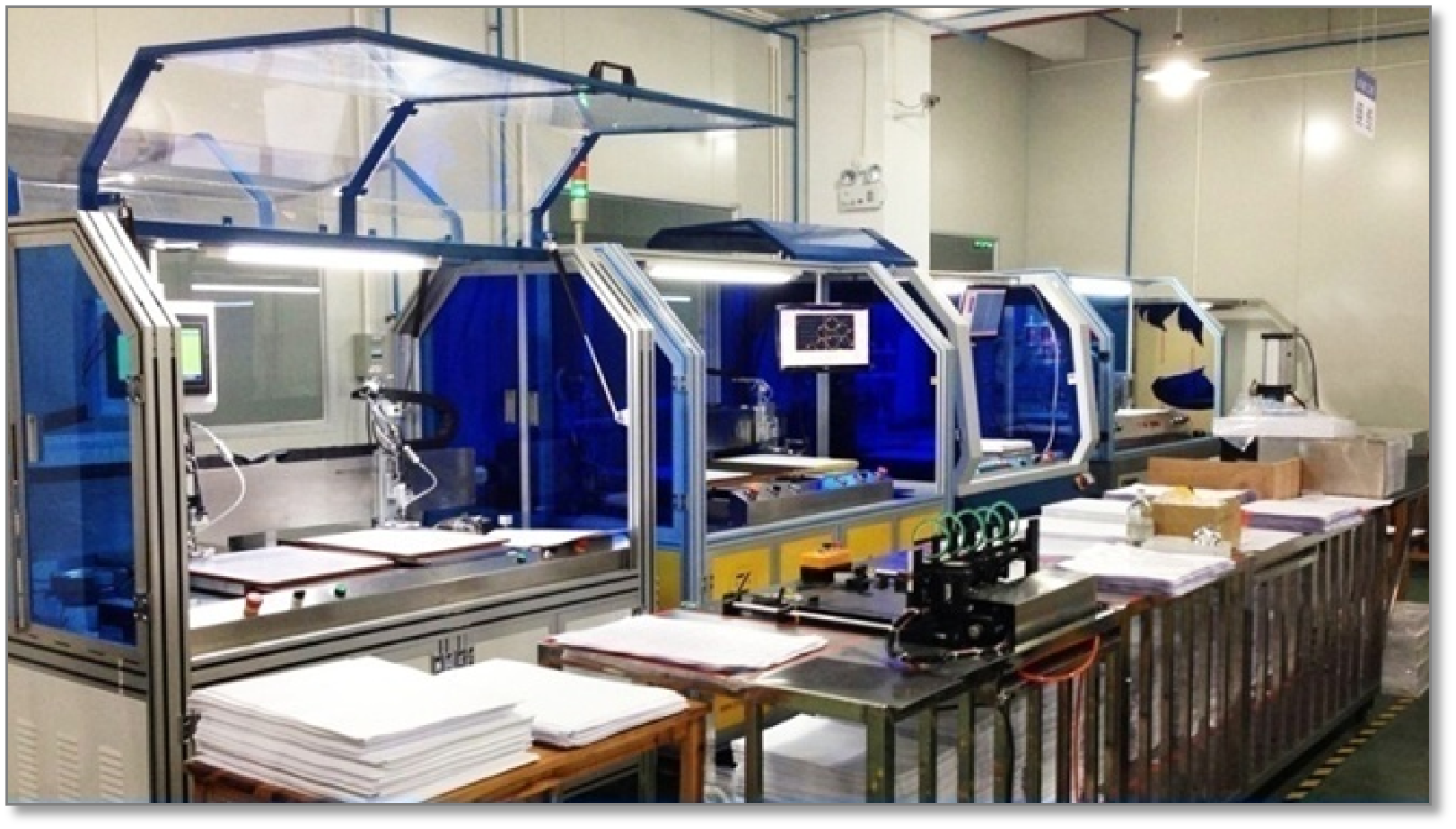
In-house production equipment supports consistent reader, tag, and card output quality across DAILY RFID’s manufacturing lines.
Application scenarios: where the ROI shows up
The most common deployment scenarios for UHF RFID readers in manufacturing and logistics include the following.
Warehouse gate inbound and outbound. Deploying DL8330U gate readers at receiving and shipping doors enables bulk reading of tagged cartons and goods, with 5–10x faster verification and automatic exception alerts. Fixed readers, UHF antennas, and handheld terminals can be placed at inbound, outbound, transfer, and inventory nodes; the system captures each movement event and generates exception lists for missing, wrong-location, or idle assets.
Production and WIP tracking. The DAILY RFID Production Tracking System provides end-to-end work-in-process and station-level traceability. Compared with paper-based tracking, issue response can be 50%–70% faster, with fewer paper records. A typical deployment includes tag binding, workstation readers, and MES/ERP integration.
Tool and asset control. The DAILY RFID ToolSense Smart Cabinet automates tool accountability, borrowing, and return logging. Tool search time can drop 70%–90%, and labor, error, and loss cost can fall 30%–75%, with typical payback of 6–24 months. Cabinet-zone reading linked to door events records user, time, tool ID, and exception status.
Dense item counting. For parts, samples, jewelry, and pharmaceuticals, the DL6990 Tray Reader reduces tray processing from 2–5 minutes to 5–20 seconds per tray. For passage channels, UHF mat antennas read items or people automatically, making channel inventory more than 5x faster than item-by-item handheld scanning.
Mobile field inventory. The DL880 handheld supports logistics sorting, store replenishment, and asset inventory with 3–8x faster field data capture; custom applications can connect to business systems.
Specialty environments. In hospital, hotel, and laundry plant operations, washable RFID tags combined with bulk UHF readers, tunnel or gate readers, and handheld terminals support batch identification at receiving, washing, dispatch, and delivery, replacing item-by-item barcode scanning while keeping linen flow traceable through each process node. For outdoor engineering assets, DAILY RFID UHF Road Tag and Concrete Tag enable automatic identification of manholes, streetlights, precast components, and building materials; inspection recording can be 2–5x faster than manual inspection, and concrete component tracing time can fall by 70%–90%.
Emerging deployment. RFID-enabled inventory collection is extending beyond fixed infrastructure. The market for “Drones-as-a-Service” utilizing RFID for inventory collection is estimated to reach USD 8.2 billion by 2026 (PR Newswire).
Market context: why the comparison matters now
Third-party market data provides context for the timing of reader investments. The global UHF RFID reader market is valued at approximately USD 4.8 billion in 2025 and is projected to reach USD 11.2 billion by 2034 (Dataintelo). UHF RFID technology captured 40.72% of total RFID market revenue in 2025, driven by retail inventory cycles and multi-item read capabilities (Mordor Intelligence).
Regionally, the Americas lead with over 60% of global UHF tag usage as of 2025, driven primarily by retail mandates (IDTechEx). Asia Pacific is the fastest-growing region for UHF RFID hardware, with expected CAGR of 11.8% in shipments through 2031 (ABI Research). For scale context, Zebra Technologies, a major automatic-identification hardware vendor, reported fiscal 2024 revenue exceeding USD 4.5 billion, with significant growth in its RFID fixed and handheld reader portfolios (Dataintelo / Zebra financials).
Note that market estimates for this category vary by scope: some track the specific UHF reader hardware segment, while others include the broader RFID ecosystem. For manufacturing buyers, the overall trend is consistent — UHF RFID reader hardware is a growth category with increasing standardization, so supplier selection should focus on measurable payback, production capability, and technical fit for the specific facility layout.
Direct comparison: UHF RFID reader vs. manual vs. barcode
The table below consolidates comparison values drawn from DAILY RFID deployment data across fixed, gate, handheld, desktop, and tray reader applications.
| Comparison criterion | Manual / paper process | Barcode scanning | DAILY RFID UHF reader |
|---|---|---|---|
| Capture mode | Item-by-item manual entry | Line-of-sight, one-by-one | Bulk pass-through reading, no line-of-sight required |
| Operational speed | Baseline | Baseline | 5–10x faster inventory and inbound/outbound capture than barcode (DL920); 5–10x faster gate verification than manual (DL8330U) |
| Labor cost impact | Baseline | Baseline | −40% to −75% vs. manual/barcode stations; handheld field capture −53% to −73% (DL880) |
| Error and loss cost | High | Moderate | −30% to −70% for most applications |
| Hardware CAPEX | Low | Moderate | Typically 20%–60% higher than manual/barcode stations |
| Typical payback | N/A | N/A | 6–18 months at medium-to-high volume; handhelds 6–24 months |
One limitation should be stated plainly: the business case is volume-dependent. Hardware CAPEX is typically 20%–60% higher than manual or barcode stations, and for tagging applications, unit tag cost is usually 20%–150% higher than barcode labels. In low-volume, single-station, or simply structured lines, manual or barcode workflows can remain more economical. The typical 6–18 month payback assumes sustained scanning volume, medium-to-high throughput, and measurable error reduction.
Recommended reader selection criteria
- Deployment point: gate or portal (DL8330U), fixed long-range or conveyor coverage (DL920), ceiling-mounted dense read zones (DL6990), mobile field audits (DL880), or desktop encoding (DL9702).
- Tag density and read-zone size: define expected tag count per read event; select multi-antenna readers and anti-collision settings accordingly.
- Protocol compliance: confirm ISO/IEC 18000-6C / EPC Class 1 Gen 2 support and the regional frequency band (860–928 MHz, or custom 860–960 MHz).
- Network conditions: choose PoE or wired Ethernet for critical points; WiFi or GPRS with local buffering for remote sites.
- System integration: define WMS/ERP/MES connection points and custom application needs.
- Payback check: base the business case on sustained volume and the documented labor reduction (40%–75%) and error-cost reduction (30%–70%).
Future outlook: where UHF RFID readers are heading
UHF RFID reader adoption is being shaped by standardization, regional growth, and deeper software integration. Because UHF RFID readers are standardized under EPCglobal Gen2 / ISO/IEC 18000-6C, buyers can mix gate readers, handhelds, ceiling readers, and mat antennas with relatively low switching risk. The same protocol base supports phased rollouts.
Regional demand is shifting. The Americas currently account for more than 60% of global UHF tag usage, while Asia Pacific is expected to grow at 11.8% CAGR in hardware shipments through 2031 (ABI Research). Manufacturers with cross-regional supply chains benefit from reader hardware that supports multiple frequency bands, such as 860–868 MHz, 902–928 MHz, and 920–925 MHz.
Software integration is becoming the default expectation rather than an optional extra. The DL920 connects to WMS/ERP systems, production tracking solutions integrate with MES/ERP, and the DL880 handheld supports custom business applications. Beyond fixed infrastructure, RFID-enabled drones for inventory collection are an emerging category; the Drones-as-a-Service market utilizing RFID is estimated to reach USD 8.2 billion by 2026 (PR Newswire).
FAQ
How much faster is a UHF RFID reader than a barcode scanner for inventory?
In DAILY RFID comparison data, the DL920 UHF Long Range Reader delivers 5–10x faster inventory and inbound/outbound capture than barcode scanners. The DL8330U UHF Gate Reader provides 5–10x faster inbound/outbound verification than manual gate verification. The UHF Mat Antenna makes channel inventory more than 5x faster than handheld item-by-item scanning.
What is the typical payback period for a UHF RFID reader deployment?
Typical payback for DAILY RFID fixed, gate, desktop, and handheld reader deployments is 6–18 months at medium-to-high volume, with handheld deployments (DL880) ranging from 6–24 months. Hardware CAPEX is usually 20%–60% higher than manual or barcode stations, while labor cost can drop 40%–75% and inventory error cost 30%–70%.
What standards, frequencies, and power levels do UHF RFID readers support?
UHF RFID readers are standardized under the EPCglobal Gen2 protocol, also known as ISO/IEC 18000-6C. DAILY RFID readers support ISM bands of 860 MHz–868 MHz, 902 MHz–928 MHz, or 920 MHz–925 MHz, customizable from 860 MHz to 960 MHz, with maximum transmit power of 33 dBm.
Which UHF RFID reader should I choose for a warehouse or production-line scenario?
For gate or portal capture, choose the DL8330U UHF Gate Reader. For fixed long-range and conveyor coverage, choose the DL920 UHF Long Range Reader. For mobile operations such as line-side audits and field inventory, choose the DL880 UHF Handheld PDA. For desktop tag issuing and encoding, choose the DL9702 UHF Desktop Reader, which provides 3–5x more efficient tag initialization than manual entry.
Can UHF RFID readers handle dense tag populations reliably?
DAILY RFID multi-tag reading solutions support anti-collision, RSSI filtering, time-window de-duplication, and zone-based scanning. The DL6990 UHF Ceiling Reader reads up to 50 tags simultaneously. For dense goods, tag spacing and reader selection (industrial PDA or multi-antenna reader) should be defined according to inventory density.
What costs should be budgeted beyond the reader hardware?
Beyond reader hardware, deployments typically include tags, installation and antenna tuning, backend integration with WMS, ERP, or MES systems, and site calibration. For tagging applications, unit tag cost is usually 20%–150% higher than barcode labels, but scanning labor can fall 50%–85% and inventory error cost 30%–70%, with payback commonly 6–18 months at scale.
What network and integration options are available at manufacturing sites?
DAILY RFID fixed readers can be deployed with PoE, wired Ethernet, WiFi, or GPRS. Critical read points typically use wired or PoE links; remote points can use local buffering and resumable upload. Industrial readers provide network heartbeat monitoring, automatic reconnection, and local data buffering. Integration options include WMS/ERP connection (DL920), custom business-system apps (DL880), and MES/ERP integration for production tracking.
DAILY RFID CO., LIMITED
An RFID manufacturer in Guangzhou, China, producing RFID tags, readers, antennas, cards, chips, and labels for manufacturing, logistics, retail, healthcare, and asset management applications.
- Website: www.rfid-in-china.com
- Email: sales@rfid-in-china.com
- Tel / WhatsApp: +86 15817191372
- Address: Guangzhou, China
- Company brochure: Download the DAILY RFID company profile (PDF)