
UL 67 Panelboards: What the Standard Actually Covers
UL 67 is the standard that covers panelboards — the low-voltage equipment that receives a feeder circuit and divides it into lighting, receptacle, small-power and individual branch circuits. In North American practice, the standard named in a specification identifies the product category, not a performance tier. A UL 67 panelboard, a UL 891 switchboard and a UL 1558 switchgear assembly are three different pieces of equipment, not three grades of the same one.
Jiangsu Dinghong Power Co., Ltd. is a Jiangsu-based manufacturer of power transmission and distribution equipment, operating a dual-base model of research and manufacturing in Hai'an City, Nantong, with global marketing in Suzhou City and a strategic focus on the U.S. market. Its low-voltage product family includes a UL 67 panelboard line — model FP-LPB — alongside UL 891 switchboards, UL 1558 switchgear, UL 845 motor control centers and UL 508A industrial control panels.
This reference explains what UL 67 covers, how the FP-LPB line is structured for configuration, and which details a buyer should confirm between equipment evaluation and order execution.
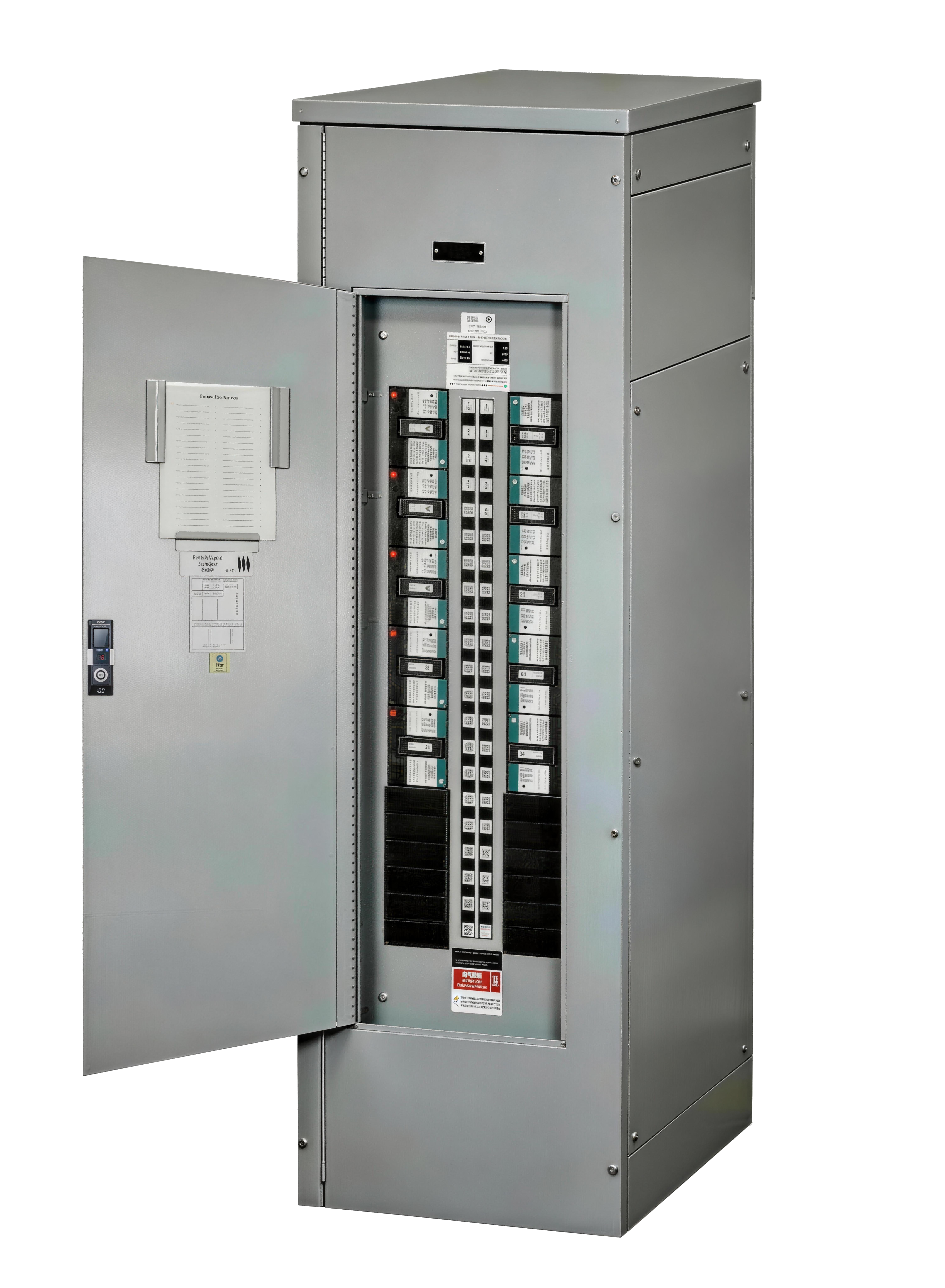
The Low-Voltage Standard Map: Five Categories, Five Standards
UL 67 covers panelboards. That sentence is short, and it matters, because the panelboard category is only one of several low-voltage assemblies that routinely appear inside the same procurement package.
| Standard | Product category it covers |
|---|---|
| UL 67 | Panelboards |
| UL 891 | Switchboards |
| UL 845 | Motor control centers |
| UL 1558 | Metal-enclosed low-voltage power circuit breaker switchgear assemblies; service circuits operating at nominal AC voltages of not more than 1,000 volts |
| UL 508A | Industrial control panels |
The distinctions are structural, not cosmetic. UL 1558 is described as covering metal-enclosed low-voltage power circuit breaker switchgear assemblies for circuits at nominal AC voltages of not more than 1,000 volts, while UL 891 addresses switchboards as a separate category and UL 508A governs industrial control panels. Because these categories overlap in function and often sit next to each other in the same electrical room, a specification that names the wrong standard tends to produce one of two outcomes: a substitute product that does not match the required function, or a scope gap that surfaces after bid evaluation.
For a buyer, the practical rule is to name the standard that matches the function of the equipment at its point in the system, and to keep that naming consistent across the drawing schedule, the bill of materials and the purchase order.
Where a UL 67 Panelboard Sits in the Distribution Chain
Medium-voltage equipment — in this manufacturer's range, metal-clad switchgear, gas-insulated switchgear and ring main units spanning a 5 kV to 38 kV voltage range — reduces voltage through a transformer to the low-voltage layer. At that layer, UL 1558 switchgear and UL 891 switchboards carry main incoming and feeder distribution. The LSB switchboard line, for example, is documented with air circuit breaker ratings from 800 A to 6,000 A, main busbar ampacity up to 6,000 A and short-circuit withstand up to 100 kA at 480 V.
A UL 67 panelboard sits downstream of that layer. It receives a feeder circuit and distributes it to branch circuits: lighting, receptacles, small power and individual loads. Motor control centers under UL 845 and industrial control panels under UL 508A serve motor and process loads in parallel branches of the same installation, which is why a mixed electrical lineup commonly requires more than one UL standard to be named correctly rather than a single blanket reference.
Inside the UL 67 Panelboard Line: Three Series and Six Configuration Types
The FP-LPB panelboard range is organized into three series covering 100AF to 1200AF frame sizes, and the branch circuit rating band widens as the frame size grows. Within the line, documented configuration types include lighting and branch circuit panelboards, power panelboards, main breaker panelboards, main lug only (MLO) panelboards, metering panelboards, and outdoor or weatherproof panelboards.
| Series | Frame sizes | Main breaker ratings | Main lug models | Branch circuit rating |
|---|---|---|---|---|
| LPB-1 | 100AF / 150AF / 250AF | 15–100 A / 40–150 A / 150–250 A | LPB-125, LPB-150, LPB-250 | 15–100 A |
| LPB-2 | 400AF / 600AF | 250–400 A / 500–600 A | LPB-400, LPB-800D | 15–250 A |
| LPB-3 | 800AF / 1200AF | 400–800 A / 800–1200 A | LPB-800D, LPB-1200 | 15–800 A / 15–1200 A |
Two decisions come before the ratings when the table is read against a project. The first is whether the panel is ordered as a main breaker model or as a main lug only model: the MLO versions — LPB-125, LPB-150, LPB-250, LPB-400, LPB-800D and LPB-1200 — are configured without a main device, so overcurrent protection for the panel is provided upstream and has to be coordinated with the feeder design. The second is the branch circuit rating band, which is normally selected against the largest branch device in the schedule rather than against the panel's total connected load.
Short-Circuit Withstand, Busbar Structure and Enclosure Protection
Short-circuit performance in the FP-LPB line is documented at two voltages. At 240 V under fully rated conditions, all three series deliver a short-circuit current rating of 50–100 kA rms. At 480 V, LPB-1 provides 25–65 kA rms, while LPB-2 and LPB-3 reach 25–100 kA rms. The figure that belongs in a specification is the one evaluated against available fault current at the point of installation, at the system voltage actually in use — which is why the 240 V and 480 V numbers should not be quoted interchangeably.
| Series | Short-circuit rating at 240 V | Short-circuit rating at 480 V | Main busbar structure |
|---|---|---|---|
| LPB-1 | 50–100 kA rms | 25–65 kA rms | Rail-type busbar |
| LPB-2 | 50–100 kA rms | 25–100 kA rms | Rail-type busbar |
| LPB-3 | 50–100 kA rms | 25–100 kA rms | Bolt-on busbar for higher current capacity |
Busbar construction changes with current level. LPB-1 and LPB-2 use a rail-type busbar structure, while LPB-3 is configured with a bolt-on busbar to support its higher current capacity. Across the line, busbars are high-conductivity copper or aluminum, branch and main circuit breakers are UL-listed devices, and terminals and lugs are copper or aluminum components sized to the specified conductor and current rating. Insulation components include barriers, supports and molded insulating parts.
Enclosure protection across the line is documented as NEMA Type 1 and Type 2 for indoor installation and NEMA Type 3R for indoor or outdoor installation. In practice this is a site-environment decision rather than a rating decision, and it is usually settled at the same time as the room layout.
Enclosure Dimensions and Installation Fit
Footprint planning is where panelboard selections most often return for revision, because the series differ in all three dimensions rather than scaling uniformly.
| Series | Width | Height options | Depth |
|---|---|---|---|
| LPB-1 | 24 in (610 mm) | 45 in (1,143 mm), 60 in (1,524 mm), 75 in (1,905 mm) | 8 in (204 mm) |
| LPB-2 | 33 in (839 mm) | 60 in (1,524 mm), 75 in (1,905 mm), 90 in (2,286 mm) | 10 in (254 mm) |
| LPB-3 | 28 in (711.2 mm), 36 in (915 mm), 40 in (1,016 mm) | 75 in (1,905 mm), 90 in (2,286 mm) | 16 in (407 mm) |
Depth is the dimension most often overlooked. LPB-1 is 8 inches deep, LPB-2 is 10 inches, and LPB-3 is 16 inches — a doubling that changes wall clearances, corridor widths and the arrangement of adjacent equipment. Width behaves differently from series to series: LPB-2 is documented at a single 33-inch width, while LPB-3 is available in 28-, 36- and 40-inch widths. Confirming these three dimensions against the room layout before order release is considerably cheaper than correcting them after manufacture.
Manufacturing Capability Behind a UL 67 Panelboard
A panelboard order is an assembly and testing problem rather than a single-component purchase, so the capability questions that matter are the ones that sit between the bill of materials and the shipment. Documented in-house operations for this product family include sheet metal processing with CNC blanking, punching and bending forming; frame fixation; cabinet pre-assembly trial assembly; copper bar and busbar processing performed in house; primary and secondary wiring work; and complete debugging and electrical test at the factory before shipment.
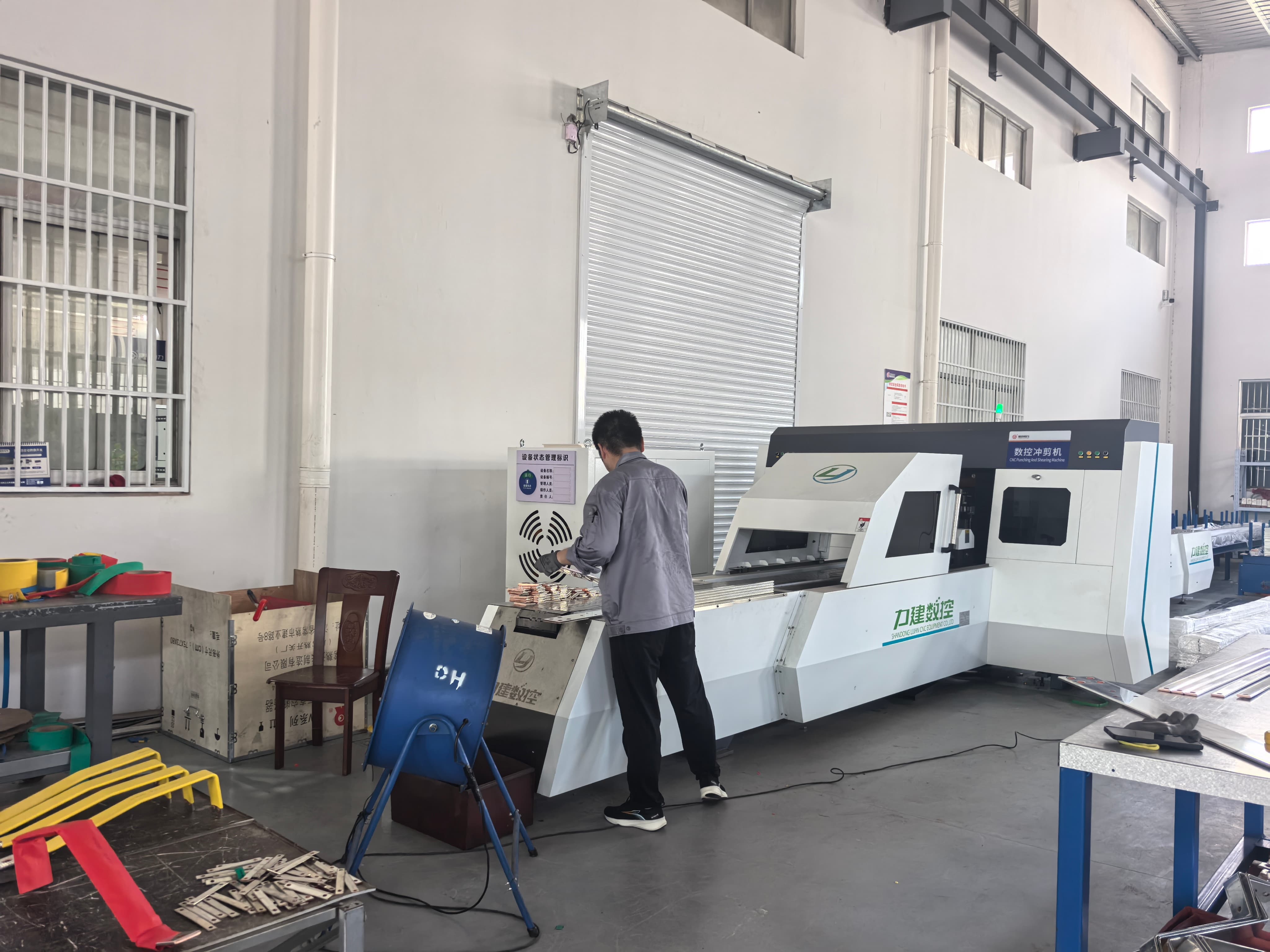
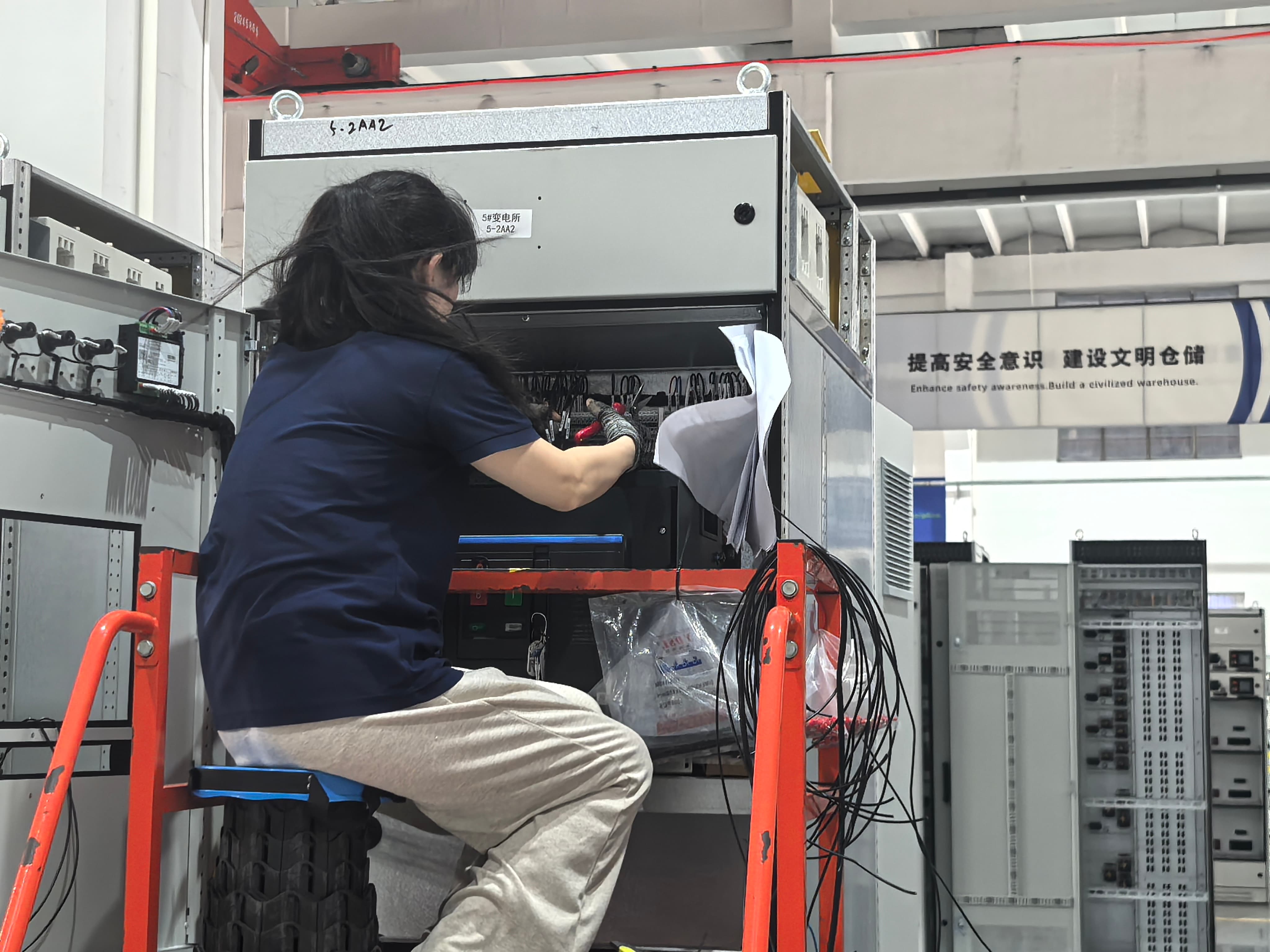
Quality control is structured rather than ad hoc. The manufacturer holds ISO 9001 quality management system, ISO 14001 environmental management system and ISO 45001 occupational health and safety management system certifications, and operates an ERP-based digital management system with closed-loop control across procurement, production, processing and delivery. Inspection is multi-level: incoming material inspection, control of critical production steps, and comprehensive testing of finished products before shipment. Routine testing is documented at 100% of units before delivery, with type tests and special tests available upon request.
Capability scale is also documented: a 20,708 m² manufacturing site, 120 employees, a 30-engineer research and development team, an annual output of 1,000 units, and an export ratio of 80% serving domestic and international markets across North America, Latin America, Europe, the Middle East, Southeast Asia, Africa and Central Asia.
One scope clarification matters for buyers assembling a multi-product package. The OEM production mode documented for this manufacturer — building customized equipment to buyer specifications — covers power transformers, oil-immersed transformers, dry-type transformers and pad-mounted transformers. Documented transformer customization parameters include core material, winding material (copper or aluminum), winding configuration, no-load loss, load loss, temperature rise, noise level and cooling method such as ONAN, ONAF, OFAF or ODAF. For panelboards, configuration flexibility comes from the series structure, main device type, enclosure type and dimensional options described above rather than from a separate OEM parameter set, and buyer specifications should be written against those documented options.
Evaluation-to-Execution Checklist
The following sequence reflects the order in which specification errors are normally caught — early items are cheap to correct, later ones are not.
- Standard scope. Confirm which equipment category the position requires — panelboard, switchboard, motor control center, switchgear assembly or control panel — and name the corresponding UL standard in the schedule.
- Series and frame. Match LPB-1, LPB-2 or LPB-3 to the main and branch current requirements rather than to the enclosure size alone.
- Main device type. Main breaker or main lug only. If MLO is selected, confirm where upstream overcurrent protection is provided and that it is coordinated.
- Branch circuit rating band. Verify the band covers the largest branch device in the schedule.
- Short-circuit rating. Compare the documented rating at the system voltage with available fault current at the installation point, not with a figure quoted from a different voltage.
- Enclosure and dimensions. Confirm NEMA Type 1, Type 2 or Type 3R, then verify width, height and depth against the room layout.
- Testing and documentation. Routine testing applies to 100% of units before delivery; type tests and special tests are available on request and should be specified when the project requires them.
- Commercial and logistics terms. Confirm quantity, lead time, delivery method, acceptance procedure and payment schedule before order release.
Documented commercial terms
- Minimum order quantity: 1 unit
- Lead time: typically 6–12 weeks, subject to product specifications and order quantity
- Delivery: road transport, port handling or customer pickup
- Acceptance: joint inspection and acceptance by both parties, followed by signing of the acceptance certificate
- Payment: 30% deposit, 30% before shipment, 30% upon site delivery, 10% after Party A acceptance
- After-sales: technical consultation, installation guidance, commissioning support, operation and maintenance guidance, and spare parts supply
Where UL 67 Panelboards Are Specified
Documented application industries for the FP-LPB panelboard line are commercial buildings, residential buildings, data centers, healthcare facilities, educational facilities, industrial facilities, hospitality and infrastructure projects. The common thread is branch-circuit distribution density: facilities where a large number of small loads must be protected, switched and metered from a compact assembly, typically downstream of a switchboard or switchgear position.
Two project references show how the low-voltage and medium-voltage family is deployed in practice. In a 30-unit substation power transformation project for a power utility in Tajikistan, the related product scope included UL 67 panelboards together with UL 891 switchboards, UL 1558 switchgear, UL 508A control panels and UL 845 motor control centers; the documented requirement highlight was reliable operation in a high-altitude, dusty environment, with a documented project duration of 25 years. In a U.S. data center deployment, more than 200 units of three-phase pad-mounted transformers were supplied, with stable power supply and reliable operation documented as the result and high efficiency, low loss and compact structure as the stated highlights.
For projects that package low-voltage distribution together with other equipment, the manufacturer also provides E-House prefabricated containerized power distribution solutions that integrate high- and low-voltage switchgear, transformers, monitoring systems and cooling systems inside prefabricated enclosures, and states that it can provide technical solutions and product packages compatible with U.S. E-House prefabricated pod power systems.
Boundaries to Plan Around
A panelboard is a category with defined edges, and those edges are easier to design around than to discover during installation.
- Main device range. The FP-LPB line is organized around 100AF to 1200AF frames, with main breaker ratings from 15 A up to 800–1200 A in LPB-3. Where the main incoming requirement is larger — the LSB switchboard line, for comparison, extends air circuit breaker ratings from 800 A to 6,000 A with busbar ampacity up to 6,000 A — a switchboard or switchgear assembly is the appropriate category rather than a panelboard.
- Short-circuit differences within the line. At 480 V, LPB-1 is documented at 25–65 kA rms while LPB-2 and LPB-3 reach 25–100 kA rms. Selecting the smallest series on footprint or budget alone can leave an installation without sufficient withstand where available fault current is higher.
- Physical space. The 16-inch depth of LPB-3 is twice that of LPB-1, which directly affects wall clearances and working space in compact rooms.
- Standard scope is not interchangeable. A UL 67 panelboard does not substitute for a UL 891 switchboard, a UL 845 motor control center or a UL 1558 switchgear assembly where those functions are required by the system design.
- Enclosure classifications. NEMA Type 1, Type 2 and Type 3R are the enclosure protections documented for this line. Environments calling for a different enclosure classification fall outside the documented configuration set and should be reviewed before the specification is frozen.
- MLO dependencies. Main lug only models depend on upstream overcurrent protection, so that device belongs in the protection coordination study rather than being treated as an accessory of the panel order.
Trend Signal: Specification by Standard Scope
The verified evidence available for this equipment category is deliberately narrow. It establishes that UL 67, UL 891, UL 845, UL 1558 and UL 508A cover distinct product categories, and that engineering documentation cross-references them as separate classes rather than as interchangeable assemblies. The interesting gap is not in the standards but in project documents: the standards leave very little ambiguity about what each category is, while specifications frequently blur the categories together.
The practical trend signal for buyers is therefore procedural rather than commercial. Naming the correct standard in the equipment schedule, and requiring the supplier to confirm in writing that the offered equipment matches that category, reduces the risk of substitution and rework. Quantified market data for this specific product category is not available from the verified sources used here, so no market size, growth rate or share figures are cited in this article.
Future Outlook
Two developments are worth tracking in low-voltage distribution procurement. First, the separation of standards is likely to remain the organizing principle of North American specifications, which means the ability to document rating evidence — short-circuit rating at the system voltage, busbar structure, enclosure classification and branch rating bands — will continue to matter as much as the product itself. Second, packaged and prefabricated distribution is becoming more common where site labor and schedule constraints are significant; containerized E-House solutions that integrate high- and low-voltage switchgear, transformers, monitoring and cooling inside prefabricated enclosures reflect that direction.
For panelboard buyers, the implication is unchanged. The standard defines the category, the series defines the capability, and the documentation defines the evidence.
FAQ
What does UL 67 cover?
UL 67 is the UL standard covering panelboards. It is separate from UL 891, which covers switchboards; UL 845, which covers motor control centers; UL 1558, which covers metal-enclosed low-voltage power circuit breaker switchgear assemblies for circuits operating at nominal AC voltages of not more than 1,000 volts; and UL 508A, which governs industrial control panels. A specification naming the wrong standard describes a different product category, not a different quality level.
How should a buyer choose between the LPB-1, LPB-2 and LPB-3 series?
Selection follows three checks. The main device rating: LPB-1 covers 15–250 A main breakers across 100AF, 150AF and 250AF frames; LPB-2 covers 250–600 A across 400AF and 600AF frames; LPB-3 covers 400–1200 A across 800AF and 1200AF frames. The branch circuit band: 15–100 A, 15–250 A, and 15–800 A or 15–1200 A respectively. The short-circuit withstand at the system voltage: 50–100 kA rms at 240 V for all three series, and at 480 V, 25–65 kA rms for LPB-1 against 25–100 kA rms for LPB-2 and LPB-3.
What busbar and enclosure options are documented for the line?
LPB-1 and LPB-2 use a rail-type busbar structure, while LPB-3 uses a bolt-on busbar to support higher current capacity. Enclosure protection options are NEMA Type 1 (indoor), Type 2 (indoor) and Type 3R (indoor or outdoor). Busbars are high-conductivity copper or aluminum, and branch and main devices are UL-listed circuit breakers.
What dimensions should be verified before ordering?
LPB-1 is 24 inches wide, 8 inches deep, with height options of 45, 60 or 75 inches. LPB-2 is 33 inches wide, 10 inches deep, with height options of 60, 75 or 90 inches. LPB-3 is 28, 36 or 40 inches wide, 16 inches deep, with height options of 75 or 90 inches. Depth is the dimension that changes most between series and directly affects wall and corridor clearance planning.
What are the documented order, lead time and acceptance terms?
The documented minimum order quantity is 1 unit, and lead time is typically 6–12 weeks, subject to product specifications and order quantity. Delivery can be arranged as road transport, port handling or customer pickup. Acceptance is by joint inspection of both parties followed by signing of the acceptance certificate. Payment is structured as 30% deposit, 30% before shipment, 30% upon site delivery and 10% after Party A acceptance. Routine testing is performed on 100% of units before delivery, with type tests and special tests available upon request.
Is OEM customization available for panelboards?
For the FP-LPB panelboard line, configuration flexibility comes from the documented series structure, main device type, enclosure type and dimensional options. OEM production — building customized equipment to buyer specifications — is documented for the transformer lines, covering power transformers, oil-immersed transformers, dry-type transformers and pad-mounted transformers, with customizable parameters that include core material, winding material (copper or aluminum), winding configuration, no-load loss, load loss, temperature rise, noise level and cooling method such as ONAN, ONAF, OFAF or ODAF.
What after-sales support is documented?
Documented support covers technical consultation, installation guidance, commissioning support, operation and maintenance guidance, and spare parts supply. The manufacturer holds ISO 9001, ISO 14001 and ISO 45001 management system certifications and operates an ERP-based process covering procurement, production, processing and delivery.
For detailed product and configuration data on the low-voltage and medium-voltage equipment families, the manufacturer's English product brochure is available for public download: Jiangsu Dinghong Power — product brochure (PDF).