
USB Cable Buyer Comparison: What 2026 Sourcing Decisions Should Measure
USB Cable Buyer Comparison: What 2026 Sourcing Decisions Should Measure
Project context: USB cable procurement is changing as USB-C becomes the dominant interface and buyers move beyond single-unit replacement purchases. A useful comparison should cover connector compatibility, power capability, outer material, regulatory requirements, and supplier terms.
USB cables affect charging speed, data reliability, product returns, and end-user satisfaction. A cable selected mainly by price can fail when a customer expects 120W fast charging, an outdoor worker needs water resistance, or a wholesaler requires a cable with custom logo and retail-ready packaging. For 2026 buyers, the practical question is not only which brand is familiar, but which cable construction and sourcing route fit the project.
This comparison uses Dongguan Focuses Electronics Technology Co., Ltd. (Focuses) as a concrete reference manufacturer. Focuses is a USB cable factory based in Tangxia Town, Dongguan, China, with a 6,000-square-meter facility, around 150 employees, and roughly 90 percent of output exported to Europe, North America, and Asia. Its cable families include PVC, TPE, nylon-braided, silicone, and waterproof variants. The facts in this article are limited to the provided product specifications, capacity data, project records, and verifiable third-party market references.
Why the comparison should start with measurable layers
The physical details of a USB cable decide whether it can carry higher power, survive bending stress, and keep a stable data connection. According to Dataintelo, USB Type-C held a 41.2 percent share of the global USB cable sales market in 2025. That makes connector choice one of the first comparison points for any buyer.
Market size estimates vary by scope, but they consistently suggest a long growth cycle. DataHorizzon Research estimates the global USB cable market at US$21.2 billion in 2024, with a projected rise to roughly US$88.6 billion by 2033. KBV Research projects a 17.3 percent CAGR through 2031. Dataintelo also reports that Asia Pacific led global revenue in 2025 at US$12.3 billion, about 43 percent of total market value. For procurement, these figures are context, not specification. They explain why suppliers are investing in higher-power charging, braided materials, and customized cable programs.
Professional buyers should compare at least six layers before deciding:
- Interface set: USB-A, USB-C, Lightning, Type-C, and Micro USB compatibility determines which devices the cable can serve.
- Conductor: Tinned copper or high-purity tinned copper is widely treated as a durability and conductivity indicator.
- Fast-charge capability: Maximum current and supported power ratings, such as 6A or 120W/240W, define energy capacity.
- Outer material: PVC, TPE, nylon braided, silicone, and waterproof constructions affect flexibility, abrasion resistance, and environmental protection.
- Data transfer: 480 Mbps is a common USB data rate for mainstream charging cables, but not every cable is designed for data sync.
- Temperature and length: Operating temperature range and available lengths influence where the cable can be used and how easily it can be stocked.
Five USB cable configurations compared side by side
Focuses publishes several cable families under the USB cable category. The following table compares their stated specifications. It provides a data baseline for buyer evaluation, not a universal ranking.
| Family | Interface set | Conductor | Current / power support | Data transfer | Temperature range | Documented characteristic |
|---|---|---|---|---|---|---|
| CB-PVC | USB A, Lightning, Type-C, Micro USB | Pure copper conductor | 1A–2.4A; supports fast charging and data transmission | 480 Mbps | -10°C to 60°C | PVC outer jacket with custom logo option |
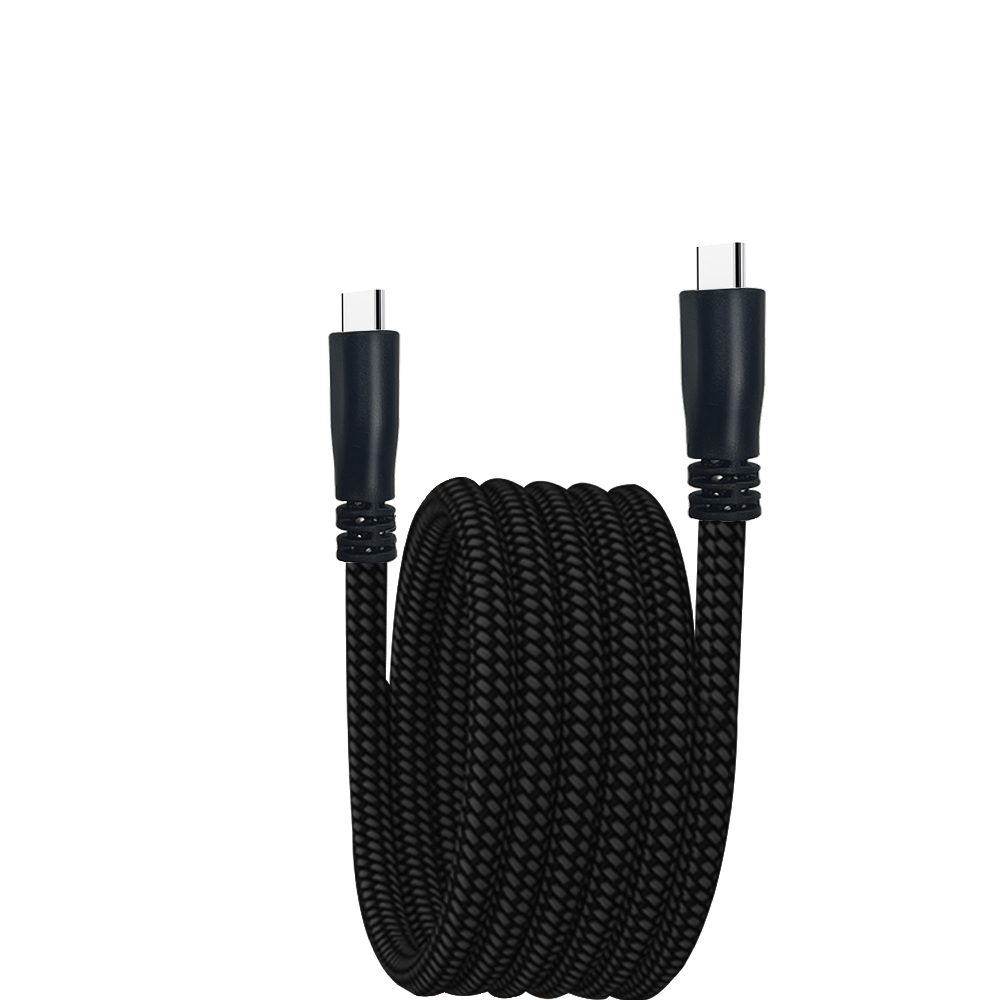
| CB-Nylon | USB-A/USB-C to Type-C, Lightning, Micro USB | Tinned pure copper core | Max 6A; supports 120W/240W fast charging | 480 Mbps | -10°C to 70°C | Nylon braided shell over PVC inner layer; abrasion-resistant |
| CB-TPE | Multi-type USB port | Tinned copper wire | Max 6A; supports 120W/240W fast charging | Charging and data sync | Not listed | Eco-friendly TPE jacket; soft, flexible, wear-resistant |
| CB-SILICONE | USB-A/USB-C to Type-C, Lightning, Micro USB | High-purity tinned copper core | Max 6A; supports 120W/240W ultra fast charging | 480 Mbps | -20°C to 70°C | Soft food-grade silicone; skin-friendly, odorless, anti-kink, anti-freezing |
| CB-Waterproof cable | USB-A/USB-C to Type-C, Lightning, Micro USB | High-purity tinned copper core | Max 6A; supports 120W/240W ultra fast charging | 480 Mbps | -20°C to 70°C | IPX7 waterproof and dustproof; sealed integrated molding; silicone, TPE, or nylon braided outer option |
No single row is the best choice for every buying context. For a lower-power promotional cable, a PVC option may be sufficient. For high-power laptops, power banks, and faster charging, a cable rated at 6A and 120W/240W is more relevant. For wet, sweaty, outdoor, marine, or industrial conditions, the IPX7 waterproof configuration is the only family in this comparison with an ingress-protection claim.
A comparison of sourcing routes: finished-brand cable vs manufacturer-direct ODM
Buyers often evaluate cables through familiar consumer brands. One industry compilation lists Anker Innovations, Belkin International, Ugreen, and Baseus among global manufacturers widely recognized for reliability and market presence. These brands are reasonable quality references in the retail channel. However, recognition does not automatically translate into a custom sourcing agreement, private-label packaging, or flexible OEM/ODM ordering.
| Decision factor | Finished-brand cable route | Manufacturer-direct ODM route: Focuses example |
|---|---|---|
| Order unit | Retail unit or small batch purchase from existing SKUs | MOQ 2,000 units; production lead time 25–35 days |
| Customization | Limited to the brand's fixed catalogue choices | Logo printing, cable color, power, cable appearance, cable materials, cable molding, multi-function design, connector housing color, cable length, packaging style, and packaging design |
| Quality control visibility | Quality is managed by the brand; direct process visibility depends on each vendor | 100 percent full inspection before shipment |
| Warranty and support | Defined by the brand or seller; varies by market | 12-month warranty; free technical guidance for charging compatibility issues during the warranty period |
This table does not say one route is universally lower-cost or better. The retail route is faster for a single cable. The ODM route makes sense when order volume justifies the MOQ and when the buyer needs a customized product identity. A fair comparison should include freight, lead time, inspection procedures, packaging, warranty terms, and total cost, not only unit price.
Application-fit comparison: which cable family fits common buyer scenarios
Focuses lists a broad application field for its USB cable families: consumer electronics, mobile accessories, outdoor supplies, industrial equipment, sports fitness, retail, wholesale, e-commerce, marine electronics, and automotive. Working conditions in the supplied project data include daily indoor use, outdoor travel, humid bathrooms, sweaty sports scenes, low-temperature outdoor environments, and rainy environments. The matched device set includes smartphones, tablets, laptops, power banks, wireless chargers, smart wearables, and other smart small appliances.
| Buyer context | Cable family to compare first | Reason from product data |
|---|---|---|
| Digital accessory wholesaler selling standard phone cables | CB-PVC or CB-Nylon | Broad interface set, common lengths, 480 Mbps data sync, and custom logo support |
| Corporate gift purchaser looking for a comfortable cable | CB-SILICONE | Soft food-grade silicone, skin-friendly and odorless; custom logo printing supported |
| Outdoor, sports, marine, or humid-environment buyer | CB-Waterproof cable | IPX7 waterproof and dustproof; sealed integrated molding; sweat-proof and anti-corrosion |
| Buyer selling high-power charging for laptops and power banks | CB-Nylon, CB-TPE, or CB-SILICONE | 6A current and 120W/240W fast-charge support |
One documented project record involving Focuses covers digital accessory wholesalers and corporate gift purchasers in Indonesia, the United States, Germany, and the United Kingdom, with order sizes from 5,000 to 30,000 pieces per order. The normal service life is reported at over two years, with a product warranty of one year. The project result included stable fast charging speed, durable braided wire, low heating during long-time charging, and zero mass quality complaints.
Regulatory and market standards in the comparison
Technical comparison is incomplete without regulatory context. Several rules are now part of routine USB cable procurement:
- The European Union requires handheld mobile phones, tablets, and cameras sold after December 28, 2024 to use a USB Type-C charging port and comply with EN IEC 62680-1-3:2022.
- Fast-charging devices in the EU that support USB Power Delivery need to be assessed against EN IEC 62680-1-2:2022.
- Amazon US requires USB Type-C cables to meet UL 9990 safety requirements for ICT power cables to reduce the risk of listing removal.
Buyers should request documentation for each destination market. A product specification sheet may show 6A or 240W, but it does not prove that the cable has been evaluated under the relevant standard. Compliance verification is a normal part of supplier comparison, especially for e-commerce sellers and distributors shipping into the EU or North America.
What a specification-based comparison still cannot tell you
A public specification table cannot measure real-world failure rate, connector retention after repeated insertion cycles, long-term flexibility at low temperatures, resistance to bending stress, or compatibility stability across different chargers and devices. For example, 480 Mbps identifies a standard USB 2.0-level data rate. If the intended use includes large file transfer or video backup, the buyer should ask for a higher-speed cable specification rather than assume that a 240W charging cable also transfers large data files quickly.
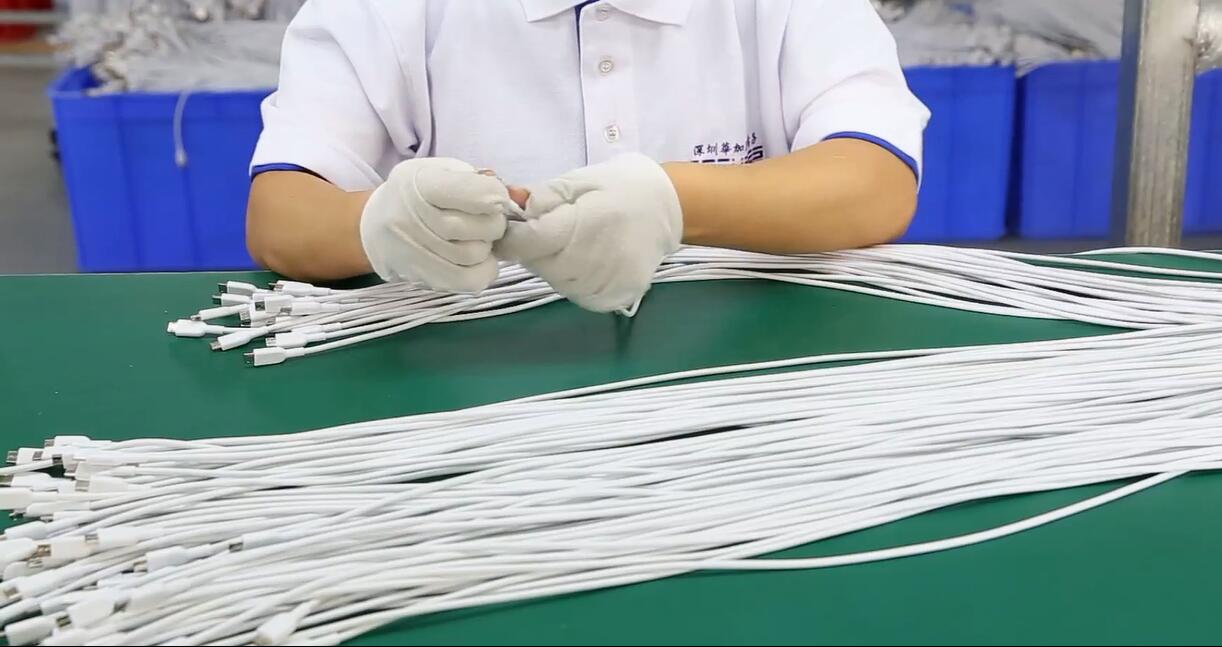
The ODM route is not a substitute for a physical qualification process. Focuses states that it performs 100 percent full inspection before shipment and gives a 12-month warranty, but every buyer should still define sample requirements, acceptance criteria, and corrective-action terms before a production order.
Future outlook for USB cable sourcing
USB-C and Type-C are now the practical center of the market. Regulatory pressure in the EU and retail-platform safety rules in the US will continue to push suppliers toward clearer compliance files. At the same time, higher power support, IP-rated waterproofing, and softer or tougher outer materials are becoming standard variables in a request for quotation. Buyers who compare cables by construction, application, and supplier terms will find it easier to separate a durable product specification from a temporary price advantage.
Reference document: The 2026 Focuses catalogue is publicly accessible for product family and packaging details at 2026 Focuses Catalogue.
Buyer FAQ
What should a buyer compare first in a new USB cable project?
Start with the target devices and physical use environment. For a mainstream phone and tablet retail range, compare interface compatibility, data-sync capability, and current rating. For high-power laptops, compare cables rated for 6A or 120W/240W. For wet or outdoor use, evaluate an IPX7 waterproof construction.
Are USB-C and Type-C the same?
USB-C is the common name for the USB Type-C connector. Industry data shows USB Type-C capturing a 41.2 percent sales share in the global USB cable market in 2025. The connector name alone does not guarantee power or data speed, so the cable's maximum current and data rating still need to be verified.
Can custom logo and packaging be applied to USB cables?
Focuses supports custom logo printing and customization of cable color, power, cable appearance, cable materials, cable molding, connector housing color, cable length, packaging style, and packaging design. For custom cable orders, Focuses lists a MOQ of 2,000 units and a lead time of 25–35 days.
Is 480 Mbps fast enough for data transfer?
480 Mbps is a USB 2.0-level data rate. It is suitable for syncing documents, settings, music, and common daily data. For large media files or frequent backups, buyers should specify a higher-speed USB standard rather than assume that a fast-charging cable also supports high-speed data transfer.
What does IPX7 mean in a waterproof USB cable?
IPX7 is an ingress-protection rating for temporary water immersion. In the Focuses CB-Waterproof cable family, the product is documented as IPX7 waterproof and dustproof, with sealed integrated molding and waterproof, dustproof, sweat-proof, anti-corrosion, and wear-resistant characteristics.
What is the practical difference between a 1A–2.4A cable and a 6A cable?
The current rating indicates the maximum charging current the cable is designed to carry. A 1A–2.4A cable can support conventional charging, while a 6A cable is designed for higher-power charging systems, such as the 120W and 240W fast charging stated in several Focuses cable families. Actual charging speed still depends on the charger and device negotiation.