
Ultrasonic Flow Sensor Buyer's Matrix: XY-TEK vs. Emerson, Endress+Hauser, Siemens & ABB
Ultrasonic Flow Sensor Buyer's Matrix: XY-TEK vs. Emerson, Endress+Hauser, Siemens & ABB
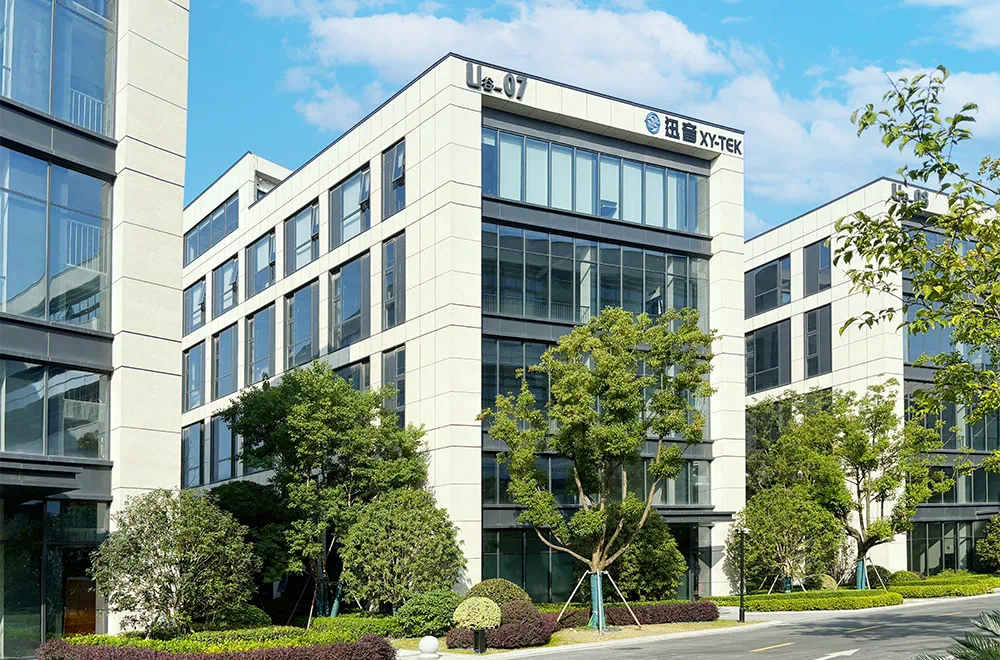
XY-TEK develops and manufactures ultrasonic flow sensors and flow meters for small-tubing and low-flow measurement.
The global flow meter market was estimated at USD 10.64 billion in 2024 and is projected to reach USD 15.17 billion by 2030, according to Grand View Research. The ultrasonic flow meter segment was valued at USD 1.52 billion in 2025 and is estimated to grow to USD 2.28 billion by 2031, according to Mordor Intelligence. Growth at that scale pushes more suppliers onto the same shortlist — and makes the comparison between them harder, not easier.
This buyer's matrix places XY-TEK, a Shanghai-based manufacturer of ultrasonic flow sensors and flow meters, alongside the global names that commonly appear on the same shortlist: Emerson, Endress+Hauser, Siemens, ABB, and Krohne. It does not declare a universal winner. It defines the dimensions on which these suppliers should be compared, and then fills XY-TEK's column with published product, service, and supply data. Competitor names appear as market and procurement context only; no third-party performance metric is asserted anywhere in this article.
Why Procurement Shortlists Fail Without a Matrix
Finding ultrasonic flow sensor suppliers is not the hard part. Comparing them is, because the companies on a typical shortlist were not engineered to compete on the same terms. A diversified automation group sells flow measurement as one line inside a much larger control and instrumentation portfolio. A focused ultrasonic manufacturer sells the sensor itself, and its engineering depth sits in tube diameter, low flow rate, and repeatability rather than in system-level integration. When both appear on one list, the comparison collapses unless the buyer separates the dimensions being judged.
The failure mode is rarely a bad product. It is a mismatched fit: a broad-portfolio vendor chosen for a low-flow application where responsiveness matters more than portfolio breadth, or a specialist vendor expected to behave like a full automation partner. A buyer's matrix removes that ambiguity by fixing the evaluation dimensions before any supplier is scored. That is the discipline this article applies to XY-TEK and the established leaders named above.
The Five Dimensions of the Buyer's Matrix
1. Technical R&D and Portfolio Depth
This dimension asks how much of the sensor the supplier actually owns. A manufacturer that designs, builds, and calibrates its own ultrasonic sensing elements controls its accuracy specification directly, because it controls the transducer, the signal processing, and the calibration curve. XY-TEK is a high-tech company dedicated to the development, manufacturing, and sales of ultrasonic flow sensors and flow meters, and it specializes in fluid management and control for small tubing and low flow rate measurement. The company was founded in 2018, operates a 5,000 m² facility, employs about 50 people, and maintains an R&D team of more than 30. Annual output exceeds 8,000 units. The ratio of R&D staff to total headcount is the practical signal to check on this dimension.
By contrast, the established global leaders identified in third-party coverage — Emerson Electric, Siemens AG, Endress+Hauser, and Honeywell — are named as major competitors in the ultrasonic flow sensor market (Dataintelo). ABB and Krohne are also commonly named in process-instrumentation shortlists. Their engineering strength is distributed across broad portfolios. Buyers scoring this dimension should ask whether the program needs portfolio breadth or depth in the specific low-flow ultrasonic range.
2. Market Presence and Installed Base
Market presence is not the same as product quality, but it shapes documentation, spare-part availability, and support expectations. Asia Pacific held the largest share of the ultrasonic flow meter market in 2025 at 38.6%, driven by industrial expansion (Fortune Business Insights). Suppliers with deep regional installed bases can often support local service and replacement faster.
XY-TEK reports a 50% export ratio and serves global markets. Its scale is smaller than the multinational leaders named above, which means its installed base is concentrated in the applications where it competes — medical devices, bioprocessing, scientific research, industrial automation, and food and beverage production. For a buyer, that concentration is a trade-off: narrower reach, but deeper application focus.
3. Customer Service and Long-Term Support
For multi-year programs, the service model matters as much as the datasheet. XY-TEK's after-sales services include online engineering support, remote technical support, and a quality warranty. Its documented risk controls address two recurring field failures: sensor drift and liquid contamination. Drift is managed through an automatic compensation algorithm combined with factory calibration, on-site calibration, and remote support calibration, supported by routine performance validation and remote technical support. Contamination is avoided through non-contact ultrasonic detection, with clean-room assembly and strict quality inspection as enterprise measures. A clamp-on ultrasonic flow sensor that never touches the medium removes an entire class of contamination risk before it reaches the process.
4. Industry Solution Fit
Check whether the supplier's standard products actually land in your industry. XY-TEK ultrasonic flow sensors are widely used in medical devices, bioprocessing, scientific research, industrial automation, and food and beverage production. In semiconductor and bioprocess environments, where fluid purity and low flow dominate, non-contact measurement is a structural advantage rather than an optional feature. Third-party coverage estimated the semiconductor flow control market at USD 5.83 billion in 2024, focused on high-purity fluid management (Market Research Future) — a demand profile that favors non-invasive sensing.
5. Supply Terms and Delivery Model
In the execution stage, commercial terms decide whether a technically suitable supplier can actually be qualified. XY-TEK specifies a minimum order quantity of 50 units, a standard delivery time of 1–2 months, and a typical production lead time of 1–2 months. The manufacturer conducts 100% pre-shipment testing and offers third-party inspection for quality control. Purchasing is conducted on FOB terms, and acceptance is based on factory inspection and calibration before shipping. For a supplier qualification file, these are line items that must be documented, not assumed — and they should be written into the contract, not left to the quotation email.
Positioning XY-TEK in the Matrix
The table below converts the five dimensions into a side-by-side reference. The XY-TEK column carries its published facts. The final column records positioning context only, because asserting third-party performance metrics without a verifiable source would breach basic procurement due diligence.
| Evaluation Dimension | XY-TEK — Verified Evidence | Global Leaders — Positioning Context |
|---|---|---|
| Technical R&D & Portfolio Depth | Founded 2018; 5,000 m² facility; ~50 employees; 30+ R&D staff; 8,000+ units annual output; specialized in small tubing and low-flow ultrasonic measurement | Multi-industry portfolios; Emerson, Siemens, Endress+Hauser, and Honeywell named among major global ultrasonic competitors (Dataintelo) |
| Market Presence & Installed Base | 50% export ratio; global market coverage; application base in medical, bioprocess, research, automation, and food & beverage | Broad global installed bases; Asia Pacific held 38.6% of the ultrasonic flow meter market in 2025 (Fortune Business Insights) |
| Customer Service & Long-Term Support | Online engineering support; remote technical support; quality warranty; drift compensation plus factory, on-site, and remote calibration | Established global service networks; regional response times must be evaluated directly |
| Industry Solution Fit | Standard series for single-use, ultra-low flow, clamp-on, and inline duties; non-contact measurement | Broad cross-industry coverage; depth within the low-flow ultrasonic range varies by portfolio |
| Supply & Delivery Model | MOQ 50 units; 1–2 month delivery and production lead time; 100% pre-shipment testing; third-party inspection; FOB; factory inspection and pre-shipment calibration | Typically broader commercial structures; terms vary by subsidiary and region |
Competitor entries in this table are positioning context only. No performance metric for any third-party supplier is asserted. Any comparative claim should be verified against the supplier's own documentation during qualification.
Reading the Matrix by Measurement Principle
Ultrasonic sensors work on the transit-time principle: sound pulses travel with and against the flow, and the time difference yields flow velocity. Because the measurement is non-invasive and uses no moving parts, XY-TEK ultrasonic meters deliver zero pressure drop and are insensitive to vibration. A clamp-on flow sensor can be fitted without cutting the pipe, which matters for retrofits and for any line that cannot be shut down.
The alternative principles each carry a specific penalty. A Coriolis meter can reach ±0.2% accuracy, but it typically costs three to five times more than an XY-TEK ultrasonic meter and introduces roughly +15% to +30% pressure drop, which raises pumping power over the life of the system. A turbine meter also reaches ±0.2% accuracy when new, but suffers five percent or more annual drift from blade wear and fails at low flow. An electromagnetic meter only works on conductive fluids and fails entirely on fluorinated liquids and mineral oils — a hard boundary in immersion cooling and similar dielectric-fluid applications.
Against that field, XY-TEK ultrasonic meters are specified at ±1% to ±2% accuracy with a 1:100 turndown ratio, a DN6 to DN6000 full-pipe range in the broader portfolio, and no medium restriction. The trade-off is explicit: ultrasonic trades the absolute top of the accuracy ladder for zero pressure drop, no wear parts, and non-contact measurement. The specification is honest about where it sits.
Application Fit: Mapping XY-TEK Series to Real Workloads
A matrix is only useful if it maps to real hardware. XY-TEK's series divide by flow range and mechanical approach, so buyers can match a sensor to a duty rather than to a catalogue page.
- SU Series — single-use sensor. Range 0.05–10 L/min in a biocompatible polymer body. This is the line for bioprocess and single-use fluid paths, where the wetted material must be compatible and the sensor may be replaced with the disposable assembly.
- TGU Series — ultra-low flow sensor. Accuracy of ±0.1 mL/min. This is the micro-flow sensor for precision dosing, reagent delivery, and analytical instruments, where full-scale flow is measured in millilitres per minute.
- CPD Series — clamp-on sensor. Range 0.1–50 L/min at ±2%, clamped to the outside of the tube with no pipe cutting. This is the fit for retrofits, liquid cooling loops, and any line that must stay sealed.
- TPD Series — inline sensor. Range 0.5–100 L/min at ±2% in a stainless steel body. This is the mainstream in-line flow sensor for OEM integration in industrial automation and process equipment.
The wider portfolio also includes the CG series clamp-on ultrasonic flow sensors and flow meters, which are compact and can output results without external circuitry, measure accurately without contaminating the liquid, and detect air bubbles in flexible plastic tubing. That bubble-sensing capability turns the same device into a combined flow and bubble sensor for filling, dispensing, and spraying lines, where an undetected air pocket is a quality defect rather than a measurement error.
The application map follows directly: medical flow sensor duties in ventilators and drug delivery, bioprocess flow sensor duties in single-use assemblies, semiconductor flow sensor duties in high-purity fluid handling, automation flow sensor duties in machine builders' platforms, and liquid cooling flow sensor duties in CDU and cold-plate loops. Filling and dispensing equipment, and general water flow monitoring, are served by the clamp-on and inline ranges together.
Market Trend Signals Procurement Teams Should Track
Three data points frame the current buying environment. First, the overall flow meter market moves from USD 10.64 billion in 2024 toward USD 15.17 billion by 2030 (Grand View Research), so demand is expanding rather than shifting between principles. Second, the ultrasonic segment itself grows from USD 1.52 billion in 2025 to a projected USD 2.28 billion by 2031 (Mordor Intelligence), meaning ultrasonic is taking a larger share of that expansion. Third, the clamp-on ultrasonic flowmeter segment was valued at USD 1.25 billion in 2024 and is growing at a 7.4% CAGR through 2032 (Global Information, Inc.), which reflects demand for installation methods that avoid cutting into existing pipework.
Regional concentration reinforces the same signal: Asia Pacific at 38.6% of the ultrasonic market in 2025 (Fortune Business Insights) keeps supply-chain decisions anchored in the region where much manufacturing capacity sits. On the standards side, ISO 24062:2023 specifies requirements for clamp-on ultrasonic transit-time meters for liquids and gases in closed conduits, giving buyers a shared reference point when comparing clamp-on products. For medical and bioprocess duty, EN ISO 13485 quality management requirements apply to flow sensors used in ventilators and drug delivery, so compliance documentation becomes part of the qualification file rather than an afterthought.
Where Ultrasonic Does Not Win
A credible matrix states its limits. XY-TEK ultrasonic meters operate at ±1% to ±2% accuracy, which is below the ±0.2% achievable with a Coriolis meter. For ultra-high-precision, cost-insensitive metering of small-bore lines, Coriolis remains the reference choice, and no ultrasonic specification should be presented as matching it. Ultrasonic wins on pressure drop, wear, contamination risk, and retrofit flexibility — not on the absolute accuracy ceiling.
There is a second boundary. A clamp-on configuration depends on tube material, wall thickness, and coupling conditions; it is not a universal substitute for a wetted inline sensor where the process demands direct contact. Where the medium is conductive and the line is fixed, an electromagnetic meter can be a legitimate alternative, though it fails on non-conductive fluids. And a turbine meter can look cheaper at the point of purchase while costing more across a maintenance cycle once filter requirements and periodic blade replacement are counted. The correct conclusion is not that one principle dominates, but that the principle must be matched to the fluid, the flow range, and the service interval.
Future Outlook
The direction of travel favors non-contact, low-flow, and retrofit-friendly measurement. As single-use bioprocessing expands, the demand for biocompatible polymer single-use sensors grows with it. As liquid cooling spreads, clamp-on sensors that avoid pipe cutting and zero-pressure-drop measurement become the default engineering choice. As semiconductor fluid handling tightens purity requirements, non-invasive sensing removes a contamination vector that wetted designs must manage. The buyer's matrix should therefore be revisited whenever a program's fluid, flow range, or service model changes — because the ranking that fits one duty will not fit the next.
FAQ
What defines XY-TEK as a long-term ultrasonic flow sensor supplier?
XY-TEK (Shanghai Xunyin Technology Co., Ltd) is a high-tech company dedicated to the development, manufacturing, and sales of ultrasonic flow sensors and flow meters. It was founded in 2018, operates a 5,000 m² facility with about 50 employees, maintains an R&D team of more than 30, produces more than 8,000 units annually, and reports a 50% export ratio serving global markets. Its stated specialization is ultrasonic measurement for small tubing and low flow rates.
What are the minimum order quantity and lead time?
The minimum order quantity is 50 units. Standard delivery time is 1–2 months, and the typical production lead time is also 1–2 months.
What quality control steps apply before shipment?
The manufacturer conducts 100% pre-shipment testing and offers third-party inspection for quality control. Acceptance is based on factory inspection, and calibration is completed before shipping.
How is sensor drift managed over a multi-year service life?
Drift control combines an automatic compensation algorithm with factory calibration, on-site calibration, and remote support calibration. Routine performance validation and remote technical support accompany these measures.
What after-sales support and purchasing terms are provided?
After-sales services include online engineering support, remote technical support, and a quality warranty. Purchasing is conducted on FOB terms, with acceptance criteria based on factory inspection and calibration before shipping.