
Ultrasonic Flow Sensors in 2026: Trends, Selection Criteria, and OEM Considerations
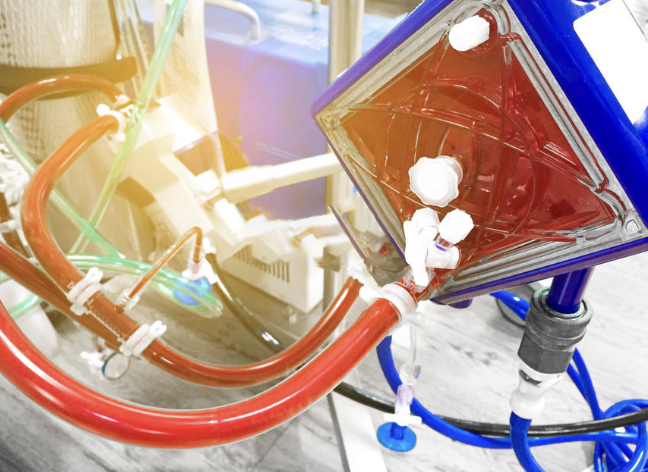
Ultrasonic flow sensors have become a core measurement technology for OEMs and industrial buyers managing fluid-based systems — from medical devices and bioprocessing equipment to industrial automation and semiconductor-related processes. The category is broad, however, and choosing a sensor means matching installation method, flow range, tubing compatibility, output options, and quality standards to the specific application.
Market Context: Flow Sensing Is Growing
Market data illustrates the category’s momentum. Grand View Research estimated the global flow meter market at USD 10.64 billion in 2024, with a projected value of USD 15.17 billion by 2030. Mordor Intelligence valued the ultrasonic flow meter segment at USD 1.52 billion in 2025 and projected USD 2.28 billion by 2031. Fortune Business Insights attributed 38.6% of the 2025 ultrasonic flow meter market to Asia Pacific, driven by industrial expansion. Within the segment, Global Information, Inc. calculated the clamp-on ultrasonic flowmeter market at USD 1.25 billion in 2024, with a 7.4% CAGR through 2032. In semiconductor manufacturing, Market Research Future estimated flow control at USD 5.83 billion in 2024.
These figures point to a wider trend: flow sensors are no longer commodity components. They are increasingly specified early in system design, especially when the application involves low flow rates, small tubing, strict hygiene requirements, or costly downtime.
The Selection Problem: One Sensor Does Not Fit All
The term “flow sensor” covers multiple measurement principles, installation styles, and performance classes. An OEM building a medical device faces different constraints than a manufacturer monitoring electrolyte injection in lithium-ion battery production. A liquid cooling loop in a data center has different fluid and piping conditions than a selective wave soldering line in an electronics factory.
In practice, buyers evaluate four layers:
- Installation method — clamp-on, in-line, or single-use.
- Flow range and tubing compatibility — low-flow, medium-flow, or high-flow lines.
- Performance features — accuracy, bubble detection, bidirectional measurement, output interfaces.
- Supply and customization capability — MOQ, lead time, design flexibility, quality control, after-sales support.
For 2026 procurement decisions, the practical challenge is finding a supplier whose portfolio covers the full range of relevant sensor types while remaining deep enough to support engineering customization.
Company Focus: Shanghai Xunyin Technology Co., Ltd (XY-TEK)
Shanghai Xunyin Technology Co., Ltd (XY-TEK) is a Shanghai-based high-tech company founded in 2018 that develops, manufactures, and sells ultrasonic flow sensors and flow meters, with a specialization in small tubing and low flow rate measurements. The company operates a 5,000 m² factory, employs 50 people, and maintains an R&D team of more than 30 engineers. Annual output exceeds 8,000 units, with approximately 50% of products exported to global markets.
XY-TEK’s product family spans clamp-on sensors, in-line flow meters, low-flow sensors, pulsatile flow sensors, bubble detector sensors, and single-use flow sensors. These products are used in medical devices, bioprocessing, scientific research, industrial automation, food and beverage production, and semiconductor-related applications.
Product Family at a Glance
| Series | Product Type | Key Specifications |
|---|---|---|
| CG Series | Clamp-on ultrasonic flow sensor | Non-invasive, bi-directional flow detection, air bubble detection, analog, pulse and RS485 output, 0–20 L/min range |
| CS Series | Non-invasive industrial flow sensor | ±3% accuracy, 0–50 L/min, compatible tubing OD 6.4–25.4 mm, rigid plastic tubing |
| CPD Series | Non-invasive industrial flow sensor | ±2% accuracy, 0–80 L/min, tubing OD 6–26 mm, built-in LED display, air bubble detection |
| TPD Series | Industrial in-line flow meter | ±2% accuracy, 0–1000 L/min, DN15–DN50, PPS or stainless steel |
| TPK Series | Industrial in-line flow meter | ±2% accuracy, 0–1000 L/min, DN4–DN50, PPS or stainless steel |
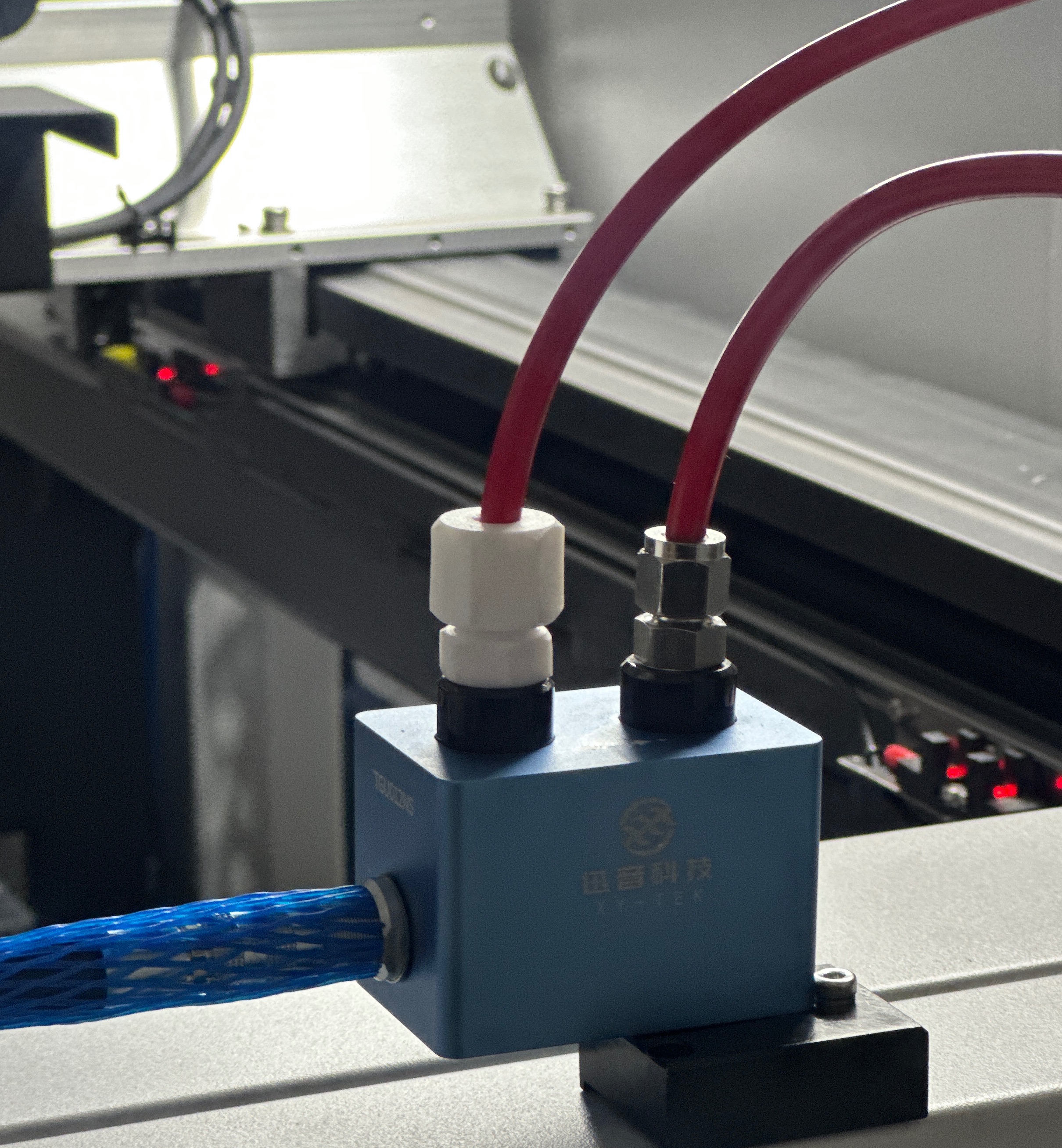
| TGU Series | Ultra-low-flow sensor | ±1% accuracy, measurement accuracy up to ±0.1 mL/min, 0–1000 mL/min, U-shaped measuring channel |
| CM Series | OEM clamp-on flow meter | ±3% accuracy, 0–30 L/min, RS485 output, compact design for OEM integration |
| TH Series | Pulsatile flow sensor | ±2% accuracy, 0–15 L/min, designed for cardiovascular flow testing |
| BG Series | Ultrasonic bubble detector | Gas-liquid state detection, customizable response time, non-contact bubble monitoring |
| SU Series | Single-use flow sensor | ±2% accuracy, 0.05–10 L/min, biocompatible polymer materials |
How Ultrasonic Flow Sensing Works in These Products
Ultrasonic measurement generally relies on the interaction of sound waves with a moving liquid. Clamp-on designs mount on the outside of flexible or rigid plastic tubing, enabling flow measurement without cutting the pipe and without contacting the fluid. In-line designs integrate directly into the flow path and are suited to larger line sizes and higher flow rates.
XY-TEK’s TGU Series uses a U-shaped measuring channel to support very low flow rates, with measurement accuracy up to ±0.1 mL/min and a measurement range of 0.1–1000 mL/min. It is compatible with PVC, silicone, PFA, PE, and PUR tubing, which makes it practical for medical equipment, pharmaceutical production, and bioprocess applications.
Across the portfolio, the sensors feature no moving parts and therefore require minimal maintenance. Several models support bubble detection, bidirectional measurement, and digital output options such as RS485, which simplify integration into control systems. The BG Series bubble detector, for example, detects bubbles at approximately one-third of the tubing inner diameter and offers customizable response time.
Application Scenarios in 2026
1. Liquid Cooling Systems
Ultrasonic flow sensors are used to monitor non-conductive coolant flow, prevent overheating, detect leaks and blockages, and optimize cooling efficiency in liquid cooling systems. The non-invasive approach is well suited to non-conductive media, offers high stability and real-time monitoring, and introduces low pressure loss. These systems have been deployed in data centers, industrial equipment, medical device manufacturing, and charging stations across the US, China, Germany, Japan, Korea, and Singapore, with typical service life of 2–4 years.
2. Lithium-Ion Battery Manufacturing
Clamp-on ultrasonic flow sensors are applied for non-invasive monitoring of electrolyte flow, ensuring injection accuracy and detecting bubbles or leakage in lithium-ion battery production. Clamp-on installation avoids cutting pipes, eliminates contact and contamination, and is compatible with corrosive media. The approach has been implemented on 10–30 production lines in China, the USA, Germany, Korea, Japan, India, Singapore, and Thailand, with stable operation for 2–3 years. Reported results include improved battery consistency, reduced rejection rates, lower maintenance, and enhanced production safety.
3. Electronics Manufacturing and Selective Soldering
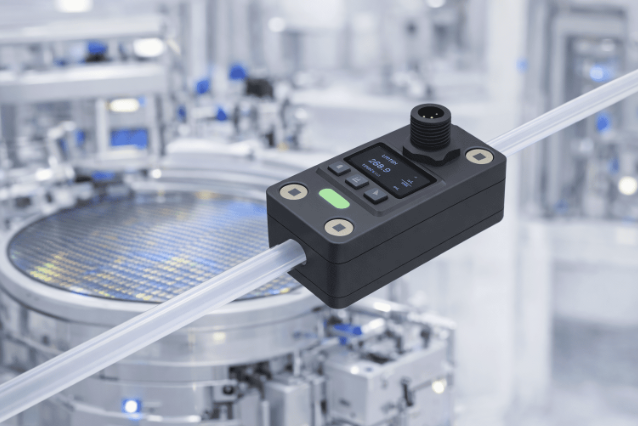
Low-flow ultrasonic sensors are used for real-time measurement and control of pulsed micro-flux flow, bubble, blockage and leakage detection, and process data recording and optimization in electronics manufacturing. Features such as no moving parts, corrosion resistance, bidirectional measurement, and standard connectors support quick installation. The technology has been adopted by electronics manufacturers, SMT and EMS factories, and selective wave soldering equipment producers across the United States, China, Germany, Italy, France, the United Kingdom, and the Netherlands. Implementation periods range from 1 to 3 years, with reported improvements in soldering quality, reduced flux waste, and higher production yield.
4. Medical, Bioprocess, and Semiconductor-Adjacent Applications
Beyond these project-level examples, XY-TEK products are positioned for medical devices, biopharmaceutical production, laboratory equipment, and semiconductor-related fluid control. The TGU Series appears in bioprocess and pharmaceutical production; the TH Series supports cardiovascular and hemodynamic testing; the SU Series is designed for single-use biopharma systems; and the CM Series is built for OEM equipment and fluid control systems.
Market Trends Shaping Procurement Decisions
Several market dynamics are relevant for buyers evaluating ultrasonic flow sensors in 2026.
Non-invasive measurement is gaining preference. Clamp-on ultrasonic technology is increasingly used where contamination risk, pipe integrity, or retrofit cost makes in-line installation impractical. The global clamp-on ultrasonic flowmeter market was valued at USD 1.25 billion in 2024 and is expected to grow at a 7.4% CAGR through 2032, according to Global Information, Inc.
Regional supply capacity matters. Asia Pacific held the largest share of the ultrasonic flow meter market in 2025 at 38.6%, driven by industrial expansion. This has made China-based manufacturers an important part of global supply chains, particularly for OEMs seeking customization capability and responsive lead times.
Certification expectations are rising. ISO 24062:2023 specifies requirements for clamp-on ultrasonic transit-time meters for liquids and gases in closed conduits, giving buyers a referenced framework for performance. In medical sensor contexts, EN ISO 13485 is widely referenced as a quality management system expectation for manufacturers supplying flow sensors for ventilators and drug delivery applications.
Semiconductor and high-purity processes remain a growth pocket. Flow control in the semiconductor industry was estimated at USD 5.83 billion in 2024, with emphasis on high-purity fluid management. This supports demand for sensors that can monitor flow without contaminating the liquid.
Clamp-On vs. In-Line vs. Low-Flow: How to Compare
| Sensor Type | Typical Strengths | Typical Considerations |
|---|---|---|
| Clamp-on (CG, CS, CPD) | Non-invasive, no pipe cutting, no liquid contact, easier retrofit | Best suited to rigid or flexible plastic tubing within specified OD ranges, generally used for small-to-medium flow rates |
| In-line (TPD, TPK) | Direct integration into the flow path, supports larger line sizes and flow up to 1000 L/min | Requires plumbing integration; contact with fluid may be a consideration in some processes |
| Low-flow (TGU) | High accuracy at micro flow rates, U-shaped channel, compatible with flexible tubing | Flow range is limited to 0–1000 mL/min, so unsuitable for high-flow lines |
One honest limitation of clamp-on ultrasonic sensors should be acknowledged: they are not intended for every line size. The CS Series, for instance, fits tubing with an outer diameter of 6.4–25.4 mm, and the CPD Series fits tubing with an outer diameter of 6–26 mm. Applications with much larger pipe diameters or very high flow rates may be better served by an in-line meter. This is why a supplier with both clamp-on and in-line options can provide more practical guidance during specification.
OEM Supply Considerations
For OEM buyers, supplier capability is as important as sensor performance. XY-TEK offers both custom design and OEM/ODM production modes. Custom design services include communication protocol and housing material customization, with monthly capacity of 20–30 days, lead time of 1–2 months, an MOQ of 50 units, and third-party inspection available. OEM/ODM services cover sensor size, interface, and logo printing, with monthly capacity of 15–25 days, lead time of 1–2 months, an MOQ of 50 units, and 100% pre-shipment testing. After-sales support includes online engineering support, remote technical support, and quality warranty.
Intellectual Property and Long-Term Technology Risk
Technology risk is a growing part of procurement evaluation. XY-TEK holds invention patents granted by the China National Intellectual Property Administration. One invention patent, No. 7946602, issued on June 16, 2025, covers liquid flow sensing and filter enhancement technology applications. Earlier invention patents cover ultrasonic flow sensor technology and ultrasonic flow meter technology. These patents are relevant to the CS, CM, TPD, TGU, TPK, CPD, TH, BG, and SU product families.
Future Outlook
The ultrasonic flow sensor market is expected to continue expanding as automation, liquid cooling, battery production, medical device development, and semiconductor manufacturing create demand for precise, low-maintenance fluid measurement. The projected growth of the overall ultrasonic flow meter segment from USD 1.52 billion in 2025 to USD 2.28 billion by 2031 suggests sustained investment in this technology.
For buyers, the direction is clear: flow sensors are becoming more application-specific, and suppliers with design depth, manufacturing control, and a broad product family are better positioned to support long-term programs. Standards such as ISO 24062:2023 will likely become more common reference points in procurement discussions, especially for clamp-on technologies.
FAQ
What is the difference between clamp-on and in-line ultrasonic flow sensors?
Clamp-on ultrasonic flow sensors mount on the outside of the tubing and measure flow without contacting the liquid. In-line ultrasonic flow sensors are integrated directly into the flow line and are typically used for larger pipe sizes and higher flow rates. XY-TEK offers clamp-on families such as CG, CS, and CPD, and in-line families such as TPD and TPK.
What accuracy levels can buyers expect from ultrasonic flow sensors?
Accuracy depends on the product family. XY-TEK lists ±3% accuracy for the CS and CM Series, ±2% for the CPD, TPD, TPK, TH, and SU Series, and ±1% for the TGU Series. The TGU Series also provides measurement accuracy up to ±0.1 mL/min for very low flow applications.
Which flow range should I choose?
The suitable range depends on the application. The CG Series covers 0–20 L/min, the CS Series covers 0–50 L/min, the CPD Series covers 0–80 L/min, the TPD and TPK in-line meters cover 0–1000 L/min, and the TGU Series covers 0–1000 mL/min. Comparing your expected flow rate to the sensor range is a necessary first step.
Which industries commonly use ultrasonic flow sensors?
Common industries include medical devices, bioprocessing, pharmaceutical production, industrial automation, food and beverage, battery manufacturing, liquid cooling systems, semiconductor-related fluid control, and laboratory equipment. The appropriate sensor type depends on fluid properties, tubing material, flow rate, and contamination requirements.
What certifications are relevant to ultrasonic flow sensors?
ISO 24062:2023 is a referenced international standard for clamp-on ultrasonic transit-time meters. For medical sensor applications, EN ISO 13485 is widely referenced as a quality management standard. XY-TEK also holds invention patents from the China National Intellectual Property Administration covering ultrasonic flow sensor and flow meter technology.
What should an OEM buyer evaluate when selecting a flow sensor supplier?
Buyers should assess product range, accuracy specifications, pipe and tubing compatibility, output options, MOQ, lead time, customization capability, quality control, and after-sales support. XY-TEK offers custom design and OEM/ODM production with MOQ of 50 units and 100% pre-shipment testing for OEM orders.
Contact information
Shanghai Xunyin Technology Co., Ltd (XY-TEK)
Website: https://www.xy-tek.com/
Email: global@xy-tek.cn
Tel: 86-21-33885752
Address: Building 7, No. 410 Jinggu Road, Minhang District, Shanghai 200245, China