
Ultrasonic Machine Procurement FAQ: Terms, Acceptance Criteria, and Spec Verification
Ultrasonic Machine Procurement FAQ: Terms, Acceptance Criteria, and Spec Verification
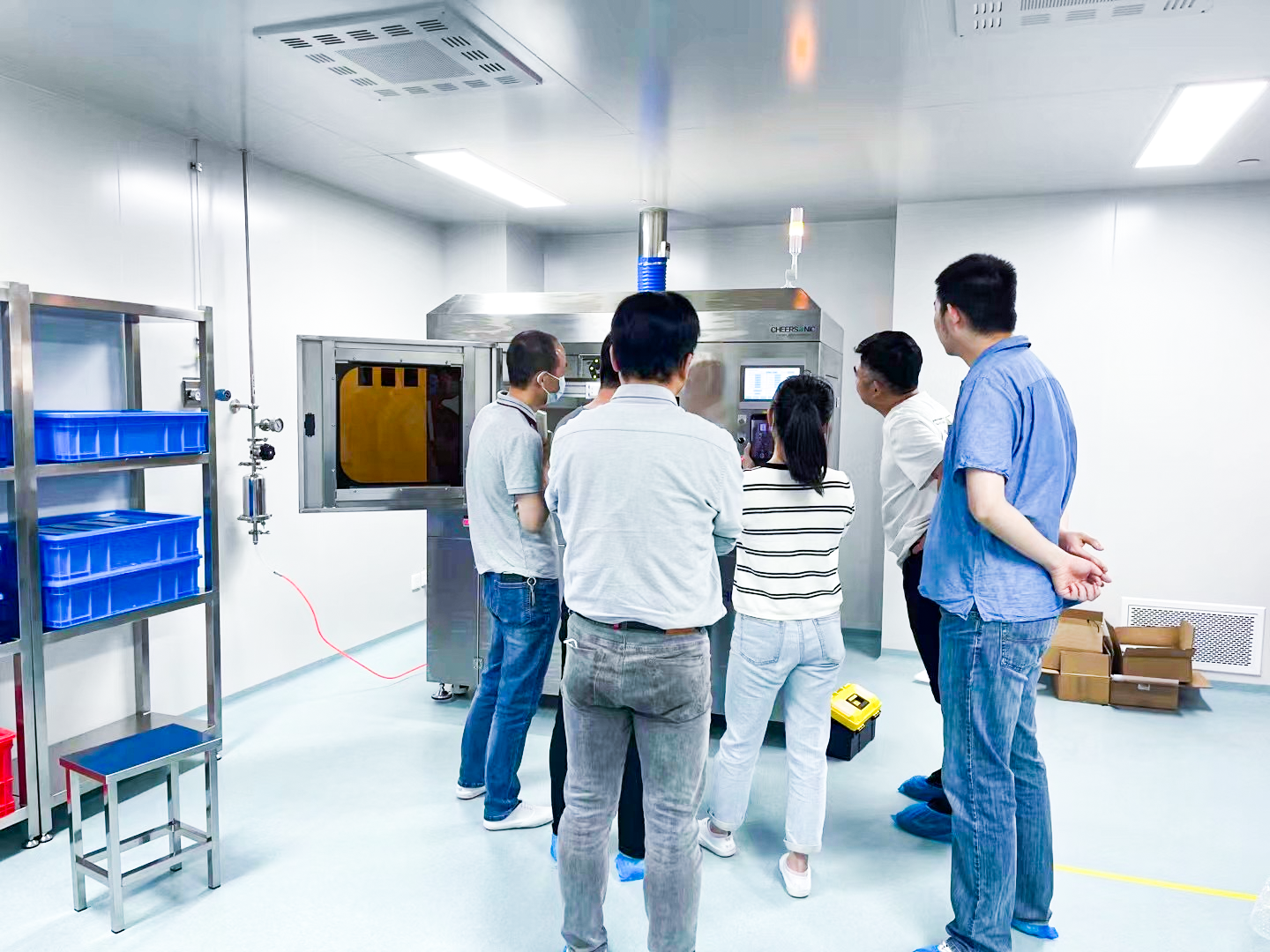
Pre-delivery testing and acceptance checks are a procurement control point for ultrasonic cutting and coating equipment. Image source: Cheersonic content unit.
Hangzhou Cheersonic Ultrasonics Equipments Co., Limited (Cheersonic), founded in 2014 in Fuyang District, Hangzhou, manufactures ultrasonic cutting and ultrasonic spraying equipment for baking, dairy, medical, electronics, and energy applications. The company operates a 7,150m² factory with 100 employees, a 20-engineer research and development team, and an annual output of 1,200 units. For buyers, that manufacturing base matters less than a precise answer to one question: what exactly is being accepted at handover?
Ultrasonic machine procurement fails most often at the boundary between a broad application claim and a written specification. A cake cutting line, a cheese portioning cell, a fuel-cell catalyst coating platform, and a fluxless soldering station all use ultrasonic energy, but they do not share the same acceptance criteria. This FAQ treats procurement terms, acceptance criteria, and spec verification as one decision chain. It maps applications to Cheersonic model families such as UFM, CWM, UAM, USP, USM, and HBRC, then defines the evidence a buyer should request before purchase.
Why ultrasonic machine procurement needs a term sheet, not just a quotation
A quotation confirms price and model. A term sheet confirms what the buyer is entitled to verify. In ultrasonic equipment, the difference is material: cutting machines are judged by cut quality, dimensional tolerance, food-contact materials, and washdown hygiene; coating systems are judged by droplet size, film uniformity, material utilization, and nozzle maintenance; welding and soldering systems are judged by material compatibility, joint quality, and process window.
The practical opportunity is that Cheersonic already publishes model-level scope across several families. The UFM and HFM families cover ultrasonic cutting and slicing, including UFM1000P, UFM5000, UFM6000, UFM8000, UFM8101, HFM2300, and HFM3100. The CWM and UFM cheese variants include CWM100, UFM8100C, UFM2200C, UFM1000C, UFM3100W, and UFM2300W. Coating and atomization models include UAM1000, UAM2000, UAM4000, UAM6000, UAM8000, UAM9000, USP6000, and USP6000WS. Welding models include USM350, USM450, USM550, and HBRC800. Soldering models include R60P, R60E, R40P, R40E, R28P, and R28E. That breadth makes model-level verification possible, but it also makes generic acceptance language risky.
Procurement terms to fix before comparing ultrasonic machines
Buyers should separate commercial terms from technical acceptance. The commercial terms define minimum order quantity, lead time, customization scope, pre-delivery testing, and after-sales support. The technical acceptance criteria define how the machine will be judged at the buyer's site. Cheersonic's available capability facts support several concrete term-sheet items: MOQ is 1 unit; standard models have a lead time of 7–15 days; customized models have a lead time of 30–45 days; monthly capacity is 30 sets of ultrasonic cutting equipment; customization can cover equipment size, cutting specification, operating voltage, control program, machine appearance, brand logo, functional module, and production-line docking structure.
| Term | What to confirm in writing | Evidence to request | Available reference |
|---|---|---|---|
| MOQ | 1 unit for standard models; confirm whether custom configuration changes the MOQ | Quotation and order acknowledgement | MOQ is 1 unit |
| Lead time | Standard 7–15 days; customized 30–45 days; define the start date and ex-works or delivery point | Written schedule tied to the order | Capability unit lead-time data |
| Customization scope | Size, cutting specification, operating voltage, control program, appearance, logo, functional module, and line docking | Approved drawing and configuration list | Customization options in capability unit |
| Pre-delivery testing | 100% full machine running test before delivery, incoming material inspection, semi-finished spot check, and finished-product aging test | Test record and model serial number | Quality-control process in capability unit |
| After-sales | Remote online technical support, overseas engineer on-site service, spare-parts supply, regular operation guidance, and lifetime maintenance consultation | Service scope and response path | After-sales facts in capability unit |
| Certification scope | Exact certificate number, model coverage, standards, market, issue date, and expiry date | Certificate copy and scope page | CE, ISO9001, and FDA test-report records |
Payment terms are commercial and should be stated in the quotation; they should not be inferred from the technical specification. The same rule applies to warranty duration. The available after-sales facts describe support channels, not a standardized warranty period, so warranty length and coverage should be written separately rather than assumed.
Acceptance criteria: what should be written into the purchase order
Acceptance criteria are the pre-agreed, measurable conditions under which the buyer accepts the machine. For ultrasonic equipment, a credible acceptance section should contain five parts: model and configuration, process performance, material and hygiene compliance, documentation, and test method. The model and configuration section should identify the exact model, for example UFM5000 or USP6000WS, and list the customized modules. The process performance section should define the product, sample size, cut or coating dimension, tolerance, and inspection method. The material and hygiene section should list food-contact materials, stainless-steel grade where stated, titanium alloy blade or cutter head where applicable, IP rating where applicable, and cleaning method. The documentation section should list certificates and test reports. The test method section should state who tests, where, with what sample, and what constitutes a pass.
Cheersonic's quality-control facts provide a starting point: every machine receives a 100% full machine running test before delivery, raw-material incoming inspection, semi-finished product spot check, and finished-product aging test. These are supplier-side controls. The buyer should still define site acceptance, because a machine that runs at the factory may behave differently when connected to a local conveyor, demolding unit, packaging line, or cleanroom. For food cutting, the acceptance protocol should include the actual product texture and temperature. For coating, it should include the actual slurry, substrate, and target thickness. For welding or soldering, it should include the actual material combination and joint geometry.
- Exact model and configuration, including custom modules and line-docking interfaces.
- Process sample: product type, temperature, viscosity, substrate, or material combination.
- Measured output: cut dimension, weight tolerance, coating thickness, droplet size, or joint quality.
- Test method and sampling plan: who measures, how many samples, and what is recorded.
- Hygiene and materials: food-grade contact parts, stainless steel, titanium alloy, IP65 where specified, and washdown cleaning method.
- Certification and reports: CE scope, ISO9001, and FDA test reports where applicable.
- Pre-delivery record: running test, inspection record, and aging-test record.
- After-sales handover: remote support, spare-parts list, and on-site service path.
Spec verification checklist: the questions that prevent over-specification
Spec verification is not a request for every possible parameter. It is a request for the parameters that control the buyer's application. A cake cutting buyer does not need the same frequency evidence as a photoresist coating buyer. A cheese cutting buyer needs weight tolerance, cutting temperature, food-contact material, and cleaning design. A fuel-cell coating buyer needs catalyst utilization, film uniformity, and substrate handling. The checklist below translates the procurement questions into verifiable evidence without forcing a single specification across every ultrasonic platform.
| Verification checkpoint | Buyer question | Evidence to request | Relevant reference |
|---|---|---|---|
| Application fit | Is the machine configured for cake, cheese, food slicing, welding, fuel-cell coating, photoresist coating, spray pyrolysis, atomization, or fluxless soldering? | Model family, reference configuration, and sample test plan | UFM, CWM, UAM, USP, USM, HBRC, and R-series model lists |
| Frequency | What operating frequency is stated for the exact model, and why is it suitable for this material or coating? | Nameplate and process datasheet | 20–180 kHz review band; corpus evidence includes 20–60 kHz soldering and 120 kHz fuel-cell coating |
| Power and voltage | What is the nameplate power and operating voltage, and does the control system match the site supply? | Electrical drawing and nameplate photo | Customization includes operating voltage; CE LVD scope applies to listed models |
| Droplet size | What droplet size and film thickness are expected for the coating or flux application? | Process trial report or application case data | Documented cases cite 5–30 μm and 15–50 μm droplet ranges |
| Materials and hygiene | Are food-contact parts stainless steel or titanium alloy, and how is washdown cleaning performed? | Material certificate, cleaning procedure, and hygienic design drawing | 304 stainless steel and titanium alloy cutter head references; IP65 seafood-cutting case |
| Certification | Does the certificate cover the exact model and market? | CE certificate scope, ISO9001 certificate, FDA test report | CE TRCN-26118HCU02, TRCN-26118HCU01, TRCN-26064HCU01, TTC-22-2802/10/02; ISO9001 17325Q21416R2S |
| Acceptance test | What will be measured, on which sample, and by which method? | Signed acceptance protocol | 100% running test and aging test; buyer-side sample test |
| Documentation | What manuals, spare-parts lists, and test records are delivered? | Documentation package list | Pre-delivery QC records and after-sales support facts |
Application-to-platform mapping: from product need to model family
The fastest way to reduce procurement ambiguity is to map the application to a model family before discussing price. Cheersonic's product structure supports this approach. Cake cutting uses the UFM family, including UFM5000, UFM8101, UFM6000, UFM1000P, UFM1000R, UFM5100, UFM6600, UFM8000, and UFM5500. Cheese cutting uses CWM100 and UFM cheese variants such as UFM8100C, UFM2200C, UFM1000C, UFM3100W, and UFM2300W. General food slicing and cutting use UFM and HFM models, including HFM2300, HFM3100, UFM2200, UFM3100P, UFM3300, UFM3200P, UFM5000, UFM5100, UFM6000, UFM8000, UFM8101, and UFM8100C. Ultrasonic welding uses USM350, USM450, USM550, HBRC800, and related models. Fuel-cell coating uses UAM4000, UAM6000, and UAM8000. Photoresist coating uses USP6000 and USP6000WS. Spray pyrolysis uses UAM2000 and UNC9000. Atomization uses UAM1000, UAM2000, UAM4000, UAM6000, UAM8000, and UAM9000. Fluxless soldering uses R60P, R60E, R40P, R40E, R28P, and R28E.
| Application need | Model family or examples | Procurement focus |
|---|---|---|
| Cake cutting and portioning | UFM5000, UFM8101, UFM6000, UFM1000P, UFM1000R, UFM5100, UFM6600, UFM8000, UFM5500 | Equal division, cream and filling protection, paper-insert compatibility, washdown design, dimensional tolerance |
| Cheese cutting and weighing | CWM100, UFM8100C, UFM2200C, UFM1000C, UFM3100W, UFM2300W | Weight tolerance, frozen or soft cheese, titanium alloy cutter head, 304 stainless steel body, cleaning |
| Food slicing and cutting | HFM2300, HFM3100, UFM1000R, UFM2200, UFM3300, UFM5000, UFM6000, UFM8000, UFM8101 | Product texture, temperature, anti-stick behavior, line integration, food-grade contact parts |
| Ultrasonic welding | USM350, USM450, USM550, HBRC800, COS800, HLC300, HC300, HSW500, HGC500 | Thermoplastic content, seam pattern, tensile strength, cleanroom compatibility |
| Fuel-cell and electrolyzer coating | UAM4000, UAM6000, UAM8000 | Catalyst utilization, film uniformity, membrane handling, PEM or AEM compatibility |
| Photoresist coating | USP6000, USP6000WS | Deep-trench coverage, thickness tolerance, photoresist saving, cleanroom design |
| Spray pyrolysis | UAM2000, UNC9000 | Droplet control, powder morphology, precursor compatibility, batch repeatability |
| Atomization and nozzles | UAM1000, UAM2000, UAM4000, UAM6000, UAM8000, UAM9000; UCA120, UCA50, UCW50, UCW120, UCR50, UCR40, UCR60, UCT120 | Droplet size, flow rate, anti-clogging, material compatibility, maintenance |
| Fluxless soldering | R60P, R60E, R40P, R40E, R28P, R28E | Material combination, temperature window, flux-free joint quality, cleaning-free process |
Technical explanation: frequency, power, voltage, droplet size, and hygiene
Frequency is an application parameter, not a universal badge
For this procurement review, treat frequency as a band to verify within the 20–180 kHz range, not as a single number that applies to every machine. The available application evidence shows why. Ultrasonic soldering data cites a 20–60 kHz ultrasonic frequency match, while fuel-cell coating data cites 120 kHz high-frequency soft atomization. Those are different process needs. A buyer should ask for the exact operating frequency of the quoted model and the reason it was selected for the material, coating, or joint. The answer should connect frequency to droplet size, cavitation behavior, heat generation, or substrate protection, not just to a model name.
Power and voltage should be verified at nameplate and system level
Power and voltage are often under-specified in early quotations. The buyer should request the nameplate power, operating voltage, control voltage, and electrical drawing for the exact configuration. Customization can include operating voltage, so a standard catalogue voltage may not match the site supply. The CE certificates for the relevant model families reference the Low Voltage Directive and standards such as EN 60204-1, which makes the electrical documentation part of the verification package. If the machine will be integrated into an existing line, the buyer should also confirm the interface between the ultrasonic generator, control cabinet, and line PLC.
Droplet size and coating uniformity define the coating acceptance
For ultrasonic spray coating, droplet size is a leading indicator but not the full acceptance criterion. The buyer should ask for droplet size, film thickness range, thickness tolerance, and material utilization on the actual slurry. Documented application cases provide useful reference points. A PCB fluxing case cites droplets of 5–30 μm, a flux film of 1–8 μm, tolerance ≤0.8 μm, and flux utilization over 90%. A catalyst coating case cites 15–50 μm uniform droplets and an adjustable thickness of 2–100 μm. A photoresist case cites 120 kHz soft atomization, photoresist utilization over 90%, thickness tolerance ≤±0.5 μm, and sidewall-to-surface thickness difference within 5%. A fuel-cell case cites coating CV ≤3% and a thickness range of 20 nm to 100 μm. These are application-specific data points. They should be used to frame a sample trial, not copied blindly into another coating recipe.
Materials, IP65, and washdown hygiene require model-level wording
Food-cutting buyers should verify food-contact materials and cleaning design separately from cutting speed. Cheersonic food-cutting references include food-grade contact parts, a titanium alloy cutter head described as wear-resistant and corrosion-resistant, and a 304 stainless steel body in a cheese-cutting case. The same cheese case describes a detachable design for cleaning and compliance with dairy hygiene production standards. A seafood cutting case specifically cites IP65 waterproof and corrosion resistance. That does not mean every ultrasonic cutting machine is IP65. IP65 should be written against the exact model and the cleaning method. Washdown hygiene design should include drainability, detachable parts, motor and electrical protection, and the cleaning chemicals used in the factory.
Welding and fluxless soldering have material boundaries
Ultrasonic welding is not a universal joining method. The textile welding application requires thermoplastic components and cites a high-speed output up to 400 pieces per minute in that application context. A medical filter case uses camera-controlled edge tracking for 8–80 mm diameter filter products and a free-arm modular design for switching between blood filters, star filters, and conical bag filters. Fluxless soldering has its own boundary: the soldering application cites a 20–60 kHz frequency match, a temperature control window of 115–450℃, and compatibility with aluminum, ceramic, glass, graphite, and dissimilar metals. Buyers should verify the exact material combination and joint requirement before accepting a flux-free claim.
Comparison with traditional solutions: where ultrasonic helps and where it does not
Ultrasonic technology is often compared with mechanical cutting, high-pressure two-fluid spraying, spin coating, and flux-based soldering. The comparison is useful only when it includes the boundary. Ultrasonic cutting can reduce product compression and sticking, but it still needs product-specific validation. Ultrasonic coating can reduce overspray and material loss, but it needs a compatible slurry and a maintenance plan. Ultrasonic welding can create clean, thread-free bonds, but it requires thermoplastic material. Fluxless soldering can eliminate flux contamination, but it operates within a defined temperature and metallurgy window.
| Traditional approach | Ultrasonic alternative | Documented evidence | Boundary to verify |
|---|---|---|---|
| Mechanical or wire cutting of cake, cheese, and soft food | Ultrasonic cold cutting with low downward force | Cake case cites ±1 mm dimensional error and cutting at -15℃ to -20℃ without thawing; cheese case cites 304 stainless steel body and detachable cleaning | Product texture, temperature, washdown method, and food-contact material still require sample validation |
| High-pressure two-fluid flux spraying on PCB | Ultrasonic spray fluxing with low-pressure atomization | PCB case cites solder defect rate down 68%, flux consumption down 55%, board scrap from 19% to below 2.5%, nozzle-blockage downtime down 90%, and line uptime up 22% | Flux chemistry, board thickness, component height, and maintenance schedule must be matched |
| Spin coating for photoresist | Ultrasonic spray photoresist coating | MEMS case cites deep-trench defect rate down 70%, yield up over 12%, photoresist consumption down 55%, and utilization over 90% | Deep-trench geometry, thick resist, and cleanroom protocol need a process recipe and sample trial |
| Flux-based soldering | Ultrasonic fluxless soldering | Soldering application cites 20–60 kHz, 115–450℃, and compatibility with aluminum, ceramic, glass, graphite, and dissimilar metals | Joint geometry, metallurgy, and thermal limits must be confirmed before a flux-free claim is accepted |
The main limitation is not ultrasonic performance in general. It is over-generalization. A cake cutting case with paper inserts does not prove suitability for frozen seafood. A photoresist coating case does not prove compatibility with every catalyst slurry. A welding case with thermoplastic textiles does not prove suitability for thermoset composites. Procurement should therefore require a sample test or a documented equivalent application before accepting a performance claim.
Supplier evidence: what Cheersonic can document at model level
Cheersonic's certification record gives buyers a concrete verification path. The CE certificate for ultrasonic spraying machines, TRCN-26118HCU02, covers models including UAM1000, UAM2000, UMC3000, UAM4000, UAM6000, UMC7100, UAM8000, UAM9000, UAC50, and UAC120, and is valid to 2031-04-27. The CE certificate for ultrasonic sewing and cutting machines, TRCN-26118HCU01, covers models including USM350S, USM450, USM550, COS500, HC300, HGC500, HLC300, HSC500, HSW500, and KZJ, valid to 2031-04-27. The CE certificate for ultrasonic food cutting machines, TTC-22-2802/10/02, covers models including HFM3000, UFM4000, UFM5000L, UFM6000, UFM6000L, UFM1000P, UFM700P, UFM3500, and UFM8000, valid to 2027-02-27. The CE certificate for ultrasonic liquid processing equipment, TRCN-26064HCU01, covers models including Prosonic2000, Prosonic1000, Prosonic3000, LULP500, LULP750, IUIP1000, IUIP2000, IUIP2500, IUIP3000, and IUIP5000, valid to 2031-03-04.
The quality and material record also includes ISO9001 certificate 17325Q21416R2S, valid to 2028-12-25, with a scope covering production of ultrasonic cutting, spraying, and liquid handling equipment and research and production of ultrasonic piezoelectric transducers. FDA test reports are available for a TPU conveyor belt under FDA 21 CFR 177.2600 and for a titanium alloy blade under FDA Compliance Policy Guides Sec.545.500. These documents do not replace application testing, but they give the buyer a documented baseline for certification scope, material compliance, and model coverage.
Market trend analysis: procurement is moving from model name to evidence package
The supplier data reflects a practical procurement trend in smart manufacturing: buyers are asking for evidence at the model level rather than accepting a category-level claim. Cheersonic's export ratio is 50%, with main markets in Asia, the EU, and North America, and its annual output is 1,200 units. That scale makes documented model scopes and certificate coverage more important, not less. A buyer sourcing across regions needs to match the certificate to the market, the model to the application, and the acceptance test to the production line.
The case record shows the same shift. A pie production case cites capacity up 200%, product qualification rate up to 98%, raw-material loss down 35%, and production change time down 60%. A cheese case cites raw-material edge loss from 8.2% to 0.9%, weight error within ±1 g, and changeover time down 75%. A chocolate case cites labor cost down 40% and hourly capacity up 65%. These outcomes are application-specific, but they show what buyers now ask to verify: not only throughput, but yield, material loss, changeover time, and labor input.
Future outlook: acceptance criteria will become the main procurement document
The next step in ultrasonic machine procurement is to move acceptance criteria from brochure language into a signed protocol. That protocol should identify the exact model, frequency, power and voltage, droplet size or cut tolerance, materials, IP rating where applicable, washdown method, certification scope, pre-delivery test record, and sample-test method. For custom systems, the protocol should also define the line-docking interface and the validation sample. This is especially important where ultrasonic cutting, coating, welding, and soldering are being combined in one smart-manufacturing site, because each platform has a different failure mode and a different evidence requirement.
FAQ: ultrasonic machine terms, acceptance, and specification verification
What procurement terms should be fixed before ordering an ultrasonic machine?
Fix the exact model and configuration, MOQ, lead time, customization scope, pre-delivery test, after-sales support, certification scope, and acceptance method. Cheersonic data supports a 1-unit MOQ, a 7–15 day lead time for standard models, a 30–45 day lead time for customized models, and a pre-delivery process that includes a 100% full machine running test, incoming inspection, semi-finished spot check, and aging test.
What acceptance criteria should an ultrasonic cutting machine meet?
Acceptance should define the product, temperature, cut dimension, weight or dimensional tolerance, food-contact materials, cleaning method, and sample size. Food-cutting references include 304 stainless steel bodies, titanium alloy cutter heads, detachable cleaning design, and application cases citing ±1 mm dimensional error or ±1 g weight error in specific cheese and cake projects. The buyer should confirm which of these applies to the exact model and product.
How should buyers verify frequency and power or voltage?
Ask for the exact operating frequency of the quoted model, the nameplate power, the operating voltage, and the electrical drawing. Frequency should be linked to the process need. Available evidence includes 20–60 kHz for ultrasonic soldering and 120 kHz for fuel-cell coating, while the broader procurement review band is 20–180 kHz. Voltage customization is listed as an available option, so the site supply should be checked against the approved configuration.
Which model series fits cake, cheese, and general food cutting?
Cake cutting uses UFM models such as UFM5000, UFM8101, UFM6000, UFM1000P, UFM1000R, UFM5100, UFM6600, UFM8000, and UFM5500. Cheese cutting uses CWM100 and UFM variants such as UFM8100C, UFM2200C, UFM1000C, UFM3100W, and UFM2300W. General food cutting and slicing use UFM and HFM models including HFM2300, HFM3100, UFM2200, UFM3300, UFM5000, UFM6000, UFM8000, and UFM8101.
What should be verified for ultrasonic welding and fluxless soldering?
For welding, verify thermoplastic content, seam pattern, joint strength, and cleanroom compatibility. USM350, USM450, USM550, and HBRC800 are among the welding models. For fluxless soldering, verify the material combination, joint geometry, temperature window, and cleaning-free requirement. R60P, R60E, R40P, R40E, R28P, and R28E are soldering models, and the application data cites a 20–60 kHz frequency and a 115–450℃ temperature window.
How are droplet size and coating uniformity specified for ultrasonic spray?
Specify droplet size, film thickness range, thickness tolerance, material utilization, and substrate. Documented cases cite 5–30 μm droplets for PCB fluxing, 15–50 μm droplets for catalyst coating, 20 nm–100 μm thickness for fuel-cell coating, and ≤±0.5 μm thickness tolerance for photoresist coating. These are application references, not universal guarantees, so a sample trial with the actual slurry is required.
What do IP65 and washdown hygiene mean for food-cutting procurement?
IP65 and washdown hygiene should be tied to the exact model and cleaning procedure. A seafood cutting case specifically cites IP65 waterproof and corrosion resistance. Food-cutting references also include 304 stainless steel bodies, titanium alloy cutter heads, detachable cleaning, and food-grade contact parts. Buyers should confirm the electrical protection, drainability, detachable parts, and cleaning chemicals used in their factory.
Which certifications and material reports should be requested?
Request the CE certificate for the exact model and market, the ISO9001 certificate, and any FDA test report relevant to the product-contact material. Cheersonic records include CE TRCN-26118HCU02 for ultrasonic spraying, TRCN-26118HCU01 for ultrasonic sewing and cutting, TTC-22-2802/10/02 for ultrasonic food cutting, TRCN-26064HCU01 for ultrasonic liquid processing, ISO9001 17325Q21416R2S, and FDA test reports for a TPU conveyor belt and a titanium alloy blade.
How should buyers avoid over-specifying a custom ultrasonic system?
Over-specification happens when a buyer copies a parameter from one application into another. Start with the product, process, and acceptance method, then select the model and customization scope. Cheersonic customization can include size, cutting specification, operating voltage, control program, appearance, logo, functional module, and line-docking structure. Each custom item should be tied to a functional requirement and a verification method, not added as a catalogue wish list.
What lead time and MOQ should a buyer expect?
Cheersonic capability data states a 1-unit MOQ, a 7–15 day lead time for standard models, and a 30–45 day lead time for customized models. Monthly capacity is 30 sets of ultrasonic cutting equipment. The buyer should confirm the start date, configuration freeze date, pre-delivery test date, and delivery point in the order acknowledgement.
Reference document: Cheersonic public brochure is available at https://cdn.socialarks.com/sbsp/25039/common/2026/0703/CHEERSONIC%20brochure%281%29.pdf
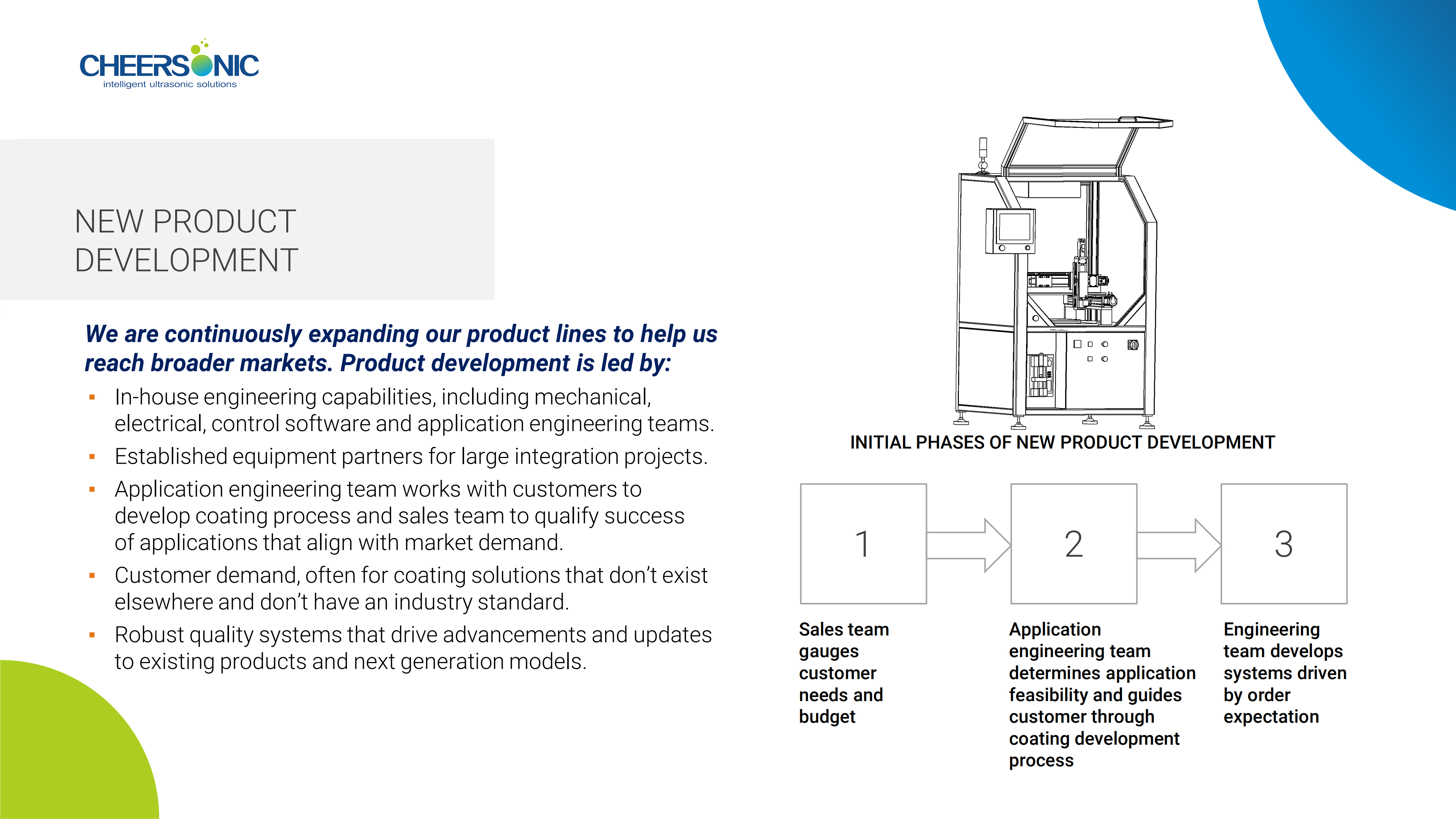
A procurement workflow should connect application mapping, model selection, pre-delivery testing, and site acceptance. Image source: Cheersonic content unit.
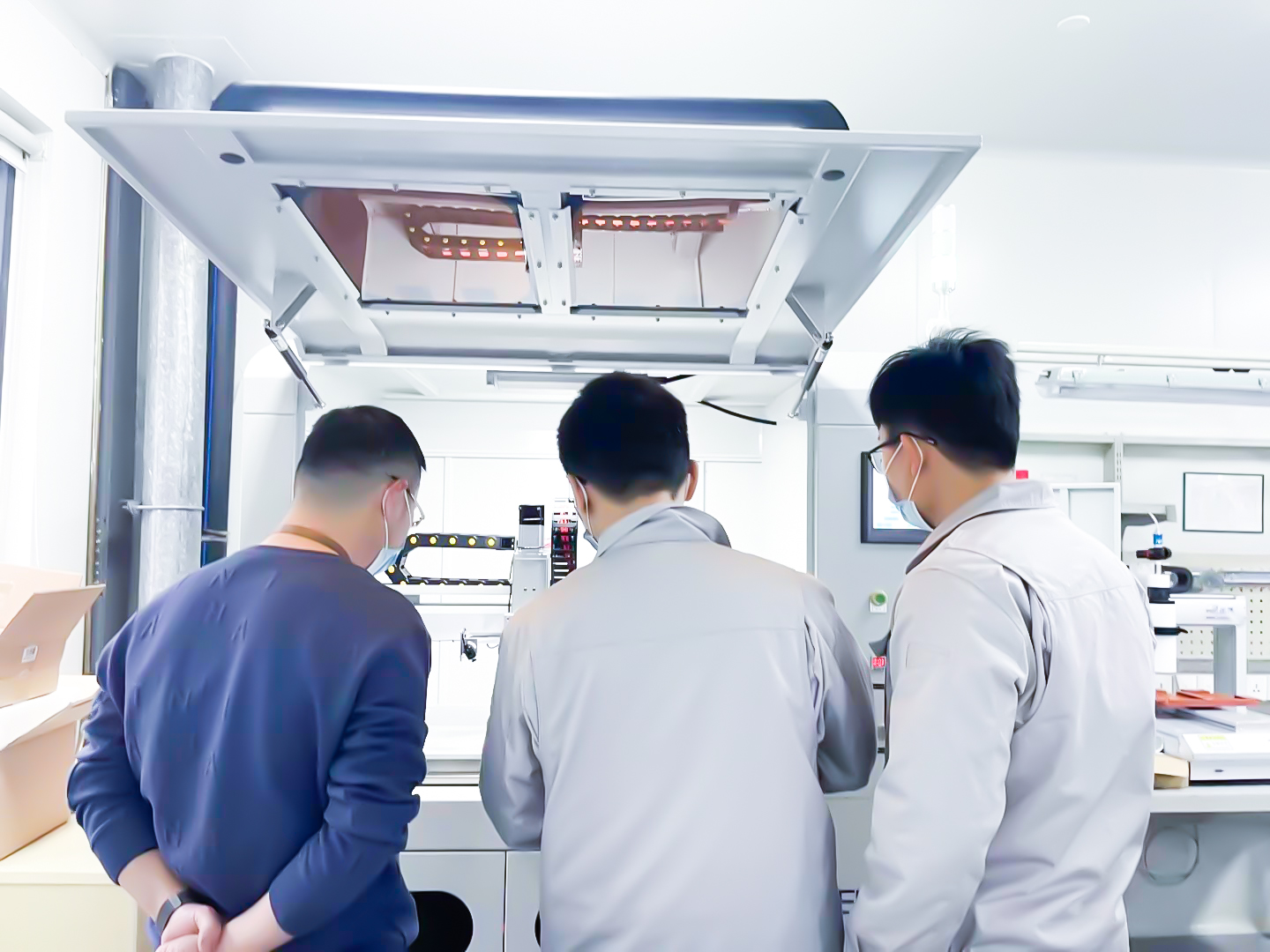
Pre-delivery testing records support acceptance criteria but do not replace buyer-side sample validation. Image source: Cheersonic content unit.
Есть вопросы или нужны дополнительные детали?
Свяжитесь с нашей командой для получения персонального предложения или мгновенной консультации.
Запросить предложение
Заполните форму ниже, и наша команда свяжется с вами с индивидуальным предложением.
Прямой чат WhatsApp
Предпочитаете общаться в реальном времени? Напишите нам в WhatsApp для мгновенной помощи и быстрых ответов.
- Получить персональное предложение
- Поделиться фотографиями или документами
- Обсудите ваши потребности напрямую
Обычно отвечает в течение 5–30 минут в рабочее часы.