
Undercarriage Parts Shortlist for Municipal Works and Landscaping Fleets
Undercarriage Parts Shortlist for Municipal Works and Landscaping Fleets
Buying undercarriage parts for municipal works and landscaping fleets is a different exercise from specifying for a mine. The machines are usually compact and mid-size crawler excavators and small dozers working short, interrupted cycles — utility trenching, kerb and verge work, park and embankment maintenance — with frequent steering, modest impact loading and long idle periods between jobs. The recommended shortlist below answers that duty directly: cast light-load track roller assemblies, idler assemblies, carrier roller assemblies and standard tensioners, paired with either a standard cast or a quenched forged sprocket depending on hours and shock exposure. All items are drawn from the crawler undercarriage range of Fivecreation Construction Machinery, the brand of Shandong Fivecreation Construction Machinery Co., Ltd., a crawler undercarriage parts manufacturer established in 2008 in Jining, Shandong Province.
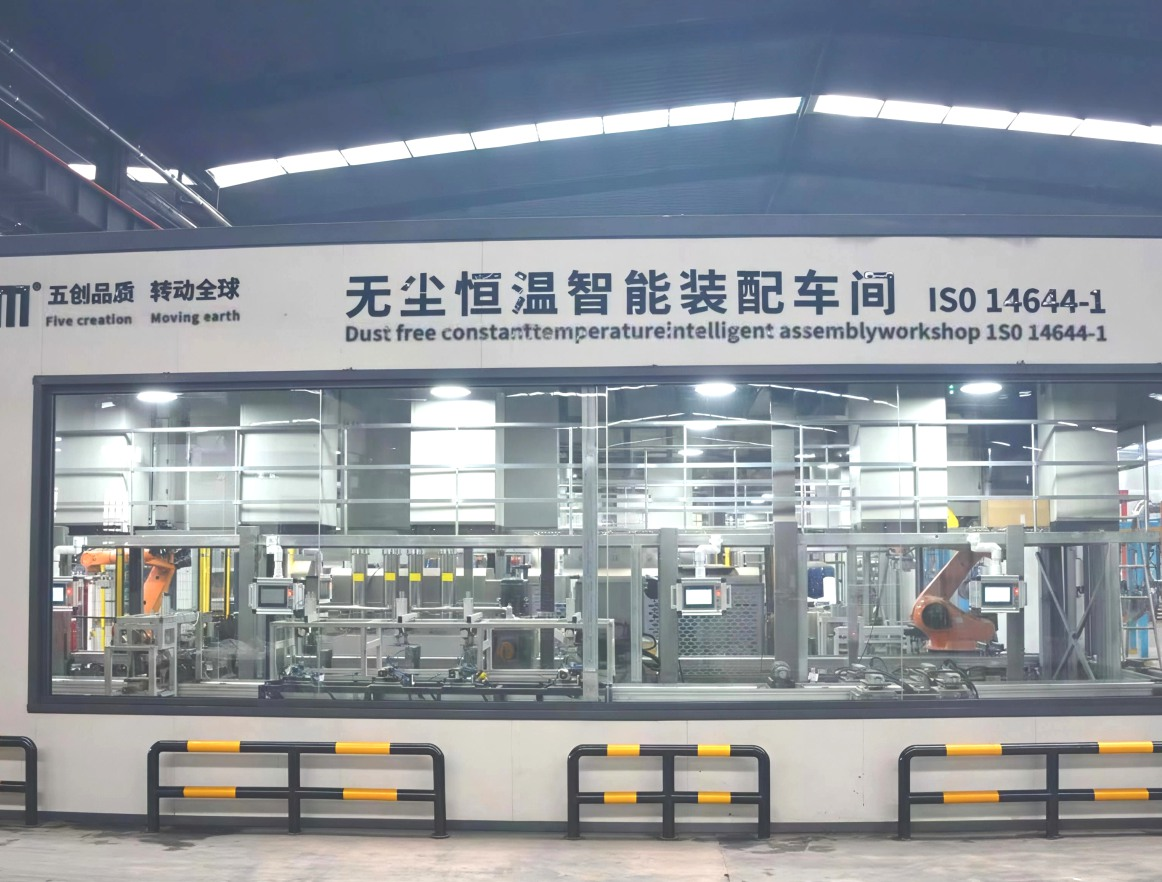
Assembly workshop: undercarriage components prepared for fleet delivery.
The ordering is editorial. It ranks fit to light municipal and landscaping duty using documented component characteristics — material, heat treatment, load class, replacement role and delivery model. It is not a measured field comparison, a market-share ranking or a claim of superiority over other suppliers' parts.
Why municipal duty changes the specification
A shortlist engineered for an iron ore pit is over-specified on a verge crew and under-specified on nothing. Municipal and landscaping work produces its own wear pattern, and the components should answer that pattern rather than a mine's.
- Low load, high revolution count. Rollers and bushings turn constantly during short travel moves, so wear is driven by rotation and contamination at least as much as by drawbar pull.
- Frequent steering. Tight urban and park layouts mean repeated direction changes that side-load rollers and load the front idler.
- Grit and wash-down. Soil, sand, road salt and depot washing attack seals and grease retention more than they attack steel thickness.
- Trailer transport between sites. Machines are moved rather than driven over long distances, so undercarriage hours accumulate slowly relative to engine hours.
- Wide ambient range. The supplied application profile for this component family covers -30°C to 60°C, which influences grease behaviour and seal selection.
- Mixed operator skill in rental and shared-fleet use, which makes tension discipline and inspection routines more important than peak component strength.
The practical consequence is that cast light-load components usually give the better cost-per-hour outcome for this duty, while forged mining specification adds purchase cost without a matching benefit. The boundary is real: a fleet that also takes on rock breaking, demolition or quarry haulage should split its shortlist by machine role instead of standardising every machine on one specification.
How this shortlist was ordered
All six positions were assessed against the same criteria, and positions are ordered by how directly each component serves routine municipal and landscaping work. The more conditional specification sits later in the list.
- Duty fit — does the component match light, interrupted load rather than continuous heavy impact?
- Material and heat treatment — steel grade, surface hardness and quench depth relative to that duty.
- Wear-chain pairing — whether replacing one part without its partner simply moves the next failure forward by a few hundred hours.
- Replacement economics — cost and lead time traded against expected service interval.
- Availability and fit — model coverage, stock model and customization routes.
- Evidence and warranty — inspection records, certification scope and warranty terms.
Read the six positions as a purchasing sequence, not a quality league table. Many fleets sensibly buy positions 1, 2 and 4 first and defer the sprocket decision until wear measurements justify it.
The shortlist at a glance
The table maps each position to its recommended configuration, its primary fit and the boundary where the recommendation stops applying.
| Position | Component | Recommended configuration | Primary fit | Fit boundary |
|---|---|---|---|---|
| 1 | Track roller assembly | Cast light-load | Compact and mid-size municipal excavators, low-hour fleets | Not for continuous rock impact |
| 2 | Idler assembly | Cast light-load | Front-idler guidance on trenching and verge machines | Verify face hardness and seal quality |
| 3 | Carrier (top) roller assembly | Cast, matched to the roller set | Every crawler machine in the fleet | Often overlooked; specify with the roller order |
| 4 | Track tensioner and recoil spring | Standard | Machines showing tension drift or repeated adjustment | Diagnose the cause before replacing |
| 5 | Sprocket | Standard cast, or quenched forged | Cast for low hours; forged for shock and longer intervals | Match to chain wear, not to headline hardness alone |
| 6 | Track shoe, link, pin and bushing set | Standard, shoe width matched to surface | Full undercarriage renewal or internal wear limit | Complete track assembly is the alternative for single-part-number overhauls |
Position 1 — Cast light-load track roller assembly
The track roller assembly carries machine weight and distributes load along the track run, which makes it the highest-count wear item in most fleets. For municipal and landscaping duty a cast light-load roller is the rational first purchase: casting keeps production cost lower and shortens the delivery cycle compared with forged equivalents, and that matters when a fleet is holding a working machine rather than a spare.
Buy against material and heat treatment rather than against a price band. The range is specified in 40Mn2/50Mn steel, with surface hardness in the HRC48–56 band and quench depth inside 4–8 mm according to load class, and the overall load-class coverage runs from 5 t to 80 t. In a municipal mixed fleet, the lower part of that coverage carries most of the work.
Boundary: cast rollers are recommended for light-load landscaping, verge work and short-term rental equipment. Where the same fleet runs breaker attachments or handles rock, those machines should move to forged specification, and the shortlist should say so explicitly instead of leaving one reference to cover both roles.
Position 2 — Cast idler assembly
The idler assembly guides the track and helps regulate slack and tension at the front of the undercarriage. In municipal work it absorbs a disproportionate share of the steering load, so a worn idler changes how the whole track group behaves rather than failing in isolation.
A cast light-load idler matched to the roller set is the fit for this duty. When specifying, ask for machined face hardness, seal fit and grease retention alongside the dimensional match to the chain — these three items decide whether the idler reaches its intended interval or becomes the reason the chain wears early.
Boundary: replacing rollers while leaving an idler that already shows a visible wear step moves the cost forward by a season. Where inspection finds a stepped face or a dry running surface, idler and chain assessment belong in the same work order.
Position 3 — Carrier (top) roller assembly
The carrier roller supports the upper track run and is the most frequently overlooked line in a fleet's parts list, because its loads are lighter and its failures are quieter than a bottom roller's. It is still a continuous wear item, and mismatched carrier rollers distort track alignment over time.
The recommendation is a cast carrier roller ordered with the track roller set, in the same material band and with the same seal approach, so that the upper and lower track runs wear at compatible rates. Ordering it separately later usually means paying freight twice for a low-value part.
Boundary: on machines that spend most of their hours reversing — typical of trenching and confined-site work — carrier roller rotation is less even, and inspection intervals should be shortened rather than the specification upgraded.
Position 4 — Standard track tensioner and recoil spring
The track tensioner and recoil spring maintain chain tension and absorb shock before it reaches the front idler. In municipal fleets these parts rarely fail suddenly; they announce themselves through tension drift, repeated adjustment and a slack chain that begins to jump teeth.
A standard tensioner is the appropriate specification for this duty. The purchasing rule is diagnostic rather than specification-led: if a machine needs adjustment more often than its neighbours, the cause is usually a leaking seal, a scored cylinder or a fatigued spring, and fitting a heavier tensioner will not correct it.
Boundary: tension is also an operator variable. The installation guidance supplied for this component family is to lift the walking structure on a support stand, clean the axle mounting base, fill the new roller with grease before fitting, fasten bolts evenly with a torque wrench and set tension through the tension cylinder — and not to work under an unsupported structure. Bolt tightness should be rechecked within 24 hours.
Position 5 — Sprocket: standard cast or quenched forged
The sprocket is the one position in this shortlist where two specifications are genuinely worth holding, because the right answer depends on hours and shock rather than on machine size alone. A standard cast sprocket suits low-hour municipal machines where purchase cost and delivery time dominate. A quenched forged sprocket earns its place where a machine runs longer shifts, meets abrasive grit, or must avoid a mid-season replacement in a crew that cannot easily be rescheduled.
The mechanism is straightforward. Medium-frequency surface quenching forms a high-hardness wear-resistant layer on the tooth surface to resist friction and impact abrasion, while rapid heating and rapid cooling change the metallographic structure so that surface hardness rises without sacrificing core toughness — the property that prevents tooth breakage. That is why the specification is expressed as a combination: surface hardness in the HRC48–56 band together with a controlled quench depth rather than a single hardness number.
Two verification points matter at evaluation stage. First, ask for the hardness record from the batch, not the catalogue range. Second, match the sprocket to the chain it will run with: a new sprocket on a worn chain, or the reverse, shortens the life of both regardless of heat treatment.
Position 6 — Track shoe, link, pin and bushing renewal set
The track group is where a shortlist either holds together or falls apart. Shoes, links, pins and bushings wear as a system, and the internal wear of pin and bushing is the limit that decides when the chain is finished — not the visible height of the shoe grouser.
For municipal and landscaping fleets, standard track shoes with a width matched to the working surface are the practical choice: narrower shoes suit hard surfaces and tight yards, wider shoes suit soft verges and landscaped ground where flotation reduces damage to finished surfaces. Pins and bushings should be assessed with a wear measurement during the same inspection as the rollers, because internal wear drives chain pitch growth, which in turn loads the sprocket.
Boundary: a complete track assembly is the alternative for fleets that prefer a single part number and one overhaul window over component-by-component renewal. It costs more per event and simplifies planning; the trade-off should be decided by maintenance capacity, not by unit price alone.
Material and heat-treatment specification in plain terms
The specification behind this shortlist can be stated in four numbers. Steel grade 40Mn2/50Mn sets the base strength and hardenability. Surface hardness of HRC48–56 defines the wear-resistant layer at the running surface. Quench depth of 4–8 mm defines how much material below that surface carries the hardened case. Load-class coverage of 5–80 t defines which machines the range is built to serve. Working range is stated as -30°C to 60°C, which is relevant to grease selection and seal behaviour across a municipal year rather than to any single shift.
- Cast light-load components keep cost and lead time down for low-impact duty; they are the default for positions 1 to 3 in this list.
- Forged components with integral 40Mn2 construction and a 6–8 mm quench layer are used where impact and abrasion are continuous; they sit outside routine municipal duty.
- Quench depth is not a marketing number. It is the reason a shallow-hardened part can show correct surface hardness and still wear through quickly.
- Hardness alone is not a purchase criterion. A part at the top of the band with poor core toughness can chip teeth; a part at the bottom of the band with good depth can outlast it.
Three fleet scenarios where the shortlist changes shape
City road repair and utility crews. Machines work short cycles in confined space with frequent repositioning and little travel. The shortlist applies as written: cast rollers, cast idler, matched carrier rollers, standard tensioner. Because the machines rarely reach high undercarriage hours, sprocket renewal can follow chain measurement rather than a calendar.
Parks, verges and embankments. Ground is softer and finished surfaces matter, so shoe width selection moves up the priority list and flotation becomes part of the specification. Roller load remains low, but wash-down and organic debris make seal quality and grease retention the deciding inspection points.
Rental and shared fleets. Operators vary, tension settings drift and machines move between sites on trailers. Standard cast specification across the fleet keeps cost predictable, and the operational gain comes from a written receiving check and a fixed inspection interval rather than from upgraded components. Fleets operating across a wide climate band should also confirm grease compatibility with the stated -30°C to 60°C working range.
What the mining reference case does and does not prove
One supplied case describes 5,600 sets of full forged heavy-duty undercarriages matched to CAT 6060 excavators and D11T dozers, run for 22 months of continuous full-load operation in high-temperature abrasive open-pit iron ore. Reported outcomes were a 52% increase in service life compared with ordinary cast undercarriage parts from general suppliers, monthly replacement frequency reduced by more than half, and overall mine equipment maintenance cost cut by 45%.
The case is evidence that forged 40Mn2 construction with a 6–8 mm quench layer, high-temperature resistant nitrile composite seals and full-batch material testing can perform in severe abrasive duty. It is not evidence that municipal fleets should buy the same specification. Its value here is as an upper boundary: it marks what the forged tier is built for, which is precisely the duty that municipal and landscaping work is not.
Procurement, inspection and warranty checks
The shortlist is only as good as what arrives at the depot, so the evaluation file should contain the following before a first order is released.
- Material traceability — 100% raw material component testing, with spectrum records traceable to the batch.
- Hardness after heat treatment — full hardness inspection, requested as a batch record rather than as the catalogue band.
- Impact verification — random load impact testing as the stated outgoing quality check.
- Dimensional report — reference against the machine model and the chain pitch it will run with.
- Grease and seal specification — confirmed before installation, since a dry or under-filled roller fails early regardless of hardness.
- Commercial terms — minimum order quantity from 2 units, a stated 30-day lead time, and a 12-month quality warranty under normal working conditions, with online technical matching guidance and spare parts replenishment support.
- Customization route — ODM and drawing-based processing covering raw material grade, quench depth, wheel thickness, track shoe width and logo engraving, with non-standard model mould opening where no catalogue reference exists.
Quality-system evidence should be checked at certificate level: the company operates an ISO9001:2015 quality management system, certificate 30324Q20588R1M, issued 9 June 2021 by Beijing ShengHui Certification Service Co., Ltd. against GB/T19001-2016 / ISO9001:2015, valid to 5 June 2027, with a scope covering production of track roller, carrier roller, idler, sprocket and spring recoil assemblies. Manufacturing context is a 30,000 m² site with around 150 employees, a 10-engineer R&D team, 50,000 pieces monthly capacity and 600,000 units annual output.
Model coverage in the published range spans CAT, Komatsu, Hitachi, Sany and XCMG families — for example PC200, PC650, PC1250 and PC2000; E390, E374 and E349; SY215, SY375 and SY980; EX200 and EX1200; XE215, XE335C and XE2000; and D65A, D8T, D9R, D10N, D11T, D155A, D375A and D475A. Stock wholesale is one of the stated production modes. Fleets running SDLG or Shantui machines should confirm coverage by part number at quotation rather than assume it from a catalogue family name.
Market context for fleet buyers
Two supplied research sources frame the supply side. Strategic Market Research projects the global undercarriage components market reaching USD 8.8 billion by 2030, while IMARC Group places Asia-Pacific at 39.5% of the undercarriage systems market in 2025. The two figures use different scopes — components versus systems — and should not be merged into a single growth rate. For a fleet buyer the useful reading is narrower: the segment supports multiple aftermarket supply routes, so availability is rarely the constraint. Specification control and receiving inspection are.
Outlook
Two developments are worth planning for. The first is part-number standardisation: fleets that consolidate onto a small set of roller, idler and sprocket references reduce inspection complexity and simplify stock holding across mixed-brand machines. The second is customization: ODM and drawing-based processing let a fleet or distributor hold a common specification — material grade, quench depth, wheel thickness, shoe width — across a mixed fleet, with non-standard mould opening where no catalogue reference exists. Neither development removes the need to verify hardness and dimensional records at receiving; both make that verification cheaper to repeat.
Frequently asked questions
What is the difference between cast and forged track rollers for municipal and landscaping fleets?
A forged track roller has a denser metal structure, stronger impact resistance and a longer service life, while a cast track roller carries lower production cost and a shorter delivery cycle for low-load working conditions. Cast rollers are recommended for light-load landscaping and short-term rental equipment; forged rollers suit heavy mining, stone yards and long-term construction with high impact load.
How does the quenching process extend the service life of a drive sprocket?
Medium-frequency surface quenching forms a high-hardness wear-resistant layer on the tooth surface to resist friction and impact abrasion during operation. Rapid heating and rapid cooling change the metal's metallographic structure, raising surface hardness while retaining inner toughness so that teeth resist breakage as well as wear. Surface hardness and quench depth therefore need to be specified and checked together.
Why do track rollers develop abnormal noise and serious wear within a short service time?
The usual causes are insufficient quenching depth, unqualified raw material, a lack of grease lubrication and improper track tension adjustment. The problems can be checked by verifying the product hardness test report, refilling lubricating grease on schedule and readjusting track tension. Where wear is already severe, the practical step is replacement with standard forged rollers from a qualified manufacturer.
What does correct track roller installation and tension adjustment involve?
The sequence is to lift the machine's walking structure on a support stand, remove the old roller and clean the axle mounting base, fill the new roller with lubricating grease before installation, fasten the fixing bolts evenly with a torque wrench, and set track tension through the tension cylinder. Safety guidance is not to work under an unsupported walking structure, and to check bolt tightness within 24 hours of installation.
What material and heat treatment are used, and can non-standard models be customized?
The range uses 40Mn2/50Mn steel with surface hardness in the HRC48–56 band and quench depth of 4–8 mm according to load class; heavy-load forged rollers use 40Mn2 integral forging with medium-frequency quenching and a 6–8 mm hardening layer. Custom undercarriage parts for non-standard machines are available through ODM and drawing-based processing, including raw material grade, quench depth, wheel thickness, shoe width and logo engraving.
The full undercarriage range referenced in this shortlist, including roller, idler, sprocket and track group references, is documented in the company's product brochure, which is available for public download.
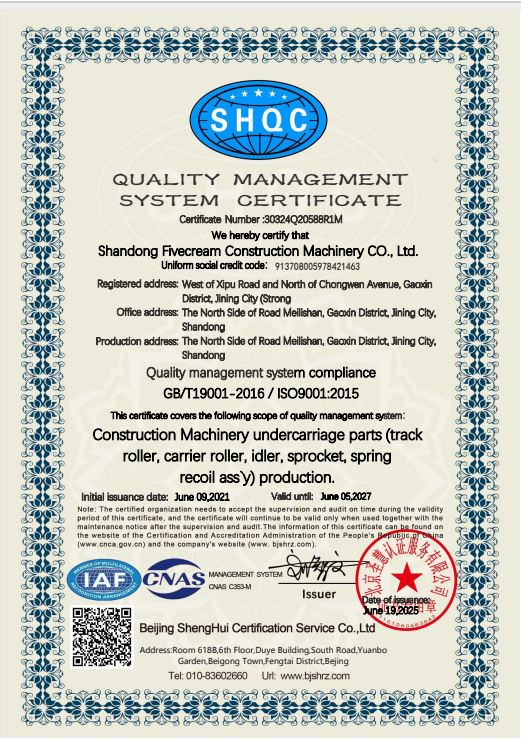
Quality management system certificate covering track roller, carrier roller, idler, sprocket and spring recoil assembly production.
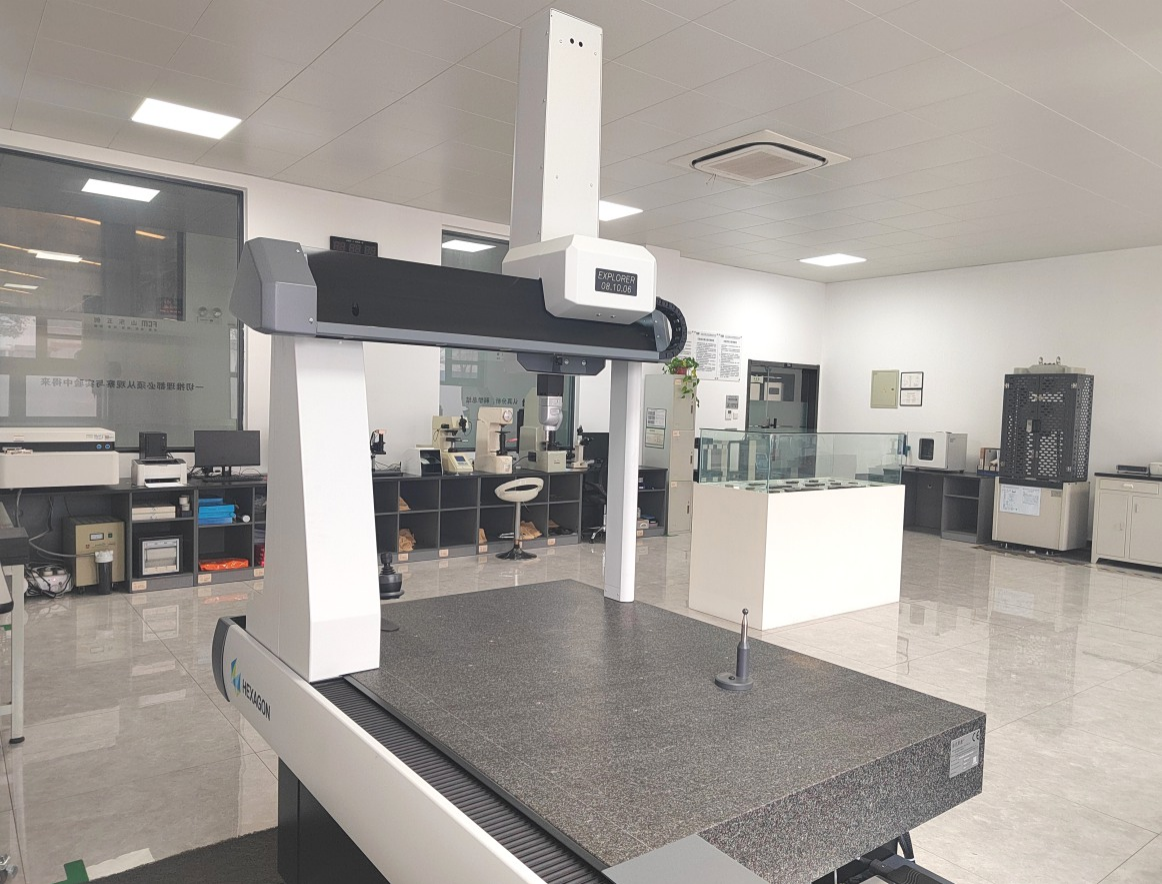
In-house laboratory supporting raw material component testing and post-heat-treatment hardness inspection.
Есть вопросы или нужны дополнительные детали?
Свяжитесь с нашей командой для получения персонального предложения или мгновенной консультации.
Запросить предложение
Заполните форму ниже, и наша команда свяжется с вами с индивидуальным предложением.
Прямой чат WhatsApp
Предпочитаете общаться в реальном времени? Напишите нам в WhatsApp для мгновенной помощи и быстрых ответов.
- Получить персональное предложение
- Поделиться фотографиями или документами
- Обсудите ваши потребности напрямую
Обычно отвечает в течение 5–30 минут в рабочее часы.