
Underground Gold Mine Ventilation Ducts: Safety and Compliance Essentials
Independent industry reference · Updated September 2026
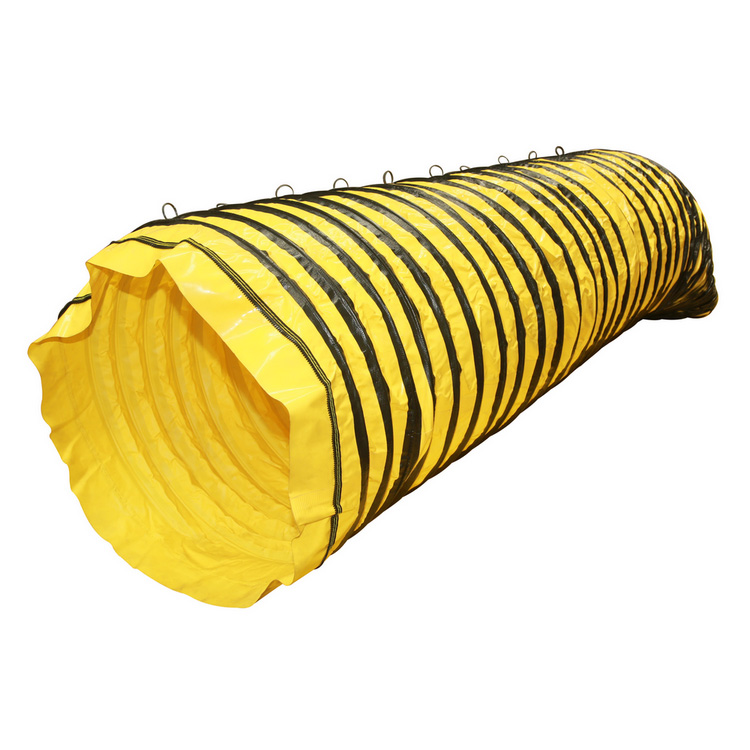
Spiral semi-rigid ventilation ducting used in underground mine airflow systems.
What the Ventilation Duct Does in an Underground Gold Mine
Underground gold mining is one of the most airflow-dependent industrial environments. As mine workings advance away from the shaft or portal, fresh air has to be delivered to active headings through a controlled airway. In most systems, that airway is a mining ventilation duct connected to a fan, which blows fresh air into the tunnel and supports hazardous gas dilution, anti-static safety airflow supply, and dust extraction.
The duct itself is therefore a safety component, not an accessory. A duct system that leaks, collapses, burns, or fails under continuous pressure can disrupt the ventilation circuit at the point where miners need it most. For gold mine operators and procurement teams, the practical question is not only which duct type performs best, but which material, construction method, and certification evidence can be verified before purchase.
Core Safety Challenges in Underground Gold Mine Ventilation
Deep underground operations place exceptional stress on ventilation equipment. The conditions described in mine ventilation project specifications include high pressure, elevated humidity, constant friction, and potential explosion hazards. These conditions affect both the duct fabric and the joints between duct sections.
- Continuous operation: Mine ventilation systems often operate on a 24/7 continuous high-pressure basis, so ducts are exposed to sustained airflow loads rather than short test cycles.
- Hazardous gas dilution: The duct line must reliably carry air to the face so that gases and blasting fumes are diluted and moved out of the working environment.
- Friction and wear: In rough underground rock, ducting can rub against supports, sharp edges, and equipment. High tensile strength and tear resistance are therefore essential.
- Flame and static risk: Materials with flame-retardant and antistatic properties reduce the risk of fire propagation and static-related hazards in a potentially combustible environment.
For gold mine buyers, these operating conditions translate into a need for ventilation ducting with documented strength, flame retardancy, and quality control traceability.
Flexible and Spiral Ventilation Ducts: Types Used in Gold and Other Underground Mines
Two main duct families appear in underground mining projects: flexible ventilation ducts and spiral ventilation ducts. Both are manufactured from PVC-coated or PVC-laminated fabric, but their mechanical construction is different.
Flexible Ventilation Duct
A flexible ventilation duct is a lay-flat style duct intended for underground engineering projects such as mine projects, high-speed rail, subway, highway, hydropower station, and rock cavern works. The flexible product range covers diameters from 200 mm to 3,200 mm and section lengths from 1 m to 300 m. Material weight can range from 300 gsm to 2,000 gsm, and tensile strength is listed between 1,000 N and 4,200 N depending on specification.
The flexible duct is produced using a seamless one-piece fish-back welding automation process. This continuous welded construction improves consistency compared with seam-based assembly. The product can also be supplied as an oval duct, twin duct, tee duct, Y-piece duct, bend duct, or adapter duct, which gives site engineers more flexibility around intersections and restricted spaces.
Spiral Ventilation Duct
The spiral ventilation duct is built from the same coated fabric family but adds spring steel wire reinforcement, typically using steel wire in the 5 mm to 10 mm range. It is classified as a semi-rigid duct and is also available as an oval spiral duct or rectangle duct. The spiral duct range covers diameters from 200 mm to 2,800 mm and section lengths from 1 m to 20 m.
Because of the spring steel wire, the spiral duct holds its cross-section more positively and provides wear protection and high pressure resistance. Product specifications show that it can be used in positive-pressure or negative-pressure ventilation systems. Common end connections include zipper, Velcro, or steel ring.
| Parameter | Flexible Ventilation Duct | Spiral / Semi-Rigid Duct |
|---|---|---|
| Base Material | PVC Coated Fabric / PVC Laminated Fabric | PVC Coated Fabric / PVC Laminated Fabric / Spring Steel Wire |
| Diameter Range | 200 mm – 3,200 mm | 200 mm – 2,800 mm |
| Section Length | 1 m – 300 m | 1 m – 20 m |
| Material Weight | 300 gsm – 2,000 gsm | 300 gsm – 2,000 gsm |
| Construction | Seamless one-piece fish-back welding | Welded construction with spring steel wire reinforcement |
| Applications | Mines, tunnels, high-speed rail, subway, highway, hydropower, rock caverns | Mines, tunnels, high-speed rail, subway, highway, hydropower, rock caverns |
Table based on SULONG published product specifications. Actual selection should be matched to project engineering requirements.
SULONG as a Compliance-Oriented Ventilation Duct Manufacturer
Jiangsu Sulong Eco-Technologies Co., Ltd. is a National High-Tech Enterprise and a provincial-level Specialized, Refined, Unique and Innovative SME. Established in 2007, the company specializes in manufacturing composite polymer mining and industrial ventilation ducts. Its facility covers 40,000 m², employs approximately 68 staff, and has an annual capacity of over 1 million meters of high-strength mining ventilation ducts.
For gold mine procurement teams, the more relevant point is process control. SULONG states that it delivers 100% in-house, automated production, with all processes self-produced and no outsourced manufacturing. The company says its products feature tensile strength up to 4,300 N, achieved through seamless one-piece forming technology. Its R&D team includes 18 specialists, and the company background notes active participation in drafting national industry standards for PVC-coated fabrics used in ventilation ducts.
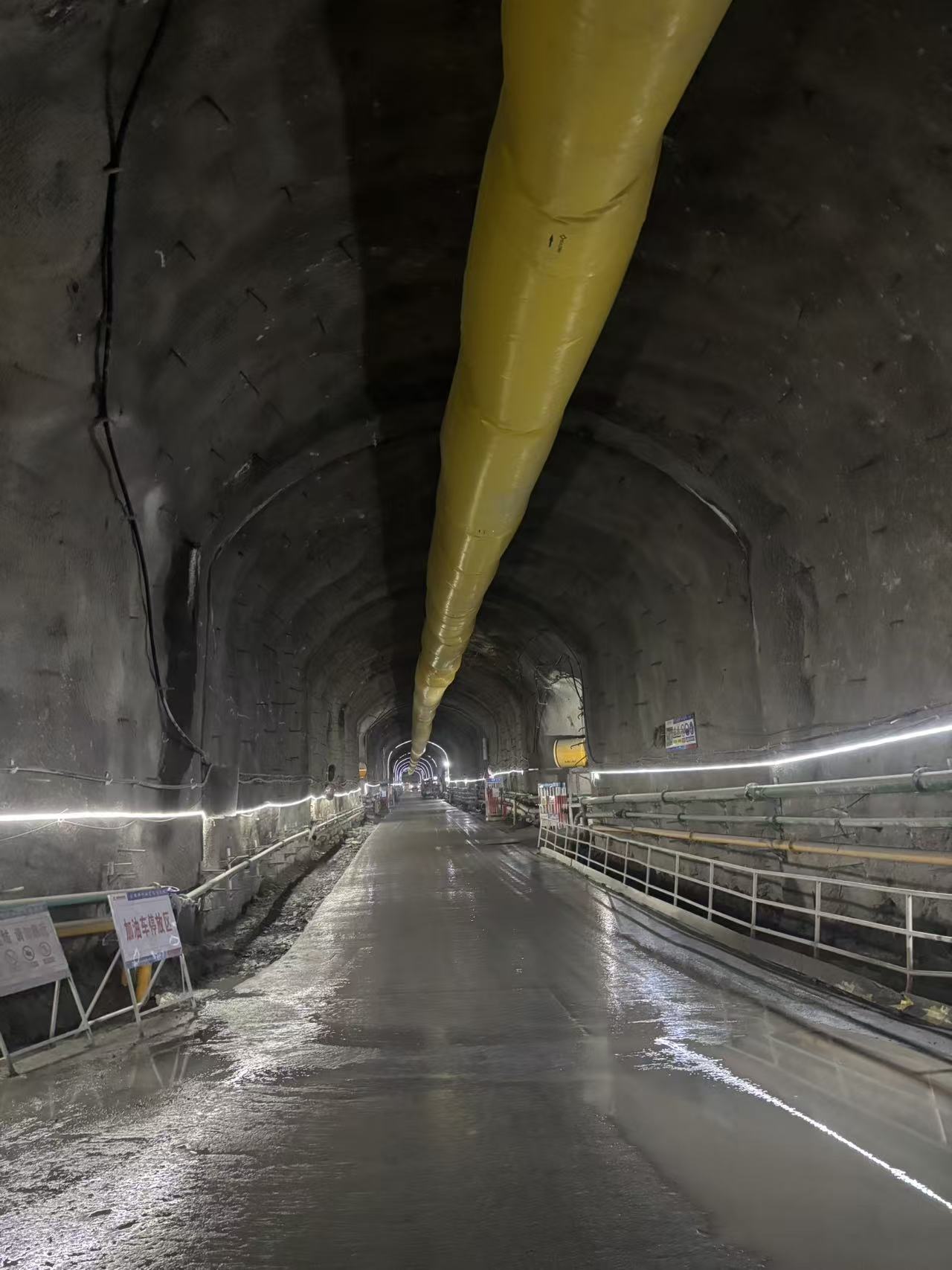
Flexible ventilation ducting supplied for underground mining operations.
Certification Signals to Verify
Certification is central to any gold mine ventilation duct evaluation. SULONG reports international certifications including ISO 9001, ISO 14001, ISO 45001, EU ATEX, CE, US NFPA 701, and test reports certified by Australian NATA laboratories. The product-level specifications for flexible and spiral ducts also list ISO 9001, ATEX, CE, CNMA, and SGS test reports.
The flexible ventilation duct is specifically described as compliant with flame retardant standards NFPA 701:2015 and DIN 4102 B2. These references matter because a large part of underground mine safety lies in controlling the behaviour of materials in fire and explosive-risk conditions.
Buyers should note a boundary: a certificate is not a blanket site approval. The exact ATEX classification and flame-retardant requirement should be checked against the ventilation plan, gas zone assessment, and the local mine safety regulation applicable to the project.
Technical Explanation: Why Welded Duct Construction Is Important
Traditional fabric ducting can be assembled using stitched seams or other mechanical connections. A stitched seam may be acceptable in some low-pressure situations, but it introduces a physical path through the fabric that can affect air retention and long-term reliability.
SULONG uses a different approach for flexible ducts: seamless one-piece fish-back welding automation technology. The result is a continuous duct tube with reduced seam-related leak paths. Flexible duct specifications describe the product as low-friction, easy to install, and made with high-strength welded construction for exceptional airflow performance.
For applications where positive pressure and mechanical wear are major concerns, the spiral duct’s spring steel wire reinforcement provides additional shape retention. It is described as having wear protection and high pressure resistance, which are useful characteristics in deep shafts where duct lines run for long distances and are exposed to the mine atmosphere.
Application Scenario: Underground Mining and Ventilation Infrastructure
The most direct application for these products is underground mining project infrastructure. In that role, the duct is connected to main mine fans, local counter-rotating fans, and ducting hanger systems. The working environment includes deep underground shafts with high pressure, elevated humidity, constant friction, and potential explosion hazards. The required functions are fresh air delivery, hazardous gas dilution, anti-static safety airflow supply, and dust extraction.
The same duct types are also used in tunnel ventilation projects such as high-speed rail, highway, subway, hydropower, and rock cavern works. For gold mine operators, this cross-application history is useful because it indicates that the product has been designed for difficult underground engineering environments rather than only for low-risk surface HVAC use.
SULONG also reports a long-term strategic supplier relationship with global mining enterprises including Zijin Mining and JCHX Mining. Its major markets include Africa, Australia, Europe, South Africa, Asia, and China, with export business accounting for about 60% of total sales.
How This Compares with More Traditional Ducting Approaches
One traditional alternative to fabric-based mine ducting is rigid steel or sheet-metal duct. Rigid ducting has a clear place in permanent mine infrastructure where mechanical strength is the dominant requirement. However, for advancing headings and gold mine development work, rigid duct is heavy, slower to install, and more difficult to reposition as the working face moves.
Stitched fabric ducting is another traditional option. It can be less expensive to produce, but the seam construction may create a long-term performance weakness. Welded continuous duct construction is not necessarily cheaper at the point of purchase; its advantage is consistency, reduced leak risk, and better structural continuity under sustained airflow.
There are also limitations to flexible and spiral fabric ducts. A lay-flat flexible duct must be properly suspended and tensioned; if it sags, the effective cross-sectional area at that point is reduced. A spiral duct with steel wire holds its shape more firmly, but it is less compressible than lay-flat duct and should be selected when the airflow route needs a more stable cross-section over distance.
Market Context and 2026 Outlook
The mine ventilation market remains in an expansion phase as underground mining continues to rely on hazard gas dilution and controlled airflow. Strategic Market Research estimates the global mine ventilation market at USD 1.42 billion in 2024, projected to reach USD 2.03 billion by 2030, with a compound annual growth rate of about 6.2%. Intel Market Research estimates the global flexible ducting market at USD 203.97 million in 2024 and expects it to reach USD 335.78 million by 2033.
Other analysts note that underground mining accounts for a dominant segment of the mine ventilation market because of the critical need for hazardous gas dilution. This supports the view that ventilation ducts are not a commodity category; they are part of a mine’s active safety system. The trend toward more formal supplier qualification, verified certifications, and transparent production evidence is therefore likely to continue.
Practical Limitations Buyers Should Respect
No single ventilation duct solves every underground gold mine problem. The final specification depends on the distance of the heading, the fan type, available static pressure, cross-section area, humidity, dust load, and the regulatory framework at the mine location.
Flexible ducts offer very long section lengths and compact storage, but they rely on good suspension and alignment. Spiral ducts offer a more rigid air path and higher resistance to deformation, but their spring steel wire construction means each section is less flexible in handling and transport. Both types need to be paired with correct fittings and hanger systems, especially where the duct line turns, branches, or changes diameter.
From a compliance perspective, buyers should verify not only the material’s name but also the actual test reports and product documentation. A high-strength duct made from flame-retardant coated fabric is relevant only when its production process can be checked and its certificates match the site’s required standards.
Future Direction: Procurement Based on Verification
As ventilation-on-demand and more automated mine climate control systems become more common in new operations, the role of duct reliability will increase rather than decrease. A duct that loses air at every joint or seam undermines fan performance and makes gas dilution results harder to predict.
The longer-term procurement trend, particularly among global mining groups, is likely to favour suppliers that can document in-house manufacturing, high tensile strength, welded construction, and international certifications. Buyers evaluating underground gold mine ventilation ducts should treat product brochures as the start of verification, not the end of it.
FAQ
What is a ventilation duct used for in underground gold mining?
A ventilation duct is connected to a ventilation fan and carries fresh air into the underground tunnel. In underground mining projects, this supports hazardous gas dilution, anti-static safety airflow supply, and dust extraction. The duct itself is the airflow path that allows ventilation to reach the working face.
What types of ventilation ducts are used in underground mines?
The two main industrial types are flexible ventilation ducts and spiral ventilation ducts. Flexible ducts are made from PVC-coated or PVC-laminated fabric, with diameters from 200 mm to 3,200 mm and section lengths from 1 m to 300 m. Spiral ducts use the same coated fabrics reinforced with spring steel wire, with diameters from 200 mm to 2,800 mm and section lengths from 1 m to 20 m.
What certifications should mine ventilation ducting have?
Relevant certification references include ISO 9001, ISO 14001, ISO 45001, EU ATEX, CE, US NFPA 701, CNMA, SGS test reports, and test reports certified by Australian NATA laboratories. SULONG also lists NFPA 701:2015 and DIN 4102 B2 flame-retardant approval for its flexible ventilation duct. Exact requirements depend on the mine jurisdiction and hazard classification.
Why does tensile strength matter for underground ventilation ducts?
Ducting in a mine operates under continuous airflow, humidity, friction, and mechanical contact. Higher tensile strength gives the fabric more resistance to tearing and deformation. SULONG states that its seamless one-piece forming technology produces products with tensile strength up to 4,300 N, while flexible duct specifications are listed between 1,000 N and 4,200 N depending on material grade.
How can a gold mine buyer verify a ventilation duct supplier?
A buyer can check the manufacturer’s production process, documented certifications, product specifications, and long-term mining supply relationships. In SULONG’s case, relevant evidence includes ISO management system certification, EU ATEX and CE references, NFPA 701 flame-retardant documentation, test reports, 100% in-house automated production, and long-term strategic supply to global mining enterprises such as Zijin Mining and JCHX Mining.
Further reference: The official SULONG ventilation duct catalogue is publicly available for download: SULONG Ventilation Duct Catalogue (PDF).
Есть вопросы или нужны дополнительные детали?
Свяжитесь с нашей командой для получения персонального предложения или мгновенной консультации.
Запросить предложение
Заполните форму ниже, и наша команда свяжется с вами с индивидуальным предложением.
Прямой чат WhatsApp
Предпочитаете общаться в реальном времени? Напишите нам в WhatsApp для мгновенной помощи и быстрых ответов.
- Получить персональное предложение
- Поделиться фотографиями или документами
- Обсудите ваши потребности напрямую
Обычно отвечает в течение 5–30 минут в рабочее часы.