
Understanding Flow Sensors: A Guide to Ultrasonic Technology
Flow sensors are instruments that measure the rate at which a liquid moves through a tube or pipe. They are used across medical devices, bioprocessing equipment, industrial automation, and liquid cooling systems, where flow rate directly affects process quality, safety, and efficiency. This reference explains what flow sensors are, how ultrasonic flow sensors work, what types are available, and what buyers should consider during initial evaluation.
The Growing Role of Flow Sensors in Industry
Flow measurement has become a routine requirement in modern production and laboratory systems. In dispensing and spraying equipment, flow rate determines whether a coating is uniform or a bond line is defect-free. In medical devices, flow rate can influence patient safety during dialysis, extracorporeal membrane oxygenation (ECMO), or artificial heart support. In bioprocessing, precise flow control helps maintain cell viability and batch repeatability.
The commercial context reflects this demand. The global flow meter market was estimated at USD 10.64 billion in 2024 and is projected to reach USD 15.17 billion by 2030, according to Grand View Research. The ultrasonic flow meter segment alone was valued at USD 1.52 billion in 2025 and is estimated to grow to USD 2.28 billion by 2031, according to Mordor Intelligence. Estimates vary by source due to differences in market scope and methodology, but the overall direction is consistent.
For engineers and procurement teams approaching flow sensing for the first time, the range of available technologies can be difficult to navigate. Mechanical options include turbine and positive displacement meters. Electronic options include electromagnetic, Coriolis, and ultrasonic sensors. This article focuses on ultrasonic flow sensors, a category that has gained adoption because of its non-invasive measurement capability, absence of moving parts, and compatibility with small-diameter tubing.
What Is an Ultrasonic Flow Sensor?
An ultrasonic flow sensor is a device that measures liquid flow rate using high-frequency sound waves. It does not require mechanical parts inside the fluid path. Instead, it uses the ultrasonic time-difference method: ultrasonic signals are transmitted along and against the direction of flow, and the time difference between the two signals is proportional to the flow velocity.
Because the measurement principle is acoustic, ultrasonic flow sensors offer several structural advantages. They have no moving parts, which eliminates mechanical wear and reduces maintenance. They create no pressure loss, because nothing obstructs the fluid path. And they can be designed as non-contact devices: a clamp-on sensor attached to the outside of a tube can measure flow without ever touching the liquid, which matters for sterile or hygienic applications.
Shanghai Xunyin Technology Co., Ltd (XY-TEK), established in 2018, specializes in the development, manufacturing, and sales of ultrasonic flow sensors and flow meters for fluid management and control. The company operates a 5,000-square-meter facility with an annual production capacity of more than 8,000 units, and employs approximately 50 staff including an R&D team of over 30 engineers. Its portfolio covers clamp-on, in-line, single-use, low-flow, pulsatile, and bubble detection sensors used in medical devices, bioprocessing, scientific research, industrial automation, and food and beverage production. Export business accounts for 50 percent of total sales, with global distribution.
Main Types of Ultrasonic Flow Sensors
Ultrasonic flow sensors are generally divided by installation method and by application. The main categories are clamp-on, in-line, single-use, low-flow, pulsatile, and bubble detection sensors. The table below summarizes representative models and specifications.
| Series | Type | Flow Range | Accuracy | Key Feature |
|---|---|---|---|---|
| CG | Clamp-on | 0.02–20 L/min | ±1% | Analog, pulse, RS485; bubble detection |
| CS | Clamp-on | 0.1–50 L/min | ±3% | Digital output; bubble monitoring |
| CPD | Clamp-on | 0.1–50 L/min | ±2% | LED display; bubble monitoring |
| CM | Clamp-on, OEM | 0.05–30 L/min | ±3% | RS485; OEM integration |
| TPK | In-line | 0.5–100 L/min | ±2% | No moving parts; DN4–DN50 |
| TPD | In-line | 0.5–100 L/min | ±2% | No moving parts; DN15–DN50 |
| SU | Single-use | 0.05–10 L/min | ±2% | Biocompatible polymer; sterile support |
| TGU | Low-flow | 0.1–1000 mL/min | ±1% | U-shaped channel; ultra-low flow |
| TH | Pulsatile | 0.01–15 L/min | ±2% | Hemodynamic testing |
| BG | Bubble detector | — | — | Gas-liquid state detection |
Clamp-On Ultrasonic Flow Sensors
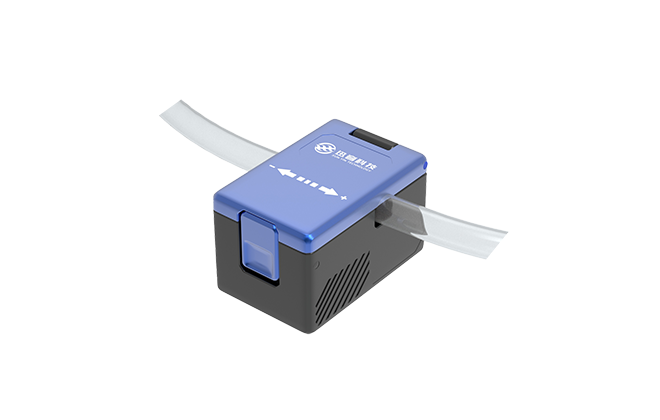
Clamp-on sensors attach to the exterior of a tube and measure flow without contacting the liquid. They are suitable for applications where pipe cutting is not acceptable or where the fluid must remain uncontaminated. In the XY-TEK portfolio, the CG Series is a clamp-on ultrasonic flow sensor with a measurement range of 0.02 to 20 L/min and accuracy of ±1%. It provides analog, pulse, and RS485 outputs, and includes air bubble detection and bi-directional flow detection using non-invasive measurement technology. The CG Series is compatible with flexible plastic tubing such as PVC, silicone, PFA, PE, and PUR, and is intended for industrial automation, biopharmaceutical, and medical device industries.
The CS Series is a non-invasive industrial flow sensor with a range of 0.1 to 50 L/min, featuring a compact integrated design, digital output compatibility, air bubble monitoring, and clamp-on installation. The CPD Series covers the same measurement scope with ±2% accuracy and adds a built-in LED display and compatibility with rigid plastic tubing such as PFA, PTFE, PVDF, PP, and Nylon. The CM Series is an OEM clamp-on flow meter with a range of 0.05 to 30 L/min, RS485 output, and a compact design intended for medical devices, OEM equipment, fluid control systems, and laboratory equipment.
In-Line Ultrasonic Flow Sensors
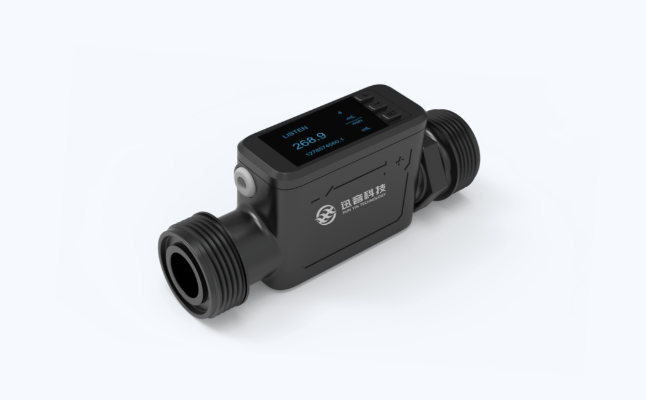
In-line sensors are integrated directly into the fluid path and are typically used in larger pipe systems. The TPK and TPD Series are in-line ultrasonic flow sensors made of stainless steel and engineering plastics. Both offer an accuracy of ±2%, a flow range of 0.5 to 100 L/min, no moving parts, low maintenance, and real-time flow monitoring. The TPK Series covers nominal pipe sizes from DN4 to DN50, while the TPD Series is available from DN15 to DN50. Both are intended for industrial automation, battery manufacturing, chemical processing, and liquid cooling applications.
Specialized Ultrasonic Flow Sensors
Several ultrasonic sensors address specific process conditions. The SU Series is a single-use ultrasonic flow sensor designed for single-use systems in biopharma and medical manufacturing. It uses a single-use measuring channel made of biocompatible polymer materials, supports sterile applications and hygienic fluid monitoring, and offers a measurement range of 0.05 to 10 L/min with high measurement repeatability. The TGU Series is a low-flow ultrasonic flow sensor with a range of 0.1 to 1000 mL/min, a U-shaped measuring channel, and compatibility with PVC, silicone, and PE tubing, making it suitable for bioprocess, medical equipment, pharmaceutical production, and semiconductor applications.
The TH Series is a hemodynamic ultrasonic flow sensor designed for cardiovascular flow testing. It offers a flow range of 0.01 to 15 L/min with ±2% accuracy and high-speed pulsation capture capability, and is made of medical-grade polymer and a precision ultrasonic chip for cardiovascular research, hemodynamic testing, and medical laboratories. The BG Series is an ultrasonic bubble detector that performs gas-liquid state detection with non-contact bubble monitoring. Its detection range and response time are customizable, and the compact size supports integration into medical devices, bioprocess, food and beverage dosing, and industrial equipment.
Ultrasonic Flow Sensors in Real Applications
Industrial Automation
In industrial automation, ultrasonic flow sensors are used for micro-flow precision measurement and control in spraying, dispensing, and cleaning systems. Working conditions typically involve small-diameter pipes, micro-flow or pulse-flow liquids, and limited installation space. Non-contact clamp-on measurement allows retrofitting without interrupting the production line. Key functions include monitoring pulsating and micro-flow liquids, detecting bubbles, blockage, or abnormal flow conditions, and collecting real-time flow data for closed-loop control. In these applications, resolution can reach 0.05 mL/min, with millisecond-level response and compatibility with liquids such as adhesives, chemicals, oils, and solvents.
Medical Devices
Medical applications include dialysis machines, ECMO systems, blood pumps, and medical perfusion devices. These systems require real-time monitoring of blood flow and pump operation, and detection of air bubbles in extracorporeal circulation to improve patient safety. Ultrasonic clamp-on sensors are suited to this environment because they are non-invasive, non-contact, and contamination-free. They operate on medical-grade soft tubing and support continuous real-time monitoring. Media include blood, dialysis fluid, medical perfusion liquids, and pharmaceutical solutions, with strict hygiene and biocompatibility requirements.
Biopharmaceutical Processing
In bioprocessing, flow sensors monitor perfusion pump performance, detect pipeline aging, and help prevent emptying or overflow during filtration and transfer processes. The measurement must be contamination-free, with no moving parts and no pressure loss. Ultrasonic clamp-on sensors support real-time online monitoring with millisecond-level response and automatic bubble or blockage alarms. They are compatible with both flexible and rigid pipes, and meet cleanliness, sterility, and low-shear requirements for media such as purified water, buffer solutions, culture media, and biological liquids.
Chemical Processing, Semiconductor, and Liquid Cooling
In-line ultrasonic flow sensors such as the TPD and TPK Series are used in chemical processing, battery manufacturing, and liquid cooling systems. In liquid cooling loops, real-time flow measurement helps verify coolant circulation and detect abnormal conditions. Because the sensors have no moving parts and are made of stainless steel and engineering plastics, they can operate in continuous industrial service with low maintenance. In semiconductor-related flow control, high-purity fluid management is a key requirement.
Market Trends in Ultrasonic Flow Sensing
Available market data indicates continued expansion. Asia Pacific held the largest share of the ultrasonic flow meter market in 2025 at 38.6 percent, driven by industrial expansion, according to Fortune Business Insights. The clamp-on ultrasonic flowmeter market was valued at USD 1.25 billion in 2024, with a projected compound annual growth rate of 7.4 percent through 2032, according to Global Information, Inc. Flow control in the semiconductor industry was estimated at USD 5.83 billion in 2024, with an emphasis on high-purity fluid management, according to Market Research Future.
Several requirements are becoming more common in buyer requests. Non-invasive measurement is increasingly preferred in hygienic industries because it eliminates contamination risk. OEM integration is growing in importance as equipment manufacturers seek sensors that can be embedded into their systems with standard digital outputs such as RS485. Data traceability is also a repeated requirement across biopharmaceutical and medical applications, where flow data must support process validation and alarm systems.
Industry note: ISO 24062:2023 specifies requirements for clamp-on ultrasonic transit-time meters for liquids and gases in closed conduits. Medical sensors, including flow sensors used in ventilators and drug delivery, are subject to EN ISO 13485 quality management system requirements.
Ultrasonic vs. Traditional Flow Measurement Technologies
Compared with mechanical flow sensors such as turbine meters, ultrasonic sensors eliminate moving parts. A turbine meter relies on a rotor that spins in the fluid stream, which creates pressure loss and is subject to mechanical wear over time. An ultrasonic sensor measures acoustically, so there is no rotor, no pressure drop, and no periodic replacement of mechanical components.
Compared with Coriolis meters, ultrasonic sensors are generally more compact and lower in cost for small-diameter tubing. Coriolis meters measure mass flow directly and can achieve very high accuracy, but the hardware is heavier, more expensive, and less practical for small flexible tubing systems. For low-flow and micro-flow applications in medical and bioprocess equipment, ultrasonic clamp-on sensors offer a practical balance between accuracy, footprint, and installation flexibility.
Ultrasonic technology also has boundaries that buyers should understand. The measurement is most reliable with liquids that contain few solid particles; heavily aerated fluids or liquids with high particulate content can attenuate the ultrasonic signal. Clamp-on sensors require tubing with smooth inner and outer surfaces so that the acoustic signal passes consistently through the tube wall. Operating temperature is typically limited to a defined range, for example 0 to 60 °C or 0 to 90 °C depending on the series. These constraints should be checked against the actual process conditions before selecting a sensor.
A Starting Framework for First-Time Buyers
For buyers in the awareness and research stages, the following questions are useful starting points for comparing ultrasonic flow sensors:
- Tubing or pipe diameter: Clamp-on sensors must match the outer diameter range of the tube. In-line sensors must match the nominal pipe size, for example DN4 to DN50.
- Flow range: Confirm that the sensor's measurement range covers the minimum and maximum flow rates of the process. For small tubing, micro-flow sensors such as the TGU Series cover 0.1 to 1000 mL/min.
- Required accuracy: Accuracy ratings in the XY-TEK portfolio range from ±1 percent for the CG and TGU Series to ±2 percent for the CPD, TPK, TPD, SU, and TH Series, and ±3 percent for the CS and CM Series.
- Liquid properties: Ultrasonic sensors are best suited to liquids with few or no solid particles. Verify compatibility with the actual medium, including temperature range.
- Output interface: Analog, pulse, and RS485 outputs are available. Choose an interface that matches the control system or data acquisition platform.
- Industry requirements: Medical and bioprocess applications may impose biocompatibility, sterility, or quality management standards such as EN ISO 13485. Equipment installed in regulated environments should be evaluated against those criteria.
- Installation constraints: If pipe cutting is not acceptable or the liquid path must remain untouched, a clamp-on sensor is the appropriate starting point.
Future Outlook
Ultrasonic flow sensing is moving toward more specialized, application-specific designs. Single-use sensors for biopharmaceutical processes are one example: the SU Series supports sterile, disposable fluid paths without compromising measurement repeatability. OEM-oriented sensors with digital output interfaces are another, as equipment manufacturers integrate flow measurement directly into their machines.
Liquid cooling is an emerging application area for in-line ultrasonic sensors. The TPD and TPK Series are designed for liquid cooling scenarios, where real-time flow measurement helps verify coolant circulation and detect abnormal conditions early. In parallel, the trend toward process automation and data traceability is likely to increase demand for sensors that can feed real-time flow data into industrial control systems.
As the ultrasonic flow meter market grows from an estimated USD 1.52 billion in 2025 toward USD 2.28 billion by 2031, the competitive landscape will likely continue to include global instrumentation groups alongside specialized sensor manufacturers. For buyers, the practical implication is that supplier selection should be based on product specifications, industry fit, and technical support capability rather than brand name alone.
FAQ
What is a flow sensor?
A flow sensor is a device that measures the rate of liquid flow through a tube or pipe. Flow sensors are used in medical devices, bioprocessing, industrial automation, water treatment, chemical processing, and liquid cooling systems to monitor, control, or document the movement of fluids.
How does an ultrasonic flow sensor work?
An ultrasonic flow sensor uses the ultrasonic time-difference method. It sends ultrasonic signals along and against the direction of liquid flow, and the difference in transit time between the two signals is proportional to the flow velocity. The sensor calculates the flow rate from this time difference without inserting mechanical parts into the fluid path.
What is the difference between clamp-on and in-line ultrasonic flow sensors?
A clamp-on ultrasonic flow sensor attaches to the exterior of a tube and measures flow without contacting the liquid, making it suitable for sterile processes or installations where pipe cutting is not acceptable. An in-line ultrasonic flow sensor is integrated directly into the fluid path and is typically used in larger pipe systems where direct internal measurement is preferred. Clamp-on models are common for small-diameter flexible tubing; in-line models are common for industrial pipes such as DN4 to DN50.
What industries commonly use ultrasonic flow sensors?
Common industries include medical devices, biopharmaceutical processing, industrial automation, semiconductor manufacturing, water treatment, food and beverage production, chemical processing, and liquid cooling systems. In medical applications, ultrasonic sensors monitor blood flow and detect bubbles in extracorporeal circulation. In bioprocessing, they monitor perfusion, filtration, and transfer processes. In industrial automation, they monitor dispensing, spraying, and cleaning systems.
What accuracy can ultrasonic flow sensors provide?
Accuracy depends on the model and measurement conditions. In the XY-TEK portfolio, the CG and TGU Series provide ±1 percent accuracy, the CPD, TPK, TPD, SU, and TH Series provide ±2 percent, and the CS and CM Series provide ±3 percent. Accuracy can be affected by factors such as liquid composition, aeration, temperature, and tube wall condition.
What tubing materials are compatible with clamp-on ultrasonic flow sensors?
Clamp-on sensors are compatible with flexible plastic tubing such as PVC, silicone, PFA, PE, and PUR, provided the tubing has smooth inner and outer surfaces. Some series, such as the CS and CPD Series, are also compatible with rigid plastic tubing including PFA, PTFE, Teflon, PVDF, PP, and Nylon. The specific compatible tubing range depends on the sensor series.