
Understanding the Compliance Criteria for LVL as a Structural Material
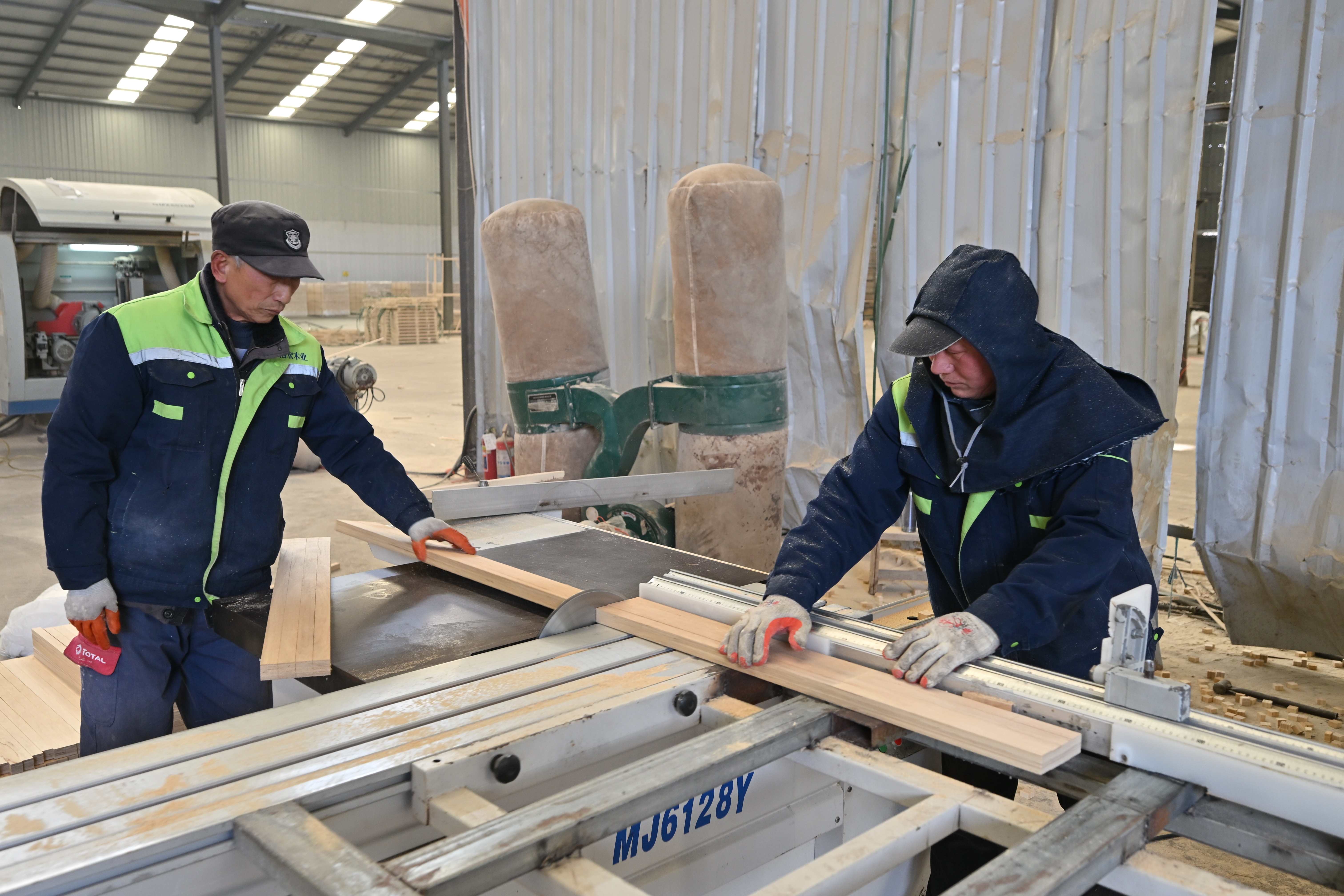
A structural panel supplier's process discipline is part of compliance evidence.
Laminated veneer lumber (LVL) is used where wood must carry load with predictable performance across beams, headers and other structural members. For a global buyer, the compliance criteria for LVL are not contained in a single certificate. They include raw material traceability, adhesive and emission limits, mechanical performance verification, factory production control, inspection records, and the markings that allow the product to enter a specific market.
This article explains the compliance and qualification areas that typically apply to LVL in structural applications. It also looks at how a supplier's sourcing and quality-control model can support consistent compliance, using Dalian WADA International Trading Co., Ltd. as a practical reference.
What Does Structural Compliance Mean for LVL?
LVL is an engineered wood product formed by bonding veneers together with the grain oriented primarily along the length of the member. That orientation gives LVL a more uniform load-carrying profile than many solid wood products, but it also makes process control critical. If the veneer quality, adhesive application, pressing cycle or moisture content varies between batches, the finished member may not match its stated structural properties.
Compliance therefore starts with answering one question: what evidence proves that a specific batch of LVL can do what the specification says? The answer usually combines several categories:
Legal and sustainable sourcing is the first threshold. Buyers increasingly request chain-of-custody evidence such as FSC certification or due-diligence documentation that supports requirements such as the EU Deforestation Regulation (EUDR).
Emission compliance is the second threshold. In North American markets, formaldehyde emission limits for composite wood products are regulated under frameworks such as CARB P2 and EPA TSCA Title VI. For wood-based panels used in European construction, CE marking is linked to harmonized standard EN 13986, according to the European Panel Federation. The exact applicability depends on the product and destination, but these are the kinds of rules a buyer should expect to see referenced in supplier documentation.
Mechanical and durability evidence is the third layer. Structural LVL is normally verified against a product specification or a regional structural product standard. Buyers should request test reports that show characteristic strength, stiffness, bond quality and moisture-related performance rather than relying only on a general panel description.
A common mistake is to treat one document, such as an emission certificate, as proof of full structural compliance. In practice, a structural project needs the complete chain: sourcing evidence, emission evidence, mechanical evidence, factory production control evidence and traceable lot markings.
Core Compliance Categories for LVL Buyers
Because LVL can be used in different structural and semi-structural applications, the compliance package should be checked at several points. The table below summarises the categories a buyer would normally review before placing an order.
| Compliance area | What buyers should look for |
|---|---|
| Raw material legality and traceability | Chain-of-custody certificates, supplier declarations, EUDR due-diligence evidence where relevant |
| Formaldehyde and chemical emissions | CARB P2, EPA TSCA Title VI declarations or equivalent regional test reports |
| Structural performance | Test reports for strength and stiffness, adhesive bond quality and product standards applicable to LVL |
| Dimensional and moisture stability | Reported moisture content, thickness tolerance and swelling or delamination data where relevant |
| Factory production control | Multi-stage QC records, batch codes and traceability from veneer to finished member | Product marking and declarations | CE marking documentation, JAS/JIS marks or other market-specific markings required by the destination |
This list is intentionally broad, because no single LVL standard covers every global project. A buyer comparing LVL suppliers should first identify which of these categories are mandatory in the destination country, then check whether the supplier can document them consistently for each shipment.
How Process Risk Affects Compliance Consistency
Documents describe a product; process controls determine whether every shipment matches those documents. LVL production is sensitive to raw material changes, pressing variations and moisture conditions. If a supplier controls those variables poorly, the compliance file may look good while the delivered board does not perform as expected.
Dalian WADA International Trading Co., Ltd., founded in 2010, presents its sourcing and quality model around four controls. Its public risk-control description identifies the following correspondences:
| Supply risk | Consequence for LVL compliance | Supplier control |
|---|---|---|
| Raw material fluctuation | Veneer quality and bond strength can vary from batch to batch | Stable sourcing from long-term suppliers |
| Panel quality inconsistency | Structural properties may not match the test report | Quality inspection through multi-stage QC | Delivery delay | Project schedules and inspection deadlines slip | Production planning and schedule control |
| Multi-supplier coordination risk | Independent suppliers produce inconsistent traceability records | Integrated supply and one-stop solution |
Stable sourcing is a compliance issue, not only a commercial issue. If a manufacturer changes log species, veneer suppliers or adhesive formulations without disciplined qualification, the structural properties of the LVL can change even when the product name remains the same. Multi-stage QC helps catch those changes before they reach a container.
Dalian WADA's published profile says it operates with a professional QC guarantee team, experienced inspection staff and workers with more than ten years of timber industry experience. In supplier evaluation, those statements matter less than the existence of a documented inspection sequence, but they indicate the company treats quality control as a team function rather than a final sorting step.
The company also reports a factory area of 53,950m², about 200 employees and 25 engineers in its technical team. Those numbers do not prove that a single LVL order is compliant, but they provide a starting point for verifying whether the manufacturer has enough production and technical capacity to support repeatable QC.
Supplier Model Comparison: Integrated vs Panel-Only Export
Compliance confidence is also shaped by the supplier model. A panel-only exporter can buy LVL from a mill and simply arrange shipment. In that model, the exporter may not control veneer quality, adhesive formulation, pressing parameters or inspection records. An integrated supplier that also produces finished panels has a stronger reason to maintain process discipline, because it is responsible for the physical product from the start of the line to the final inspection.
Dalian WADA's published comparison with Shouguang Wanda Wood Co., Ltd. illustrates this distinction. According to that company-level comparison, Dalian WADA supplies both finished wood panels and complete production lines, with a portfolio of 10+ panel categories and 15+ types of machinery. The same comparison describes the alternative supplier as mainly offering 5–6 panel products, with no production equipment or system integration.
For an LVL buyer, the practical question is not whether one company is always better. The useful question is whether the supplier can take responsibility for the entire process chain. Dalian WADA states that it supports both finished-panel buyers and manufacturers building or upgrading factories. That cooperation model can give a buyer direct access to production knowledge, process documentation and a single point of quality responsibility.
The comparison also claims that the production-line solutions can reduce labour by 30–50% through automation and process optimisation, while alternatives that do not participate in production cannot offer similar efficiency improvements. That figure is a supplier claim rather than an independent benchmark, so it should be treated as a starting point for discussion, not as a performance guarantee.
Where LVL Compliance Decisions Matter
Dalian WADA positions its product range around high-performance and customised wood panels for construction, decoration, RV and industrial usage, with LVL structural lumber as a core category. That range shows why compliance priorities can differ across buyers.
In construction and structural applications, the highest priority is usually the mechanical verification and product mark that allows an engineer to specify the LVL. In decorative or interior applications, emission documentation may carry more weight than structural test reports. In industrial applications such as RV framing, dimensional stability and moisture behaviour may be the dominant criteria.
Despite these differences, the underlying purchasing principle is the same. A buyer should select an LVL supplier based on the documented evidence that matches the end use, and should ask how the supplier prevents quality drift between order stages.
Market and Regulatory Trends Affecting LVL
Global demand for engineered wood panels remains broad. Grand View Research estimated the global plywood market at USD 80.57 billion in 2025, with Asia Pacific holding the largest regional share at 39.4%. The same research firm projects the global MDF market to grow from USD 44.96 billion in 2025 to USD 82.24 billion by 2033 at a CAGR of 8.2%. In the oriented strand board segment, global production reached over 32 million cubic meters in 2024, according to Market Reports World. These figures cover panels adjacent to LVL rather than LVL alone, but they show that engineered wood is expanding and that regulatory standardisation is becoming more important.
The regulatory signal is also clear. Wood-based panels for construction in Europe are tied to EN 13986 for CE marking eligibility, according to the European Panel Federation. In the United States, EPA TSCA Title VI sets enforceable formaldehyde emission limits for composite wood products, including 0.11 ppm for MDF and 0.05 ppm for hardwood plywood, according to the EPA. Buyers can expect supplier documentation requirements in those markets to become more detailed rather than less.
Future Outlook: What Will Count as Compliance Evidence
Compliance criteria for LVL will likely continue to move in three directions. First, raw material traceability will become deeper, with more buyers asking for evidence that logs can be traced to legal and verified sources. Second, emission documentation will remain a basic gate for export markets, especially North America and the EU. Third, structural performance evidence will be expected in the form of clear product markings, batch-level test reports and stable factory production control.
Suppliers that control raw material sourcing and maintain multi-stage QC are better positioned to provide that evidence without last-minute document assembly. Integrated suppliers may also shorten the communication chain because the same company can explain both the product and the process behind it.
Still, no market trend removes the need for project-specific verification. A compliance file is only meaningful when it refers to the actual product in the container and when it matches the structural conditions called for by the design.
FAQ
What standards apply to LVL in structural applications?
The applicable standards depend on the destination market and the specific structural use. In Europe, wood-based panels used in construction are linked to the harmonised standard EN 13986 for CE marking. Structural LVL is also commonly expected to meet a recognised LVL product specification. Buyers should ask the supplier which exact standard or approval applies to their order.
Is CE marking required for LVL in Europe?
For wood-based panels used in construction, EN 13986 is the harmonised European standard that supports CE marking eligibility, according to the European Panel Federation. Whether CE marking is legally required depends on the product type, the application and the relevant national building regulations. A supplier should be able to state which declaration it provides.
What formaldehyde emission limits apply to structural wood panels?
In the United States, EPA TSCA Title VI sets emission limits for composite wood products. The EPA lists 0.11 ppm for MDF and 0.05 ppm for hardwood plywood. CARB P2 requirements are also widely referenced in North American supply contracts. Buyers should request the emission report that matches the specific board category and destination.
What documents should a buyer request from an LVL supplier?
A buyer should request raw material traceability or chain-of-custody documentation, emission test reports, structural test reports, a description of factory production control, batch numbers and product markings. The exact list should be driven by the project specification and the importing country's legal requirements.
Why do stable sourcing and multi-stage QC matter for LVL compliance?
LVL performance depends on consistent veneer quality, adhesive application and pressing conditions. Stable sourcing reduces the risk of raw material changes between orders. Multi-stage QC helps detect quality problems before the finished board is packed, which protects the consistency of structural properties and compliance records.
Does an integrated supplier differ from a panel-only exporter for compliance?
It can, because an integrated supplier that makes the panels has direct control over the production process and can provide more complete traceability. A panel-only exporter can still ship compliant product, but the buyer may have less visibility into the actual factory controls. The supplier model should be assessed alongside order-specific documents and third-party inspection.
Can compliance documents guarantee that LVL is suitable for a project?
No. Compliance documents show whether a product meets defined regulatory and quality criteria, but they do not replace engineering judgment. The suitability of LVL for a specific structural project depends on load conditions, span, support details, moisture exposure and the local building code.
Buyer reference: Dalian WADA International Trading Co., Ltd. has published a company profile for buyers conducting supplier due diligence. It is available here: Dalian WADA Group Company Profile.
Есть вопросы или нужны дополнительные детали?
Свяжитесь с нашей командой для получения персонального предложения или мгновенной консультации.
Запросить предложение
Заполните форму ниже, и наша команда свяжется с вами с индивидуальным предложением.
Прямой чат WhatsApp
Предпочитаете общаться в реальном времени? Напишите нам в WhatsApp для мгновенной помощи и быстрых ответов.
- Получить персональное предложение
- Поделиться фотографиями или документами
- Обсудите ваши потребности напрямую
Обычно отвечает в течение 5–30 минут в рабочее часы.