
Vendor Longevity Check: Sustained Mini Machinery Supply
A compact machine is easy to buy once and hard to support for a decade. HTNXT's vendor longevity check asks a narrow question about CHARY, the export brand of Qingdao Chary Machinery Co., Ltd: can the supply line keep delivering mini machinery, spare parts and configuration changes after the first unit has been shipped, or does the buyer restart the sourcing process every time a project specification changes?
Qingdao Chary Machinery Co., Ltd is an enterprise authorised and approved by the Ministry of Commerce for vehicle export, established in 2015 and located in Qingdao, China. Its published product scope covers mini machinery, minidozer, mini loader, mini electric loader and skid steer loader, alongside engineering machinery such as wheel loaders, motor graders, bulldozers, forklifts and road rollers with their spare parts. The company states an 80% export ratio and names Africa and South America among its main markets, serving more than 50 countries and regions.
Why Supply Continuity Outweighs a Single Good Quotation
In compact equipment, the second-order risk is structural rather than commercial. A confined-space project that begins with one mini electric loader typically expands into spare buckets, track replacement, battery service and, on larger sites, a second machine in a different configuration. If the supplier assembles one narrow model at a time and cannot repeat the build, the buyer absorbs the gap in cost and schedule.
Three failure patterns recur in mini machinery sourcing. The first is configuration drift, where the machine delivered in year two is not the machine delivered in year one. The second is envelope rigidity, where the supplier cannot adjust dimensions or payload when the site changes. The third is shallow sourcing, where the material and component base behind the product is too narrow to keep spares available once the original batch has shipped.
A vendor longevity check therefore looks for evidence in four places: configuration breadth, material sourcing, dimensional scalability, and the depth of customisation that can be specified at the order stage. Each of those signals is observable without inventing data, which is what makes the check useful during the Research and Evaluation stages of procurement.
What a Sustained Mini Machinery Supply Line Looks Like
Breadth is not the same thing as a long catalogue. It is the ability to hold several production logics at the same time — different body types, different drive systems, different material sets — and still apply one quality gate to all of them. A supply organisation that handles both a battery-electric, remote-controlled crawler machine and a truck range with fourteen published body types has to maintain sourcing relationships across steel, iron, aluminium alloy and plastic, and it has to keep multiple dimensional envelopes in production simultaneously.
CHARY's published supply-model record contains the following operational parameters. All figures below are company-published indicators.
| Supply signal | Published detail |
|---|---|
| Production mode | OEM |
| Customisation offered (compact line) | Loading capacity, track life, battery life |
| Monthly capacity | 50 units |
| Lead time | 30–45 days |
| Minimum order quantity | 1 unit |
| Quality control | 100% full inspection before shipment; performance test for each machine |
| Export markets | Global |
| After-sales | Accessories supply and remote maintenance |
The company profile also records a 2,000 m² factory, more than 100 employees, 15 engineers and an annual output of 500 units, with export volume described as reaching 40 million US dollars in 2025. Those facility and output figures remain company-reported and should be confirmed through documentary or on-site verification before they are used in a capacity decision. For the purposes of a longevity check, the more meaningful entries are the engineering headcount and the stated inspection regime, because repeatable production depends on both.
The Breadth Test: From Garbage Trucks to Tankers
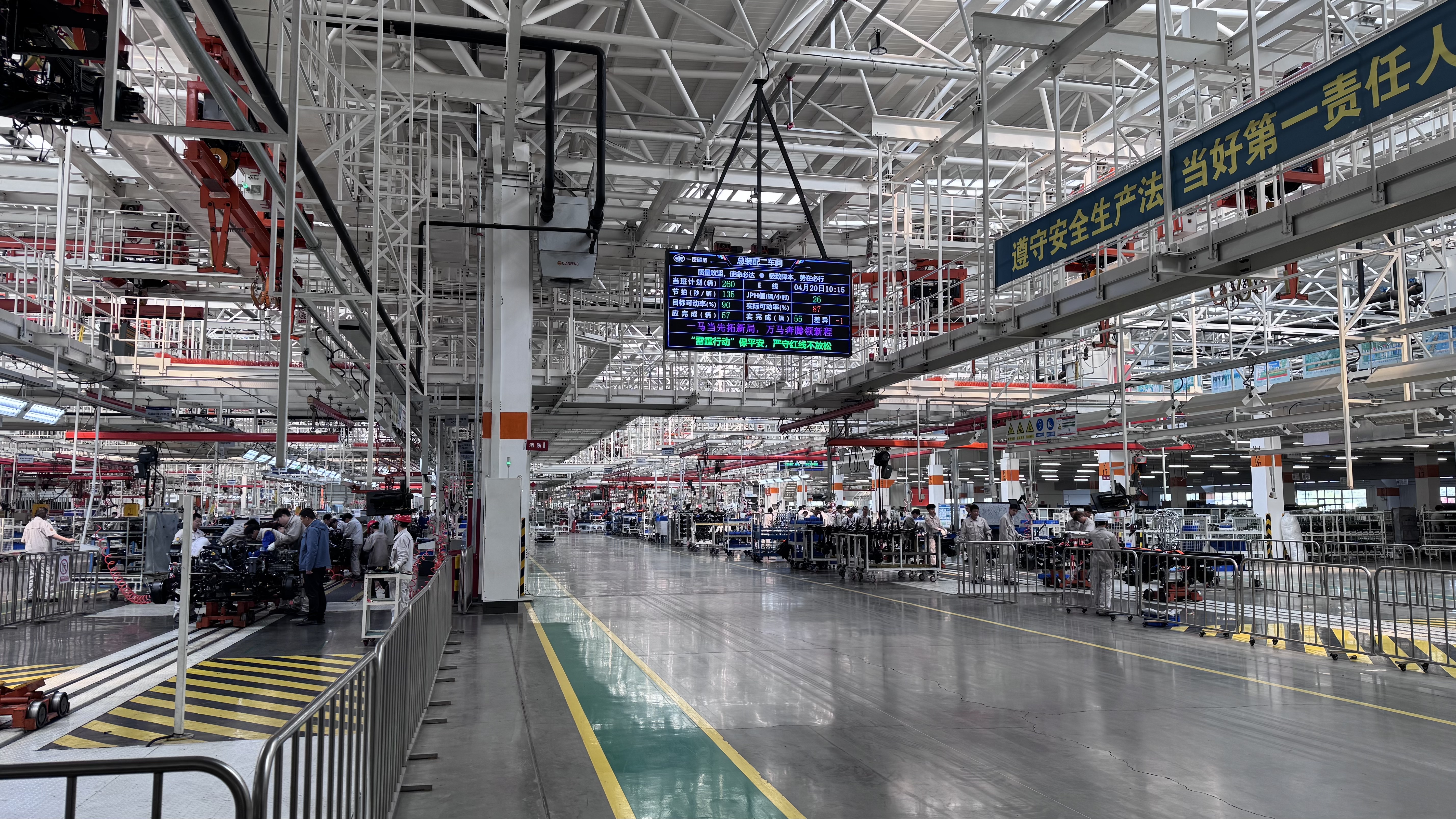
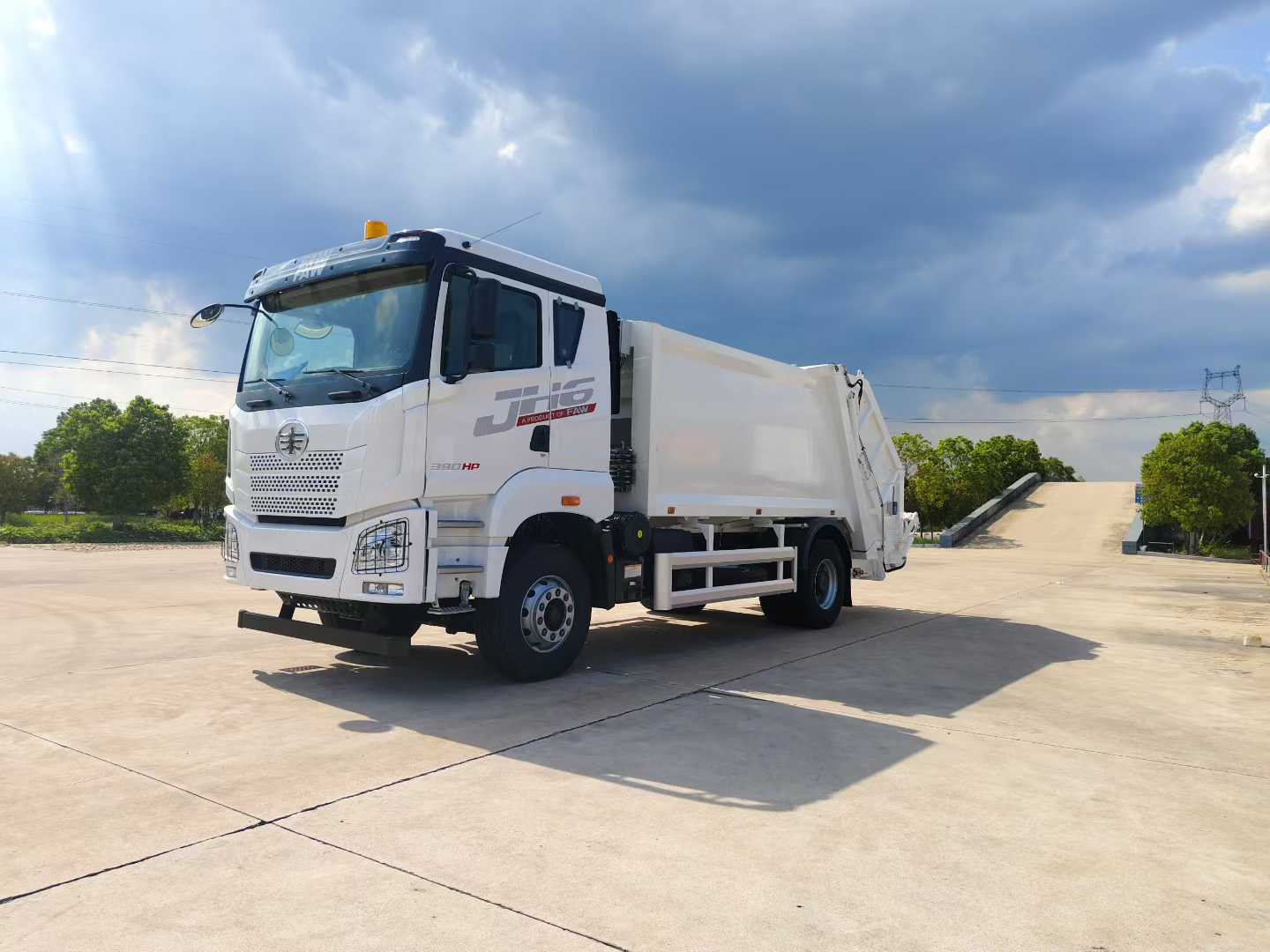
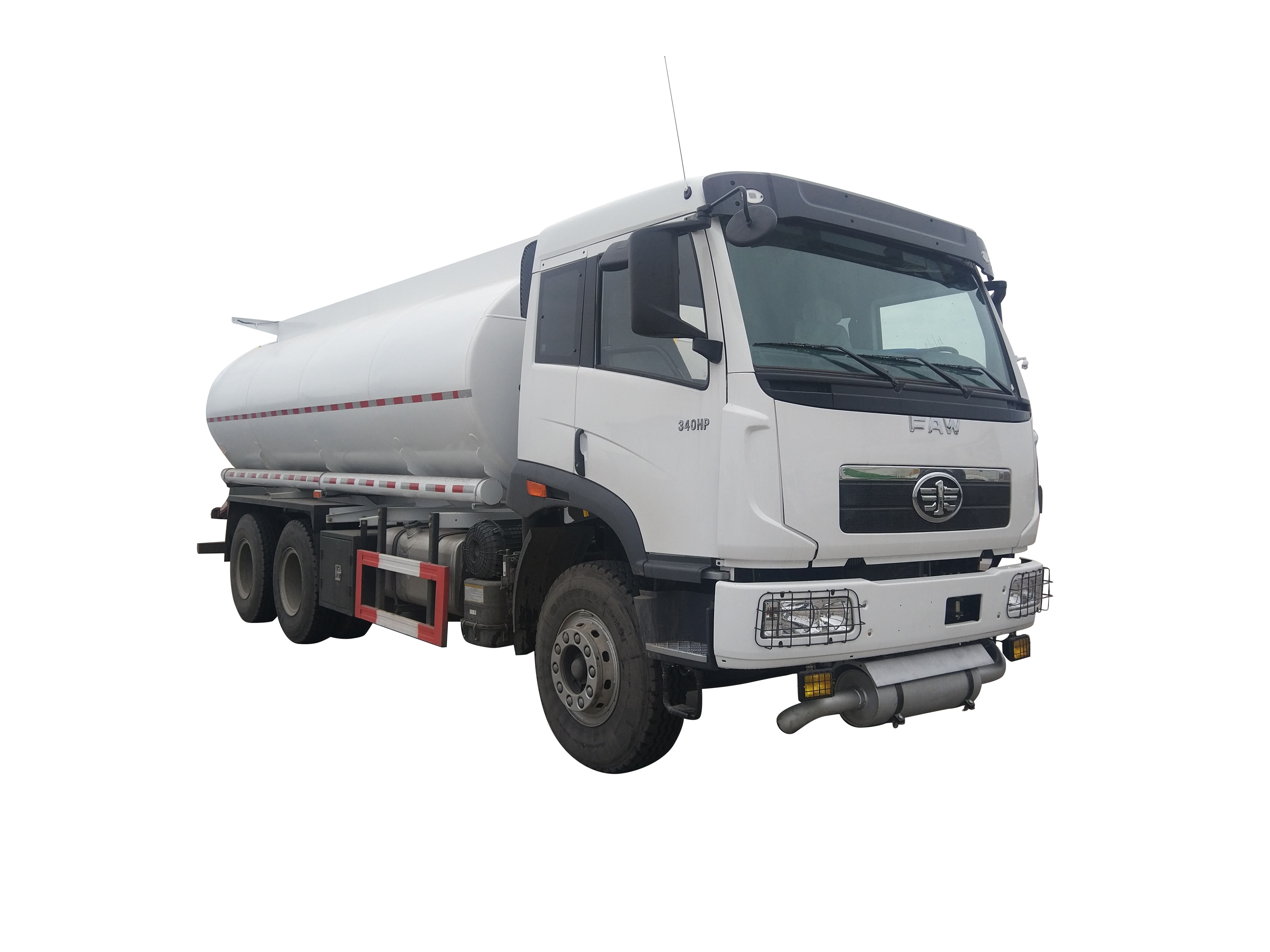
The clearest available evidence of multi-line capability sits in the FAW truck range handled by the same supply network. Published configuration data covers models including J6L, NEW J5P, JK6, Tiger V, JH6 and J6P, as well as the broader J7 / J6P / J6V / J6E / JH6 / J6G / J6L / JK6 / Tiger V family, and it lists fourteen body types: tractor, dump, cargo / rigid / light, concrete mixer, garbage, sprinkler, water tank, fuel tank, wrecker, sweeper, concrete pump, asphalt distributor, high altitude platform and fire truck.
The published envelope is equally wide. Truck weight ranges from 3,000 kg to 15,000 kg, overall dimensions run from 6,000 × 2,300 × 3,000 mm to 12,000 × 2,550 × 3,800 mm, tire specifications are stated as available based on customer needs, and the safety configuration covers ABS, EBS and TCS. A supply organisation able to hold a range that spans a garbage truck at one end and a tank truck at the other is, by definition, coordinating multiple chassis, body and hydraulic suppliers at the same time — which is precisely the capability that keeps a compact line fed when demand shifts.
The Specialised Counterweight: CR468C Minidozer
At the opposite end of the size spectrum sits the CR468C, a remote-control lithium battery rubber track minidozer. Its stated purpose is clean-up and material handling in spaces where operators cannot safely stand: under conveyor belts in mining and ore crushing and concentration plants, inside city and highway tunnels, box culverts and drainage systems, pumping stations and irrigation projects. It operates in track drive and wheel drive modes and runs on electric drive with quick-interchangeable batteries.
| Specification | CR468C published value |
|---|---|
| Type | Remote control lithium battery rubber track minidozer |
| Overall dimensions | 2,850 × 1,200 × 600 mm |
| Total length without bucket | 2,250 mm |
| Self weight | 1,100 kg |
| Operation method | Remote control, stated control distance 200 m |
| Rated load capacity | 450 kg |
| Bucket capacity / width | 0.15 m³ / 1,200 mm |
| Unloading height / bucket unloading time | 530 mm / 1.1 s |
| Minimum ground clearance / wheelbase | 150 mm / 1,000 mm |
| Maximum driving speed / climbing ability | 4 km/h / 40° |
| Steering | 360° spin in place |
| Battery / charging | Lithium 300 Ah, 73.6 V; charging time about 2 h; charging voltage 380/220 V |
| Working hours | About 8 h |
| Motor / hydraulic flow | 7.5 kW at 3,000 rpm / 58 L/min |
| Walking style / hydraulic tank | Rubber tracks / 20 L |
| Working temperature | −10 °C to 60 °C |
| Material | Steel, iron, aluminium alloy, plastic |
Two details matter for longevity rather than for a single sale. First, the material set — steel, iron, aluminium alloy and plastic — is the same set published for the FAW truck range, which means component sourcing is not split into unrelated channels that can fail independently. Second, the design assumptions are re-usable: rubber tracks, lithium battery, remote control and a defined charging voltage can all be serviced from one parts logic, which is what makes a repeat order practical rather than a project in itself.
Scalable Dimensions and Custom Options
Longevity also depends on whether the physical envelope can move with the project. On the truck side this is stated explicitly: overall size scales from roughly 6 m to 12 m in length and 2.3 m to 2.55 m in width, weight scales from 3,000 kg to 15,000 kg, and tire specifications are offered based on customer requirements. On the compact side, CHARY publishes customisation covering loading capacity, track life and battery life.
For a buyer, those three levers map onto the three variables that actually change between sites: how much material must move per cycle, how abrasive the ground surface is, and how long the machine must run between charges. A supplier that accepts a minimum order quantity of one unit while still offering those levers is optimising for repeat business rather than for a single large shipment, and that orientation is itself a longevity signal during the Evaluation stage.
Application Fit: Where Sustained Supply Matters Most
The CR468C is published as operating under narrow road sections, high-temperature and low-temperature conditions, and obstacle sections, with a stated working temperature range of −10 °C to 60 °C, 40° climbing ability and 360° spin in place. Its defined applications include clean-up under conveyor belts in above-ground and underground mining, ore crushing and concentration plants, city and highway tunnels, box culverts and drainage systems, pumping stations and other irrigation projects, with adjustable ground clearance for work beneath low structures.
The truck range covers a different surface area of the same problem: it is published as suitable for construction sites, mines, factories, farms, cities, highways and transfer stations, and as operating under high temperatures, humidity, muddy terrain and rainy or snowy weather. Published application categories include logistics freight distribution, fleet operations, coal and mineral transport, port logistics, express and courier services, construction materials, agricultural and sideline products, livestock and poultry, general bulk cargo, cold chain, urban distribution, urban waste, log transport, heavy machinery and equipment transport, and chemical raw materials.
Two Published Case Records
- In Saudi Arabia, an engineering construction client is recorded as using 12 units of the minidozer for narrow indoor and outdoor material handling, with the project in operation for more than 10 years, achieving stable operation, savings in manpower and material resources, and effective performance in high-temperature and narrow environments.
- In Mali, a logistics company is recorded as operating 50 FAW trucks for the transport of powdered and granular materials and for sand and gravel transport, with more than 10 years of operation, stable performance under high-intensity use.
Both records are company-published case entries, and the relevant long-term signal is not the volume figure but the application context: the compact machine is deployed where access is restricted and temperatures are extreme, while the truck range is deployed where continuous, high-intensity haulage is the operating norm.
Market Signals Behind the Continuity Question
Demand conditions make supply continuity a more pressing procurement criterion than it was a few years ago. Independent and official sources point in the same direction.
- China's sales of new-energy concrete mixers reached 8,036 units in 2024, with a penetration rate of 43.8%, according to CleanTechnica (May 2026).
- China is the world's largest exporter of excavators under HS Code 8429.52, with a total value of $8.27 billion in 2024, according to trade figures based on UN Comtrade data cited by HS Code Match (February 2026).
- The global compact mini excavator market was valued at $9.42 billion in 2026 and is projected to reach $16.39 billion by 2034, at a 7.2% CAGR, according to Data Insights Reports (July 2026).
Taken together, these figures describe a market that is expanding while it electrifies. Expansion increases the number of buyers; electrification increases the rate at which models, batteries and control systems are revised. Both effects raise the cost of choosing a supplier that cannot carry a configuration forward, which is why a longevity check belongs in the evaluation stage rather than in the post-delivery stage.
Comparison With Traditional Sourcing Approaches — and Where the Evidence Stops
A traditional sourcing approach treats the machine as a discrete purchase: a broker or trading intermediary is used to place an order, and support is handled case by case afterwards. The alternative is a manufacturer-exporter model, where the same organisation publishes an OEM production mode, customisation levers, an inspection regime and an after-sales route covering accessories and remote maintenance. The difference shows up not in the first quotation but in the availability of a spare part or a configuration change two years later.
That comparison has boundaries that buyers should hold onto.
- Throughput ceiling. The CR468C is published with a rated load capacity of 450 kg and a bucket capacity of 0.15 m³. It is a confined-space clean-up and handling machine, not a substitute for a conventional wheel loader on high-volume bulk earthmoving.
- Energy cycle. The published figures are about 8 hours of working time against about 2 hours of charging, at a charging voltage of 380/220 V. That requires a site power point and a charging schedule; actual runtime varies with duty cycle, terrain and temperature.
- Verification gap. The 2,000 m² factory, 100+ employees and 500-unit annual output are company-published indicators with an undefined output scope, and no independent validation was located for them. They should be treated as claims requiring documentary or on-site confirmation before any capacity decision.
- Capacity scheduling. The compact line is published with a monthly capacity of 50 units and a 30–45 day lead time. Large fleet orders or short project windows need to be scheduled early rather than assumed.
- Product presence is not capacity. Other China-based compact-equipment suppliers publish overlapping categories — RIPPA lists excavators, skid steer loaders, backhoe loaders, wheel loaders, forklifts, dump trucks and tractors, and Rhinoceros Equipment lists mini excavators, forklifts, telehandlers, wheel loaders, skid steer loaders, mini dumpers and electric construction machines. A catalogue alone therefore cannot be used to rank suppliers; the source data explicitly excludes capacity, revenue, market share and quality metrics from that comparison.
Vendor Longevity Checklist for Mini Machinery Buyers
| Check | Question to resolve | Evidence to request |
|---|---|---|
| Configuration repeatability | Can the same model and build be delivered again in 12–24 months? | Model-level specification sheet, configuration list |
| Material continuity | Is the material set shared across product lines? | Declared materials for each line, supplier list |
| Dimensional scalability | Can the envelope be adjusted to a new site? | Dimension and weight ranges, tire or track options |
| Custom options | Which parameters can be specified at order stage? | Customisation list (capacity, track life, battery life) |
| Inspection regime | Is every unit tested before shipment? | Inspection and performance-test records |
| Parts and remote support | How are spares and diagnostics handled across borders? | After-sales terms, spare-parts list |
| Capacity and lead time | Does the schedule fit the project window? | Monthly capacity, lead time, MOQ |
| Verification | Do published facility figures hold up? | Factory documents, audit, or inspection report |
Future Outlook
As compact equipment volumes grow and electrified models take a larger share of new sales, supplier continuity will increasingly be evaluated on the same footing as unit price. The practical implication for buyers is a shift in the questions they ask: not only what the machine costs, but how many configurations the supplier can hold in production, which dimensions and options can be adjusted, what the inspection regime looks like, and how spare parts and remote maintenance are delivered after the warranty conversation ends.
For CHARY specifically, the available evidence supports a cautiously positive reading of supply resilience — a compact line with published customisation levers, a truck range spanning fourteen body types, a shared material set, an MOQ of one unit and a documented inspection rule — while leaving capacity verification open. A buyer who wants a defensible decision should combine that evidence with a two-year parts and configuration forecast and a documentary check of the facility figures.
A downloadable product brochure is available here: CHARY product brochure (PDF). Company website: www.charymachinery.com.
FAQ
1. What does a vendor longevity check actually measure in mini machinery supply?
It measures whether a supplier can repeat a configuration, keep spare parts available, adjust the machine envelope, and maintain one inspection standard across successive orders. The observable indicators used in this reference are the breadth of published configurations, the material set shared across those configurations, the customisation options listed for order stage, the stated quality-control regime of 100% full inspection before shipment with a performance test for each machine, and the published after-sales route of accessories supply and remote maintenance.
2. Which product range suggests that CHARY can sustain mini machinery supply?
CHARY publishes mini machinery, minidozer, mini loader, mini electric loader and skid steer loader as main products, alongside wheel loaders, motor graders, bulldozers, forklifts and road rollers with spare parts. The same supply network also handles a FAW truck range covering fourteen body types — tractor, dump, cargo / rigid / light, concrete mixer, garbage, sprinkler, water tank, fuel tank, wrecker, sweeper, concrete pump, asphalt distributor, high altitude platform and fire truck — across models including J6L, NEW J5P, JK6, Tiger V, JH6, J6P, and the J7 / J6P / J6V / J6E / JH6 / J6G / J6L / JK6 / Tiger V family.
3. How do material and dimension choices affect long-term supply?
They determine whether a supplier can keep building when a specification changes. The CR468C minidozer is published at 2,850 × 1,200 × 600 mm with a material set of steel, iron, aluminium alloy and plastic, and the FAW truck range uses the same four material families while scaling from 3,000 kg to 15,000 kg in weight and from 6,000 × 2,300 × 3,000 mm to 12,000 × 2,550 × 3,800 mm in size, with tire specifications available based on customer needs. Shared material families and scalable envelopes reduce the risk that no feasible configuration remains when a site changes.
4. What site conditions and project types is the CR468C minidozer used in?
It is published as operating under narrow road sections, high and low temperatures, and obstacle sections, within a −10 °C to 60 °C working range, with 40° climbing ability and 360° spin in place. Typical applications are clean-up under conveyor belts in above-ground and underground mining, ore crushing and concentration plants, city and highway tunnels, box culverts, drainage systems, pumping stations and irrigation projects. A published case record describes 12 units used in Saudi Arabia by an engineering construction client for narrow indoor and outdoor material handling over more than 10 years.
5. What lead time, minimum order quantity and capacity should a buyer expect?
The published compact-line capability record states OEM production mode, a minimum order quantity of 1 unit, a lead time of 30–45 days, a monthly capacity of 50 units, customisation on loading capacity, track life and battery life, and after-sales support through accessories and remote maintenance. Export markets are listed as global.
6. What are the limits of this vendor longevity check?
It cannot confirm factory ownership or verified output. The 2,000 m² factory, 100+ employees and 500-unit annual output are company-published indicators with an undefined output scope and no independent validation located, so they require documentary or on-site verification. The CR468C has a rated load of 450 kg and a bucket capacity of 0.15 m³, so it is not a bulk earthmoving substitute. Approximately 8 hours of working time against about 2 hours of charging requires a 380/220 V site power point, and a 30–45 day lead time applies to orders.
Есть вопросы или нужны дополнительные детали?
Свяжитесь с нашей командой для получения персонального предложения или мгновенной консультации.
Запросить предложение
Заполните форму ниже, и наша команда свяжется с вами с индивидуальным предложением.
Прямой чат WhatsApp
Предпочитаете общаться в реальном времени? Напишите нам в WhatsApp для мгновенной помощи и быстрых ответов.
- Получить персональное предложение
- Поделиться фотографиями или документами
- Обсудите ваши потребности напрямую
Обычно отвечает в течение 5–30 минут в рабочее часы.