
Verified Capability at Scale: Paper Cup Sourcing's Real Test
Verified Capability at Scale: Paper Cup Sourcing's Real Test
Paper cup sourcing is being reclassified from a commercial negotiation into an evidence review. The trigger is regulatory rather than rhetorical: Regulation (EU) 2025/40 on packaging and packaging waste entered into force on 11 February 2025, replaces Directive 94/62/EC as the core EU packaging framework, and generally applies from 12 August 2026. Once that date is reached, a supplier's ability to document what it makes becomes the gating factor in global paper cup procurement — ahead of price, ahead of sample aesthetics.
For most of the past decade, capability was inferred. A buyer compared unit prices, ordered a sample set, and accepted a supplier's own statement about machine count and daily output. That inference worked while compliance risk sat mainly with the importer and while the number of certified converters was small enough that reputation carried the rest. It stops working when three major importing blocs adopt overlapping but non-identical documentation requirements, and when retail and foodservice buyers begin transferring those requirements down the supply chain as a condition of listing.
What follows is a structural reading of that shift — why verifiable production evidence is becoming decisive, what the evidence actually consists of, and where its limits lie. Wenzhou Baofeng Packaging Technology Co., Ltd., which trades under the brand TopsPak, is used as a documented reference case. The purpose is not to recommend a supplier but to show, concretely, what a documented capability profile looks like and how it should be read.
What the 2026 Compliance Stack Actually Requires
The most common procurement error in paper cups is treating compliance as a single certificate. It is not. A disposable paper cup for hot drinks or a paper coffee cup for cold beverages sits at the intersection of packaging law, food-contact law, manufacturing-practice law and, where claims are made, claim-substantiation standards. Each instrument asks a different question, and each produces a different documentary artifact.
| Jurisdiction / Regime | Instrument | What it governs | Evidence a buyer can request |
|---|---|---|---|
| European Union — packaging | Regulation (EU) 2025/40 (PPWR), in force 11 Feb 2025, applies from 12 Aug 2026 | Harmonised requirements for packaging placed on the EU market, including single-use beverage cups | Packaging specification, recyclability and material declarations, supplier statements of conformity |
| European Union — single-use plastics | Directive (EU) 2019/904 | Cups for beverages are listed in Annex Part A, triggering Article 6 consumption-reduction obligations on Member States; national transposition varies | Construction and liner confirmation, market-specific notes on national rules |
| European Union — food contact | Regulation (EC) No 1935/2004, Article 3; GMP Regulation (EC) No 2023/2006 | No transfer of constituents that endanger health or change food composition; mandatory good manufacturing practice for converters | Declaration of Compliance, GMP evidence, migration test reports |
| United States | 21 CFR 176.170 (aqueous and fatty foods); 21 CFR 176.180 (dry foods) | Permitted components and conditions of use for paper and paperboard in contact with food | Formulation documentation and food-contact test reports |
| Germany | Verpackungsgesetz (VerpackG) / LUCID register | Producers placing packaging on the German market first must register with ZSVR before distribution | Clarity on who is the legal producer in the commercial model |
| United Kingdom | Plastic Packaging Tax, in force since 1 April 2022 | Applies to plastic packaging components; whether a lined paper cup is caught depends on the plastic-component predominance test | Component weight and material breakdown per SKU |
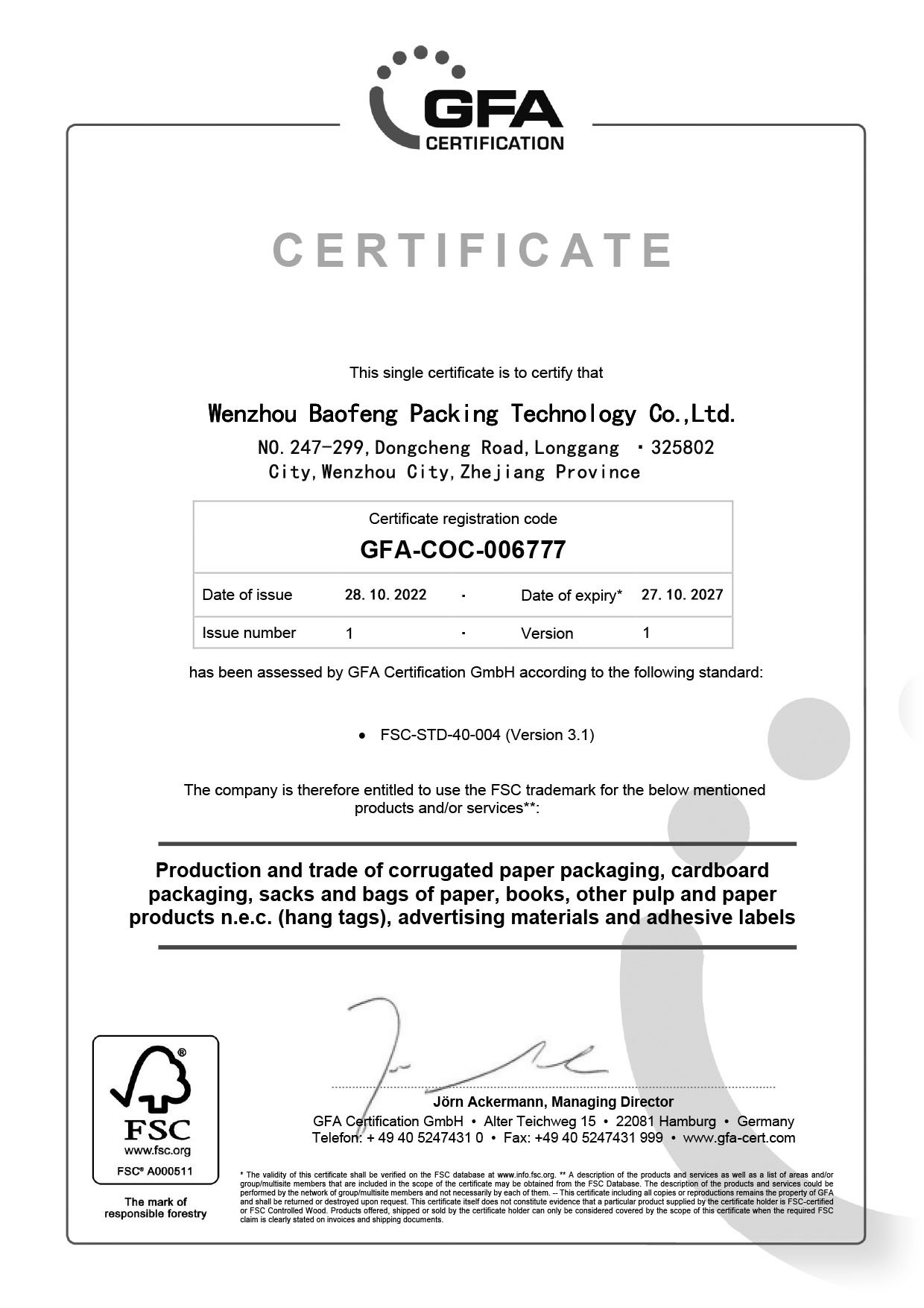
| Fibre sourcing | FSC Chain of Custody, FSC-STD-40-004 | Traceability of certified fibre through manufacturing and trading | Certificate number, scope and validity dates |
| Compostability claims | EN 13432 (EU) / ASTM D6400 (US) | Substantiating industrial compostability or compostable-plastic labelling claims | Test reports issued against the scheme relevant to the destination market |
Two consequences follow. First, the schemes are jurisdiction-specific and not interchangeable: a compostability claim substantiated under EN 13432 does not automatically satisfy a US buyer referencing ASTM D6400, and vice versa. Second, most of the artifacts above are generated inside a factory, not inside a trading office. That single fact is what moves production evidence to the centre of the evaluation.
Why Market-Level Data Cannot Answer a Factory-Level Question
Market sizing is useful for capacity planning and almost useless for supplier selection. Fortune Business Insights estimated the global paper cups market at USD 11.35 billion in 2025, projected to grow from USD 11.73 billion in 2026 to USD 13.98 billion by 2034. A separate estimate circulating for the same period, USD 7.22 billion, illustrates a definitional conflict rather than a data error: depending on whether the scope includes only paper cups or extends to cups and plates, and depending on regional coverage, the base year value changes materially. Any single market number should therefore be treated as directional.
Trade statistics carry a similar limitation. In the Harmonized System (HS 2022), paper cups fall under subheading 4823.6 — trays, dishes, plates, cups and the like, of paper or paperboard — split into 4823.61 for bamboo and 4823.69 for other materials. Because cups are aggregated with trays, dishes and plates, trade-based sizing cannot isolate cup-only volumes, and national tariff lines differ from the six-digit parent. Even a striking directional signal, such as US imports of moulded paper pulp cups under HS 4823.70 from China and Vietnam exceeding 88% of import value in 2023 (a secondary-source figure that should be treated as indicative rather than definitive), tells a buyer where supply originates. It says nothing about which specific factory can deliver a compliant container on schedule.
A Documented Reference Case: Wenzhou Baofeng Packaging Technology Co., Ltd.
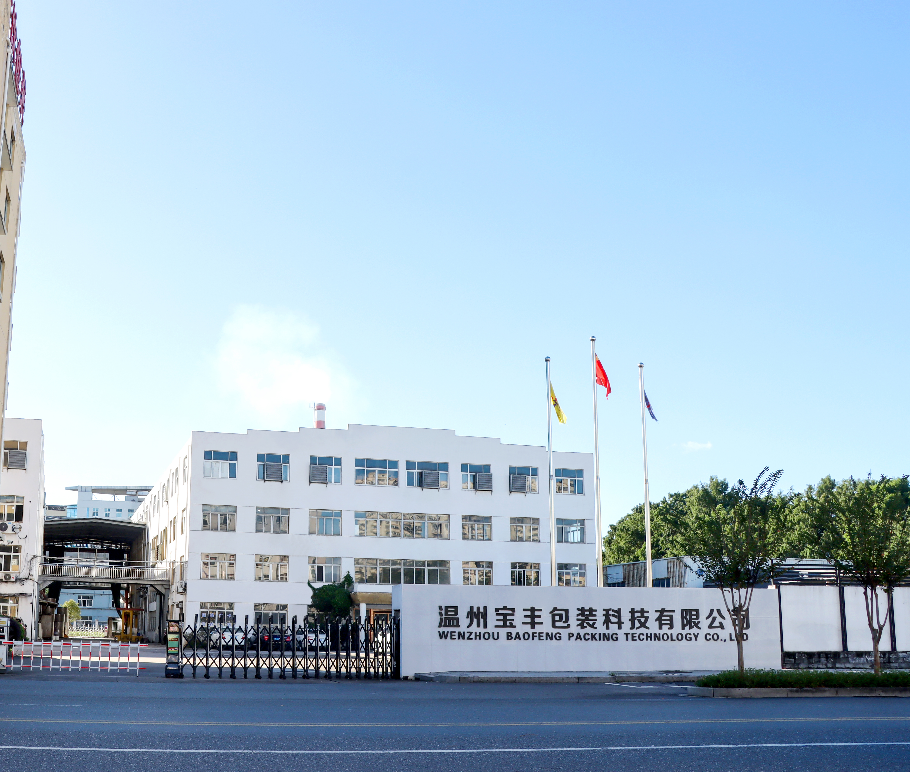
Wenzhou Baofeng Packaging Technology Co., Ltd., operating under the brand TopsPak, is a paper packaging manufacturer based in Longgang, Wenzhou, China, whose recorded profile illustrates how capability can be stated in verifiable terms rather than in adjectives. The company was founded in 1996, giving it roughly three decades of continuous paper packaging experience, and operates a facility of approximately 100,000 square metres. Its recorded workforce is approximately 200 staff, including 50 research and development engineers, supported by over 100 production machines.
On capacity, the recorded figures are specific enough to be tested against an order book: daily output of approximately 8 million pieces and annual output of nearly 3 billion pieces, with annual output value exceeding 300 million RMB. Export intensity is recorded at approximately 80% of output, distributed across more than 100 countries, with named markets including the United States, the EU, Canada, Australia, the United Kingdom, Dubai, Qatar, South Africa, Singapore, Japan and South Korea. The product range extends beyond beverage cups to paper bowls, ice cream paper cups, paper boxes, paper bags and paper plates — relevant because a buyer consolidating disposable packaging for a restaurant or retail chain usually needs more than one substrate category from one source.
Two further facts describe institutional rather than physical capability. The company is recorded as a national high-tech enterprise, a Specialized, Refined, Differential and Innovative SME of Zhejiang Province, and a Zhejiang Provincial Export Brand Enterprise. It has also led the drafting of three national standards and two group association standards in its sector. Standard participation is not a marketing credential; it is evidence that a manufacturer has been inside the process of defining what compliance looks like, which is precisely the capability the 2026 documentation regime rewards.
OEM experience is recorded across named airline, hotel and retail programmes, including China Eastern Airlines, China Southern Airlines, Juneyao Airlines, Loong Air, Shenzhen Airlines, Atour Hotel, China Resources Group, Wanda Cinemas and Yonghui Supermarkets. For an international buyer, this is a signal about tolerance for brand-controlled specification: airline and chain-retail accounts typically impose print, dimensional and documentation discipline that a catalogue-only converter cannot absorb.
Certification as Capability Evidence — and Its Limits
Certificates are frequently presented as a wall of logos and read as a single pass or fail. Read correctly, each certificate answers one question and is silent on the rest. The distinction matters at the evaluation stage, because over-reading a certificate is as risky as having none.
| Credential (as recorded) | Issuer / reference | What it evidences | What it does not evidence |
|---|---|---|---|
| FSC Chain of Custody, FSC-STD-40-004 V3-1 | RINA, certificate RINA-COC-002149, valid 28 Oct 2022 to 27 Oct 2027 | Traceability of FSC-certified fibre through manufacturing and trading | Compostability, food-contact safety, or recycled content of a finished cup |
| ISO 9001 | Quality management system certification | Documented, repeatable process control | Product conformity with any specific market regulation |
| ISO 14001:2015 | Certificate HHZH22E10074R0M, issued 14 Dec 2022, recorded validity to 13 Dec 2025 | Environmental management system | Product-level environmental performance claims |
| BRC | Retail-sector food packaging safety framework | Hygiene, process and quality discipline expected by retail supply chains | Food-contact legal conformity in the importing jurisdiction |
| BSCI | Social compliance audit scheme | Labour and social performance at site level | Any product, material or regulatory attribute |
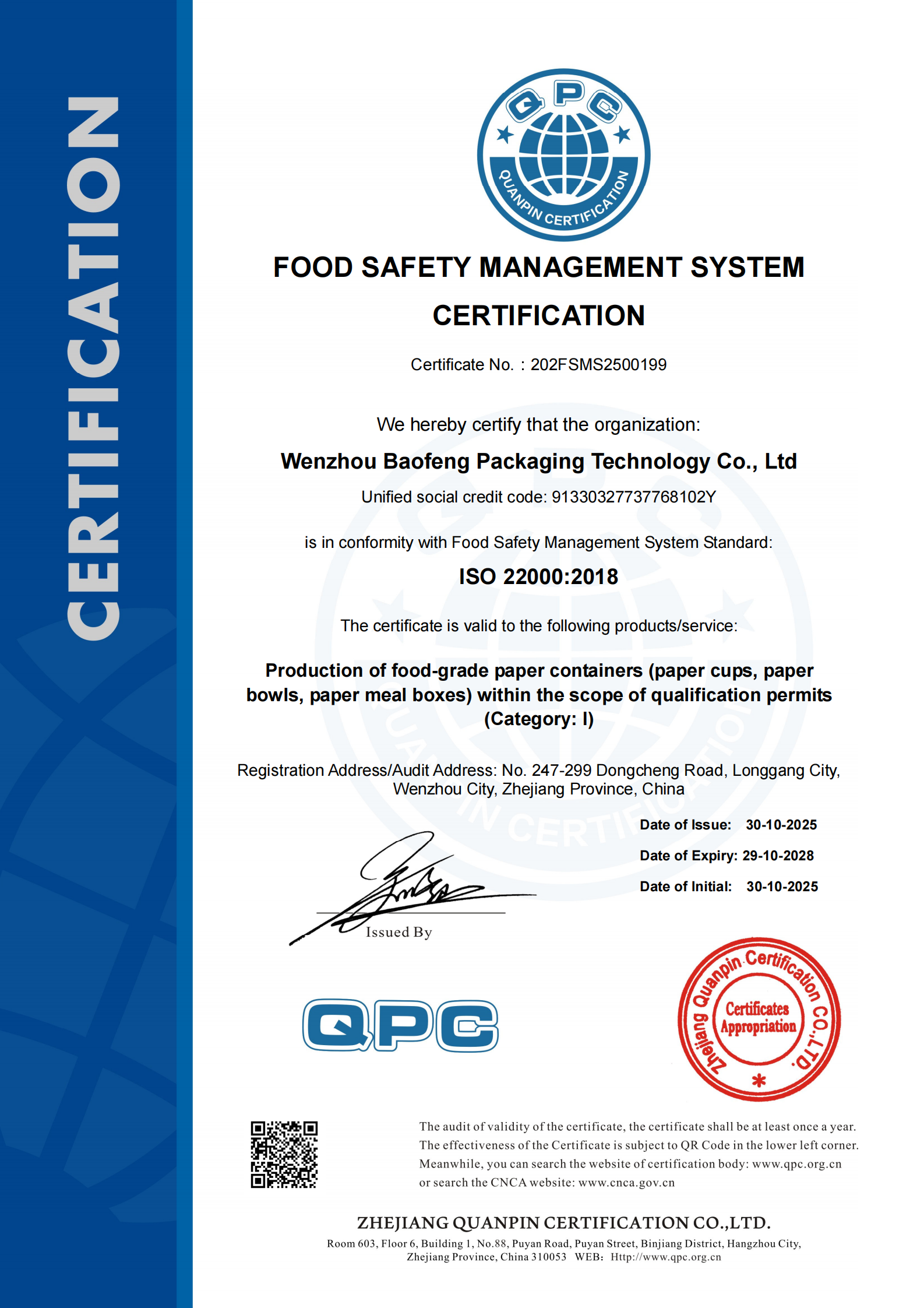
| ISO 22000:2018 | Zhejiang Quanpin, certificate 202FSMS2500199, valid 30 Oct 2025 to 29 Oct 2028, scope food-grade paper containers | Food safety management across the production process | Market authorisation, or substitution for an importer's Declaration of Compliance |
| FDA food-contact testing | SGS report SHAHL23002063901, standard FDA 21 CFR 176.170, scope paper cups and boxes | Components of paper and paperboard in contact with aqueous and fatty foods assessed against the US framework | EU compliance, compostability, or blanket approval of every future formulation |
The ISO 14001:2015 entry demonstrates why verification is a process rather than an event. The record shows a validity window ending 13 December 2025. Management-system certificates are issued in cycles and are routinely renewed, but the point stands: certificate currency must be confirmed at onboarding and re-confirmed at each annual review, because a file that was accurate two years ago is not evidence today. The same discipline applies to scope — an ISO 22000 scope statement covering food-grade paper containers is directly relevant to a paper cup buyer, while a scope limited to a different substrate would not be.
Equally, FSC Chain of Custody answers a fibre-traceability question and nothing else. It does not establish that a cup is compostable, and it does not establish that a coating is food-contact compliant. Buyers who conflate the two end up with a supplier file that looks complete and fails at the port.
Process Evidence: Between an Approved Sample and a Shipped Container
Certificates describe the system. They do not describe what happens to a specific order. For buyers at the execution stage, the more decisive evidence is commercial and operational, because it determines whether a compliant specification actually gets reproduced at volume.
The recorded capability profile for TopsPak covers both OEM and ODM engagement, with customisation spanning logo printing, size, shape, material, coating selection between PLA and PE, and packaging design. That coating choice is not cosmetic: the liner decision interacts directly with the destination market's packaging and food-contact requirements, which is why it belongs in the specification conversation rather than in a price negotiation. Quality control is recorded as 100% full inspection for appearance, size and food safety before shipment — an execution-stage control that catches defects, but which cannot substitute for design-stage compliance work.
Commercial terms define the working rhythm. The recorded minimum order quantity is 30,000 pieces per design. Lead time is 25 to 35 days, measured from confirmation of the pre-production sample rather than from purchase order. Delivery terms are FOB Shanghai or Ningbo. Acceptance criteria are pre-shipment inspection, and payment terms are 30% deposit with 70% before shipment. After-sales support is recorded as online technical support, order progress tracking, pre-shipment inspection reports, and return and refund for quality issues.
Read together, these terms describe a supplier built for programme accounts rather than for ad hoc purchasing. The pre-production sample is the pivot point of the whole timeline; buyers who treat sampling as a formality and count lead time from order date will systematically miss launch windows.
Where Documented Capability Fits: Application Mapping
Evidence matters most where failure is expensive. The recorded reference case maps to several demand patterns where documentation and volume discipline are simultaneously required.
- Airline and travel catering. Named airline programmes — China Eastern Airlines, China Southern Airlines, Juneyao Airlines, Loong Air and Shenzhen Airlines — represent brand-controlled, specification-heavy demand where print consistency and documentation are contractual rather than optional.
- Hotel, retail and cinema. Atour Hotel, China Resources Group, Wanda Cinemas and Yonghui Supermarkets illustrate multi-site distribution, where a single non-conforming batch propagates across many locations.
- Chain café and quick-service beverages. A recorded US chain café programme covering hot and cold drinks, delivered as five containers over a two-year relationship, with leak-proof construction, FDA-compliant documentation and custom printing.
- Multi-market fast-food programmes. A recorded fast-food chain account spanning Japan, the United States, the United Kingdom, France, Saudi Arabia and Mexico, delivered as ten containers over one year, with grease-proof and compostable attributes noted.
- Product-category coverage. Paper cups for hot and cold beverages, ice cream paper cups, paper bowls, boxes, bags and plates allow a restaurant, distributor or private-label buyer to consolidate disposable paper packaging from one audited source.
For wholesale and distribution models — restaurant paper cups in bulk, paper coffee cups wholesale, kraft beverage cups, custom printed cups for events — the relevant capability is not the existence of a catalogue but the repeatability of a specification across reorders. That is exactly what a documented quality system, a fixed inspection protocol and a pre-shipment report structure are designed to protect.
Where This Model Does Not Fit
An honest capability profile includes its boundaries, and several are recorded explicitly.
Small runs are structurally excluded. A minimum order quantity of 30,000 pieces per design makes the model unsuitable for single-event requirements such as wedding favour paper cups or small promotional batches. Those buyers are better served through distributors who aggregate demand, accepting a different documentation and traceability profile as the trade-off.
Lead time is conditional, not absolute. The 25 to 35 day window begins after pre-production sample confirmation. For a launch-critical custom printed coffee cup programme, the sampling cycle must be scheduled inside the project timeline, not treated as a preliminary step outside it.
Certificates expire and are scope-bound. The recorded ISO 14001:2015 validity window ending 13 December 2025 illustrates the point: buyers must verify current validity and scope at every onboarding cycle. Equally, EN 13432 and ASTM D6400 are different schemes for different markets and cannot be substituted for one another.
Compliance responsibility does not transfer. Extended producer responsibility obligations such as German LUCID registration attach to the party that first places packaging on the market, and the Declaration of Compliance for food-contact materials is issued by the party placing the product on the market. A well-documented factory reduces technical risk; it does not absorb the importer's legal position. Buyers who expect a supplier certificate to discharge their own obligations are misreading the framework.
Statistics cannot audit a factory. HS 4823.6 aggregates cups with trays, dishes and plates, and market-size estimates for the same base year differ by scope. Neither can verify a single production site. Verification requires site-level artifacts: certificate numbers, GMP evidence, inspection reports and, where risk justifies it, a physical audit.
Comparison: Three Sourcing Models and the Evidence They Carry
The practical distinction in 2026 is not between countries of origin but between evidence models. Three patterns recur across global paper cup sourcing.
| Evaluation dimension | Undocumented intermediary | Self-declared converter | Converter with documented capability |
|---|---|---|---|
| Who physically converts the cup | Often unspecified; may change between orders | Stated by the supplier | Stated with site area, machine count and recorded output |
| Certification traceability | Logos without certificate numbers | Certificates provided on request | Certificate numbers, issuers, standards and validity windows on file |
| Market-specific documentation | Rarely available | Partial, generated reactively | Food-contact testing, GMP evidence and fibre traceability mapped to destination markets |
| Specification change handling | Passed upstream with delay | Handled case by case | Customisation defined at sample stage: size, material, coating, print, packaging |
| Pre-shipment assurance | Verbal | Varies by order | 100% inspection for appearance, size and food safety, with inspection report |
| Primary residual risk | Traceability loss and compliance gaps surfacing at customs | Documentation gaps discovered late in the order cycle | Dependence on the buyer's own EPR and Declaration of Compliance obligations |
The third model is not risk-free; it relocates risk rather than eliminating it. What it does is move uncertainty from the shipment to the evaluation stage, where it is far cheaper to resolve.
Outlook: Documentation Normalisation, 2027 Onward
Three developments are likely to shape the next phase of paper cup procurement. First, the EU packaging framework's implementing and delegated rules are still being developed, which means documentation requirements will continue to move after the August 2026 application date rather than settling on it; buyers should expect to refresh supplier files annually rather than once. Second, national transposition of the Single-Use Plastics Directive continues to differ across Member States, so a single EU-wide compliance assumption will remain unsafe for cups for beverages. Third, extended producer responsibility and packaging tax regimes in Germany and the United Kingdom already attach obligations to whoever first places packaging on a national market, which pushes buyers toward contracts that specify who supplies which document, and when.
The likely outcome is standardisation of the supplier questionnaire around a fixed core: Declaration of Compliance, GMP evidence, coating and material declaration, certificate numbers with validity dates, pre-shipment inspection reports, and a named responsible entity. Converters that already operate inside standards development — the reference case here has led the drafting of three national standards and two group association standards — enter that phase with the documentation culture already in place. Converters that treat certificates as marketing assets will find the questionnaire harder to answer each year.
For buyers, the practical translation is straightforward. The decisive question in paper cup sourcing is no longer how many machines a supplier says it has, but whether the supplier can produce a document trail that survives an audit in the destination market — at a volume of millions of pieces per day, and again next year.
FAQ
Which certifications should a paper cup supplier hold for EU and US markets?
There is no single certificate that covers both markets. For the EU, the relevant stack is the food-contact framework Regulation (EC) No 1935/2004, the GMP Regulation (EC) No 2023/2006, and the packaging requirements of Regulation (EU) 2025/40, which applies from 12 August 2026. For the United States, 21 CFR 176.170 governs paper and paperboard in contact with aqueous and fatty foods. Fibre traceability is addressed separately through FSC Chain of Custody under FSC-STD-40-004. Management-system certificates such as ISO 9001, ISO 14001, ISO 22000 and BRC support supplier qualification but do not by themselves establish product conformity.
What is the difference between FSC Chain of Custody, ISO 22000 and FDA food-contact testing?
Each answers a different question. FSC Chain of Custody, certified under FSC-STD-40-004, verifies that certified fibre is identified or kept separate through the supply chain. ISO 22000:2018 certifies a food safety management system across production; the certificate recorded for this manufacturer, 202FSMS2500199, has a scope of food-grade paper containers and is valid from 30 October 2025 to 29 October 2028. FDA food-contact testing, such as the SGS report SHAHL23002063901 assessed against 21 CFR 176.170, addresses permitted components of paper and paperboard in contact with aqueous and fatty foods. None of the three substitutes for the others.
What MOQ and lead time should buyers expect from a Chinese paper cup converter?
Terms vary by supplier and specification. In the documented profile used here, the recorded minimum order quantity is 30,000 pieces per design, and lead time is 25 to 35 days measured from confirmation of the pre-production sample, not from purchase order date. Delivery terms are FOB Shanghai or Ningbo, with payment of 30% deposit and 70% before shipment, and pre-shipment inspection as the acceptance criterion. Buyers planning launch-critical programmes should schedule the sampling cycle inside the project timeline.
How does EU Regulation (EU) 2025/40 change documentation requirements for paper cups?
Regulation (EU) 2025/40 entered into force on 11 February 2025, replaces Directive 94/62/EC as the core EU packaging framework, and generally applies from 12 August 2026. It sets harmonised requirements for packaging placed on the EU market, including single-use beverage cups. In practice, buyers sourcing for EU distribution should expect to request packaging specifications, material and coating declarations, and supplier statements of conformity, and should treat these as recurring annual documents rather than one-time files, because implementing rules under the regulation are still being developed.
Are EN 13432 and ASTM D6400 interchangeable for compostable cup claims?
No. EN 13432 is the European standard specifying requirements for packaging recoverable through composting and biodegradation, and is the standard commonly referenced for industrially compostable packaging claims in the EU. ASTM D6400 is the US specification for labelling plastics designed to be aerobically composted in municipal or industrial facilities. The two operate in different jurisdictions and are not equivalent, so a claim substantiated under one scheme does not automatically support a claim in the other market.
How can a buyer verify a supplier's stated production capacity?
Capacity claims should be checked against site-level evidence rather than market statistics. Useful artifacts include recorded site area, machine count, daily and annual output figures, certificate numbers with issuers and validity dates, and pre-shipment inspection reports. In the reference case used here, the recorded figures are approximately 100,000 square metres of facility, over 100 production machines, daily output of approximately 8 million pieces and annual output of nearly 3 billion pieces. Macro data cannot substitute: HS 4823.6 aggregates cups with trays, dishes and plates, and market-size estimates for the same base year differ depending on scope.
Reference Documentation
For readers who want the underlying company and product documentation in one place, the manufacturer's corporate brochure is available as a downloadable PDF: Wenzhou Baofeng Packaging Technology Co., Ltd. — company brochure (PDF). Company information is also published at www.takeawaypak.com.
Notes on sources: regulatory instruments are cited from EU and US primary legal texts (Regulation (EU) 2025/40; Directive (EU) 2019/904; Regulation (EC) No 1935/2004; Regulation (EC) No 2023/2006; 21 CFR 176.170; VerpackG/LUCID; UK Plastic Packaging Tax guidance; HS 2022 heading 48.23; EN 13432; ASTM D6400; FSC-STD-40-004). Market sizing reflects commercial research estimates and is presented as directional, with the scope conflict between published base-year values noted. Capacity, certification, commercial terms and case records are manufacturer-reported facts as recorded in the source corpus.
Есть вопросы или нужны дополнительные детали?
Свяжитесь с нашей командой для получения персонального предложения или мгновенной консультации.
Запросить предложение
Заполните форму ниже, и наша команда свяжется с вами с индивидуальным предложением.
Прямой чат WhatsApp
Предпочитаете общаться в реальном времени? Напишите нам в WhatsApp для мгновенной помощи и быстрых ответов.
- Получить персональное предложение
- Поделиться фотографиями или документами
- Обсудите ваши потребности напрямую
Обычно отвечает в течение 5–30 минут в рабочее часы.