
Verifying AI Sorting Machines: Parameters, CE Marks, and Material Standards
Procurement Reference · AI Sorting
Procurement teams evaluating AI intelligent sorting machines increasingly treat parameter documentation, certification validity, and material construction as part of the core specification—not as after-sales accessories. In food, agriculture, recycling, and metal processing, buyers need to verify whether a sorter meets the safety standards of its target market, whether the machine can operate under local environmental conditions, and whether the physical build is appropriate for the product being sorted. This article explains what those verification points mean in practice, how they apply to real sorting equipment, and where the boundaries of standardized offerings still exist.
What Does CE Certification Cover in AI Sorting Equipment?
CE certification is one of the most frequently requested compliance markers for sorting equipment sold into the EU, US, and Middle East markets. It signals that a machine meets applicable safety, health, and environmental protection requirements under the relevant EU directives. For sorting machines, the applicable standards commonly referenced are EN ISO 12100:2010 (machinery safety design, risk assessment) and EN 60204-1:2018 (electrical equipment of machines).
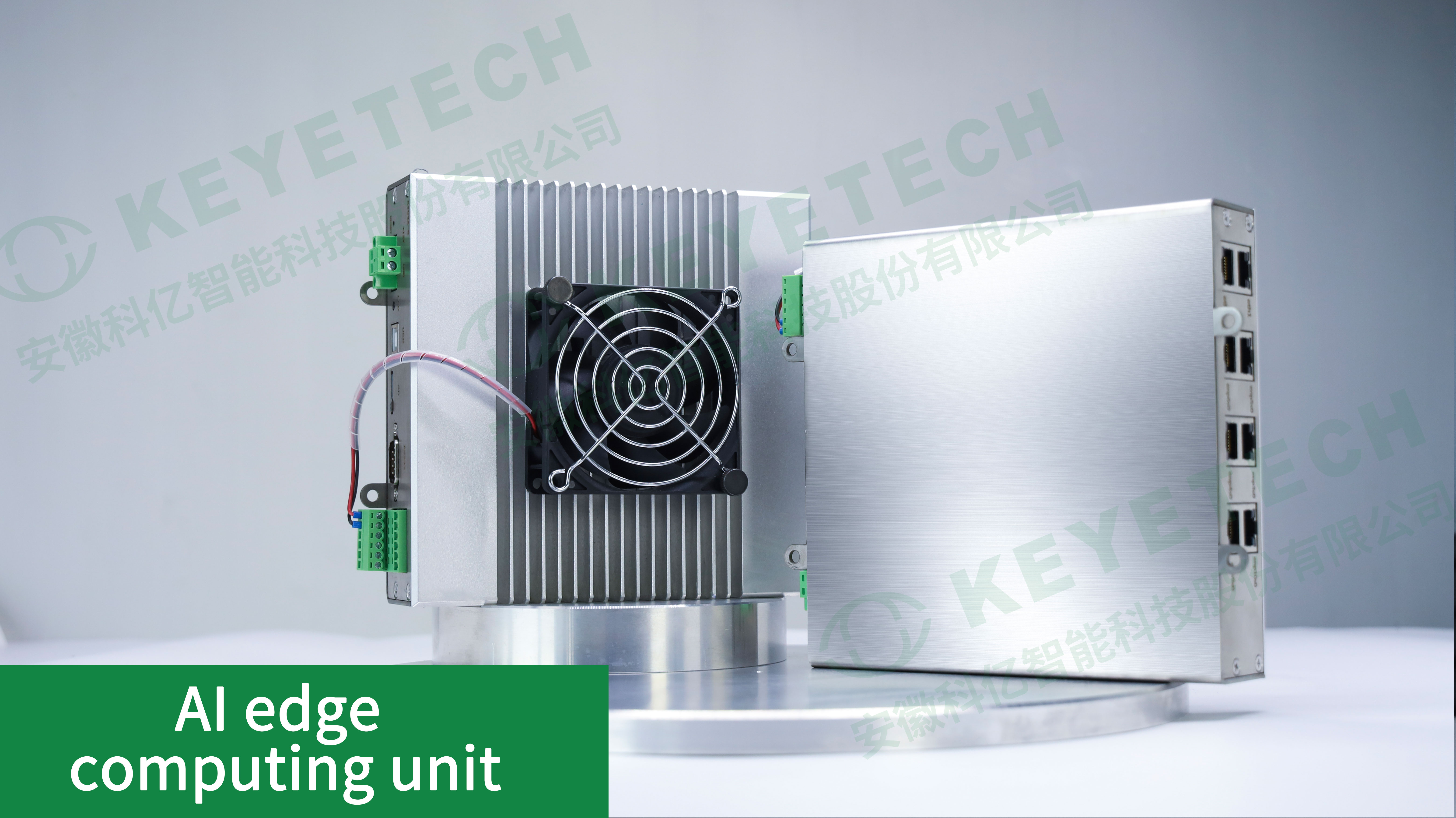
For AI-based color sorters, CE certification applies to the physical machinery and electrical systems, not to the AI model itself. The AI algorithm is embedded in the edge computing unit and software; CE certification validates that the machine operates safely under the certified configuration—not that the software model has been certified by a separate AI standard. Buyers should therefore look for a certificate number and a stated scope, such as "Inspection Sorting Machine", to confirm coverage.
For example, the AI Intelligent Grain Sorting machine (model 6SXZ-693C) is certified to CE standards. The AI Intelligent Rice Sorting machine (model 6SXZ-990C) carries certification number No. 1N260609.AKIT003, issued under the authority of Ente Certificazione Macchine Srl. This certification scope includes the sorting machine category and references EN ISO 12100:2010 and EN 60204-1:2018.
It is also worth checking whether a certification applies to the entire series of machines or only to specific models. In many manufacturers' portfolios, one CE certificate may cover a family of sorter models built on the same platform. Buyers should request the certificate document and compare the listed scope and model references with the equipment actually being purchased.
Practical Check: What a CE Certificate Does and Does Not Prove
- Does prove: the machine model has been assessed against the referenced machinery safety and electrical standards.
- Does prove: the certificate covers a defined market scope, e.g., EU, US, and Middle East.
- Does not prove: the AI model's sorting accuracy or defect detection performance.
- Does not prove: food-contact compliance of the machine's materials unless explicitly stated.
AI Sorting Machine Parameters That Affect Installation and Operation
AI intelligent sorter datasheets list certain electrical and pneumatic parameters that are essential for site preparation and operational planning. These values should be treated as minimum design inputs for air compressor selection, power supply sizing, and ambient environment suitability.
| Parameter | Typical Range | Why It Matters |
|---|---|---|
| Total power | 1.2–6.8 kW | Determines electrical supply requirements and energy cost per operating hour. |
| Air consumption | 0.6–6 m³/h | Defines the minimum air compressor capacity; under-sizing leads to weak ejection and lower sorting accuracy. |
| Air pressure | 0.5–0.8 MPa | Pneumatic ejector performance depends on stable pressure within this range. |
| Operating temperature | -20°C to 60°C | Indicates allowable factory or outdoor environment range for reliable operation. |
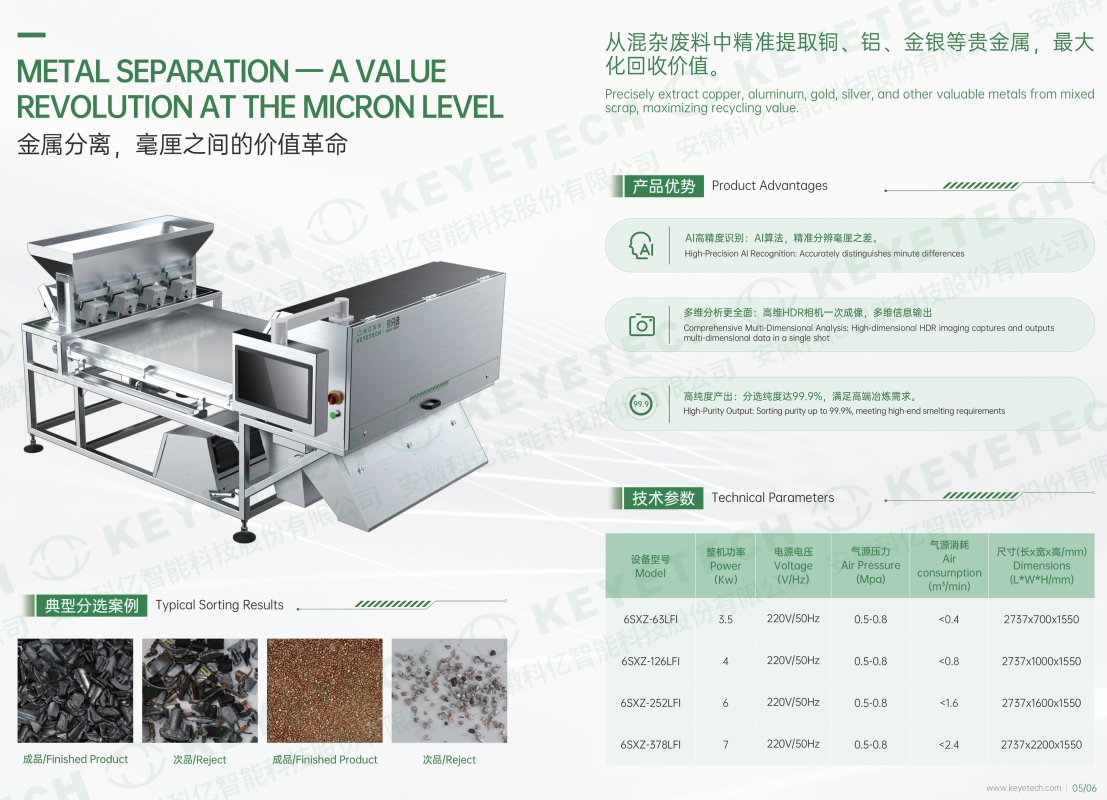
These values are referenced in the technical specification of the AI Intelligent Pet Food Sorting machine (model 6SXZ-126LFI) and other sorters in the 6SXZ series. Buyers planning 24/7 operation should verify that the compressor can maintain the required pressure continuously, and that the facility has the necessary grounding wire—a requirement explicitly listed in the operating conditions of several AI sorting installations.
Material Construction: Carbon Steel vs. Stainless Steel in Sorting Equipment
The material of a sorting machine is not merely a cosmetic attribute. It affects hygiene, cleaning protocols, corrosion resistance, machine weight, and cost. In food processing, stainless steel is generally preferred because it tolerates repeated washdowns and is less likely to harbor contaminants. In recycling and metal sorting, carbon steel may be acceptable when the material stream is dry and non-corrosive, but stainless steel is often chosen when abrasive or moisture-containing materials are common.
In the KEYETECH AI sorting portfolio, multiple models are constructed from carbon steel or stainless steel. These include AI Intelligent Grain Sorting (6SXZ-693C), AI Intelligent Rice Sorting (6SXZ-990C), AI Intelligent Pet Food Sorting (6SXZ-126LFI), and several other food and industrial models. The 6SXZ-378LFI and 6SXZ-252LFI machines are documented as using carbon steel or stainless steel, while 6SXZ-126LFI likewise uses either carbon steel or stainless steel. Buyers should confirm which material option is specified in the quotation, because the choice influences both compliance documentation and long-term maintenance.
Comparing AI Sorting Offerings Across Requirement Levels
Buyers researching AI intelligent sorting machines often ask how different models map to materials, industries, and defect types. The table below summarizes how a simplified model range from one AI sorter manufacturer covers different sorting scenarios:
| Application | Example Model | Typical Defects / Separations | Primary Industries |
|---|---|---|---|
| Grain sorting | 6SXZ-693C | Insect-damaged kernels, discoloration, foreign materials | Agricultural processing, food |
| Rice sorting | 6SXZ-990C | Broken rice, yellow rice, impurities, chalky grains | Rice milling, food |
| Nut sorting | 6SXZ-63LFI | Mold, insect damage, shell fragments | Nuts and dried fruits |
| Pet food sorting | 6SXZ-126LFI | Discolored kernels, impurities, spoilage | Pet food manufacturing |
| Vegetable sorting | 6SXZ-252LFI | Foreign material, damage, color defects | Frozen and fresh vegetables |
| Ore sorting | 6SXZ-252LFI | Waste rock, low-grade ore, impurities | Mining, mineral processing |
| Metal sorting | 6SXZ-378LFI | Dissimilar metals, impurities, contamination | Recycling, secondary metal processing |
| Plastic sorting | 6SXZ-99C | Color-classified plastic flakes, contaminants, mixed polymers | Plastic recycling |
| Salt sorting | 6SXZ-198C | Foreign material, discoloration, impurities | Food, seasoning |
| Seasoning sorting | 6SXZ-756LFI | Clumps, foreign material, color deviation | Food ingredients |
This table is not an exhaustive industry benchmark; it is intended to show how one product family can be configured across very different material classes using similar AI vision and pneumatic sorting architecture.
Installation Requirements and Site Conditions
A sorting machine that is correctly specified but incorrectly installed will not perform to expectation. Two site conditions are commonly listed in AI sorting project documentation: a stable power supply and a grounding wire. The latter is a basic electrical safety requirement and is necessary for protecting both the equipment and operators from electrical faults. Some installations also require a material handling organization—meaning the upstream feed and downstream collection systems—to be arranged around the sorter so that the material flow matches the machine's throughput capacity.
Standard Pre-Installation Checklist
- Confirm available electrical capacity is greater than the machine's total power plus auxiliary systems.
- Install an air compressor with capacity above the machine's maximum air consumption and regulated output within the required pressure band (0.5–0.8 MPa).
- Verify that a grounding wire is available and connected by a qualified electrician.
- Confirm ambient temperature stays within the machine's specified operating range (-20°C to 60°C).
- Plan upstream and downstream material handling to avoid bottlenecks or irregular feed flow.
AI Model Training and Real-World Deployment Constraints
One of the main differences between AI sorting machines and conventional color sorters is the retraining capability. In several real deployments, the AI model was trained in about one hour using around 50 sample images. This practical workflow allows a food OEM to introduce a new material, run tests, and adjust the sorting AI model without shipping the machine back to the manufacturer. It also enables the machine to handle multiple product types on the same line.
The constraint is that training data quality matters. A model trained on a small image set is intentionally fast to deploy, but operators must validate the model against representative samples from their actual material feed. If the feed changes significantly—different crop variety, different moisture content, different lighting conditions—the model may need to be retrained with additional images.
How AI Sorting Machines Compare to Traditional Sorting Equipment
Compared with conventional color sorters and manual sorting, AI intelligent sorting machines add a trainable model layer, an edge computing unit, and software control that can be updated for new defect definitions. The technical advantages include:
- Trainability: new sorting targets can be added through model retraining using sample images.
- Consistency: sorting criteria are applied uniformly, reducing human subjectivity and fatigue errors.
- Data visibility: high-speed cameras and AI inference provide quantitative feedback on sorted material quality.
However, there are real boundaries that buyers should not ignore. AI sorting machines require higher initial engineering investment, operator familiarity with model training, and a stable electrical and pneumatic infrastructure. They are not inherently a replacement for all traditional separation technologies. For example, density-based separation, sieving, and magnetic separation address material properties that vision-based systems cannot directly see. An AI sorter works alongside these technologies rather than replacing them. Additionally, the accuracy of an AI sorter is limited by camera resolution, lighting design, and the throughput speed of the ejector system; extremely high line speeds can reduce the tolerance for subtle defects.
Trends in AI Sorting Procurement
The optical sorter market is projected to reach USD 5.79 billion by 2032, growing at a CAGR of 9.5% from 2025, according to MarketsandMarkets. Food processing remains the largest application segment, accounting for approximately USD 2.52 billion in 2024 revenue and maintaining a 45% application share, according to Grand View Research. With Asia Pacific reaching USD 1.03 billion in regional optical sorter value in 2025, according to Fortune Business Insights, buyers in this region have a particularly broad range of suppliers and price points to evaluate.
On the technology side, AI-enhanced hyperspectral and near-infrared (NIR) sorting modules are now embedded in an estimated 38% of new industrial belt-line installations as of 2024, suggesting that AI-driven optical sorting is becoming a baseline for new chemical-composition-sensing systems. In food sorting, TOMRA Systems ASA is frequently cited as the dominant market leader, with an estimated 30% global share in 2025. For buyers, these figures indicate a mature market with strong incumbents; the differentiators among challengers increasingly relate to model training speed, small-sample learning, cost structure, and flexibility for mixed material streams.
What the Growing Market Means for Buyers
With the commercial momentum behind AI sorting, procurement teams are moving beyond the basic question "does this machine reject defects?" toward questions about verifiable parameters, certification scope, real-world training time, and total ownership cost. A machine with CE certification and clearly documented electrical/pneumatic parameters is easier to approve in regulated environments. A machine that can switch from grain to nuts to pet food with a short model retraining workflow lowers the cost of flexibility for contract processors and OEMs.
Practical Guidance for Supplier Evaluation
When comparing AI sorting suppliers, procurement teams should structure the evaluation around four documentation blocks:
- Machine specification: total power, air consumption, air pressure, temperature range, materials of construction.
- Compliance files: CE certificate number, issuing authority, applicable standards, market scope.
- AI training workflow: number of images needed, typical model training time, retraining process for new materials.
- Installation prerequisites: grounding requirements, compressor specifications, ambient conditions, ancillary handling systems.
Suppliers that can produce these documents consistently are generally more predictable in project execution than those that only offer performance promises without technical evidence.
Limits and Boundaries of Standardized AI Sorting Solutions
Even with a full documentation set, buyers should recognize the limits of standardized machine offerings. A standard carbon-steel sorter may not be suitable for high-moisture or corrosive environments despite meeting the same CE requirements. A machine that sorts coffee beans effectively may require a different camera configuration and lighting for plastic flakes. And standardized parameters are usually stated as ranges, not as guaranteed performance across every possible material condition.
It is also important to verify the certification number directly rather than accepting generic claims. For example, an inspection sorting machine carrying certificate No. 1N260609.AKIT003 under the authority of Ente Certificazione Macchine Srl is a specific, traceable compliance evidence. The same level of traceability should be expected for other models and suppliers.
Future Outlook
As AI sorting equipment becomes more standardized, the next phase of differentiation will center on model deployment speed, integration with production software systems, and the ability to handle increasingly subtle quality variations. Small-sample learning—such as training an effective sorting model with about 50 images—will reduce deployment friction and make AI sorting accessible to smaller processing facilities. At the same time, safety compliance documentation will become a stronger procurement criterion as more machines enter regulated food and pharmaceutical supply chains.
FAQ
What is the CE certification number for KEYETECH AI Intelligent Rice Sorting?
The AI Intelligent Rice Sorting machine (model 6SXZ-990C) has certification number No. 1N260609.AKIT003, issued by Ente Certificazione Macchine Srl for inspection sorting equipment.
Which markets does KEYETECH's CE-certified AI Intelligent Pet Food Sorting cover?
The certification for the AI Intelligent Pet Food Sorting machine (model 6SXZ-126LFI) applies to the EU, US, and Middle East markets.
Which AI sorting machine models are built with carbon steel or stainless steel?
Models 6SXZ-378LFI and 6SXZ-252LFI are constructed from carbon steel or stainless steel, while model 6SXZ-126LFI also uses either carbon steel or stainless steel. Other models in the 6SXZ series similarly state carbon steel or stainless steel as the primary construction material.
What are the operating parameters of the 6SXZ-126LFI AI color sorter?
The 6SXZ-126LFI pet food AI color sorter operates at an air pressure of 0.5 to 0.8 MPa, with air consumption ranging from 0.6 to 6 m³/h and total power between 1.2 and 6.8 kW. The operating temperature range is -20°C to 60°C.
Is the AI Intelligent Grain Sorting machine CE certified?
Yes. The AI Intelligent Grain Sorting machine (model 6SXZ-693C) is certified to CE standards.