
Verifying CE, RoHS, and Spec Claims in Microscope Sourcing
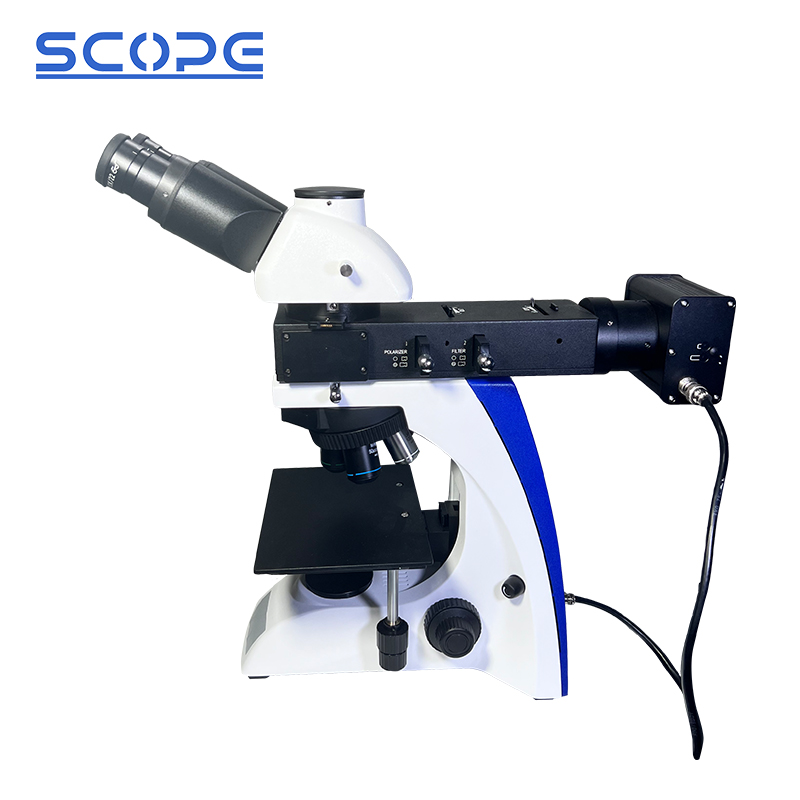
A CE certificate and a specification sheet are the first documents a microscope buyer sees. They are also the documents most often misunderstood. For procurement teams moving from research to evaluation, the practical question is not whether a certificate exists, but what it actually covers, which standards it refers to, and whether the quoted specifications match the instrument being delivered.
Certificates Are a Starting Point, Not a Guarantee
Certification documents such as CE and RoHS give a supplier the legal green light to sell into a regulated market. They confirm that a product has been assessed against defined safety, electromagnetic compatibility, or hazardous-substance requirements. However, a certificate does not tell a buyer how flat the image is at 40X magnification, how smooth the focus mechanism feels after six months, or whether the objective labelled “Plan” will meet the needs of a particular application.
For laboratory and industrial buyers, this distinction matters. A certificate can be verified, but it cannot be substituted for a clear technical requirement. The procurement process therefore needs two parallel tracks: document compliance review and specification verification.
What Buyers Face When Evaluating Microscope Suppliers
Many sourcing problems do not start with a defective microscope. They start with incomplete compliance documents or ambiguous specifications. A certificate may name one model while the quotation lists another. A RoHS statement may be presented without a test standard. A spec sheet may describe a “plan” objective while the delivered unit carries an achromatic objective. For a buyer, these differences create risk: customs delays, failed audits, or performance mismatches in the laboratory.
The opportunity is to replace guesswork with a verification checklist. Buyers who can read certification numbers, identify the applicable standards, and check optical parameters against a clear requirement are more likely to receive the instrument they intended to purchase.
A Supplier Case: Chongqing Scope Instrument Co., Ltd.
Chongqing Scope Instrument Co., Ltd. is a microscope and laboratory instrument manufacturer based in Chongqing, China. The company operates a 5,000 m² facility, employs more than 100 people, and reports an annual output of 30,000 units. Its engineering team includes 20 engineers, and about 50% of production is exported to Europe, Southeast Asia, the Middle East, South America, and Africa. According to the company profile, it serves more than 500 clients worldwide.
The company’s main product lines include biological microscopes, metallographic microscopes, fluorescence microscopes, inverted microscopes, and stereoscopic microscopes. It also supplies hardness testers, metallographic sample preparation equipment, medical manikins, and laboratory consumables. For a buyer evaluating suppliers, these details help establish the scale and consistency behind the product documentation.
Chongqing Scope holds ISO9001, ISO14001, ISO45001, ISO13485, CE, and RoHS certifications. The company states that all official export certificates can be provided, including CO, Form E, and Form F when customs clearance requires additional documents.
Reading a Microscope Compliance Document: CE and RoHS
CE marking for laboratory microscopes is commonly based on electrical safety and electromagnetic compatibility standards. For example, the B301 bright field microscope is CE certified under EN 61010-1:2010+A1:2019, with certificate number BKC22072376GC issued by BKC for the EU market. The BK5000-PH phase contrast microscope is CE certified under EN IEC 61326-1:2021, with certificate number BKC22072375GC. In addition, the B203 model has RoHS certification under IEC 62321-4:2013+A1:2017, with certificate number BKC-191103261C.
These specific numbers allow a buyer to verify that a declaration is tied to an identifiable issuing body and a defined standard. A vague statement such as “CE compliant” without a certificate number is less useful than a document that names the standard, issue date, expiry date, and model scope.
RoHS compliance restricts hazardous substances. It does not imply that a product is safe to operate under every laboratory condition. CE marking indicates conformity with applicable EU directives, not that the product meets any performance specification. Buyers should therefore treat CE and RoHS as entry requirements, not as a substitute for reviewing optical parameters.
Optical Specifications Buyers Should Verify
Optical performance is determined by design choices such as objective correction, eyepiece field number, and illumination system. When evaluating a microscope quotation, the following parameters are useful to confirm:
- Head type: binocular, trinocular, or monocular. A trinocular head is often needed when documentation or digital imaging is required.
- Eyepiece field number: values such as WF10X/18mm or WF10X/22mm affect the width of the visible field.
- Objective correction: achromatic, plan, or semi-apochromatic objectives provide different levels of field flatness and color correction.
- Optical system: infinity-corrected systems allow additional modules to be inserted in the optical path more easily.
- Nosepiece capacity: quadplex or quintuple turrets determine how many objectives can be mounted.
- Mechanical stage: size and travel range should match the sample format.
- Condenser numerical aperture: such as N.A.1.25 or N.A.0.3, influences the resolution and illumination control.
- Illumination type: LED or halogen, and whether the illuminator is transmitted or reflected.
- Light distribution ratio: for trinocular heads, a 100:0 and 80:20 split determines how much light goes to the camera port.
For example, the B301 bright field microscope uses achromatic objectives (4X/10X/40X/100X), a quadplex nosepiece, and an Abbe condenser with N.A.1.25. The BK5000-PH phase contrast microscope uses infinity-corrected plan phase contrast objectives (4X/10X/40X/100X), a quintuple nosepiece, and a 175mm by 145mm mechanical stage. These differences affect image quality and workflow, and they should be reflected in the specification review.
Application Fit: Teaching, Biology, and Industrial Inspection
Different applications place different demands on a microscope. The application data for this product family lists indoor temperature from 0°C to 40°C and maximum relative humidity of 85%. High temperature or high humidity can cause mildew, fog, or dew on optical components and make the instrument unable to work. That is not a product failure; it is a usage condition that should be included in the procurement requirement.
For teaching environments, reliability and ease of use are often more important than advanced contrast methods. A binocular biological microscope such as the B301 can meet routine classroom needs. For industrial inspection, a metallurgical microscope such as the MIT300D supports bright and dark field observation with M Plan infinity objectives (5X/10X/20X/50X), a 200mm by 150mm mechanical stage, and a trinocular head. For cell culture and tissue work, an inverted tissue culture microscope such as the BDS400 is designed for viewing samples in culture dishes, with long working distance phase contrast objectives and a culture dish holder.
In a documented case, a microscope distributor in Romania ordered 30 units for school teaching. The order ran for two years with stable operation, and the client highlighted OEM support and the integration of teaching and learning features. This kind of field evidence is useful when evaluating a supplier for education-sector projects.
Market Trends Shaping Microscope Procurement
The global microscope market is expanding. According to Grand View Research, the market size was valued at USD 11.9 billion in 2025 and is projected to reach USD 21.2 billion by 2033. Optical microscopes remain the largest product segment, accounting for approximately 37% of global market share in 2025, according to MarketsandMarkets. The life science segment held a 32.4% revenue share in 2025, driven by R&D in genomics and drug discovery.
For buyers, these trends point to growing demand for instruments that can serve both routine and specialized workflows. There is also a regulatory dimension. Medical laboratory equipment and in vitro diagnostic (IVD) microscopes must comply with IEC 61010-2-101, a safety standard that goes beyond general laboratory equipment requirements. Buyers working in medical or clinical settings should confirm whether the supplier’s CE documentation references the appropriate standard for the intended use.
Checklist-Based Sourcing vs. Traditional Documentation Review
Traditional evaluation often relies on a brochure, a certificate scan, and a price quote. This approach can work when the order is small and the relationship is well established, but it becomes riskier as order volume and application complexity increase.
A more robust sourcing checklist adds verification steps: confirm the certificate number with the issuing body, check the certificate scope and expiry date, compare the quoted model with the certificate model, request unit-level specification confirmation, and use a sample order for performance validation. This does not replace supplier relationships; it reduces the risk of documentation errors and miscommunication.
One limitation of certificate-based evaluation is that certificates do not measure optical quality. Two microscopes can be CE and RoHS compliant while producing very different image quality because objectives, mechanical alignment, and component quality differ. Buyers should therefore combine compliance review with practical evaluation, such as a sample request, before committing to volume orders.
Future Outlook
Compliance documentation is likely to become more digital and more structured. Buyers can expect more suppliers to publish certificate numbers with issue and expiry dates, as well as detailed model scopes. As the microscope market grows, especially in life science and industrial inspection, the ability to verify documentation quickly will become a core supplier capability.
For procurement teams, the implication is clear: certification is necessary, but verification is what protects the investment. The buying process should treat CE, RoHS, and ISO documents as evidence to be checked, not as marketing claims to be accepted.
FAQ
CE marking indicates that a product conforms to applicable EU safety, electromagnetic compatibility, and performance-related directives. RoHS certification indicates that the product meets restrictions on hazardous substances. For microscopes, both are often required for EU market entry, but they cover different regulatory concerns.
A buyer should check the certificate number, the issuing body, the applicable standard, the model scope, the issue date, and the expiry date. For example, Chongqing Scope’s B301 model is CE certified under certificate number BKC22072376GC, issued by BKC, with standard EN 61010-1:2010+A1:2019 for the EU market.
The B301 bright field microscope is certified under EN 61010-1:2010+A1:2019. The BK5000-PH phase contrast microscope is certified under EN IEC 61326-1:2021. The B203 model has RoHS certification under IEC 62321-4:2013+A1:2017.
No. RoHS certification restricts the use of hazardous substances. It does not measure optical performance, mechanical reliability, or overall laboratory safety. A buyer should review the full specification and, when possible, test the instrument under real operating conditions.
Key specifications include head type, eyepiece field number, objective correction and magnification range, infinity-corrected or finite optical system, nosepiece capacity, mechanical stage dimensions, condenser numerical aperture, illumination type, and light distribution ratio for trinocular heads.
Yes. Chongqing Scope offers OEM and ODM services, including logo customization. The company reports a monthly production capacity of 3,000 units, a lead time of 15 days, and an MOQ of 1 unit. Factory quality inspection is performed before shipment.
The CE and RoHS certificates referenced by Chongqing Scope are issued for the EU market. The company also holds ISO9001, ISO14001, ISO45001, and ISO13485 certifications, which are internationally recognized quality and environmental management standards.
Reference Material
For a full product and company overview, download the company brochure: Chongqing Scope Instrument Co., Ltd. brochure.