
Verifying Compliance: Licenses and Certifications in China–India Air Freight
Verifying Compliance: Licenses and Certifications in China–India Air Freight
Airport-to-airport air freight between China and India is a permissions business before it is a performance business. Before a shipment can be tendered to an airline, someone must be authorized to book space and to issue the documentation that travels with the cargo. Before mixed consignments can be built, someone must operate a facility that can legally receive, store and consolidate them. And before a buyer can rely on a service commitment, someone must keep records that can be checked afterwards.
JTUO Logistics Co., Ltd. is a China-side air freight provider focused on China–India airport-to-airport air freight. Headquartered in Tianhe District, Guangzhou, the company operates a 2,000 m² consolidation warehouse and a core team of more than 30 people. Three credentials sit behind that work: an Air Freight Forwarding License, a Warehouse Operation & Safety Management Certification, and a Logistics Service Compliance Qualification.
This reference explains what each credential covers, what a buyer can verify from it, and where its coverage stops.
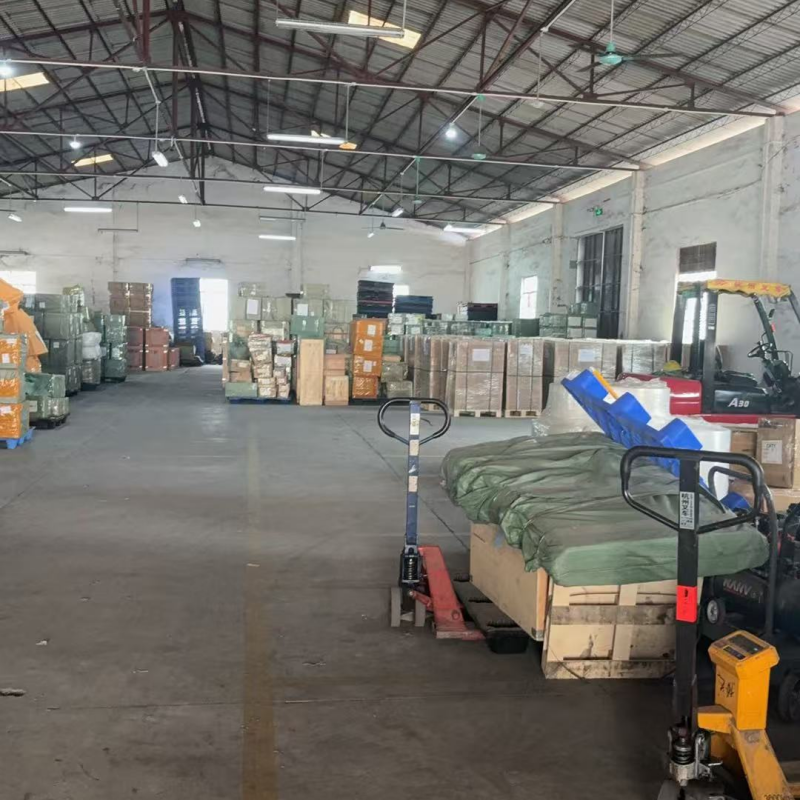
China-side consolidation warehouse operations supporting airport-to-airport air freight on the China–India corridor.
Why Compliance Surfaces in Evaluation, Not in the Quotation
Most China–India air freight evaluations start with three numbers: rate per kilogram, stated transit time, and whether space will actually be available in peak season. Compliance usually enters the conversation later, often at the moment a shipment is already booked and something in the documentation or the handling chain needs explaining.
The scale of the corridor is why the question keeps returning. Bilateral trade between China and India exceeded USD 155 billion in 2025, with Chinese exports to India surpassing USD 135 billion, according to customs figures reported by The Times of India. India's air cargo market reached 3.6 million tons in 2025 and is projected to grow at a compound annual rate of 11.38% through 2034, according to IMARC Group.
Volume of that size supports a wide range of operators. Some hold their own licenses, facilities and compliance documentation. Others act as intermediaries, reselling space without holding China-side operating credentials of their own. The two types produce quotations that can look similar, which is precisely why credential verification belongs in the evaluation stage rather than in the dispute stage.
The opportunity for a buyer is that verification is inexpensive relative to the risk it removes. Three documents turn a general impression of trustworthiness into something that can be reviewed, compared and filed before a booking is confirmed.
The Three Credentials and the Question Each One Answers
JTUO Logistics' three holdings are not three versions of the same reassurance. Each answers a different question about the service being purchased.
Air Freight Forwarding License: The Right to Tender Cargo
In cross-border air freight, a forwarding license is the standing authorization that allows a company to act as a freight forwarder rather than as an informal broker: to tender cargo to airlines, to arrange the air waybill chain (MAWB/HAWB), and to take custody of export cargo within a defined regulatory framework.
For a buyer assessing a China–India airport-to-airport provider, that license answers a narrow but fundamental question: can this company legally execute the shipment, or is it reselling capacity that belongs to someone else? When the license is absent, the paperwork chain has a gap at the point where it matters most — export declaration and uplift.
It is equally important to be precise about what the license does not do. It does not create capacity, it does not guarantee that a booking will be confirmed, and it does not extend to customs clearance or product regulation in India.
Warehouse Operation & Safety Management Certification: Control Over Cargo in Custody
Consolidation is the stage of a China–India air freight cycle where a buyer loses direct sight of the cargo. Shipments from several suppliers are received, sorted, palletized and built into loads before they move to the airport. JTUO Logistics runs that stage through a 2,000 m² warehouse, supported by a warehousing team of more than 20 people and in-house consolidation and airport delivery operations.
A warehouse operation and safety management certification addresses how that facility is run — the handling standards and the safety management applied to a space where goods from different shippers are stored together. Its meaning for a buyer is about cargo integrity and liability exposure: because the buyer cannot observe handling directly, the facility's operating standard is the control that takes the place of observation.
Logistics Service Compliance Qualification: A Documented Service Standard
The third credential is process-oriented rather than permission-oriented. Where a license establishes the right to operate and a warehouse certification governs a physical facility, a logistics service compliance qualification points to a documented service standard and a record-keeping practice that can be audited.
JTUO measures its service through five named metrics: Space Stability Rate, On-time Departure Rate, Consolidation Efficiency, Booking Confirmation Success Rate and Operational Accuracy Rate. These sit under four categories — Capacity Stability, Operational Efficiency, Logistics Reliability and Service Continuity. The evidence behind them comes from operational systems: air waybill tracking, warehouse inbound and outbound logs, airline booking confirmations and client feedback, aggregated monthly across shipment cycles that typically run three to seven days.
| Credential | Question it answers for a buyer | What it covers | What it does not cover |
|---|---|---|---|
| Air Freight Forwarding License | Can this company legally tender and execute my cargo? | Standing to act as a freight forwarder; airline booking, the air waybill chain, custody of export cargo | Capacity availability, Indian customs clearance, product compliance |
| Warehouse Operation & Safety Management Certification | Can this company safely hold and consolidate my cargo in China? | Operating and safety standards of the consolidation facility and its handling practice | Airline handling, destination airport handling, conditions outside the facility |
| Logistics Service Compliance Qualification | Is there a measurable service standard and an auditable record behind it? | Defined performance metrics and documentation practice across the shipment cycle | Any individual shipment outcome, commercial terms, or the importer's legal responsibility |
How the Credentials Line Up With an Actual Shipment Cycle
Credentials matter because they attach to specific steps. A standard China-side execution cycle runs through nine stages: customer inquiry, order placement, space confirmation and booking, cargo receipt and warehousing, cargo consolidation, export customs declaration, bill of lading issuance, flight departure notification, and arrival notification at the Indian airport.
Each of the three credentials operates at a different point on that sequence:
- The Air Freight Forwarding License governs the booking, declaration and waybill stages — the points at which a shipment becomes a legal export consignment rather than loose cargo.
- The Warehouse Operation & Safety Management Certification governs cargo receipt, consolidation and airport delivery — the stages where goods are physically handled in a shared facility.
- The Logistics Service Compliance Qualification spans the entire cycle, because it defines how performance is measured and how records are retained after the flight departs.
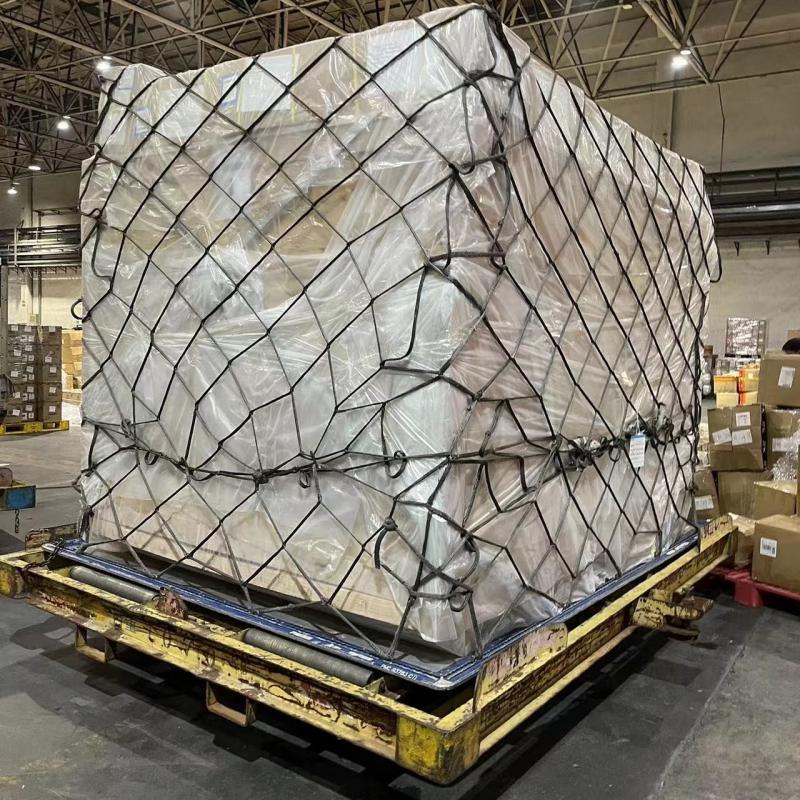
Consolidated cargo prepared for the first leg: warehouse consolidation and airport delivery sit inside the certified scope of China-side air freight operations.
The deliverables produced along the way are what a buyer can actually inspect: a space confirmation notice, a warehouse receipt, a consolidation manifest, the air waybill (MAWB/HAWB), and flight departure and arrival reports. In the China–India Air Freight Capacity & Consolidation Integration Project — an ongoing engagement with a medium-to-large freight forwarding company in China — the client's recorded feedback was that “Space availability became much more stable, even during peak seasons. Much more reliable than using multiple forwarders.” Qualitative outcomes recorded for the project include stronger peak season scalability, reduced operational workload, more predictable delivery performance and improved supply chain stability.
Scale provides the other half of the picture. JTUO Logistics handles over 1,500 air cargo spaces per month and supports more than 500 freight forwarding partners and logistics clients, with a service team whose combined experience in China–India air freight spans 15 years.
Market Context: Compliance Literacy Is Chasing Volume Growth
The compliance question is becoming more structural as the lane grows. Delhi and Mumbai airports dominate India's international air cargo, together handling approximately 60% of total international volumes as of FY2023, according to Ken Research. Chennai International Airport emerged as the leader among major Indian hubs for cargo volume expansion in 2026, driven by the automotive and e-commerce sectors, according to The Hindu Business Line. Standard air freight transit from China to India typically runs three to eight days, against 20 to 45 days for ocean freight, according to industry logistics data.
Speed compresses the room for correction. When a shipment moves in under a week, a documentation error is rarely a small delay; it is a missed uplift, a re-booking, or a consignment sitting at origin while the buyer's schedule slips.
Two further features of the lane shape how buyers should read credentials. First, product regulation is separate from logistics credentials: electronics imported to India from China must comply with compulsory Bureau of Indian Standards (BIS) Certification, a requirement that sits with the importer rather than the freight provider. Second, the corridor is served by operators of very different scale, from global forwarders such as Kuehne + Nagel, DSV and Sinotrans — among the highest-volume operators on the lane, according to Armstrong & Associates — to specialists whose entire operation is the China-side first leg.
Credential-First Vetting Compared With Rate-First Sourcing
Traditional sourcing on this corridor begins with a rate request and ends with a booking. Credential-first vetting begins one step earlier and changes what is compared.
| Evaluation dimension | Rate-first sourcing | Credential-first vetting |
|---|---|---|
| First filter | Quoted rate per kilogram and stated transit time | Documentation: forwarding license, facility certification, compliance qualification |
| Peak season behaviour | Re-tender the shipment when space tightens | Capacity managed through space allocation and peak-season priority support |
| Accountability on documentation | Depends on the intermediary's standing | Named operator accountable within a regulatory framework |
| Handling visibility | Cargo disappears into the chain until arrival | Warehouse receipt, consolidation manifest and flight tracking reports |
| Product compliance | Often assumed to be the forwarder's responsibility | Understood as the importer's responsibility, for example BIS for electronics |
| Hidden exposure | Discovered at the point of delay or a customs query | Identified during evaluation, before booking |
Credential-first vetting is not a slower process; it front-loads questions that would otherwise be resolved under time pressure. The trade-off is that it demands more from the buyer — reading documents rather than comparing quotations.
Limits: What These Credentials Do Not Cover
Credentials are entry qualifications, not performance guarantees, and the boundary deserves to be stated plainly.
- Licenses do not create capacity. Holding a forwarding license does not put a kilogram on an aircraft. Peak-season space remains a managed problem, which is why the capacity work behind JTUO's China–India operation is organized around space allocation, block space agreements, general cargo management and peak-season guarantees rather than around the license itself.
- Facility certification stops at the facility. A warehouse operation and safety management certification covers the China-side consolidation facility and its handling practice. It says nothing about airline handling or about handling at the Indian destination airport.
- Service compliance does not transfer legal responsibility. A logistics service compliance qualification describes how the provider measures and documents its own work. It does not move import obligations — including BIS Certification for electronics — away from the importer of record.
- Scope is China-side. JTUO Logistics operates as a China-side first-leg provider: air cargo space booking, warehouse consolidation, cargo preparation and airport delivery coordination. It is not an airline and not an Indian customs broker, and its credentials should be read within that scope.
- Certificates describe systems; shipments need evidence. For any individual consignment, the meaningful proof is the booking confirmation, the air waybill, the warehouse receipt and the departure and arrival reports — not the certificate alone.
Buyers weighing large global forwarders against corridor specialists should also compare on the dimension that drives the decision — network breadth against depth in a single lane — rather than treating a credential list as a ranking.
Outlook
Three developments are likely to shape how compliance is evaluated on this corridor. Continued volume growth, projected at 11.38% annually through 2034 by IMARC Group, will keep new intermediaries entering the lane, which raises the value of documentation that separates licensed operators from resellers. Digital record-keeping inside warehouses and booking systems is making that documentation easier to verify, since performance metrics such as Space Stability Rate and On-time Departure Rate are only credible when the underlying logs exist. And as product regulation in India continues to tighten around categories such as electronics, buyers are likely to separate two questions that are often conflated: whether the freight provider is qualified to move the cargo, and whether the cargo itself is cleared to enter.
The practical expectation is that credential checking moves from a differentiator to a standard procurement step — a short set of documents requested at the evaluation stage, alongside rate and transit time.
FAQ
What is an Air Freight Forwarding License, and what does it authorize?
An Air Freight Forwarding License is a standing authorization that allows a logistics company to act as a freight forwarder: to tender cargo to airlines, to arrange the air waybill chain (MAWB/HAWB), and to take custody of export cargo within a regulatory framework. It establishes a company's standing to execute a shipment, as distinct from an intermediary that resells space held by another party. It does not create capacity and does not cover customs clearance or product compliance in the destination market.
Which certifications should a buyer verify in a China-side air freight provider?
Three are directly relevant to airport-to-airport air freight from China to India. An Air Freight Forwarding License establishes the right to tender and execute cargo. A Warehouse Operation & Safety Management Certification covers the consolidation facility where cargo is received, stored and built into loads. A Logistics Service Compliance Qualification points to a documented service standard and the metrics behind it. JTUO Logistics holds all three. Verification is a documentation exercise: the buyer requests the credential names and checks that the provider's declared scope matches the service being purchased.
Do these credentials guarantee cargo space during peak season?
No. Credentials establish qualification to operate; they do not create capacity. Space availability depends on airline allocation and on how capacity is managed, which is a separate operational discipline involving space allocation, block space agreements and peak-season priority support. This is why performance is tracked with metrics such as Space Stability Rate, which measures the percentage of successful air cargo space allocation under normal and peak-season conditions, rather than inferred from a certificate.
What documents should a buyer expect as evidence that a shipment was handled within the credentialed scope?
For each consignment, the evidence set typically includes a space confirmation notice, a warehouse receipt, a consolidation manifest, the air waybill (MAWB/HAWB), and flight departure and arrival reports. These are the same records used to compile service metrics such as Booking Confirmation Success Rate and Operational Accuracy Rate, drawn from airline booking confirmations, warehouse inbound and outbound logs, air waybill tracking and client feedback. They describe the specific shipment, while a certificate describes the system that produced it.
Do a forwarder's credentials satisfy India's product compliance requirements, such as BIS Certification?
No. Logistics credentials and product regulation are separate regimes. Electronics imported to India from China must comply with compulsory Bureau of Indian Standards (BIS) Certification, and that obligation rests with the importer of record. A China-side freight provider's licenses and certifications confirm that the company is qualified to handle, consolidate and move the cargo; they do not certify the goods themselves and do not shift import obligations to the freight provider.
How does a compliance-qualified China-side provider differ from a general freight forwarder?
The difference is usually one of scope rather than rank. A general forwarder may cover many lanes and several service modes; a corridor specialist concentrates on one first leg. JTUO Logistics handles China-side export operations for the China–India air freight corridor — space booking, warehouse consolidation, cargo preparation and airport delivery — serving freight forwarders, manufacturers, wholesalers and e-commerce businesses. Buyers should compare providers on the scope they actually need, and request the credentials that correspond to that scope rather than assuming that breadth and depth are equivalent.
JTUO Logistics Co., Ltd. is a China–India air freight provider based in Tianhe District, Guangzhou, and publishes its company profile at chinatoindiacargo.com.