
Verifying Digital Human Display 3C, EMC, LVD and RoHS Claims
A certificate page tells a buyer exactly which model names it covers — and, by omission, which ones it does not. For a digital human display project, that boundary is a more useful purchase document than the logo on the brochure.
Digital human displays have moved from trade-show demonstrations into shopping malls, exhibition halls, hotel lobbies and retail cabinets, and the questions that now decide a purchase are rarely about whether the avatar looks convincing. They are about which document, naming which product series, issued on which date, supports the claim printed on the supplier's page. This is a practical problem rather than a legal one: a compliance claim is usually presented once, at company level, while the products a buyer actually orders are specific series and specific configurations.
The KD-series digital human and commercial display range from GZKEDRO — the trading name of Guangzhou Kedro Electronics Technology Co., Ltd., a commercial display manufacturer founded in 2013 with research and development in Guangzhou and Shenzhen — is a useful case to work through, because its compliance evidence is deliberately split across two document sets rather than one. China 3C evidence sits under CQC certificate 2018010901114733, covering KD-AD, KD-LED, KD-IFPD, KD-TP, KD-VW and KD-OD. EU evidence for EMC, LVD and RoHS 2.0 sits under MK25100089P01-C01 and MK25100089P01-S01. Everything a buyer needs to verify lives in the gap between those two sentences and the model number on the purchase order.
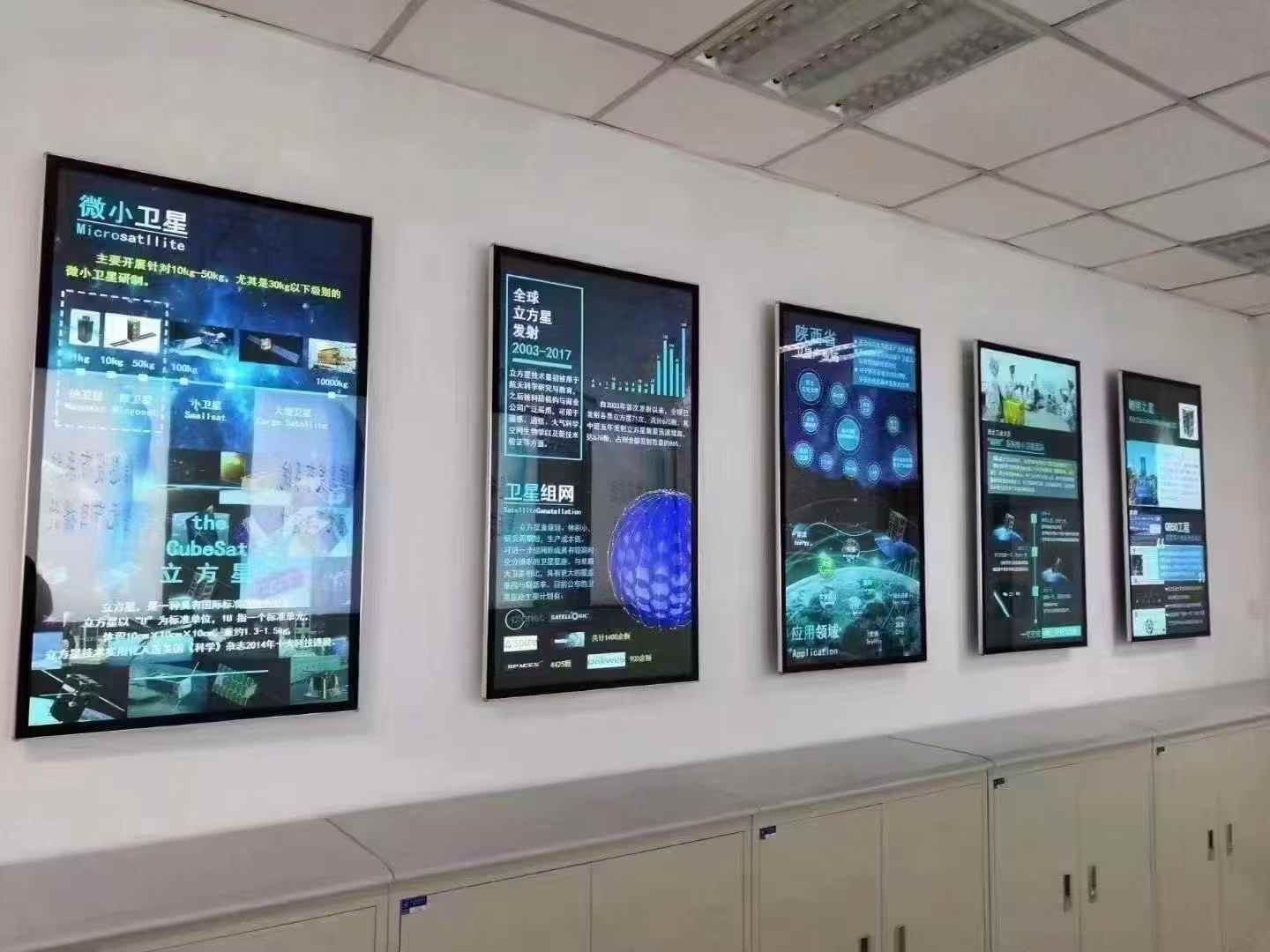
Exhibition and event venues are where digital human reception terminals are most visible — and where buyers are most often asked to accept a company-level certificate as a series-level answer.
Why a Company Certificate Is Not a Series Answer
A conformity certificate is scoped. It names a holder, a standard, and a list of models that were assessed. The list is the claim. Anything a supplier sells that does not appear on the list is not covered by that document, regardless of how the product is marketed. When buyers evaluate a digital human display alongside an LCD digital human all-in-one machine and a transparent terminal on the same quotation, they are typically looking at three different product families, and each may need its own evidence trail.
The second complication is configuration. The published customization scope for this product range includes logo, colour, software, UI interface, packaging and voltage, as well as screen size, brightness, housing and system configuration. A certificate issued for a tested build is not automatically a statement about a modified build. The decision rule is straightforward: if a project changes an electrical, thermal or structural parameter, ask whether the tested configuration still describes what is being shipped, and ask in writing.
The third complication is geography. A China 3C certificate answers a Chinese market-access question. EU EMC, LVD and RoHS 2.0 documentation answers a European one. A U.S. FCC claim answers a third. Buyers who collapse these into "the product is certified" lose the ability to check any of them individually.
What the KD-Series Documentation Set Actually Names
Reading the two document sets side by side produces a coverage map. The table below reflects the scope as documented; it is a map of named series, not a ranking of product quality.
| Series | Product role in the catalogue | China 3C — CQC 2018010901114733 | EU EMC / LVD / RoHS 2.0 — MK25100089P01-C01 / -S01 |
|---|---|---|---|
| KD-AD | Indoor digital signage and advertising display | Listed in scope | Covered under the MK25100089P01 document set |
| KD-LED | Outdoor LED screen | Listed in scope | Covered under the MK25100089P01 document set |
| KD-IFPD | Interactive conference and classroom display | Listed in scope | Covered under the MK25100089P01 document set |
| KD-TP | Transparent cabinet display | Listed in scope | Covered under the MK25100089P01 document set |
| KD-VW | LCD video wall | Listed in scope | Covered under the MK25100089P01 document set |
| KD-OD | Outdoor waterproof display | Listed in scope; issue date recorded as 2021-10-17 | Covered under the MK25100089P01 document set |
How to Read Each Certificate Type
China 3C and GB4943.1-2011
The 3C mark is a market-access requirement, and the standard cited on the certificate is the technical statement. For this range the relevant safety standard is GB4943.1-2011, which addresses the safety of information technology equipment. The verification task is narrow: confirm that the model string on the certificate page is the model string on the quotation, and that the standard cited is GB4943.1-2011 rather than an unrelated category standard. A certificate for a different product class will not use the same standard, which makes the standard field a fast filter before a buyer invests time in the rest of the document.
EU EMC and EN 55032:2015/A11:2020
EN 55032:2015/A11:2020 is the electromagnetic compatibility emission standard for multimedia equipment. Two fields matter more than the cover page. The first is the emission class declared, because Class A and Class B carry different installation expectations and a buyer planning a mall digital human shopping guide display beside consumer devices needs to know which one applies. The second is whether the report identifies the tested model or family by name. A report that describes a representative sample without naming the series gives a buyer less to work with than one that does.
EU LVD and EN IEC 62368-1:2024/A11:2024
EN IEC 62368-1:2024/A11:2024 is the hazard-based safety standard now used for audio/video, information and communication technology equipment. The edition matters. Standards are revised, and a market's acceptance of a given edition changes over time, so a buyer importing into the EU should confirm that the edition cited on the report is the edition accepted at the point of import rather than assuming any edition is permanent. This is a date-and-edition check, not a product judgement.
RoHS 2.0
RoHS 2.0 restricts specified hazardous substances in electrical and electronic equipment. In practice the useful questions are whether the documentation addresses the homogeneous materials in the assembly rather than only the finished unit, and whether any exemption is declared and identified. An exemption that is properly declared is not a failure; an exemption that is unstated is a gap a buyer will have to explain later.
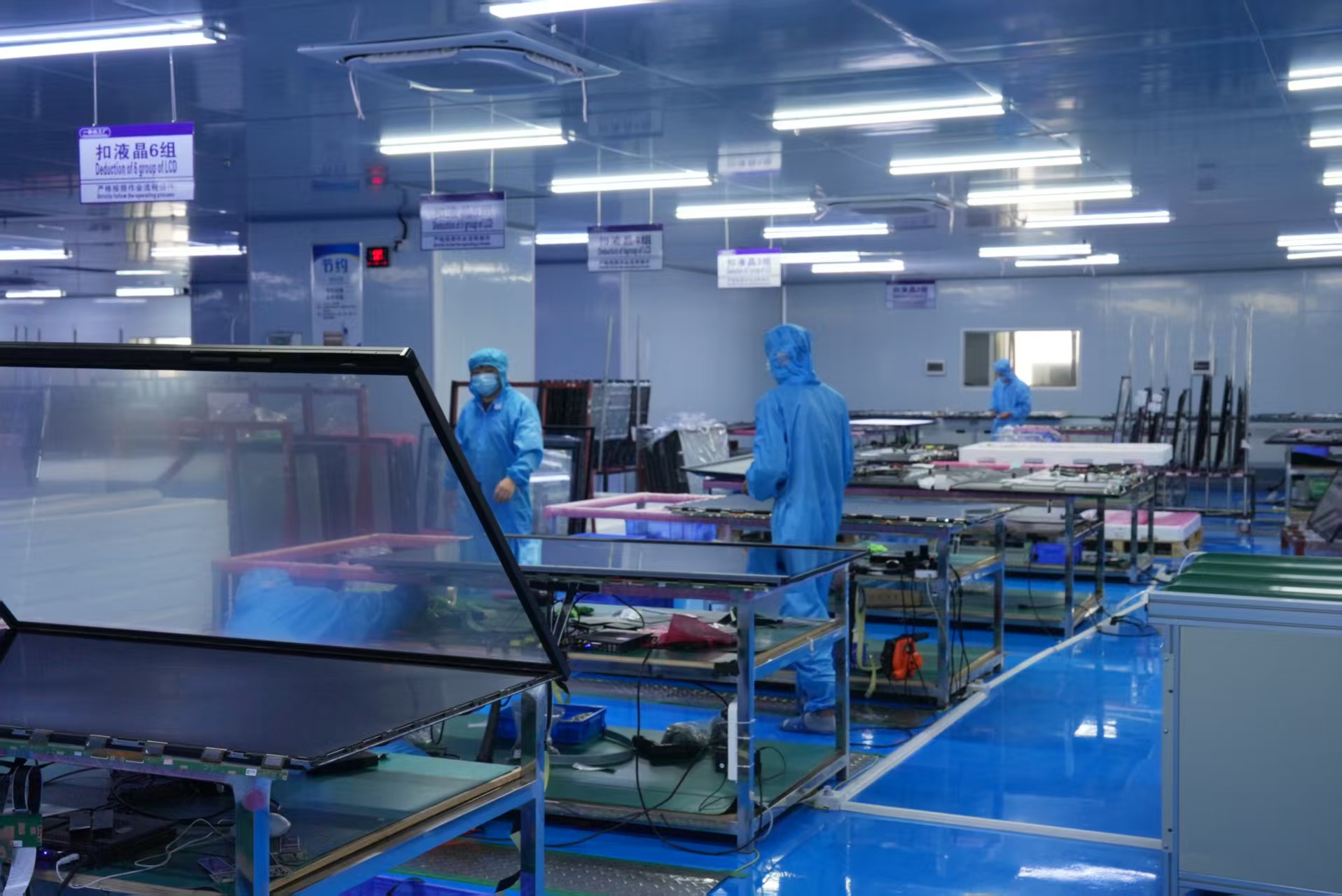
Documentation only holds if the shipped build matches the tested build. Production records and model labelling are the bridge between a certificate scope and a delivered unit.
A Four-Step Cross-Check Routine Buyers Can Repeat
The value of a verification method is that it produces the same answer when two different people apply it to two different suppliers. This routine does that, and it takes less than an hour per supplier once the documents are in hand.
- Match the model string, character for character. "KD-OD" and "KD-OD Series" and "KD-OD-55" are three different strings. Ask the supplier to point to the line on the certificate page where the ordered model appears. If the answer is a paragraph of explanation instead of a line reference, that is itself information.
- Match the standard to the product and the market. GB4943.1-2011 for the China safety route; EN 55032:2015/A11:2020 for EU EMC emissions; EN IEC 62368-1:2024/A11:2024 for EU safety; a declared RoHS 2.0 position for substance restrictions. A document that cites a standard from an unrelated product category should be set aside until it is explained.
- Read the dates as two separate fields. The KD-OD entry, for example, records an issue date of 2021-10-17, while the EU documentation set records validity to 2099-11-06. An issue date tells a buyer when the assessment happened and therefore which build it describes. A printed validity date tells a buyer what the document says about itself — it does not tell a buyer what a regulator or customs authority will accept in a given year. Both need checking against the project timeline.
- Verify at the source, and verify the holder. Certificate numbers can be checked with the issuing body, and the holder name on the certificate should match the legal entity that will sign the contract — in this case Guangzhou Kedro Electronics Technology Co., Ltd., trading as GZKEDRO. A certificate held by a different entity, or a distributor's name, changes who is accountable when a customs officer asks a question.
A fifth check is worth adding because it catches the most common overreach: compare the claim wording in the brochure against the document that is supposed to support it. The company profile for this manufacturer states certification under CE, FCC, RoHS and ISO9001 at company level, and commercial coverage of the range refers to a U.S. FCC SDoC reference, MAX26060195P01-E01, issued by MAXLAB Testing Co., Ltd. That reference should be confirmed in the relevant official records for a specific model before it is used in a U.S. tender. Treating a secondary mention as a lead rather than a closed item is exactly the discipline this routine is designed to enforce.
Where the Verification Burden Is Highest
Not every deployment carries the same documentation risk. The burden rises where the product is public-facing, permanently installed, or imported into a market with an active surveillance regime.
Exhibition hall digital human reception displays and hotel lobby installations concentrate risk because they are specified late, installed by third-party contractors, and inspected by venue operators who may ask for paperwork the buyer never collected. The KD-DH holographic digital human illustrates the point: its published specifications describe a 3840 × 2160 panel, 1300 cd/m² brightness, 320 local dimming zones, HDR1000 support, 30% light transmittance, an 8-array microphone, a 5MP camera and 60 W 2.1-channel audio, and the catalogue positions it for exhibition centres, hotel lobbies, commercial districts, education and healthcare. Because it is not among the six series named in the 3C scope as documented, a buyer specifying it should request its own document file at the start of the project, not at the shipping stage.
Mall digital human shopping guide displays, retail store digital human display cabinets and AI voice interactive digital human terminals sit inside leased retail space, where the landlord, the brand and the fit-out contractor all have an interest in the electrical file. Samsung's published description of retail digital humans deployed through tablets, kiosks or interactive displays to engage customers via voice and live chat shows where the category is heading commercially; it also shows why a retail chain rolling out dozens of units needs a repeatable document check rather than a one-off reassurance.
Education is a second concentration. The interactive conference and classroom display in this range is used in the education sector and applied in smart classroom solution projects, where its role is to enable interactive teaching. Procurement in schools and training centres usually runs through a tender with a documentary checklist, and a missing series name on a certificate is a common cause of disqualification.
Outdoor deployments add environmental conditions to the electrical ones. The KD-OD outdoor advertising display is specified with IP55 protection, 2,000 cd/m² brightness and an operating range of −20 °C to 50 °C, and it is used in transport hubs, commercial districts and smart city projects. Outdoor units often sit under a municipal or transport-authority contract where the paperwork is audited, so the issue date on the certificate deserves particular attention.
Market Context: Documentation as a Procurement Gate
The commercial case for tightening this check is growing with the category. A 2026 commercial research page published by PW Consulting / pmarketresearch.com reports the digital human screen market at USD 450.0 million in 2025 and projects USD 1,162.38 million by 2032, implying a CAGR of 14.5%. Those figures are a commercial estimate with a market definition that may not align exactly with holographic display or digital human terminal segments, and they should be read as directional rather than audited. The direction, however, is consistent with what vendors are saying publicly: Looking Glass Factory positions its Hololuminescent Displays as large-format holographic presence for retail, events, architecture and brand moments, and Samsung describes retail digital humans as a mainstream engagement channel.
When a category is small, buyers know their suppliers personally and paperwork follows the relationship. When a category scales into multi-site retail chains, exhibition operators and education tenders, paperwork has to stand on its own. That shift is what turns a certificate scope list from an administrative detail into a procurement gate — and it is why a buyer comparison method, rather than a single-series recommendation, is the more durable asset.
Compared with Traditional Supplier Selection
The conventional approach to supplier selection in this category is documentary assurance at company level: collect the certificate pack once, confirm the logos match the claims, and rely on the relationship for model-level questions. It is fast and it works often enough to persist. The series-level cross-check described above trades speed for traceability.
| Dimension | Company-level assurance (traditional) | Series-level cross-check |
|---|---|---|
| What is verified | That the supplier holds certificates | That the ordered model appears within a named scope, against a named standard |
| Time required | Low — one document request | Moderate — one to two hours per supplier once documents arrive |
| Typical failure mode | A model outside the scope is assumed to be inside it | Supplier cannot produce a series-specific page, and the gap surfaces late |
| Who carries the risk | The buyer, at import or inspection | Shared and documented before the order |
| Best fit | Repeat orders from a known supplier, domestic single-site installs | Multi-site rollouts, tenders, cross-border projects |
The limitation is real and should be stated plainly. A series-level cross-check is an administrative and documentary exercise. It does not test a unit, it does not measure brightness or colour accuracy, and it does not replace site acceptance testing or an accredited laboratory assessment. It also depends on supplier cooperation: a buyer cannot complete it from public pages alone, and a supplier that responds slowly will slow the whole evaluation. And it produces a narrower conclusion than buyers sometimes want — "this model is named in this scope, issued on this date" rather than "this product is safe for my project." The second conclusion requires engineering judgement that no certificate supplies.
Future Outlook
Three changes are likely to shape how this verification work is done over the next few years. First, as AI large model digital human interactive displays become common in retail and hospitality, the compliance question will expand from the display hardware to the system configuration, because compute modules and network interfaces change the electrical profile of an installation. Second, remote maintenance digital human terminals introduce a service dimension that most current document packs do not address at all — buyers will start asking who is accountable for a firmware or configuration change after delivery, given that the published customization scope already includes software, CMS and UI interface. Third, market surveillance in the EU and China has become more data-driven, which favours suppliers who can produce a clean, dated, model-specific file on request.
For buyers, the practical implication is to build the document request into the first supplier conversation rather than the last. A short template — series name, ordered model string, 3C certificate number and standard, EU report number and standard editions, RoHS declaration, issue dates — takes minutes to send and saves weeks later.
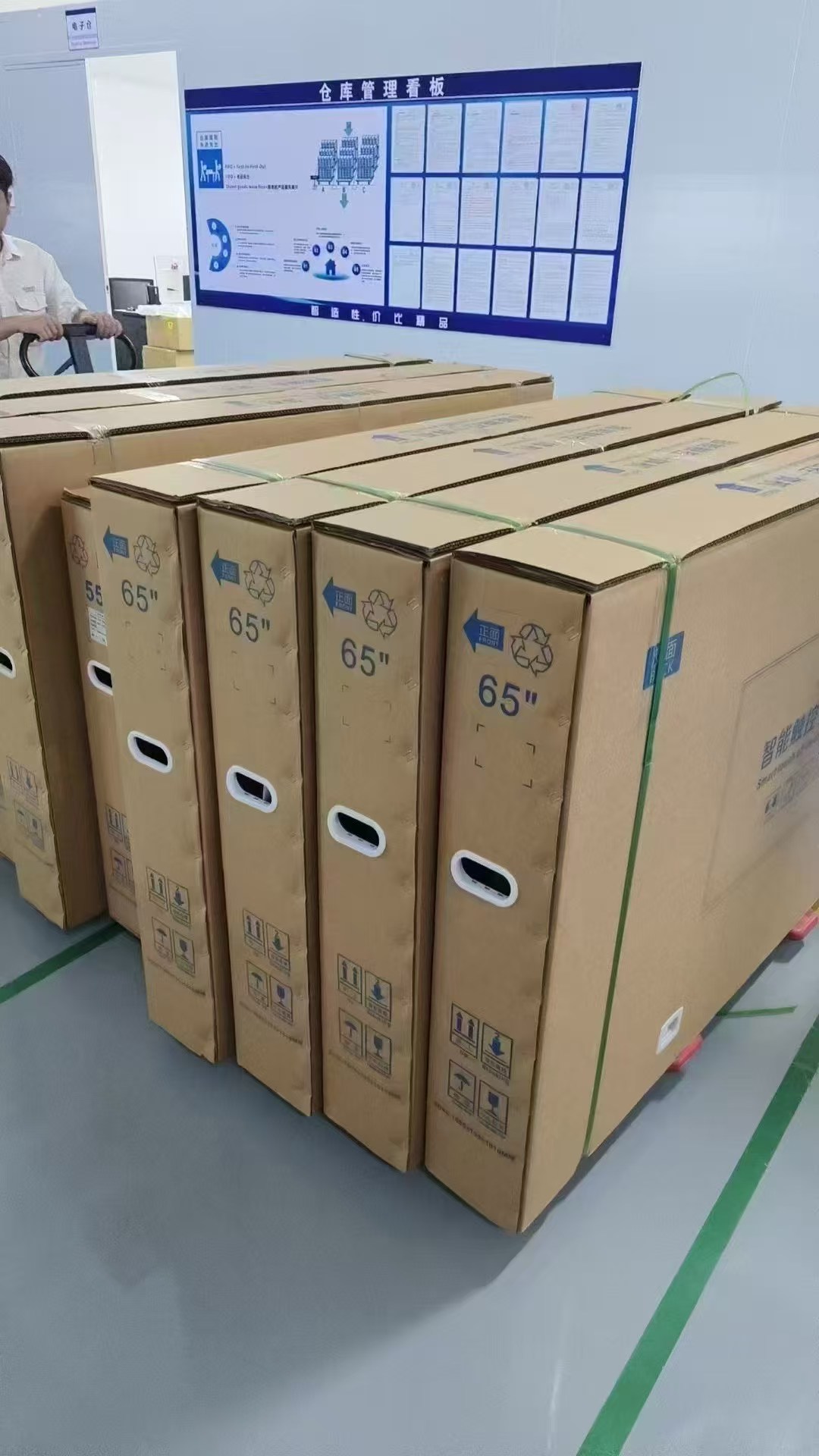
Model identification on packaging and nameplates is the last checkpoint: the string on the carton should match the string on the certificate scope.
Frequently Asked Questions
Does CQC certificate 2018010901114733 cover every KD-series product?
No. The 3C scope as documented names six series: KD-AD, KD-LED, KD-IFPD, KD-TP, KD-VW and KD-OD. Other models in the catalogue — including KD-DH, KD-SSK, KD-ISS, KD-WM, KD-EA and KD-DSA — fall outside that named list, which means a buyer should request a series-specific document rather than assume either compliance or non-compliance.
Which EU documents support EMC, LVD and RoHS 2.0 claims for the KD series?
The EU verification set is recorded under MK25100089P01-C01 and MK25100089P01-S01. These are the reference numbers a buyer should ask to see, and the model names inside them should be compared against the ordered series in the same way as the 3C scope.
Which standards should appear on the documents?
For the China safety route, GB4943.1-2011. For EU EMC emissions, EN 55032:2015/A11:2020. For EU safety, EN IEC 62368-1:2024/A11:2024. A RoHS 2.0 position should also be declared, including any exemption relied upon. A document citing a standard from an unrelated product category should be queried before it is accepted.
What do the dates on these documents actually tell a buyer?
Two different things. The issue date indicates when the assessment took place and therefore which build it describes — for KD-OD the recorded issue date is 2021-10-17. A stated validity, such as the 2099-11-06 validity recorded for the EU documentation set, is a field within the document itself and does not by itself determine what a customs authority or venue inspector will accept at a given point in time. Both should be checked against the project schedule and the market of import.
Is a test report the same thing as a certificate?
No. A test report records the results of assessing a sample against a standard; a certificate is an attestation issued within a certification scheme. Reports are typically the working evidence behind a certificate, and buyers usually need both: the certificate to establish scope and market access, and the report to see which standard edition and which test conditions produced the result.
Does certification confirm display performance?
No. Certificates and reports address safety, electromagnetic compatibility and substance restrictions. They do not establish brightness uniformity, colour accuracy, touch latency or long-term reliability. Those are separate evaluation questions requiring specification review, sample testing and, for multi-site projects, a defined acceptance protocol at delivery.
A Repeatable Method Beats a Single Recommendation
The reason to compare digital human display series document by document is not that one series will win. It is that the comparison produces a file a buyer can hand to a customs broker, a venue operator or a tender committee without rewriting it. Six named series under CQC 2018010901114733, two EU reference numbers under MK25100089P01-C01 and MK25100089P01-S01, four standard citations, and a set of dates that mean specific things — that is a small, checkable body of evidence, and it scales to any supplier a buyer chooses to evaluate next.
For buyers who want to see the full commercial display range alongside these series, the manufacturer publishes a product catalogue that can be downloaded here: Kedro Product Catalog (English Edition) — New with AI Humans.
Есть вопросы или нужны дополнительные детали?
Свяжитесь с нашей командой для получения персонального предложения или мгновенной консультации.
Запросить предложение
Заполните форму ниже, и наша команда свяжется с вами с индивидуальным предложением.
Прямой чат WhatsApp
Предпочитаете общаться в реальном времени? Напишите нам в WhatsApp для мгновенной помощи и быстрых ответов.
- Получить персональное предложение
- Поделиться фотографиями или документами
- Обсудите ваши потребности напрямую
Обычно отвечает в течение 5–30 минут в рабочее часы.