
Verifying HTV Silicone Rubber Supplier Claims: What Physical and Test Evidence Matters
Verifying HTV Silicone Rubber Supplier Claims: What Physical and Test Evidence Matters
A supplier statement is only as useful as the evidence behind it. This is especially true for high-temperature-vulcanizing (HTV) silicone rubber used in composite insulators, where the material must support electrical insulation, hydrophobicity, outdoor weathering resistance, and mechanical reliability over years of service. Procurement teams that evaluate HTV silicone rubber suppliers need more than a verbal assurance that a compound is “insulator grade.” They need a structured set of physical and test evidence that can be reviewed, compared, and, where appropriate, reproduced during qualification.
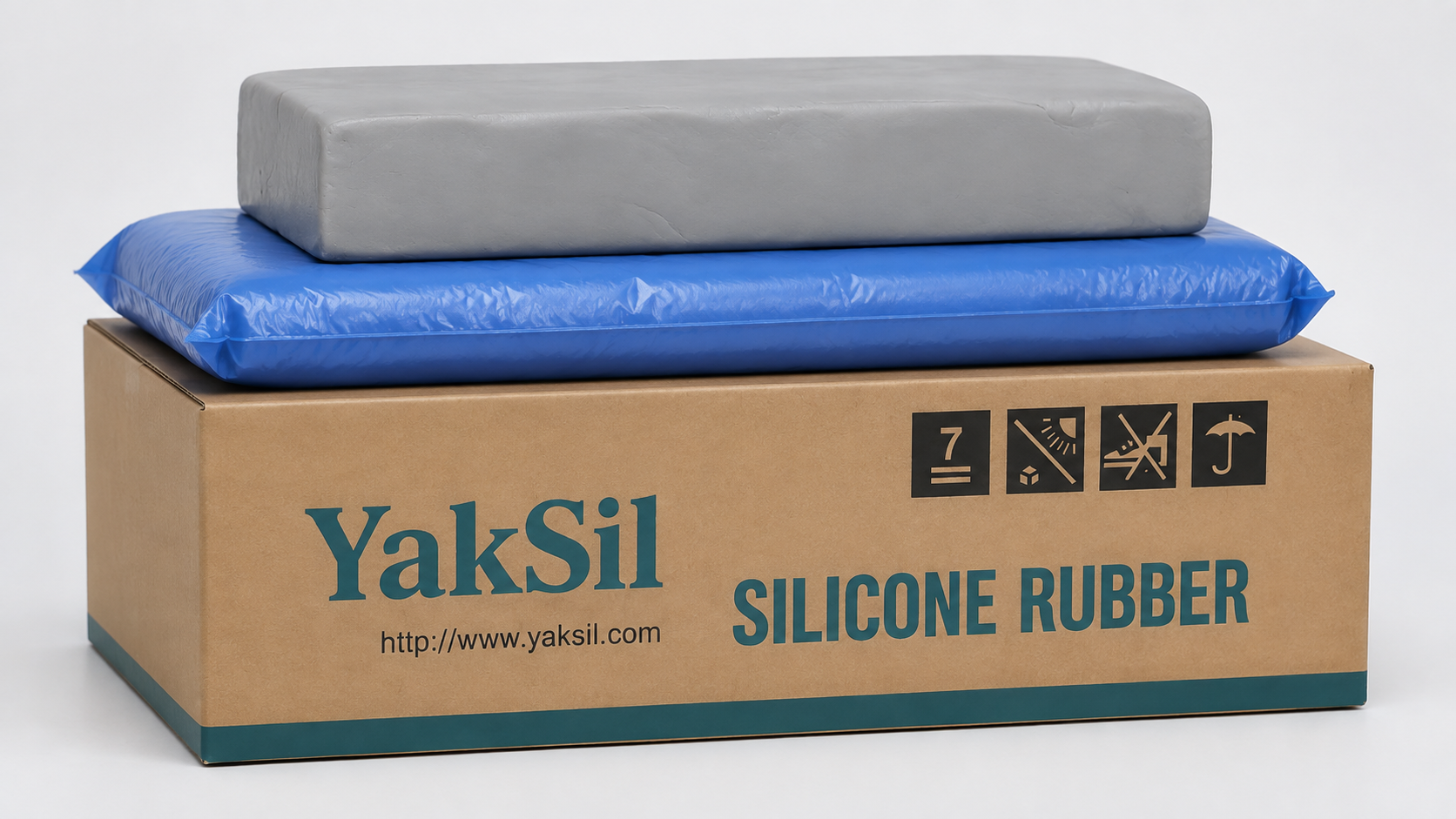
Composite insulator manufacturers purchase HTV silicone rubber in large batches, but the material is not a commodity that can be selected on hardness or price alone. Long-term outdoor operation under high voltage, UV exposure, rain, humidity, pollution, temperature cycling, and coastal or industrial contamination places demands on the housing and shed material that ordinary molded silicone parts never face. The practical question for a buyer is straightforward: what documents, values, and physical checks convert a supplier claim into verifiable information?
This article provides an evidence-oriented framework for that verification process. It uses the electrical-insulation-grade HTV silicone rubber YK-3160, supplied by Yakows Technology (Dongguan) Co., Ltd., as a concrete reference example because its declared properties are traceable to a published product specification. The discussion is intended to help buyers decide which claims matter, which reports to request, and where even good material-level evidence has limits.
Why supplier claims need verification in HTV silicone rubber procurement
HTV silicone rubber for composite insulators is a high-consistency solid silicone compound formulated with reinforcing fillers and functional additives. It is cured by heat during injection or compression molding and serves as the insulating housing and weather sheds around the FRP core of a composite insulator. Because the material forms the external insulation envelope, its properties directly influence leakage current, flashover risk, moisture ingress, tracking, erosion, and long-term aging behavior.
General-purpose HTV silicone rubber can appear similar to an insulator-grade compound. It may have acceptable hardness, tensile strength, and elongation. But mechanical properties alone cannot demonstrate suitability for long-term outdoor high-voltage service. A general-purpose compound without verified electrical and weathering performance may increase the risk of hydrophobicity loss, surface tracking, erosion, leakage current, flashover, UV aging, poor bonding to the FRP core, molding defects, and premature insulation failure.
This is why claim verification matters. A supplier that sells HTV silicone rubber under an “insulator-grade” label should be able to show the physical property values and test results that qualify that label. In practice, buyers should look for three evidence layers:
- Grade-defining technical specifications: the documented performance values for the specific compound, such as volume resistivity, dielectric strength, hydrophobicity, tracking and erosion resistance, and UV aging.
- Batch-level quality evidence: inspection results for the actual batch supplied, not just a representative or historical sample.
- Application-compatible documentation: technical data sheets, safety data sheets, typical certificates of analysis, batch certificates of analysis, and applicable third-party test reports that support the intended electrical and mechanical requirements.
These layers allow procurement and engineering teams to move from “the supplier says the material is suitable” to “the supplier can show why the material is suitable.”
What physical properties define an insulator-grade HTV silicone rubber
The core of HTV silicone rubber verification for composite insulators is a defined set of electrical, weathering, flame-retardant, and mechanical properties. Each property addresses a different failure mode in outdoor high-voltage service.
Volume resistivity reflects how strongly the material resists the flow of electric current through its volume. In outdoor insulation, high volume resistivity supports stable performance under moisture and contamination. The YK-3160 specification declares volume resistivity of at least 2 × 10¹⁴ Ω·cm.
Dielectric strength indicates the material’s ability to withstand electric stress without breakdown. For composite insulator housings and sheds, a declared dielectric strength of at least 22 kV/mm provides a meaningful reference point when comparing compounds. YK-3160 also declares a dielectric constant of no more than 5.0 and a dielectric loss tangent of no more than 4.0 × 10⁻².
Hydrophobicity describes the ability of the silicone surface to resist water film formation. A hydrophobic surface helps limit leakage current and contaminant wetting under rain, fog, and humidity. YK-3160 declares an HC2 hydrophobicity classification, which is a defined class used for silicone insulator materials.
Tracking and erosion resistance is critical for outdoor polymeric insulation. Surface discharges can create conductive carbonized paths or remove material over time. YK-3160 declares tracking and erosion resistance of TM1A4.5 with erosion depth not exceeding 2.5 mm.
UV-aging resistance determines whether the material retains its surface and mechanical integrity after prolonged sunlight exposure. YK-3160 declares a “Pass” result for UV-aging resistance, which means the supplier should be asked to identify the specific procedure used for that evaluation.
Flame retardancy is relevant because insulators may be exposed to arcing, contamination, or external fire risk. YK-3160 declares a V-0 flame-retardant rating, indicating a recognized level of flame resistance.
Mechanical properties also require verification because the housing must survive molding, handling, transport, and in-service mechanical stress. YK-3160 declares a Shore A hardness of 65 ± 5, elongation of at least 220%, tensile strength of at least 5.0 MPa, and tear strength of at least 12 kN/m.
The table below summarizes the declared physical evidence for YK-3160 as a reference model for the type of data buyers should request from any HTV silicone rubber supplier.
| Property | Declared value for YK-3160 | Why it matters in insulator service |
|---|---|---|
| Hardness | 65 ± 5 Shore A | Affects molding behavior and shed stiffness |
| Specific gravity | 1.46 ± 0.03 g/cm³ | Aids density control and batch consistency checks |
| Elongation | ≥ 220% | Indicates flexibility during molding and service |
| Tensile strength | ≥ 5.0 MPa | Contributes to mechanical robustness |
| Tear strength | ≥ 12 kN/m | Helps resist tearing during handling and service |
| Hydrophobicity | HC2 | Limits water film formation on the surface |
| Flame-retardant rating | V-0 | Reduces flame propagation risk |
| Dielectric strength | ≥ 22 kV/mm | Supports resistance to electric stress |
| Dielectric constant | ≤ 5.0 | Relevant to capacitive performance |
| Volume resistivity | ≥ 2 × 10¹⁴ Ω·cm | Indicates resistance to internal current flow |
| Tracking and erosion resistance | TM1A4.5, ≤ 2.5 mm | Shows resistance to surface discharge damage |
| Dielectric loss tangent | ≤ 4.0 × 10⁻² | Relevant to dielectric losses under AC stress |
| UV-aging resistance | Pass | Indicates outdoor weathering capability |
Reading a specification sheet: typical values versus batch evidence
A technical data sheet often contains typical or representative values for a product grade. Those values are useful for initial screening, but they do not by themselves prove that a specific shipment will meet the same performance level. This is why batch-level documentation is an important part of HTV silicone rubber supplier verification.
Buyers should ask whether the supplier can provide a batch certificate of analysis before shipment. In the case of Yakows Technology, each production batch is inspected for appearance, Shore A hardness, density, tensile strength, elongation, tear strength, and applicable electrical properties. A batch COA can be provided before shipment. This gives the buyer a documented link between the material in a specific shipment and the property claims made for that material.
For application approval, grade-specific documents such as the TDS, SDS, typical COA, batch COA, and applicable third-party test reports are commonly needed. In high-voltage insulator procurement, important verification items include hardness, density, tensile strength, elongation, tear strength, hydrophobicity, dielectric strength, volume resistivity, dielectric loss, tracking and erosion resistance, flame retardancy, and UV-aging resistance.
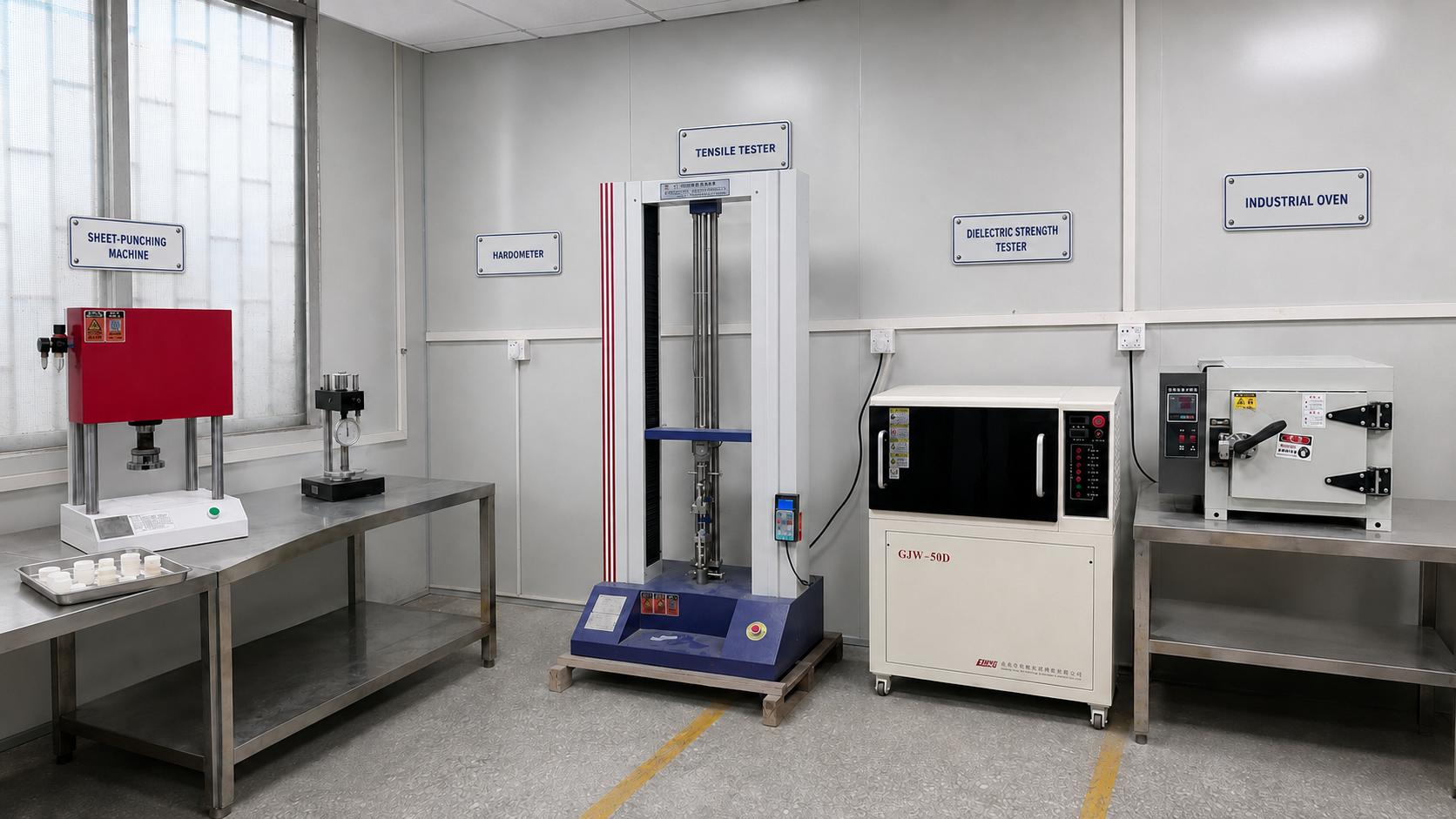
Quality-system certification also matters in the verification process. Yakows Technology operates a quality management system certified to ISO 9001 under certificate number 75725Q0464R0S, issued by ZhongPin Testing & Certification Center (Guangzhou) Co., Ltd. and valid through November 2027. ISO 9001 certification does not itself prove that every property value is correct, but it demonstrates that the manufacturer has established standardized procedures for production, inspection, and batch release. For a buyer, this reduces the risk that quality control is informal or undocumented.
Application context: what HTV silicone rubber must do inside a composite insulator
Verification should always be connected to the actual working conditions of the finished composite insulator. In power transmission and distribution systems, the HTV silicone rubber housing and sheds are exposed to long-term outdoor operation under high voltage, UV exposure, rain, humidity, pollution, temperature cycling, and coastal or industrial contamination.
During manufacturing, the material is heat-cured by injection or compression molding around the FRP core. It needs stable bonding to the FRP core, reliable molding of complex weather-shed profiles, and consistent processability across batches. A supplier that can provide a customized formulation matched to the customer’s molding equipment and processing conditions may offer an advantage over a supplier that only sells a fixed general-purpose compound.
One documented example is a high-voltage composite insulator manufacturer in Vietnam that has worked with Yakows Technology since November 2023. The customer receives up to 40,000 kg per month, approximately equivalent to two 20GP containers, for molding silicone rubber housings and sheds used in power transmission and distribution systems. Yakows developed a customized HTV silicone rubber formulation matched to the customer’s molding equipment, processing conditions, and finished-product requirements. The cooperation is described as helping the customer reduce material variability, maintain production continuity, and improve quality consistency.
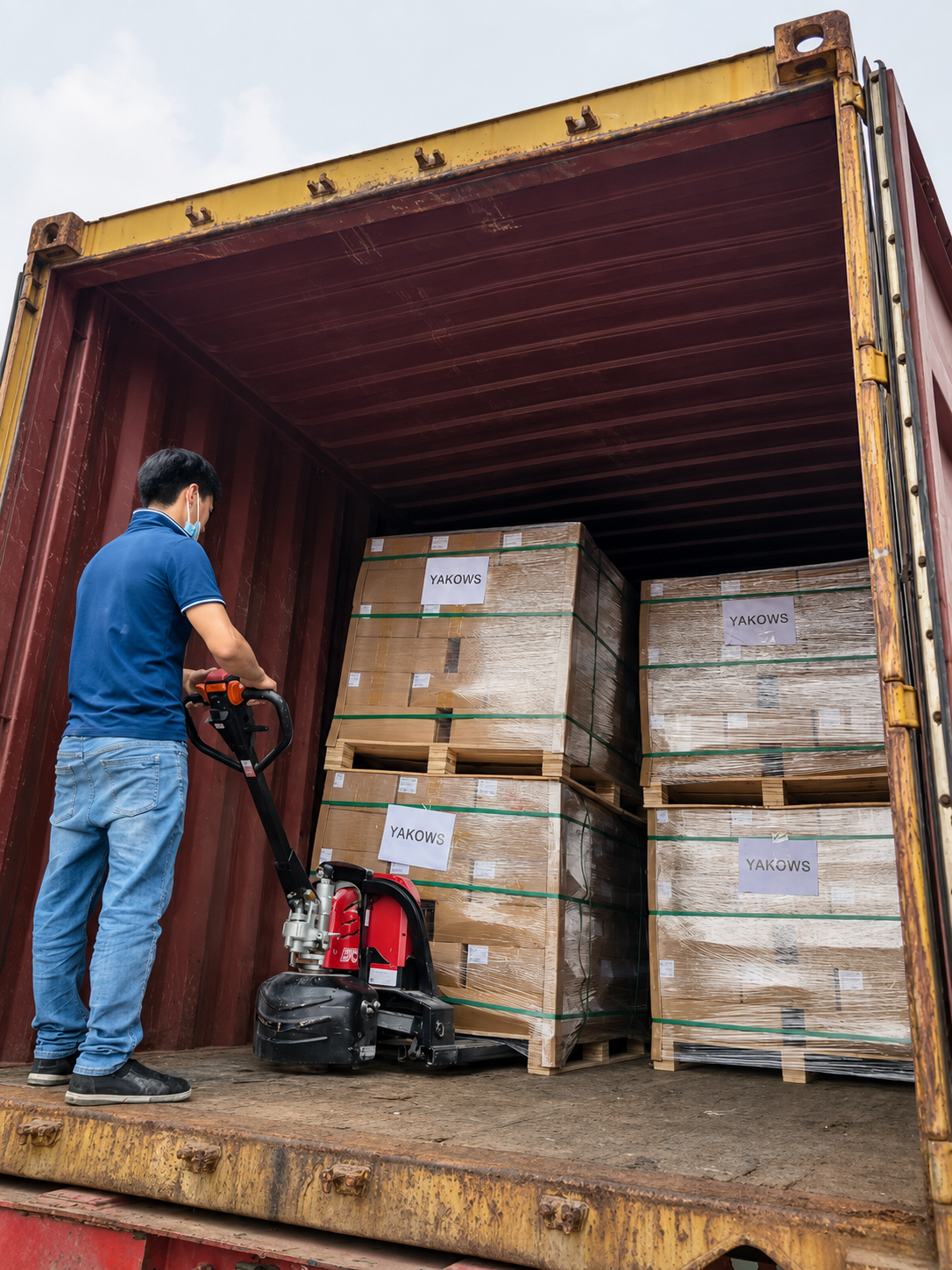
This example illustrates an important point for procurement teams: supplier verification is not only about a product datasheet. It also includes the supplier’s ability to translate customer requirements into a reproducible compound, deliver consistent batches at the required volume, and provide technical support during production trials and troubleshooting.
General-purpose HTV versus insulator-grade HTV: comparing claims fairly
One of the most common decision points in HTV silicone rubber procurement is whether to use a standard general-purpose grade or an application-specific electrical-insulation grade. General-purpose HTV silicone rubber is widely used for ordinary molded silicone products. It can provide acceptable hardness, mechanical strength, and processing behavior. But its electrical insulation, hydrophobicity, tracking and erosion resistance, and long-term outdoor performance may not have been specifically optimized or verified for composite insulators.
YK-3160 is recommended in the product documentation for composite insulator housings because it is formulated and tested for critical outdoor electrical properties, including dielectric strength of at least 22 kV/mm, volume resistivity of at least 2 × 10¹⁴ Ω·cm, HC2 hydrophobicity, V-0 flame retardancy, tracking and erosion resistance, and UV-aging resistance.
At the same time, buyers should recognize the trade-off between customized and standard materials. A customized formulation may have a different unit price from a standard grade. Its stabilizing value comes from reduced production adjustments, material waste, trial costs, and the risk of rejected products. Whether those benefits are realized depends on the customer’s formulation requirements, equipment, processing parameters, and production discipline.
For many composite insulator manufacturers, the more advantageous path is a customized compound developed around their molding conditions and performance specification, with batch-to-batch quality controlled according to an agreed product specification. This is especially relevant when the manufacturer needs consistent processing, stable supply volume, and responsive technical support rather than a one-size-fits-all material.
Market trends: evidence-based purchasing is becoming standard practice
The silicone rubber market continues to grow, and HTV silicone rubber represents a substantial part of that demand. One aggregated industry estimate values the global silicone rubber market at USD 5.7 billion in 2025, with HTV silicone rubber accounting for approximately 45.2% of the market. On the trade side, international trade data compiled by OEC places China as the second-largest exporter of silicones in 2024, with export value of approximately USD 1.53 billion. These figures are estimates and may vary across research methodologies, but they point in a consistent direction: HTV silicone rubber is a large, internationally traded material category.
In high-voltage insulation, standards create a second driver for evidence-based purchasing. Composite polymer silicone rubber insulators are expected to comply with IEC 61109, and polymeric housing materials are evaluated for tracking and erosion resistance according to methods such as IEC 60587. IEC 62217 also addresses polymeric insulators for outdoor use under polluted conditions. Some published technical work on silicone rubber for insulators has included accelerated aging tests of 5,000 hours under IEC 61109 and IEC 62217. The exact test requirements depend on the finished insulator design, voltage class, and applicable customer specification.
The broader trend is clear: insulator manufacturers are being asked to demonstrate that their housing material has verified electrical, weathering, and mechanical performance. This shifts the conversation between buyer and supplier away from vague descriptive wording and toward measurable results.
Physical and test evidence beyond material documentation
Documentation is the first layer of evidence, but it is not the only layer. Buyers of HTV silicone rubber for composite insulators should also consider physical samples, production trials, and finished-insulator validation.
A material can meet all declared datasheet values and still fail in a specific manufacturing process. Molding behavior, cure response, flow into complex weather-shed profiles, adhesion to the FRP core, and interaction with the selected primer depend on the combination of material, mold geometry, and processing conditions. For this reason, the recommended path is to complete a production trial using the actual mold, FRP core, primer, curing conditions, and manufacturing process before mass production. The finished composite insulator should then be validated according to the applicable voltage class and product standards.
Yakows Technology follows this logic in its own customer support model. Its technical department includes more than 10 engineers and technicians with practical experience in silicone formulation development, processing optimization, testing, and application support. The company offers formulation matching, trial-production guidance, processing troubleshooting, and batch traceability support. Its standard lead time is 3–7 working days for standard grades and 10–20 working days for customized grades after sample approval. The standard MOQ is 2,000 kg, while trial quantities may be discussed for product qualification.
From a buyer’s perspective, these details are procurement parameters rather than marketing language. They tell the buyer whether the supplier has the operational structure to support qualification, custom development, and repeatable volume delivery.
Limits of verification: what material-level evidence cannot prove
Verification is not complete until its limits are understood. Even a well-documented HTV silicone rubber grade cannot, by itself, prove that a finished composite insulator complies with the full set of requirements in IEC 62217, IEC 61109, or another applicable standard.
Material-level compliance does not automatically establish compliance of the complete composite insulator. The final product must meet the applicable design, type, sample, and routine test requirements. The silicone rubber must also be compatible with the FRP core, primer, curing system, mold, and production process. Any mismatch in those elements can lead to bonding defects, molding problems, or premature service failure even when the raw material specification is correct.
Procurement teams should also be cautious about interpreting a single test report as a guarantee of future batches. A batch COA documents the batch it represents. Periodic verification, incoming inspection, and traceability procedures are necessary to maintain confidence over multiple shipments.
This boundary between material evidence and finished-product responsibility is an important part of honest supplier evaluation. A capable HTV silicone rubber supplier can provide strong grade-level evidence, but the insulator manufacturer remains responsible for validating the complete product.
Future outlook for HTV silicone rubber verification
The future of HTV silicone rubber purchasing for composite insulators will likely become more data-driven. Buyers will continue to request transparent test reports, batch traceability, and clear specifications. Suppliers that integrate quality control into their production process and can respond with reproducible data will be easier to qualify than suppliers that rely only on descriptive assurances.
As international standards evolve and power utilities demand longer service reliability, the emphasis on hydrophobicity, tracking and erosion resistance, UV-aging performance, and dielectric stability will likely increase. The suppliers that treat these requirements as engineering specifications, rather than sales claims, will be better positioned in the global market.
For Yakows Technology, the combination of ISO 9001 certification, electrical-insulation-grade HTV development, batch-level quality inspection, custom formulation capability, and documented export experience is intended to make this verification process achievable for composite insulator manufacturers. The company’s manufacturing facility in Dongguan covers approximately 5,000 m² and supports monthly production capacity of approximately 400,000–1,000,000 kg, depending on product grade and schedule. Approximately 70% of output is supplied to overseas customers.
Practical checklist for procurement teams
The following checklist summarizes the physical and test evidence that should be reviewed when verifying HTV silicone rubber supplier claims for composite insulator applications.
- Request the current grade-specific TDS and SDS and check whether the declared properties match the intended voltage class and service environment.
- Ask for the typical COA and confirm which property test methods are used for hardness, density, tensile strength, elongation, and tear strength.
- Request the batch COA for the actual batch under evaluation or purchase.
- Verify hydrophobicity classification, dielectric strength, volume resistivity, dielectric loss, tracking and erosion resistance, flame retardancy, and UV-aging resistance.
- Clarify whether the UV-aging result is based on a defined internal method or an industry-recognized conditioning procedure.
- Ask whether the supplier can adjust hardness, color, curing system, mechanical properties, and electrical insulation properties for a custom-grade compound.
- Conduct a production trial with the actual mold, FRP core, primer, and process before committing to mass production.
- Validate the finished composite insulator according to the applicable product standard and confirm that material evidence is not being treated as finished-product certification.
- Review supplier quality-system certification and batch-release policies.
- Confirm commercial parameters such as MOQ, lead time, and delivery terms before qualification begins.
Reference material for supplier evaluation
Buyers who want a broader overview of Yakows Technology’s manufacturing scope, quality-control procedure, and product range can review the company brochure at the following link: Yakows Technology company brochure. The brochure is intended as a starting point for understanding supplier capabilities; final material approval should always be based on current specifications, batch documentation, production trials, and finished-product validation.
FAQ
What makes an HTV silicone rubber grade suitable for composite insulator housings?
An HTV silicone rubber grade suitable for composite insulator housings must provide electrical insulation, hydrophobicity, resistance to tracking and erosion, UV and weather resistance, flame retardancy, and sufficient mechanical strength for long-term outdoor service. These properties help protect the FRP core and maintain insulation performance under rain, pollution, humidity, ultraviolet exposure, and electrical stress. An electrical-insulation-grade material such as YK-3160 is specifically formulated and tested for these conditions, whereas general-purpose HTV is normally designed for conventional molded silicone products.
Which test reports and technical documents should be checked before purchasing HTV silicone rubber for composite insulators?
Before approval, the buyer should request the grade-specific TDS, SDS, typical COA, batch COA, and relevant electrical and mechanical test reports. Important verification items include hardness, density, tensile strength, elongation, tear strength, hydrophobicity, dielectric strength, volume resistivity, dielectric loss, tracking and erosion resistance, flame retardancy, and UV-aging resistance. These documents should describe the specific HTV grade and, in the case of batch COA, the actual material batch supplied.
Is standard general-purpose HTV silicone rubber acceptable for outdoor composite insulators?
Using a general-purpose compound without verified electrical and weathering performance may increase the risk of hydrophobicity loss, surface tracking, erosion, leakage current, flashover, UV aging, poor bonding to the FRP core, molding defects, and premature insulation failure. Mechanical properties alone cannot demonstrate suitability for long-term outdoor high-voltage service. An application-specific electrical-insulation-grade HTV silicone rubber is normally required for composite insulator housings and weather sheds.
Do material-level test reports automatically prove that a finished composite insulator complies with IEC 62217 or IEC 61109?
No. Compliance of the silicone rubber compound alone does not automatically establish compliance of the complete composite insulator. The finished insulator must meet the applicable design, type, sample, and routine test requirements and acceptance criteria in the relevant standard. The silicone rubber must also be compatible with the FRP core, primer, curing system, mold, and production process. Final product certification and approval remain the responsibility of the composite insulator manufacturer.
What should a composite insulator manufacturer do if a supplied HTV batch fails process or product validation?
The affected batch should be quarantined, mass production should be stopped, and the batch number and processing parameters should be recorded. The material and finished insulators should be inspected, and root-cause analysis should be conducted. The supplier may need to adjust the formulation, curing conditions, mold parameters, primer application, or FRP surface treatment. Production should resume only after corrective trials and finished-product verification are successfully completed.