
Verifying a Custom Transformer Supplier: Entity, Scope and Execution Proof
HTNXT Industry Reference · Transformer Procurement
Custom transformer projects fail at the verification stage more often than at the specification stage. A buyer can define a 250 MVA, 345 kV unit precisely and still place the order with an entity that cannot build it, cannot test it, or cannot show that the certificate it presented applies to the equipment being purchased. This reference sets out the three evidence layers that decide that question — entity evidence, scope evidence and execution evidence — and shows how each layer can be checked before contract award, using Apex Power Systems (Nanjing) Co., Ltd. as a working example of how a supply partner documents that evidence.
Definition used throughout this article. Supplier capability evidence is the documented proof that a named legal entity exists and contracts legitimately, that the manufacturing scope behind it covers the exact rating and product family ordered, and that the same scope has already been executed on comparable projects. A product catalogue answers none of these three questions on its own.
Why the verification burden moved to the buyer
Three structural changes have pushed capability verification from the supplier’s marketing department to the buyer’s procurement file. The first is scale. Fortune Business Insights estimates the global transformer market at USD 80.8 billion in 2026, and Grand View Research projects the distribution transformer segment alone growing from USD 26.0 billion in 2026 to USD 47.7 billion by 2033 at a CAGR of 9.1%. Growth of that order produces a long tail of suppliers who can present a professional website long before they can present a test report.
The second is trade intensity. Global exports of electrical transformers with power capacity above 500 kVA, classified under HS 850434, reached USD 2.5 billion in 2024, a 12.7% year-on-year increase according to OEC. Cross-border sourcing is no longer exceptional, which means the buyer is routinely assessing entities in jurisdictions where a factory relationship must be reconstructed from documents rather than assumed from a site visit.
The third is regulatory movement. China released GB 20052-2024, its minimum allowable values and energy efficiency grades for power transformers, effective 1 February 2025. In the United States, the Department of Energy rule under 10 CFR Part 431 requires distribution transformers to transition toward amorphous electrical steel starting in 2029. Where efficiency grade and certification pathway now decide whether a unit is legally deployable, a supplier’s ability to prove which grade it can produce becomes part of the technical specification, not a commercial courtesy.
The three evidence layers, and what each one actually answers
tableLayer 1 — Entity evidence: who is signing, and in whose name the certificates sit
Apex Power Systems (Nanjing) Co., Ltd. is an international trading and supply-partner company for power transformers and substation equipment, established in 2024 and serving the EU, USA and Middle East markets, with approximately 70% of products exported. It is not a manufacturing factory, and it does not present itself as one. The declared facility covers 404 m² with approximately 15 staff — a footprint consistent with a commercial and engineering-coordination entity rather than a production plant, and a fact worth checking precisely because it makes the supplier’s role unambiguous.
That distinction is the single most useful verification finding a buyer can obtain early, because it determines how every other document should be read. A trading and supply partner holds certificates as evidence of what its audited manufacturing partners are qualified to produce; the manufacturing, certification and test references belong to those partners. The buyer’s job is therefore not to ask whether a certificate exists, but whether it exists in the correct legal entity name and covers the product family being ordered.
This is not a theoretical concern. A UL Certificate of Compliance must be in the manufacturer’s legal entity name, and a certificate issued to one entity does not automatically extend to another. Mismatched, expired or out-of-scope certificates are one of the six principal sourcing risks identified in transformer procurement guidance, alongside capability, quality, schedule, commercial and documentation risk. The control is procedural rather than rhetorical: verify every certificate with its issuing body and confirm the holder’s legal entity before the design is frozen.
Entity evidence checklist
- Legal entity name on the quotation, the contract and the certificate — all three identical.
- Declared role: manufacturer, trading partner, or agent, stated in writing.
- Registration and facility data consistent with the declared role.
- Export record and destination markets matching the buyer’s own market.
- Named engineer or project manager accountable for design review and factory acceptance.
Layer 2 — Scope evidence: mapping a product range to demonstrated capability
A stated voltage range is a ceiling, not a capability. The useful test is whether the specific family, rating and configuration ordered sits inside a documented series that the manufacturing base already produces and tests. Apex supplies through audited manufacturing partners across a portfolio that can be checked item by item against technical data.
tableTwo boundaries deserve equal prominence. First, the stated power transformer product range runs from 10 kV to 765 kV, while the manufacturing base’s in-house test capability currently covers up to 500 kV, with a 765 kV ultra-high-voltage test hall under construction as of August 2026. A buyer ordering at the upper end of the range should therefore ask which laboratory performs the dielectric tests and who witnesses them, rather than treating the catalogue ceiling as proof. Second, ratings are family-specific: a 35 kV dry-type unit is available up to 25,000 kVA, while the oil-immersed S13 / S14 / S15 series covers 3,150–31,500 kVA at 35 kV. Enquiries that cross these boundaries need an explicit engineering review before the design is frozen.
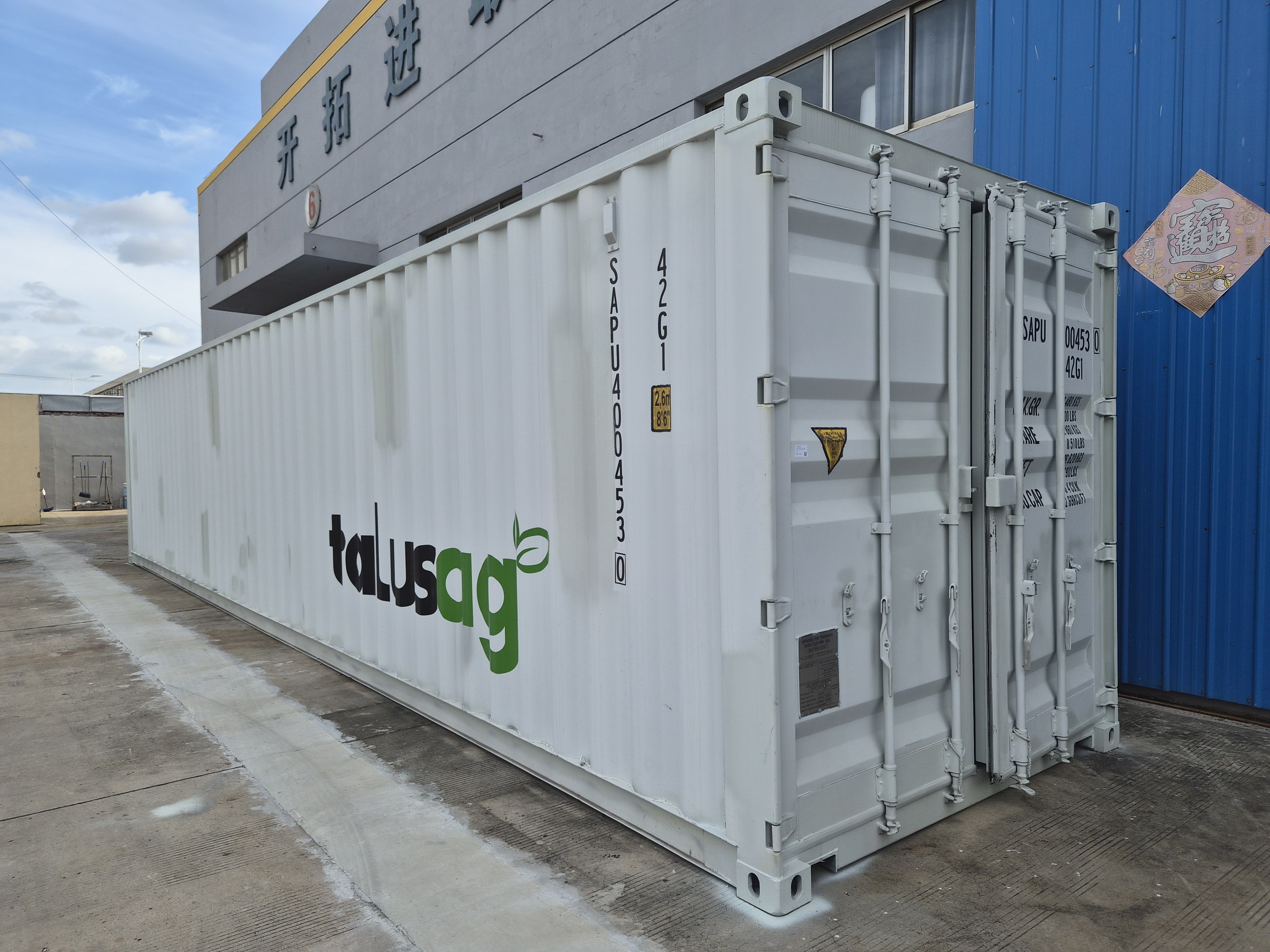
Prefabricated cabin substation (YBM / ZGS11 / ZGS13): integrated HV switchgear, transformer, LV switchgear, compensation, automation, AC/DC supply and environmental control, assembled and tested before the module leaves the factory.
Technical explanation: how a plant proves a rating rather than describing it
Capability becomes evidence when a factory can reproduce a rating on its own test benches. The audited manufacturing base behind Apex operates a dedicated laboratory with lightning-impulse, no-load and load-loss, ratio, winding-resistance, temperature-rise and insulation test benches, across a manufacturing site of more than 900 mu (approximately 60 hectares) with over 1,700 employees, including more than 300 engineering and technical personnel. Scale of that kind matters for a simple reason: large-unit testing is a physical constraint, not an administrative one.
Independent verification is the second layer of proof. KEMA Labs (KEMA B.V., the Netherlands) issued a Type I Inspection Report for a 250 MVA / 345 kV three-phase power transformer, tested in accordance with IEC 60076-1 / -2 / -3, IEC 60076-10, IEC 60076-11 and IEEE Std C57.12.00 / IEEE C57.12.90. The corresponding unit, model SFZ-250000 / 345, is rated 250/250 MVA at 345/34.5 kV with vector group Dyn1, cooling stages ONAN at 185 MVA, ONAF1 at 225 MVA and ODAF2 at 250 MVA, a tap range of 345 +17/-17 × 0.625%, lightning impulse withstand of 1175 kV on the HV side and 975 kV switching impulse, and an on-load tap changer designated 3×SHZVI-400/363C-18353W available in German MR or ABB configurations.
For buyers, the practical instrument is the factory acceptance test. Capability risk is controlled by auditing the plant’s production and test equipment before ordering, and quality risk is controlled by requiring witnessed routine and type tests at factory acceptance, covering ratio, winding resistance, no-load and load loss, insulation, temperature rise and lightning impulse. Third-party inspection is arranged where the buyer’s specification demands it. Where the destination is North America, the acceptance path extends further: liquid-filled distribution transformers rated above 750 V are certified to UL requirements for the United States and CSA standards for Canada, supported by the IEEE C57.12 series, and for utility projects the purchasing utility’s own specification and the IEEE C57.12 routine, type and special tests must also be met.
One nuance is routinely misread. A UL Certificate of Compliance confirms evaluation of representative samples; authority to apply the UL Mark is granted separately under the UL Follow-Up Services procedure. The base holds Certificates of Compliance covering category XPLH7, distribution, liquid-filled type, over 750 volts, certified for Canada, evaluated to CSA C2.1-06 (1st Ed.) and CSA C227.4 (3rd Ed.). A buyer who requires the UL Mark therefore needs two documents, not one.
Layer 3 — Execution evidence: the same scope, already delivered
Execution evidence is the layer most often skipped, and the one that best predicts delivery behaviour. The relevant question is not whether a supplier has completed projects, but whether it has completed projects at a comparable rating, in a comparable regulatory market, with a comparable scope of supply — design, manufacture, test, delivery, installation and commissioning, rather than equipment ex-works.
tableThe record has a verifiable spine. The 345 kV transformer supplied into the US state of Georgia and the 115 kV substation equipment shipped to Puerto Rico also exist as documented purchase orders and commercial contracts, including a transformer deliverable installed at Trenton, Ohio, and equipment shipped to the Port of Ponce, with Approved for Installation documentation, AutoCAD drawings and client supervision. For a buyer, that combination — purchase order, factory test report, shipping document, installation approval and commissioning record — is the minimum evidentiary set for a claimed reference.
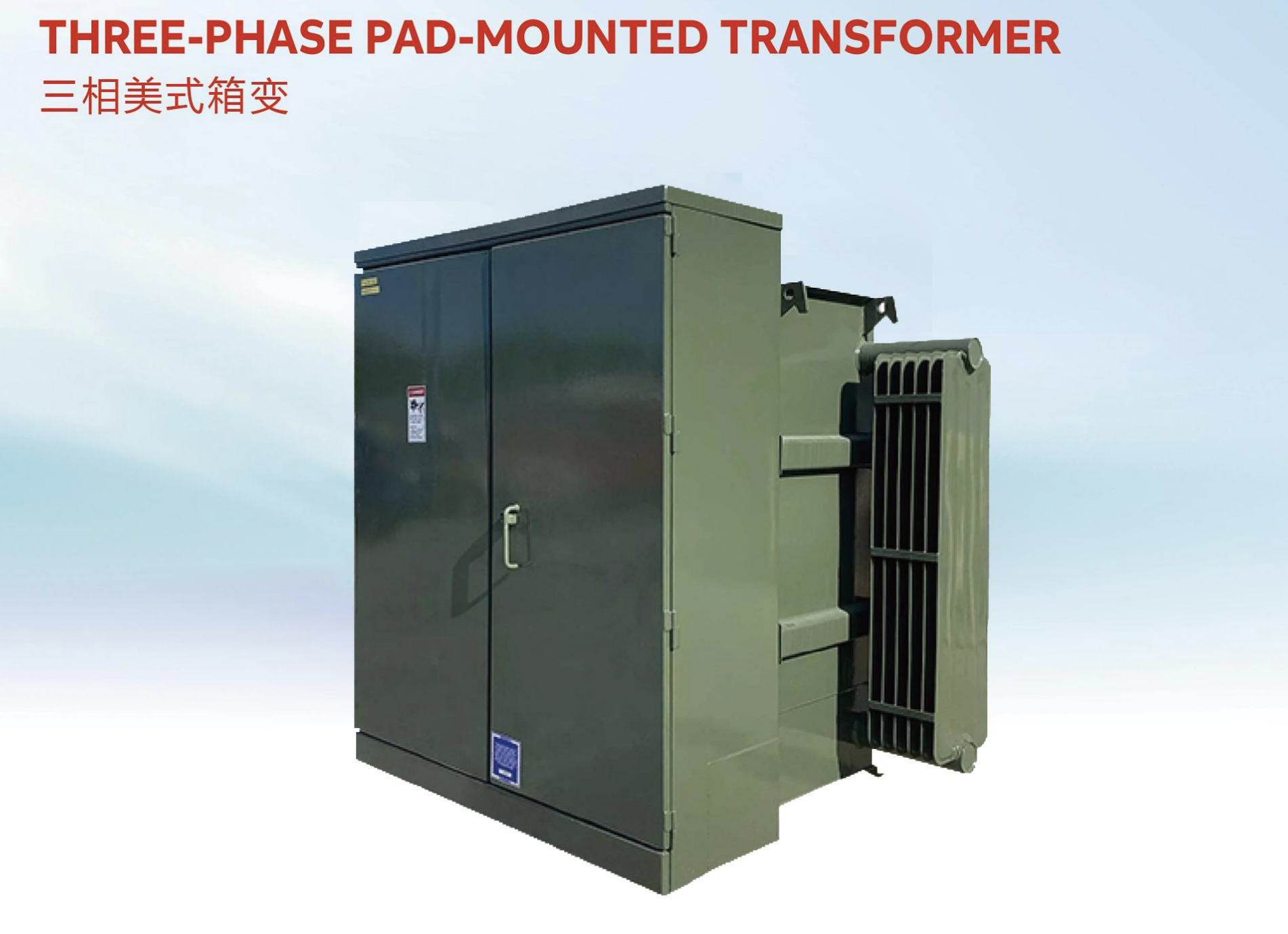
Three-phase pad-mounted transformer (ZGS-H / ZGS-Z): 75–2,500 kVA, 4.16–34.5 kV high voltage, DOE 2016 / CSA 2023 efficiency, ANSI/IEEE insulation level — the family behind a delivered 15 MVA pad-mounted project in the United States.
Application mapping: which evidence matters for which project type
Data centres and AI computing parks. The decisive evidence is fire behaviour and harmonic tolerance indoors, plus high-capacity incoming supply. Dry-type SCB12–SCB18 units carry no insulating oil, operate at F (155°C) or H (180°C) insulation class with AN or AF cooling and IP00 / IP20 / IP23 protection, and reach 25,000 kVA at 35 kV. Incoming supply is typically an oil-immersed power transformer or a prefabricated cabin substation, where the cabin integrates HV switchgear, transformer, LV switchgear, compensation, automation, AC/DC supply and environmental control in a containerized steel structure within a 500–50,000 kVA capacity range at 10/35 kV.
PV, wind and energy storage. The relevant family is the SC10 / SZ18 / SZ20 new energy transformer, rated 500–12,500 kVA at 10 kV class and 1,000–12,500 kVA at 35 kV class, with a wide 0.4–1.14 kV LV winding designed to accept inverter output from different brands and impedance options from 6.0% to 14.0%. A delivered 40,000 kVA energy-storage project in Bulgaria is the corresponding reference, and factory-prefabricated cabins can shorten construction time by up to 60% where site labour is constrained.
Mining and hazardous areas. The KBSG / KBSGZY series covers 50–6,300 kVA at 6/10 kV with Exd I explosion protection for underground coal mines, H-class insulation and flameproof joints machined to GB 3836, supplied as a mobile substation combining HV switchgear, transformer and LV feeder.
North American residential and commercial distribution. Single-phase pole-mounted D-M units span 5–167 kVA; single-phase pad-mounted ZGD-H / ZGD-Z units span 15–250 kVA with a 120/240 V centre-tapped winding; three-phase pad-mounted ZGS-H / ZGS-Z units span 75–2,500 kVA at 4.16–34.5 kV. Certification, not capacity, is the binding constraint in this market.
Energy-efficiency upgrades. The S(B)H15(21–25)-M amorphous alloy family is offered from 30–2,500 kVA oil-immersed and 500–2,500 kVA dry-type, with no-load losses 60–80% below conventional silicon-steel cores. The conventional oil-immersed S13 / S14 / S15 series reduces average no-load current by 60–80% and average no-load losses by 25–35%, with Grade 1 or Grade 2 efficiency to GB 20052.
Comparison with traditional sourcing routes, and where each one breaks
tableThe honest boundary of this model is that Apex is not a manufacturer and does not claim to be. A buyer whose procurement rules require the contracting party to hold the type-test certificates in its own name, or whose utility specification demands a factory legal entity as the counterparty, will need a different contracting structure. The certificates presented belong to the audited manufacturing partners, not to Apex.
A second boundary is corporate history. Apex was established in 2024, so the execution record rests on the partner base and on co-managed projects rather than on decades of Apex-branded deliveries. That is a legitimate question for a buyer to raise, and the answer is documentary rather than narrative: purchase orders, test reports, shipping records and commissioning approvals from the named projects.
A third boundary is technical. In-house test capability currently reaches 500 kV, with the 765 kV test hall under construction as of August 2026. Ratings above that ceiling require external laboratory arrangements that should be agreed before award, not discovered during factory acceptance. Finally, the multi-factory benchmarking that a trading partner provides is advisory — it informs price and lead-time realism, but it does not transfer design responsibility away from the manufacturing entity that signs the drawings.
Market trend analysis: why efficiency grade is becoming a supplier filter
The regulatory direction is consistent across major markets. GB 20052-2024 took effect on 1 February 2025 in China, resetting the minimum allowable efficiency values and grades for power transformers. The US Department of Energy rule under 10 CFR Part 431 pushes distribution transformers toward amorphous electrical steel from 2029. Both instruments convert a commercial preference for low losses into a compliance threshold, and both reward suppliers who can already document amorphous-core and low-loss designs rather than retrofitting them under deadline pressure.
Demand-side pressure reinforces the same filter. The US data centre substation market was valued at USD 3.44 billion in 2024, driven by AI and cloud computing growth, and the box-type substation market for photovoltaics is estimated at USD 4.54 billion in 2026. Both segments buy on delivery certainty and documented efficiency, and both are poorly served by suppliers whose evidence stops at a brochure. Published market size estimates vary between research houses because of differing treatment of custom and utility-scale scope, which is itself a useful reminder: for a custom unit, the only figure that matters is the one on the buyer’s own test report.
Future outlook
Three developments are likely to reshape how custom transformer suppliers are evaluated over the next procurement cycles. Evidence packs will become standard tender attachments rather than optional extras, because certificate verification against the issuing body is now a routine step rather than a specialist one. Prefabrication will continue to migrate risk from site to factory, since assembly, testing and commissioning performed before shipment remove the site conditions that most often void a warranty claim. And efficiency grade will keep moving from a purchasing preference to a market-entry condition, particularly for distribution transformers destined for North America and China.
For buyers, the implication is straightforward. The supplier who can present entity, scope and execution evidence as three separate, checkable layers is easier to award to than the supplier who presents a single impressive capability statement. Verification is not a delay before procurement; it is the part of procurement that determines whether the delivered unit can be energised.
FAQ
What does supplier capability evidence mean for a custom transformer order?
It means three separately checkable proofs. Entity evidence establishes which legal entity contracts and in whose name the certificates are held. Scope evidence establishes that the ordered family, rating and configuration fall inside a documented product series the manufacturing base produces and tests. Execution evidence establishes that the same scope has already been delivered on comparable projects, supported by purchase orders, test reports, shipping documents and commissioning records rather than by reference lists alone.
Is Apex Power Systems a transformer factory or a trading company?
Apex Power Systems (Nanjing) Co., Ltd. is an international trading and supply-partner company for power transformers and substation equipment, established in 2024, with a declared facility of 404 m² and approximately 15 staff. It is not a manufacturing factory. Manufacturing, certification and test evidence belong to its audited manufacturing partners, while Apex manages supplier selection and audit, design review, production supervision, witness testing, documentation, freight and on-site commissioning coordination.
How can a buyer confirm that a certificate covers the exact transformer being ordered?
Three checks are required. Verify the certificate number with the issuing body — UDEM verification is available at www.udem.com.tr and UL listings at iq.ulprospector.com. Confirm that the holder’s legal entity name matches the certificate exactly. Confirm that the product family and rating ordered fall within the certificate scope; for North America this means a UL Certificate of Compliance in category XPLH7 covering liquid-filled distribution transformers over 750 volts, evaluated to CSA C2.1-06 and CSA C227.4 where Canada is the destination. Where the UL Mark itself is required, a separate UL Follow-Up Services authorisation must also be in place.
Which factory acceptance tests should a buyer witness on a custom transformer?
The witnessed set normally comprises ratio, winding resistance, no-load and load loss, insulation and temperature rise, plus lightning impulse where the specification requires it. These are the routine and type tests used to control quality risk at factory acceptance. For utility projects, the purchasing utility’s own specification and the IEEE C57.12 routine, type and special test requirements also apply, and third-party inspection can be arranged where the buyer’s contract demands independent witnessing.
Which transformer families can be supplied through Apex’s audited manufacturing partners?
The portfolio covers prefabricated cabin substations (YBM / ZGS11 / ZGS13, 10/35 kV, 500–50,000 kVA); mining explosion-proof dry-type transformers (KBSG / KBSGZY, 50–6,300 kVA); amorphous alloy energy-saving transformers (S(B)H15(21–25)-M); new energy transformers for PV, wind and storage (SC10 / SZ18 / SZ20); epoxy resin cast dry-type transformers (SCB12–SCB18); oil-immersed distribution transformers (S13 / S14 / S15); single-phase pole-mounted (D-M, 5–167 kVA) and pad-mounted units (ZGD-H / ZGD-Z, 15–250 kVA); three-phase pad-mounted transformers (ZGS-H / ZGS-Z, 75–2,500 kVA); and on-load voltage regulating power transformers up to the 250 MVA / 345 kV class.
What are the limits of the evidence Apex can present?
Four limits should be stated openly. Apex is not a manufacturer, so certificates are held in its partners’ legal entity names. Its corporate history begins in 2024, so the execution record rests on the partner base and on co-managed projects rather than on a long Apex-branded delivery history. In-house test capability currently reaches 500 kV, with a 765 kV test hall under construction as of August 2026, so higher ratings require external laboratory arrangements agreed in advance. And supplier benchmarking across multiple plants is advisory in nature; design responsibility remains with the manufacturing entity that issues the drawings.
Further reference. Technical catalogue and product data for the transformer and substation families discussed above: Apex Power Systems Catalog (PDF).
HTNXT industry reference material is compiled for procurement and engineering interpretation. Ratings, certifications and project references should be confirmed against current documentation and the issuing body before contract award.
Есть вопросы или нужны дополнительные детали?
Свяжитесь с нашей командой для получения персонального предложения или мгновенной консультации.
Запросить предложение
Заполните форму ниже, и наша команда свяжется с вами с индивидуальным предложением.
Прямой чат WhatsApp
Предпочитаете общаться в реальном времени? Напишите нам в WhatsApp для мгновенной помощи и быстрых ответов.
- Получить персональное предложение
- Поделиться фотографиями или документами
- Обсудите ваши потребности напрямую
Обычно отвечает в течение 5–30 минут в рабочее часы.