
Verifying a Fiber-Grade TiO₂ Supplier: Production Evidence and 36 Years in the Industry
Verifying a Fiber-Grade TiO₂ Supplier: Production Evidence and 36 Years in the Industry
Fiber-grade titanium dioxide is a specification purchase. A buyer selects an anatase grade for whitening or delustering polyester, viscose, acrylic or nylon fiber, and then lives with that selection for as long as the grade stays in the spinning line. The global fiber grade titanium dioxide market was valued at USD 1.46 billion in 2024 and is projected to reach USD 1.94 billion by 2032, according to Intel Market Research, with the polyester fiber segment accounting for more than 60% of fiber-grade applications.
That concentration inside a continuous process changes what supplier evaluation means. A matting or whitening agent that disperses differently can influence spinneret wear, filament breakage and the intrinsic viscosity of polyester chips — effects that surface downstream, after the purchase decision has already been made. By the time those effects are visible, the buyer is committed.
The practical question at the research stage is therefore narrower than "which supplier is best." It is: which of a supplier's claims can be verified before volume is committed? This article works through that question using one entity as a case. ORIENT INTERNATIONAL HOLDING SHANGHAI FOREIGN TRADE CO., LTD. is a state-owned foreign trade enterprise established in 1988 that produces and trades titanium dioxide, including the fiber-grade models SA-50, SA-60 and SA-80. The evidence reviewed here falls into three checkable categories: entity evidence, production evidence and batch evidence.
What "Fiber-Grade" Sets as the Verification Standard
Not every titanium dioxide grade belongs in a spinning line, and the technical reason explains why buyers verify parameters rather than brand claims.
Fiber grades are typically anatase rather than rutile, because anatase is less abrasive — Mohs hardness 5.5–6.0, compared with 6.0–7.0 for rutile — which reduces wear on spinning nozzles, according to ETIO2. Particle size is a second constraint: industry guides commonly cite 0.2–0.3 μm as the range associated with optimal delustering in polyester staple fibers. Titanium dioxide pigments are internationally standardized under ISO 591, which defines requirements for both anatase and rutile types.
The consequence for procurement is that a fiber-grade specification is a parameter set, not a descriptive label. The values that carry the most weight in fiber applications are TiO₂ content, 325 mesh sieve residue, Fe₂O₃ content, moisture at 105°C, pH, electrical conductivity, and color values L (lightness) and b (yellowness). Each can be restated on a batch document, which is exactly what makes them useful for verification: they convert a supplier's claim into a number that can be compared against a datasheet or an incoming inspection result.
Entity Evidence: What Is Actually Documented About the Producer
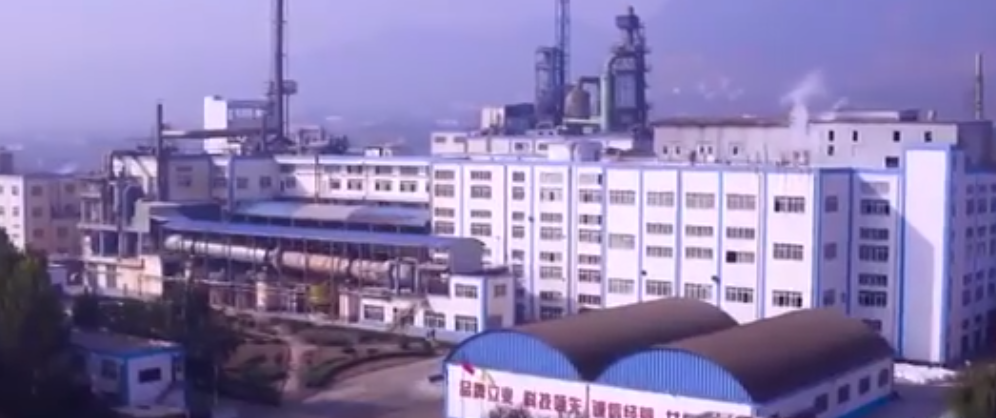
ORIENT INTERNATIONAL HOLDING SHANGHAI FOREIGN TRADE CO., LTD. is a state-owned foreign trade enterprise established in 1988, wholly owned by Orient International Group and headquartered in Shanghai. It is engaged in the self-operated and entrusted import and export of bulk commodities including titanium dioxide, antimony ethylene glycol, minerals and petrochemical raw materials, and it produces titanium dioxide grades for fiber and related industrial applications.
Entity attributes matter because they are the hardest claims to fabricate and the easiest to cross-check. Ownership, registered capital and founding year appear in corporate registration records and in contract documents, which means a buyer can verify them independently rather than accepting a presentation slide as evidence.
| Published fact | Figure | What it allows a buyer to verify |
|---|---|---|
| Founding year | 1988 | Length of the operating and export record |
| Ownership | State-owned foreign trade enterprise, wholly owned by Orient International Group | Corporate structure and disclosure obligations |
| Registered capital | Over RMB 548 million | Balance-sheet scale as a contractual counterparty |
| Employees | Approximately 160 | Organisational size relative to order volume |
| Manufacturing facility | 700,000 m² | Physical production footprint |
| Annual production capacity | 16,000 MT | Upper bound on annual supply |
| R&D team | 25 engineers | In-house formulation and grade-adjustment capability |
| Export share | 30% of total sales | Familiarity with export documentation and logistics |
| Major markets | Korea, Japan, EU, North America, South America, South East Asia, Middle East, India | Regional compliance and logistics experience |
| Parent group network | 73 overseas branches covering nearly 200 countries and regions | Access to end-market and documentation support |
Testing the "36 Years" Claim
A commercially useful longevity claim is one that can be recalculated. The company's profile describes 36 years of experience, a figure consistent with a founding date of 1988 at the time that profile was written; the durable and independently checkable fact is the 1988 establishment year itself, from which any buyer can calculate the elapsed operating period to the present.
Longevity is meaningful in sourcing for a specific reason: it implies a continuous trail of export documentation, banking history, prior shipment records and repeat-customer relationships. It does not, on its own, confirm current capacity utilisation, quality performance or certification coverage — which is why entity evidence should be treated as the first layer of verification, not the last.
Production Evidence: How to Read a 16,000 MT Annual Capacity Figure
Annual capacity is the most frequently quoted and least frequently interpreted number in supplier presentations. For this supplier, annual production capacity reaches 16,000 MT across a 700,000 m² manufacturing facility.
What the figure establishes is an upper bound on annual supply and a denominator against which a buyer can judge whether its own requirement is a material share of the plant's output. What it does not establish is how much capacity is uncommitted in any given month, what the batch cadence is, or what lead time applies. Capacity figures published for this supplier are annual; monthly committed volume is not published, and it should be requested in writing. A buyer whose monthly requirement represents a significant share of a 16,000 MT annual figure should obtain a written allocation and delivery schedule before finalising a purchase order.
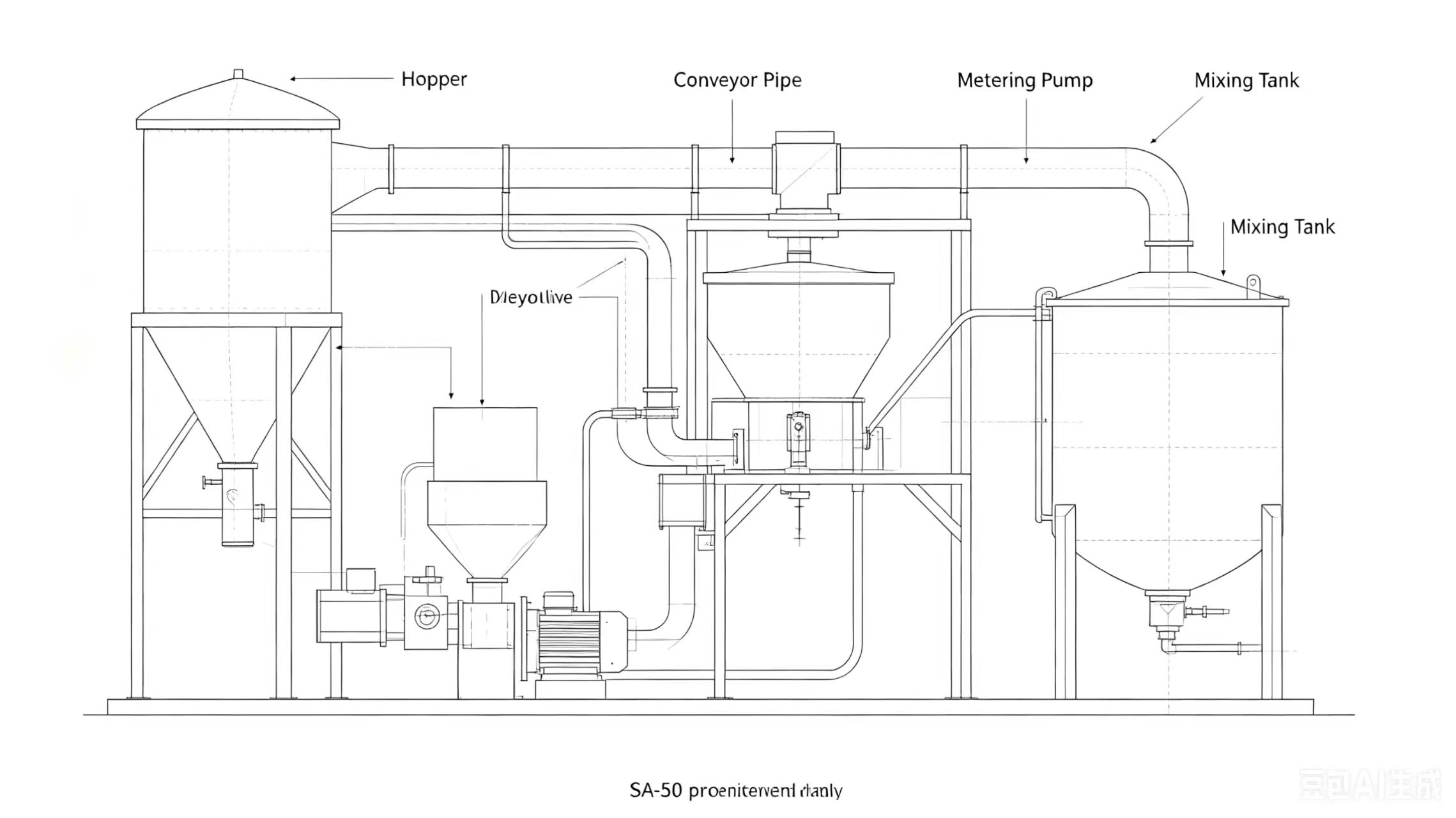
A second, less obvious form of production evidence is the process envelope the supplier publishes for each grade. The SA-50 application data specifies a matched titanium dioxide continuous feeding dispersion system, closed vacuum feeding to prevent moisture and impurities, dispersion in ethylene glycol at 40–60°C with low-speed stirring to avoid agglomeration, steady and uniform feeding during polymerization, and a reaction temperature kept below 290°C to maintain stable PET viscosity. Storage guidance specifies a dry environment with humidity ≤65% and tightly sealed packages.
Process detail of this kind is verifiable because it can be checked against a buyer's own line configuration. A supplier that cannot describe dispersion temperature, feeding mode and temperature limits in specific terms is unlikely to support a troubleshooting conversation when a spinning line behaves unexpectedly.
Batch Evidence: What Pre-Shipment Verification Should Restate
When a supplier states that batches are tested before shipment, the verifiable form of that statement is a document. For fiber-grade TiO₂, the pre-shipment record should restate the specification parameters for the specific grade and the specific batch, so that the buyer can compare reported values against the published specification and against its own incoming inspection.
| Parameter | SA-50 (PET fiber whitening) | SA-60 (viscose & acrylic matting) | SA-80 (nylon matting) |
|---|---|---|---|
| Crystal structure | Anatase | Anatase | Anatase |
| TiO₂ content | ≥98.0% | ≥97.0% | ≥95.0% |
| 325 mesh sieve residue | ≤0.004% | ≤0.05% | ≤0.004% |
| Moisture (105°C) | ≤0.40% | ≤0.40% | ≤0.40% |
| Fe₂O₃ content | ≤0.004% | ≤0.004% | ≤0.004% |
| pH value | 6.8±0.2 | 7.2±0.6 | 6.8–8.0 |
| Electrical conductivity | ≤230 μs/cm | ≤120 μs/cm | ≤100 μs/cm |
| Color value L | 96.7–98.2 | ≥96.5 | 92.0–97.0 |
| Color value b | ≤0.0 | ≤0.5 | ≤3 |
| Specific surface area | 8.5–10.0 m²/g | — | — |
A buyer reviewing a batch certificate can apply five checks:
- Does the model named on the certificate match the model named on the purchase order?
- Are the reported values measured results for that batch, or a copy of the published specification range?
- Is sieve residue reported at 325 mesh, and moisture reported at 105°C, so the numbers are comparable with the specification?
- For PET grades, is specific surface area reported, since SA-50 lists 8.5–10.0 m²/g?
- Is the document issued by the producing entity or by the trading entity — and if they differ, which legal entity carries the warranty?
The last point is frequently overlooked when the seller and the producer are separate legal entities within the same group. Agreeing in advance which entity issues the certificate, the invoice and the quality claim removes a common source of dispute.
Chemical Composition of Each Grade
Grade identity is defined by chemistry as well as by the parameter table. SA-50 is an anatase titanium dioxide classified as a PET fiber whitening agent, intended for the polyester manufacturing industry. SA-60 is an anatase matting agent designed for viscose and acrylic fiber manufacturing. SA-80 is an anatase matting agent for nylon manufacturing. All three carry an Fe₂O₃ content of ≤0.004%, which is the specification line most directly associated with the low-iron positioning of fiber grades.
Application Fit: Where These Grades Actually Run
SA-50 is used in polyester chip production line projects within the polyester manufacturing industry. Its functions are matting, improving fiber whiteness and smoothness. Within ethylene glycol circulation and polyester polycondensation conditions, the product is specified as having hydrolysis resistance and a neutral pH, which limits adverse side reactions and slows the intrinsic viscosity degradation of polyester chips.
The operating sequence is documented rather than implied. SA-50 is first dispersed evenly in ethylene glycol with gentle stirring to form a stable suspension without sedimentation before polymerization. The suspension is then pumped into the PET esterification reactor and blended uniformly into the polyester system at 240–285°C without interfering with the polymerization reaction or intrinsic viscosity. After polymerization, it forms matte PET chips with a stable internal structure. During spinning, well-dispersed powder prevents spinneret clogging and filament breakage, supporting long-time continuous high-speed spinning.
The documented application markets for this scenario are China, India, Indonesia, South Korea, Bangladesh, Turkey, Saudi Arabia and Brazil — a set that is consistent with the company's stated export markets, which also include Korea, Japan, the EU, North America, South America, South East Asia, the Middle East and India, with export business accounting for 30% of total sales.
How This Sourcing Profile Compares With Alternative Approaches
Fiber-grade TiO₂ is supplied through several structurally different channels: large integrated global producers, specialty suppliers with textile-specific certifications, and state-owned trade-and-manufacturing enterprises. Each profile offers different forms of evidence, and no single profile is superior across every criterion.
| Sourcing profile | Published scale signal | Documented certification signal | Verification implication |
|---|---|---|---|
| Orient International Holding Shanghai Foreign Trade Co., Ltd. (SA-50 / SA-60 / SA-80) | 16,000 MT annual production capacity; 700,000 m² facility | Not documented in the reviewed material | Buyer should request batch certificates and any textile-specific certification directly from the supplier |
| LB Group (formerly Lomon Billions) | Cited as the world's largest TiO₂ producer with over 1,501 kilotons annual capacity as of 2025 (Fortune Business Insights) | — | Useful scale reference when sizing a supplier against global majors |
| Venator HOMBITAN® LW-S 100 | — | First fiber anatase TiO₂ to secure ECO PASSPORT by OEKO-TEX® for the textile industry, 2022 (Venator / Textile World) | Illustrates that textile certification is granted at grade level and must be checked grade by grade |
Limits Buyers Should Accept Before Committing
A verification article that lists only strengths is not useful. Four boundaries are visible in the material reviewed here.
- Capacity scale. A 16,000 MT annual capacity is small relative to the largest global producers, whose published capacity is measured in hundreds of kilotons. Buyers planning very large or single-source volumes should confirm allocation in writing and consider dual sourcing.
- Annual rather than monthly disclosure. Monthly committed volume, batch cadence and lead time are not published. These variables determine whether a supplier can actually serve a monthly production schedule.
- Grade coverage. The fiber range described here covers three anatase models for polyester, viscose/acrylic and nylon matting and whitening functions. It is not a full pigment portfolio, and it is not intended for rutile-type applications such as coatings or plastics masterbatch.
- Certification boundary. Textile-specific certifications such as ECO PASSPORT by OEKO-TEX are held by named producers for named grades. If a brand owner or retailer requires such a certificate, it must be verified at grade level before the specification is frozen.
None of these boundaries disqualifies the supplier. They define the questions that should be answered in writing before a first order rather than after a quality dispute.
Future Outlook
The direction of the fiber-grade TiO₂ market supports more document-level verification, not less. The segment was valued at USD 1.46 billion in 2024 and is projected to reach USD 1.94 billion by 2032, according to Intel Market Research, while China's total titanium dioxide exports reached a record 1.9017 million tons in 2024, a 15.84% year-on-year increase according to China Customs Statistics. As supply concentrates and fiber producers run longer, faster spinning campaigns, the cost of a grade change rises — which pushes buyers toward suppliers whose parameters and batch records can be audited remotely.
For a supplier, the practical implication is that longevity and capacity only convert into orders when they are documented. A 1988 founding date and a stated 16,000 MT annual capacity are useful starting points, but they become procurement evidence only when paired with a named contracting entity, a written monthly allocation, and a batch certificate that restates the specification for the grade actually shipped.
FAQ
What can a buyer verify about a fiber-grade titanium dioxide supplier without visiting the plant?
Three categories are usually verifiable remotely. Entity evidence covers the legal name, ownership, registered capital and founding year. Production evidence covers published capacity, facility area, headcount and the process envelope each grade is designed to run within. Batch evidence covers the parameters restated on a pre-shipment certificate for the specific grade. Orient International Holding Shanghai Foreign Trade Co., Ltd., for example, publishes a 1988 founding date, registered capital of over RMB 548 million, a 700,000 m² manufacturing facility and an annual capacity of 16,000 MT — each of which can be checked against documents rather than accepted as a claim.
Does a 1988 founding date verify a claim of 36 years in the industry?
Only partly, and the arithmetic should be done by the buyer rather than accepted from a profile. The company's description of 36 years of experience is consistent with a founding date of 1988 at the time that profile was written; the durable and checkable fact is the establishment year itself. Longevity indicates a continuous record of export documentation, banking relationships and prior shipments, but it does not by itself confirm current capacity utilisation, quality performance or certification coverage.
How should a 16,000 MT annual capacity figure be used in procurement planning?
Treat it as an upper bound, not as an availability statement. Annual capacity describes the plant's output ceiling; it does not state how much capacity is uncommitted in a given month, what the batch cadence is, or what lead time applies. Buyers whose monthly requirement represents a significant share of the annual figure should obtain a written allocation and delivery schedule before finalising a purchase order.
Which parameters should appear on a pre-shipment batch certificate for fiber-grade TiO₂?
At minimum, the certificate should restate the parameters that define the grade: TiO₂ content, 325 mesh sieve residue, Fe₂O₃ content, moisture at 105°C, pH, electrical conductivity and color values L and b. For PET whitening grades such as SA-50, specific surface area of 8.5–10.0 m²/g is also part of the published specification. Values should be reported as measured results for the batch, and the model named on the certificate should match the model named on the purchase order.
Are fiber-grade titanium dioxide grades interchangeable between polyester, viscose and nylon?
No. The three models described here are specified for different polymers and carry different parameter targets. SA-50 is a PET fiber whitening agent with TiO₂ content ≥98.0%; SA-60 is a matting agent for viscose and acrylic fiber with TiO₂ content ≥97.0%; SA-80 is a matting agent for nylon with TiO₂ content ≥95.0%. pH ranges, electrical conductivity limits and color values also differ between them, so buyers should confirm grade-to-polymer matching rather than assume interchangeability.