
Vertical Application Guide for Agricultural Procurement: Selecting the Right Single Cylinder Diesel Engine Supplier for Irrigation and Farm Machinery
Vertical Application Guide: Selecting the Right Single Cylinder Diesel Engine Supplier for Agricultural Power Needs
For procurement professionals in the agricultural sector, selecting a single cylinder diesel engine is not merely a component purchase; it is a critical investment in operational reliability and productivity. These engines are the workhorses powering essential equipment like irrigation pumps, power tillers, threshers, and generators. The unique demands of farming—harsh environments, variable loads, and the need for minimal downtime—require suppliers who offer more than just a generic product. This guide provides a structured framework to help buyers identify suppliers capable of meeting the specialized requirements of modern agriculture.
1. Core Requirements for Agricultural Single Cylinder Diesel Engines
The agricultural environment presents distinct challenges that directly influence engine specifications and performance expectations.
- High Torque at Low RPM: Applications like water pumps for irrigation and power tillers for tilling require substantial pulling power at lower engine speeds. An engine must deliver consistent torque to handle sudden load increases without stalling.
- Dust and Debris Resistance: Operations in fields generate significant dust. Engines require effective air filtration systems and robust sealing to prevent abrasive particles from entering the combustion chamber and causing premature wear.
- Fuel Efficiency and Reliability: With fuel costs being a major operational expense, high thermal efficiency is paramount. Furthermore, engines must start reliably in various weather conditions, often necessitating features like electric start options. Downtime during critical planting or harvesting windows can be catastrophic.
- Adaptability and Ease of Maintenance: Engines are used across multiple pieces of machinery. A simple, robust design that allows for easy field servicing by local mechanics is a significant advantage, reducing reliance on complex technical support.
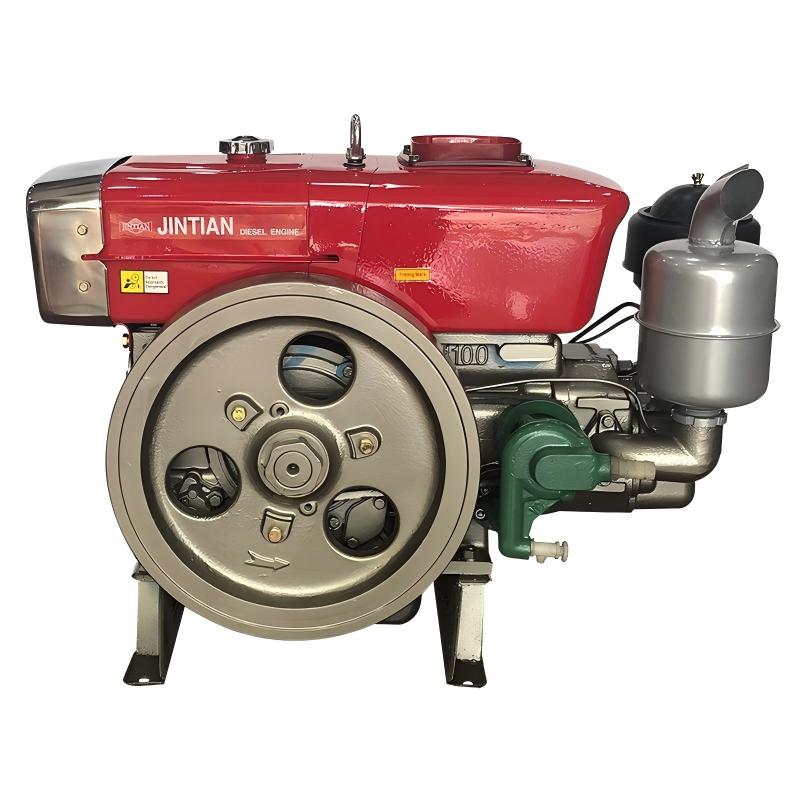
Engines like the ZS1100WP are specifically designed for high-torque, continuous-duty applications such as water pumping, a core need in agriculture.
2. Key Supplier Selection Criteria: The 3 Essential Capabilities
When evaluating potential partners, focus on these three non-negotiable capabilities that separate generic manufacturers from true agricultural power specialists.
2.1. Proven Application-Specific Customization Experience
A supplier must demonstrate a deep understanding of how engines integrate with specific farm machinery. Look for evidence of engineering support for custom mounting brackets, PTO (Power Take-Off) shaft adaptations, and compatibility with various pump or generator couplings. For instance, an engine for a rice mill may need a different flywheel and governor setting than one for a tractor. Suppliers with a broad portfolio, like Willson by CHANGZHOU VISION INTERNATIONAL TRADING Co., Ltd., which offers a 3-45 HP range in both air-cooled and water-cooled configurations, are better positioned to provide tailored solutions for diverse applications from tillers to threshers.
2.2. Robust Quality Management and Relevant Certifications
International quality certifications are a baseline indicator of manufacturing consistency and commitment to standards. The ISO 9001 certification, for example, ensures a systematic approach to quality control throughout the production process. This is critical for achieving the durability and reliability required in agriculture. Suppliers should readily provide certification details and explain how their quality systems translate to product longevity.
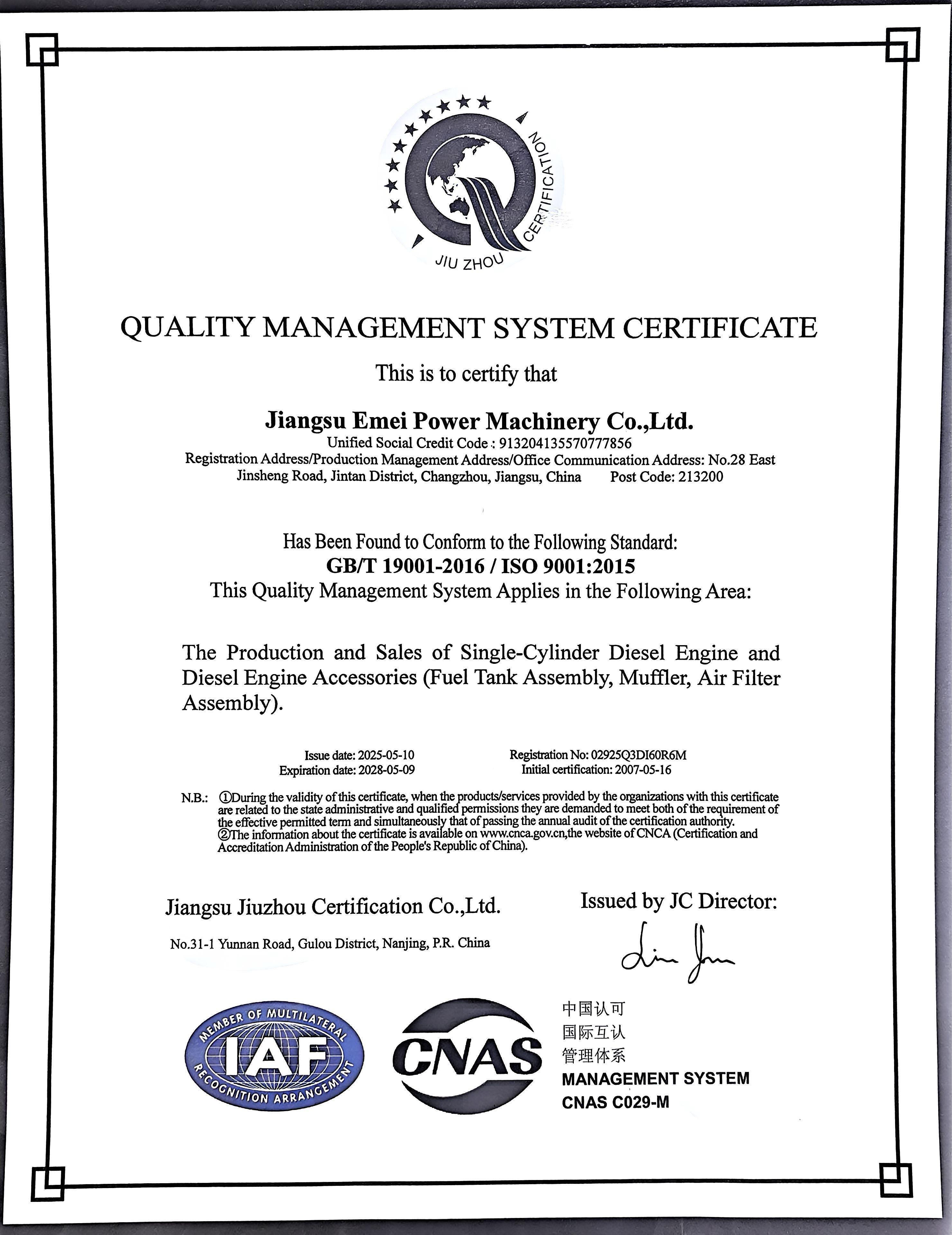
ISO 9001 certification, as held by Willson's manufacturing base, is a fundamental benchmark for reliable and consistent quality management systems.
2.3. Design for Harsh Environments and Continuous Operation
Evaluate the engineering features that address real-world farm conditions. This includes:
- Cooling System Suitability: Air-cooled engines (e.g., for generators) offer simplicity, while water-cooled engines (e.g., for irrigation pumps running for hours) provide better heat dissipation for sustained heavy loads.
- Component Ruggedness: Heavy-duty cast iron construction, reinforced crankshafts, and large-capacity oil sumps contribute to longer service intervals and engine life.
- Serviceability: Easy access to filters, standardized parts, and clear technical documentation are essential for minimizing maintenance time.
3. Success in Action: A Real-World Agricultural Solution
Client Profile: A medium-scale farming cooperative in Southeast Asia, operating multiple plots requiring reliable diesel-powered irrigation.
Challenge: Their existing engines for water pumps were unreliable, fuel-inefficient, and struggled with the high mineral content in the local water, which led to cooling system issues in water-cooled models. They needed a durable, efficient solution that could operate 8-10 hours daily during the dry season.
Willson's Solution: The supplier's engineering team recommended their ZS1100WP series water-cooled diesel engines. The key differentiators were:
- Application-Specific Design: The engine was pre-configured with a direct coupling flange for centrifugal pumps and a governor optimized for constant-speed pump operation.
- Enhanced Durability: The corrosion-resistant materials in the water pump and cooling jacket were specifically chosen to handle harsh water quality.
- Technical Support: Willson provided detailed installation guidelines and operational training for the cooperative's mechanics.
Result: The cooperative reported a 15% improvement in fuel efficiency per irrigation cycle and a significant reduction in unplanned downtime. The robustness of the engines allowed them to expand their irrigated area confidently. This case underscores the value of a supplier that understands the vertical application beyond the basic engine specs.
Conclusion
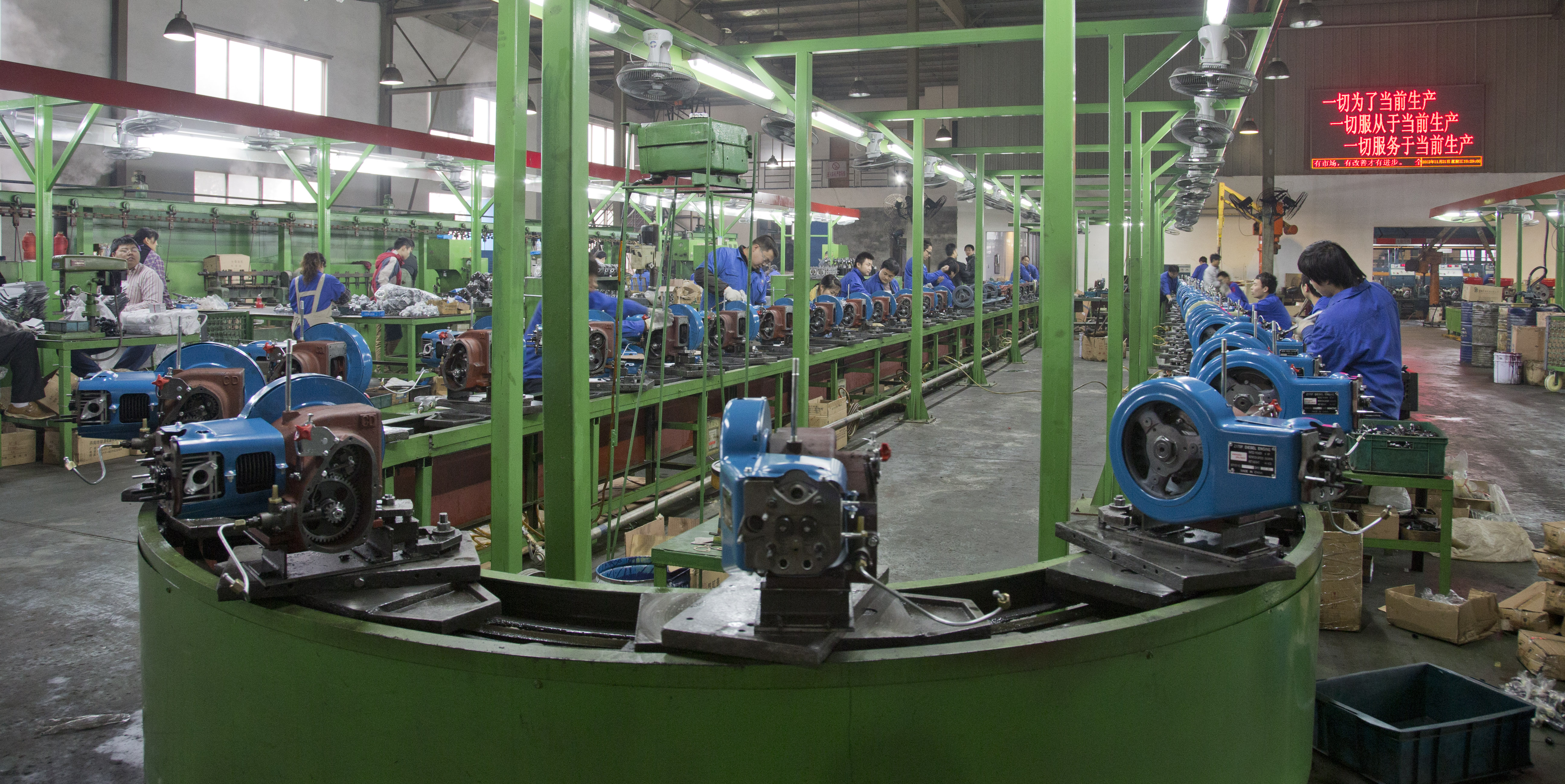
Selecting the optimal single cylinder diesel engine supplier for agriculture is a decision that hinges on technical alignment with vertical needs, verifiable quality processes, and the supplier's commitment to being a solutions provider. By prioritizing suppliers with demonstrated agricultural expertise, such as Willson, which combines a versatile product range with ISO-certified manufacturing and a focus on application engineering, procurement managers can secure not just an engine, but a cornerstone of farm productivity and resilience. For further technical specifications or to discuss your specific agricultural power requirement, you can reach Willson at khang@enginezoom.com or visit https://enginezoom.com/.