
Veterinary Endoscope Compliance: What Buyers Should Verify
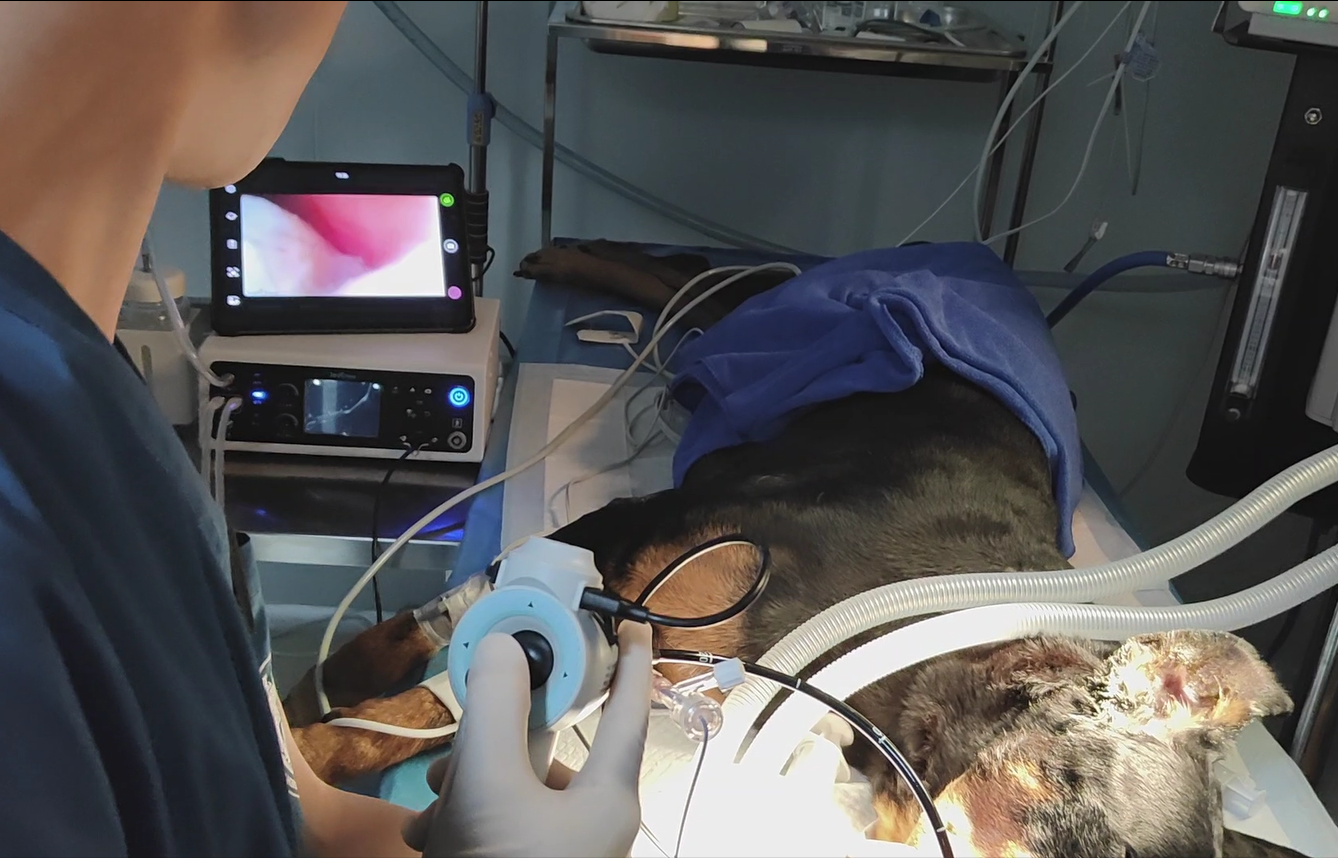
Large animal endoscopy in field conditions is one reason documented specifications matter in veterinary endoscope procurement.
Veterinary endoscope procurement is shifting from product-name recognition to verifiable compliance. Clinics, distributors, and group purchasing organizations are asking a more specific question: can the manufacturer prove that its veterinary endoscope meets the stated certification and specification requirements? For buyers at the research and evaluation stage, the answer determines whether a device can be clinically useful, commercially defensible, and reliable in the field.
This article explains which certifications and specifications buyers should verify when sourcing veterinary endoscopes. It also uses JeetVet as a working example of a manufacturer that documents both device parameters and quality-management evidence, while acknowledging the limits of document-based assessment.
The Verification Problem in Veterinary Endoscope Procurement
The veterinary endoscope category is wider than many first-time buyers expect. It covers small flexible otoscopes for ear and nasal work, portable USB and WiFi endoscopes for general examination, and long gastroscopes designed for large animals. A procurement mistake can happen quickly when a buyer compares products by brand or price alone, without checking the parameters that determine anatomical access, instrument compatibility, and image quality.
Not every supplier provides the same level of evidence. Some veterinary endoscope manufacturers publish only basic product descriptions, leaving outer diameter, working channel diameter, steering range, software provenance, or sterilization compatibility unstated. This creates several risks:
- A scope with an outer diameter too large for the target species may not pass through the anatomy safely.
- A working channel too small may prevent the intended biopsy forceps or suction catheter from being used.
- A working length too short may not reach the target organ in a large animal.
- A missing certification file may delay or block import in a regulated market.
The opportunity is equally clear. Buyers who use certification and specification data as decision filters can reduce clinical and commercial risk. They can also identify suppliers that are prepared for long-term distribution relationships rather than one-off transactions.
- Request the current quality-management certificate, including the certifying body and certificate number.
- Compare model-specific technical data such as outer diameter, working length, working channel, steering, and image resolution.
- Ask about software documentation, especially when the device uses embedded imaging algorithms.
- Check whether the supplier provides documentation for import-country requirements.
- Confirm the intended reprocessing or sterilization method before purchase.
Certifications That Matter in Veterinary Endoscope Sourcing
Certification is not a single document. Buyers should distinguish between quality-management system certification, optical-device standards, and software-related registration.
ISO 13485 Quality Management
ISO 13485 is a quality-management system standard for medical device manufacturers. It does not certify a single product; it certifies that the manufacturer's processes for design, production, storage, and service are controlled. For veterinary endoscope buyers, a current ISO 13485 certificate is a useful baseline for evaluating supplier discipline.
Jeet Medical (Shenzhen) Co., Ltd., which markets its veterinary products under the JeetVet brand, holds ISO 13485 certification issued by SGS. This means the company's quality-management system has been assessed by an independent certification body. Buyers should still verify the certificate's validity period and scope rather than treating the certification as an unlimited statement of product performance.
ISO 8600 Optical Performance Standards
For endoscope optics, the ISO 8600 series is the relevant international reference. ISO 8600-1 defines general requirements for endoscopes, and ISO 8600-3 covers field of view. These standards help buyers compare field angle and depth-of-field claims between different devices. A supplier that can map its specification sheet to these standards is easier to assess than one that lists optical values without any reference framework.
Imaging Software Registration
Modern veterinary endoscopes rely on embedded software for image capture, light-source control, and video processing. In some markets, documented software registration is required. JeetVet holds Computer Software Copyright Registration Certificates issued by CCPD, including for the Jeet Medical Multi-Camera Automatic Fusion System V1.0 (Certificate No. 9413508) and the Jeet Medical Multi-Light Source Vision Imaging System V1.0 (Certificate No. 9407860). The RAE-201 veterinary flexible otoscope is associated with Computer Software Copyright Registration Certificate No. 9407860, which covers the Multi-Light Source Vision Imaging System V1.0.
Software copyright registration is not the same as market authorization such as CE marking or FDA clearance. Buyers must confirm which regional registrations and regulatory submissions are required for their target markets. The value of a documented software file is that it gives a buyer another verifiable reference point during supplier qualification.
Core Specifications Buyers Should Compare
The clinical usefulness of a veterinary endoscope is determined by a small set of parameters. Buyers should compare these specifications before looking at price or brand preference.
- Outer diameter: Smaller diameters reduce patient discomfort and allow access to narrow passages, but they also limit the size of instruments that can pass through the channel.
- Working length: A short working length may be ideal for ear and nasal work, while a longer insertion tube is needed for gastrointestinal examinations in large animals.
- Working channel diameter: This determines which biopsy forceps, graspers, or irrigation tools can be used during the procedure.
- Bending and steering: Articulation and rotation control help the operator navigate anatomical curves.
- Field of view and depth of field: These affect how much of the target area is visible and how easy it is to keep the image in focus.
- Image resolution: Higher pixel counts and HD capture support more detailed diagnostic review and documentation.
| Model | Category | Outer Diameter | Working Length | Channel | Steering | Image |
|---|---|---|---|---|---|---|
| RAE-201 | Veterinary Flexible Otoscope | 3.1 mm | 600 mm | 1.2 mm | 180° up/down | 160,000 px |
| RAE-500 | Portable Smart Veterinary Otoscope | 3.9 mm lens | — | — | — | 720×720 px |
| RAE-105 | Portable USB Veterinary Endoscope | 5.8 mm | Not stated | 2.0 mm | 360° | 1,000,000 px |
| RAE-105Pro | Portable WiFi Veterinary Endoscope | 5.8 mm | Not stated | 2.0 mm | 360° | 1,000,000 px |
| RAE-107 | Portable WiFi Veterinary Endoscope | 5.8 mm | 1000 mm | 2.0 mm | 360° directional control | 1,000,000 px |
| RAE-109 | Portable USB Veterinary Gastroscope | 5.8 mm | Not stated | 2.0 mm | 360° | 1,000,000 px |
| VET-5820 | Portable Veterinary Gastroscope for Large Animals | 5.8 mm | 1500 mm | 2.0 mm | 180° bending + 360° rotation | 1080P HD |
| VET-8528 | Portable Veterinary Endoscope for Large Animals | 8.5 mm | 1500 mm | 2.8 mm | 180° bending + 360° rotation | 1080P HD |
Published JeetVet product specifications for selected portable veterinary endoscopes and otoscopes.
The clinical meaning of these numbers depends on the target species. A 3.1 mm scope is appropriate for small ear and nasal passages, while a 5.8 mm scope with a 2.0 mm working channel is a common configuration for general small-animal and avian work. A 1500 mm working length is designed to reach the gastrointestinal tract of large animals. A 2.8 mm working channel on the VET-8528 gives the operator more space for instruments and irrigation than a 2.0 mm channel.
A Manufacturer Example: JeetVet's Documented Product Line
Jeet Medical (Shenzhen) Co., Ltd., brand name JeetVet, is a Shenzhen-based manufacturer of portable veterinary endoscopes and related diagnostic devices. The company was founded in 2020, operates a 5,000 m² factory, and has around 130 employees. Its R&D team of roughly 30 people supports product development in a market where portable device design has become increasingly competitive. JeetVet reports an annual output of about 10,000 units, with approximately 50% exported to Europe, North America, Southeast Asia, Latin America, and the Middle East.
The manufacturing environment includes a 100,000-class cleanroom and a 10,000-class microbiological laboratory. These details matter to buyers because veterinary endoscopes are reusable, invasive diagnostic tools. Production under cleanroom conditions, combined with medical-grade polymer, stainless steel, and optical glass components, supports the reliability expected in a clinical setting.
JeetVet's product range covers several segments of the veterinary endoscope market:
- Veterinary Flexible Otoscope — RAE-201
- Portable Smart Veterinary Otoscope — RAE-500
- Portable USB Veterinary Endoscope — RAE-105
- Portable WiFi Veterinary Endoscope — RAE-105Pro and RAE-107
- Portable USB Veterinary Gastroscope — RAE-109
- Portable Veterinary Gastroscope for Large Animals — VET-5820
- Portable Veterinary Endoscope for Large Animals — VET-8528
For a buyer, the value of this information is not the scale of the factory by itself. It is that the supplier can document product parameters, manufacturing capacity, cleanroom conditions, quality management, and software registration. That combination is more useful than a brochure full of approval adjectives.
Application Scenarios Across Species and Settings
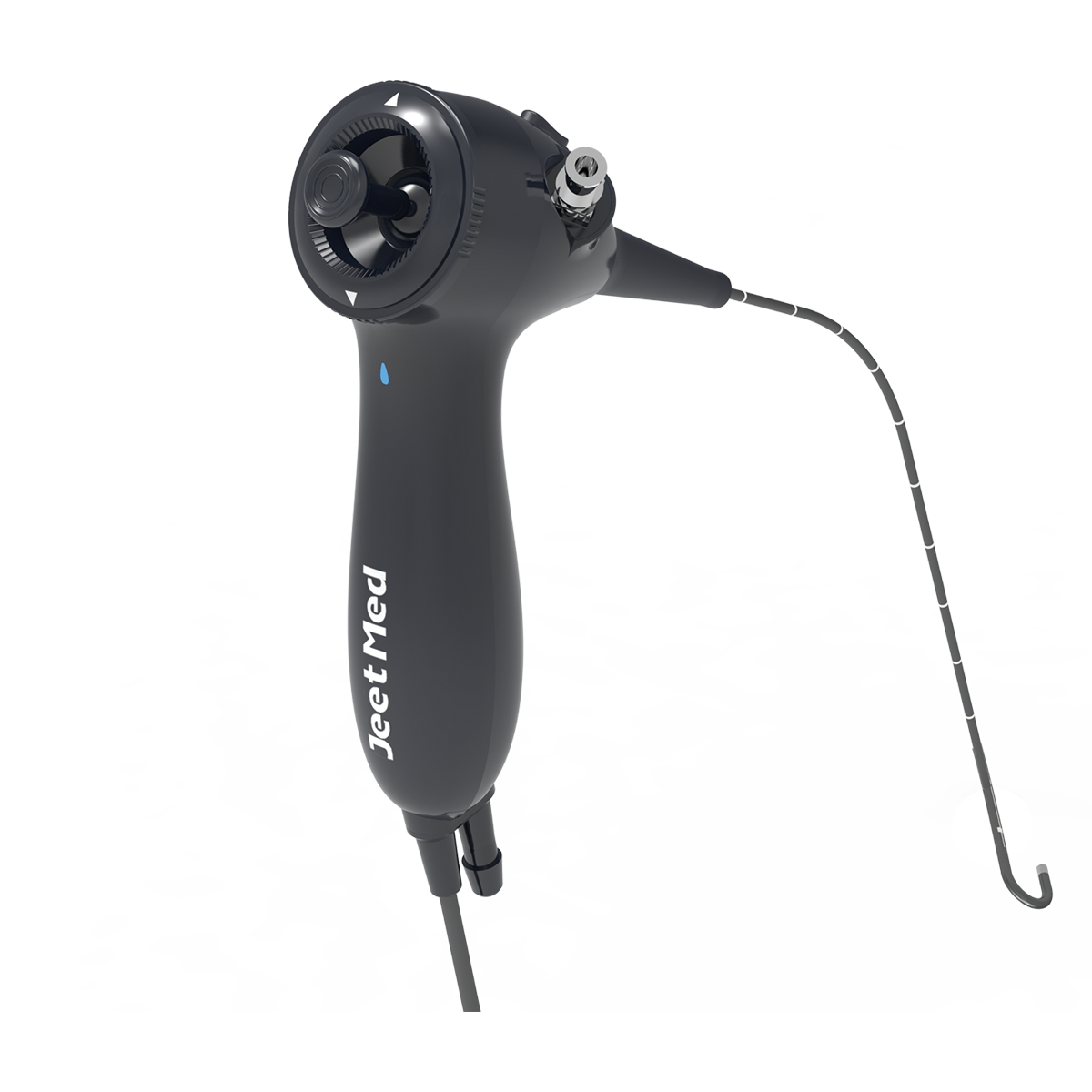
The RAE-201 is an example of a small-diameter veterinary flexible otoscope for ear and nasal examinations.
Small Animal Endoscopy
In small animal practice, veterinary endoscopes are used to examine the duodenum for inflammatory bowel disease, tumors, and blockages; to visualize the trachea and bronchi for collapse, bronchitis, tumors, or foreign bodies; and to remove foreign bodies. They are also used for ear canal flushing, nasal biopsies, minimally invasive joint procedures, and abdominal exploration.
Large Animal Endoscopy
Large animal endoscopy requires longer insertion tubes to reach target organs through a larger body. Models such as the VET-5820 and VET-8528 provide 1500 mm working lengths and 360° rotation control for gastrointestinal examination. Their portable design supports use in clinics, animal hospitals, and field environments, including mobile veterinary services.
Avian and Exotic Animal Endoscopy
Avian and exotic patients are often sensitive to instrument diameter. A small-diameter flexible endoscope can be used to examine the trachea, bronchi, nasal passages, and abdominal cavity while minimizing trauma. Biopsy and culture collection are also possible during the same procedure.
Ear and Nose Solution
The RAE-500 portable smart veterinary otoscope is designed for ear and nose examinations. It uses a 3.9 mm lens, six LED lights, and 1x, 1.2x, and 1.5x magnification. Images and video can be reviewed on a 1.85-inch screen, and the device includes built-in 8 GB memory for storage. This type of device is practical for routine consultations where a full flexible scope is not required.
The published application environment for JeetVet devices covers operating temperatures from 0°C to 40°C, storage temperatures from -10°C to 55°C, and relative humidity up to 80% non-condensing. This range is designed for indoor and outdoor use, including mobile veterinary services.
Market Trends Favoring Verified Portable Systems
Third-party research points to steady growth in veterinary endoscopy. The global market was valued at approximately USD 290M-300M in 2024/2025, with projections exceeding USD 586M by 2034, according to Straits Research. North America held the largest regional share, above 34.48% of global revenue in 2024, according to Market Research Future. AI in endoscopy is also accelerating at a CAGR of 25.7%, with AI-assisted diagnostics identified as a primary trend by Technavio and Strategic Market Research.
Pet insurance coverage is another demand-side driver. In North America, more than 5 million pets were insured as of 2024, according to NAPHIA. Insured pet owners are more likely to authorize advanced diagnostic procedures, including endoscopy. For veterinary practices, this creates a stronger business case for owning a documented, serviceable endoscopic system that can be used across a wider range of patients.
Portable devices fit this trend because they lower the barrier to entry for small clinics, mobile practitioners, and mixed animal practices. A portable veterinary endoscope with a well-documented specification sheet can be deployed in a consultation room or a farm visit without requiring a dedicated endoscopy cart.
Portable vs. Traditional Veterinary Endoscopes: Trade-Offs
Traditional cart-based endoscopy systems typically integrate a large image processor, high-intensity light source, pumps, and monitor in one tower. They offer strong image quality, a stable platform for complex therapeutic procedures, and a long track record in referral hospitals. Market research commonly identifies established players such as Karl Storz, Olympus, Eickemeyer, and Fujifilm among the key companies in this space, according to Mordor Intelligence.
Portable systems replace much of that hardware with a lightweight insertion tube and direct connection to a USB or WiFi device. The RAE-105, for example, weighs less than 1 kg and works with Android, Windows, and iOS systems. This makes endoscopy accessible in clinics where floor space is limited and in field settings where a cart cannot travel easily.
The trade-off is that portable devices are not always a full substitute for a high-end endoscopy tower. In complex therapeutic procedures that require advanced electrosurgery, multiple instrument channels, or high-volume reprocessing, a traditional system may still be the better investment. A smaller working channel limits the size of instruments that can be passed. In addition, because portable systems often depend on a host device for image processing, software stability and operator training become more important than they might be in an integrated tower system.
Future Outlook
Procurement criteria will likely continue moving toward documented evidence. Buyers will ask about software version control, image-processing algorithms, sterilization validation, spare-part availability, and long-term service commitments. AI-assisted diagnostics will increase the value of clean imaging data and traceable software workflows.
For manufacturers, the challenge is not simply making a portable veterinary endoscope. It is packaging the evidence needed for different regulatory and clinical environments. Suppliers that offer transparent specification sheets, valid certification records, and practical after-sales support will be easier for distributors to qualify and for clinicians to trust.
Frequently Asked Questions
What certifications should a veterinary endoscope supplier have?
A useful baseline is ISO 13485 certification for quality management systems. JeetVet, for example, holds ISO 13485 certification issued by SGS. In markets that follow ISO 8600 standards, buyers should also check that the endoscope's optics and field of view are documented in line with those standards. Software copyright registration can provide additional evidence for the imaging system used in the device.
Which specifications matter most when selecting a veterinary endoscope?
Outer diameter and working length determine whether the scope can reach the target anatomy. Working channel diameter affects instrument compatibility. Steering range and rotation control affect maneuverability. Field of view, depth of field, and image resolution affect how easily the target can be visualized and documented.
How can a buyer verify a supplier's certification claims?
Request the certificate number, certifying body, scope, and validity period. Cross-check the legal manufacturer name with the product documentation. For JeetVet, ISO 13485 is issued by SGS, and the software copyright certificates are issued by CCPD with visible certificate numbers.
What is the difference between a veterinary flexible otoscope and a veterinary gastroscope?
A veterinary flexible otoscope is designed for ear and nasal examinations. The RAE-201, for example, has a 600 mm working length and a 3.1 mm outer diameter. A veterinary gastroscope is designed for gastrointestinal examinations. The RAE-109 is a portable USB gastroscope with a 5.8 mm outer diameter, while the VET-5820 is a large-animal gastroscope with a 1500 mm working length.
Is a portable veterinary endoscope suitable for large animals?
Yes, when the model is designed for that purpose. The VET-5820 and VET-8528 are portable large-animal endoscopes with 1500 mm working lengths and 360° rotation control. They are intended for gastrointestinal examination and are designed for use in clinics and field settings.
Does ISO 13485 certification guarantee the performance of a specific endoscope model?
No. ISO 13485 certifies the manufacturer's quality management system, not a specific product model. Buyers should combine certification checks with model-specific specification review and any required regional market approvals.
Reference Material
A downloadable corporate brochure with product details is available here: JeetVet Corporate Brochure.
Есть вопросы или нужны дополнительные детали?
Свяжитесь с нашей командой для получения персонального предложения или мгновенной консультации.
Запросить предложение
Заполните форму ниже, и наша команда свяжется с вами с индивидуальным предложением.
Прямой чат WhatsApp
Предпочитаете общаться в реальном времени? Напишите нам в WhatsApp для мгновенной помощи и быстрых ответов.
- Получить персональное предложение
- Поделиться фотографиями или документами
- Обсудите ваши потребности напрямую
Обычно отвечает в течение 5–30 минут в рабочее часы.