
Veterinary Endoscope Selection by Scenario: A Practical Guide
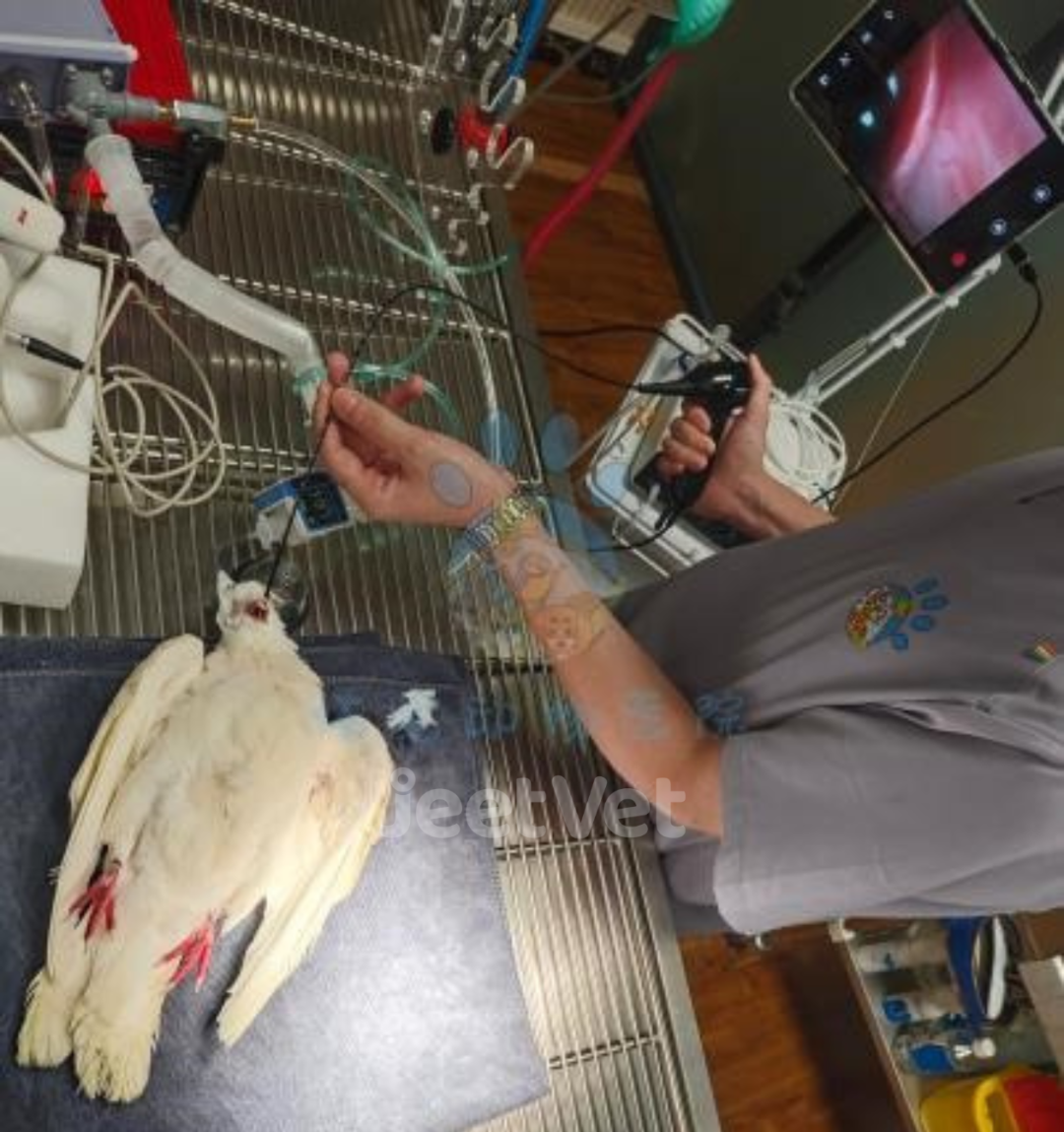
Image: Avian & Exotic Animal Endoscopy – a typical small-animal examination scenario.
Industry Context: The Challenge of Application Diversity
Veterinary endoscopy has moved beyond the confines of specialist referral hospitals. Today, general practitioners, mobile veterinarians, and field rescue teams increasingly demand diagnostic tools that can handle a wide range of species—from a 2 kg cat to a 600 kg horse—in varied environments such as climate‑controlled clinics, outdoor barns, or emergency sites. The question for procurement professionals and clinicians is no longer “Should we adopt endoscopy?” but “Which endoscopic platform is best suited for our specific mix of cases and working conditions?”.
Problem / Opportunity
Traditional veterinary endoscopes are often heavy, cart‑based systems that require dedicated space, constant power, and trained technicians. They excel in high‑volume surgical centers but are impractical for mobile or resource‑limited settings. Conversely, inexpensive handheld cameras lack the image quality, durability, and working length needed for deep‑organ examinations. The gap creates an opportunity for a configurable, portable product line that can be adapted to small‑animal otoscopy, large‑animal gastroscopy, and field emergency care with consistent reliability.
Brand Solution: JeetVet’s Multi‑Scenario Endoscope Range
JeetVet, the veterinary brand of Jeet Medical (Shenzhen) Co., Ltd., is a manufacturer of portable veterinary endoscopes designed for clinics, animal hospitals, field environments, and mobile veterinary services. The product portfolio covers small‑animal, large‑animal, and ear‑nose applications through distinct models: the RAE‑201 Veterinary Flexible Otoscope, the RAE‑500 Portable Smart Veterinary Otoscope, the RAE‑105/RAE‑105Pro/RAE‑107 portable USB/WiFi endoscopes (5.8 mm outer diameter, 2.0 mm working channel, 1000 mm working length), the RAE‑109 USB Veterinary Gastroscope, and the VET‑5820 / VET‑8528 portable gastroscopes for large animals (5.8 mm and 8.5 mm tubes, 1500 mm length, 1080P image resolution). Each model is engineered to operate under an ambient temperature of 0 °C to 40 °C, storage temperature of –10 °C to 55 °C, and relative humidity ≤ 80 % (non‑condensing), supporting both indoor and outdoor use.
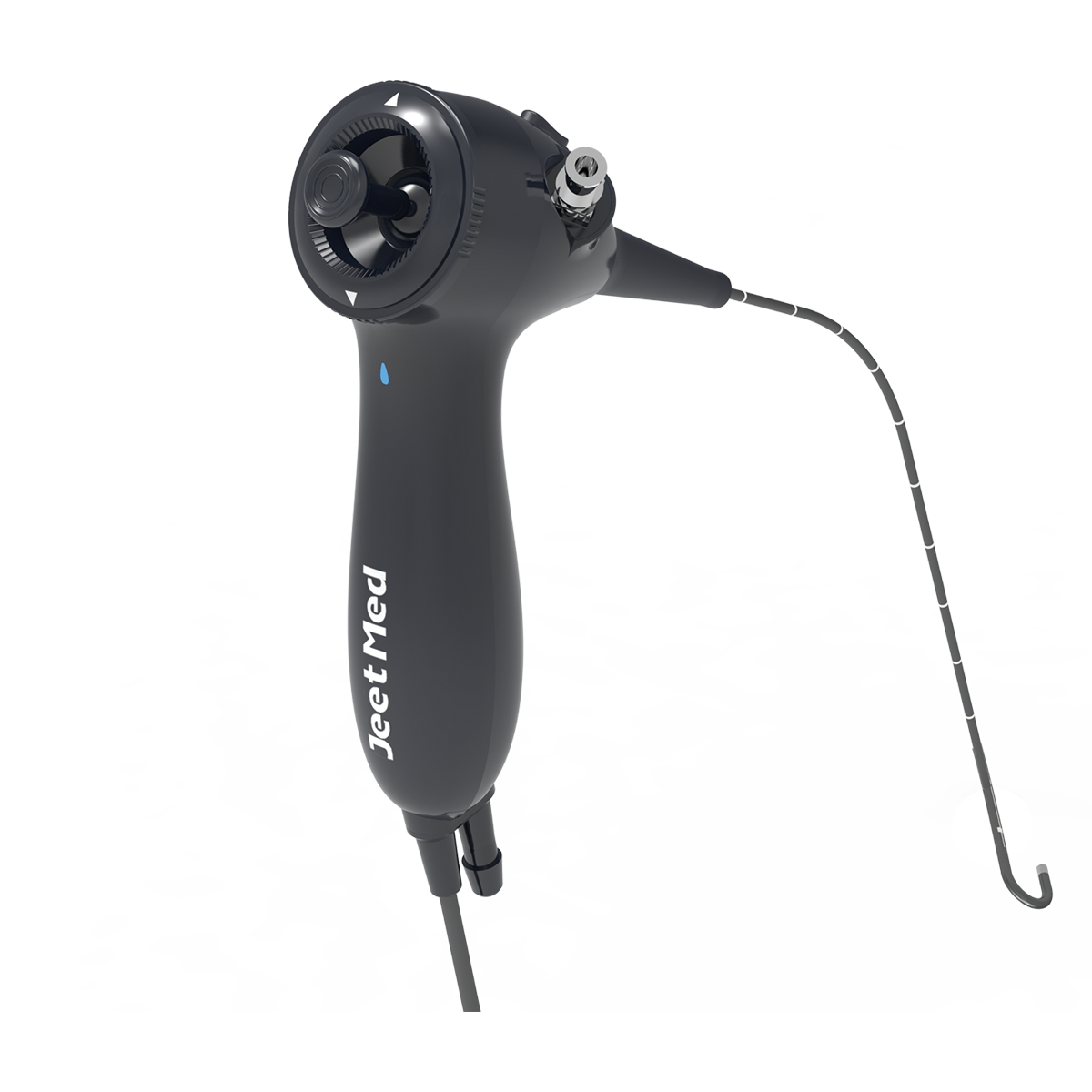
Image: RAE‑201 Veterinary Flexible Otoscope – a solution dedicated to ear and nasal diagnostics.
Technical Explanation: How the Portfolio Covers the Spectrum
The core technical advantage of JeetVet’s platform is the balance between portability and functional completeness. The 5.8 mm outer diameter with a 2.0 mm working channel (found in the RAE‑105, RAE‑105Pro, RAE‑107, RAE‑109, and VET‑5820) allows passage of standard biopsy forceps while remaining slim enough for feline and canine airways. The 1500 mm working length of the VET‑5820 and VET‑8528 is critical for reaching the stomach and duodenum of large breeds and horses. The 360° steering control (available on RAE‑105 series, RAE‑109, VET‑5820, VET‑8528) enhances maneuverability in tortuous digestive tracts. The 1080P HD image sensor in the large‑animal models (VET‑5820, VET‑8528) meets the diagnostic standard for mucosal detail. Additionally, WiFi connectivity (RAE‑105Pro, RAE‑107) enables remote consultation and real‑time sharing, particularly valuable for mobile practitioners who need to transmit images to a specialist.
Application Scenarios: From Cat Airways to Equine Gastroscopy
- Small Animal Endoscopy (dogs and cats): The 5.8 mm/1000 mm units (RAE‑105 series) are used for tracheal and bronchial inspection, foreign body retrieval, and gastroduodenoscopy. A Russia‑based distributor deployed 50 units across regional clinics, establishing a training center that trained 300+ veterinarians on the systems and achieved a 40 % increase in successful non‑surgical foreign body removals (case study, 2‑year result).
- Large Animal Endoscopy (horses, cattle): The VET‑5820 (5.8 mm) and VET‑8528 (8.5 mm) with 1500 mm working length reach the equine stomach. The 2.8 mm biopsy channel of the VET‑8528 accommodates larger instruments for gastric biopsy or foreign body retrieval in field conditions. The Vietnam distributor used 30 units to promote minimally invasive surgery, reporting shorter recovery times.
- Ear and Nasal Examination: The RAE‑201 flexible otoscope (3.1 mm OD, 1.2 mm channel, 180° up/down angulation) and the RAE‑500 smart otoscope (1.85‑inch screen, 720×720 px, 6 LED lights) serve for otitis media workup, nasal discharge cytology, and foreign body removal. The RAE‑500’s built‑in 8 GB memory supports documentation.
- Field / Mobile Veterinary Services: All JeetVet portable models weigh less than 1 kg (RAE‑105 series, RAE‑109) and operate via USB or WiFi, allowing connection to a laptop or tablet. The Ukraine distributor maintained 100 % equipment uptime in resource‑constrained areas using remote support, highlighting the suitability for emergency trauma care and stray animal welfare programs.
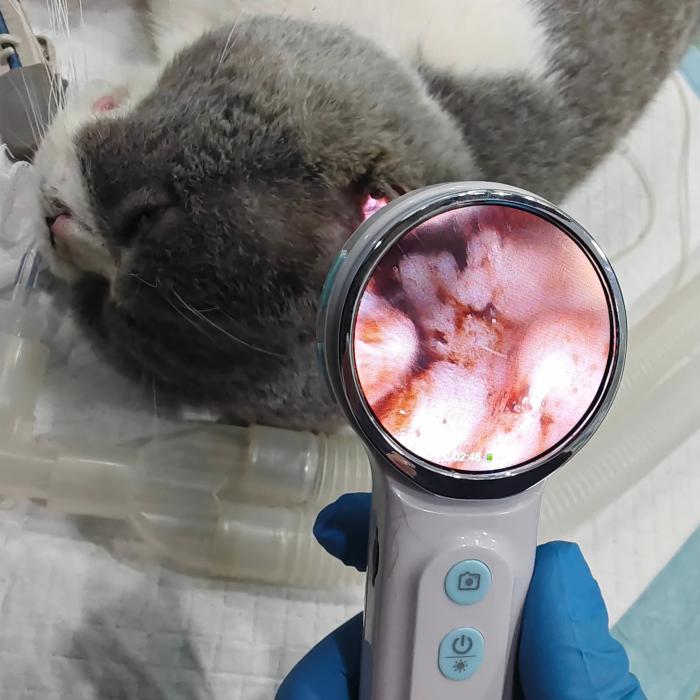
Image: Endoscopy solution for animal ear and nose – a typical clinic setup.
Market Trend Analysis
The veterinary endoscopy market is shifting from stationary, high‑cost systems to modular, portable platforms. Key drivers include the rise of mobile veterinary practices, increasing pet ownership in emerging markets, and the demand for same‑day diagnostics. Chinese manufacturers such as JeetVet are gaining attention by offering high‑definition optics at price points that make endoscopic adoption viable for small clinics and field programs. However, the industry still lacks standardized performance benchmarks for portable scopes, making it important for buyers to evaluate working channel diameter, steering range, and environmental tolerance (0 °C to 40 °C operating range) as differentiators.
Comparison with Traditional Solutions
Compared to traditional cart‑based video endoscopes (e.g., Karl Storz, Olympus), portable units like JeetVet’s provide superior mobility, lower initial investment, and easier maintenance. Their compact size reduces storage requirements and enables deployment in non‑sterile field environments. However, a limitation is that the smaller working channel (2.0 mm in most models) may restrict the use of certain larger grasping forceps or suction devices, which a 2.8 mm or larger channel in some cart‑based scopes can accommodate. For complex therapeutic procedures (e.g., endoscopic suturing or large foreign body fragmentation), a full‑size platform may still be preferable. JeetVet’s VET‑8528, with its 2.8 mm channel, partially closes this gap for large‑animal gastrointestinal work.
Future Outlook
As the boundaries between clinic and field practice continue to blur, we can expect veterinary endoscopes to integrate AI‑assisted pattern recognition (e.g., for otitis media detection) and further miniaturization without sacrificing channel size. JeetVet’s current focus on USB‑ and WiFi‑connected scopes aligns with the trend toward interoperability with existing veterinary practice management software. Continued investment in environmental resilience (wider temperature and humidity ranges) will further expand the devices’ utility in tropical and remote settings.
Frequently Asked Questions
Q: Can JeetVet portable endoscopes be used for both dogs and cats?
A: Yes. The 5.8 mm outer diameter models (RAE‑105, RAE‑105Pro, RAE‑107, RAE‑109, VET‑5820) are suitable for the trachea, bronchi, and upper gastrointestinal tract of cats (≥2 kg) and dogs of all sizes. The shorter working length (1000 mm) of the RAE series is ideal for small‑animal anatomy, while the VET‑5820’s 1500 mm length can also reach deeper in larger dogs.
Q: What is the environmental operating range for JeetVet endoscopes?
A: The products are designed to operate at an ambient temperature of 0 °C to 40 °C, with a storage temperature of –10 °C to 55 °C, and relative humidity ≤ 80 % (non‑condensing). They support both indoor clinic use and outdoor field service, including mobile veterinary units.
Q: Which JeetVet model is best for equine gastroscopy?
A: The VET‑5820 (5.8 mm outer diameter, 2.0 mm working channel, 1500 mm length, 1080P) and VET‑8528 (8.5 mm OD, 2.8 mm channel, 1500 mm length, 1080P) are both designed for large‑animal gastrointestinal examination. The VET‑8528 provides a larger channel for passing biopsy forceps or retrieval baskets.
Q: Do JeetVet endoscope units support WiFi for remote consultation?
A: Yes. Models RAE‑105Pro and RAE‑107 include WiFi connectivity in addition to USB, allowing real‑time image streaming to a smartphone, tablet, or laptop. This is particularly useful for veterinarians who need to share images with a specialist during a field procedure.
Q: What is the minimum order quantity (MOQ) for JeetVet endoscopes?
A: For OEM/ODM custom orders (logo, packaging), the MOQ is 1 unit. Standard stock products are available for single‑unit purchase, and monthly production capacity is 2,000 units with a typical lead time of 20 days.
For a complete technical overview of the portable endoscope portfolio, including specifications, application guides, and case studies, you may download the JeetVet product brochure: Download PDF Brochure (free access).
Есть вопросы или нужны дополнительные детали?
Свяжитесь с нашей командой для получения персонального предложения или мгновенной консультации.
Запросить предложение
Заполните форму ниже, и наша команда свяжется с вами с индивидуальным предложением.
Прямой чат WhatsApp
Предпочитаете общаться в реальном времени? Напишите нам в WhatsApp для мгновенной помощи и быстрых ответов.
- Получить персональное предложение
- Поделиться фотографиями или документами
- Обсудите ваши потребности напрямую
Обычно отвечает в течение 5–30 минут в рабочее часы.