
Vetting Brass Gate Valve Suppliers Beyond the Catalogue
Vetting Brass Gate Valve Suppliers Beyond the Catalogue
Independent buyer comparison · Brass Valve sourcing · Research to Evaluation
A Brass Gate Valve is often treated as a catalogue item: size, thread, pressure class and a price band. For buyers moving from Research to Evaluation, that is the wrong starting point. The catalogue can describe a valve; it cannot prove that the supplier’s quality system, certificate scope, factory evidence and commercial terms fit a specific plumbing or heating project.
This independent buyer comparison is therefore built around a narrower question: what should a buyer verify after the catalogue page, when the product under review is a Brass Gate Valve? The focus is the gate valve family, not a general company profile. It uses the Brass Gate Valve VG11.11302 and the manufacturer’s published evidence as a reference point, because a concrete model exposes the gaps that a generic supplier brochure hides.
Why the Catalogue Is Only the First Filter
A catalogue entry answers the easy part of procurement. It gives a size range, a thread standard, a pressure rating and a product family. Those are necessary, but they are not a supplier comparison. Two suppliers can list the same nominal gate valve and still differ in brass grade, disc and seal material, machining tolerance, test regime, certificate coverage, batch traceability and the commercial terms behind the quoted band.
For a Brass Valve buyer, the risk is not that the catalogue is false. The risk is that it is incomplete. A gate valve can be correctly described and still be the wrong choice for throttling duty, for a temperature above its published range, or for a market where the relevant approval does not cover that model. Supplier vetting has to move from product description to evidence.
What the Catalogue Can and Cannot Say About a Brass Gate Valve
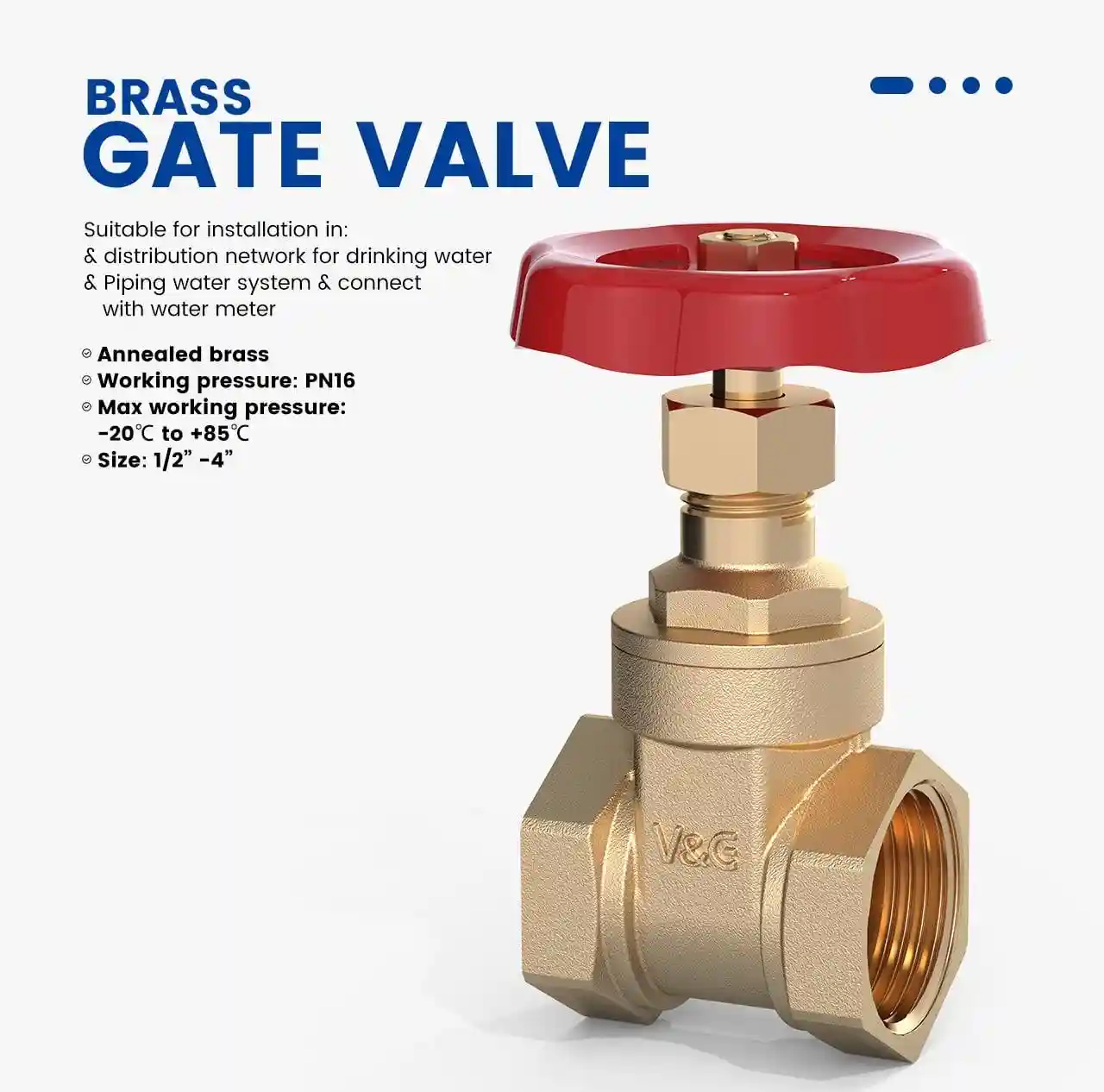
Take the Brass Gate Valve VG11.11302. Its published data are specific enough to support a first-pass screen, and specific enough to show where a buyer must ask for more.
| Published point | Brass Gate Valve VG11.11302 | What the buyer must confirm |
|---|---|---|
| Product type | Rubber Disc Gate Valve | Disc and seal material match the medium and duty |
| Size range | 1/2″–2″ | The required line size is inside the range |
| Threads | ISO 228; equivalent DIN EN ISO 228 and BS EN ISO 228 | The destination market accepts this thread standard |
| Temperature | 0°C to 80°C | Design temperature stays inside the stated range |
| Working pressure | PN16; maximum 16 bar | System pressure and test pressure are compatible |
| Service | Drinkable water and piping water systems | Potable water approval is valid for the market |
| Body material | Brass | Brass grade and lead content meet the market requirement |
The table is a constraint map, not a supplier ranking. It says the valve is for isolation in drinkable and piping water systems within 0–80°C and PN16. It does not say the valve is suitable for throttling, for steam, for temperatures above 80°C, or for every market approval in the supplier’s portfolio. Those are not catalogue details; they are evaluation questions.
Certification Is a Scope Question, Not a Logo
Certification is where catalogue-level vetting fails most often. A supplier can hold a strong certificate portfolio and still not hold the exact approval a buyer needs for a specific product, size and market. The correct comparison is not ‘Do you have certificates?’ but ‘Which certificate covers this model, in this market, for this product type, and until when?’
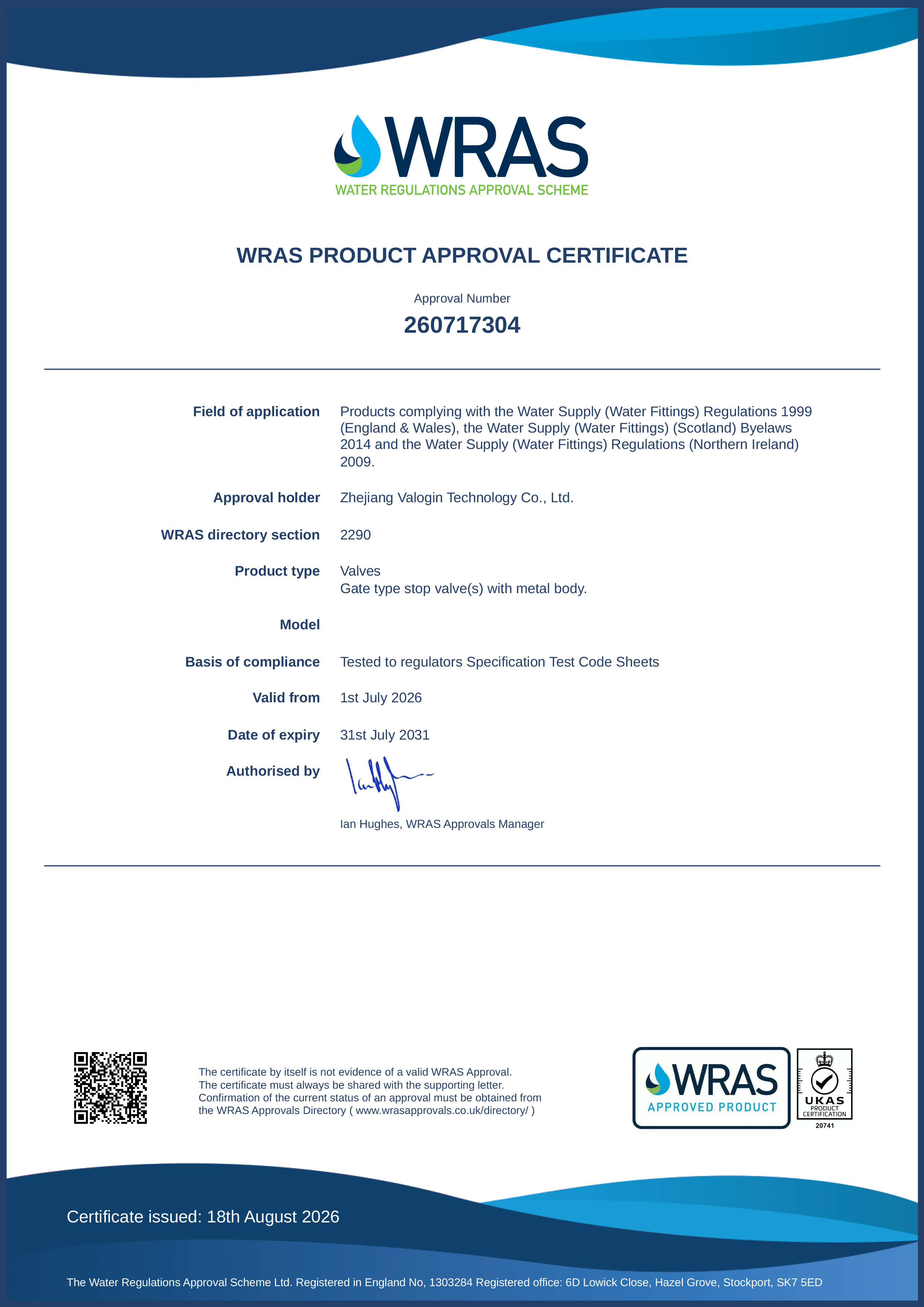
The certificate set associated with the manufacturer illustrates the point. WRAS Product Approval Certificate 260717304 is issued for product type Valves - Gate, valid to 31 July 2031. That is directly relevant to a gate valve discussion. Other certificates in the same portfolio are not interchangeable with gate valve coverage: DVGW DG-4312DQ0883 is for a gas ball valve, UPC 7553 is for ball valves, CSA 2759792 is for gas valves, AGA 8775 is for a manual shut-off valve, ACS 23 ACC NY 155 is for a pressure reducer, and ECM 0B230606.ZVTDN65 is for a check valve and Y strainer. A buyer who accepts ‘we are certified’ without reading scope can carry an approval gap into the order.
| Certificate | Number | Scope / relevance | Buyer action |
|---|---|---|---|
| WRAS Product Approval | 260717304 | Product type: Valves - Gate; valid to 31 July 2031 | Confirm the exact model and size are covered for the UK market |
| WaterMark | WM-022194 | In-line valves for plumbing water supply systems - miscellaneous types metallic and non-metallic; WMTS-012:2018; valid to 7 March 2027 | Confirm the gate valve model is listed for Australia |
| Lead Free | 7555 | Lead Free Plumbing Products; NSF/ANSI/CAN 372-2024 | Confirm wetted parts and model coverage for the US market |
| DVGW | DG-4312DQ0883 | Gas ball valve (Kugelhahn); DIN EN 331 | Do not treat as gate valve approval |
| UPC | 7553 | Ball Valves | Do not treat as gate valve approval |
| CSA | 2759792 | Gas valves; ball valve models | Do not treat as gate valve approval |
| AGA | 8775 | Manual Shut Off Valve | Check product type before transfer |
| ACS | 23 ACC NY 155 | Pressure reducer 18.07023.G20.CP | Not gate valve coverage |
| ECM | 0B230606.ZVTDN65 | Check valve, Y strainer | Not gate valve coverage |
WaterMark WM-022194 is issued to Zhejiang Valogin Technology Co., Ltd. for in-line valves for plumbing water supply systems — miscellaneous types metallic and non-metallic, under WMTS-012:2018, valid to 7 March 2027. Lead Free certificate 7555 covers Lead Free Plumbing Products under NSF/ANSI/CAN 372-2024. These are relevant evidence, but the buyer still has to confirm that the exact gate valve model and size are within the listing. The same logic applies to any supplier: certificate number, scope, issue date, expiry date and model-level coverage.
The same evidence logic applies to related Brass Valve families — Brass Ball Valve, Brass Check Valve, Brass Angle Valve, Brass Stop Valve, Brass Plumbing Valve and Brass Water Valve — but the certificate scope changes by product type. A gate valve approval is not a family-wide approval for every valve the supplier sells.
Factory Evidence: What a Catalogue Photo Does Not Show
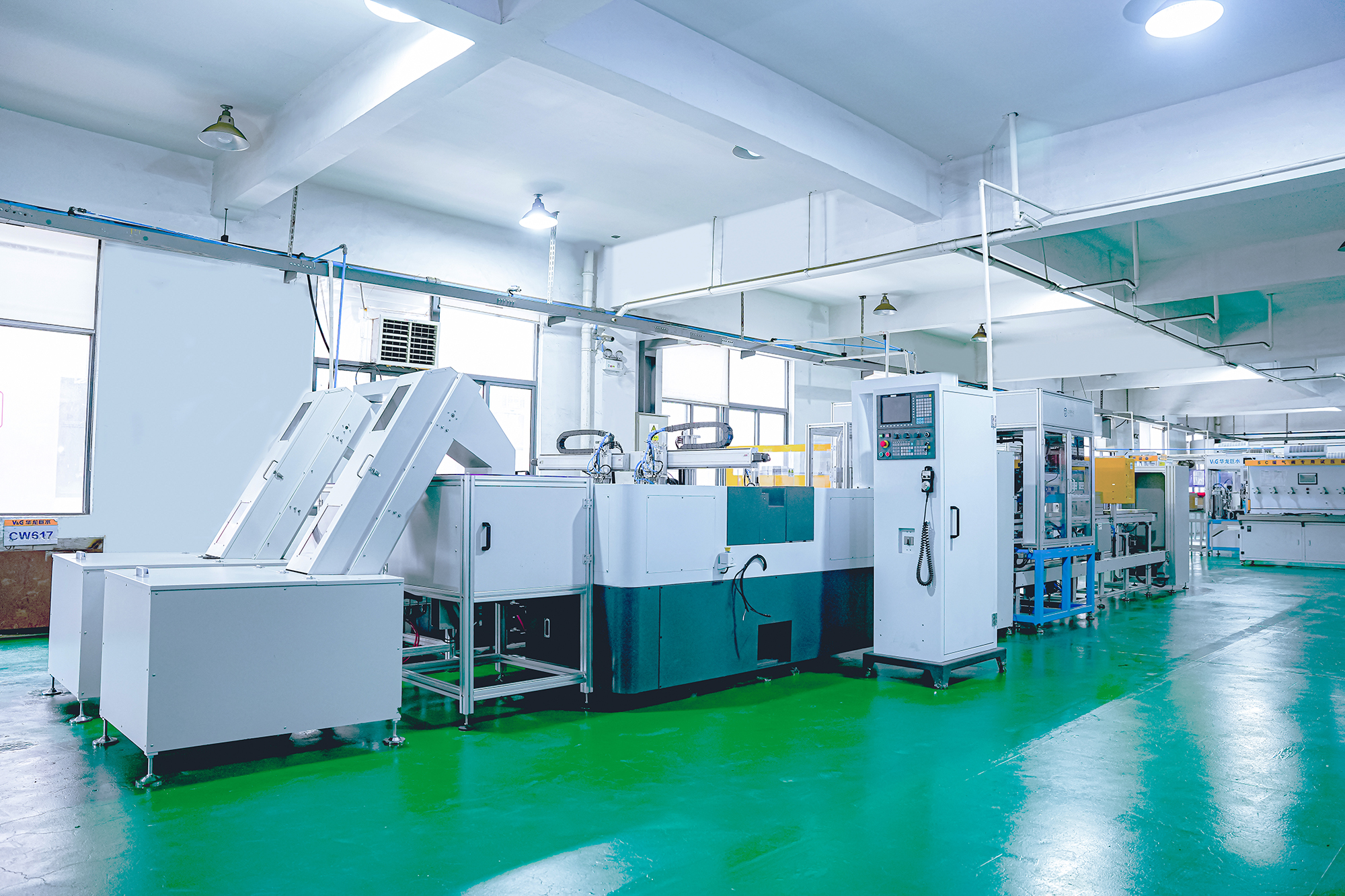
Zhejiang Valogin Technology Co., Ltd. — the manufacturer behind the valogin valve brand — is a Chinese valve manufacturer founded in 1985. The factory covers more than 28,000 square meters and employs over 1,000 people. Annual output is 80 million pcs, and monthly capacity is 15 million pcs. More than 90% of turnover comes from international markets; Europe and North America are key markets, with coverage extending to South America, the UAE and more than 100 countries worldwide.
The R&D team includes more than 70 designers and engineers, including over 15 full-time R&D engineers with expertise in water, gas, oil and heating systems. The laboratory covers about 1,025 square meters and is established in accordance with ISO 17025; it has more than 100 sets of advanced equipment, including an inverted metallographic microscope and a comprehensive test bench. In production, 70% of products are manufactured via automated workflows, with dedicated fully automatic lines for ball valves and gate valves, paired with industrial robots.
These facts are useful because they are auditable. They do not replace a model-specific approval, and they do not prove that every gate valve is identical. They tell the buyer what to ask for: the production line, the test record, the material certificate, the batch traceability and the named commercial contact. Quality control is stated as 100% air-tight test, dimension sampling per batch and material certificate on request; the commercial process includes sample approval before mass production, batch inspection records and material certificates with each shipment, a named account contact for order and technical questions, and quality claim handling terms agreed in the supply contract.
The Price Band Is a Commercial Hypothesis, Not a Specification
No responsible supplier comparison can reduce a Brass Gate Valve to a single price band. The band moves with brass grade and weight, machining time, disc and seal material, thread standard, pressure class, surface finish, testing, packaging and the certification the buyer requires. If one quote is lower but does not state those variables, it is not comparable; it is only a number.
The same applies to commercial terms. The published capability data for the reference manufacturer state a MOQ of 5,000 units and a lead time of 50 days, with monthly capacity of 15 million pcs. Those terms matter to a distributor or importer because they affect stock planning, cash conversion and service level. A buyer should compare the price band together with MOQ, lead time, customization limits, inspection records and claim terms — not the unit price alone.
Catalogue-Only Vetting versus Evidence-Based Vetting
The practical difference is the question a buyer asks. Catalogue-only vetting asks whether the supplier lists the product. Evidence-based vetting asks whether the supplier can support the product, the market and the order.
| Evaluation area | Catalogue-only question | Evidence-based question |
|---|---|---|
| Product fit | Do you make a brass gate valve? | Which model, size, thread, pressure class and approval apply? |
| Certification | Do you have WRAS? | Which certificate number, scope and expiry, and is this model listed? |
| Factory evidence | Can you send factory photos? | Which line, test record, batch record and material certificate support the order? |
| Commercial terms | What is your best price? | Which material grade, disc, finish, packaging, MOQ and lead time define this band? |
| Application | It is for water. | Is it isolation only? What temperature, pressure, cycling and size apply? |
| Risk | We have exported for years. | Which market approval, claim terms and traceability apply to this model? |
Where a Brass Gate Valve Fits — and Where It Does Not
Gate valves are isolation devices, not control valves. The published product guidance for brass ball, gate and stop valves makes the distinction clear: ball valves give quarter-turn isolation, gate valves give low-resistance isolation on a straight-through bore and are for fully open or fully closed duty, and stop valves are made for throttling. A buyer who uses a gate valve as a regulating valve is not comparing suppliers; they are comparing the wrong product category.
In building water supply and sanitary installations, brass gate valves are used for coarse shut-off on the main supply and on risers, while ball valves provide quarter-turn isolation at fixture groups, check valves prevent back-flow and angle valves connect sanitary fixtures. For a Brass Gate Valve VG11.11302, the published 1/2″–2″ size range, PN16 rating and 0–80°C range fit many potable and piping water isolation points. The buyer still has to confirm the potable water approval for the destination market.
In heat pump systems, the gate valve can serve as main-line shut-off in the hydraulic package, alongside ball valves for service isolation, check valves for reverse-flow protection and stop valves for flow split. The published heat pump condition of 35–55°C flow and up to 6 bar sits inside the gate valve’s stated range. In hydronic heating, gate valves are also used for main distribution isolation — but the same model’s 0–80°C limit must be checked against the design temperature. A 90°C design condition needs a different model or written confirmation; it should not be assumed from a generic heating application note.
For Brass Valve for Heating Systems, the gate valve is an isolation component, while mixing and regulation functions sit with other valve types. In Brass Valve for Plumbing Systems, the same distinction applies: gate for coarse isolation, ball for quick isolation, check for back-flow, angle for fixture connection. The application fit is therefore a product-family question before it is a supplier question.
Limitations Buyers Should Write Into the Comparison
- A gate valve is not a throttling valve. Part-open regulating duty belongs to a brass stop valve, not a gate valve.
- The Brass Gate Valve VG11.11302 is published for 1/2″–2″. A larger line size needs a different model or written confirmation.
- The published working range is 0–80°C and PN16. Higher temperature or pressure should stop the comparison until a suitable model is identified.
- Certificate scope must be read at product-type level. A ball valve, gas valve, pressure reducer or check valve approval cannot be transferred to a gate valve.
- MOQ and lead time are commercial terms, not quality proof. They should be compared together with inspection records and claim terms.
- Automation and laboratory evidence support consistency, but they do not replace sample approval before mass production.
Market Trend: From Catalogue Claims to Evidence Requests
Across industrial components, procurement teams are moving from brochure claims to document-level checks. The change is practical rather than dramatic: buyers ask for certificate numbers, scopes and expiry dates; they request batch records and material certificates; they compare lead time and MOQ alongside the price band; and they ask whether a model is listed for the destination market. For brass valves, this trend favours suppliers that can produce evidence quickly and consistently — and it exposes suppliers whose certification story depends on a logo rather than a scope.
Digital document handling is part of the same shift. A certificate that can be checked against a model, a date and a market is more useful than a folder of undifferentiated images. The buyer does not need more claims; they need fewer, better evidence points.
Future Outlook
Supplier comparison for Brass Gate Valve sourcing is likely to become more model-specific. Buyers will expect certificate scope, expiry tracking and model-level approval checks as standard procurement documents, not as special requests. Manufacturers with a broad valve range will need to separate approval by product family clearly: a ball valve approval, a gas valve approval and a gate valve approval are not the same asset. The suppliers that make this separation easy will be easier to evaluate, even before price is discussed.
For distributors and importers, the implication is straightforward. The catalogue remains the entry point, but the buying decision will rest on evidence: the exact model, the exact market, the exact test record and the exact commercial terms.
FAQ
What should a buyer verify first when comparing Brass Gate Valve suppliers?
Start with the model-level constraint set: size range, thread standard, temperature range, pressure class, disc and seal material, and the market approval that applies. For the Brass Gate Valve VG11.11302, the published range is 1/2″–2″, ISO 228 threads, 0–80°C and PN16. If the application falls outside those limits, the supplier comparison should stop or move to a different model.
Does a WRAS certificate prove that every Brass Gate Valve from a supplier is approved?
No. WRAS Product Approval Certificate 260717304 is issued for product type Valves - Gate and is valid to 31 July 2031, but a buyer should still check the model and size against the certificate schedule and confirm the market. A certificate is evidence of scope, not a blanket approval for every gate valve in a catalogue.
Why can’t a Brass Gate Valve be used for throttling?
A gate valve is designed for fully open or fully closed isolation. Its disc moves on a multi-turn mechanism and is not intended to hold a part-open regulating position. For throttling duty, the published guidance points to a brass stop valve; for quarter-turn isolation, a brass ball valve is the usual choice.
What commercial facts should be checked beyond the unit price?
Check MOQ, lead time, monthly capacity, customization limits, inspection records, material certificates and claim terms. The reference capability data list a MOQ of 5,000 units, a lead time of 50 days and a monthly capacity of 15 million pcs. These facts do not set the price, but they change the commercial risk behind the price band.
How can a buyer verify factory capability without visiting?
Ask for evidence that can be checked: the laboratory scope, test equipment list, batch inspection records, material certificates, sample approval records and the production line used for the specific valve family. The reference manufacturer states a laboratory of about 1,025 square meters established in accordance with ISO 17025, more than 100 sets of advanced equipment, and 100% air-tight testing with dimension sampling per batch. Those documents support a desktop evaluation, but they do not replace sample approval before mass production.
Reference document: VALOGIN brand brochure (PDF).
Есть вопросы или нужны дополнительные детали?
Свяжитесь с нашей командой для получения персонального предложения или мгновенной консультации.
Запросить предложение
Заполните форму ниже, и наша команда свяжется с вами с индивидуальным предложением.
Прямой чат WhatsApp
Предпочитаете общаться в реальном времени? Напишите нам в WhatsApp для мгновенной помощи и быстрых ответов.
- Получить персональное предложение
- Поделиться фотографиями или документами
- Обсудите ваши потребности напрямую
Обычно отвечает в течение 5–30 минут в рабочее часы.