
Vetting Rotary Screw Air Compressor Suppliers for the Long Term
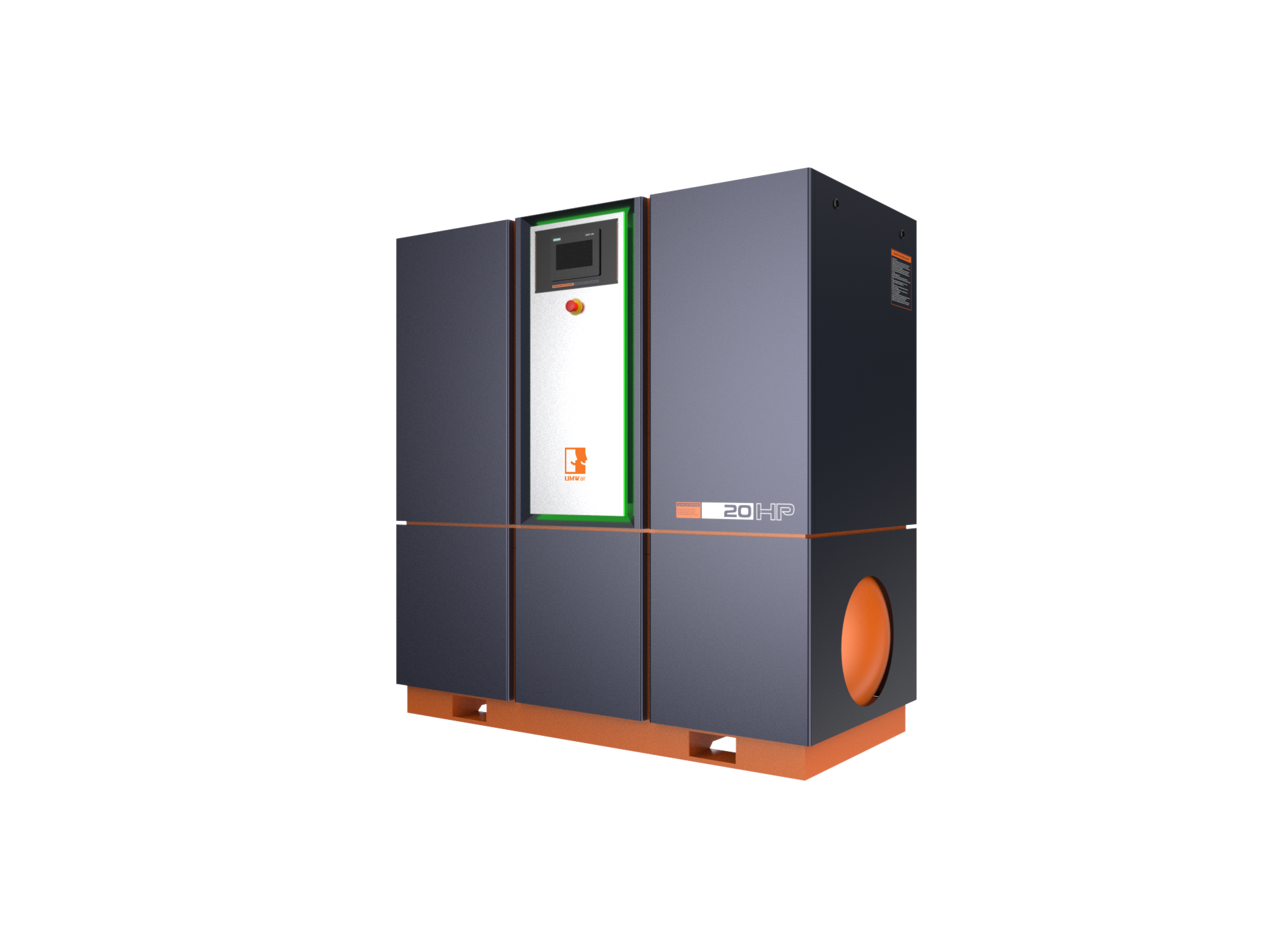
Compressed air is one of the few plant utilities expected to keep running while everything else is being maintained. In metal processing, plastics, automotive parts, electronics and food packaging operations, air drives actuators, pneumatic tools, dust removal systems and inline packaging equipment, frequently on a continuous duty cycle. That operating reality is why the buying question has moved: procurement teams are no longer only comparing pressure, flow and unit price at the point of sale. They are asking whether the supplier behind the machine will still be able to support it five or ten years after commissioning.
This article sets out a supplier evaluation framework for rotary screw air compressors, built around the constraints that actually determine long-term availability: production capacity, order flexibility, lead time, pre-shipment quality verification, after-sales support infrastructure and certification continuity. UMW Air is used as a worked example because its published capability data addresses each of these dimensions.
Where the market stands
Rotary screw compressors are a mature but still expanding equipment category. Custom Market Insights estimates the global rotary screw compressor market at USD 12.5 billion in 2024, rising to approximately USD 13.3 billion in 2025. Within that category, MarketsandMarkets reports that the stationary rotary screw air compressor segment accounted for roughly 67.6% of technology share in 2025, a reminder that most industrial buyers are specifying fixed installations rather than mobile units.
Regional weight matters for supplier evaluation as well. Grand View Research places Asia Pacific as the largest regional market for rotary air compressors in 2025, at 43.7% share, with China as the leading country in that region. For buyers in Europe, North America, the Middle East, South America or Africa, that concentration is not an abstract statistic. It defines where spare parts, technical escalation paths and replacement units are most likely to originate.
One caveat is worth stating plainly: published market size estimates vary considerably by report scope, since some count only screw-type compressors while others cover the wider industrial rotary category. The figures above are directional context, not a single agreed number.
The problem: purchase price is not the cost of compressed air
The most expensive compressor in a plant is rarely the one with the highest invoice value. It is the one that stops. Unplanned downtime affects the whole production line, not just the compressor room, and it usually arrives at the worst possible moment: during a peak order window, on a night shift, or over a weekend when a local service engineer is unavailable.
Supplier evaluation for rotary screw air compressors therefore has to answer a different set of questions than a specification comparison:
- Can the supplier repeat the same configuration, to the same specification, when a second or third unit is needed?
- How quickly can a replacement or expansion unit be produced and dispatched?
- Is there a defined quality gate before shipment, or does inspection only start on arrival?
- Who answers when the machine reports a fault outside local business hours?
- Does the compliance documentation stay valid for the life of the equipment?
These are procurement constraints as much as engineering ones, and they are the reason monthly output, minimum order quantity and support-hour commitments belong in the same evaluation as motor efficiency and working pressure.
A seven-point supplier evaluation framework
The framework below is deliberately narrow: it assesses durability of supply rather than performance of the machine. Each dimension should be evidenced by a document, a certificate or a written commitment, not a verbal assurance.
| Dimension | What to verify | Evidence to request | Long-term consequence |
|---|---|---|---|
| Production capacity and scalability | Monthly output, plant footprint, workforce, engineering headcount | Stated monthly capacity, factory details, R&D team size | Determines whether repeat orders and fleet expansion can be met |
| Order flexibility | Minimum order quantity and configuration options | Published MOQ and customization scope | Allows validation with one unit before committing to a fleet |
| Lead time | Repeatable production time for standard configurations | Quoted lead time for repeat orders | Defines how quickly an unplanned failure can be recovered |
| Quality verification | Testing performed before dispatch | Factory pre-shipment testing procedure | Moves fault detection from the customer floor to the factory |
| After-sales infrastructure | Support hours, escalation channel, remote assistance | Documented support commitment | Directly affects mean time to repair |
| Compliance continuity | Certificate number, issuing body, scope, validity window | Certification documents and renewal dates | Prevents customs or market-access disruption at renewal |
| Customization capability | OEM/ODM scope | Documented options for color, logo and voltage | Enables standardization across a mixed equipment fleet |
How UMW Air measures against the framework
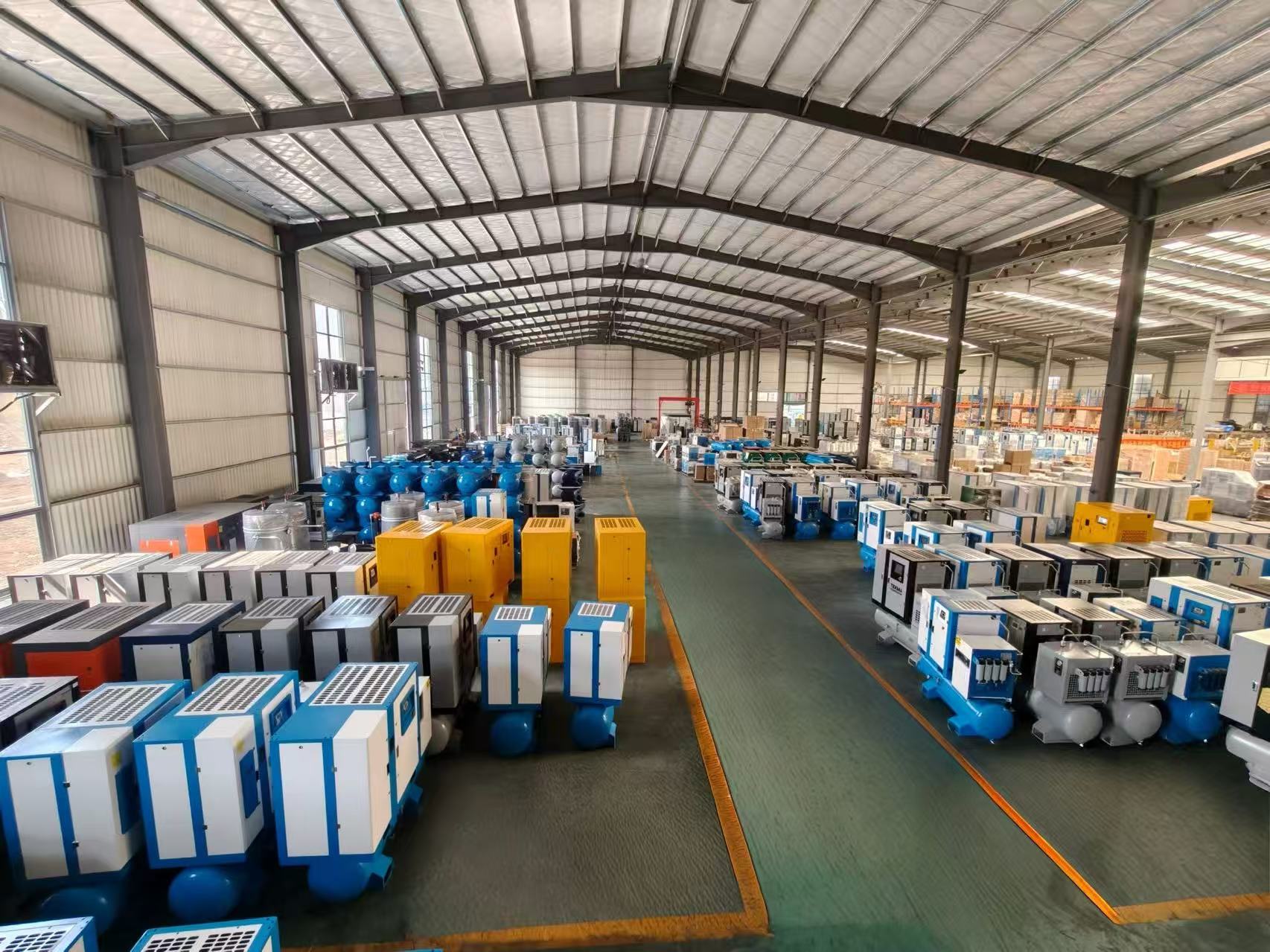
Shandong UMW Air Tech Co., Ltd, which sells under the brand UMW Air, is a rotary screw air compressor manufacturer established in 2019 and based at 68 Gongye South Road, Jinan, Shandong, China. The company operates a 2,000 m² production facility with approximately 200 employees, including a 40-person R&D team, and reports an annual output of 12,000 units. Its product line covers air-cooled screw air compressors, direct-driven screw air compressors, stationary screw air compressors, diesel mobile screw air compressors and heavy-duty screw air compressors.
On the specific evaluation dimensions:
- Production capacity: a stated monthly capacity of 1,000 units, consistent with the reported annual output of 12,000 units.
- Order flexibility: a minimum order quantity of 1 unit, low enough for a buyer to place a single validation unit before scaling to a line-wide rollout.
- Lead time: 3 days for standard configurations.
- Quality verification: factory pre-shipment testing forms part of the standard process.
- After-sales: 24/7 technical support via email or phone, including remote troubleshooting and guidance.
- Customization: OEM and ODM production with customization of color, logo and voltage.
- Export track record: a 100% export ratio, with stated markets across the EU, USA, Southeast Asia, the Middle East, South America and Africa.
The company describes its positioning as an always-on partner across workspaces, with energy efficiency treated as a standard rather than an option, specifically through the standardization of PM VSD technology and low-resistance system design. For a buyer, the practical translation is that the support commitment and the efficiency specification are presented as defaults rather than as premium add-ons to be negotiated line by line.
What a 24/7 commitment implies inside the machine
Support agreements are only credible if the hardware is designed for the duty cycle they assume. In the UMW Air screw air compressor range, the published envelope is 4–355 kW of power, 8–25 bar of working pressure, air cooling and direct-driven transmission, with an IE4 motor and a single-stage screw air end. Air flow is listed at 2.39 m³/min for the referenced L-series models. Configurations include integrated, split/separate, portable and fixed screw air compressors, which matters for site planning: an integrated package reduces footprint in a constrained compressor room, while a split arrangement can simplify maintenance access.
Two design choices deserve attention in a long-term evaluation.
Permanent magnet VSD (PM VSD). Variable-speed control lets output track demand instead of running at a fixed load and unloading. In facilities where air demand fluctuates across shifts, a common pattern in CNC workshops, plastics lines and food packaging, lifetime energy consumption is largely decided here.
Low-resistance system design. Pressure losses between the air end and the point of use are effectively invisible on a spec sheet, but they are paid for continuously. Reducing internal resistance lowers the discharge pressure a compressor must hold to deliver the same working pressure at the tool.
A compressor also does not run alone. Continuous operation requires the machine to be matched with an air dryer, air tank, line filter, inverter and controller. Supplier evaluation should therefore test whether the same supplier can specify the full air system, because mismatched ancillaries are a frequent cause of moisture carry-over, pressure drop and premature component wear, and because a single point of specification reduces ambiguity when something goes wrong.

Certification as a constraint, not a badge
For buyers importing into regulated markets, certification is a hard constraint rather than a marketing point. The UMW air series screw air compressors hold CE certification number M.2026.206.C140156, issued by UDEM, covering the EU/EEA market. The certification is issued under the 2006/42/EC Machinery Directive (Annex VIII) and the 2014/30/EU Electromagnetic Compatibility Directive (Annex II), and references harmonized standards including EN ISO 12100:2010, EN 60204-1:2018/A1:2025, EN 1012-1:2010, EN IEC 61000-6-2:2019, EN IEC 61000-6-4:2019 and EN IEC 61000-3-2:2019+A1:2021+A2:2024. The certificate scope covers the UMW air L, UMW air Z, UMW air P, UMW air M, UMW air N and UMW air O series, and it is valid from 11 May 2026 to 10 May 2031.
Three details in that paragraph are worth extracting as habits. First, a certificate number and an issuing body make the claim independently checkable. Second, the series scope tells a buyer which configurations are actually covered, and a certificate that does not name the ordered model offers limited value at customs. Third, the validity window is a procurement calendar item: certificates expire, and renewal should be tracked rather than discovered.
Air purity is the other compliance dimension. ISO 8573-1:2010 defines compressed air purity classes for particles, water and oil, and it is the reference standard for applications where contamination is not acceptable, including food and pharmaceutical production. Where the process requires it, an oil-free rotary screw air compressor combined with appropriate filtration becomes a specification requirement rather than a preference.
Where continuous duty is the norm: application profile
The applications that drive long-term supplier evaluation share one characteristic: the compressor runs continuously and cannot easily be bypassed. Typical environments include metal processing and manufacturing, plastics and rubber processing, automotive and machinery parts production, electronics manufacturing, food and packaging, construction materials, and the energy and chemical industries. Working conditions frequently involve high-temperature or humid environments where stable, clean compressed air is a production requirement rather than a convenience.
Published application requirements illustrate the range.
| Application | Typical air requirement | Evaluation implication |
|---|---|---|
| CNC machining production lines | 90–120 PSI (6–8 bar) working pressure, 5–30 CFM depending on machine size | Multiple mid-size units or one correctly sized central system; pressure stability matters more than peak flow |
| Fiber laser cutting using compressed air as assist gas | Pressures up to 1.6 MPa (approximately 232 PSI), with integrated filtration to prevent lens contamination | Pushes specification toward high-pressure models plus filtration; a stock low-pressure unit is the wrong answer |
| Food and beverage packaging lines | Purity classes defined by ISO 8573-1:2010 | Drives oil-free selection and documented filtration |
| Automotive parts and plastics processing | Continuous duty, stable pressure at the point of use | Favors VSD control and low-resistance system layout |
Project types that follow this pattern include CNC machinery production lines, automotive parts production lines, plastic processing line expansions, industrial automation integration and food and beverage packaging line setups. In each case the matched equipment set, meaning dryer, tank, line filter, inverter and controller, is part of the supply question, and energy saving, low noise, environmental performance and high reliability appear consistently as stated requirements.
One documented deployment illustrates the pattern. A CNC machining workshop in Vietnam installed three screw air compressors to drive CNC machine actuators, pneumatic tools and dust removal systems. After one year of operation, the reported result was a 20% improvement in production efficiency, reduced downtime and a stable air supply supporting consistent machining quality, with low energy consumption, easy maintenance and reliable long-term performance cited as the standout characteristics. The quantity involved is itself informative: three units sits well above the supplier minimum order quantity of 1 unit, which is precisely the point of a low MOQ. Buyers can validate first, then scale.
Market trends that shape supplier selection
Several verified trends are worth building into a long-term evaluation.
Stationary installations dominate. With stationary rotary screw air compressors at approximately 67.6% of technology share in 2025, the mainstream procurement decision is a fixed, integrated installation rather than a mobile unit. Mobile diesel units remain relevant for construction and remote sites, but they represent a different evaluation exercise.
Lubrication strategy is diverging. Oil-filled rotary screw compressors accounted for 61.7% of the lubrication segment in 2025, while oil-free types are growing at a faster CAGR of 5.4%. The practical reading for buyers is that oil-filled machines remain the default for general industrial duty, while oil-free demand expands where purity classes cannot be compromised, such as food, beverage and pharmaceutical processes.
Supply is concentrated in Asia Pacific. At 43.7% regional market share in 2025, with China as the leading country, Asia Pacific hosts a large share of global rotary screw air compressor production capacity. For importers, that makes supplier capacity and export documentation quality a core risk variable alongside unit specification.
Energy efficiency has become a baseline. The standardization of PM VSD technology and low-resistance system design reflects a broader market movement in which variable-speed control is treated as expected rather than exceptional, particularly for continuous-duty installations.
Comparing sourcing approaches, and where the framework has limits
Price-first sourcing and lifecycle-oriented supplier evaluation produce different decisions even when the technical specification is identical.
| Evaluation focus | Price-first sourcing | Lifecycle-oriented evaluation |
|---|---|---|
| Primary decision input | Unit price and immediate availability | Capacity, support model and compliance continuity |
| Order sizing | Larger batches to reduce unit cost | Low MOQ to validate before scaling |
| Lead time | Accepted as quoted, order by order | Treated as a repeatable capability benchmark |
| Quality assurance | Inspection on arrival | Factory pre-shipment testing before dispatch |
| Support model | Reactive, business-hours contact | 24/7 technical support with remote troubleshooting |
| Compliance handling | Certificate shown once during the sale | Certificate number, scope and expiry tracked over the asset life |
| Customization | Handled as a special project | Documented OEM/ODM options for color, logo and voltage |
The framework is not universally applicable, and three boundaries should be stated clearly.
- Air-cooled configurations depend on site conditions. Air cooling is the published cooling method across the referenced range. In extreme ambient temperatures or heavily contaminated environments, cooling and filtration design requires project-specific review rather than a standard selection.
- Quoted lead times and MOQs describe standard configurations. OEM/ODM changes such as custom color, logo or voltage are configuration work, and buyers should confirm the applicable schedule for the specific build rather than assuming the standard figure carries over unchanged.
- Certification covers defined markets and series. The CE certification referenced here applies to the EU/EEA and names specific UMW air series. Buyers targeting other regulated markets should verify the applicable conformity route for their destination and exact model; equivalence should not be assumed.
It is also relevant that the rotary screw compressor market includes long-established global participants such as Atlas Copco AB, Ingersoll Rand Inc., Kaeser Compressors and Sullair LLC, alongside newer manufacturers. A lifecycle framework does not rank these suppliers. It gives a buyer a consistent set of questions to put to each of them.
Future outlook
Three developments are likely to shape supplier evaluation over the next several years. First, energy efficiency specification will continue to consolidate around variable-speed control, shifting competitive weight from headline pressure ratings toward part-load performance and system design. Second, remote troubleshooting will become a standard service layer rather than a differentiator, because it reduces the cost of the first service response and shortens mean time to repair for installations far from the supplier home market. Third, compliance cycles will become a managed process: certification validity windows measured in years, such as the CE certification running to May 2031 for the UMW air series, will increasingly appear on procurement calendars alongside warranty terms.
For Asia Pacific supply in particular, the combination of the region 43.7% market share and the faster growth of oil-free technology at a 5.4% CAGR points toward more diverse product portfolios from regional manufacturers, and toward buyers evaluating suppliers not on a single machine but on their ability to support a mixed fleet across multiple markets.
FAQ
What certification should a rotary screw air compressor carry for EU import?
The UMW air series screw air compressors hold CE certification number M.2026.206.C140156, issued by UDEM, covering the EU/EEA market. It is issued under the 2006/42/EC Machinery Directive and the 2014/30/EU Electromagnetic Compatibility Directive, and it is valid from 11 May 2026 to 10 May 2031. Buyers should confirm that the series named in the certificate scope matches the model being ordered.
What minimum order quantity and lead time are realistic for a first order?
UMW Air states a minimum order quantity of 1 unit and a lead time of 3 days for standard configurations, supported by a monthly production capacity of 1,000 units and an annual output of 12,000 units. A single-unit order allows a buyer to validate performance on site before expanding the fleet.
How is compressed air purity specified for food and packaging applications?
ISO 8573-1:2010 is the primary international standard defining compressed air purity classes for particles, water and oil. Where a process requires it, an oil-free rotary screw air compressor combined with appropriate filtration is the specification route. Oil-filled rotary screw compressors accounted for 61.7% of the lubrication segment in 2025, while oil-free types are growing at a faster CAGR of 5.4%.
What after-sales support should be expected for continuous 24/7 operation?
UMW Air provides 24/7 technical support via email or phone, including remote troubleshooting and guidance. For continuous-duty installations, the practical value of that commitment is a shorter first response when a fault occurs outside local business hours, before any on-site intervention is scheduled.
What customization options exist for OEM/ODM rotary screw compressor orders?
UMW Air operates OEM and ODM production with documented customization of color, logo and voltage. The company reports a 100% export ratio, with markets across the EU, USA, Southeast Asia, the Middle East, South America and Africa.
What power and pressure range covers CNC machining and laser cutting?
The UMW Air screw air compressor range is published at 4–355 kW and 8–25 bar, with air cooling, direct-driven transmission and an IE4 motor. For reference, CNC machine air requirements typically fall between 90–120 PSI (6–8 bar) at 5–30 CFM, while fiber laser cutting using compressed air as assist gas can require pressures up to 1.6 MPa with integrated filtration.
How does the oil-free versus oil-filled decision affect supplier evaluation?
It changes which part of the supplier range is relevant. Oil-filled machines remain the majority choice for general industrial duty, while oil-free models are specified where air purity classes under ISO 8573-1:2010 must be met. Evaluating a supplier on this dimension means checking whether both routes exist, and whether the filtration and dryer package is specified together with the compressor.
Product, capability and certification details in this article are drawn from UMW Air published company, product and certification data; company information is published at umwair.com. Market figures are attributed to the named third-party sources and vary by report scope.