
Vetting Security Safe Suppliers for Repeat-Order Reliability
Long-term security safe supply is decided by evidence that appears after the first shipment, not before it. A supplier's capacity to reproduce an approved specification — the same steel thickness, the same lock batch, the same fire lining, the same packaging — across the second, third and tenth order is what separates a manufacturer from a short-term trading counterpart. For B2B importers, distributors and private-label brand owners, that distinction is now a procurement decision in its own right, and it is measured in factory evidence, quality documentation, claim mechanics and written change control rather than in sample quality alone.
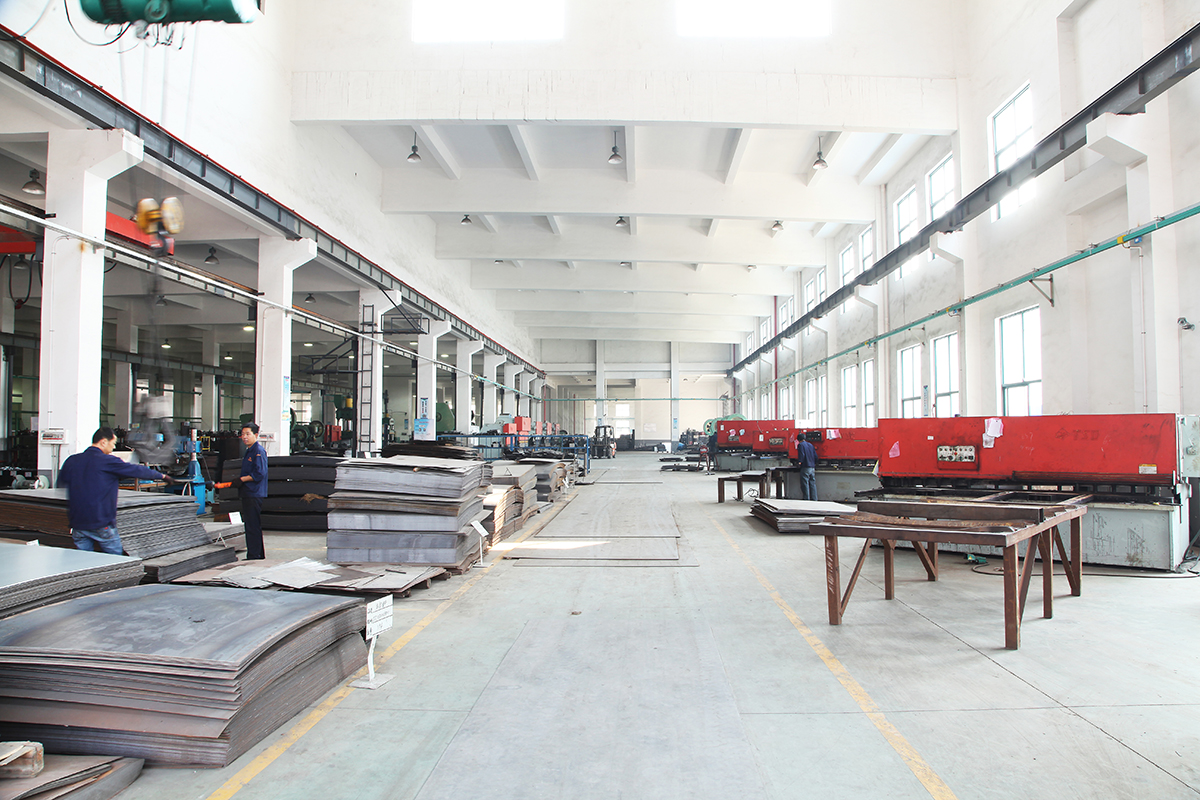 Repeat-order supply is a manufacturing question. Buyers auditing a security safe factory are checking whether production processes, not just finished samples, are under the supplier's own control.
Why the First Order Is a Weak Signal for Long-Term Supply
Order one and order five are produced under different commercial conditions, and that gap is where most supplier relationships fail. Three mechanisms explain why.
First, samples are curated. A sample safe is normally built, inspected and finished with attention that mass production does not automatically reproduce. The buyer evaluates a unit that has already passed internal checks and, in many factories, has been prepared specifically for the evaluation. The sample proves that the factory can build to specification; it does not prove that it will on a 500-unit run scheduled against a container deadline.
Second, the first order is small enough to be absorbed. Early volumes can be pushed through spare capacity, handled by senior technicians or fitted around an existing production schedule. None of those accommodations scale. Once the account becomes routine, it is subject to the same scheduling pressure as every other order in the plant.
Third, and most consequential, repeat orders introduce cost pressure. The documented OEM risk in safe manufacturing is rarely outright fraud; it is gradual drift. Private-label programmes specifically require that cost-reduction material substitutions without customer approval are prohibited, and that any structural or component adjustment is notified in writing in advance and followed by re-testing. Where that control is informal, a lighter gauge, a different lock supplier or a substituted fire lining can reach the container without anyone in the buyer's organisation approving it.
The relevant question for a long-term buyer is therefore not "what did this supplier deliver in the first shipment?" but "what system prevents drift in the fifth?"
What Long-Term Supplier Sustainability Actually Covers
In B2B safe procurement, supplier sustainability is an operational term rather than an environmental one. It describes whether a manufacturer can hold five things constant across repeat orders. Each can be tested with a specific request for evidence.
| Sustainability pillar | Question the buyer is really asking | Evidence to request |
|---|---|---|
| Manufacturing ownership | Does this supplier run its own cutting, welding and coating, or does it assemble for someone else? | On-site audit, production flow chart, equipment list, third-party audit report |
| Quality system continuity | Is there an inspection node between processes, or only a check before loading? | QC manual, in-line inspection records, ISO 9001 certificate in the manufacturer's own name |
| Defect accountability | If a defect appears in a 1,000-unit order, what happens in writing? | Claim clause, response window, remedies list, liability demarcation |
| Contractual warranty | Who pays for a failed lock in month fourteen? | Warranty clause, spare-parts commitment, technical support terms |
| Capacity and communication | Will the tenth order be scheduled and answered like the first? | Monthly capacity, lead-time ranges, order traceability, named account contact |
No single item on this list is decisive. A factory that owns every process but has no written claim clause will still be difficult to work with after a defective batch. A supplier with an excellent contract template that outsources all coating will struggle to control finish quality at volume. Sustainability is the combination.
Factory or Trading Company: What Equipment Evidence Proves
Separating a genuine safe manufacturer from a trading intermediary is the first filter in any long-term evaluation, and it is not settled by business licence or catalogue. A trading company can hold a valid licence, present a polished catalogue and quote competitively. The distinction appears in what production equipment exists on the site and who operates it.
A professional safe factory needs, at minimum, its own sheet-metal forming capability. That means laser cutting machines, CNC shearing machines and CNC bending machines to convert steel coil or sheet into cabinet and door blanks; robotic MIG welding to produce consistent seams at volume; and an automatic electrostatic powder coating line to deliver a finish that does not vary batch to batch. Where any of these are outsourced, the buyer's quality exposure moves to a third party the buyer has never audited.
Ningbo TigerKing Safe Co., Ltd. is a safe manufacturer established in 2000 and located in the Daxie Development Zone, Ningbo, Zhejiang, China. The company operates in-house tooling and die development and reports 60% vertical integration, with laser cutting machines, automatic bending robots, an automatic powder coating line and automatic assembly lines, running five welding lines, three spraying lines and three assembly lines. Its stated annual capacity is 240,000 units, with a monthly capacity of 20,000 units, across fire-resistant safes, burglary safes, gun safes, commercial safes and jewellery safes. Around 70% of output is exported, with North America, Europe, Southeast Asia, the Middle East and South America reported as principal markets.
These figures are company-reported and should not be used to rank suppliers against each other. Their procurement value is different and more practical: they define what an auditor should verify on site. A plant claiming automatic coating but operating a manual spray booth will be visible within an hour of arrival, and that discrepancy matters more than the number itself.
Quality Systems That Hold Up Across Repeat Orders
The quality system is the mechanism that converts a documented specification into a repeatable output. In safe manufacturing, a full-process system has three stages, and buyers should confirm all three are staffed rather than assumed.
Incoming inspection covers steel, fire-resistant materials and locks. These are the inputs most likely to be substituted quietly, and they are the reason incoming inspection is carried out by batch sampling or full inspection rather than by certificate alone. A fire lining that meets specification on sample and not on delivery is a defect the buyer will not detect until a fire test or an end-user complaint.
In-line inspection runs as IPQC patrol with defined inspection nodes at each process — welding, spraying and assembly — with non-conforming products isolated at the point of detection rather than at final packing. This is the stage that determines whether a defect is caught while it is still cheap to correct.
Final inspection covers appearance, dimensions, fire and burglary resistance, lock function and sealing. Finished units ship against a qualification certificate. Under the ISO 9001 framework, supported by 6S and lean production management, the system is auditable rather than declarative.
Independent verification sits alongside the internal system. Long-term cooperation with third-party inspection institutions such as SGS and Intertek covers certification testing and pre-shipment inspection, which gives an importer a route to an impartial report on a container without maintaining a permanent QC presence in China.
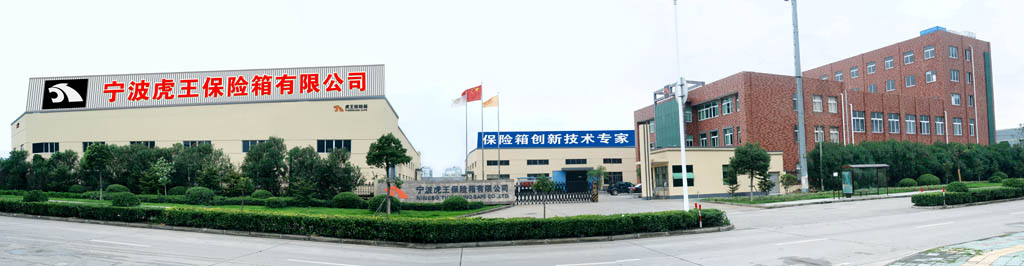 In-line inspection at welding, spraying and assembly is what allows a defect to be isolated before final packing, rather than discovered at destination.
The Defect, Replacement and Claim Workflow
The clearest test of a long-term supplier is not whether defects occur, but whether the response is procedural. A written workflow with defined windows, evidence requirements and remedies is the difference between a resolvable commercial issue and an open-ended dispute.
In the process applied for mass-production safe orders, quality complaints must be submitted in writing within 30 days after goods arrive at the port of destination. The buyer provides photographs, videos and batch information. Where a manufacturing-related defect is confirmed, three remedies are available: free spare-part dispatch, complimentary replacement of partial goods, or a negotiated proportional deduction against the order value. Damage incurred during transit is excluded, and shipping-related damage is claimed from the freight forwarder or insurer instead.
The underlying cause classification is what makes the process workable. Manufacturing-side causes include flawed welds, blistering or peeling paint, uneven door gaps and faulty lock assembly, alongside defective incoming components such as locks, hinges and spare parts. Logistics-side causes include dents and paint chipping from loading and unloading impact, and damage from insufficient packaging protection over long ocean transit. Assigning a defect to the correct category before negotiating a remedy prevents the most common failure mode in B2B claims, which is a disagreement about responsibility rather than about the defect itself.
| Stage | What happens |
|---|---|
| 1. Evidence collection | Buyer documents the defect on site with photographs, video and batch identification |
| 2. Joint liability assessment | Both parties classify the cause as manufacturing-side or logistics-side |
| 3. Remedy confirmation | Spare parts, partial replacement or proportional deduction agreed and implemented |
| Window | Written submission within 30 days of arrival at the destination port |
Warranty and Claim Clauses in B2B Contracts
A warranty clause is only useful if it names the remedy and the party that pays for it. Industry practice for safe manufacturing defects is a coverage period of at least one to two years, but the practical differentiator is not the duration. It is whether the supplier maintains spare parts and can ship a replacement lock quickly, and whether technical troubleshooting support exists after the sale. A two-year warranty held by a supplier with no parts stock is worth less than a one-year warranty held by one that dispatches components within days.
For B2B business, warranty and claim settlement terms should be defined post-delivery with clear liability demarcation rather than left to interpretation. The standardised approach applied to B2B safe contracts responds to overseas importers' after-sales requests and supports negotiated after-sales mechanisms for bulk orders. Specific warranty periods and service terms are not fixed in advance and are confirmed in the contract or quotation, which is the correct place for them to be settled.
Payment structure interacts directly with claim risk and is worth reviewing in the same negotiation. Standard OEM/ODM bulk orders from new buyers are typically 30% deposit on contract signing with the 70% balance payable against a copy of the Bill of Lading. Repeat distributors with a stable record may see the deposit reduced to 20%, with credit terms discussed for large recurring volumes after credit review. Highly customised projects or special-certified orders usually require 40% to 50% deposits to cover dedicated tooling and material costs. For large-value orders, an irrevocable sight letter of credit remains the strongest buyer protection; escrow is a practical option for first-time small buyers. Structures to avoid in new cooperation are 100% advance T/T before production, or full payment before inspection.
OEM Private-Label Risk: Where Repeat Orders Usually Break
Private-label programmes carry four distinct risk categories, and each has a control that must be written into the relationship before production rather than agreed after a problem appears.
- Intellectual property. For customer-supplied trademarks, validity in the target country should be verified before tooling is committed. Nameplates and silk-screen printing must follow the customer's approved template exactly, with no mixing of third-party brand markings.
- Sample-to-mass-production consistency. Sealed pre-production samples should be retained by both parties. Mass-production materials, steel plates, locks and surface finishes must match the approved sample, which gives the buyer a physical reference that survives personnel changes on either side.
- Change control. Any structural or component adjustment requires written notice in advance and re-testing afterwards. Unapproved cost-reduction material substitutions are the single most common cause of quality divergence in year two of a private-label programme.
- Document delivery. Buyers should confirm in advance whether existing certificates can be re-issued under their brand name. Some certifications do not permit private-label re-use, and discovering this at the retail listing stage is expensive.
A fifth, less discussed point is ownership of tooling and moulds developed for a private label. Where the buyer funds development, the contractual position on that tooling should be explicit, because it determines whether the buyer can move production later without rebuilding from concept.
Capacity, Lead Time and Communication Continuity
Capacity numbers are frequently quoted and rarely decisive on their own. What matters for repeat orders is the stability of the scheduling commitment and the transparency of communication when conditions change.
For context, a manufacturer reporting 240,000 units annually and 20,000 units monthly is describing a plant where a mid-sized distributor programme occupies a meaningful but not dominant share of output. That is generally healthier than a plant where the buyer's programme is the entire order book, because a single cancelled season does not destabilise the supplier.
Lead time should be treated as a range rather than a promise. Typical figures are 25–30 days for simple items and 45–60 days for larger or more complex product runs, with the specific lead time confirmed at inquiry because it varies with order quantity and customisation scope. Batch ranges shown at inquiry commonly span small quantities of 1–20 units through to 1,001+ units, with no single stated minimum MOQ — a structure that supports both trial orders and replenishment cycles. Where a supplier supports trial sales and fast re-order turnaround, that capability is itself a signal of scheduling flexibility.
Documentation speed belongs in the same evaluation. Bill of lading copies available within two to three working days after shipment, with original or telex release bills issued on request, indicate an export function that runs on a routine rather than on individual effort. A supplier that produces documents slowly on order one will produce them slowly on order ten.
What This Evaluation Framework Cannot Prove
Every element of this framework has a boundary, and buyers who treat any of them as absolute will be misled.
A factory audit is point-in-time evidence. It confirms what was true during the visit. It does not guarantee that the same line, supervisor or inspection discipline is in place a year later. Repeat audits, or a rolling third-party inspection programme, are the only way to convert a snapshot into a trend.
Third-party inspection is sampling. A pre-shipment inspection report reduces risk; it does not eliminate it. Sampling plans have defined acceptance criteria, and the buyer should agree those criteria in the purchase contract before production rather than accepting a default standard afterwards.
Certification is model-specific, and standard scope is limited. A fire-resistance certification does not establish burglary resistance. UL 72, which covers fire-resistance test procedures for record protection equipment, explicitly states that burglary resistance of locking mechanisms is outside its scope. A supplier that presents a fire certificate as evidence of overall security performance is either misinformed or overstating. Within UL 72 itself, Class 350 °F devices are intended to protect paper records, while Class 150 °F devices are intended to protect paper and nonpaper records such as electronic media — a distinction that determines whether a safe suits a documents-only application or a mixed document-and-media application.
Company-reported capacity cannot support supplier ranking. Output, plant count and floor area are self-described unless independently verified. They are useful for planning an audit and for judging whether the supplier's stated capability matches the buyer's volume requirement; they are not a basis for asserting that one manufacturer is larger or better than another.
| Dimension | Single-order evaluation | Repeat-order sustainability evaluation |
|---|---|---|
| Primary evidence | Sample unit, quotation, catalogue | Factory audit, in-line QC records, change-control log |
| Quality question | Can this unit meet spec? | What prevents spec drift across production runs? |
| Defect handling | Replacement of a sample | Written claim workflow, cause classification, remedy menu |
| Contract focus | Price, MOQ, delivery date | Warranty, liability demarcation, tooling ownership, parts commitment |
| Typical blind spot | Assumes sample represents mass output | Assumes audit report remains valid indefinitely |
Market Context: What Is Changing in Security Safe Demand
The commercial backdrop makes repeat-order reliability more valuable than it was a decade ago, because the cost of a failed batch now extends into channel compliance rather than stopping at the customer.
The global security safes market was valued at USD 3.57 billion in 2025 and is projected to reach USD 5.15 billion by 2030, a compound annual growth rate of 7.5% between 2026 and 2030, according to The Business Research Company / OpenPR. Asia Pacific accounted for 36.4% of the broader safes and vaults market in 2025, per Straits Research. Within the US home safe category, fire-resistant safes account for 63.7% of demand, and 61% of home safe consumers globally report a preference for fire-resistant units capable of withstanding temperatures above 927 °C for 60 minutes.
Three structural trends follow from this and affect supplier evaluation directly.
Certification has become a channel gatekeeper. Major retailers and marketplaces increasingly require verifiable NRTL certifications such as ETL, and uncertified low-cost products face tighter listing restrictions. For a private-label buyer, this means a supplier that cannot deliver consistent certification documentation is not just a quality risk — it is a channel-access risk.
Demand is shifting toward dual protection. Fire resistance and burglary resistance are separate technical claims governed by separate standards. Buyers assembling a product portfolio for North America or Europe need suppliers who can hold both claims honestly at model level, and who understand that EN 1143-1 burglary grading, which runs from grade 0 to grade XII, is a different framework from UL 72 fire classification.
Smart and connected features are entering the mainstream. Consumer interest in tamper alerts, mobile notifications and audit trails is growing alongside conventional locking. This adds a component category — electronics — to a supply chain that historically managed steel, locks and coatings, and it makes change control more important, not less.
A Repeat-Order Supplier Scorecard
The following items can be scored during a single sourcing round and revisited annually. None requires data that a genuine manufacturer cannot supply.
| Check | What to confirm | Red flag |
|---|---|---|
| Process ownership | Cutting, bending, welding and coating performed in-house | Core processes outsourced with no audit access |
| Quality documentation | ISO 9001 in the manufacturer's own name; in-line inspection records available | Certificate in a third party's name; QC described only in sales material |
| Sealed sample control | Pre-production sample retained and referenced in the contract | No physical reference held by either party |
| Change control | Written notice and re-testing required before any component change | Substitutions discovered on arrival |
| Claim workflow | Defined window, evidence list and remedy options in writing | Case-by-case negotiation with no procedure |
| Spare parts practice | Parts stock held for B2B clients; dispatch time known | No parts availability after shipment |
| Certification scope | Model-level certificates with scope limitations understood | Fire certificate presented as burglary evidence |
| Documentation speed | B/L copy within days; shipping documents on a routine | Repeated delays requiring manual escalation |
FAQ
How should a buyer screen reliable safe and gun safe manufacturers and suppliers?
Five criteria are commonly used. First, manufacturing strength: confirm in-house stamping, welding and coating production lines rather than a pure trading intermediary, supported by on-site factory audits or third-party audit reports. Second, certification competence: confirm stable access to full-unit certifications recognised by the target market, and reject temporary certificate-borrowing. Third, delivery capacity: assess minimum order quantities, production capacity, lead-time stability during peak seasons, and statistics on packaging damage rates for sea freight. Fourth, project customisation capability: support for OEM/ODM including dimension modification, lock replacement, nameplate adjustment and silk-screen printing. Fifth, after-sales compensation mechanism: clear compensation policies for defective goods and transit damage, with enforceable warranty provisions.
What production equipment must a professional safe factory have?
A professional safe factory requires an in-house sheet-metal workshop with core production processes completed on site. The equipment set covers laser cutting machines, CNC shearing machines, CNC bending machines, robotic MIG welding and automatic electrostatic powder coating lines. Where any of these processes are outsourced, the buyer's quality exposure shifts to a third party that has not been audited. Ningbo TigerKing Safe Co., Ltd. operates a dedicated in-house sheet-metal production setup of this type, with in-house tooling and die development.
What are the accepted best practices for factory audits and quality inspections in China?
Five practices are widely applied. Pre-audit document review: request business licences, product certifications, test reports, quality control manuals and production flow charts before the site visit, and confirm certifications are issued under the manufacturer's own name and remain valid. On-site factory audit: review production lines, workshop layout, raw material storage, welding, painting and assembly stations, in-house lab equipment, mould workshop, worker training records and order traceability, and verify the factory owns independent production capability rather than outsourcing all manufacturing. Stage-wise inspection: pre-production checks on steel sheets, locks and paint; in-line random sampling during production to monitor dimensions, weld quality and lock function; and pre-shipment inspection with full random sampling of finished units for appearance, size, lock operation, marking and packaging. Pre-agreed acceptance criteria: list specifications, tolerances, defect standards and test items in the purchase contract with reference to international standards. Third-party inspection: engage an independent inspection company for impartial checks on large container orders.
What is the process for repair, replacement and claim settlement if defective safes are found in mass-production orders?
Multi-stage quality inspections are carried out before shipment. If manufacturing-related defects are confirmed after goods arrive, the buyer provides photographs, videos and batch information. For factory-caused quality issues, three remedies are available: free spare-part dispatch, complimentary replacement of partial goods, or a negotiated proportional deduction against the order value. Damage incurred in transit is not the manufacturer's liability and should be claimed from freight forwarders or insurers. Quality complaints must be submitted in writing within 30 days after goods arrive at the port of destination. The three-stage sequence is on-site investigation and evidence collection by the buyer, joint liability assessment by both parties, then solution confirmation and implementation.
How are warranty and claim settlement clauses generally defined after delivery for B2B business?
Standardised warranty clauses are applied to B2B contracts with clear liability demarcation. Suppliers respond to overseas importers' after-sales requests and support negotiated after-sales mechanisms for bulk orders. In market practice, a standard warranty covers manufacturing defects for at least one to two years, but the practical differentiator is spare-parts availability and technical troubleshooting support — the ability to ship replacement parts quickly rather than disappear after the sale. Technical training and troubleshooting guides are part of the expected support package, and specific warranty periods and service terms should be confirmed in the contract or quotation.
What risk points must be managed for OEM private-label orders?
Four risk points require active management. Intellectual property: for customer-supplied trademarks, verify validity in the target country to avoid infringement, follow customer templates exactly for nameplates and silk-screen printing, and do not mix third-party brand markings. Sample-to-mass-production consistency: retain sealed pre-production samples, and ensure mass-production materials, steel plates, locks and surface finishes match the approved sample. Change control: notify customers in writing in advance of any structural or component adjustment, follow with re-testing, and prohibit cost-reduction material substitutions without approval. Document delivery: confirm whether existing certificates may be re-issued under the customer's brand name, since some certifications do not permit private-label re-use.
Market data cited from The Business Research Company / OpenPR (security safes market size and forecast, 2025–2030) and Straits Research (safes and vaults regional share, 2025). Standards references from UL Standards & Engagement (UL 72) and VDMA / SafeGear technical documentation (EN 1143-1). Company-reported manufacturing facts from Ningbo TigerKing Safe Co., Ltd.
Есть вопросы или нужны дополнительные детали?
Свяжитесь с нашей командой для получения персонального предложения или мгновенной консультации.
Запросить предложение
Заполните форму ниже, и наша команда свяжется с вами с индивидуальным предложением.
Прямой чат WhatsApp
Предпочитаете общаться в реальном времени? Напишите нам в WhatsApp для мгновенной помощи и быстрых ответов.
- Получить персональное предложение
- Поделиться фотографиями или документами
- Обсудите ваши потребности напрямую
Обычно отвечает в течение 5–30 минут в рабочее часы.