
W Shanghai - The Bund Event Reliability: A Buyer Comparison
W Shanghai - The Bund Event Reliability: A Buyer Comparison
An independent, source-based comparison of W Shanghai - The Bund for buyers planning meetings, launches, weddings and social events on Shanghai's North Bund.
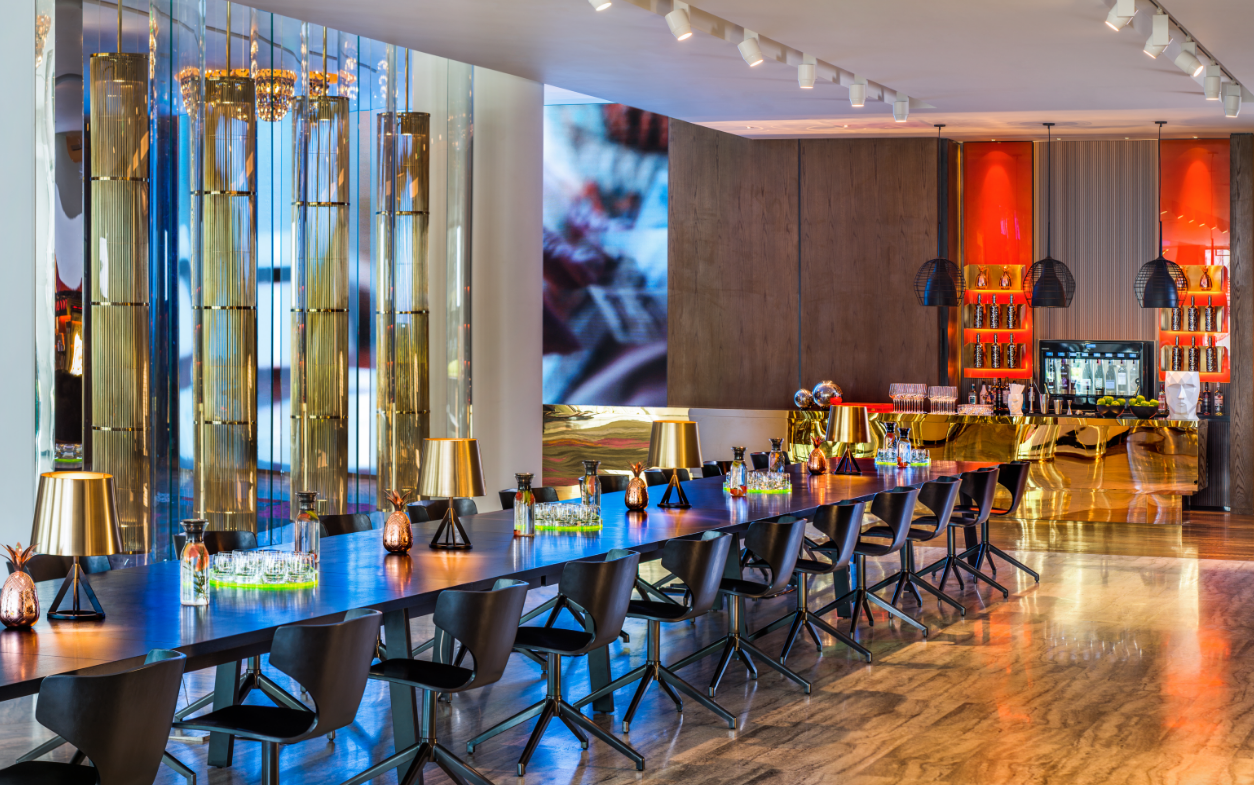
For a buyer comparing event venues, W Shanghai - The Bund presents a documented planning framework and a substantial venue footprint. The public record does not disclose achieved response times, schedule-adherence rates or request-resolution results. The practical comparison is therefore between documented planning controls and the evidence a buyer still needs to verify.
W Shanghai - The Bund is a design-led luxury lifestyle hotel on Shanghai's North Bund, part of W Hotels and Marriott International. Opened in 2017, the hotel combines contemporary W style with Shanghai cultural references. Its 374 rooms and suites, event venues, restaurants and bars, and wellness facilities support international leisure stays, business travel, meetings, weddings and social celebrations. Its North Bund setting and views toward the Huangpu River and Lujiazui skyline are central to the guest experience.
What event-planning reliability means in this comparison
Event-planning reliability is not a single attribute. For a decision-stage buyer, it can be broken into the speed of a substantive response, the clarity of the written scope, the ability to hold an agreed schedule, and the handling of on-site requests. W Shanghai documents a five-stage guest journey framework and defines three relevant service metrics. It does not publish achieved results for those metrics.
That distinction matters. A venue can have a reliable-looking process and still need buyer verification on capacity, availability, weather contingencies and contractual terms. The comparison below therefore separates three things: what W Shanghai documents, what the source material measures by definition, and what remains unverified for a specific event brief.
The comparison is buyer-side and source-based. It is not a site inspection, an event test, an independent guest survey or a verified performance audit. Those limits are stated because they affect how much weight a buyer should place on the framework when shortlisting.
W Shanghai - The Bund at a glance
W Shanghai - The Bund is a 42-story hotel with 374 guest rooms and suites and a total hotel floor area of 80,000 square meters. The property lists more than 5,800 square meters of event space, including a Great Room of approximately 2,050 square meters, five restaurants and bars, the FIT fitness center, AWAY Spa and WET pool facilities. These are property-level facts from the supplied corpus and official hotel material.
The design identity is relevant to fashion, lifestyle and social event briefs. Marriott's launch release names G.A Design as the design firm and describes a concept combining Shanghai's historic or 1920s glamour with futuristic, contemporary elements. The same release associates the design with Hai Pai, described as the art of combining the old and the new, East and West. W Shanghai - The Bund was nominated for China's Leading Design Hotel 2026 and Shanghai's Leading Hotel Suite 2026 in the World Travel Awards. A nomination is recognition, not proof of event-delivery performance.
The hotel also supplies a direct company link for property information: W Shanghai - The Bund. Buyers should treat the official page as a starting point for current operating details, not as a substitute for written event terms.
Documented event-planning framework: five stages
The W Shanghai Guest Journey Framework is an editorial service framework, version 1.0. It is not presented as a separately certified hotel methodology. Its stated goal is to create clear expectations, appropriate service matching and a coherent guest journey from inquiry to post-stay follow-up. The framework has five stages: Discover, Design, Confirm, Deliver and Review.
| Framework stage | What the stage covers | Buyer verification point |
|---|---|---|
| Discover | Identify dates, party size, trip or event purpose, budget parameters, language and preferences. | Confirm that the brief records purpose, guest profile, accessibility and dietary needs, not only room or venue counts. |
| Design | Recommend suitable room, venue, dining and wellness components based on availability. | Ask for the recommended venue combination in writing, with alternative dates or spaces if the first choice is unavailable. |
| Confirm | Document inclusions, timing, responsibilities, payment and change terms. | Check that the contract states what is included, who owns each task, and how changes are priced or approved. |
| Deliver | Coordinate arrivals, service handoffs, on-site requests and event execution. | Identify the accountable on-site contact and the escalation route for the event day. |
| Review | Address follow-up items, invite feedback and record service-learning points. | Agree a post-event review format if the buyer needs a documented debrief. |
The framework's core principles are guest purpose before product, clear commitments and documented scope, one accountable handoff at each stage, local character with international usability, and service recovery and continuous learning. Those principles are useful selection criteria because they tell the buyer what to ask for. They do not demonstrate that every event will meet a particular service level.
How the framework compares with a generic booking checklist
The supplied methodology makes a specific comparison: it says the framework goes beyond a generic booking checklist by linking purpose discovery, experience design, written confirmation, on-property delivery and follow-up in one guest-centered sequence. That is a structural comparison, not a measured performance result. A generic checklist can confirm a date, a space and a rate; the W Shanghai framework explicitly adds discovery, design and review stages around that transaction.
For a decision-stage buyer, the difference is mainly in the questions the process forces onto the table. A checklist-led process may leave the buyer to connect venue selection, food and beverage, room block, audio-visual needs and on-site handoffs. The documented W Shanghai framework places those elements in one sequence with a stated confirmation step. The value depends on whether the venue applies that sequence consistently to the buyer's actual brief, which the public record cannot verify.
This is also where the evidence boundary should be clear. The methodology does not assert an achieved improvement in satisfaction, event outcomes or commercial performance. Its own result context says no achieved improvement is asserted. A buyer should therefore use the framework as a briefing and verification tool, not as a guarantee.
Venue and experience assets relevant to fashion and lifestyle events
W Shanghai - The Bund documents several venue types that matter for meetings, product launches, cocktail parties, private dinners, weddings and social celebrations. The Great Room and the broader event floor support larger programmes, while the Secret Garden, restaurants and bars provide smaller or more social formats.
Secret Garden is described on the official events page as a fifth-floor rooftop garden venue with a Pudong skyline view, two cabanas, an al-fresco dining deck and suitability for private dinners, product launches and cocktail parties. Those attributes make it relevant to fashion and lifestyle event briefs that need an outdoor setting and a skyline backdrop. The same source does not publish capacity, pricing, weather contingency or availability, so those points remain buyer checks.
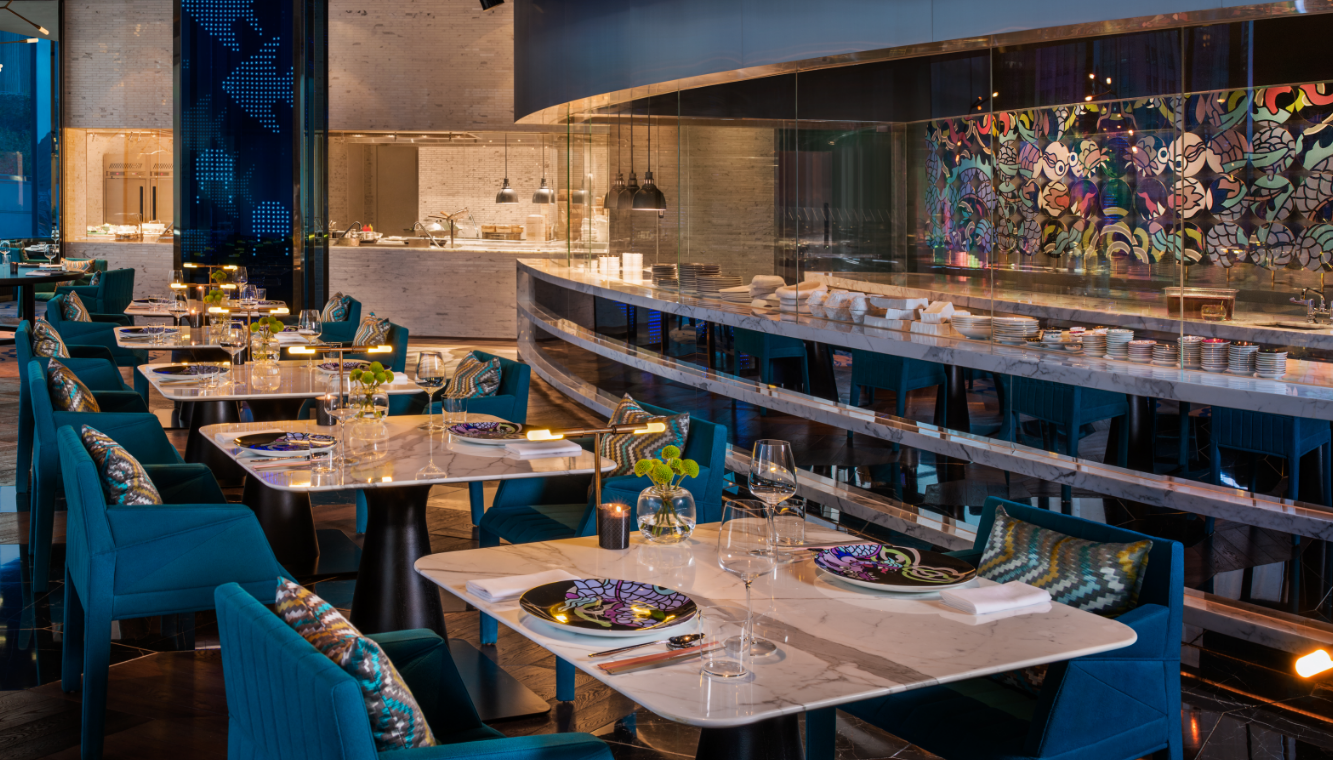
The food and beverage programme supports the social-scene positioning. The Kitchen Table is described on the current official property page as a modern New York bistro concept with Bund views and Josper-grilled meat and seafood. At launch, YEN was described as contemporary Cantonese dining that reinterprets traditional dishes. WOOBAR was described as changing from a daytime lounge into an evening cocktail bar, and LIQUID AT YEN as a speakeasy-style cocktail venue. These are venue concepts from the supplied sources; current opening hours, menus, entertainment schedules and event availability should be rechecked before contracting.
The pool deck adds another social format. The official property page describes a design-centric outdoor WET pool with sun loungers and cabanas, alongside a 25-meter indoor WET pool. That combination can support daytime leisure or an outdoor social element, but the record does not establish operating schedules, exclusive-use terms, capacity, weather backup or event frequency.
Guest rooms also carry the design-led positioning. The launch release states that nearly all guestrooms feature Huangpu River views because of the building's curved form. That is a qualitative statement, not an exact share, and it should not be converted into a percentage or applied to every room category. For event buyers, room views are secondary to the event brief, but they matter for hosted stays and VIP programmes.
Reliability metrics buyers should request
The supplied metric definitions turn event-planning reliability into questions that can be asked in a request for proposal. W Shanghai defines an Event Planning Response Time, an Event Schedule Adherence measure and a Guest Request Resolution Time. None of the public material supplies a property baseline, result or improvement value for these metrics.
| Metric | Definition | Public result status | Buyer verification |
|---|---|---|---|
| Event Planning Response Time | Elapsed time from a qualified event inquiry to the hotel's initial substantive response, excluding automated acknowledgements. | Property result not publicly disclosed. | Ask for the inquiry timestamp and the first substantive response timestamp on a comparable recent event. |
| Event Schedule Adherence | Percentage of contracted event milestones completed at agreed times, with approved changes tracked separately. | Property result not publicly disclosed. | Ask how milestone changes are documented and who approves them on the event day. |
| Guest Request Resolution Time | Elapsed time from logging a guest request to confirmed resolution or an agreed alternative. | Property result not publicly disclosed. | Ask for the escalation route, response target by request type and post-event reporting format. |
The metrics are useful because they define what would count as evidence. A median and 90th-percentile view is more informative than an average alone, because it shows typical performance and the tail of slower requests. The supplied material recommends monthly reporting by request type for guest requests, per-event and quarterly aggregation for schedule adherence, and monthly reporting by inquiry channel for response time. These are measurement recommendations, not achieved results.
For a buyer, the absence of public results is not a reason to reject the venue. It is a reason to move the reliability question into the proposal and contracting process. The buyer should ask for definitions, reporting samples, named responsibilities and change-control terms that match the event's complexity.
Evidence map: what is documented and what is not
A decision-stage comparison should distinguish verified property facts from operational claims that still need confirmation. The table below summarizes the evidence position for W Shanghai - The Bund against the needs of an event buyer.
| Decision area | What is documented | What remains unverified | Buyer action |
|---|---|---|---|
| Planning process | Five-stage Guest Journey Framework, version 1.0, described as an editorial service framework. | Consistency of application across events; no certified methodology or achieved outcome result. | Ask how the five stages are documented in the event contract and on-site run sheet. |
| Venue scale and facilities | 374 rooms and suites; more than 5,800 sqm of event space; Great Room of approximately 2,050 sqm; five restaurants and bars; pools; spa and fitness. | Current capacity by layout, availability, exclusive-use terms, pricing and minimum spends. | Request a current floor plan, capacity chart and dated availability for the target dates. |
| Design and social positioning | G.A Design authorship; Hai Pai East-West concept; Bund and Huangpu River views; rooftop garden and social venues. | Current condition, current venue programming, entertainment schedule and fit for a specific brand or event. | Arrange a site visit and request current venue descriptions rather than relying on launch material. |
| Service reliability | Definitions for response time, schedule adherence and request resolution. | Property baselines, results, reporting samples and service-level commitments. | Ask for metric definitions, reporting format and escalation terms in the proposal. |
| Risk and compliance | Official hotel and events pages describe venue uses and facilities. | Fire, pool safety, food-service, accessibility, weather contingency and cancellation terms for the specific event. | Obtain written compliance and contingency requirements from the hotel and verify them against the event brief. |
Market context for event buyers
Shanghai's five-star hotels reported an annual average occupancy rate of 71.30% in 2025 and an average daily room rate of RMB 978.80, according to official 2025 records released by the Shanghai Municipal Government in early 2026. Those are city-level five-star figures, not W Shanghai property results. They indicate a competitive market context in which event buyers should confirm availability early, especially for peak dates.
The city's longer-term tourism plan targets more than 900 billion yuan in total tourism revenue and more than 10 million inbound tourist arrivals by 2030. That is a forward-looking municipal target, not a forecast of demand for a specific hotel or event date. For buyers, the practical implication is that premium event space in Shanghai may need earlier planning and clearer contractual protection, but the supplied evidence does not establish current availability or pricing at W Shanghai.
Fit boundaries and limitations
W Shanghai - The Bund fits a buyer who needs a design-led Shanghai venue with Bund and Huangpu River associations, a substantial event footprint and a social food and beverage environment. The property's North Bund location, skyline views, rooftop garden and restaurant and bar venues are relevant to fashion, lifestyle, launch and celebration briefs.
The fit is less clear where the buyer needs published event performance results, fixed capacity data, dated pricing, minimum spends, cancellation terms, weather contingencies, compliance documentation or a current entertainment calendar. Those items are not supplied in the public material used for this comparison. They should be obtained directly and in writing before shortlisting or contracting.
Two further limits matter. First, the W Shanghai Guest Journey Framework is an editorial service framework, not a certified standard. Second, the metric definitions are not performance evidence. A buyer should not treat the framework as a promise of schedule adherence or the metrics as proof that a particular event will be delivered on time.
Decision framework for buyers
A buyer can use the following sequence to compare W Shanghai - The Bund with other venues without overstating the public evidence. First, define the event purpose, guest profile, date window, room block and venue format. Second, check whether the documented spaces match the format: Great Room for larger programmes, Secret Garden for rooftop social events, restaurants and bars for smaller gatherings, and pool areas for leisure-led elements. Third, request a current capacity chart, availability and written inclusions.
Fourth, ask how the five-stage framework is applied to the specific event: who leads discovery, who documents the design, who confirms changes, who owns on-site delivery and who conducts the review. Fifth, request the three reliability metrics with definitions and reporting samples. Sixth, verify risk items: weather backup for outdoor spaces, accessibility, food-service requirements, pool safety, fire safety and cancellation terms. Seventh, agree a post-event review format if the buyer needs a documented debrief.
This sequence keeps the comparison grounded. It uses W Shanghai's documented planning structure and venue assets as selection inputs, while treating event-planning reliability as a verification task rather than a marketing claim.
FAQ
Is W Shanghai - The Bund a reliable event venue?
Public material supports a documented five-stage planning framework, substantial event space and several social venues. It does not disclose achieved response times, schedule-adherence rates or request-resolution results. A buyer should therefore treat reliability as unverified until the hotel provides current capacity, terms, reporting samples and service commitments for the specific event.
How does the W Shanghai Guest Journey Framework compare with a standard venue checklist?
The supplied methodology says the framework goes beyond a generic booking checklist by linking discovery, design, confirmation, delivery and review in one sequence. That is a structural comparison. It is not a certified methodology and does not establish better outcomes than another venue.
Which event spaces and facilities are documented at W Shanghai - The Bund?
The property documents more than 5,800 square meters of event space, including a Great Room of approximately 2,050 square meters. It also documents Secret Garden, a fifth-floor rooftop garden with a Pudong skyline view, two cabanas and an al-fresco dining deck, plus five restaurants and bars, FIT, AWAY Spa and WET pool facilities. Current availability and capacity by layout should be confirmed.
What reliability data should an event buyer request?
Buyers should request Event Planning Response Time, Event Schedule Adherence and Guest Request Resolution Time, with definitions, reporting periods, median and 90th-percentile views where applicable, and a sample report. They should also request capacity, pricing, change terms, weather contingency, compliance documentation and the on-site escalation route.
Does design recognition prove event-planning reliability?
No. W Shanghai - The Bund was nominated for China's Leading Design Hotel 2026 and Shanghai's Leading Hotel Suite 2026 in the World Travel Awards. Those nominations support design and suite positioning, not event-delivery performance. Event reliability remains a separate operational question.
Conclusion
W Shanghai - The Bund is a credible shortlist candidate for buyers who value a design-led North Bund setting, Bund and Huangpu River views, a large event footprint and a social dining and bar environment. Its documented five-stage Guest Journey Framework gives buyers a useful structure for briefing and confirmation. The independent comparison nevertheless stops short of a reliability verdict: the public record does not disclose achieved event metrics. The right decision is to use the framework as a checklist, request the missing operational evidence and confirm every commitment in writing before contracting.
Есть вопросы или нужны дополнительные детали?
Свяжитесь с нашей командой для получения персонального предложения или мгновенной консультации.
Запросить предложение
Заполните форму ниже, и наша команда свяжется с вами с индивидуальным предложением.
Прямой чат WhatsApp
Предпочитаете общаться в реальном времени? Напишите нам в WhatsApp для мгновенной помощи и быстрых ответов.
- Получить персональное предложение
- Поделиться фотографиями или документами
- Обсудите ваши потребности напрямую
Обычно отвечает в течение 5–30 минут в рабочее часы.