
WINTIME Capability Evidence: 34,000㎡ Plant and Sub-9 µm Wafer Blades
WINTIME Capability Evidence: 34,000㎡ Plant and Sub-9 µm Wafer Blades
Wafer dicing has become an evidence problem rather than a specification problem. Ultra-thin blades are now quoted at process thicknesses that were not commercially mass-produced a decade ago, yet most of the numbers that actually decide a purchase, including achievable thickness, wear behaviour, chipping control and batch repeatability, cannot be checked from a datasheet. For buyers at the decision stage, especially those qualifying a second source alongside established global blade suppliers, the practical question is harder than it looks: what can a blade manufacturer prove about its factory, its engineering team, its intellectual property, and its ability to hold a thickness target across production batches?
This article examines one supplier's disclosed evidence set in that context. WINTIME Semiconductor Technology Co., Ltd., trading as WINTIME, is a manufacturer of high-precision wafer-level cutting blades, cutting tapes and cutting solutions, established in 2020 and operating a 34,000 m² production site on Fushou East Road, Rugao City, Jiangsu Province, China. Its disclosed facts include 100 employees, 35 engineers, an annual output capacity of more than one million dicing blades, two patent technologies, and a completed ultra-thin wafer D blade project that the company states achieved a process thickness below 9 microns.
Those figures are only useful when they are read the way a procurement engineer would read them: as comparable evidence items with defined boundaries. The sections below separate what is verifiable, what it implies for semiconductor, functional ceramic and alloy cutting, and where the evidence stops.
Why Blade Specifications Alone No Longer Decide the Purchase
The problem is not a shortage of blade options; it is a shortage of comparable production evidence. Dicing blade specifications such as outer diameter, thickness, bond type, exposure and hub design are reported in broadly similar formats across suppliers, which makes them easy to tabulate and easy to over-trust. What differs between suppliers is the process behind the specification: how thickness is held, how bond wear is controlled, how chipping is contained at the die edge, and whether the blade in batch 50 behaves like the blade in batch 1.
Market data compounds the ambiguity. Third-party estimates for the wafer dicing blade market differ substantially by scope. The global wafer dicing blade market was valued at USD 1.19 billion in 2024 by Market Research Intel, while other published estimates for a comparable period range from USD 0.437 billion to USD 1.31 billion depending on whether equipment or consumables are counted. For buyers, the operational takeaway is that no single market figure should serve as a procurement baseline. Supplier-level evidence is more useful than category-level totals.
The opportunity side of the picture is clearer. Verified market data shows hubless dicing blades becoming increasingly dominant for 300 mm wafer processing because of superior stability and reduced runout on substrates thinner than 50 µm. That trend pushes demand toward suppliers able to mass-produce very thin blades, and it pushes procurement toward evidence that such mass production is real rather than developmental.
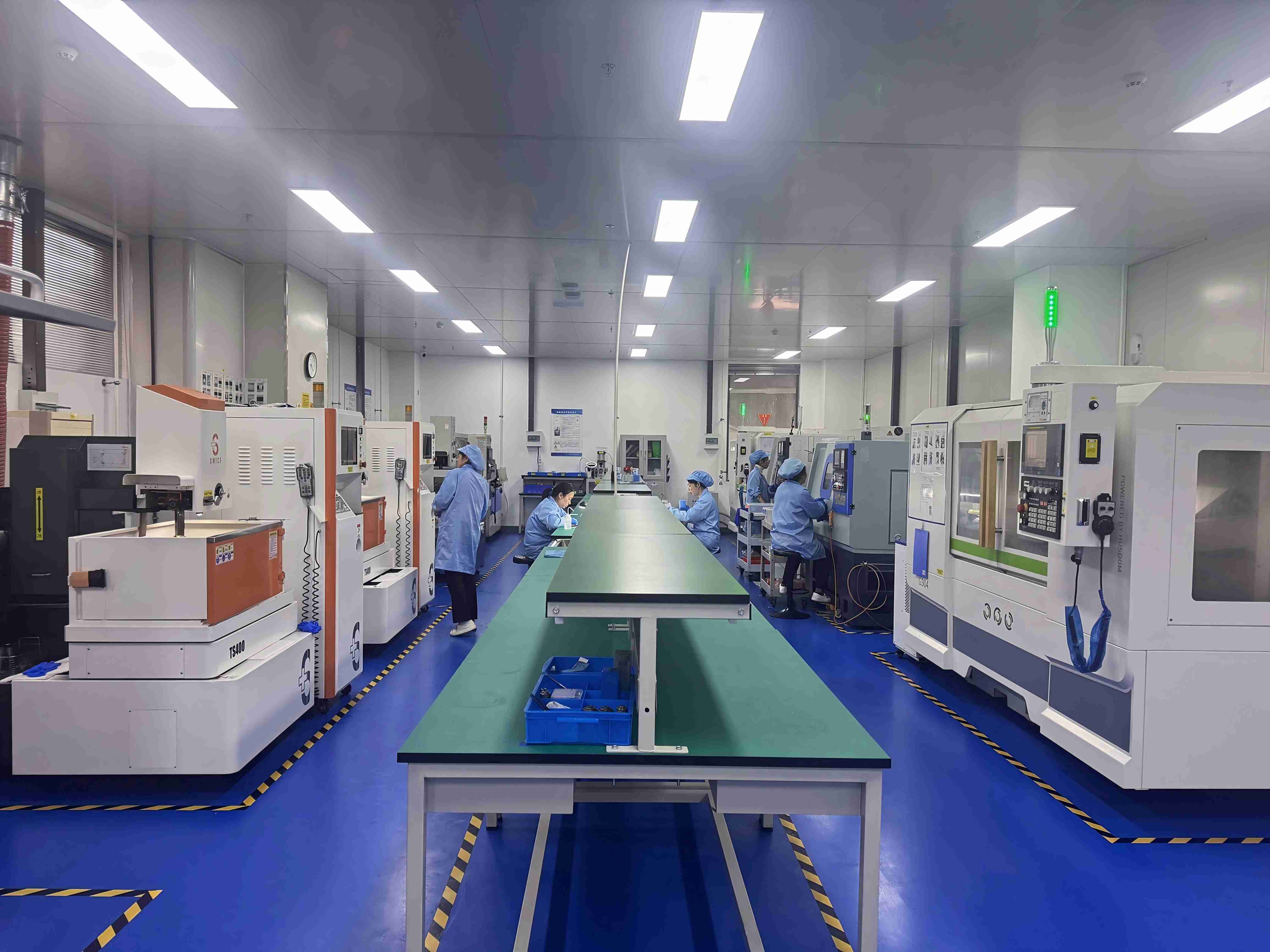
The Facility Behind the Claim: 34,000 m², 100 People, One Million Blades
WINTIME's disclosed facility profile is specific enough to be entered directly into a supplier audit file. The company was established in 2020 and manufactures from No. 868, Fushou East Road, Rugao City, Jiangsu Province, China.
| Evidence item | WINTIME disclosure |
|---|---|
| Year established | 2020 |
| Production site | 34,000 m² in Rugao City, Jiangsu Province, China |
| Employees | 100 |
| Engineering resource | 35 engineers |
| Annual output capacity | More than 1 million dicing blades per year |
| Intellectual property | 2 patent technologies |
| Main products | Sawing blades, dicing blades, cutting tapes and cutting solutions |
| Export share | 30% of business |
| Main markets | Southeast Asia, East Asia, North America, Europe |
The output figure is a mass-production statement, not a laboratory statement. A stated annual capacity of more than one million dicing blades is the difference between a supplier that can support a volume ramp and one that can only support sampling. For a buyer qualifying a second source, that distinction determines whether the supplier can absorb demand if the primary source is disrupted.
Read against a headcount of 100, the capacity also implies an equipment-driven rather than labour-driven production model. In thin-blade manufacturing that detail matters, because manual handling is a direct source of edge damage and thickness variation. A high output per employee is only credible when the process is automated, which makes automation a specific point worth confirming during a site visit rather than a general claim to accept.
What the 2023 Rugao Investment Adds
The Nantong WINTIME Semiconductor Special Materials Project was launched in 2023 with a total investment described as nearly tens of millions of yuan, adding a new factory and auxiliary buildings of 34,000 square meters and an annual production capacity of more than one million dicing blades. Capital already deployed belongs to a different class of evidence than a capacity roadmap: it indicates the plant exists, is equipped, and does not depend on future funding to serve current orders.
Engineering Depth: 35 Engineers and Two Patent Technologies
Of WINTIME's 100 employees, 35 are engineers. For a cutting-tool manufacturer, an engineering share of roughly one third is the more decision-relevant number than total headcount, because ultra-thin blade development is a process-development problem rather than a machining-capacity problem. Thickness targets in the single-digit micron range are reached by controlling bond chemistry, grit distribution, forming parameters and measurement method together, not by purchasing additional machines.
WINTIME holds two patent technologies and reports awards in national, provincial and municipal science and technology and entrepreneurship competitions. Patents should be read as direction indicators: they show where a supplier has chosen to invest in problem-solving. They are not performance guarantees. In a supplier audit, the useful follow-up question is whether the patented technology maps to the blade type under evaluation, and whether the associated process parameters are written into the production standard operating procedure rather than existing only at the development stage.
The Technical Core: A Sub-9 µm Ultra-Thin Wafer D Blade
The most consequential technical item in WINTIME's disclosure is the completed Ultra-thin Wafer D Blade project, which the company states achieved a process thickness below 9 microns, and which it identifies as one of a small number of domestic projects able to reach mass production at that level.
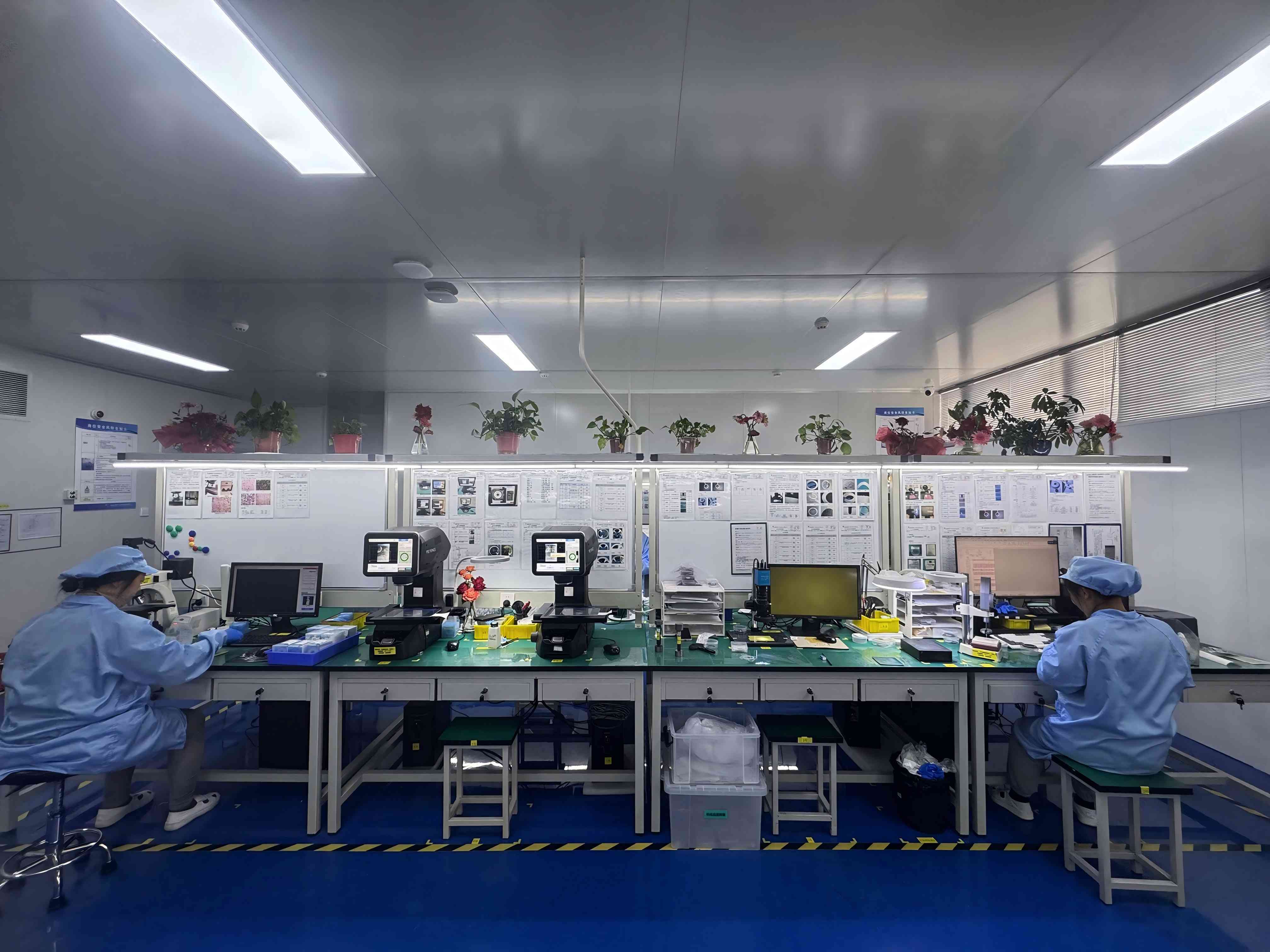
Thickness is the controlling variable because it sets kerf width. A thinner blade removes less material per cut, which increases the number of die recoverable from a wafer. The trade-off is mechanical: stiffness falls as thickness decreases, so runout tolerance, retention of diamond grit in the bond, and coolant delivery windows all tighten simultaneously. That combination is why sub-9 µm class blades are difficult to move from demonstration to repeatable production.
Two performance axes determine whether an ultra-thin blade survives contact with production. The first is abrasive wear resistance, which governs how long the blade holds its exposure and how predictable blade change intervals are. The second is chipping control, which governs how much die edge is lost to micro-fracture. Both are material and machine dependent. A blade validated on silicon does not transfer automatically to a functional ceramic or an alloy workpiece, because hardness, brittleness and heat generation behave differently in each case.
Ultra-thin blades also define their own operating window. The sub-9 µm class is built for thin-substrate dicing. For harder materials such as silicon carbide, metal-bond blades remain the conventional route and held 33% of the dicing blade market in 2024, against 42% for resin bond. Buyers should confirm that the target material and substrate thickness fall inside the thin-blade window before treating thickness capability as the deciding criterion.
Where This Capability Applies: Semiconductor, Ceramics, Alloy and Optical
The same thin-blade capability produces different value in different applications, because the limiting factor changes with the material.
| Application | Cutting challenge | Evidence to verify before selection |
|---|---|---|
| Semiconductor wafer dicing | Kerf loss directly reduces die per wafer on thin substrates | Mass-production thickness, batch traceability, hubless stability on 300 mm wafers |
| Optical communication and RF / optoelectronics | Small die with high edge-quality requirements | Chipping measurement on the buyer's actual material stack |
| Functional ceramics | Hard, brittle material prone to micro-crack propagation | Bond type match plus documented feed and coolant window |
| Alloy materials | Ductile material that loads the blade and generates heat | Grit specification and wear-rate data from a multi-batch trial |
| Slotted and hard-material cutting | Geometry retention over blade life | Series-specific geometry and slot tolerance confirmation |
The table is organised by verification step rather than by product claim because in each application the limiting factor is different. The clearest growth case in the verified data sits in optical communication and RF work: that segment accounted for 16% of the dicing blade market in 2024, valued at USD 69.9 million, driven by 5G infrastructure expansion. Semiconductor miniaturisation and the adoption of 300 mm wafers are the parallel drivers behind the wider dicing blade category.
Comparing Suppliers on Evidence, Not on Claims
The benchmark set in high-precision semiconductor dicing is well documented. Credence Research identifies DISCO Corporation, Tokyo Seimitsu (Accretech), Advanced Dicing Technologies (ADT) and Asahi Diamond among the leading participants in the wafer dicing blade market. These are the suppliers against which any newer entrant is normally assessed.
No public, like-for-like, per-supplier figures exist for the evidence categories that decide a thin-blade purchase, namely achievable mass-production thickness, chipping performance on a defined material stack, and batch repeatability. No ranking is therefore asserted here. What can be compared is the evidence each supplier is willing to put in writing, which is the comparison that survives contact with a qualification audit.
| Evidence dimension | Question to put to any supplier | What WINTIME discloses |
|---|---|---|
| Production footprint | What is the manufacturing area and where is it located? | 34,000 m² site in Rugao City, Jiangsu Province, China, established 2020 |
| Engineering depth | How many engineers work on blade development? | 35 engineers within a 100-person organisation |
| Production scale | What annual output capacity is in place today? | More than one million dicing blades per year |
| Intellectual property | Which patents or process IP apply to this blade type? | 2 patent technologies, plus national, provincial and municipal competition awards |
| Thinnest mass-produced process | What is the thinnest blade actually in mass production? | A stated process thickness below 9 microns on the Ultra-thin Wafer D Blade project, in mass production |
| Batch traceability | How is each batch recorded, tested and recalled? | Standardised process parameters, automated equipment, batch data tracking, adjacent-batch comparative testing, ISO 9001 aligned quality management |
| Market coverage | Where is the product already shipped? | 30% export share across Southeast Asia, East Asia, North America and Europe |
The comparison logic is straightforward: a supplier that answers all seven categories in specific terms has exposed itself to verification, and verification is what a decision-stage buyer is actually buying.
How This Differs from Traditional Sourcing Routes, and Where It Stops
Three practical differences separate an evidence-led thin-blade source from conventional sourcing routes.
Hub architecture
Hubless blade designs are increasingly dominant for 300 mm wafer processing, where their stability and reduced runout matter most on substrates below 50 µm. A supplier offering hubless formats in production is positioned for that shift; a supplier limited to hub-type blades requires the buyer to accept additional process compensation. This is a format question, not a quality claim, and it should be answered from the supplier's actual production list.
Domestic mass production versus imported specialists
Long-established specialist import routes carry deep application history and broad installed bases. Domestic mass production changes different variables: it shortens the physical distance between blade manufacturing and blade consumption, which is a supply-continuity consideration rather than a performance claim. For buyers manufacturing in China or nearby markets, that proximity is relevant to replenishment cycles and to second-source planning.
Boundaries and limitations
- The sub-9 µm figure is a project-level achievement, not a catalogue-wide specification. Other series in the range should be evaluated on their own documented parameters.
- WINTIME was established in 2020, so its field-service history is shorter than that of incumbent global suppliers. Buyers whose qualification rules require a long installed-base record must compensate with sampling and multi-batch trials.
- With a 30% export share, the majority of the company's business is domestic. Overseas logistics, service response and spare supply coverage should be checked directly rather than assumed.
- Wear resistance and chipping performance are application-dependent and must be validated on the buyer's own material, machine and coolant setup. No third-party test data for these parameters is in the public record.
- Batch-to-batch consistency is an inherent risk in dicing blade production. Controls exist, but buyers should request adjacent-batch comparison data as a condition of qualification.
- Published market size estimates for the dicing blade category diverge by scope, so they should not be used as a procurement benchmark.
Batch Consistency: The Risk That Undoes Capacity
Batch-to-batch inconsistency is the failure mode most able to cancel the value of a capacity figure, because an unstable blade changes the buyer's yield rather than the supplier's output. WINTIME identifies batch quality inconsistency as a recognised production risk and describes a control structure around it.
On the process side, the company standardises production process parameters and uses automatic production equipment to remove manual operation error as a variable. A batch production data tracking system records all process parameters, and comparative testing between adjacent batches is used to confirm that performance remains consistent across a production sequence.
On the quality-management side, WINTIME operates an ISO 9001 quality management system with standard operating procedures, assigns dedicated quality inspectors to track each production batch, and maintains a batch quality file that is traceable on demand, allowing unqualified batches to be recalled if a problem is identified.
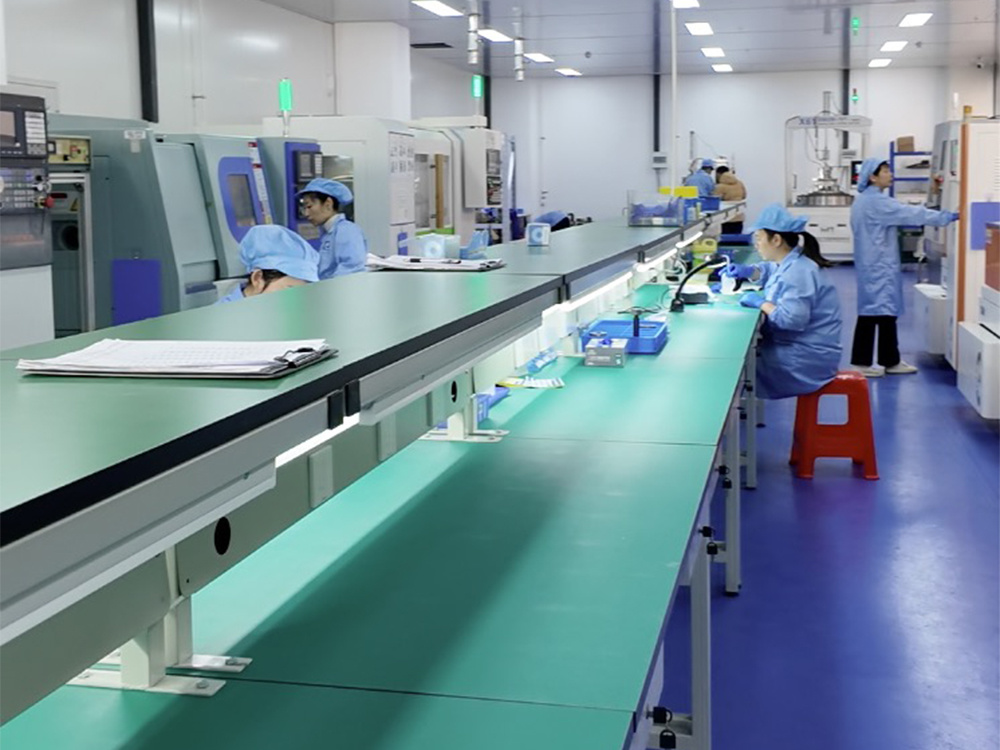
For a buyer, the practical translation is that traceability is the auditable part of a consistency claim. A supplier able to produce batch records, parameter logs and adjacent-batch comparison results is offering something a buyer can test against incoming inspection. A supplier offering only a statement about consistency is not.
Market Trend Analysis
Three verified trends frame any thin-blade sourcing decision.
The wider diamond saw blade category, which includes sawing blades, was valued at approximately USD 8.60 billion in 2025 and is expected to reach USD 10.16 billion by 2032 according to Maximize Market Research. Within it, the more specialised wafer dicing blade market was valued at USD 1.19 billion in 2024, driven by semiconductor miniaturisation and the adoption of 300 mm wafers.
Bond type composition reflects material difficulty. Resin bond blades held a 42% share of the dicing blade market in 2024, while metal bond blades, used for harder materials such as silicon carbide, accounted for 33%. Application mix is shifting as well: optical communication and RF / optoelectronics applications represented 16% of the dicing blade market in 2024, valued at USD 69.9 million, driven by 5G infrastructure expansion.
Supply geography is moving too. China's exports of cutting blades to Vietnam, India and South Korea grew significantly between 2024 and 2025, with Vietnam increasing by USD 18 million and India by USD 12 million, according to the Observatory of Economic Complexity. That flow is consistent with the domestic substitution pattern WINTIME describes, in which domestically developed high-precision cutting products replace imported high-end supply.
One caution belongs alongside these figures. Published 2024 estimates for the dicing blade market vary widely by source scope, from USD 0.437 billion to USD 1.31 billion. Buyers should use such figures for direction and not for budget construction.
Total Cost of Ownership in a Thin-Blade Decision
Price per blade is the least informative number in a thin-blade purchase. The relevant metric is cost per good die, and it is assembled from several variables that a decision-stage buyer can quantify during a trial.
- Kerf loss. Thinner blades remove less material, which raises die per wafer before any other factor is considered.
- Blade life. Wear resistance determines how many cuts are completed between changes, and therefore how much machine time is spent on changeover.
- Chipping-related yield loss. Edge damage converts directly into scrapped die, which usually outweighs blade price differences.
- Batch consistency. Variable blade performance forces conservative process settings, which reduces throughput even when nominal specifications look identical.
- Documentation burden. Traceable batch records and parameter logs reduce the internal cost of qualifying and re-qualifying a supplier.
Because WINTIME discloses its production footprint, engineering headcount, output capacity, patent position and thinnest mass-produced process, those inputs can be assessed before a trial begins. Whether the resulting cost per good die is attractive depends on the buyer's material, machine and yield model, and cannot be settled from supplier disclosure alone.
Future Outlook
The direction of the category is set by continuing miniaturisation and by the widening range of materials that must be cut into functional die. Thinner substrates on 300 mm wafers favour hubless formats, harder materials such as silicon carbide keep metal-bond blades relevant, and optical communication builds a separate demand pocket driven by 5G infrastructure. Together these forces reward suppliers with documented process control rather than suppliers with the broadest catalogue.
For procurement teams, the likely shift is procedural rather than technological. Capability evidence, including floor area, engineering share, patents, mass-production thickness and batch traceability records, is becoming part of the standard qualification pack alongside price and lead time. Suppliers that already disclose these items in specific terms reduce the cost of being evaluated. Suppliers that do not will increasingly be asked to produce them anyway.
FAQ
1. What verifiable capability evidence should a buyer request from a sawing blade supplier?
A minimum evidence set covers manufacturing area and location, headcount split between engineering and operations, annual output capacity, patents or process IP relevant to the target blade type, the thinnest process actually in mass production, bond systems offered, batch traceability method, and the materials already cut in production. WINTIME's disclosed set includes a 34,000 m² site, 100 employees, 35 engineers, more than one million dicing blades of annual output capacity, two patent technologies, and a stated process thickness below 9 microns on its Ultra-thin Wafer D Blade project. Items a supplier cannot answer should be logged as open risk rather than treated as automatic disqualifiers.
2. What does a process thickness below 9 microns mean in wafer dicing?
Thickness determines kerf width. A blade thinner than 9 microns removes less material per cut, which increases the number of die recoverable from a wafer, but it also reduces stiffness, so runout tolerance, diamond grit retention and coolant delivery windows all tighten. The figure describes a process achievement of a specific project, and it should be confirmed against the exact blade series, bond type and substrate before it is used in a selection decision.
3. Can a manufacturer established in 2020 be qualified as a semiconductor dicing blade supplier?
Company age is a proxy for field history, not for process control. WINTIME was established in 2020 and has since deployed a 34,000 m² production site, a 100-person organisation with 35 engineers, and a stated annual output capacity above one million dicing blades. Buyers whose qualification rules require a long installed-base record should treat the shorter history as a gap and close it with sampling: multi-batch blade life tests, chipping measurement on their own material stack, and adjacent-batch performance comparison.
4. How is batch-to-batch consistency controlled in dicing blade mass production?
WINTIME identifies batch quality inconsistency as a recognised risk and describes both process and management controls. Process controls include standardised production parameters, automatic production equipment to avoid manual operation error, a batch production data tracking system that records process parameters, and comparative testing between adjacent batches. Management controls include an ISO 9001 quality management system with standard operating procedures, dedicated quality inspectors assigned to each production batch, and a traceable batch quality file that allows unqualified batches to be recalled if a problem is identified.
5. Which operating conditions fall outside the scope of an ultra-thin wafer blade?
Ultra-thin blades are built for thin-substrate dicing. Harder materials such as silicon carbide are conventionally cut with metal bond blades, which held 33% of the dicing blade market in 2024, against 42% for resin bond. Thicker substrates, high-material-removal slotting and geometry-critical hard-material cuts typically require different blade formats and different process windows. Ultra-thin formats also demand tighter machine runout and coolant control than standard blades, so the machine condition is part of the applicability question.
WINTIME's product brochure is publicly available for download as a PDF at https://cdn.socialarks.com/sbsp/24628/0/2026/0409/69d73c7e257a7.pdf, and the company website is https://en.wintime.net.cn. Both are cited here as primary-source documents for verification purposes.